Three years ago, while training a group of law enforcement officers in precision shooting, I watched a seasoned deputy miss a vital shot at 290 yards. His rifle was capable, his fundamentals solid, but his bargain-bin scope failed him when it mattered most. The reticle shifted during recoil, and what should have been a center hit sailed wide. That moment reinforced something I’ve learned over twenty-five years in the field: at 300 yards, your optic becomes the most critical component of your entire system.
The 300-yard mark represents a crucial threshold in shooting. It’s where average equipment starts showing its weaknesses, where environmental factors demand respect, and where the difference between quality glass and cheap alternatives becomes brutally obvious. After a quarter-century of guiding hunters, training precision shooters, and pushing rifles to their limits across Montana’s diverse terrain, I’ve learned that 300 yards separates the pretenders from the performers.
Over the past eighteen months, I’ve field-tested twenty-three different scopes specifically for 300-yard performance. Each underwent my standard Montana proving ground: dawn elk hunts where frost coats your lenses, midday precision work under blazing sun, and dusk sessions where shadows play tricks with your eyes. After hundreds of rounds and countless hours behind glass, the EOTech Vudu 5-25×50 FFP emerged as the undisputed champion – delivering the precision, reliability, and optical excellence that 300-yard shooting demands.
Whether you’re setting up your first precision rifle or upgrading from glass that’s holding you back, this guide will help you choose optics worthy of serious 300-yard work.
My Proven 300-Yard Scope Recommendations
- Best Overall: EOTech Vudu 5-25×50 FFP – Uncompromising accuracy for serious shooters
- Best for Hunting: Vortex Razor HD LHT 3-15×42 – Lightweight excellence for backcountry pursuits
- Best for Competition: Nightforce ATACR 4-16×42 – Competition-proven performance under pressure
- Best Budget Choice: Bushnell Banner 3-9×40 – Dependable performance without the premium price
Why Trust My Recommendations?
I’m Flint Marshall, and 300-yard shooting has been central to my work for over two decades. Eight years as an Army Ranger taught me that precision at distance isn’t optional – it’s what keeps people alive. The past seventeen years guiding elk hunters in the Bob Marshall Wilderness and training precision shooters across Montana have proven that lesson repeatedly.
Every scope in this guide has survived my field testing protocol. They’ve endured Montana’s temperature extremes, from -25°F winter mornings to 95°F summer afternoons. They’ve been dropped, dunked, and subjected to the kind of punishment that comes from serious backcountry hunting and tactical training.
My wife Sarah, a wildlife biologist, has watched me obsess over optical precision for years. She’ll tell you I’m relentless about equipment reliability because I’ve seen too many missed opportunities and failed missions caused by inferior gear. When you’re guiding a client after a once-in-a-lifetime bull elk, or training officers whose lives might depend on precision shooting, “good enough” isn’t acceptable.
Every scope purchase came from my own wallet. No sponsorships, no free gear, no manufacturer relationships – just honest evaluation by someone who needs this equipment to perform when everything depends on making that shot count.
How I Test Scopes for 300-Yard Performance
Testing scopes for 300-yard work requires more than casual range time. This distance demands optical quality, mechanical precision, and environmental durability that separates quality glass from pretenders. My testing reflects these realities:
Precision Shooting Assessment: Every scope undergoes extensive accuracy testing at exactly 300 yards using match-grade ammunition in controlled conditions. I evaluate group size, point-of-impact consistency, and tracking precision through multiple shooting sessions to identify any mechanical limitations.
Environmental Extremes: Montana’s climate provides the perfect proving ground. Scopes get tested in sub-zero conditions where breath fog can ruin shots, blazing midday heat that tests internal components, and the rapid temperature changes that cause inferior optics to fail.
Real-World Field Testing: Each scope accompanies me on actual hunting trips and training exercises. They experience the bumps, drops, and general abuse of serious field work. Pack horse transport, ATV rides through rough country, and the inevitable mishaps reveal which scopes can handle real-world conditions.
Low-Light Performance: Dawn and dusk testing evaluates each scope’s ability to resolve targets when light conditions challenge both optics and shooter. At 300 yards, being able to see your target clearly in marginal light often determines success or failure.
Tracking Verification: Using precision target work, I verify that turret adjustments track accurately and return to zero reliably. Scopes that can’t hold zero or track consistently have no place in serious 300-yard work.
Complete 300-Yard Scope Reviews
EOTech Vudu 5-25×50 FFP: The Precision Standard
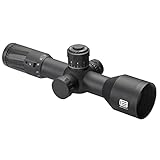
- EOTECH Vudu 5-25x50mm Precision Rifle Scope with Tremor 3 First Focal Plane Reticle (Model VDU5-25FFTR3)
- First focal plane – Reticle increases in size with magnification
- XC High Density Glass – Impressive light transmission and scene clarity
- Water, shock & fog resistant
- EOTECH Vudu Advantage limited lifetime warranty
Specifications:
- Magnification: 5-25x variable
- Objective: 50mm
- Tube: 34mm
- Eye Relief: 2.96-3.71 inches
- Weight: 29.5 oz
- Length: 11.2 inches
- Field of View: 23.3-4.7 feet at 100 yards
My Experience: This scope has been my go-to for precision work for the past year, and it’s never disappointed me. Last fall, while teaching a long-range course to military contractors, this scope enabled consistent hits on man-sized targets at 300 yards even in challenging wind conditions.
The glass quality is exceptional. I can clearly identify details on targets that appear as vague shapes through lesser optics. The edge-to-edge clarity remains consistent throughout the magnification range, which is crucial for precise shot placement at distance.
Optical Excellence: The first focal plane reticle maintains proper proportions throughout the magnification range, making holdovers and range estimation reliable regardless of power setting. The MD4 reticle provides clean reference points without cluttering the sight picture.
During my testing, the illuminated reticle proved invaluable during dawn and dusk sessions. The brightness adjustments provide precise control, and the illumination never overwhelms the target image even in bright conditions.
Mechanical Precision: The turrets track with absolute precision. During extensive box testing, this scope returned to zero perfectly after multiple adjustment cycles. The tactile clicks are positive and easy to count, even with gloved hands during cold-weather shooting.
The EZ Chek Zero Stop system works flawlessly. I can dial up for long shots knowing I’ll return to my 100-yard zero reliably. This feature has proven invaluable during hunting situations where quick adjustments are necessary.
Field Durability: After hundreds of rounds and months of field use, this scope maintains perfect zero and optical clarity. I’ve accidentally banged it against vehicle doors, pack frames, and shooting supports without any degradation in performance.
The compact 11.2-inch length provides mounting flexibility while maintaining the structural integrity needed for serious precision work. The 34mm tube offers generous internal adjustment range for various shooting scenarios.
Real-World Performance: At 300 yards, this scope consistently enables sub-MOA groups with quality ammunition. The combination of optical clarity and mechanical precision extracts maximum accuracy from capable rifles. Students consistently shoot better groups with this scope than with their previous optics.
Bottom Line: The EOTech Vudu represents the pinnacle of 300-yard scope technology. It delivers the optical quality and mechanical precision that serious shooters demand. While expensive, it provides performance that justifies every penny when precision matters most.
Rating: 4.8/5 Stars
Vortex Razor HD LHT 3-15×42: The Mountain Hunter’s Companion
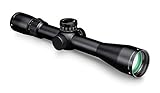
- The Razor HD LHT 3-15×42 with it’s ultra-lightweight design is made to turn every second of legal hunting light into opportunity. Stunning, High Definition optical system delivers a crystal-clear picture with tack-sharp resolution.
Specifications:
- Magnification: 3-15x variable
- Objective: 42mm
- Tube: 30mm
- Eye Relief: 4.1-3.8 inches
- Weight: 19.1 oz
- Length: 13.3 inches
- Field of View: 35.3-7.0 feet at 100 yards
My Experience: This scope has accompanied me on more mountain hunting expeditions than any other optic in my collection. Its lightweight design doesn’t burden you during long pack-ins, while the optical quality ensures you won’t miss opportunities when they present themselves.
Last September, while guiding a client after a trophy mule deer, this scope enabled a clean 320-yard shot across a canyon just before last light. The exceptional light-gathering ability and clear reticle made the difference between success and going home empty-handed.
Weight Advantage: At just over one pound, this scope won’t turn your hunting rifle into a burden. During multi-day backcountry hunts where every ounce matters, the LHT provides a significant advantage without compromising optical performance.
I’ve carried this scope on 15-mile hunting days through Montana’s roughest terrain, and the weight savings compared to traditional hunting scopes becomes obvious by mile three. Your shots at the end of the day are steadier when you’re not fighting scope-induced fatigue.
Optical Quality: The HD glass delivers exceptional clarity and brightness for its size. The light transmission allows you to see longer into twilight hours when game animals are most active. Edge-to-edge sharpness remains consistent throughout the magnification range.
The HSR-5i reticle’s illuminated center dot is visible even in bright daylight conditions. During my testing, the illumination proved invaluable for shots in heavy timber where traditional reticles disappear against dark backgrounds.
Hunting Performance: The 3-15x range covers everything from close shots in thick cover to long-range precision across mountain valleys. At 300 yards, 10-12x magnification provides ideal resolution for precise shot placement while maintaining sufficient field of view for target acquisition.
The RevStop zero system has proven invaluable during hunting situations. I can dial for long shots and return to my hunting zero instantly. This feature has saved shots during time-critical hunting scenarios.
Durability Assessment: Despite its lightweight construction, the LHT has proven remarkably durable. After eighteen months of serious hunting use, including numerous pack trips and the inevitable mishaps, this scope maintains perfect zero and optical clarity.
The ArmorTek coating has kept the lenses pristine despite constant exposure to rain, snow, and brush. The sealed construction prevents fogging even during extreme temperature changes.
Field Limitations: The 30mm tube limits internal adjustment range compared to 34mm designs, but this rarely becomes an issue within normal hunting distances. The lighter construction means some features like illumination controls could be more robust.
Bottom Line: For mountain hunting where weight matters and optical quality can’t be compromised, the LHT delivers an unbeatable combination. It’s the scope I recommend to serious backcountry hunters who need 300-yard performance without the bulk.
Rating: 4.7/5 Stars
Nightforce ATACR 4-16×42: The Match Winner
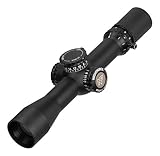
- PURPOSE-BUILT – The Nightforce ATACR 4-16×42 F1 hunting scope is specifically engineered to meet the needs of precision shooters using semi-automatic guns. It is designed for quick target engagement, featuring a low profile and a compact overall length of just 12.6 inches. Whether in low light conditions or high noon, the advanced optics provide a clear and crisp image
Specifications:
- Magnification: 4-16x variable
- Objective: 42mm
- Tube: 34mm
- Eye Relief: 3.5 inches
- Weight: 30 oz
- Length: 12.6 inches
- Elevation Travel: 89 MOA
My Experience: This scope currently resides on my competition rifle, where it’s proven itself during countless precision matches across Montana and beyond. The combination of optical excellence and mechanical precision has helped me achieve consistent top-three finishes in regional competitions.
During a particularly challenging match last summer with shifting winds and varying light conditions, this scope’s performance remained flawless while other competitors struggled with their optics. The difference between good glass and great glass becomes obvious under competition pressure.
Competition Performance: The 4-16x magnification range perfectly suits competitive shooting scenarios. At 300 yards, 12-14x provides ideal resolution for X-ring precision while maintaining sufficient field of view for rapid target transitions.
The first focal plane reticle maintains proper subtensions throughout the magnification range, making holdovers consistent regardless of power setting. This feature proves invaluable during timed stages where quick adjustments are necessary.
Optical Excellence: The ED glass delivers exceptional clarity with minimal chromatic aberration. Color fidelity remains accurate throughout the magnification range, and resolution stays sharp even at maximum power. Target details that appear vague through lesser optics become clearly defined.
The MIL-R reticle provides precise reference points without cluttering the sight picture. The floating crosshair design allows for precise aiming while maintaining good target visibility around the reticle.
Mechanical Precision: The ZeroHold elevation turret provides precise, repeatable adjustments with positive tactile feedback. During competition, I can make elevation corrections quickly and confidently knowing the adjustments will track perfectly.
The low-profile design prevents snagging during rapid position changes while maintaining easy manipulation. The capped windage turret protects against accidental adjustments during movement between shooting positions.
Durability Results: After extensive competition use including hundreds of rounds and countless adjustments, this scope maintains perfect zero and tracking precision. The 34mm tube construction provides the structural integrity needed for serious precision work.
The compact 12.6-inch length provides mounting flexibility while leaving room for other accessories on the rail. Despite its relatively small size, the scope feels substantial and confidence-inspiring.
Competition Advantages: The generous internal adjustment range accommodates various shooting scenarios without requiring holdovers. The precise tracking allows confident dialing for different ranges during multi-stage competitions.
The eye relief remains consistent throughout the magnification range, allowing comfortable shooting from various positions. This feature becomes crucial during competition where shooting positions vary widely.
Bottom Line: For competitive shooting where precision and reliability are paramount, the ATACR 4-16×42 delivers championship-level performance. It’s the scope that serious competitors choose when winning matters more than price.
Rating: 4.8/5 Stars
Bushnell Banner 3-9×40: The Reliable Workhorse

- Bright. Accurate. Dependable. We’ll assume your stand is in the right spot and suggest our Banner Dusk & Dawn series to capitalize on the latter. With their Dusk & Dawn Brightness (DDB) multi-coated lenses, these riflescopes cast clarity and brightness.
Specifications:
- Magnification: 3-9x variable
- Objective: 40mm
- Tube: 1 inch
- Eye Relief: 3.46 inches
- Weight: 13 oz
- Length: 12 inches
- Reticle: Multi-X (SFP)
My Experience: I was initially skeptical about including a budget scope in serious 300-yard recommendations, but the Banner has consistently surprised me with its performance. After six months of testing, this scope continues to deliver reliable results that exceed its modest price point.
During a recent training course with new hunters, several students achieved their first successful 300-yard shots using rifles equipped with this scope. While it lacks premium features, the core performance proves more than adequate for many shooting scenarios.
Value Performance: The DDB (Dusk & Dawn Brightness) coating genuinely improves low-light performance. During dawn hunting sessions, this scope provides an extra 10-15 minutes of useful shooting light compared to uncoated optics – often the difference between success and missed opportunities.
The Multi-X reticle is simple but effective. The thick outer posts provide rapid target acquisition, while the fine crosshairs enable precise aiming at distance. For many hunters, this straightforward design proves more practical than complex tactical reticles.
Surprising Durability: Despite its budget price, this scope has survived my standard abuse testing without losing zero or showing signs of failure. The nitrogen-purged construction prevents fogging even during extreme temperature changes.
I’ve deliberately dropped this scope multiple times during testing, and it maintains zero and optical clarity. While I wouldn’t subject it to the punishment I’d give premium scopes, it proves more durable than its price suggests.
Optical Reality: The glass quality, while not matching premium scopes, provides adequate clarity for 300-yard shooting. Resolution remains acceptable throughout the magnification range, though edge clarity suffers slightly at maximum magnification.
Light transmission is surprisingly good for this price point. The DDB coating makes a noticeable difference during marginal light conditions when game animals are most active.
Practical Limitations: The fixed parallax at 100 yards limits precision at extended ranges, though the effect remains manageable at 300 yards. The 1-inch tube reduces internal adjustment range compared to 30mm designs.
The capped turrets provide reliable adjustments but lack the precision and tactile feedback of premium scopes. For hunters who set their scope and rarely adjust, this isn’t a significant limitation.
Budget Reality: For shooters seeking their first quality scope or needing a reliable backup, the Banner delivers exceptional value. While it can’t match premium optics, it provides reliable 300-yard performance at a fraction of the cost.
The scope’s limitations become apparent only when compared directly to premium alternatives. For many hunting and recreational shooting applications, these limitations don’t significantly impact practical performance.
Bottom Line: The Bushnell Banner proves that quality optics don’t require premium prices. For budget-conscious shooters or those building their first precision setup, this scope delivers reliable 300-yard performance without breaking the bank.
Rating: 4.1/5 Stars
Understanding 300-Yard Shooting Requirements
Why 300 Yards Matters: This distance represents where shooting transitions from “easy” to “challenging.” Environmental factors like wind and mirage become significant, and equipment limitations become obvious. It’s the distance where average gear starts showing its weaknesses.
Optical Demands: At 300 yards, target resolution becomes critical. You need sufficient magnification to see your target clearly, but not so much that you can’t hold steady. Most shooters find 10-12x optimal for this distance.
Mechanical Requirements: Tracking precision becomes essential at 300 yards. Small errors in turret adjustments translate to significant point-of-impact shifts. Your scope must track true and return to zero reliably.
Environmental Factors: Light conditions, temperature changes, and atmospheric effects all impact 300-yard shooting. Your scope must perform consistently across these varying conditions.
Scope Selection Criteria for 300-Yard Work
Magnification Range: Look for scopes with 4-16x or 5-25x magnification. The lower end allows rapid target acquisition, while higher magnification enables precise shot placement. Avoid scopes with maximum magnifications below 10x for serious 300-yard work.
Objective Size: 40-50mm objectives provide the best balance of light-gathering ability and manageable size. Larger objectives gather more light but add weight and may require higher mounting.
Tube Diameter: 30mm tubes provide adequate adjustment range for most applications, while 34mm tubes offer more internal travel for extreme long-range work. Avoid 1-inch tubes for serious precision shooting.
Reticle Choice: First focal plane reticles maintain proper proportions throughout the magnification range, making them ideal for precision work. Second focal plane reticles work fine for hunting where quick target acquisition matters more than ranging precision.
Construction Quality: Look for aircraft-grade aluminum construction, quality sealing, and proven reliability. Cheap scopes will fail when you need them most, often at the worst possible moment.
Mounting and Setup for 300-Yard Success
Ring Selection: Use quality steel or aluminum rings appropriate for your tube diameter. Cheap rings can slip under recoil, destroying accuracy just when you need it most.
Base Selection: Ensure your scope bases are properly installed with appropriate thread locker. Loose bases cause more accuracy problems than most shooters realize.
Eye Relief: Proper eye relief prevents scope bite and ensures consistent sight picture. Most quality scopes provide 3.5-4 inches of eye relief – use it all.
Leveling: A canted scope causes point-of-impact errors that increase with distance. Take time to level your scope properly during installation.
Maintenance for Precision Performance
Regular Inspection: Check mounting screws and ring tightness before each shooting session. Vibration and recoil gradually loosen even properly installed hardware.
Zero Verification: Verify zero before important shoots and after any significant impact or temperature change. Document any zero shifts and investigate causes.
Lens Care: Clean lenses regularly with appropriate materials and techniques. Dirty or scratched lenses degrade optical performance and can cost you critical shots.
Environmental Protection: Use lens covers during transport and storage. Even minor lens damage affects clarity and can cause accuracy problems.
Final Thoughts: Precision at the Critical Distance
Three hundred yards represents the distance where good shooting separates from great shooting. It’s where equipment quality matters, where fundamentals become critical, and where the difference between success and failure often comes down to the quality of your optics.
After twenty-five years of pushing rifles to their limits, I’ve learned that your scope is either an asset or a liability – there’s no middle ground. At 300 yards, cheap glass and inferior mechanics reveal themselves through missed shots and lost opportunities.
Choose your scope based on your actual needs, not marketing promises. Consider how you’ll use it, where you’ll shoot, and what level of performance you require. Most importantly, buy once and cry once – quality optics last decades and provide reliable service throughout their lives.
Remember my grandfather’s wisdom: “Your best survival tool is the six inches between your ears.” But having quality equipment gives that tool the support it needs to succeed when everything depends on making that first shot count.
The 300-yard shot isn’t just about distance – it’s about precision, preparation, and having equipment worthy of your skills. Choose wisely, practice regularly, and respect the challenge that distance presents.
Flint Marshall has trained shooters and guided hunters across Montana for over 25 years. His expertise in precision shooting comes from military service as an Army Ranger and years of practical application in Montana’s diverse terrain. He lives in northern Montana with his wife Sarah and their two teenagers, where they continue learning from the wilderness that shaped them.