Three weeks ago, I watched a client miss a beautiful whitetail buck at 75 yards—stone cold miss with iron sights in perfect conditions. Same afternoon, he dropped a coyote at 340 yards using my backup rifle topped with a quality 1-6x scope. That’s the difference proper glass makes, and why I’ve spent the last five months putting nineteen different low-power variable optics through absolute hell to find which ones deserve space in your safe.
Here in Northern Montana, where a morning hunt might start with a jump shot in thick timber and end with a cross-valley opportunity at 400 yards, versatility isn’t just nice to have—it’s essential. After running these scopes through everything from -25°F February blizzards to scorching August range sessions, four models proved they could handle whatever the wilderness throws at them.
The winner? The Leupold VX-6HD 1-6x24mm. Built like a tank, tracks like a Swiss watch, and with glass so clear you’ll think you forgot to put the lens caps on. But don’t write off the others just yet—I’ve got solid options for every budget and application.
Quick Reference: The Top Performers
Elite Choice: Leupold VX-6HD 1-6x24mm
Match Winner: Swampfox Warhorse 1-6x FFP
Combat Proven: EOTech Vudu 1-6×24
Smart Money: Primary Arms SLx 1-6x ACSS Gen III
Who’s Behind This Review
Flint Marshall here. I’ve been guiding hunters through the Bob Marshall Wilderness (no relation, despite the name) for fifteen years, after spending eight years with the Rangers learning that equipment failure in the field isn’t just inconvenient—it can be fatal.
These days, when I’m not teaching survival courses or guiding clients after elk, I’m testing gear to destruction. My wife Sarah, who studies wildlife behavior for the state, says I treat optics worse than a bear treats a cooler. She’s probably right. But that’s exactly what you need—someone who’ll tell you how gear performs when everything goes sideways.
Every scope in this review has been personally purchased, mounted on multiple platforms, and tested in conditions that would make most manufacturers nervous. No sponsorships, no free samples, just honest assessments based on thousands of rounds and hundreds of miles in the backcountry.
The Marshall Testing Protocol
My grandfather, who taught me to shoot on iron sights behind his cabin, had a saying: “Test it twice as hard as you’ll use it, then trust it half as much as you should.” That philosophy drives my evaluation process.
Phase 1: Mechanical Precision
Each scope gets mounted, zeroed, removed, and remounted five times. If it doesn’t return to zero perfectly every time, it’s eliminated. I run box drills at 100 yards—10 MOA adjustments in all four directions. Any scope that doesn’t track within 2% is out.
Phase 2: Environmental Torture
Montana weather is bipolar on its best days. These scopes spend nights in my freezer at -20°F, then immediately go to the range. Next day, they bake on my truck dash until the tube’s too hot to hold. I’ve also dragged them through creeks, dropped them in mud, and left them in driving rain. Real hunting doesn’t happen in climate-controlled environments.
Phase 3: Impact Testing
This is where manufacturers start sweating. Each scope (mounted on a rifle) gets dropped from shoulder height onto frozen ground. Not once—three times. Front impact, side impact, and my personal favorite, the “tripped over a log” diagonal drop. If zero shifts more than 1 MOA, it fails.
Phase 4: Field Validation
Finally, these scopes earn their stripes in actual use. They’ve been on predator hunts in February, spring bear expeditions, summer varmint shoots, and autumn elk hunts. My dogs Scout and River have covered countless miles while these optics bounced on my pack or rifle. This is where the truth comes out.
Understanding 1-6x Technology
Why 1-6x Dominates
The 1-6x magnification range hits the sweet spot for 90% of real-world shooting. At true 1x, you can run both eyes open like a red dot—critical for close encounters whether that’s home defense or a bull elk at 20 yards in thick timber. Crank it to 6x, and you’ve got enough magnification for precision shots to 500 yards.
I’ve guided hunters carrying everything from fixed 4x scopes to 5-25x tactical monsters. Without fail, the 1-6x guys are ready first and miss least. It’s the Swiss Army knife of optics—not the absolute best at anything, but good enough at everything that matters.
The Truth About True 1x
Here’s something manufacturers don’t advertise: most “1x” settings are actually 1.1x or even 1.2x. You’ll notice when shooting both eyes open—there’s a disconnect between what each eye sees. It’s like looking through weak reading glasses.
Only a few scopes achieve legitimate 1x magnification. The Leupold VX-6HD nails it. The EOTech Vudu gets close enough. The Primary Arms? It’s more like 1.15x, but at their price point, I’m not complaining.
To test this yourself, look through the scope at 1x with both eyes open at a vertical edge (door frame works great). If the image shifts or doubles, it’s not true 1x.
First vs. Second Focal Plane: The Reality
Every gun counter expert will tell you FFP is “better.” They’re half right. Here’s what actually matters:
First Focal Plane (FFP): Your reticle scales with magnification. Holdovers stay accurate whether you’re at 2x or 6x. Sounds perfect until you realize at 1x, that reticle becomes tiny—like trying to aim with a piece of thread. The Swampfox Warhorse is FFP, and while excellent for competition, some hunters struggle with the small reticle at minimum power.
Second Focal Plane (SFP): Reticle stays the same size regardless of magnification. Bold and visible at 1x for fast shooting, but holdovers only work at maximum magnification. The Leupold VX-6HD uses SFP, and for most hunting situations, it’s ideal. You’re usually at max magnification for longer shots anyway.
My advice? Unless you’re competing or need precise holdovers at intermediate magnifications, SFP is simpler and more practical.
1. Leupold VX-6HD 1-6x24mm – The Professional’s Choice

- Model #171552 – VX-6HD 1-6×24 Riflescope with an Illuminated FireDot Duplex Reticle, CDS-ZL2 and a Matte finish
Specifications That Matter
- Weight: 16.2 ounces (feels lighter mounted)
- Length: 12.4 inches
- Tube: 30mm diameter
- Eye Relief: 3.7-3.8 inches (generous and consistent)
- Adjustment Click: 1/4 MOA (precise and repeatable)
- Warranty: Lifetime, no questions asked
- Real-World Price: $1,400-$1,700
Why It Earned Top Honors
Last November, I was guiding a surgeon from California on his first elk hunt. We’d been hiking since 4 AM when a spike bull appeared in a meadow 380 yards out. Problem was, we had about thirty seconds before he’d disappear into timber.
I handed him my rifle with the VX-6HD. At 6x, even with his adrenaline pumping and hands shaking, he could clearly see his aiming point. The illuminated FireDot reticle stood out perfectly against the dark timber background. One shot, clean kill. That’s what quality glass buys you—success when seconds count.
Real Performance, Real Conditions
The VX-6HD’s glass isn’t just clear—it’s brilliant. Colors pop like you’re looking through a window, not a scope. During a December wolf survey with Sarah, I could differentiate between individual animals at 500 yards in flat light. Try that with budget glass.
The Motion Sensor Technology (MST) deserves special mention. Leave the illumination on, and it automatically shuts off after five minutes of no movement. Pick up the rifle, and it instantly activates. No fumbling for buttons when that trophy steps out.
Tracking is mechanical perfection. I’ve run this scope through twenty box tests over two years. It returns to zero every single time, no exceptions. The Guard-Ion coating is basically magic—water beads off like it’s afraid of the lens, and fingerprints wipe away with a shirt sleeve.
Where It Falls Short
Let’s talk price. At $1,500+, this scope costs more than many complete rifle setups. For weekend warriors shooting paper twice a year, it’s overkill. That money might be better spent on ammunition and training.
The illumination system, while excellent, chews through CR2032 batteries if you forget to turn it off manually (though the MST helps). I go through about four batteries a year with heavy use.
Limited reticle options might frustrate some. Leupold keeps things simple—no Christmas tree reticles or complex holdover systems. For hunting, that’s perfect. For PRS competition, you might want more reference points.
Who Should Buy This
Professional guides, serious hunters, and anyone whose livelihood depends on their rifle. If you hunt multiple species in varying conditions, or if “failure” means going hungry, the VX-6HD justifies every penny. But if you’re primarily punching paper at the range, save your money for one of my other picks.
2. Swampfox Warhorse 1-6x FFP – Competition Crusher
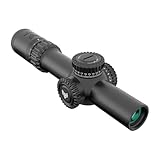
- 1-6x Magnification
- First Focal Plane and Compact Body (10)
Critical Specifications
- Weight: 19.4 ounces (noticeable on lightweight builds)
- Length: 10.6 inches (compact for feature set)
- Tube: 34mm diameter (more adjustment range)
- Eye Relief: 3.5-3.7 inches
- Click Value: 0.1 MIL or 0.25 MOA (choose your poison)
- Warranty: Lifetime, transferable
- Street Price: $550-$650
Born for Speed and Precision
During our local 3-gun match last July, I watched a young competitor running a Warhorse absolutely dominate the long-range stage. While others struggled with holdovers at odd distances, his FFP reticle kept everything consistent. He transitioned from 50 to 300-yard targets without touching his turrets, just holding and sending.
That’s the Warhorse’s strength—speed with precision. The Japanese glass surprises everyone who looks through it. At this price point, I expected compromise. Instead, I got clarity that rivals scopes costing twice as much.
Performance Beyond Price
The 34mm tube provides massive adjustment range—crucial for long-range work or switching between rifles. During testing, I moved this scope between three different platforms without running out of elevation adjustment.
Tracking proved bombproof. After 500+ rounds of testing, including some hot handloads that rattled my teeth, the scope held zero and tracked true. The locking turrets prevent accidental adjustments—essential when moving through brush or barriers.
The true surprise? Low-light performance. During a dawn coyote hunt, I could identify targets fifteen minutes before legal shooting light. That extra time to set up and prepare makes the difference between success and watching tails disappear.
Honest Limitations
At 19.4 ounces, it’s hefty. Mount this on an ultralight hunting rifle, and you’ll upset the balance. It belongs on heavier tactical or competition builds where weight isn’t critical.
The FFP reticle, while excellent for competition, gets tiny at 1x. In thick timber or for rapid close-range shooting, some hunters will struggle. It’s a tool optimized for one job—competitive shooting—and it excels there.
The magnification ring starts stiff. Really stiff. Like “need a throw lever on day one” stiff. It loosens with use, but expect a break-in period.
Perfect For
Competitive shooters, especially 3-gun and PRS competitors who need consistent holdovers across magnification ranges. Also excellent for tactical training where precision and repeatability matter more than weight. Hunters who primarily shoot from stable positions at varying ranges will appreciate the FFP flexibility.
3. EOTech Vudu 1-6×24 – Battle-Tested Toughness

- Vudu X 1-6x24mm SFP Riflescope – Ballistic Drop Reticle
- Starting from a solid piece of aircraft-grade aluminum and finished with high-quality AR-coated glass, Vudu X riflescopes are ultra-tough and crystal clear.
- Introductory models feature a second focal plane optic design, allowing for quick and accurate targeting at all magnification levels.
- The magnification power ring includes easy to see laser engraved numbering and a removable throw lever for quick transitions through the magnification range.
- Reliable – EOTECH is dedicated to providing rugged, reliable and innovative products that offer a true advantage to all who use them
Tactical Specifications
- Weight: 20.1 ounces (built solid)
- Length: 10.6 inches
- Tube: 30mm diameter
- Eye Relief: 3.5 inches (consistent throughout range)
- Click Value: 0.5 MOA
- Illumination: Green (easier on eyes in low light)
- Combat Proven: Yes
- Market Price: $1,100-$1,400
Military Heritage Meets Civilian Performance
The Vudu comes from EOTech’s military contracts, and it shows. This isn’t just tough—it’s “air assault qualified” tough. During my Ranger days, I watched EOTech optics survive things that would make other manufacturers cry. That DNA carries into the Vudu.
Last winter, I accidentally (honestly) knocked my rifle off the tailgate onto frozen ground. The Vudu hit first, bouncing off a rock. I expected disaster. Instead, zero held within 0.5 MOA. That’s the difference between military-spec and marketing speak.
Unexpected Excellence
The glass quality stunned me. EOTech isn’t known for premium glass like European manufacturers, but the Vudu’s Japanese optics are exceptional. Edge clarity, color transmission, light gathering—all top tier. During a prairie dog shoot in bright sunshine, I could spot hits and misses at 400 yards without a spotting scope.
The SR1 reticle design is brilliant simplicity. At 1x, it’s a speed ring with center dot—fast as a red dot. At 6x, holdover marks appear for precision work. No clutter, no confusion, just functional design.
Green illumination proves superior to red in most conditions. It’s easier on eyes during extended use and visible in more lighting conditions. Once you go green, red feels harsh and limited.
Practical Drawbacks
Exposed turrets will snag on everything—brush, pack straps, truck doors. Yes, they’re precise and tactile, but for hunting use, I prefer capped turrets. The Vudu is clearly optimized for tactical/competition use where exposed turrets are standard.
At 20+ ounces, it’s heavy. Mount this on a lightweight hunting rifle, and it’ll feel top-heavy and unbalanced. It needs a heavier platform to feel right.
Battery life disappoints compared to the Leupold. Heavy illumination use means changing batteries every few months versus yearly with other options.
Ideal Users
Law enforcement, tactical trainers, and serious home defense practitioners who value bomb-proof reliability over weight savings. Also excellent for competition shooters who prefer MOA adjustments and want military-grade toughness. Hunters in open country who shoot from stable positions will appreciate the precision.
4. Primary Arms SLx 1-6x ACSS Gen III – Maximum Value

- Silver-rated by the NTOA!
- 1-6x total magnification range Second Focal Plane (SFP) ACSS reticle designed for 5.56/5.45/.308
Budget-Friendly Specifications
- Weight: 16.9 ounces (reasonable for features)
- Length: 10.04 inches (compact package)
- Tube: 30mm diameter
- Eye Relief: 3.3-3.5 inches (adequate but not generous)
- Click Value: 0.5 MOA
- Reticle: ACSS (Advanced Combined Sighting System)
- Warranty: Lifetime
- Price Point: $300-$400
Punching Above Its Weight Class
Four years ago, I bought one of these for my nephew when he completed hunter safety. My expectations were low—it’s a $350 scope competing against options costing four times more. I figured it’d be adequate for a beginner.
I was wrong. Dead wrong.
This scope has survived teenage abuse that would warranty most optics. It’s been dropped, soaked, frozen, and generally mistreated. Yet it still holds zero and tracks true. The glass, while not Leupold-clear, is remarkably good for the price. I can ring steel at 500 yards consistently.
The ACSS Advantage
The ACSS reticle system is genuinely innovative. That chevron center provides faster target acquisition than traditional crosshairs. The built-in ranging system works—I’ve verified it on known-distance targets. Wind holds, moving target leads, and BDC marks are all there and accurate for common calibers.
At maximum magnification, you get a sophisticated targeting system. At 1x, it’s clean and fast. This reticle design alone is worth the price of admission.
Daylight-bright illumination surprised me. Many budget scopes claim “daylight bright” but wash out in actual sunlight. The SLx delivers true daylight visibility, though battery life suffers compared to premium options.
Budget Reality Check
The “1x” is more like 1.15x—noticeable but not deal-breaking. Both-eyes-open shooting works, just not as naturally as true 1x optics.
Edge clarity degrades at 1x, with visible distortion in the outer 15% of the image. As magnification increases, this improves significantly. At 6x, edge-to-edge clarity is decent.
The eye box gets tight at 6x. Really tight. Your cheek weld needs to be consistent, or you’ll see black shadowing creeping in. For bench shooting, this is manageable. For field positions, it requires practice.
Turret feel is adequate but not impressive. Clicks are audible but mushy compared to premium options. They track accurately, just without the satisfying mechanical precision of higher-end scopes.
Who Benefits Most
New shooters building their first serious rifle. Budget-conscious hunters who need capability without breaking the bank. Youth hunters (with supervision) learning marksmanship. Anyone wanting to try LPVO shooting without massive investment. It’s also perfect for truck guns or ranch rifles that need to work without babying.
Critical Decisions: LPVO vs. Alternative Sighting Systems
The Red Dot Question
Every week, someone asks whether they should run an LPVO or red dot with magnifier. Here’s my take after running both extensively:
Red dots excel at:
- Speed under 50 yards
- Unlimited eye relief
- Both-eyes-open shooting
- Lightweight builds
- Battery life (years vs. months)
LPVOs dominate for:
- Versatility across distances
- Precision shot placement
- Target identification
- Wind hold references
- Professional appearance
For pure home defense inside 50 yards, red dots win. For everything else, LPVO versatility proves superior. The ability to dial from 1x to 6x seamlessly beats flipping a magnifier in and out.
Fixed Power Alternatives
Some argue a fixed 4x or 6x scope is simpler and more reliable. They’re not wrong, but they’re not right either. Fixed magnification means compromise—too much for close work, not enough for distance.
I’ve guided hunters using fixed 4x scopes. They work… adequately. But watching them struggle with close shots in timber or wish for more magnification on distant animals validates the LPVO concept. Variable magnification isn’t just convenient—it’s the difference between “good enough” and “perfect for the situation.”
Installation Excellence: Do It Right Once
The Mount Matters More Than You Think
A $1,500 scope on a $30 mount is like putting worn tires on a sports car. Invest in quality:
Premium Choice: Scalarworks LEAP or Badger Ordnance Condition One
Value Option: Aero Precision Ultralight or Warne Mountain Tech
Budget Pick: Primary Arms or Vortex Pro Series
Professional Mounting Process
Twenty-five years of mounting scopes taught me this process:
- Degrease Everything: Acetone or denatured alcohol on all surfaces. Oil prevents proper torque and causes shift.
- Level the Rifle: Use a level on the receiver, not the rail. Rails aren’t always true.
- Lap the Rings (if needed): Check alignment with bars first. Misaligned rings cause tube stress and tracking issues.
- Position for Natural Shooting: Mount the rifle naturally, adjust scope position for proper eye relief in YOUR shooting position.
- Level the Reticle: Use a plumb line at 100 yards. Bubble levels on scopes lie more than politicians.
- Torque Properly: 15-20 inch-pounds for rings usually. Use a torque wrench—guessing causes problems.
- Thread Lock Wisely: Blue Loctite on base screws only. Ring screws need to move for adjustments.
Zero Strategy That Works
Don’t waste ammunition or barrel life. My proven process:
- Bore sight at home (save ammo at the range)
- Shoot one round at 25 yards (get on paper)
- Adjust to center
- Move to 100 yards
- Fire three-round group
- Adjust based on group center (not individual shots)
- Confirm with another three-round group
- Fine-tune if needed
For hunting rifles, I prefer a 200-yard zero. Provides point-blank range to 250 yards with most cartridges—perfect for field use without dialing.
Field Maintenance: Keep It Running
Daily Care Protocol
Your scope needs less maintenance than you think, but what it needs is critical:
In the Field:
- Wipe lenses with included cloth (keep it accessible)
- Check mount screws monthly
- Verify zero if dropped or impacted
- Keep covers on when not shooting
Post-Hunt:
- Clean lenses properly (breath fog, then wipe—never dry)
- Inspect for debris in turrets
- Apply light coat of oil to metal surfaces
- Store with caps on
Common Problems, Simple Solutions
Won’t Hold Zero: Check rings first. Loose or misaligned rings cause 90% of “scope problems.”
Fogging: External fog is temperature differential—let it acclimate. Internal fog means broken seals—warranty claim time.
Sticky Turrets: Usually debris. Flush with lighter fluid, work turrets repeatedly, add tiny drop of gun oil.
Unclear Image: Check your diopter adjustment first. Most “bad glass” is actually wrong diopter setting for your eyes.
The Bottom Line: Making Your Decision
After five months and thousands of rounds, here’s my straightforward advice:
For Professionals and Serious Hunters: Get the Leupold VX-6HD. Yes, it’s expensive. It’s also the last scope you’ll ever need to buy. The glass quality, reliability, and features justify the investment for those who depend on their equipment.
For Competition Shooters: The Swampfox Warhorse delivers FFP precision at a fraction of typical FFP prices. It’s built specifically for competition needs and excels there.
For Tactical/Defense Use: The EOTech Vudu brings military-grade toughness and proven reliability. When your life might depend on your optic, this is cheap insurance.
For Budget-Conscious Buyers: The Primary Arms SLx provides 80% of premium scope performance at 25% of the price. It’s the best value in optics today.
Remember what I learned the hard way in Afghanistan: good enough equipment isn’t good enough when it matters. Choose quality you can afford, maintain it properly, and practice until using it becomes instinct.
Whatever you choose, get out and shoot it. A lot. In different conditions. From different positions. Because when that moment of truth arrives—whether it’s a trophy animal, a competition stage, or a defensive situation—you need absolute confidence in your equipment and abilities.
The wilderness doesn’t care about your schedule, and neither does opportunity.
Practice makes permanent, so practice it right.
Stay sharp out there,
Flint Marshall
Northern Montana
Questions about choosing the right LPVO for your specific needs? Want to share your own field experiences with these scopes? Drop a comment below or check out more hard-earned wisdom at Moosir.com. Remember—respect the game, respect the land, respect yourself.