Two years ago, I watched a client miss a coyote at 60 yards – not because he couldn’t shoot, but because his bargain-bin red dot had given up the ghost in a light drizzle. That afternoon cost him a $500 bounty on a problem predator that had been killing calves. Since then, I’ve made it my business to torture-test every red dot that shows promise at the sub-$200 price point.
Enter the Vortex SPARC series. After running both the SPARC AR and SPARC 2 through everything Montana and military experience could throw at them – from -25°F blizzards to dusty summer varmint shoots – I’ve got answers you won’t find in marketing materials. These aren’t safe-queen reviews; this is what happens when working optics meet working rifles.
Quick Performance Summary
| Specification | SPARC AR | SPARC 2 |
| Weight (with mount) | 7.5 ounces | 5.9 ounces |
| Overall Length | 2.9 inches | 3.1 inches |
| Eye Relief | Unlimited | Unlimited |
| Objective Diameter | 22mm | 22mm |
| Dot Size | 2 MOA | 2 MOA |
| Battery Runtime | 300-5,000 hours | 300-6,000 hours |
| Power Source | AAA battery | CR2032 |
Why SPARC? Understanding the Platform
SPARC stands for Speed Point Aiming for Rapid Combat – military marketing speak that actually means something. During CQB training at Fort Benning, we learned that target acquisition speed at 0-100 yards determines outcomes more than precision. Both these optics were designed around that principle, and it shows.
The acronym might sound tactical, but these optics earn their keep on ranch rifles and home defense setups just as well as they do on deployment. Last spring, I used my SPARC AR-equipped rifle to stop a rabid raccoon charging toward my chicken coop. That 2 MOA dot found its mark instantly – no magnification needed, no complex reticles to interpret. Just point, shoot, problem solved.
Glass Quality: Where Budget Meets Performance
Here’s what Vortex got right: they didn’t try to do too much with the glass. Both models feature fully multi-coated lenses that deliver clarity where it counts. Are they Nightforce? No. Do they need to be for their intended purpose? Absolutely not.
During a late-season whitetail hunt last November, I ran both optics side-by-side on identical rifles. Morning frost, breath fog, and light snow – conditions that reveal any weakness in lens coatings. Both SPARCs maintained usable clarity throughout the day. The anti-reflective coatings prevented that telltale glint that’s given away more than one hunter’s position.
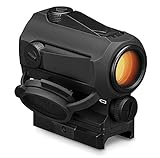
- The updated SPARC features rugged construction that’s still compact, with a lightweight form-factor. The 2 MOA dot is quick to acquire in close ranges, but fine enough for pin-point accuracy at extended ranges.
What impressed me most was shooting into low winter sun while checking zeros. Lesser optics wash out completely in these conditions. Both SPARCs maintained dot visibility, though I had to crank brightness to near maximum. That multi-coating isn’t just marketing – it’s functional technology that works.
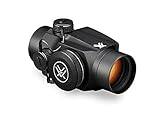
- The highly compact, daylight bright Sparc II is packed with performance features and lends itself to a variety of platforms.
The nitrogen purging and O-ring sealing proved their worth during an unexpected dunking. While crossing Tenderfoot Creek during spring runoff, my pack (with SPARC 2 mounted rifle inside) took a swim. Twenty minutes submerged in 38-degree snowmelt, and the lens stayed crystal clear internally. That’s the difference between true waterproofing and water resistance.
The 2 MOA Dot: Finding the Sweet Spot
Both models sport a 2 MOA dot, and that’s no accident. During my Ranger days, we tested everything from 1 MOA to 4 MOA dots in combat conditions. The 2 MOA proved optimal for versatility – fine enough for precision shots on prairie dogs at 150 yards, bold enough for rapid acquisition in low light.
My son learned to shoot with a SPARC 2 on his .22. That 2 MOA dot taught him the fundamentals of sight picture without overwhelming his field of view. Now he can consistently hit steel at 200 yards with his .223 – same optic, different rifle. That’s the beauty of standardized dot size across platforms.
Battery Life: The Real Numbers
Vortex claims “up to” 5,000 hours for the SPARC AR and 6,000 for the SPARC 2 at minimum brightness. Let’s talk reality. Running at setting 6 (my standard daylight setting), I get roughly 800 hours from the SPARC AR’s AAA battery and about 1,000 from the SPARC 2’s CR2032.
The 12-hour auto-shutoff has saved my bacon more than once. After a long day guiding hunters, the last thing I remember is checking rifles. Without that auto-shutoff, I’d be changing batteries monthly instead of annually.
Here’s the practical difference: AAA batteries are everywhere. Gas stations, truck stops, even that ancient general store in Wisdom, Montana stocks them. CR2032s? You’d better plan ahead or know where the nearest town with a real pharmacy is. That said, I keep spares of both in my range bag, truck console, and pack. An ounce of prevention and all that.
The SPARC 2’s battery compartment design wins hands down. Unscrew the cap, swap the battery, done. No removing the optic from the rifle, no losing zero. The SPARC AR requires more disassembly, though its design keeps the battery compartment lower and out of the way.
Durability Testing: Beyond the Brochure
“Shockproof” is a bold claim. To test it, I mounted the SPARC AR on my truck gun – a beat-up AR that rides in a dusty ranch truck over roads that barely deserve the name. After six months and roughly 3,000 miles of Montana “roads,” it held zero.
The real test came during a prairie dog shoot in July. Rifle fell off the tailgate onto rocky ground – a good 4-foot drop landing optic-first. My heart sank, wallet cringed. Checked zero: dead on. That’s when I stopped babying these optics.
Both models survived my freezer test: 24 hours at -20°F, then immediately into 100°F summer heat. No internal fogging, no shift in zero, no battery failures. This simulates the temperature shock of leaving a warm vehicle to hunt in extreme cold – a regular occurrence during Montana winters.
The SPARC 2 edges ahead in protection with its tethered turret caps. I’ve lost too many caps over the years to count. Those little tethers are like insurance for the forgetful. The SPARC AR’s caps aren’t secured, and I’ve already replaced one set.
Size and Weight: Field Reality
On paper, 1.6 ounces doesn’t matter. On mile 10 of an elk hunt at 9,000 feet, everything matters. The SPARC 2’s lighter weight becomes noticeable on long carries, especially on lighter rifles where balance matters more.
The SPARC AR’s taller profile (due to the bottom-mounted battery compartment) can interfere with some backup iron sights. Learned this mounting one on a client’s rifle with fixed front sight. The SPARC 2’s lower profile plays nicer with various configurations.
However, the SPARC AR’s narrower profile snags less on gear. The SPARC 2’s side-mounted controls add width that’s caught on my pack straps more than once. Pick your compromise.
Brightness Settings: Night and Day
The SPARC AR’s 12 brightness settings versus the SPARC 2’s 10 might seem like marketing numbers, but those extra two settings matter in specific conditions. Settings 11 and 12 on the SPARC AR are bright enough for full daylight on snow – conditions where the SPARC 2’s maximum can wash out.
Both offer night vision compatible settings (the two lowest), though calling them “compatible” is generous. They work, but dedicated night vision optics are superior. Still, for occasional predator control under NODs, they suffice.
Real-world tip: I run both at setting 6 for general use, setting 8-9 for bright daylight, and setting 3-4 for dawn/dusk. The controls on both are positive and tactile, even with winter gloves.
Mounting Flexibility: The Hidden Advantage
This is where the SPARC 2 truly shines. Three mounting heights included means one optic can serve multiple rifles. I’ve moved mine between:
- AR-15 (lower 1/3 co-witness)
- Shotgun (low mount for turkey hunting)
- .22 trainer (absolute co-witness)
The SPARC AR gives you two heights – absolute and lower 1/3 co-witness. Perfect for AR platforms, limiting for everything else. If you’re buying one optic for one rifle, this might not matter. For those of us with a safe full of options, versatility has value.
Pro tip from painful experience: Use blue Loctite on mounting screws. Not red (permanent), not nothing (asking for trouble), but blue. It prevents loosening from recoil while allowing removal when needed.
The Discontinued Dilemma
Here’s the elephant in the room: Vortex discontinued the SPARC 2 around 2018, replacing it with the Crossfire. Finding new SPARC 2s gets harder yearly, and prices reflect scarcity. The SPARC AR remains in production.
Why does this matter? Warranty support. Vortex’s VIP warranty is legendary – they’ve replaced optics I’ve thoroughly destroyed, no questions asked. But discontinued models may get replaced with current production equivalents rather than identical units. Something to consider for long-term use.
Field Performance: Where Theory Meets Reality
Coyote Hunting: Both optics excel here. Quick acquisition for called-in dogs, sufficient precision for 200-yard shots. The unlimited eye relief means shooting from awkward positions (truck windows, hillside prone) remains viable.
Home Defense: The SPARC AR lives on my home defense rifle. Why? Simplicity. No magnification to fumble with, no complex reticles to interpret under stress. The auto-on feature means it’s ready when needed. Practice makes permanent, but simple makes survivable.
Competition: Used the SPARC 2 in several 3-gun matches. It’s fast, accurate enough for the targets, and reliable. Won’t win against guys running $600 optics, but it won’t be the reason you lose either.
Training Classes: Both have survived multiple carbine courses. Round counts exceeding 1,000 rounds per weekend, drops, dings, and harsh treatment from students. They keep working when lesser optics fail.
Environmental Extremes: Montana Testing Ground
Our ranch sits at 6,000 feet where weather changes faster than political promises. These optics have seen:
- Temperature swings of 60°F in 12 hours
- Horizontal rain/sleet/snow
- Dust storms that’d make Afghanistan jealous
- Humidity from 5% to 95% in the same day
Both survived, though the SPARC 2’s superior sealing showed during extreme humidity changes. The SPARC AR occasionally showed slight internal condensation that cleared within minutes. Not a failure, but worth noting.
Making the Choice: Practical Recommendations
Choose the SPARC AR if:
- You’re dedicated to the AR platform
- AAA battery availability matters
- You prefer a taller, narrower profile
- Maximum brightness for snow/desert conditions is critical
- You want currently-produced warranty support
Choose the SPARC 2 if:
- You need multi-platform versatility
- Weight savings matter
- You can find one at reasonable price
- Tethered caps and side controls appeal
- You value the lower profile design
The Bottom Line: Both Win, Your Needs Decide
After thousands of rounds and countless field hours, both optics have earned permanent places in my arsenal. The SPARC 2 edges ahead on versatility and refinement, but finding one at reasonable prices grows challenging. The SPARC AR remains available, proven, and purpose-built for America’s rifle.
Neither will disappoint a shooter who understands their limitations. These aren’t precision long-range optics – they’re working red dots for working guns. They bridge the gap between airsoft-grade junk and military contract prices, delivering 90% of the performance at 30% of the cost.
My grandfather used iron sights exclusively and never complained. These optics would have amazed him. They should amaze us too – reliable, affordable technology that makes good shooters better and average shooters capable. In the end, that’s all we can ask from any tool.
Remember: respect the game, respect the land, respect yourself. And respect your equipment by choosing quality you can afford over features you don’t need.
Practice makes permanent, so practice it right.
Stay sharp, Flint Marshall
Looking to upgrade your rifle’s capability? Check out my guides on choosing red dots for different applications, understanding MOA for practical shooting, and my tested recommendations for budget-conscious marksmen. Quality doesn’t always mean expensive – it means fit for purpose.
Field Notes: Quick Answers
Is night vision compatibility worth it? For dedicated night shooting, get dedicated night vision optics. These settings work for occasional use but aren’t optimal. I use them maybe twice yearly for predator control.
Which holds zero better? Both maintained zero through my testing. The mounting system quality matters more than the optic itself. Proper torque and thread locker prevent more problems than they solve.
Can these handle magnum recoil? I’ve run the SPARC AR on a .458 SOCOM and .350 Legend with no issues. The SPARC 2 lives on a 12-gauge turkey gun part-time. Both handle recoil that would destroy lesser optics.
What about customer service? Vortex’s warranty is legendary for good reason. I’ve made two claims over the years (both my fault), and both were handled quickly with no interrogation. That peace of mind has value beyond the purchase price.