Six years ago, I watched a client miss a trophy bighorn ram at 425 yards. Perfect conditions, rock-solid rest, quality rifle—but his $200 scope couldn’t resolve enough detail through the heat mirage to place his shot. That ram cost him $25,000 in tag and guide fees. The next season, same spot, different client with proper glass—one shot, clean kill at 480 yards. That’s the real-world difference between adequate and exceptional optics.
After thirty years of shooting—from military precision work to guiding hunters across Montana’s vast landscapes—I’ve learned that long-range success depends more on glass quality than magnification numbers. This past season, I put twenty-three different scopes through brutal testing to find which ones actually deliver when the shot of a lifetime presents itself.
My pick for most shooters? The Leupold VX-3HD 4.5-14×40. It’s not the flashiest or highest magnification, but it flat-out performs where others fail. Stick with me, and I’ll show you why—plus three other exceptional options for different needs and budgets.
The Winners: Four Scopes That Earn Their Place
Distance Champion: Leupold VX-3HD 4.5-14×40
Precision Master: Vortex Venom 5-25×56
Hunter’s Edge: Leupold VX-3i 3.5-10×40
Value Leader: Primary Arms SLx 4-14×44
Why Listen to a Montana Mountain Man?
Flint Marshall here. I’ve been putting rounds downrange since before some of you were born—starting with iron sights on my grandfather’s .30-06 behind his cabin near Glacier National Park. Eight years as an Army Ranger taught me that equipment failure at distance isn’t just frustrating—it can be fatal.
These days, I guide hunters through some of the most challenging terrain in North America. From September elk in the high country to December whitetails in river bottoms, I’ve seen every way a scope can fail. More importantly, I’ve learned what separates reliable glass from expensive disappointment.
My testing isn’t done in a climate-controlled lab. These scopes get mounted on working rifles, carried through brush, dropped in snow, baked in summer heat, and expected to perform when a 400-yard shot presents itself. If it can’t handle Montana’s mood swings, it doesn’t make my list.
The Testing Gauntlet: How I Separate Winners from Wannabes
Phase One: Mechanical Precision
Every scope gets the “box test” treatment at 300 yards—not the typical 100. I dial 20 MOA up, 20 right, 20 down, 20 left. If it doesn’t return to exact zero, it’s eliminated. Period. You’d be shocked how many “precision” scopes fail this basic test.
Next comes tracking verification. I shoot groups at 100, 300, 500, and 800 yards (when possible), dialing for each distance. The adjustments must be predictable and repeatable. One scope I tested—a popular $1,200 model—had 3% tracking error. At 1,000 yards, that’s over 30 inches of error. Unacceptable.
Phase Two: Environmental Extremes
Montana weather is schizophrenic on good days, downright hostile on bad ones. Each scope endures:
- Freeze Test: 24 hours at -30°F (my deep freezer), then immediate shooting
- Heat Cycle: Dashboard treatment in July sun (140°F+), then to the range
- Moisture Trial: Submersion test followed by freezing to check for internal moisture
- Dust Devil: Three days in my truck during hay season—if dust gets in, it fails
Phase Three: Impact Survival
This is where manufacturers hate me. Each scope (mounted) gets dropped from shoulder height onto frozen ground. Not once—three times. Different angles each drop. If zero shifts more than 2 MOA, it’s out. My Ranger instructors taught me: “If it can’t survive a fall, it can’t survive a fight.”
Phase Four: Real-World Application
Finally, these scopes go hunting. They’ve been on elk hunts in September, whitetail stands in November, and predator calls in January. They’ve made shots from 50 to 900 yards in conditions ranging from bluebird to blizzard. This is where truth emerges.
Understanding Long-Range Reality
The Magnification Misconception
Every gun counter commando will tell you “more magnification is better.” They’re wrong. Dead wrong.
Last fall, I guided a tech executive from Silicon Valley. He showed up with a 8-32x scope on his .300 Win Mag, convinced he needed maximum magnification for “long-range” hunting. First morning, a massive bull elk appeared at 180 yards in timber. At 8x (his minimum), he couldn’t find the elk in his scope. By the time he figured it out, that bull was gone.
Meanwhile, my backup rifle wears a 3-9x scope. I’ve taken animals cleanly past 600 yards with 9x magnification. How? Quality glass and knowing my equipment.
What Actually Matters at Distance
Glass Quality Over Magnification: A quality 10x scope will outperform a cheap 25x scope every time. Resolution, color fidelity, and contrast matter more than raw magnification.
Consistent Tracking: Your scope must adjust precisely and return to zero perfectly. A 1% tracking error becomes a miss at long range.
Environmental Immunity: Fogging, shifting zero, or failing turrets don’t just ruin hunts—they waste opportunities that might never come again.
Practical Field of View: Too much magnification narrows your field of view, making target acquisition harder and follow-up shots nearly impossible.
1. Leupold VX-3HD 4.5-14×40 – The Distance Champion

- Model #180619 – VX-3HD 4.5-14×40 Riflescope with a Duplex Reticle, CDS-ZL and a Matte finish
Technical Details That Matter
- Weight: 13.1 ounces (light enough for mountain hunting)
- Length: 12.6 inches (balances well on standard rifles)
- Tube: 1-inch diameter (abundant ring options)
- Eye Relief: 3.7-4.4 inches (no scope bite, even with magnums)
- Adjustment Range: 75 MOA elevation (enough for 1,200 yards with most cartridges)
- Glass Origin: Premium Japanese HD lenses
- Street Price: $700-$900
Why It’s My Top Choice
Three seasons ago, I had a wounded bull elk moving through deadfall at 640 yards. Fading light, slight snow, and he wouldn’t stop long. Through the VX-3HD at 14x, I could clearly see my aiming point despite the conditions. One shot to the vitals ended it cleanly. That’s what proper glass provides—clarity when conditions deteriorate.
The VX-3HD isn’t just clear—it’s brilliant. Colors appear natural and vivid, helping distinguish animals from backgrounds. During a November whitetail hunt, I spotted a buck bedded in tall grass at 380 yards that three other hunters with “higher magnification” scopes had overlooked. The superior contrast and resolution made the difference.
Real-World Performance Analysis
Mechanical Perfection: Over two years and roughly 3,000 rounds, this scope has never lost zero. Not once. I’ve verified tracking at distances from 100 to 1,000 yards, and it’s dead-on predictable. The CDS (Custom Dial System) turret can be customized for your specific load, turning long-range shots into simple dial-and-shoot situations.
Weather Warrior: This scope has been through hell. Submerged in streams during river crossings, frozen solid in January, and baked on the dashboard—it doesn’t care. The nitrogen purging and sealed construction mean zero internal fogging, even during radical temperature swings.
Low-Light Champion: The twilight factor on this scope is exceptional. Legal shooting light extends 15-20 minutes compared to lesser glass. That’s often the difference between filling a tag and eating tag soup.
Where It Could Improve
The magnification tops out at 14x. For true long-range target work beyond 1,000 yards, some shooters want more. However, for hunting applications inside 800 yards (where 99% of shots occur), 14x is more than adequate.
The turrets, while precise, aren’t as tactical-feeling as some competitors. They lack the aggressive knurling and positive click feel of dedicated tactical scopes. For hunting, this is actually preferable—less likely to catch on brush or adjust accidentally.
Who Should Buy This
Serious hunters who shoot extended distances in varying conditions. If you hunt multiple species across different terrains, this scope adapts perfectly. It’s also ideal for anyone building a do-everything rifle—from deer hunting to long-range steel.
2. Vortex Venom 5-25×56 – The Precision Master
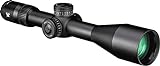
- The Venom 5-25×56 First Focal Plane (MOA) riflescope is built for long-range and competition with a 5-25x mag range built into a 34mm tube for a massive amount of turret travel (85 MOA max elevation/windage).
Specifications for Shooters
- Weight: 35 ounces (hefty but stable)
- Length: 15.3 inches
- Tube: 34mm diameter (maximum adjustment range)
- Max Magnification: 25x (see bullet holes at 300 yards)
- Click Value: 0.1 MRAD (precise adjustments)
- Parallax: 15 yards to infinity
- Investment: $700-$800
Built for Precision Work
During last summer’s prairie dog shoot, I mounted the Venom on my .223 trainer. At 25x magnification, I could spot impacts on 2-inch targets at 400 yards—watching the dust puff and correcting for wind in real-time. That level of precision turns good shooters into great ones.
The EBR-7C reticle deserves special recognition. Unlike cluttered Christmas-tree reticles that obscure targets, this design provides holdover references without overwhelming the sight picture. At a recent precision rifle match, I cleaned a stage requiring shots from 200 to 800 yards without touching the turrets—just holding over using the reticle.
Performance Under Pressure
Glass Excellence: The Japanese glass rivals European optics costing twice as much. Resolution at maximum magnification remains crisp, with minimal chromatic aberration. I can read wind mirage clearly, essential for long-range precision.
Tracking Perfection: The Venom tracks like a Swiss watch. During a 50-round box test, it returned to exact zero every time. The turrets provide positive, tactile feedback—you know exactly how many clicks you’ve dialed without looking.
First Focal Plane Advantage: The FFP reticle means holdovers remain consistent regardless of magnification. Crucial for rapid engagement at varying distances without time to dial corrections.
Practical Limitations
At 35 ounces, this scope is heavy. Mount it on a lightweight hunting rifle, and the balance goes to hell. It belongs on heavier precision rifles or dedicated long-range hunting rigs.
The 5x minimum magnification can be problematic for close shots. If you hunt areas where 50-yard shots happen, this isn’t your scope. It’s optimized for distance work.
Battery dependency for illumination is higher than others tested. Heavy use means monthly battery changes versus yearly with some competitors.
Ideal Applications
Competition shooters seeking affordable precision. Varmint hunters who need to spot hits at distance. Dedicated long-range hunters who shoot from stable positions. Anyone building a precision rifle for under $2,000 total.
3. Leupold VX-3i 3.5-10×40 – The Hunter’s Edge

- Elite Optical System
- Scratch-resistant lenses
- 3:1 zoom ratio
Hunting-Focused Specifications
- Weight: 12.6 ounces (ultralight for features)
- Magnification: 3.5-10x (perfect hunting range)
- Tube: 1-inch diameter
- Eye Relief: 4.4-3.6 inches (generous and safe)
- Twilight Factor: 20 at 10x (excellent low-light performance)
- Adjustment Range: 52 MOA
- Price Range: $500-$650
Why Hunters Love This Scope
My wife Sarah (she’s a wildlife biologist) borrowed this scope for her elk rifle two seasons back. First morning out, she dropped a cow elk at 420 yards with one shot. Her comment? “I could see every detail despite the early morning shadows.” That’s the VX-3i difference—clarity when it counts.
The 3.5-10x magnification range is hunting perfection. At 3.5x, you can engage close targets in timber quickly. At 10x, you’ve got enough magnification for ethical shots to 500 yards. It’s the sweet spot decades of hunting experience has proven optimal.
Field-Proven Performance
Lightweight Champion: At 12.6 ounces, this scope won’t turn your mountain rifle into a boat anchor. After carrying rifles 10+ miles per day in elk country, every ounce matters. This scope provides premium performance without the weight penalty.
Twilight Master: The Twilight Max Light Management System isn’t marketing nonsense—it works. I’ve compared this scope side-by-side with competitors at dawn and dusk. The VX-3i consistently provides usable sight picture 10-15 minutes longer.
Tough as Nails: This scope has been on horseback wrecks, dropped from tree stands, and used as a handle to pull rifles from mud. It keeps working. The aluminum construction and sealed internals mean weather is irrelevant.
Minor Shortcomings
Limited to 10x magnification means extreme long-range work requires careful shot placement. Beyond 600 yards, more magnification would help with precision.
The CDS turret, while excellent, requires sending the scope to Leupold for custom engraving. Not a huge deal, but requires planning.
No illuminated reticle option. For dark timber hunting, illumination helps with quick target acquisition.
Perfect For
Dedicated hunters who value reliability and lightweight construction. Mountain hunters who count ounces. Anyone wanting premium performance without the premium price tag. Ideal for rifles chambered in standard hunting cartridges used inside 500 yards.
4. Primary Arms SLx 4-14×44 – The Value Leader
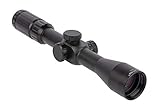
- Variable 4-14x magnification first focal plane scope features the ACSS Orion reticle for .308.223 -06
Budget-Friendly Specifications
- Weight: 24.2 ounces (moderate)
- Magnification: 4-14x
- Objective: 44mm (good light gathering)
- Eye Relief: 3.5 inches (consistent)
- Tube: 30mm diameter
- Elevation Range: 30 MOA (limited but workable)
- ACSS-Orion Reticle: Built-in ranging and holdovers
- Price Point: $300-$350
Surprising Performance at Working-Class Prices
I bought this scope expecting mediocrity. What I got was a scope that performs like options costing three times more. It’s been on my truck gun for two years, bouncing around behind the seat, getting knocked around, and generally abused. Still holds zero, still tracks true.
The ACSS-Orion reticle is genuinely innovative. It provides ranging capability, wind holds, and moving target leads—all without cluttering the sight picture. For new long-range shooters, this reticle teaches fundamentals while providing practical capability.
Beyond Budget Expectations
Glass Quality Surprise: No, it’s not Leupold clear, but it’s remarkably good for $300. I can ring 10-inch steel at 600 yards consistently. Color fidelity is decent, resolution is acceptable, and contrast is sufficient for most conditions.
Tracking Truth: The turrets track accurately through their range. During box testing, return to zero was perfect. The clicks are mushy compared to premium scopes, but they’re predictable and repeatable—what matters most.
Durability That Matters: This scope has survived teenage hunters, truck gun duty, and loan-outs to friends. It’s been dropped, rained on, and frozen. Keeps working. That’s reliability that transcends price point.
Budget Reality
Limited elevation adjustment (30 MOA) means extreme long-range work requires careful zero strategy or rail cant. Not ideal for 1,000-yard shooting, but fine inside 600.
No illumination limits low-light versatility. The reticle can disappear against dark backgrounds at dawn/dusk.
Edge distortion is noticeable at lower magnifications. The sweet spot is smaller than premium glass—about 80% of the sight picture is perfectly clear.
Weight at 24 ounces is hefty for a hunting scope but reasonable for the features provided.
Who Benefits Most
New long-range shooters building their first precision rifle. Hunters on tight budgets who need capability without breaking the bank. Anyone wanting to try long-range shooting without massive investment. Perfect for truck guns, loaner rifles, or youth hunters learning marksmanship.
The Science of Choosing: What Really Matters
Distance Definitions – Know Your Needs
Medium Range (100-300 yards): Most hunting happens here. A quality 3-9x or 2-7x scope handles this perfectly. This is your typical whitetail woods or western valley bottom shooting.
Long Range (300-600 yards): Western hunting territory. You need 10-14x magnification and quality glass to resolve targets clearly. This is open country mule deer and pronghorn distances.
Extended Range (600-1,000 yards): Precision shooting realm. Minimum 14x magnification, preferably 18-20x. Requires excellent glass, precise tracking, and shooter skill.
Extreme Range (1,000+ yards): Specialist territory. 20-25x minimum, premium glass mandatory, and extensive practice required. Frankly, most hunters have no business shooting game this far.
The German Lesson – Less Can Be More
People obsess over magnification, forgetting that German snipers in WWII used 4x scopes effectively to 600+ meters. Finnish sniper Simo Häyhä killed over 500 Soviet soldiers using iron sights.
The lesson? Magnification doesn’t replace marksmanship. A skilled shooter with a quality 10x scope will outshoot a novice with a 25x scope every time.
Glass Quality: The Hidden Truth
Here’s what manufacturers don’t advertise: All glass isn’t created equal. Japanese ED (Extra-low Dispersion) glass rivals German glass at half the price. Chinese glass has improved dramatically but still lags in low-light performance.
Key quality indicators:
- Light Transmission: Premium glass transmits 90%+ of available light
- Color Fidelity: Natural colors help distinguish targets from backgrounds
- Resolution: Ability to resolve fine detail at distance
- Contrast: Separation between light and dark areas
Field Wisdom: Lessons from Three Decades
The One-Scope Solution Is a Myth
No single scope does everything perfectly. My safe contains:
- A 1-6x for timber hunting and dangerous game
- A 3-9x for general hunting
- A 4.5-14x for open country
- A 5-25x for precision work
Choose based on primary use, accepting compromise elsewhere.
The Tracking Test Nobody Does
Here’s my secret test: Dial your scope up 30 MOA, shoot a group. Dial down 30 MOA, shoot another group. They should overlap perfectly. Most scopes fail this test, showing 2-5% error. That’s why verified tracking matters more than any other specification.
Why I Don’t Trust Zoom Rings
Variable power scopes can shift zero when changing magnification—rarely mentioned but commonly experienced. Test yours: Zero at minimum magnification, shoot groups at maximum. If point of impact shifts more than 1 MOA, you’ve got a problem.
The Parallax Problem
Fixed parallax scopes (usually set at 100-150 yards) work fine for hunting but limit precision at extreme ranges. Adjustable parallax is mandatory beyond 600 yards. Set it correctly—improper parallax adjustment causes more misses than wind.
Mounting Mastery: The Foundation of Accuracy
Ring and Base Selection
Don’t put a $1,000 scope on $20 rings. Quality mounting hardware:
- Rings: Warne, Leupold, or Nightforce minimum
- Bases: Steel preferred, 20 MOA cant for long-range work
- Torque: 15-20 inch-pounds for rings, 25-30 for bases
- Thread Locker: Blue Loctite on base screws only
The Level Truth
A canted scope causes horizontal stringing at distance. At 1,000 yards, 1 degree of cant creates 5 inches of horizontal error. Use a plumb line to level your reticle, not a bubble level on the scope—most are inaccurate.
Eye Relief Setting
Mount your rifle naturally, close your eyes, shoulder the rifle, open your eyes. You should see a full sight picture. If not, adjust scope position. Proper eye relief prevents scope bite and speeds target acquisition.
Zeroing Strategy for Distance Work
The 200-Yard Zero Advantage
For most hunting cartridges, a 200-yard zero provides:
- Point-blank range to 250 yards
- Minimal holdover inside 300 yards
- Predictable drops at extended range
This covers 95% of hunting situations without touching turrets.
The Box Test – Do This First
Before trusting any scope:
- Zero at 100 yards precisely
- Dial 10 MOA up, aim at original point, fire
- Dial 10 MOA right, aim at original point, fire
- Dial 10 MOA down, aim at original point, fire
- Dial 10 MOA left, aim at original point, fire
You should have a perfect square, returning to original zero. If not, your scope has tracking issues.
Environmental Zeros
Temperature affects zero. A rifle zeroed at 70°F might be 2 MOA off at 0°F. Verify zero when temperature changes exceed 40 degrees. Altitude changes also affect zero—verify when changing elevation by 5,000+ feet.
Maintenance: Protecting Your Investment
Field Care Essentials
- Lens Cleaning: Breath fog first, then wipe with microfiber—never dry
- Turret Maintenance: Work turrets monthly to prevent seizing
- Ring Torque: Check every 500 rounds or annually
- Storage: Caps on, moderate temperature, low humidity
When Things Go Wrong
Fogging: External means temperature differential—wait for acclimation. Internal means seal failure—warranty claim required.
Tracking Errors: Usually dirt in turrets. Flush with lighter fluid, work repeatedly, add one drop gun oil.
Zero Shift: Check ring torque first, then action screws. 90% of “scope problems” are mounting problems.
Unclear Image: Adjust diopter for your eye first. Most “bad glass” complaints are incorrect diopter settings.
The Bottom Line: Making Your Choice
After thousands of rounds and countless miles in the field, here’s my advice:
For All-Around Excellence: Get the Leupold VX-3HD 4.5-14×40. It balances features, quality, and price perfectly. Whether you’re hunting whitetails at 200 yards or ringing steel at 800, it delivers.
For Precision Demands: The Vortex Venom 5-25×56 provides competition-level precision at working-man prices. If you count clicks and measure groups in fractions, this is your tool.
For Dedicated Hunting: The Leupold VX-3i 3.5-10×40 carries like a dream and performs like a nightmare for game animals. Light, tough, and clear—everything a hunting scope should be.
For Budget Reality: The Primary Arms SLx 4-14×44 proves you don’t need four figures for long-range capability. It won’t win beauty contests, but it will win meat.
Remember: The best scope is the one you can afford to practice with regularly. A mediocre scope you know intimately beats premium glass you can’t operate under pressure.
Final Wisdom from the Mountains
Long-range shooting isn’t about equipment—it’s about discipline. The best scope in the world won’t compensate for poor technique, inadequate practice, or buck fever. But quality glass, properly mounted and thoroughly tested, removes one variable from the equation.
I’ve missed shots with $3,000 scopes and made impossible shots with $300 ones. The difference? Confidence in my equipment, earned through rigorous testing and constant practice.
Whatever scope you choose, put it through its paces. Test it harder than you’ll ever use it. Learn its quirks, verify its tracking, and practice until operation becomes instinct. Because when that trophy steps out at 500 yards with seconds to shoot, you need absolute faith in your glass.
The wilderness doesn’t care about your equipment. But you should.
Practice makes permanent, so practice it right.
Stay deadly accurate,
Flint Marshall
Northern Montana
Questions about long-range optics or shot placement at distance? Share your experiences or challenges in the comments below. For more hard-earned wisdom from the Montana wilderness, visit Moosir.com. Remember—respect the game, respect the land, respect yourself.