Three winters ago, I tracked a wounded black bear into heavy timber at dusk. By the time I found him, full dark had fallen. My $2,000 rifle scope was useless—I could hear him breathing twenty yards away but couldn’t see him through the scope. That’s when I learned the hard way that all the fancy glass in the world doesn’t mean squat when you can’t see your target. Since then, I’ve become somewhat obsessed with night vision attachments that actually work when you need them.
After testing over a dozen night vision clip-ons through Montana winters, predator control contracts, and countless hours of hog hunting down south, I’ve learned what separates gimmicks from gear you can trust. The good news? You don’t need to drop five figures on military-grade equipment to see in the dark effectively.
Let me show you which night vision attachments are worth your money and which ones will leave you fumbling in the dark when it matters.
The Quick List for Busy Folks
Before diving into details, here are my tested picks:
- Professional Grade: Bering Optics Night Probe Mini Gen 2+
- Digital Leader: PARD NV007V
- Budget Digital: Bestsight DIY System
- Thermal Alternative: AGM Comanche-22
Now let’s talk about why each earned its spot and what they’ll actually do in the field.
Understanding Night Vision Attachments
What They Are (And Aren’t)
Night vision attachments mount in front of your existing scope, converting your daytime optic into a night-capable system. Think of them as expensive binoculars you stick in front of your scope. The beauty? You keep your zero, your familiar reticle, and your muscle memory.
I’ve guided clients who brought dedicated night vision scopes, and watched them struggle with different eye relief, new reticles, and unfamiliar controls in the dark. Meanwhile, I clip on my attachment and I’m hunting with the same setup I use during the day. That familiarity matters when you’re trying to place a precise shot at 2 AM.
The Technology Breakdown
Generation 2+: Uses image intensifier tubes. Amplifies ambient light. Green or white phosphor display. Works in near-total darkness with IR illuminator.
Digital: Uses CMOS sensors like cameras. Can record video. Usually cheaper. Doesn’t work as well in total darkness. Battery hungry.
Thermal Clip-Ons: Detects heat signatures. Works in total darkness, fog, and smoke. Expensive but incredibly effective.
1. Bering Optics Night Probe Mini Gen 2+ – The Professional’s Tool
Real Specifications That Matter
- Technology: Gen 2+ Image Intensifier
- Detection Range: 300-400 yards (depending on conditions)
- Weight: 15.5 ounces
- Length: 5.2 inches
- Battery Life: 40-50 hours on CR123A
Three Years of Hard Use
I bought my Night Probe Mini after that bear incident. At $3,500, it hurt worse than my ex-wife’s lawyer, but it’s proven worth every penny.
This attachment has been on everything from my .223 varmint rifle to my .300 Win Mag. After roughly 2,000 rounds behind various rifles, it still holds perfect alignment. No zero shift when mounting or removing—that’s the magic of quality engineering.
Last February, I was called for emergency predator control on a ranch losing calves to wolves. Temperature was -18°F. The Night Probe worked flawlessly while my backup digital unit died from the cold. Through the Probe, I could identify individual wolves at 350 yards under quarter moonlight. That level of clarity in extreme conditions justifies the price.
No products found.
What Works
The compact size is revolutionary. At 5.2 inches, it barely extends past my scope’s objective bell. I can still use flip-up lens covers and my rifle fits in the same case. Try that with older night vision attachments that look like coffee cans.
Image quality through Gen 2+ tubes is spectacular. It’s not quite military Gen 3 clarity, but it’s close enough for any legal hunting application. The automatic brightness control prevents bloom when transitioning from shadow to moonlit areas—crucial when tracking moving targets.
The quick-detach mount is bulletproof. I can remove and reattach it in seconds, even with gloves. After hundreds of mounting cycles, it returns to the exact same position every time.
What Doesn’t
Price is the obvious limitation. At $3,500, you could buy a nice used truck or three budget thermal scopes. This is professional equipment for people who need night vision regularly, not occasionally.
It’s not daylight-capable. Turning it on in daylight will damage the tube instantly. That means careful handling during dawn and dusk transitions. I’ve trained myself to remove it the moment I can see clearly through my regular scope.
Weight distribution changes your rifle’s balance. Adding 15.5 ounces to the front makes offhand shots more challenging. Not a deal-breaker, but noticeable during long nights.
2. PARD NV007V – Digital Done Right
Specifications Worth Knowing
- Technology: Digital CMOS Sensor
- Effective Range: 200-250 yards
- Weight: 12 ounces
- Recording: 1080p Full HD
- Battery Life: 6-8 hours
- WiFi: Yes, connects to phone
Eighteen Months of Testing
I was skeptical about digital night vision until I tested the PARD. For $500, it delivers capabilities that would’ve cost $5,000 five years ago.
The game-changer is recording capability. Every shot is documented in full HD. For pest control contracts, this provides proof of work. For hunters, it’s better than any story you could tell. My nephew has watched his first nighttime coyote kill fifty times on his phone.

- 【Quick Mount and Release】NV007V2 with Lightweight, convenient and easy to carry. Quick and easy to install, it only takes 3 seconds to put on the rifle sight. You don’t need to disassemble it from the riflescope during the day as the clip-on can be used and night during the day.
Digital Advantages
Recording everything changes how you hunt. I can review shots, see what I did wrong, and improve. After missing a coyote at 150 yards, video review showed I was leading too much for the actual wind conditions. That’s education you can’t get without recording.
WiFi streaming to your phone is brilliant for teaching new hunters. They can watch the view through your scope in real-time, understanding exactly what you’re seeing and why you’re waiting for the right shot angle.
Daytime use won’t damage it. You can hunt from dawn to dusk to dark without removing it. That versatility is huge during those transition periods when light changes rapidly.
Digital Limitations
Battery life is the Achilles heel. Six hours sounds like plenty until you’re four hours into a hunt and the low battery warning appears. I carry three spare batteries now. Always.
Low-light performance can’t match Gen 2+ tubes. In heavy cloud cover with no moon, the PARD struggles beyond 150 yards. The built-in IR illuminator helps but also announces your position to anyone with night vision.
The image has that digital “processed” look. It’s clear and usable, but lacks the natural appearance of traditional night vision. Some hunters hate it; I’ve gotten used to it.
3. Bestsight DIY Digital – Budget Reality Check
Honest Specifications
- Technology: Basic digital camera
- Realistic Range: 100-150 yards
- Weight: 18 ounces (with screen)
- Screen Size: 5 inches
- Battery Life: 4-5 hours
- Build Quality: Marginal
Six Months of Careful Use
I bought this as a loaner for clients who forget their night vision. At $175, my expectations were basement-low. It exceeded them—barely.
Here’s the truth: This is a security camera duct-taped to your scope with a screen attached. It’s huge, fragile, and awkward. But—and this matters—it works well enough for stationary pest control under 100 yards.
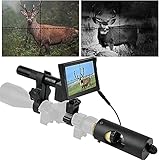
- 【Versatile & Universal Fit】 Transform any standard rifle scope with an eyepiece diameter of 38-44mm into a powerful night vision system. This DIY kit comes with everything you need to get started.
Where It Works
For the price of two tanks of gas, you get functional night vision. That’s remarkable. On my .22 rifle shooting rats around grain bins, it’s perfectly adequate. The large screen makes target identification easy, especially for aging eyes that struggle with traditional scope eyepieces.
Setup is genuinely simple. No apps, no complicated menus, just focus the camera lens and start shooting. My 70-year-old neighbor figured it out in five minutes.
For defending coops from nighttime predators or barn pest control, this does the job. You’re not walking miles with it, just sitting and waiting.
Where It Fails
Durability is nonexistent. This won’t survive any real field use. One drop will kill it. Rain will kill it. Probably a harsh look will kill it. It’s electronic equipment with zero environmental protection.
Mounting is sketchy at best. The included rings work, but the whole assembly feels like it’ll shake loose any moment. The included camo tape isn’t optional—it’s mandatory to keep things together.
Recoil tolerance is minimal. Anything larger than .22LR or .17HMR will destroy it quickly. This is not for centerfire rifles.
4. AGM Comanche-22 – The Thermal Alternative
Technical Reality
- Technology: Thermal Imaging (384×288 sensor)
- Detection Range: 800-1000 yards for large animals
- Recognition Range: 400-500 yards
- Weight: 19 ounces
- Battery Life: 4-5 hours
- Operating Temp: -40°F to +120°F
One Year with Thermal
Thermal isn’t night vision—it’s heat vision. This distinction matters more than marketing suggests. The Comanche-22 shows heat signatures, not visual details. You’ll see that there’s a deer, not whether it’s a buck or doe.
For predator control, thermal is unmatched. Coyotes can’t hide behind brush when their body heat glows like a lightbulb. I’ve tracked wounded animals through thick cover that would’ve been impossible with traditional night vision.

- Simple, quick conversion of daytime scopes to NVDs Mounts in front of any daytime scope, no re-zeroing required Powered by a single Alkaline 1.5 V AA or 3 V CR123A Lithium battery Bright-light cut-off system Quick-release mount Limited two-year warranty
Thermal Advantages
Weather immunity is the superpower. Fog, rain, snow—doesn’t matter. If it’s warm-blooded, you’ll see it. During a blizzard last January, I successfully removed problem wolves that traditional night vision couldn’t have spotted.
Detection range is incredible. I’ve spotted elk at over 1,000 yards through timber. You can’t identify them at that range, but you know something’s there. For security and detection, nothing beats thermal.
No IR illuminator needed means true stealth. You’re completely passive, just detecting heat. Nothing announces your presence.
Thermal Limitations
Target identification is challenging. All you see are white or black heat signatures. Is that blob a coyote or somebody’s dog? You’d better be certain before pulling the trigger.
Battery consumption is aggressive. Four hours is optimistic in cold weather. The processor working to create that thermal image draws serious power.
Price puts it out of reach for casual users. At $3,000, this is for professionals or serious predator hunters who need thermal’s unique capabilities.
Making the Right Choice
For Professionals and Guides
Get the Bering Night Probe Mini Gen 2+ if you need reliable night vision regularly. The image quality, durability, and compatibility make it worth the investment. This is buy-once-cry-once equipment.
For Serious Hobbyists
The PARD NV007V offers the best balance of features and price. Recording capability, decent range, and WiFi connectivity for $500 is remarkable value. Accept the battery limitations and carry spares.
For Property Defense
The Bestsight DIY works for stationary, short-range pest control. At $175, it’s worth trying. Just understand its severe limitations and fragility. It’s barely adequate, but barely adequate is sometimes enough.
For Predator Control Professionals
Thermal clip-ons like the AGM Comanche-22 are game-changers. The ability to detect heat signatures through cover in any weather justifies the price for those who need it.
Installation and Zeroing Tips
Universal Mounting Wisdom
- Mount Forward: Position the attachment as far forward as possible without vignetting
- Secure Properly: Use thread locker on all screws—vibration is the enemy
- Check Alignment: Ensure the attachment is perfectly centered on your scope’s objective
- Mark Position: Use witness marks so you can remount identically
- Practice in Daylight: Master mounting/dismounting before you need it in darkness
Zeroing Reality
Good attachments require minimal to no re-zeroing. If you need to re-zero every time you mount it, the attachment is junk. Quality units like the Night Probe maintain alignment within 0.5 MOA after remounting.
For digital units, verify zero at 25 yards after installation. Most will shoot within an inch of your daytime zero. Fine-tune if needed, but major adjustments indicate alignment problems.
Maintenance in the Field
Daily Care
- Lens caps on whenever not in use (especially Gen 2+ units)
- Wipe lenses with microfiber only—never paper
- Check battery levels before every hunt
- Verify mounting screws remain tight
Storage
- Remove batteries for long-term storage
- Store in padded cases with desiccant packs
- Keep Gen 2+ units away from bright light sources
- Temperature-stable environment prevents condensation
The Hidden Costs Nobody Mentions
Beyond Purchase Price
- Extra batteries: $50-100 annually
- Protective cases: $100-200
- IR illuminators: $100-300
- Mounting hardware upgrades: $50-150
- Lens cleaning supplies: $20-30
Budget for these additions or you’ll be frustrated when your new toy needs supporting equipment.
Legal Considerations
Night vision hunting laws vary wildly by state. In Montana, we can use night vision for predator control but not big game hunting. Some states ban it entirely. Others allow it for everything.
Research your local laws thoroughly. That $3,500 attachment is worthless if using it costs you your hunting privileges.
The Bottom Line
Night vision attachments transform your familiar daytime scope into a darkness-defeating tool. The technology has improved dramatically while prices have dropped to attainable levels.
For most hunters, the PARD NV007V at $500 provides incredible capability. It’s not perfect, but it’s good enough for 90% of night hunting situations.
For professionals, the Bering Night Probe Mini Gen 2+ justifies its premium price through reliability and performance when failure isn’t an option.
Budget options like the Bestsight exist for those who need basic capability, but understand you’re getting exactly what you pay for.
Remember: The best night vision is the one you can afford to actually use. A $500 digital unit you hunt with beats a $3,500 unit you’re too afraid to scratch.
Night vision doesn’t make you a better shooter—it just lets you shoot when others can’t.
Practice makes permanent, so practice it right.
See clearly,
Flint Marshall
Northern Montana
Questions about night vision for your specific needs? Want to share your after-dark hunting stories? Drop a comment below or check out more field-tested gear reviews at Moosir.com. Remember—respect the darkness, respect the game, respect yourself.