Two summers back, I had both Fastfire models fail on the same day – but for completely different reasons. The Fastfire 2 on my concealed carry pistol died because I hadn’t changed the battery in eighteen months (my fault). The Fastfire 3 on Sarah’s competition gun stopped working because she over-torqued that tiny battery cap trying to stop a flickering dot. That day taught me everything about the real differences between these optics.
I’ve been running Fastfire red dots since they first hit the market – currently have a Fastfire 2 on my backup carry gun and a Fastfire 3 on my .22 steel challenge pistol. After thousands of rounds and daily carry through Montana seasons, I know exactly where that extra $50 for the Fastfire 3 makes sense and where it’s wasted money.
Before diving in, understand these are pistol-focused micro red dots, though plenty of folks run them on shotguns and even rifles. They’re not Trijicon RMR tough, but at half the price, they deliver honest performance for specific applications. Your best survival tool is the six inches between your ears – use it to choose based on actual needs, not internet hype.
Quick Comparison Reality Check
| Feature | Fastfire 2 | Fastfire 3 |
| Weight (actual) | 1.5 oz | 0.9 oz |
| Dot Size | 4 MOA only | 3 or 8 MOA |
| Battery Location | Bottom (remove to change) | Top (change mounted) |
| Battery Life | 5,000 hours | 5,000+ hours |
| Brightness Settings | 4 manual | 3 manual + auto |
| Construction | Aluminum body | Aluminum body |
| Street Price | ~$150-180 | ~$200-250 |
| Warranty | Forever | Forever |
Glass Quality and Dot Performance
Fastfire 2 Glass Reality
The Fastfire 2’s glass is… adequate. Not great, not terrible, just adequate. There’s a slight blue tint that’s noticeable indoors but disappears outdoors. During a low-light defensive pistol course, that tint actually helped reduce glare from weapon lights – unintended benefit.

- VERSATILE RED DOT OPTIONS – The FastFire 3, Burris’s best-selling red dot sight, is available with a 3 MOA or 8 MOA dot. Choose the 8 MOA dot for quick target acquisition in short-range scenarios, or opt for the 3 MOA dot for pin-point accuracy
The 4 MOA dot is the only option, and it’s a compromise size. Fast enough for defensive work, precise enough for 25-yard groups, but not ideal for either. I’ve made hits on steel at 100 yards, but that dot covers a lot of target at distance.
One issue: the lens is recessed, creating a tunnel effect. In rain, water pools in that recession. Learned this during a spring turkey hunt when I couldn’t see through water droplets.
Fastfire 3 Improvements
The Fastfire 3’s glass is noticeably clearer – no tint, better coatings, crisper dot. The improvement is immediately obvious side-by-side. During bright summer days, the anti-reflective coating actually works, reducing washout that plagues the Fastfire 2.
Having 3 or 8 MOA options changes the game:
- 3 MOA: Perfect for precision pistol work or rifle mounting
- 8 MOA: Faster acquisition for defensive pistols or turkey guns
I run the 3 MOA because precision matters more in competition. For pure defensive use, the 8 MOA makes more sense. That big dot is impossible to miss under stress.
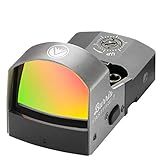
- Material Type: Aluminum
- Sport Type: Hunting
- 3 MOA Dot Reticle
The window sits higher, eliminating the tunnel effect. Rain sheets off instead of pooling. Small detail, huge improvement.
Battery Life Truth
Marketing vs Reality
Both claim 5,000 hours. Reality? About 2,000 hours on medium brightness with quality batteries. That’s still roughly 3 months of constant-on use. Not bad, but not the marketed year-plus either.
Cold weather murders battery life. At -10°F last January, my Fastfire 2’s battery lasted two weeks instead of months. Now I change batteries every six months regardless, using calendar reminders.
Fastfire 2 Battery Drama
Changing the Fastfire 2’s battery requires removing the sight. This means:
- Loss of zero (usually minor, but still)
- Potential mounting screw issues
- Loctite reapplication needed
- Re-confirmation of zero required
On a carry gun, this is annoying. On a competition gun, it’s unacceptable. I’ve started treating Fastfire 2s as semi-permanent installations, changing batteries during annual maintenance.
Fastfire 3 Battery Solution… Sort Of
Top-loading battery seems brilliant until you strip those tiny threads. The battery cap is soft metal with fine threads – a bad combination. Sarah’s wasn’t the first I’ve seen fail.
The key: finger-tight only, never use tools. That cap doesn’t need to be cranked down. Gentle pressure seals the O-ring adequately. But explaining this to every student who wants to “help” by tightening things? Exhausting.
Auto-brightness sounds great but isn’t. It hunts between settings in changing light, and the sensor can be blocked by carbon buildup. I run manual brightness exclusively.
Durability Testing Results
What They’ve Survived
Fastfire 2 abuse:
- 5,000+ rounds on Glock 19
- Daily concealed carry for two years
- Dropped on concrete (twice)
- Motorcycle crash at 30mph (don’t ask)
- Montana temperature extremes
Still works, though looking rough. The aluminum housing shows holster wear, but the lens remains uncracked.
Fastfire 3 experiences:
- 10,000+ rounds of .22LR (steel challenge)
- Washing machine cycle (left on pants)
- Scout jumping on range bag
- Multiple student fumbles
- Truck dashboard summer heat
The lighter weight seems fragile but isn’t. The redesigned electronics prove more reliable than the older Fastfire 2 circuit board.
Water Resistance Reality
Both claim waterproofing. Neither handles submersion well. Light rain? Fine. Heavy downpour? Moisture appears inside eventually.
For hunting or duty use where weather exposure is guaranteed, spend extra for truly waterproof options. These are fair-weather friends that tolerate occasional moisture, not submarine optics.
The Mount Question
Fastfire 2 includes a Picatinny mount – barely adequate for .22LR, inadequate for anything else. Budget another $50 for quality mounting plates.
Fastfire 3 includes nothing, but that’s actually better. You’ll buy proper mounting regardless, so why pay for junk? Most pistols need specific mounting plates anyway.
Real-World Applications
Where Fastfire 2 Makes Sense
Backup/Budget Guns: At $150-ish, it’s cheap enough for that house gun or truck pistol. When it dies (not if), replacement won’t break the bank.
Range Toys: On .22 pistols or rifles where precision isn’t critical and abuse is minimal, it works fine.
Fixed Installation: If you never plan to remove it, the battery compartment location doesn’t matter.
I keep one on an old Glock 17 that lives in the barn for dispatching injured animals. It’s been there three years, gets used maybe twice annually, still works.
Where Fastfire 3 Excels
Competition Pistols: The clearer glass and lighter weight matter when points count. The top battery access means no re-zeroing mid-season.
Carry Optics: If running a red dot on defensive pistols (trending now), the Fastfire 3’s improvements justify the cost. Better glass equals faster target acquisition.
Shotguns: Turkey hunters love the 8 MOA version. That big dot is perfect for close shots on moving targets.
My steel challenge gun runs the Fastfire 3 because matches happen rain or shine, and I need consistent performance. It’s not RMR reliable, but it’s reliable enough for games.
Controls and Adjustments
Fastfire 2 Simplicity
One button cycles through four brightness settings. Simple, reliable, impossible to screw up. No auto modes to malfunction, no extra buttons to confuse.
Windage/elevation adjustments need a tiny screwdriver. The clicks are mushy but functional. Each click moves impact roughly 1 MOA at 25 yards. Good enough for minute-of-bad-guy accuracy.
Fastfire 3 Complexity
Three buttons seem excessive until you use them. Separate up/down brightness controls mean finding your setting quickly. The power button includes hold-for-off functionality that I never remember exists.
Auto-brightness is worthless (see earlier rant), but having three manual modes plus auto means options for different conditions. I use manual medium 90% of the time.
Adjustments feel more positive than Fastfire 2, though still not match-grade. The included adjustment tool is junk – use quality screwdrivers instead.
The Price Question
Fastfire 2 Value
Street price around $150-180 makes this the cheapest “real” red dot available. Cheaper options exist but enter airsoft territory. For basic functionality, it delivers.
Factor in mounting solutions ($50+) and backup batteries ($20), you’re at $220-250 total investment. At that point, the Fastfire 3 starts making sense.
Fastfire 3 Investment
At $200-250 street price, you’re approaching serious optic territory. The Holosun 507C costs marginally more with significantly better features. The question becomes: good enough at this price, or save for better?
For competition where equipment failures mean lost match fees, I’d save for better. For plinking or backup guns, the Fastfire 3 hits the sweet spot.
Common Problems and Solutions
Both Models
Flickering Dot: Usually battery connection issues. Remove battery, clean contacts with pencil eraser, reinstall. If persists, warranty claim time.
Won’t Hold Zero: Check mounting screws first. If tight, the sight’s probably damaged internally. Burris warranty is excellent – use it.
Dot Too Dim/Bright: Clean the lens and sensor. Carbon buildup affects brightness perception and auto-adjustment.
Fastfire 2 Specific
Water in Lens: The recessed design traps moisture. Rain-X helps but isn’t perfect. Accept the limitation or upgrade.
Battery Contact Corrosion: Bottom location exposed to holster debris. Annual cleaning with contact cleaner prevents issues.
Fastfire 3 Specific
Stripped Battery Cap: Prevention only – finger-tight installation. Once stripped, it’s warranty time. Burris knows this issue and covers it.
Auto-Brightness Hunting: Disable it. Manual brightness provides consistency competition and defense require.
The Bottom Line
After years running both, the Fastfire 3 wins for most users. The improvements – clearer glass, better battery access, lighter weight – justify the extra $50. But context matters:
Get the Fastfire 2 if:
- Maximum budget constraints
- Truly backup gun use
- You’ll never change batteries anyway
- Simple is better for your needs
Get the Fastfire 3 if:
- Competition use
- Defensive carry
- You value convenience
- Clearer glass matters
Skip both and save for better if:
- Duty/professional use
- Life-depending reliability needed
- Extreme weather exposure expected
- Buy-once-cry-once philosophy
Practice makes permanent, so practice it right. Either Fastfire will work if you understand limitations and train accordingly. But neither replaces quality glass when reliability truly matters.
Recommended Accessories
For both:
- Quality Mounting Plate: Don’t trust included hardware
- Lens Pen: Keep glass clean
- Spare Batteries: CR1632 for FF2, CR2032 for FF3
- Protective Cover: During transport/storage
Final Wisdom
Red dots on pistols are trending hard right now. Everyone wants to be fast and accurate. But dots don’t fix fundamentals – they reveal them. Bad trigger control looks worse through a dot than irons.
Master iron sights first. Then add dots for enhancement, not replacement. The wilderness doesn’t care about your equipment – it cares whether you can deliver accurate shots under stress.
Choose based on honest assessment of needs and budget. Both Fastfires work within limitations. Neither compares to premium options. But sometimes “good enough” is exactly right.
Want to maximize your micro red dot? Check out my guides on pistol dot zeroing, both-eyes-open technique, and choosing defensive vs competition setups.
About Flint: After 8 years as an Army Ranger and 15+ years instructing defensive shooting, I’ve seen every red dot from bargain to bombproof. When not teaching or competing, you’ll find me testing optics with Scout and River, always seeking gear that balances performance with practical pricing.