Three months into testing the Holosun SCRS, a January blizzard knocked out power to half our county for five days. While neighbors scrambled for batteries and flashlights, my solar-charged red dot kept glowing on the rifle by the door. That’s when I realized this wasn’t just another gimmicky feature – it was genuine innovation that solved a real problem.
The SCRS (Solar Charging Rifle Sight) represents Holosun’s bet that shooters are tired of battery anxiety. After eight months of running this optic through Montana’s extremes – from -30°F mornings to scorching summer prairie shoots – I can tell you whether solar charging is the future or just expensive marketing.
The Solar Promise: Revolutionary or Redundant?
During my Ranger days, dead batteries meant mission failure. We carried spares for our spares, checked battery levels obsessively, and still had failures at the worst moments. The SCRS promises to eliminate that anxiety through solar charging backed by a rechargeable internal battery. Sounds great on paper, but paper doesn’t survive Montana winters.
My test rifle for this experiment:
- 16″ BCM upper on Aero lower – Primary testing platform
- 10.5″ PSA pistol build – Backup and comparison testing
- Ruger 10/22 Takedown – High-volume testing without breaking the bank
Each platform taught different lessons about living with solar-powered optics.
Technical Reality: What You’re Actually Getting
Core Specifications
The Numbers:
- Reticle: 2 MOA dot with 65 MOA circle option
- Battery Life: 50,000 hours claimed
- Solar Panel: Integrated top-mounted
- Brightness: 8 daylight, 4 night vision settings
- Housing: 7075-T6 aluminum
- Waterproof: IP67 rated
- Weight: 2.45 ounces
- Window: 22mm diameter
- Mount: Integrated lower 1/3 co-witness
That price tag makes this Holosun’s premium offering. Let’s see if solar justifies the cost.
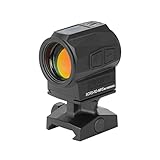
- HOLOSUN RED DOT SIGHT – The SCRS RD MRS (Solar Charging Rifle Sight) is an ultra compact 20mm tube sight designed for long gun applications; This gun sight features multi-directional light sensors and an advanced Auto Mode for automatic reticle intensity settings and Manual Mode for manual control of dot intensity
Eight Months of Solar Reality
Winter Performance: The Acid Test
Montana winters are where equipment fantasies die. Short days, weak sun, extended indoor storage – if solar charging works here, it works anywhere.
December through February results:
- Indoor storage (garage): Maintained charge with minimal light
- Extended dark periods: Internal battery carried the load
- Sub-zero performance: Electronics functioned perfectly
- Snow coverage: Quick wipe restored charging capability
The key discovery: even indirect winter light provides some charge. The optic never died, even during a week-long ice fishing trip where it lived in a dark truck cab.
Summer Abundance
Come summer, the SCRS becomes unstoppable. During a three-day prairie dog shoot in July, the optic sat in direct sun for hours. Not only did it maintain charge, but the auto-brightness system prevented washout even in blazing noon conditions.
Sarah commented that the solar panel looked like it belonged on our neighbor’s roof, not a rifle. She’s not wrong about the aesthetics, but function beats form when your optic never needs batteries.
The Charging Reality
Here’s what Holosun doesn’t emphasize: this isn’t pure solar operation. The internal rechargeable battery does the heavy lifting, with solar extending its life dramatically. Think of it like a hybrid car – solar assists but doesn’t replace the primary power source.
In practical terms:
- Direct sunlight: Maintains and slowly charges battery
- Indirect light: Maintains current charge
- Indoor lighting: Slows discharge rate
- Complete darkness: Battery provides 50,000+ hours
Optical Performance: Beyond the Solar Gimmick
Glass Quality
Forget the solar panel for a moment – this is still a red dot that needs to perform. The glass impressed me more than expected. Clear, minimal tint, and the 2 MOA dot stays crisp even with my slight astigmatism.
During a dawn elk hunt, the clarity allowed positive target identification at 200 yards through the unmagnified optic. That’s the kind of performance that matters more than charging methods.
Reticle Options
The 2 MOA dot with 65 MOA circle follows Holosun’s proven formula. Use the dot for precision, the circle for speed, or both for versatility. After eight months, I run dot-only 90% of the time. The circle helps during close-range drills but isn’t necessary for most shooting.
The night vision settings work properly with my PVS-14, though I question how many SCRS buyers actually run night vision. Still, having the option costs nothing and might matter someday.
Auto-Brightness: Actually Useful
Unlike some auto-brightness systems that lag or hunt, the SCRS adjusts smoothly and appropriately. Moving from barn shadow to bright sunlight takes about half a second to adjust – faster than your eyes adapt.
Manual override is always available, but I’ve run auto-brightness exclusively for three months without issue. One less thing to think about during shooting.
Durability: Built Like Holosun Always Builds
Environmental Testing
Eight months of Montana provided:
- Temperature swings: -30°F to 98°F
- Complete submersion: Fell through ice while crossing creek
- Dust exposure: Spring windstorms
- Impact testing: Multiple drops from truck tailgate
- Recoil testing: 3,000+ rounds of 5.56, 500 rounds of .300 BLK
Current status: Zero unchanged, all functions perfect, minor finish wear on edges.
The Ice Bath Incident
February’s “controlled submersion test” (I slipped and fell through ice) proved the IP67 rating. Twenty minutes in 34°F water, then immediate exposure to -15°F air. The SCRS never flickered, fogged, or failed. Try that with cheap electronics.
Build Quality Notes
The integrated mount deserves mention. No separate rings to loosen, no aftermarket mounts needed (though they’re available). The lower 1/3 co-witness height works perfectly with backup irons. One less potential failure point.
Real-World Applications
Home Defense
For a staged home defense rifle, the SCRS excels. Always charged, always ready, no battery anxiety during extended storage. The auto-brightness means no fumbling with controls in an emergency.
My bedroom rifle wears one now. It sits by a window where ambient light keeps it topped off. Even during our five-day power outage, it stayed functional. That’s peace of mind worth paying for.
Competition Use
At local 3-gun matches, the SCRS performs well but doesn’t excel. The solar panel adds slight height that some find distracting. The auto-brightness occasionally adjusts when moving between covered and uncovered shooting positions. Minor issues, but noticeable.
The lack of battery anxiety during all-day matches is nice. No spare batteries in your pocket, no wondering if you remembered to change them. Just shoot.
Hunting Applications
For stand hunting where rifles sit in sunlight, perfect. For timber hunting where everything stays shaded, the solar benefit diminishes. The internal battery still provides years of operation, but you’re not getting the full solar advantage.
Last season, I used it exclusively for antelope hunting on the prairie. All-day sun exposure meant unlimited operation. The auto-brightness handled changing angles as the sun moved. Zero maintenance required.
Training Value
High-volume training reveals the SCRS’s strength. During a 1,000-round weekend course, everyone else checked batteries at lunch. I just kept shooting. The psychological benefit of eliminating battery concerns is real.
Compared to the Competition
Versus Sig Romeo5
The Romeo5 offers 80% of the SCRS’s capability at 30% of the price. MOTAC works great, battery life is excellent, proven reliability. Unless you specifically need solar charging, the Romeo5 provides better value.
Versus Aimpoint PRO
Similar price, different philosophy. The PRO uses a standard battery lasting 30,000 hours – not solar but still essentially eternal. Better glass, bombproof reputation, but heavier and bulkier. For duty use, PRO wins. For innovation and weight, SCRS wins.
Versus Holosun 503 Series
The 503 offers similar features minus solar charging for half the price. Same reticle options, same build quality, traditional battery. For most users, the 503 makes more sense financially.
Versus Trijicon MRO
Direct price competitor with superior glass but significant parallax issues. Five-year battery life without solar. The MRO is more proven but less innovative. Personal preference drives this choice.
Living With Solar
Advantages Nobody Mentions
- No battery anxiety during storage
- Reduced electronic waste
- Conversation starter at the range
- Backup charging during emergencies
- Psychological comfort of self-sufficiency
Real Limitations
- Solar panel adds height/bulk
- Non-replaceable internal battery
- Higher initial cost
- Unproven long-term reliability
- Overkill for most users
Maintenance Considerations
Keep the solar panel clean. Dust, mud, snow all reduce efficiency. A quick wipe during regular cleaning maintains optimal charging. The panel seems scratch-resistant – mine still looks new despite regular use.
The non-replaceable battery concerns me long-term. Holosun claims 10+ year lifespan, but rechargeable batteries degrade. Time will tell if this becomes an issue.
Training Insights
Transition from Traditional Dots
No adjustment needed operationally. The SCRS functions identically to any quality red dot. The solar panel sits high enough to avoid interfering with sight picture or controls.
Auto-Brightness Training
Trust the system or run manual. Don’t switch between modes constantly. I recommend a month of auto-only to build confidence, then decide your preference.
The Psychological Factor
Eliminating battery anxiety changes your relationship with the optic. Instead of checking battery levels, you just shoot. It’s a small thing that makes a big difference over time.
The Investment Question
The SCRS costs serious money. Value depends on your priorities:
Worth it if:
- You value energy independence
- Battery anxiety affects you
- You shoot high volume
- Emergency preparedness matters
- Innovation appeals to you
Not worth it if:
- Budget is tight
- You rarely shoot
- Traditional batteries work fine for you
- Proven technology matters most
- The solar panel aesthetics bother you
Field Intelligence Summary
Who Should Buy This
- Preparedness-minded shooters
- High-volume trainers
- Off-grid enthusiasts
- Early adopters who appreciate innovation
- Anyone who’s been burned by dead batteries
Who Should Look Elsewhere
- Budget-conscious buyers
- Traditional technology preferrers
- Occasional shooters
- Those wanting smallest possible profile
- Anyone needing proven 10+ year track record
The Bottom Line
The Holosun SCRS succeeds at its primary mission: eliminating battery anxiety through solar assist. It’s not true solar operation, but the combination of solar charging and internal battery creates a virtually unlimited power source for practical use.
After eight months of hard use, including Montana’s worst weather, the SCRS has proven reliable and innovative. The solar charging isn’t just marketing – it provides real benefit for those who value energy independence.
Is it worth the premium over traditional red dots? That depends on your priorities. For my home defense rifle, absolutely. For a range toy, probably not.
Final Assessment
The SCRS represents genuine innovation in a market full of “me too” products. Solar charging works as advertised, adding capability without compromising basic red dot function. The execution isn’t perfect, but it’s good enough to matter.
Your best survival tool is the six inches between your ears, but those six inches appreciate equipment that works independently of supply chains and battery availability.
Practice makes permanent, and practicing without battery anxiety is liberating. The wilderness doesn’t care about your charging method, only whether your equipment functions when needed.
The SCRS functions. Always. That’s worth something, even if that something costs more than traditional alternatives.
Want more honest gear reviews from actual field use? Visit Moosir.com where we test equipment in conditions that matter, not climate-controlled environments. Because innovation means nothing if it doesn’t work in the real world.