In 2007, halfway through a patrol in Helmand Province, my EOTech died. No warning, no dimming – just black. The CR123 batteries I’d installed two weeks prior had frozen overnight in -20°F mountain temperatures, then cooked in 110°F heat the next day. That thermal cycling killed them dead. My squad leader’s ACOG? Still glowing, no batteries required. That day changed how I think about combat optics forever.
Now, after two deployments carrying ACOGs, years of running EOTechs in competition, and thousands of hours guiding hunters through Montana’s backcountry, I’ve learned what really matters when choosing between these legendary sighting systems. This isn’t about spec sheets – it’s about what happens when Murphy’s Law meets your rifle at the worst possible moment.
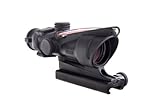
- BATTERY-FREE ILLUMINATION: Features a tritium/fiber optic illuminated reticle that automatically adjusts the brightness based on available light
Quick Reference: Core Specifications
| Feature | Trijicon ACOG (TA31F) | EOTech EXPS3 + G33 Magnifier |
| Weight | 9.9 oz | 21.6 oz combined |
| Magnification | Fixed 4x | 1x or 3x (flip-to-side) |
| Eye Relief | 1.5 inches | 2.2 inches (unlimited at 1x) |
| Field of View | 36.8 ft @ 100 yards | 68 ft (1x) / 23 ft (3x) |
| Illumination | Tritium/Fiber Optic | Battery (CR123) |
| Battery Life | 12-15 years (tritium) | 600-1000 hours |
| Waterproof | 328 feet | 33 feet |
| Price Range | $1,200-1,500 | $1,100-1,300 |
| Warranty | Lifetime | 10 years |

- Great Product
The Philosophy Behind Each System
ACOG: Simplicity Through Engineering
The Advanced Combat Optical Gunsight represents military philosophy distilled into glass and aluminum. No batteries, no electronics, minimal failure points. During my eight years as a Ranger, I watched ACOGs survive IED blasts, helicopter crashes, and treatment that would destroy lesser optics.
The genius lies in dual illumination. Fiber optics gather ambient light for daylight shooting while tritium provides constant glow in darkness. It’s elegant engineering – the brighter your environment, the brighter your reticle. No buttons, no thinking, just shoulder and shoot.
But here’s what Trijicon won’t tell you: that tritium has a half-life of 12.3 years. After 15 years, your reticle dims to barely visible. I’ve seen 20-year-old ACOGs that required perfect conditions to see the reticle. Yes, Trijicon will replace the tritium, but at $300-400, not under warranty. Plan accordingly.
EOTech + Magnifier: Versatility Through Technology
The EOTech hybrid system embodies modern tactical thinking – adaptability over simplicity. Need speed for room clearing? Leave the magnifier flipped aside. Spot movement at 300 yards? Flip it in place. This flexibility saved lives in Iraq where engagements ranged from 5 to 500 meters in seconds.
The holographic technology is genuinely revolutionary. Unlike red dots, the reticle appears to float at target distance, not on the glass. Shoot through a partially broken window? The reticle remains visible through any intact portion. Try that with conventional optics.
But technology comes with cost. Batteries die at the worst moments. Electronics fail in extreme conditions. Water infiltration kills circuits. I’ve seen EOTechs fail from everything from condensation to impact that barely scratched the housing.
Real-World Optical Performance
ACOG Glass Quality
Trijicon glass remains the gold standard. Looking through a properly maintained ACOG is like switching from standard to high-definition TV. During a recent elk hunt in the Absaroka-Beartooth Wilderness, my client’s ACOG revealed a bull at 600 yards that I couldn’t see with 10x binoculars until he pointed it out.
The 4x magnification hits a sweet spot. Enough magnification for precision shots to 500 yards, not so much that target acquisition suffers. The Bindon Aiming Concept (both eyes open) works once mastered, though it takes practice. Your brain superimposes the magnified reticle over your unmagnified view – weird at first, deadly effective with training.
Edge-to-edge clarity impresses even after years of use. My personal TA31F, purchased in 2010, shows zero degradation despite living on a ranch rifle that’s seen everything Montana offers. The multi-coated lenses shed water and resist scratching better than any optic I’ve owned.
EOTech + G33 Combination
At 1x, the EOTech provides the fastest target acquisition I’ve experienced. That 68-foot field of view at 100 yards means seeing everything, not just your target. During 3-gun competitions, the unmagnified EOTech consistently beats my ACOG times on close-range stages by 15-20%.
Flip in the G33 magnifier, and you get serviceable 3x magnification. “Serviceable” being key – the glass quality doesn’t match the ACOG. There’s noticeable distortion at the edges, and the image isn’t as sharp. For minute-of-bad-guy accuracy to 300 yards? Perfect. For shooting prairie dogs at 400? Frustrating.
The transition between magnified and unmagnified takes practice. The G33 locks solidly in both positions, but the flip motion can shift your grip and stance. During stress, I’ve seen shooters fumble the transition, costing precious seconds.
Reticle Design and Application
ACOG Reticle Science
The chevron reticle in my TA31F represents brilliant design. The tip provides precision aiming for distance work while the chevron body offers quick acquisition for closer targets. Bullet drop compensator markings below work perfectly with 62-grain 5.56 from a 14.5″ barrel – verified repeatedly to 600 yards.
What surprised me was wind hold accuracy. Those horizontal stadia lines? They actually work. In Wyoming’s constant wind, I’ve made first-round hits on steel at 400 yards using nothing but the reticle for holds. No math, no dialing – just hold and shoot.
The red illumination can overwhelm in low light, appearing to bloom and obscure targets. There’s no adjustment – the fiber optic responds to ambient light at your position, not downrange. Shooting from shadow into sunlight? Your reticle might be too dim. From sunlight into shadow? Too bright. It’s a compromise you learn to manage.
EOTech Reticle Flexibility
The 68 MOA ring with 1 MOA center dot enables both speed and precision. At close range, that large ring acts like a ghost ring sight – impossibly fast. The center dot provides precision for distance work, though 1 MOA can feel large beyond 300 yards.
Twenty brightness settings (10 daylight, 10 night vision) mean perfect reticle intensity regardless of conditions. This matters more than specs suggest. During a dawn coyote hunt last December, I adjusted brightness three times as light conditions changed. Try that with an ACOG.
The button placement (side-mounted on EXPS models) allows adjustment without breaking position. After training, brightness changes become automatic, like shifting gears while driving. NV settings genuinely work with night vision – no bloom, no washout, perfect integration.
Durability: Tested Beyond Reason
ACOG Bombproof Reputation
“Bombproof” isn’t hyperbole. I’ve personally seen ACOGs survive:
- Direct mortar impact that destroyed the rifle
- 6-foot drops onto concrete (multiple)
- Complete submersion for hours
- -40°F to 140°F temperature swings
- 50,000+ rounds of sustained fire
My ranch ACOG fell off a moving ATV at 30 mph, bounced through rocks and sagebrush for 50 yards. Scratched housing, perfect zero. That’s not luck – that’s engineering.
The aluminum housing acts as armor. Internal components float in shock-absorbing mounts. The prism design has no alignment-critical elements like traditional scopes. It’s overbuilt to military specifications that assume worst-case scenarios.
One weakness: lens covers. The factory covers are garbage – flimsy rubber that tears within months. Aftermarket solutions exist, but for a $1,300 optic, better covers should be standard.
EOTech + Magnifier Reality
EOTech’s durability is… complicated. The EXPS3 itself is remarkably tough. Machined aluminum housing, shock-resistant electronics, legitimate waterproofing. But “tough” and “ACOG tough” aren’t equivalent.
I’ve had two EOTechs fail. One from water infiltration during a river crossing (warranty covered), another from extreme cold affecting electronics (also covered). Both failures occurred at inopportune moments. That’s the difference – ACOGs don’t fail, they just gradually dim over decades.
The G33 magnifier adds complexity. Another pivot point, another potential failure. The mount is robust, but I’ve seen them loosen over time. Regular maintenance prevents issues, but that’s another task the ACOG doesn’t require.
Battery compartment sealing improved dramatically in recent models. My EXPS3 has survived complete submersion without issue. But batteries remain the weak link – cold kills them, heat degrades them, and they’re always depleting.
Combat and Competition Performance
ACOG in Action
During deployments, the ACOG proved invaluable for positive target identification. At 4x, you can distinguish weapons from tools, combatants from civilians. That magnification saved lives – both American and Afghan – by preventing tragic mistakes.
The fixed magnification forced adaptation. Room clearing with 4x magnification requires different techniques than 1x red dots. We learned to shoot with both eyes open, using peripheral vision for situational awareness while the magnified eye engaged targets. Difficult but effective.
For designated marksman roles, the ACOG excels. Engaging targets from 100-600 meters becomes routine. The BDC works, the glass clarity enables shot calling, and reliability means focusing on shooting, not equipment.
EOTech Versatility Advantage
In 3-gun competition, the EOTech combo dominates. Stage with close targets? Magnifier aside, burn through with speed. Long-range precision stage? Flip magnifier, take your time. This adaptability typically saves 5-10 seconds per stage over fixed magnification.
Home defense favors the EOTech. At 1x with unlimited eye relief, target acquisition from awkward positions (around corners, from retention) proves superior. The large window and parallax-free design mean hitting what you’re aiming at regardless of head position.
Vehicle operations strongly favor EOTech. Shooting from vehicle windows or around barriers, that unmagnified wide field of view matters. The ACOG’s fixed magnification and critical eye relief become liabilities in confined spaces.
Hunting Applications: Field Reality
ACOG for Western Hunting
My .308 wears an ACOG (TA11) for elk and mule deer. The 3.5x magnification perfectly suits shots from 50-400 yards – typical engagement distances in timber and breaks. The green chevron shows brilliantly against brown fur and autumn foliage.
Low-light performance surprises people. That tritium glow enables shots 30 minutes after sunset that iron sights couldn’t make. During a late-season whitetail hunt, I cleanly took a buck at last legal light when other hunters had already quit.
The fixed magnification occasionally frustrates. Jumped a bull elk at 20 yards last season – at 4x magnification, finding him in the scope proved challenging. By the time I acquired him, he’d made thick timber. Variable magnification would’ve sealed the deal.
EOTech for Diverse Game
For predator calling, the EOTech combo excels. Coyotes often charge to 10 yards or hang up at 300. The ability to instantly adapt magnification has filled more fur permits than any other single equipment choice.
Turkey hunting with EOTech at 1x provides faster target acquisition than any magnified optic. That wide field of view helps track birds through brush, and the precise center dot enables head shots to 50 yards.
The magnifier limitation shows beyond 200 yards. Prairie dog shoots revealed the G33’s optical limitations – adequate magnification but insufficient clarity for precision work. Small targets at distance require better glass.
Environmental Considerations
Montana Weather Testing
Both systems survived my standard Montana torture test:
- 24-hour freeze at -20°F
- Immediate transition to 100°F vehicle interior
- Complete submersion in creek water
- Dust storm simulation
- 500-round rapid fire sessions
Results varied. The ACOG shrugged off everything, requiring only external cleaning. The EOTech functioned but showed condensation under the front lens after temperature cycling. It cleared within hours but concerned me enough to monitor closely.
Battery performance in cold deserves mention. At -10°F, CR123 batteries in the EOTech lasted 300 hours versus advertised 600. The ACOG’s tritium doesn’t care about temperature. For winter predator hunting, that matters.
Maintenance Requirements
The ACOG needs essentially none. Wipe the lenses, check mount tightness annually, done. After 14 years, my oldest ACOG works identically to when new (minus slightly dimmer tritium).
EOTech demands attention. Battery changes, contact cleaning, seal inspection, mount verification for the magnifier. It’s not excessive, but compared to ACOG’s zero maintenance, it’s noticeable.
Making the Decision: Context is Everything
Choose the ACOG if:
- Reliability absolutely cannot be compromised
- You primarily shoot 100-500 yards
- Minimal maintenance appeals
- Fixed magnification suits your needs
- Long-term investment makes sense
- You can afford the premium price
Choose EOTech + Magnifier if:
- Versatility across distances matters most
- You transition between CQB and distance shooting
- Fast target acquisition is priority
- You’re comfortable with battery management
- Budget is a consideration
- Night vision compatibility is required
The Bottom Line: Mission Drives Choice
After years of professional and recreational use, here’s my verdict: both systems excel within their design parameters. The ACOG remains unmatched for reliability and optical quality. The EOTech combo provides unparalleled versatility.
My personal setup reflects this: ACOG on the .308 hunting rifle where reliability and medium-range precision matter most. EOTech + magnifier on the competition AR where adaptability wins matches. Each tool for its purpose.
For military/LEO use where failure has consequences? ACOG every time. That bombproof reliability saves lives when Murphy shows up. For civilian use where versatility and speed matter? EOTech combo provides more capability for most scenarios.
The “best” doesn’t exist in isolation. Your mission, environment, and requirements determine the winner. Both represent excellence in optical design – just different philosophies about achieving it.
Remember: equipment doesn’t make the shooter. I’ve seen experts with iron sights outshoot amateurs with ACOGs. Master your fundamentals first, then let quality optics enhance your capability.
Practice makes permanent, so practice it right. Respect the game, respect the land, respect yourself.
Stay sharp, Flint Marshall
Ready to mount your combat optic? Check out my guides on proper zero procedures for magnified optics, choosing backup sights that complement your primary, and field-tested mounting solutions that maintain zero through anything. Your optic is only as good as your mount and training.
Field Notes: Lessons Learned
Can you add a red dot to an ACOG? Yes, via top-mounted RMR. Adds $500+ and weight but provides true dual-capability. I run this on my designated marksman rifle – ACOG for distance, RMR for close work.
Which handles .308 recoil better? Both survive indefinitely. The ACOG’s lighter weight causes less scope bite during recoil. The heavier EOTech combo requires proper mounting position to avoid eye contact.
What about the new G45 5x magnifier? Game changer for EOTech. The 1-5x variable magnification closes the gap with ACOG considerably. Adds weight and cost but provides unprecedented versatility. Currently testing one – preliminary results impressive.
How long does tritium really last? Expect useful illumination for 12-15 years, marginal visibility to 20 years. My 2003-manufactured TA01 barely glows now. Factor replacement cost into long-term ownership.