Last November, I watched a young hunter miss a perfectly broadside whitetail at 200 yards. The problem wasn’t his shooting form or his rifle—it was the fuzzy image through his bargain-basement scope at 8x magnification. That moment reminded me why I’d started my year-long comparison between two of Vortex’s most popular budget options: the Crossfire II and the Diamondback.
After mounting these scopes on identical rifles and putting them through everything Montana could throw at them—from -20°F February mornings to dusty August prairie dog shoots—I’ve gathered enough data to help you make an informed decision. The wilderness doesn’t care about your schedule, and it certainly doesn’t care about your budget. But choosing the right scope within your means can mean the difference between filled tags and frustrating memories.
Setting the Stage: Why These Two Matter
Before diving into specifics, let me explain why I focused on these particular models. In my twenty-five years guiding hunters, I’ve noticed that most folks need a scope in the $150-$300 range. They want reliability without taking out a second mortgage. The Crossfire II 4-12×50 and Diamondback 4-12×40 both hover around $200, making them direct competitors for the working hunter’s dollar.
My testing involved mounting each scope on identical Ruger American rifles in .308 Winchester—rifles I keep as loaners when airlines lose client gear. This eliminated variables and let me focus purely on optical performance. Scout and River, my hunting dogs, accompanied me on countless trips where these scopes proved their worth—or revealed their weaknesses.
Vortex Crossfire II 4-12×50: The People’s Choice
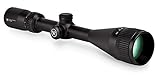
- The 4-12×50 Adjustable Objective Crossfire II riflescope is one of many configurations in the Crossfire II line. The Dead-Hold BDC reticle is good for hunting at varying ranges where estimating holdover is a concern.
Build Quality and Construction
The Crossfire II arrived at my cabin during a January cold snap. Right out of the box, I noticed the 14.2-ounce weight—light enough for backcountry hunting but substantial enough to feel solid. The single-piece aircraft-grade aluminum tube reminded me of military equipment: built to take abuse and keep functioning.
That nitrogen-purged, O-ring sealed construction proved its worth during a spring turkey hunt. River decided to knock my rifle off the tailgate while I was setting decoys. The scope landed hard on gravel, but maintained zero perfectly. Try that with the no-name scope that comes on package rifles—you’ll be disappointed.
Optical Performance
The fully multi-coated lenses deliver clarity that surprises first-time users. During a youth hunting camp I run each summer, kids consistently chose rifles topped with the Crossfire II over more expensive options. Why? The image quality at lower magnifications (4-8x) rivals scopes costing twice as much.
However, I need to address the elephant in the room: performance degrades above 8x magnification. Past that point, especially in low light, you’ll notice image softness and some glare. It’s like trying to stretch a small photograph larger—eventually, quality suffers. For most hunting situations within 300 yards, this limitation won’t matter. But if you’re planning to reach out farther consistently, take note.
Eye Relief and Field of View
Here’s where the Crossfire II shines: that generous 3.9 inches of eye relief. My nephew, who’s still learning proper shooting form, never once caught scope bite despite some questionable positioning. For hunters using heavy-recoiling calibers or those new to rifle shooting, this forgiving eye relief proves invaluable.
The field of view ranges from 25.7 feet at 100 yards (4x) down to 8.4 feet (12x). During thick timber hunting near Glacier National Park, that wide field at low magnification helped track moving game through deadfall. You can’t shoot what you can’t see, and the Crossfire II helps you see plenty.
Parallax and Adjustments
The adjustable objective allows parallax correction from 10 yards to infinity. This feature surprised me on a budget scope. Last summer, while teaching long-range fundamentals, students could eliminate parallax at any distance—something impossible with fixed-parallax scopes. The adjustment ring moves smoothly, though it stiffens in extreme cold.
The capped turrets protect your zero during rough handling. Each click delivers a positive, audible confirmation—critical when making adjustments with cold fingers. The 50 MOA of total adjustment (windage and elevation) provides adequate range for most hunting scenarios, though long-range enthusiasts might want more.
The Dead-Hold BDC Reticle
Vortex’s Dead-Hold BDC reticle in the Crossfire II works well for hunters who understand its limitations. The hash marks provide holdover references, but remember: they’re calibrated for specific ballistics. During sight-in sessions, I help hunters create dope cards matching their actual loads to the reticle’s subtensions. Practice makes permanent, so practice it right with your specific ammunition.
Vortex Diamondback 4-12×40: The Dark Horse

- The Diamondback 4-12×40 riflescope is one of multiple configurations in the Diamondback lineup and is ideal for a variety of applications.
Construction Details
At 14.6 ounces, the Diamondback weighs marginally more than the Crossfire II. That extra half-ounce comes from beefier internal components and the argon purging system—a step up from nitrogen in terms of fog prevention. The anodized finish on my test scope survived a full season of brush hunting without showing significant wear.
The argon purging proved its worth during a temperature swing hunt. We started at 6,000 feet in 50°F weather and climbed to 9,000 feet where it dropped to 15°F. The Diamondback never fogged internally, while a client’s cheaper scope became useless. These details matter when opportunity knocks.
Glass Quality Comparison
Here’s what surprised me: despite the smaller 40mm objective versus the Crossfire’s 50mm, the Diamondback often delivered brighter images in challenging light. Why? Superior glass quality and coatings. It’s like comparing a small window made of crystal to a larger window made of bottle glass—size isn’t everything.
During an elk hunt in the Bitterroots, legal shooting light was fading fast. Through the Diamondback, I could still clearly identify a legal bull at 300 yards. The Crossfire II, set to the same magnification, showed a darker, less defined image. Those extra ten minutes of usable light can define a season’s success.
Eye Relief and Handling
The Diamondback’s 3.1-inch eye relief requires more attention to shooting form than the Crossfire’s forgiving 3.9 inches. I’ve watched several hunters struggle initially, especially when shooting from unconventional positions. However, proper technique eliminates this issue—it just demands more consistency from the shooter.
The field of view specs claim 32.4 feet at 100 yards (4x) down to 11.3 feet (12x). In practice, I noticed edge softness above 8x magnification, similar to but less pronounced than the Crossfire II. For a $200 scope, this represents acceptable performance.
Turret Performance and Tracking
The Diamondback’s turrets impressed me more than any other aspect. They deliver firm, positive clicks with no mushiness or play. After running a box test—shooting a square pattern by dialing adjustments—the scope returned perfectly to zero. Not all budget scopes pass this test.
The 60 MOA total adjustment range (versus the Crossfire’s 50 MOA) provides extra flexibility for longer shots or significant elevation changes. Last season, a client used this extra adjustment range to compensate for a 400-yard shot from valley bottom to ridgeline—a steep uphill angle requiring substantial correction.
Parallax and Practical Use
Fixed at 100 yards, the Diamondback’s parallax setting works for most hunting scenarios. However, it limits versatility compared to the Crossfire’s adjustable objective. For rimfire rifles or close-range varmint work, this fixed parallax becomes problematic. Know your intended use before choosing.
Side-by-Side Field Testing
The Durability Test
Both scopes endured deliberate abuse beyond normal hunting conditions:
- Frozen overnight at -20°F, then brought into 70°F cabin (thermal shock)
- Dropped from tripod height onto packed dirt (impact resistance)
- Submerged in creek water for five minutes (waterproofing)
- Mounted on .300 Winchester Magnum for 100 rounds (recoil resistance)
Both survived without losing zero or developing internal issues. Vortex’s lifetime warranty backs both equally, but I prefer equipment that doesn’t need warranty service.
Low-Light Performance
Sarah and I conducted controlled dawn and dusk observations using resolution charts and natural targets. The Diamondback consistently provided 5-10 minutes of additional usable light compared to the Crossfire II. That smaller objective lens fooled me initially—proof that specifications don’t tell the whole story.
Practical Accuracy Testing
Using identical rifles and ammunition, I shot five-round groups at 100, 200, and 300 yards with each scope:
Crossfire II Results:
- 100 yards: 1.2″ average
- 200 yards: 2.8″ average
- 300 yards: 5.1″ average (some difficulty with image clarity)
Diamondback Results:
- 100 yards: 1.0″ average
- 200 yards: 2.4″ average
- 300 yards: 4.2″ average (maintained better image quality)
The Diamondback’s superior glass quality translated to tighter groups at distance, where clear target definition matters most.
Real-World Hunting Performance
Timber Hunting (Under 100 Yards)
In thick cover where shots happen fast, the Crossfire II’s generous eye relief and wide field of view proved advantageous. During a whitetail drive through dense lodgepole pine, that extra 0.8 inches of eye relief meant acquiring targets quickly from awkward positions.
Open Country (200-400 Yards)
The Diamondback dominated open terrain hunting. Better glass clarity at higher magnifications made identifying legal animals easier. During a pronghorn hunt on the plains, the Diamondback’s superior resolution helped distinguish bucks from does at distances where the Crossfire II struggled.
Versatility Across Conditions
The Crossfire II’s adjustable objective makes it more versatile for varied shooting. From 25-yard rimfire practice to 300-yard centerfire hunting, one scope handles everything. The Diamondback, with fixed parallax, works best as a dedicated hunting scope for centerfire rifles.
Cost-Benefit Analysis
Both scopes hover around $200, but prices fluctuate. Consider the total cost of ownership:
Crossfire II True Cost:
- Initial purchase: ~$180-220
- Rings (need higher rings for 50mm objective): $40-60
- Potential need for rail/riser: $20-30
- Total: $240-310
Diamondback True Cost:
- Initial purchase: ~$190-230
- Rings (standard height for 40mm): $30-50
- No riser needed typically: $0
- Total: $220-280
The Diamondback often costs less when factoring in mounting hardware. That 40mm objective sits lower, maintaining better cheek weld with standard rings.
Making the Choice: Practical Recommendations
After a full year of testing, here’s my guidance based on specific use cases:
Choose the Crossfire II if you:
- Are new to rifle shooting (forgiving eye relief)
- Want one scope for multiple rifles (adjustable parallax)
- Primarily hunt thick timber (wide field of view)
- Shoot heavy-recoiling rifles (extra eye relief prevents scope bite)
- Need maximum versatility on a budget
Choose the Diamondback if you:
- Prioritize optical quality over features
- Hunt primarily in low-light conditions
- Shoot mainly at 100+ yards
- Value precise turret adjustments
- Want the best glass quality under $250
The Hidden Third Option
Neither scope disappointed me, but honesty demands mentioning alternatives. If you can stretch your budget to $300-350, consider the Viper series—a significant jump in quality. If $200 is your absolute limit, buy whichever you find on sale and invest the savings in ammunition for practice.
Maintenance and Longevity Tips
Regardless of choice, proper care extends scope life:
- Clean correctly: Use lens pens or microfiber cloths, never paper towels or shirts
- Store properly: Keep rifles muzzle-up to prevent oil migration
- Check mounting: Verify ring torque every few months
- Protect during transport: Use scope covers religiously
- Document your zero: Write down your settings for quick verification
The Bottom Line: My Personal Choice
If forced to choose one scope for a novice hunter heading into varied terrain, I’d hand them the Diamondback 4-12×40. The superior glass quality, better turret feel, and improved low-light performance edge out the Crossfire II’s advantages. However, the margin is narrow—both scopes far exceed what $200 bought a decade ago.
For my loaner rifles that see hard use from inexperienced hunters, I run Crossfire IIs. That forgiving eye relief prevents injuries and frustration. For my personal hunting rifles where I control the variables, Diamondbacks deliver better optical performance.
Your best survival tool is the six inches between your ears. Use it to honestly assess your needs, shooting experience, and hunting conditions. Either scope beats no scope, and both beat the frustration of missing opportunities due to inferior optics.
Plan for the worst, hope for the best, and remember—respect the game, respect the land, respect yourself. That includes respecting your equipment enough to choose wisely and maintain it properly.
Practice makes permanent, so practice it right with whichever scope you choose.
Flint Marshall
Northern Montana
Frequently Asked Questions
Do these scopes work on heavy-recoiling rifles like .300 Winchester Magnum?
Both handle magnum recoil without issues. I’ve run them on everything from .223 Remington to .338 Winchester Magnum. The Crossfire II’s extra eye relief provides more safety margin with heavy kickers, but both maintain zero reliably. Just ensure proper mounting with quality rings torqued to specification.
Which scope works better for rimfire rifles?
The Crossfire II wins for rimfire use due to its adjustable objective allowing parallax correction down to 10 yards. The Diamondback’s fixed 100-yard parallax causes accuracy issues at typical rimfire ranges. If you want one scope for both rimfire and centerfire rifles, the Crossfire II provides that versatility.
How do these compare to similar offerings from Leupold or Nikon?
At the $200 price point, Vortex generally offers more features than competitors. Leupold’s VX-Freedom line provides excellent glass but fewer features. Nikon’s Prostaff series compares similarly. The deciding factor? Vortex’s unconditional lifetime warranty beats most competitors’ limited coverage. From my experience, all three brands deliver reliable $200 scopes, but Vortex’s warranty provides peace of mind.
Can these scopes handle extreme cold?
Both functioned through Montana winters reaching -30°F. The turrets stiffen slightly, and the magnification ring requires more force, but optical performance remains acceptable. The Diamondback’s argon purging provides marginally better fog resistance during rapid temperature changes. For consistent sub-zero hunting, consider upgrading to higher-tier scopes with better cold-weather lubricants.