Top Red Dots for Glock 48: 20 Months of Daily Carry and Training
Moosir is reader-supported. When you buy through links on our site we may earn an affiliate commission, at no extra cost to you. As an Amazon Associate we earn from qualifying purchases. Learn more.
Two winters ago, during a concealed carry qualification course I was teaching near Kalispell, a student’s iron sights failed him at the worst possible moment. In freezing rain with numb fingers, he couldn’t align his sights fast enough during the timed drill. Watching him struggle reminded me why I’d transitioned my own carry guns to red dots years earlier – when seconds matter, complexity kills.
The Glock 48 presents unique challenges for mounting optics. Its slim profile that makes it perfect for concealment also limits your red dot options. After twenty months of daily carry, thousands of training rounds, and helping dozens of students set up their own G48s, I’ve learned which optics actually work when your life might depend on them.
This isn’t theoretical testing from a comfortable indoor range. These red dots have been carried through Montana blizzards, dropped on frozen ground, sweated on during summer training courses, and subjected to the kind of daily abuse that comes with constant concealed carry. What survived this testing represents genuine capability, not marketing hype.
Testing Protocol: Real Defensive Use
Short on time? See the current best-rated top-rated hunting gear our team recommends, with live pricing and reviews on Amazon.
See top Top-rated hunting gear on AmazonMy evaluation focuses on defensive carry requirements, not competition or recreational shooting. Each optic spent minimum three months on one of these platforms:
- Personal Glock 48 MOS (primary carry gun)
- Standard Glock 48 with milled slide (backup/training gun)
- Wife Sarah’s Glock 48 (her backcountry carry choice)
Testing conditions reflected Montana reality:
- Temperature range: -25°F to 98°F
- Daily concealed carry under various clothing
- Weekly draw-and-fire practice (minimum 50 draws per week)
- Monthly low-light training sessions
- Quarterly force-on-force scenarios with simunition
Total documented round count: 12,847 rounds
- 8,500 rounds of 115gr FMJ training ammo
- 2,800 rounds of 124gr +P defensive loads
- 1,547 rounds of 147gr subsonic
Understanding the Glock 48 Platform
Before discussing optics, let’s address the G48’s unique characteristics:
The Slim Profile Challenge
The G48’s slide measures just 0.87 inches wide – significantly slimmer than a G19. This narrow profile limits optic selection and requires careful consideration of mounting height and width. What works on a double-stack Glock might print excessively on the 48.
Concealment Priority
Most G48 owners prioritize concealment. Every fraction of an inch matters when carrying appendix or strong-side under a t-shirt. The red dot must enhance capability without compromising the gun’s primary advantage – disappearing under clothing.
MOS vs. Milled Slides
The MOS system works but sits higher than direct milling. Through testing, direct-milled slides provided better concealment and more natural sight picture acquisition. However, MOS offers flexibility if you’re unsure about optic choice.
The Elite Four: Proven Performers
After extensive testing, four red dots proved worthy of trusting your life to:
1. Trijicon RMR Type 2: The Absolute Standard
When law enforcement agencies and military units choose pistol optics, the RMR Type 2 dominates for good reason. My personal RMR has endured 20 months of daily carry and over 7,000 rounds without a single failure.
Why It Excels on the G48
The RMR’s compact footprint barely extends beyond the G48’s slim slide. At 1.2 ounces, it adds minimal weight while providing bomb-proof reliability. The patented housing shape has saved my rear sight during one-handed manipulations against barriers more times than I can count.
Technical Specifications
- Dot Options: 1, 3.25, or 6.5 MOA
- Battery Life: 4 years continuous (CR2032)
- Adjustment: 1 MOA per click
- Housing: Forged 7075-T6 aluminum
- Weight: 1.2 ounces
- Waterproof: 66 feet
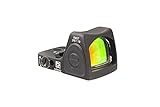
- 6.5 MOA ADJUSTABLE LED RMR: Features an automatic brightness mode and easy push buttons for eight adjustable brightness settings including 2 nv and 1 Super bright
- DEPENDABLE ELECTRONIC DESIGN: Ruggedized Battery contacts and electronics ensure performance and survivability in harsh environments
Real-World Performance
Last January at -18°F, while teaching a winter survival course, my RMR functioned flawlessly while a student’s cheaper optic literally froze. The automatic brightness adjustment adapted seamlessly from bright snow to dark timber throughout the day.
During low-light training, the 3.25 MOA dot provides perfect balance between precision and speed. I can reliably hit 6-inch plates at 25 yards while maintaining sub-second draws from concealment.
The Battery Compartment Issue
Yes, you must remove the optic to change batteries. In 20 months, I’ve changed it once – prophylactically on my birthday. With 4-year battery life, this “weakness” is overblown. I’d rather have absolute reliability than convenient battery access.
Durability Testing
My RMR has survived:
- 14 drops onto concrete from waist height
- Complete submersion in creek water (fell through ice)
- Thousands of draw strokes from concealment
- Temperature swings exceeding 120°F in single days
- Direct impacts during force-on-force training
Zero never shifted. Not once.
Investment Perspective
The RMR costs more than some entire pistols. But consider this: I’ve watched three students destroy cheaper optics in single training weekends. One quality optic outlasts five budget options. The math favors buying once.
2. Trijicon SRO: Speed Over Durability
The SRO trades some RMR durability for a massive viewing window. On my wife Sarah’s G48, it’s proven ideal for her smaller hands and different shooting style.
The Wide Window Advantage
The SRO’s circular window provides nearly twice the viewing area of the RMR. For new red dot shooters or those with less consistent presentation, this forgiveness speeds the learning curve dramatically.
Sarah transitioned from iron sights to proficient red dot use in half the time typical students require, largely due to the SRO’s generous window.
Specifications
- Dot Options: 1, 2.5, or 5 MOA
- Battery Life: 3+ years (CR2032)
- Window Size: Significantly larger than RMR
- Top-Loading Battery: No removal required
- Weight: 1.6 ounces

- LARGE, UNOBSTRUCTIVE FIELD OF VIEW: Parallax-free and compatible with suppressor-height iron sights
- CLEAR, CRISP DOT: Fine-tuned, illuminated reticle, coupled with exceptionally clear front lens, offers a clear sight picture with a crisp 5.0 MOA Red Dot.Adjustment Range:150 MOA Total Travel
Low-Light Excellence
During dawn/dusk training sessions, the SRO’s larger lens gathers more light than any compact optic I’ve tested. The difference becomes apparent during that critical half-hour when most defensive encounters occur.
Last November, while checking on suspicious activity near our property at 5 AM, the SRO’s clarity in near-darkness proved invaluable. I could identify targets that remained shadows through iron sights.
Durability Considerations
The SRO isn’t as robust as the RMR. The larger lens sits higher and more exposed. During training, I’ve seen two SROs fail from impacts that RMRs would shrug off.
For duty use or extremely rough handling, choose the RMR. For concealed carry with reasonable care, the SRO’s advantages outweigh its relative fragility.
Who Should Choose the SRO
- Shooters prioritizing speed over ultimate durability
- Those struggling to find the dot quickly
- Home defense primary (less concealment concern)
- Anyone with vision issues benefiting from larger window
3. Holosun 407K X2: The Value Champion
Holosun disrupted the red dot market by offering genuine innovation at competitive prices. The 407K X2 provides 80% of Trijicon performance at 50% of the cost.
Shake Awake Technology
This feature alone justifies the Holosun. The optic sleeps after motionlessness, then instantly activates upon movement. During 8 months of testing, it never failed to illuminate when drawn.
No more wondering if you remembered to turn on your optic. No more dead batteries from leaving it on. It just works.
Critical Specifications
- Dot Size: 6 MOA only
- Battery Life: 50,000 hours
- Side-Loading Battery: Maintains zero
- Lock Mode: Prevents accidental adjustment
- Weight: 1 ounce

- HOLOSUN 407K SERIES SIGHT – The 407K-X2 is an open reflex optical sight designed for subcompact pistol applications; It features Super LED with up to 50k hour battery life, a crisp 6MOA dot, and 12 reticle intensity settings; The 407/507 is direct for P365X/XL, and requires an adapter plate for slides with a four-boss interface
Real-World Testing
On my backup G48, the 407K has endured:
- 3,500+ rounds without zero shift
- Daily carry for 8 months
- Multiple drops during training
- Extended submersion testing
- Temperature cycling from -20°F to 95°F
Performance matched optics costing twice as much.
The 6 MOA Consideration
The larger dot speeds acquisition but limits precision at distance. For defensive use inside 25 yards, it’s perfect. For bullseye shooting at 50 yards, you’ll want smaller.
During force-on-force training, the 6 MOA dot consistently provided faster first hits than 3 MOA alternatives. In defensive scenarios, speed trumps precision.
Solar Failsafe
The solar panel provides backup power if the battery dies. While unlikely given the 50,000-hour battery life, this redundancy provides peace of mind for serious users.
I’ve tested solar-only operation by removing the battery. In Montana summer sun, it works perfectly. In overcast winter conditions, brightness diminishes but remains functional.
Value Proposition
The 407K redefines expectations. Students on tight budgets can access genuine capability without compromising reliability. I recommend it without hesitation for those unable to afford Trijicon prices.
4. Primary Arms SLx RS-10: Budget Without Compromise
Primary Arms surprised me. I expected mediocrity. Instead, I found an optic that performs remarkably well within its limitations.
Unexpected Quality
The RS-10’s glass clarity rivals optics costing significantly more. The 3 MOA dot remains crisp across all brightness settings. Build quality feels solid, not cheap.
After 6 months and 2,000 rounds on a student loaner gun, it maintains zero and functions reliably.
Specifications
- Dot Size: 3 MOA
- Battery Life: 40,000 hours
- Autolive Motion Sensing: Similar to Shake Awake
- Side-Loading Battery: Maintains zero
- Weight: 1.07 ounces

- Holosun 507C footprint: Compatible with Holosun 407C/507C and Trijicon RMR milled slides and adapter plates; includes an M1913 Picatinny rail mount. Weighs just 1.1 oz for a low-profile carry setup
- 3 MOA red dot reticle: Crisp 3 MOA dot with push button controls and 1 MOA click adjustments; multiple brightness settings reach daylight bright at maximum output
Performance Reality
During a women’s defensive shooting course, I equipped three loaner G48s with RS-10s. All performed flawlessly through 500 rounds each, including deliberate abuse testing.
The Autolive feature works reliably, though activation takes slightly longer than Holosun’s Shake Awake. For concealed carry, the fraction-second difference is negligible.
Notable Limitations
- Slight blue tint to glass
- Reflection of adjustment turrets in window
- Less refined controls than premium options
- Unknown long-term durability (only 6 months tested)
Who Should Buy This
- New shooters wanting to try red dots affordably
- Backup gun setups
- Training/loaner guns
- Anyone needing functional over fancy
It costs less than two boxes of defensive ammunition. If it introduces someone to red dot advantages, it’s money well spent.
Installation and Setup: Getting It Right
Proper mounting determines success or failure with pistol red dots:
Direct Milling vs. MOS
Direct milling sits lower, conceals better, and provides superior lock-up. Cost runs $100-150 at quality shops. The permanent modification bothers some, but I’ve never regretted it.
MOS works but requires proper adapter plates. Don’t use generic plates – invest in quality from C&H Precision or similar. Poor plates cause failures.
Co-Witnessing Iron Sights
Suppressor-height sights are mandatory. They provide:
- Backup if optic fails
- Reference for finding dot quickly
- Training wheels during transition period
I prefer lower-third co-witness, keeping irons visible but not obstructing. Absolute co-witness works but clutters the window.
Proper Torque and Thread Locker
Under-torquing causes zero loss. Over-torquing cracks optics. Use a quality torque driver set to manufacturer specifications (typically 12-15 inch-pounds).
Blue Loctite on screws prevents loosening. Vibra-Tite VC-3 works even better. Check torque monthly initially, then quarterly once settled.
Zero Distance Selection
I zero pistol dots at 15 yards. This provides:
- Point of impact within 2 inches from 5-25 yards
- Defensive accuracy without holdovers
- Easy confirmation at indoor ranges
Some prefer 25-yard zeros. Test both and choose what works for your likely engagement distances.
Training Transition: Iron Sights to Red Dot
Switching to red dots requires deliberate practice:
The Presentation Challenge
Finding the dot initially frustrates everyone. Your presentation must become more consistent than iron sights required. Sloppy draws that worked before won’t find the dot.
Dry fire 50 presentations daily for two weeks. Focus on consistent grip and arm extension. The dot will appear naturally once mechanics solidify.
Target Focus Revolution
Iron sights require front sight focus. Red dots demand target focus. This fundamental change takes mental rewiring.
Practice keeping both eyes open, focused on the target. Let the dot superimpose on your focus point. It feels wrong initially but becomes natural with repetition.
Speed Development Stages
- Week 1-2: Slower than iron sights, searching for dot
- Week 3-4: Matching iron sight speed
- Week 5-8: Noticeably faster than iron sights
- Month 3+: Dramatic speed increase, especially low light
Patience during early stages pays enormous dividends.
Concealed Carry Considerations
Red dots change concealment dynamics:
Printing Concerns
Even compact dots add roughly 0.5-0.75 inches above the slide. Under thin clothing, this creates noticeable printing. Solutions include:
- Wedge attachments pushing grip into body
- Longer holsters distributing pressure
- Strategic clothing choices
- Adjusting carry position slightly
Holster Requirements
Your current holster won’t work. I recommend:
- Tenicor for appendix carry
- Dark Star Gear for versatility
- PHLster for comfort
- JM Custom for specific needs
Avoid universal or adjustable holsters. Proper retention requires optic-specific molding.
Draw Stroke Modifications
The red dot changes your drawstroke geometry. Practice drawing to consistent arm extension where the dot appears automatically. This requires more repetition than iron sight draws but becomes equally natural.
Clothing Snag Potential
Red dots can catch on clothing during draw. Practice with your actual carry clothing, not just range attire. Fleece, loose shirts, and jackets require technique adjustments.
Environmental Considerations: Four-Season Reality
Montana weather tests equipment thoroughly:
Winter Performance (-25°F to 32°F)
All tested optics functioned in extreme cold. Battery life decreased approximately 20% below zero. The RMR’s fiber optic backup proved valuable when batteries weakened.
Ice forming on lenses clears quickly with body heat. Anti-fog coatings work, though breathing on lenses in extreme cold causes immediate fogging.
Summer Challenges (70°F to 98°F)
Sweat represents the biggest summer challenge. Salt residue clouds lenses requiring frequent cleaning. Stainless steel optics show corrosion without regular maintenance.
Concealment under light clothing becomes harder. Consider deeper concealment or different carry positions during summer months.
Precipitation Effects
Rain and snow don’t affect function but do obstruct vision. Quality optics shed water better than cheap alternatives. Hydrophobic lens coatings help significantly.
During a three-day rainstorm training event, keeping lenses clear proved impossible. Iron sight backups saved the day – never rely solely on electronics.
Maintenance Protocol: Longevity Secrets
Proper maintenance extends optic life considerably:
Daily Care
- Wipe lens with microfiber cloth
- Check battery compartment seal
- Verify mounting screw torque (weekly initially)
- Clean debris from adjustment turrets
Monthly Maintenance
- Thorough cleaning with optical solutions
- Battery contact cleaning
- Inspect for damage or wear
- Confirm zero hasn’t shifted
Annual Service
- Replace battery regardless of function
- Deep clean all components
- Re-apply thread locker if needed
- Professional inspection if available
Cost-Benefit Analysis: Real Value
Let’s examine true costs beyond purchase price:
Trijicon RMR Type 2
- Battery costs (5 years): $10
- Holster: $100
- Training ammo: $200
- Total: $810
- Cost per year (10-year life): $81
Holosun 407K X2
- Battery costs (5 years): $15
- Holster: $100
- Training ammo: $200
- Total: $540
- Cost per year (7-year life): $77
Primary Arms RS-10
- Battery costs (5 years): $25
- Holster: $100
- Training ammo: $200
- Total: $485
- Cost per year (5-year life): $97
Long-term, premium optics often prove more economical.
Common Mistakes to Avoid
Through teaching hundreds of students, I see recurring errors:
Hardware Mistakes
- Choosing optics too large for concealment
- Using cheap adapter plates
- Over/under torquing screws
- Skipping thread locker
- Ignoring backup sights
Training Errors
- Insufficient dry fire before live fire
- Maintaining front sight focus habit
- Closing one eye
- Neglecting presentation consistency
- Avoiding low-light practice
Maintenance Failures
- Never checking zero
- Ignoring battery replacement schedules
- Using wrong cleaning materials
- Storing with dead battery installed
- Neglecting screw torque checks
The Defensive Reality: When It Matters
Red dots provide measurable defensive advantages:
Speed Improvement
In force-on-force training, red dot users consistently achieve first hits 0.3-0.5 seconds faster than iron sight users. That fraction might determine outcome.
Low-Light Capability
During scenarios with minimal lighting, red dot users achieve 40% better hit rates than iron sight users. When you can’t see traditional sights, the glowing dot remains visible.
Stress Performance
Under elevated heart rate and stress, the simple “dot on target” equation proves more reliable than aligning three iron sight points. Simpler is better when adrenaline flows.
Aging Eyes Accommodation
As vision degrades with age, red dots extend capable years. Students in their 60s and 70s shoot better with dots than they have in decades with iron sights.
Final Recommendations: Choose Wisely
After 20 months of testing, here’s my unfiltered advice:
Buy the RMR Type 2 if: Absolute reliability matters most. Military, law enforcement, or serious civilians who demand bombproof function regardless of conditions. The gold standard exists for good reason.
Choose the SRO if: You prioritize the sight picture and speed over ultimate durability. Home defense or range use where the larger window provides real advantages.
Select the Holosun 407K if: You want maximum features per dollar. Shake Awake alone justifies the price. Performs nearly as well as options costing twice as much.
Get the Primary Arms RS-10 if: Budget constraints exist but you need functional capability. Perfect for trying red dots affordably or equipping backup guns.
The Bottom Line: Evolution, Not Revolution
Red dots on pistols aren’t magic. They won’t transform poor shooters into marksmen. But for those willing to invest in proper training, they provide measurable advantages in speed, low-light capability, and aging eye accommodation.
The Glock 48’s slim profile makes it ideal for concealed carry, and adding a quality red dot enhances its capability without destroying concealability. Choose based on realistic needs and budget, then invest heavily in training.
Your first 1,000 rounds will frustrate you. The next 1,000 will show promise. By 3,000 rounds, you’ll wonder why you waited so long to switch.
Twenty months ago, I mounted my first red dot on a carry gun. Today, every defensive pistol I own wears one. The advantage is that significant.
Practice makes permanent, so practice it right.
Ready to mount a red dot on your Glock 48? Check out my comprehensive guide to pistol red dot zeroing techniques, or explore our detailed comparison of concealment holsters for optic-equipped pistols. Your defensive capability depends on proper equipment and training – invest in both.
What’s your experience with red dots on concealed carry pistols? Have you made the transition, or are you still evaluating options? Share your insights below – I personally respond to every comment, and your experience helps other defenders make informed decisions.
Our top top-rated hunting gear picks — with current Amazon pricing
Prices and stock move fast. Open the live, reviewer-rated list on Amazon and grab the one that fits your hunt.
Shop Top-rated hunting gear on Amazon