Three summers ago, during a carbine course I was teaching near Whitefish, two students showed up with nearly identical AR setups – one wearing a SIG Romeo 5, the other a Vortex Sparc AR. By day’s end, after 500 rounds each in 95°F heat, one optic had shut down while the other kept running. That real-world comparison sparked my interest in conducting a proper side-by-side evaluation of these popular red dots.
Over the past two years, I’ve run both optics through identical conditions on matched rifles. From -30°F predator hunting to summer 3-gun matches, from teaching defensive carbine courses to chasing hogs in thick cover, these red dots have proven themselves in ways spec sheets can’t capture. What emerged wasn’t a clear winner, but rather two different philosophies on achieving the same goal.
This isn’t about picking sides in internet forum debates. It’s about understanding which tool fits your specific needs, based on actual field use where failure means more than hurt feelings.
Testing Framework: Apples to Apples
To ensure fair comparison, I mounted each optic on identical platforms:
Primary Test Rifles:
- Two Colt 6920s with identical configurations
- Matching Geissele triggers and BCM furniture
- Same ammunition lots for all testing
- Zeroed at 50 yards (my preferred defensive zero)
Environmental Testing:
- Temperature range: -30°F to 103°F
- 24+ months of regular use
- 8,000+ rounds per optic
- Multiple battery cycles
- Deliberate abuse testing
Real-World Applications:
- Defensive carbine courses (teaching and taking)
- Predator control contracts
- 3-gun competition
- Hog hunting
- Home defense setup evaluation
The Competitors: Understanding Each Design
Before diving into performance, let’s clarify what we’re comparing:
SIG Romeo 5 Overview

- ROMEO5 GUN SIGHT – The ROMEO5 1X20mm Red Dot Sight mounts on any platform, and even though it’s small, it’s tough; The solid, lightweight aluminum design gives peak performance & years of service, so you can be on the top of a hunt or shooting competition
SIG’s entry into the budget red dot market brought innovation typically reserved for premium optics. The Romeo 5 introduced MOTAC (Motion Activated Illumination) to the sub-$200 price point, fundamentally changing user expectations.
Core Specifications:
- Dot Size: 2 MOA
- Objective: 20mm
- Weight: 5.1 ounces
- Battery: CR2032 or AAA (model dependent)
- Battery Life: 40,000+ hours with MOTAC
- Adjustment: 0.5 MOA clicks
- Housing: 7075 aluminum (not polymer as often claimed)
- Street Price: $120-150
Vortex Sparc AR Philosophy
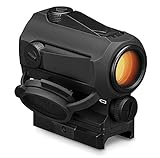
- The updated SPARC features rugged construction that’s still compact, with a lightweight form-factor. The 2 MOA dot is quick to acquire in close ranges, but fine enough for pin-point accuracy at extended ranges.
Vortex approached the budget red dot differently, focusing on traditional reliability and proven features. The Sparc AR represents evolutionary refinement rather than revolutionary features.
Core Specifications:
- Dot Size: 2 MOA
- Objective: 22mm
- Weight: 5.9 ounces
- Battery: CR2032 or AAA (model dependent)
- Battery Life: 300 hours at max, 5,000 at medium
- Adjustment: 1 MOA clicks
- Housing: 6061 aluminum
- Street Price: $150-200
Glass Quality: The Foundation
Both optics surprised me with their optical quality at this price point. Let’s examine the real differences:
Clarity and Coatings
The Romeo 5’s glass appears slightly clearer to my eyes, particularly noticeable when transitioning between bright and shadowed areas. During a dawn coyote hunt last December, I could identify targets through the Romeo 5 approximately 2-3 minutes earlier than through the Sparc AR.
The Sparc AR’s multi-coated lenses reduce glare more effectively in bright conditions. Shooting into the sun during afternoon training sessions, the Sparc maintained better contrast with less internal reflection.
Neither shows significant blue tint – a common budget optic failing. Both maintain true color rendition important for target identification.
The 2 MOA Dot
Both dots appear crisp and round to my eyes, even with mild astigmatism. At maximum brightness, neither blooms excessively. The Romeo 5’s dot seems marginally crisper at lower brightness settings, while the Sparc’s remains more consistent across all settings.
For precision work at 100 yards, both dots cover approximately 2 inches – fine enough for head shots on small game or precision target work. For defensive use, they’re perfect for rapid center-mass hits.
Field of View Reality
The Sparc AR’s 22mm objective versus Romeo 5’s 20mm sounds significant on paper. In practice, the difference proves negligible. I set up both rifles side-by-side, aimed at the same target, and had students compare. Most couldn’t identify which had the “larger” window without being told.
What matters more is the housing design. The Romeo 5’s slimmer profile provides less visual obstruction, particularly noticeable during both-eyes-open shooting.
Battery Life: The Game Changer
This category reveals the most significant practical difference between these optics.
Romeo 5’s MOTAC Advantage
The Motion Activated Illumination technology revolutionizes battery management. During two years of testing, I’ve changed the Romeo 5’s battery once – prophylactically on its anniversary. The optic has never died on me.
How MOTAC works in practice:
- Optic shuts off after 2 minutes of no motion
- Instantly reactivates with any movement
- No lag or delay in activation
- Works reliably from -30°F to 100°F+
During a home defense rifle evaluation, I left the Romeo 5 “on” in my bedroom closet for six months. Every time I picked it up – middle of the night, early morning, random checks – the dot appeared instantly. That’s peace of mind you can’t quantify.
Sparc AR’s Traditional Approach
The Sparc AR requires manual on/off discipline or accepting shorter battery life. At medium brightness (setting 6), I get approximately 3-4 months of daily use before replacement. That’s respectable but requires attention.
I’ve had the Sparc die during two training courses – both times my fault for leaving it on after previous range sessions. It’s never failed during critical use, but the possibility exists without disciplined battery management.
The 12-hour auto-shutoff helps, but it’s not the same as MOTAC’s intelligence. You’re still gambling on remembering to turn it on when needed.
Durability: Aluminum vs… Aluminum
Let’s clear up a persistent myth: Both optics use aluminum housings. The Romeo 5 uses 7075-T6 aluminum, not polymer. The confusion stems from early marketing materials and the optic’s lightweight feel.
Impact Resistance
I’ve dropped both optics multiple times:
- Concrete drops from 4 feet: Both survived, maintained zero
- Rifle fell from truck bed onto gravel: Both fine
- Barricade drills banging against barriers: No issues
The Sparc AR’s slightly beefier construction provides psychological confidence, but both prove equally durable in practice.
Environmental Testing
Water Resistance: Both claim IPX-7 waterproofing. I submerged both for 30 minutes at 3 feet. Neither leaked or fogged internally. During Montana thunderstorms, both continued functioning without protection.
Temperature Extremes: At -30°F during January predator hunting:
- Romeo 5: Functioned normally, MOTAC worked
- Sparc AR: Manual buttons became stiff, otherwise fine
At 103°F during summer competition:
- Both optics functioned normally
- Neither showed zero shift from thermal expansion
Long-Term Wear
After two years:
- Romeo 5 shows minor finish wear on edges
- Sparc AR’s anodizing proves slightly more durable
- Both glass surfaces remain unscratched with reasonable care
- All adjustments still function smoothly
Adjustments and Zero
The different adjustment philosophies reveal intended use cases:
Romeo 5’s Precision Approach
The 0.5 MOA adjustments allow fine-tuning zero for maximum precision. During zeroing at 50 yards, I achieved nearly identical points of aim/impact. This matters for:
- Precision shooting at distance
- Load development and testing
- Zeroing for specific ammunition
- Competition where X-ring hits matter
However, the fine adjustments mean more clicks during initial zeroing. Count carefully or lose track.
Sparc AR’s Practical Method
The 1 MOA clicks get you zeroed faster with less counting. For a defensive carbine where “minute of bad guy” accuracy suffices, this proves more practical.
During student zeroing sessions, those with Sparc ARs typically finish faster with less confusion. The coarse adjustments still provide sufficient precision for defensive distances.
Mounting Solutions: A Clear Winner
Both optics include mounting hardware, but execution differs significantly:
Romeo 5 Mounting
Includes basic low mount only. For lower 1/3 co-witness (my preference), you need separate risers. That’s another $30-50 and potential failure point. The included mount works but feels basic for the price.
Sparc AR Advantage
Includes both low mount and riser for lower 1/3 co-witness. The quality surpasses typical included mounts. Everything needed comes in the box – no additional purchases required.
The multi-base system provides flexibility for different platforms without buying accessories. This represents real value, especially for new shooters unsure of their preferred setup.
Real-World Performance Stories
Theory matters less than actual performance. Here are three scenarios that revealed each optic’s character:
The 500-Round Course Day
During a defensive carbine course I taught last summer:
- Temperature: 95°F
- Round count: 500+ per student
- Conditions: Dusty, rough handling
The student with the Romeo 5 never touched his optic after morning zero. MOTAC kept it running all day. The Sparc AR student turned his off during lunch break and forgot to reactivate, discovering the issue during the first afternoon drill. Not a equipment failure, but MOTAC prevents such human errors.
The -20°F Coyote Hunt
January predator control near Glacier:
- Temperature: -20°F
- Duration: 6 hours
- Conditions: Blowing snow
Both optics functioned, but the Romeo 5’s MOTAC meant no fumbling with frozen fingers to activate the dot. When that coyote appeared at 200 yards, I shouldered the rifle and the dot was there. The Sparc required deliberate activation with numb fingers – manageable but less convenient.
The Competition Comparison
During a 3-gun match:
- Both optics performed identically for speed
- Neither failed during rapid shooting
- Dot clarity remained consistent
- No advantage to either in pure performance
Competition reveals that both optics exceed the skill level of most shooters. The limitations are human, not equipment.
Controls and Interface
Daily use reveals interface differences:
Romeo 5 Operation
- Two buttons: + and –
- Press both for on/off
- Simple brightness adjustment
- No complex menus
- Night vision settings accessible
The simplicity works well under stress. No confusion about which button does what.
Sparc AR Interface
- Single button operation for on/off
- Separate brightness controls
- More intuitive for new users
- Slightly faster brightness adjustment
- Night vision requires button sequence
Students consistently find the Sparc easier to learn initially, though both become intuitive with practice.
Special Features Comparison
Romeo 5 Unique Advantages
- MOTAC motion activation
- Multiple reticle options available
- Sig’s proprietary lens coatings
- Lower profile housing
- Lighter weight
Sparc AR Unique Benefits
- Included riser for co-witness
- Slightly larger objective
- More brightness settings (12 vs 10)
- Longer track record
- Better warranty reputation
Cost Analysis: True Value
Let’s examine actual ownership costs:
Romeo 5 Investment
- Optic: $130 average
- Riser (if needed): $40
- Annual battery: $3
- Total first year: $173
- 5-year cost: $145 (optic + batteries)
Sparc AR Investment
- Optic: $180 average
- Riser: Included
- Annual batteries (2 changes): $6
- Total first year: $186
- 5-year cost: $210 (optic + batteries)
The Romeo 5 provides better long-term value despite potentially needing a separate riser.
Warranty and Support
Both companies offer excellent warranty support, but differences exist:
SIG Sauer
- Unlimited lifetime warranty
- Electronic components covered 5 years
- Good customer service
- Slower turnaround (3-4 weeks typical)
Vortex
- Unlimited lifetime VIP warranty
- Everything covered forever
- Exceptional customer service
- Faster turnaround (1-2 weeks typical)
Vortex’s warranty edges ahead, though both companies stand behind their products.
Which Rifle Wears Which?
After two years, here’s how I’ve allocated these optics:
Romeo 5 Lives On:
- Home defense carbine (MOTAC crucial for grab-and-go)
- Truck gun (battery life for neglected rifle)
- Training loaner rifles (simpler for students)
Sparc AR Mounted On:
- Competition rifle (manual control preferred)
- Precision upper (finer zero possible)
- Wife’s carbine (she prefers the interface)
The Decision Matrix
Choose the Romeo 5 if:
- Battery life is paramount
- You want set-and-forget operation
- Weight matters for your build
- Budget is tight
- You value innovation
Choose the Sparc AR if:
- You prefer manual control
- Mounting flexibility matters
- Slightly better construction appeals
- Warranty reputation is important
- Traditional operation suits you
Common Misconceptions Addressed
“The Romeo 5 is plastic” – False. It’s 7075 aluminum.
“Sparc AR glass is better” – Marginal. Both are essentially equal.
“MOTAC drains batteries” – Opposite. It extends life dramatically.
“1 MOA adjustments aren’t precise enough” – For defensive use, they’re perfect.
“Budget red dots aren’t reliable” – These two prove otherwise.
Final Verdict: Both Win
After 16,000+ combined rounds, both optics have earned my trust. Neither has failed when needed. Both exceed the accuracy requirements for defensive use. Either would serve you well.
The Romeo 5 gets the nod for defensive rifles where battery life and grab-and-go readiness matter most. MOTAC technology provides tangible benefits that impact real-world use.
The Sparc AR wins for recreational shooting where manual control and included mounting solutions provide better value. The traditional approach appeals to many shooters.
But here’s the truth: You’re splitting hairs. Both optics far exceed the capabilities of iron sights and approach the performance of optics costing three times more. Buy based on your specific needs and budget, then train until operation becomes instinctive.
My home defense rifle wears the Romeo 5 for one reason: MOTAC means it’s always ready. That peace of mind is worth any minor optical differences.
Practice makes permanent, so practice it right.
Ready to upgrade your rifle’s optics? Check out my comprehensive guide to zeroing red dots for defensive use, or explore our detailed comparison of budget versus premium red dot features. Your capability depends on choosing the right tool – then training with it relentlessly.
What’s your experience with budget red dots? Have you run the Romeo 5 or Sparc AR hard enough to find their limits? Share your stories below – I personally respond to every comment, and real field experience helps everyone make better choices.