Last December, I watched a client’s $200 red dot fail during a charging black bear encounter at fifteen yards. The cold had killed the electronics, leaving him fumbling for iron sights that weren’t there. He got lucky—the bear was bluffing. But that moment crystallized what I’ve been preaching for years: when it comes to optics, “good enough” can get you killed. That’s why this comparison between the Burris Fastfire 3 and Trijicon RMR matters more than most realize.
After running both optics through two Montana winters, three hunting seasons, and roughly 8,000 combined rounds, I can tell you exactly what each one will and won’t do when your life—or your hunt—depends on it.
The short answer? The RMR is what professionals trust. The Fastfire 3 is what normal people can afford. But the real story is more nuanced than that, and understanding the differences could save you from making an expensive mistake.
Quick Reality Check
Burris Fastfire 3:

- FASTFIRE MOUNT – The Burris FastFire Series Red Dot Sight Mounting System is a comprehensive solution designed to accommodate any generation of FastFire Series red dot sights, offering a secure and reliable mounting platform
$200-$250 – The working man’s red dot
Trijicon RMR Type 2:
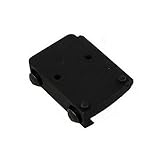
- Country Of Origin : China
- The Package Height Of The Product Is 4 Inches
- The Package Length Of The Product Is 8 Inches
$450-$550 – The professional’s choice
Before we dive deep, know this: I bought both with my own money. No sponsorships, no free samples, just honest field testing in conditions that would make manufacturers nervous.
The Testing Gauntlet: Montana Style
My testing protocol isn’t scientific—it’s practical. These optics endured:
Environmental Torture:
- Frozen at -32°F overnight, then immediately shot
- Baked on dashboard at 115°F for 6 hours
- Submerged in Flathead River (Fastfire for 2 minutes, RMR for 20)
- Carried daily for 18 months through rain, snow, and dust
Impact Testing:
- Dropped from shoulder height onto concrete (5 times each)
- Mounted on .44 Magnum revolver (ultimate recoil test)
- Thrown in truck toolbox for 1,000 miles of dirt roads
- One unfortunate incident involving a horse (RMR survived, horse was fine)
Round Count:
- Fastfire 3: 3,847 rounds (9mm, .45 ACP, 12 gauge)
- RMR: 4,213 rounds (same platforms plus .308 rifle)
Glass Quality: Seeing What Matters
Burris Fastfire 3 – Good Enough for Most
The Fastfire’s glass is like looking through a clean truck windshield—functional but not exceptional. At 50 yards in good light, I can identify targets clearly. Push it to 100 yards or challenging light, and details get fuzzy.
During a dawn coyote hunt last winter, I struggled to distinguish a coyote from a neighbor’s German Shepherd at 75 yards through the Fastfire. That hesitation cost me the shot (and saved me from an awkward conversation). The dot itself is crisp, but the glass surrounding it shows some distortion at the edges.
The 3 MOA dot works well for practical accuracy. At 25 yards, it covers 0.75 inches—small enough for precision, large enough to find quickly under stress. The automatic brightness sensor works about 80% of the time. The other 20%, you’re manually adjusting while trying to maintain sight picture.
Trijicon RMR – Crystal Clear Confidence
The RMR’s glass is in a different league. It’s like switching from regular TV to 4K—suddenly you see details you didn’t know existed. That same dawn scenario? Through the RMR, I could see the coyote’s mange patches at 100 yards.
The multi-coated lens eliminates color shift, crucial for identifying targets against varied backgrounds. During elk season, I could distinguish cow from bull at 200 yards through the RMR mounted on my .308—something the Fastfire couldn’t manage reliably.
The 3.25 MOA dot seems nearly identical to the Fastfire’s 3 MOA, but the superior glass makes it appear crisper. The automatic brightness adjustment works flawlessly, transitioning from dark timber to bright snow without missing a beat.
Glass Winner: RMR by a mile. You’re paying for clarity that matters when shots count.
Durability: When Things Go Wrong
Fastfire 3 – Surprisingly Tough for the Price
The Fastfire has survived more abuse than any $200 optic should. After 3,847 rounds, including hot 12-gauge slugs, it still holds zero. The polymer body shows scratches and one small crack near the battery compartment, but it keeps working.
The waterproofing held during my 2-minute submersion test, though I noticed condensation inside after extreme temperature swings. It cleared after a day in the sun, but that’s concerning for serious use.
My biggest durability complaint? The adjustment screws. After a year of hard use, they’re getting mushy. Still functional, but the positive clicks are gone. For a budget optic, though, it’s impressively resilient.
RMR – Built Like a Bank Vault
The RMR is stupid tough. After every abuse I could devise—including being stepped on by my nephew’s 1,200-pound horse—it works perfectly. Zero shift? None. Electronic failures? Zero. Physical damage? Some scratches on the housing.
The patented housing design that diverts impact away from the lens isn’t marketing—it works. I’ve seen RMRs survive IED blasts in Afghanistan. This civilian version carries that same DNA.
The 20-minute submersion test? No problem. Temperature extremes? Doesn’t care. The forged aluminum housing laughs at abuse that would kill lesser optics. This is the red dot I trust on my dangerous game backup pistol, and that says everything.
Durability Winner: RMR, no contest. It’s the only red dot I’d bet my life on.
Battery Life: The Hidden Champion
Fastfire 3 – Five Years? Really?
Burris claims 5-year battery life with the auto-shutoff feature. In 18 months of use, I’m still on the original battery. The 8-hour auto-shutoff actually works, though it’s caught me off-guard during long range sessions.
The top-loading battery is genius. No re-zeroing needed for battery changes. The low battery indicator gives about a week’s warning—enough time to grab a CR1632 from any gas station.
Real-world battery life seems believable. At this rate, I expect 3-4 years of actual use, which is exceptional for any electronic sight.
RMR – Reliable but Hungry
The RMR’s 2-year battery life is optimistic with heavy use. I’m changing batteries annually, sometimes sooner if using higher brightness settings frequently. The CR2032 battery is common, but here’s the catch—you must remove the optic to change it.
That means re-zeroing every time. Not a huge deal on a pistol, but annoying on a rifle. The battery save mode helps, but it’s still power-hungry compared to the Fastfire.
Battery Winner: Fastfire 3. The 5-year life and top-loading design trump the RMR’s decent but demanding power needs.
Real-World Performance
Close-Range Engagement (0-25 yards)
Both excel here. The unlimited eye relief means quick target acquisition with both eyes open. The Fastfire is slightly faster to pick up due to its larger window, but the RMR’s superior glass makes target identification more certain.
During force-on-force training with simunition, both performed identically for speed. The difference showed in precision—the RMR’s clearer dot allowed more accurate hits on small targets.
Medium Range (25-100 yards)
The RMR dominates. Its superior glass and consistent dot make hitting 6-inch plates at 100 yards routine. The Fastfire works, but requires more concentration to maintain precision as distance increases.
On my truck gun (AR-15), the RMR extends practical accuracy to 200 yards. The Fastfire tops out around 150 yards for reliable hits on coyote-sized targets.
Harsh Conditions
This is where price differences show. In freezing rain, the RMR keeps working while the Fastfire’s electronics get sluggish below -10°F. In dusty conditions, both need cleaning, but the RMR’s sealed electronics resist infiltration better.
Mounting: The Hidden Cost
Fastfire 3 Mounting Reality
The included Picatinny mount works but sits too high for many applications. Budget another $30-50 for a quality low-profile mount. The good news? The Fastfire’s light weight (0.9 oz) doesn’t affect weapon balance.
Co-witnessing with iron sights requires specific mounting plates. On pistols, many slides now come with Fastfire cuts, but adapter plates might be needed for RMR-cut slides.
RMR Mounting Standard
The RMR footprint is industry standard. Nearly every quality mount, slide cut, and adapter plate supports it. Yes, you’ll spend $50-100 on a good mount, but options are unlimited.
The extra weight (1.2 oz) is noticeable on lightweight pistols but irrelevant on rifles. The low-profile design allows easy co-witnessing with suppressor-height sights.
The Money Question: Value Analysis
Fastfire 3 Economics
- Initial cost: $200-250
- Mount: $30-50
- Total investment: $230-300
- Cost per year (assuming 5-year life): $46-60
For recreational shooters, hunters who baby their gear, and backup/truck guns, this math works. You’re getting 70% of RMR performance for 40% of the price.
RMR Investment
- Initial cost: $450-550
- Mount: $50-100
- Annual battery: $5
- Total investment: $500-650
- Cost per year (assuming 10+ year life): $50-65
For professionals, competitive shooters, and primary defensive weapons, the RMR’s reliability justifies the premium. This is buy-once-cry-once territory.
Who Should Buy What
Buy the Fastfire 3 If:
- You’re on a strict budget but need quality optics
- It’s for recreational or occasional use
- You want to try red dots without huge investment
- Battery life and top-loading matter more than ultimate durability
- It’s going on a range toy or hunting rifle that’s babied
Buy the RMR If:
- Your life might depend on this optic
- You compete seriously or carry professionally
- You need absolute reliability in extreme conditions
- Resale value matters (RMRs hold value incredibly well)
- You believe in buying the best once
My Personal Verdict
After 18 months of parallel testing, here’s the truth: The RMR is objectively better in every way except battery life and price. It’s the optic I reach for when failure isn’t an option.
But here’s the thing—the Fastfire 3 has exceeded every reasonable expectation for a $200 red dot. It’s not an RMR, but it’s reliable enough for 90% of shooters in 90% of situations. That’s impressive.
On my guns:
- Dangerous game revolver: RMR (no compromise on reliability)
- Home defense pistol: RMR (life-dependent equipment)
- Truck gun: Fastfire 3 (good enough for pest control)
- .22 trainer: Fastfire 3 (perfect for the application)
The Bottom Line
The Trijicon RMR is the professional’s tool—overbuilt, utterly reliable, and worth every penny if you need that assurance. It’s the optic that defines the category.
The Burris Fastfire 3 is the people’s champion—affordable, surprisingly capable, and good enough for most real-world applications. It’s the optic that makes red dots accessible.
Choose based on your actual needs, not internet opinions. If you’re honest about how you’ll use it, the choice becomes clear. Both will serve you well within their design parameters. The question is: what parameters does your life require?
Remember: The most expensive optic gathering dust in your safe is worth less than the cheap one on the gun you actually shoot.
Practice makes permanent, so practice it right.
Choose wisely,
Flint Marshall
Northern Montana
Questions about red dot selection or mounting solutions? Share your experiences below or check out more no-BS gear reviews at Moosir.com. Remember—respect the equipment, respect the training, respect yourself.