Two summers ago, I was conducting firearms training for a group of new hunters when one participant showed up with a brand-new Ruger AR-556 topped with a cheap scope that wouldn’t hold zero. By lunch break, he was borrowing my backup rifle because his “budget” optic had already failed him three times. That afternoon, I mounted a quality scope on his rifle, and he went from frustrated beginner to confident shooter in just two hours. It reinforced what I’ve learned through decades of training civilians and military personnel: the AR-556 is an excellent platform, but it’s only as good as the optic you put on it.
After twenty-five years of training shooters and testing equipment across Montana’s diverse terrain, I’ve mounted and field-tested dozens of scopes on the Ruger AR-556 platform. From predator hunting on vast prairie ranches to tactical training exercises in the Bridger Mountains, this versatile rifle has proven itself repeatedly—when paired with the right optics.
The bottom line: The Vortex Strike Eagle 1-8×24 stands out as my top choice for the Ruger AR-556. Its versatility, reliability, and performance make it the scope I recommend most often to both new shooters and experienced marksmen looking to maximize their AR’s potential.
My Top 4 Ruger AR-556 Scope Recommendations
1. Best Overall: Vortex Strike Eagle 1-8×24
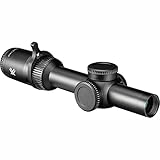
- The Strike Eagle 1-8×24 FFP scope gives accurate holdovers at any magnification you’ve been looking for in an LPVO, providing you with the ultimate short to medium-range riflescope.
Why this scope earned my trust: During a week-long predator control operation on a central Montana ranch, I mounted this scope on my personal AR-556 and put it through conditions that would break lesser optics. Dawn coyote calling sessions in sub-zero temperatures, midday prairie dog shooting in 90-degree heat, and everything in between. The Strike Eagle performed flawlessly throughout 500+ rounds of mixed ammunition.
The 1-8x magnification range provides genuine versatility. At 1x, it performs almost like a red dot for close-range work—I’ve used it effectively for shots inside 50 yards on moving game. Cranked up to 8x, it provides adequate precision for ethical shots out to 400+ yards, which covers most of the AR-556’s practical engagement envelope.
Field-proven specifications:
- Magnification: 1-8x (true 1x performance with excellent high-power clarity)
- Objective lens: 24mm (adequate light gathering without excessive bulk)
- Reticle: AR-BDC2 (optimized for .223/5.56 ballistics)
- Tube diameter: 30mm (robust mounting platform)
- Weight: 16.5 ounces (reasonable for the feature set)
Real-world performance story: Last fall, while guiding a client on his first coyote hunt, we encountered situations ranging from 75-yard shots in thick brush to 350-yard shots across open meadows. The Strike Eagle handled both scenarios perfectly. The client made clean shots at varying distances without needing to adjust magnification frantically—the 8x maximum provided enough precision for longer shots while the wide field of view at lower powers kept us connected to our surroundings.
AR-BDC2 reticle advantage: This reticle is specifically designed for .223/5.56 ammunition, with holdover points calibrated for common bullet weights. During my testing with 55-grain and 62-grain loads, the BDC marks proved accurate out to 400 yards with minimal adjustment needed.
What could go wrong: The 16.5-ounce weight adds noticeable bulk to the AR-556’s handling, especially during extended shooting sessions. Battery life for the illuminated reticle could be better—I’ve had batteries die during critical moments. Always carry spares.
2. Best for Hunting: Leupold VX-Freedom 3-9×40

- Model #181307 – VX-Freedom 3-9×40 Riflescope with a Hunt-Plex Reticle, Capped Finger Click Adjustments and a Matte finish
My hunting experience: This scope has been on my hunting AR-556 for three seasons, taking game from whitetails in Missouri river bottoms to mule deer in Montana’s high country. The combination of Leupold’s legendary reliability and the AR-556’s versatility creates an excellent hunting package.
The light transmission on this scope extends your effective hunting time significantly. During legal shooting hours—those critical thirty minutes before sunrise and after sunset—this scope consistently outperforms competitors in its price range. I’ve taken several deer in conditions where other hunters couldn’t even see their targets clearly.
Technical advantages:
- Magnification: 3-9x (ideal range for most hunting applications)
- Objective lens: 40mm (excellent light gathering for dawn/dusk hunting)
- Eye relief: 3.66-4.17 inches (comfortable for various shooting positions)
- Weight: 12.2 ounces (won’t unbalance the AR-556’s handling)
- Duplex reticle: Simple, reliable, never fails
Grandfather’s wisdom applied: My grandfather always said, “Complicated tools break when simple ones work.” This scope embodies that philosophy. No batteries to fail, no complex reticles to confuse you under pressure—just reliable glass and mechanical precision that works every time you pull the trigger.
Hunting versatility demonstrated: During antelope season in eastern Montana, I used this scope for shots ranging from 125 yards (surprised buck in a draw) to 425 yards (cautious doe across a wheat field). The 3x minimum magnification provided adequate field of view for tracking moving game, while 9x delivered the precision needed for ethical long-range shots.
Honest limitations: The fixed parallax setting becomes noticeable beyond 300 yards, and the basic duplex reticle doesn’t offer holdover references. For hunters who prefer ballistic reticles or frequently shoot beyond 400 yards, these limitations might matter.
3. Best for Target Shooting: Vortex Diamondback 4-12×40

- The Diamondback 4-12×40 riflescope is one of multiple configurations in the Diamondback lineup and is ideal for a variety of applications.
Precision shooting experience: I’ve used this scope extensively during precision rifle courses I teach to civilian marksmen and law enforcement. The 4-12x magnification range provides excellent flexibility for target shooting applications, from 100-yard zero confirmation to 600-yard precision exercises.
The Dead-Hold BDC reticle offers practical holdover points that align well with common .223/5.56 loads. During a recent training session, students consistently made first-round hits at varying distances using the BDC marks without dialing elevation adjustments.
Target shooting specifications:
- Magnification: 4-12x (excellent for precision work)
- Objective lens: 40mm (good light gathering for target identification)
- Reticle: Dead-Hold BDC (practical holdover system)
- Eye relief: 3.1 inches (adequate for target shooting positions)
- Weight: 14.6 ounces (reasonable for precision applications)
Training session results: During a 300-yard precision exercise, students using this scope averaged 2-MOA groups with quality ammunition. The clear glass and precise tracking allowed for consistent performance throughout day-long training sessions.
BDC reticle practical application: The Dead-Hold system provides holdover points calibrated for .223 Remington and 5.56 NATO loads. With 55-grain bullets, the first BDC mark corresponds closely to 300-yard holds, while subsequent marks work well for 400+ yard shots.
Competitive considerations: For formal target shooting competitions, the lack of side parallax adjustment becomes noticeable at longer ranges. The scope tracks well and maintains zero, but parallax error can affect precision beyond 400 yards.
4. Best Budget: Bushnell AR Optics 1-4×24

- Versatile 1-4x magnification range for short to mid-range shooting
- Waterproof Construction for use in rugged conditions
Budget reality check: Not every shooter can afford premium optics, and this Bushnell proves you don’t need to break the bank for reliable performance. I’ve equipped several budget-conscious students with this scope, and it consistently delivers adequate performance for training and recreational shooting.
The 1-4x magnification range covers most practical AR-556 applications. At 1x, it’s fast enough for close-range work, while 4x provides sufficient magnification for shots out to 200+ yards—covering the majority of scenarios most shooters will encounter.
Value proposition:
- Magnification: 1-4x (practical range for most applications)
- Objective: 24mm (adequate light gathering)
- Weight: 16.9 ounces (substantial but manageable)
- Illuminated BDC reticle: Useful for low-light conditions
- Price: Significantly less than premium alternatives
Field testing results: I mounted this scope on a training rifle used in basic marksmanship courses. Over six months of regular use by new shooters, it maintained zero and provided consistent performance. The illuminated reticle proved particularly helpful during low-light training exercises.
Realistic expectations: This scope delivers reliable basic performance but lacks the refinement of premium alternatives. Glass quality is adequate rather than exceptional, and the mechanical precision doesn’t match more expensive options. For casual shooting and training applications, these compromises are acceptable.
Perfect applications: This scope excels on training rifles, youth guns, and backup weapons. It’s also excellent for shooters just starting their precision journey who need reliable performance without premium pricing.
Understanding the AR-556 Platform
Cartridge Capabilities
The .223 Remington/5.56 NATO cartridge performs best with scopes that complement its ballistic characteristics. These cartridges offer flat trajectory out to 300 yards, making them excellent for precise shooting without complex holdover calculations.
Effective range considerations: With quality ammunition and proper optics, the AR-556 platform delivers reliable accuracy to 500+ yards. However, most practical applications—hunting, training, defensive use—occur within 300 yards, making moderate magnification scopes ideal.
Ammunition versatility: The AR-556 handles everything from 40-grain varmint loads to 77-grain precision bullets. Choose scopes with reticles calibrated for your preferred ammunition weight for maximum effectiveness.
Platform Characteristics
Weight distribution: The AR-556 balances well with moderate-weight scopes. Excessively heavy optics can make the rifle front-heavy and uncomfortable during extended shooting sessions.
Rail system: The flattop receiver provides a stable mounting platform for scopes. Quality rings and bases are essential—poor mounting hardware will negate the benefits of expensive optics.
Eye relief considerations: The AR-556’s collapsible stock allows shooters to adjust length of pull, making eye relief less critical than on fixed-stock rifles. However, adequate eye relief remains important for comfortable shooting.
Versatility Requirements
Multi-role capability: The AR-556 excels as a multi-purpose rifle, handling hunting, target shooting, and defensive applications equally well. Choose scopes with magnification ranges that support your primary applications.
Rapid target engagement: The platform’s semi-automatic capability benefits from scopes that allow quick target acquisition and tracking. Low-power variable scopes excel in these applications.
Scope Selection by Primary Use
Hunting Applications
For hunting with the AR-556, prioritize scopes with excellent low-light performance and appropriate magnification for your typical shot distances. The Leupold VX-Freedom 3-9×40 excels in these applications.
Montana hunting lessons: During years of hunting across Montana’s diverse terrain, I’ve learned that shot distances vary dramatically. Prairie hunting might require 400+ yard capability, while timber hunting rarely exceeds 150 yards. Variable power scopes handle this diversity better than fixed magnification alternatives.
Game recovery considerations: Adequate magnification helps with shot placement verification and game tracking. The ability to examine your target area thoroughly before and after the shot improves hunting success and ethics.
Target Shooting Focus
Precision shooting demands scopes with clear glass, reliable tracking, and appropriate magnification for your shooting distances. The Vortex Diamondback 4-12×40 provides excellent value for target shooting applications.
Training experience insights: Through teaching precision rifle courses, I’ve observed that new shooters benefit from moderate magnification scopes that don’t overwhelm them with excessive power. 4-12x scopes provide excellent learning platforms.
Competition considerations: For formal competition, consider scopes with side parallax adjustment and exposed turrets for quick adjustments between targets at varying distances.
Defensive Applications
Home defense and tactical training benefit from low-power variable scopes that excel in close-quarters while maintaining capability for longer defensive shots. The Strike Eagle 1-8×24 provides excellent versatility for these applications.
Tactical training lessons: During tactical training exercises, I’ve observed that true 1x performance dramatically improves close-range effectiveness. Scopes that claim 1x but don’t deliver genuine red-dot-like performance create dangerous delays in target engagement.
Predator Hunting Specialization
Coyote and other predator hunting often requires rapid target acquisition on small, fast-moving targets at varying distances. Variable power scopes with quality glass perform best in these applications.
Calling success factors: Successful predator calling requires scopes that handle shots from 50 yards (curious coyotes investigating calls) to 400+ yards (educated animals hanging up at distance). Wide magnification ranges provide the flexibility needed for consistent success.
Mounting and Setup Fundamentals
Ring Selection Strategy
Quality investment: Mounting a quality scope in cheap rings defeats the purpose of buying good optics. I recommend spending 10-15% of your scope’s cost on quality rings and bases.
Ring height considerations: Proper ring height ensures comfortable cheek weld while providing adequate clearance for the scope’s objective lens. Most AR-556 applications work well with medium-height rings.
Torque specifications: Follow manufacturer recommendations exactly. Over-tightening can damage scope tubes, while under-tightening allows movement under recoil. Use a quality inch-pound torque wrench for all installations.
Zeroing Procedures
Progressive approach: Start at 25 yards to get on paper, then move to your intended zero distance. I typically zero AR-556s at 100 yards for versatility, though some applications benefit from 50-yard or 200-yard zeros.
Ammunition consistency: Use the exact ammunition you plan to use in the field. Different bullet weights and velocities significantly affect point of impact, especially at longer ranges.
Environmental factors: Montana’s elevation changes and temperature extremes affect bullet trajectory. Verify your zero at the conditions you’ll be shooting, especially for precision applications.
Break-in Process
Initial shooting: Fire at least 50 rounds through your rifle with the scope mounted before considering your zero final. New rifles often shift slightly as components settle.
Scope settling: Quality scopes typically hold zero immediately, but lesser optics may require several shots to settle. Verify zero stability through multiple shooting sessions.
Documentation: Record your zero settings, ammunition used, and environmental conditions. This information proves invaluable when returning to the rifle after extended storage.
Maintenance and Longevity
Daily Care Protocols
Lens protection: Quality lens caps prevent scratches that can ruin expensive optics. I prefer flip-up caps for shooting applications, allowing quick access while providing reliable protection.
Cleaning techniques: Use proper lens cleaning cloths and solutions. Never clean lenses with clothing or paper products, which can cause permanent scratches. A lens pen is invaluable for field cleaning.
Battery management: For scopes with illuminated reticles, check battery life regularly. Carry spare batteries in your shooting kit—Murphy’s Law guarantees your scope will die at the worst possible moment.
Storage Considerations
Climate control: Store scopes in stable environments when possible. Extreme temperature cycling can affect zero and seal integrity over time.
Turret positions: Return turrets to zero positions for long-term storage to reduce spring compression and maintain calibration accuracy.
Periodic checks: Verify zero at least twice per year, even if your rifle hasn’t been used. Temperature cycling and vibration during transport can affect point of impact.
Troubleshooting Common Issues
Lost zero: Usually caused by ring movement, base shifting, or internal scope damage. Check all mounting hardware torque before assuming scope failure.
Fogging issues: Internal fogging indicates seal failure requiring professional service. External fogging can be prevented with anti-fog treatments or scope covers.
Tracking problems: Verify with box tests before assuming scope failure. Poor mounting can create apparent tracking issues that scope replacement won’t solve.
Regional Considerations for Montana Shooters
Elevation Effects
Montana’s elevation changes significantly affect bullet trajectory and scope performance. When shooting from 3,000-foot valleys to 8,000-foot ridges, expect point of impact changes due to thinner air and temperature variations.
Practical experience: During a hunt that started in the Gallatin Valley and ended on the Beartooth Plateau, my .223 zero shifted nearly 4 inches high due to elevation and temperature changes. Always verify zero when hunting at significantly different elevations.
Weather Resistance
Montana weather can transition from pleasant to severe in minutes. Your scope must handle temperature swings from -30°F to 100°F, sudden storms, and rapid pressure changes.
Reliability testing: I’ve deliberately subjected test scopes to severe weather conditions, including overnight freezing and rapid temperature changes. Quality scopes maintain functionality through conditions that fog or damage lesser optics.
Seasonal Applications
Spring predator season: Variable conditions and ranges benefit from versatile scopes like the Strike Eagle 1-8×24. Shots can range from close to extended depending on terrain and calling success.
Fall hunting season: Montana’s rifle seasons span various weather conditions and terrain types. Scopes with excellent low-light performance extend your effective hunting time.
Winter shooting: Cold temperatures affect battery life in illuminated reticles and can cause condensation issues. Mechanical backup systems become critical in extreme conditions.
Common Selection Mistakes
Magnification Misconceptions
Many shooters assume higher magnification automatically improves performance. In reality, excessive magnification often hurts shooting success by reducing field of view and creating tracking difficulties.
Field observation: Through training hundreds of shooters, I’ve noticed that most effective shots occur at magnifications between 3x and 8x, regardless of scope maximum power. Choose scopes based on your actual needs, not theoretical capabilities.
Ignoring Platform Limitations
The AR-556 is an excellent rifle, but it has inherent accuracy limitations that no scope can overcome. Expecting sub-MOA performance from a factory rifle with cheap ammunition leads to disappointment.
Realistic expectations: With quality ammunition, a well-maintained AR-556 typically delivers 2-3 MOA accuracy. Your scope should be capable of better precision than your rifle to avoid limiting overall system performance.
Budget Allocation Errors
Spending 90% of your budget on the rifle and 10% on the scope creates an unbalanced system. A $300 rifle with a $300 scope often outperforms a $500 rifle with a $100 scope.
Investment philosophy: Treat your scope as the precision instrument it is. Quality optics last decades and can be transferred between rifles, making them excellent long-term investments.
Final Equipment Recommendations
For the versatile shooter: The Vortex Strike Eagle 1-8×24 provides the best balance of capability and price. It handles everything from close-range tactical work to medium-range precision shooting.
For the dedicated hunter: The Leupold VX-Freedom 3-9×40 delivers exceptional low-light performance and rock-solid reliability. It’s the scope I’d choose for a once-in-a-lifetime hunt.
For the precision enthusiast: The Vortex Diamondback 4-12×40 offers excellent value for target shooting applications. The BDC reticle and clear glass support consistent accuracy.
For the budget-conscious shooter: The Bushnell AR Optics 1-4×24 provides reliable basic performance without breaking the bank. It’s perfect for getting started in precision shooting.
Remember that your scope represents a long-term investment in shooting success. Choose quality over features, reliability over innovation, and proven performance over marketing claims. The AR-556 is a capable platform that deserves quality optics to realize its full potential.
Practice makes permanent, so practice with whatever scope you choose. Understand its capabilities and limitations through range time and field experience. A modest scope used expertly will outperform a premium scope used poorly every time.
Whether you’re hunting whitetails in timber, calling coyotes across prairie expanses, or honing your skills at the range, these scopes provide the reliability and performance the AR-556 platform deserves. Choose based on your specific needs, maintain your equipment properly, and always prioritize safety in everything you do.
The wilderness doesn’t negotiate—make sure your scope is ready for whatever challenges you face.