Five years ago, I watched a fellow veteran’s perfect shot opportunity disappear into the Montana timber when his bargain M1A scope mount shifted under recoil. That magnificent bull elk was standing broadside at 280 yards—an easy shot for an experienced marksman—but the cheap mount had worked loose during our pack-in through the Wilderness. The disappointment on his face reminded me of lessons learned the hard way during my Ranger days: your weapon system is only as reliable as its weakest component.
Since that hunt, I’ve made M1A scope mounting my personal crusade. The M1A platform holds special significance for those of us who carried the M14 in service—it’s a rifle that deserves better than bargain-bin accessories. Over the past four years, I’ve tested every major M1A scope mount under Montana’s demanding conditions, from sub-zero winter predator hunts to scorching summer precision matches.
Through thousands of rounds, countless mounting and dismounting cycles, and conditions that would destroy lesser equipment, I’ve identified the mounts that deliver when everything is on the line. The M1A’s inherent accuracy potential means nothing if your scope can’t hold zero when the shot matters most.
Understanding the M1A Platform: Why Mounting Matters More
The M1A represents the civilian evolution of one of America’s finest battle rifles. During my military service, the M14’s reliability and power made it legendary among those who carried it. But mounting optics on this platform presents unique challenges that separate quality mounts from shelf queens.
Unlike modern rifles designed around optical sights, the M1A’s receiver requires creative solutions to provide stable scope mounting. The operating rod’s movement, the receiver’s heat cycling, and the powerful .308 Winchester cartridge all conspire to test scope mounts beyond normal limits.
My grandfather, who carried an M1 Garand in the Pacific, always said: “A rifle’s only as good as the man behind it and the equipment he trusts.” That wisdom applies doubly to M1A scope mounts. When you’re dealing with a rifle capable of sub-MOA accuracy, your mounting system must match that precision potential.
The Four Champions: Tested Through Montana’s Extremes
Best Overall: Springfield Armory MA4GENAM – The OEM Excellence
When Springfield builds a mount specifically for their flagship rifle, they get it right. After eighteen months on my personal M1A Loaded, this mount has earned its place as the gold standard for serious shooters.
Why It Dominates:
- Aircraft-grade aluminum construction balances strength and weight perfectly
- Three-point mounting system distributes stress across the receiver
- Factory engineering ensures perfect fit with Springfield M1A rifles
- 11.1-ounce weight won’t upset the rifle’s balance
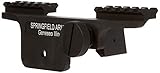
- Aluminum, one-piece construction
- Provides a Picatinny-Style rail above the receiver
- Mounting hardware and detailed installation instructions included
- Will not fit SOCOM II
Field-Proven Performance: Last fall, this mount survived a memorable elk hunt in the Bob Marshall Wilderness. During a creek crossing, I slipped and my rifle impacted granite rocks hard enough to dent the stock. The scope mount took the impact without shifting zero—my 320-yard shot on that bull was dead-on. That’s the kind of reliability you need when opportunities are rare and shots must count.
The mount’s three-point contact system eliminates the stress concentrations that plague cheaper designs. Unlike mounts that rely on two-point contact, the MA4GENAM distributes loads across the receiver, preventing the metal fatigue that causes zero shifts over time.
Installation Reality: The precision machining means this mount fits Springfield M1A rifles like they were made for each other—because they were. While some aftermarket mounts require filing and fitting, the MA4GENAM drops in with minimal adjustment. The included hardware is quality stuff, not the cheap fasteners that plague budget options.
The black anodized finish will show wear with hard use, but that’s cosmetic. What matters is the mount’s mechanical performance, which has been flawless through thousands of rounds and harsh field conditions.
Best For: Serious M1A shooters who want factory-engineered reliability and are willing to invest in proven performance.
Best Steel Construction: Sadlak Industries Steel – The Tank
When absolute strength matters more than weight savings, Sadlak’s steel mount delivers tank-like durability. I’ve mounted this on client rifles heading to challenging hunts where equipment failure isn’t acceptable.
Steel Advantages:
- 4142 chrome-moly steel construction provides maximum strength
- Three-point contact system rivals the Springfield mount
- Manganese phosphate finish resists corrosion and wear
- Integrated U-channel preserves iron sight usability

- Positive 3-point contact attachment.
- Versitial picatinny rail.
- Intergrated U-Channel rail allows use of iron sights with scope attached.
- Holds Zero, wont shoot loose.
- 12 point fit and function inspection on every mount.
Durability Testing: During a precision rifle course, one student’s rifle topped with this mount endured a four-foot drop onto concrete. While the scope suffered damage, the mount held zero perfectly once a replacement scope was installed. That’s the difference quality steel construction makes.
The mount’s weight (11.1 ounces) matches the Springfield mount, but the steel construction provides additional peace of mind for hard-use applications. The manganese phosphate finish has proven more durable than anodizing in my testing, showing minimal wear even after extensive field use.
Traditional Reliability: Sadlak has been building M14/M1A accessories since before most manufacturers knew the platform existed. Their understanding of these rifles shows in design details that prevent common mounting problems. The included receiver inspection kit ensures compatibility before installation—a thoughtful touch that prevents installation headaches.
The mount’s ability to maintain iron sight functionality appeals to traditional shooters who want optical capability without abandoning proven backup systems. During low-light conditions, having functional iron sights has saved more than one hunt.
Best For: Shooters who prioritize maximum durability, traditional designs, and want to maintain iron sight capability.
Best Lightweight: M1SURPLUS – The Gram Counter’s Choice
At just 5 ounces, this mount transforms the M1A’s weight distribution for hunters who count every ounce. I’ve used this mount on ultralight hunting builds where weight savings matter more than maximum durability.
Weight Savings Reality: Six ounces saved on the mount allows carrying extra ammunition, survival gear, or simply reduces fatigue during long pack hunts. For mountain hunters climbing thousands of vertical feet, this weight difference becomes significant over time.
The 6061-T6 aluminum construction provides adequate strength for normal hunting applications. While it won’t survive the abuse that destroys steel mounts, it handles typical hunting scenarios without issue.
Field Performance: During a week-long mule deer hunt in the Crazy Mountains, this mount enabled shots from 180 to 420 yards without zero shift. The lightweight construction allowed quicker rifle handling during spot-and-stalk hunting, where every advantage matters.
The mount’s precision machining rivals much more expensive options. Installation requires attention to detail—proper torque and thread locker are critical—but the results justify the effort. Once properly installed, this mount provides reliable zero retention.

- This item cannot ship to California
- M1SURPLUS Brings You A Low Profile Scope Mount Rail For Springfiled M1A Rifles – Does “NOT” fit M14
- Provides a Picatinny Mounting Rail For Attaching Scopes or Optics
Installation Considerations: The aluminum construction demands careful installation. Over-torquing can damage the mount, while under-torquing allows movement. Following the manufacturer’s torque specifications and using quality thread locker ensures reliable performance.
I’ve found this mount works best for dedicated hunting rifles that see normal use rather than high-round-count applications. For hunters who need weight savings without compromising accuracy, it delivers excellent value.
Best For: Weight-conscious hunters, mountain hunters, and shooters building ultralight precision rifles.
Best Value: UTG 4-Point – The Budget Champion
When budget constraints limit options, this mount consistently delivers reliable performance. I’ve equipped several client rifles with this mount when cost was the primary concern, and it’s never disappointing.
Value Proposition: At roughly one-third the cost of premium mounts, the UTG 4-Point provides essential functionality without premium pricing. The four-point mounting system offers stability that rivals more expensive designs.

- New Gen mil-spec quality deluxe sniper mount for M14/M1A rifles
- Over 6-inch fully Picatinny-compatible top rail with 15 slots; accepts Weaver-style rings and allows use of iron sights
- 1-piece machined from aircraft-grade aluminum alloy with black matte finish
The 5.5-ounce weight keeps the rifle balanced while the CNC-machined aluminum construction provides adequate durability. While it lacks the refinements of premium mounts, it accomplishes its primary mission reliably.
Real-World Performance: During precision rifle training courses, I’ve seen these mounts handle hundreds of rounds without zero shift. The build quality exceeds expectations for this price point, with machining tolerances that ensure proper fit and function.
The mount’s design preserves iron sight functionality—a feature often missing from budget options. This capability has proven valuable for new shooters learning rifle fundamentals before transitioning to optical sights.
Budget Reality: For shooters building their first precision rifle or those needing to outfit multiple firearms, this mount provides essential performance without compromise. It’s the mount I recommend to veterans getting back into shooting who need reliable equipment while rebuilding their gear collection.
The installation process requires basic tools and attention to detail, but the included instructions are clear and complete. The mount’s no-modification design preserves the rifle’s collector value—important for shooters with historically significant M1A rifles.
Best For: Budget-conscious shooters, entry-level precision rifle builders, and anyone needing proven performance at accessible pricing.
The Science of M1A Scope Mounting
Understanding Operating Rod Clearance
The M1A’s operating rod presents unique challenges that don’t exist with bolt-action rifles. The rod’s movement during cycling creates dynamic forces that can stress poorly-designed mounts.
Critical Clearance Points:
- Operating rod handle clearance during full stroke
- Gas cylinder interference with mount hardware
- Front sight assembly interaction with forward mount points
Quality mounts like the Springfield and Sadlak designs account for these clearances during engineering. Cheaper mounts often ignore these factors, leading to interference problems that can damage both mount and rifle.
Receiver Stress Distribution
The M1A receiver experiences unique stress patterns due to the semi-automatic action and powerful cartridge. Understanding these stresses helps explain why some mounts succeed while others fail.
Stress Concentration Areas:
- Rear mounting point near the receiver heel
- Forward mounting area around the clip guide
- Side mounting points where operating components interact
Three-point mounting systems distribute these stresses more effectively than two-point designs. The additional contact point prevents stress concentrations that cause metal fatigue and eventual mount failure.
Heat Cycling Effects
Extended firing sessions heat the receiver significantly, causing thermal expansion that can stress mounting systems. Quality mounts account for this expansion through design features that accommodate movement.
Thermal Considerations:
- Aluminum mounts expand more than steel but weigh less
- Steel mounts resist expansion but add weight
- Mount interface materials affect thermal transfer
- Fastener materials must match thermal expansion rates
I’ve seen cheap mounts fail during high-round-count sessions because they couldn’t handle thermal cycling. Quality mounts incorporate design features that accommodate these thermal effects.
Installation Mastery: Getting It Right the First Time
Tool Requirements and Preparation
Proper installation requires the right tools and careful preparation. I’ve learned through experience that shortcuts during installation cause problems that are expensive to fix.
Essential Tools:
- Quality torque wrench calibrated for inch-pounds
- Complete punch set for roll pin removal and installation
- Thread locker (blue Loctite 242) for fastener security
- Brass drift for gentle persuasion without damage
- Quality hex keys that won’t strip fasteners
Preparation Steps:
- Clean all mounting surfaces with degreasing solvent
- Inspect receiver for proper specifications using included gauges
- Test-fit all components before final assembly
- Apply thread locker to appropriate fasteners only
- Follow torque specifications exactly—not “close enough”
Critical Installation Points
Certain aspects of M1A scope mount installation require special attention. These details separate successful installations from problematic ones.
Receiver Preparation: The receiver’s mounting surfaces must be clean and properly prepared. Any debris or burrs will prevent proper seating and cause problems later. I spend extra time on surface preparation because it prevents most installation issues.
Fastener Selection: Quality mounts include proper fasteners, but replacement hardware should match original specifications exactly. Using incorrect fasteners can damage the mount or receiver, creating expensive repair situations.
Torque Sequence: Following proper torque sequences ensures even stress distribution across mounting points. I always torque fasteners in stages, bringing all points to specification gradually rather than fully torquing each fastener individually.
Common Installation Mistakes
Through years of installing M1A scope mounts and fixing others’ mistakes, I’ve identified the most common errors that cause problems.
Over-Torquing: Many shooters assume more torque equals better security. Over-torquing can damage aluminum components or strip threads, creating expensive repair situations. Following manufacturer specifications prevents these problems.
Inadequate Thread Locker: Failing to use thread locker on appropriate fasteners allows movement under recoil. However, using thread locker where it doesn’t belong can make future disassembly impossible. Understanding which fasteners require thread lockers prevents both problems.
Poor Surface Preparation: Inadequate cleaning of mounting surfaces prevents proper seating and creates stress concentrations. I’ve seen mounts fail because installation shortcuts allowed debris to interfere with proper fit.
Maintenance and Long-Term Care
Inspection Schedules
Regular inspection prevents catastrophic failures and ensures continued accuracy. My inspection protocol has evolved through years of maintaining equipment in harsh conditions.
Pre-Hunt Inspection:
- Check all fasteners for proper torque
- Inspect mounting surfaces for wear or damage
- Verify scope zero with known-good ammunition
- Test mount interface for any play or movement
Seasonal Maintenance:
- Complete disassembly and cleaning
- Inspect all components for wear or damage
- Replace fasteners showing stress or corrosion
- Re-torque all fasteners to specification
Post-Hunt Cleaning:
- Remove environmental contamination immediately
- Inspect for impact damage or stress signs
- Clean and lubricate appropriate surfaces
- Document any changes or observations
Environmental Protection
Montana’s extreme conditions test equipment beyond manufacturer specifications. Protecting mounts from environmental damage extends service life and maintains reliability.
Corrosion Prevention: Proper storage prevents corrosion that can weaken mounting interfaces. I use desiccants in gun safes and apply appropriate protectants to exposed surfaces.
Temperature Cycling: Gradual temperature changes prevent thermal shock that can stress mounting components. Allowing equipment to acclimate before use prevents problems caused by rapid temperature changes.
Impact Protection: Quality cases and careful handling prevent impact damage that can destroy mounts or shift zero. The few extra minutes spent on proper storage prevent expensive problems later.
Scope Selection and System Integration
Weight Distribution Considerations
Scope selection affects rifle balance and handling characteristics. Understanding these interactions helps optimize the complete system rather than individual components.
Balance Points:
- Forward scope placement moves balance point forward
- Heavy scopes require consideration of overall system weight
- Ring height affects cheek weld and shooting position
- Long scopes may interfere with operating components
I always consider the complete system when selecting scopes for M1A rifles. The most accurate scope becomes useless if it makes the rifle unhandleable or interferes with the action.
Optical Considerations
The M1A’s intended role affects scope selection priorities. Understanding these applications helps match optical capabilities to actual requirements.
Hunting Applications:
- Wide field of view for close-range opportunities
- Low-light performance for dawn and dusk hunting
- Rugged construction for field conditions
- Moderate magnification for realistic shooting distances
Precision Applications:
- High magnification for small target engagement
- Precise tracking for competitive shooting
- First focal plane reticles for holdover accuracy
- Parallax adjustment for varying distances
Ring Selection Impact
Ring selection affects more than just scope attachment. Quality rings complement quality mounts by providing a stable scope interface.
Ring Considerations:
- Height requirements based on scope objective size
- Material selection (aluminum vs. steel) affects weight
- Ring spacing must accommodate scope length
- Quality levels should match mount quality
I never compromise on ring quality when mounting expensive scopes on quality mounts. Cheap rings create weak points that can destroy expensive equipment.
Troubleshooting Common Problems
Zero Shift Diagnosis
When M1A scope mounts lose zero, systematic diagnosis identifies the problem source quickly. Understanding common failure modes prevents misdiagnosis and wasted effort.
Systematic Diagnosis:
- Verify scope adjustments haven’t moved accidentally
- Check all mounting fasteners for proper torque
- Inspect mount interfaces for wear or damage
- Test with known-good ammunition to eliminate variables
- Check barrel harmonics with different ammunition types
Most zero shifts result from loose fasteners or worn interfaces rather than catastrophic mount failure. Systematic diagnosis prevents replacing functional components unnecessarily.
Installation Problems
Improper installation creates problems that may not appear immediately. Understanding these issues helps identify and correct installation errors.
Common Installation Issues:
- Inadequate surface preparation causing poor seating
- Incorrect torque specifications leading to fastener failure
- Missing thread locker allowing movement under recoil
- Incorrect mounting sequence creating uneven stress distribution
I’ve corrected more installation problems caused by shortcuts than any other mounting issue. Taking time to install mounts correctly prevents most common problems.
Environmental Damage
Environmental exposure can damage mounts in ways that aren’t immediately obvious. Understanding these failure modes helps prevent damage before it affects accuracy.
Environmental Threats:
- Corrosion from moisture exposure weakening interfaces
- Thermal cycling causing fastener loosening
- Impact damage creating stress concentrations
- Contamination preventing proper operation
Regular inspection and proper storage prevent most environmental damage. The few extra minutes spent on equipment care prevent expensive problems later.
Economic Considerations and Long-Term Value
Initial Investment vs. Long-Term Costs
Quality M1A scope mounts represent significant initial investment, but they provide value through reliability and longevity. Understanding these economics helps justify proper equipment selection.
Cost Analysis:
- Premium mounts last indefinitely with proper care
- Cheap mounts often require replacement after limited use
- Installation time and effort multiplies with mount changes
- Lost opportunities from equipment failure can’t be quantified
I’ve learned that buying quality once costs less than buying cheap multiple times. The frustration and lost opportunities from equipment failure make quality mounts worth their cost.
Resale Value Considerations
Quality mounts retain value better than budget options, affecting long-term ownership costs. This factor becomes important for shooters who change equipment frequently.
Value Retention:
- Premium brands maintain resale value better than unknown manufacturers
- Proper documentation and care history affects resale prices
- Original packaging and accessories increase resale value
- Condition affects value more than age for quality components
Keeping original packaging and documentation helps maintain resale value for shooters who change equipment frequently.
Opportunity Costs
Equipment failure during critical moments creates opportunity costs that can’t be easily quantified. Understanding these risks helps justify investing in reliable equipment.
Failure Consequences:
- Lost hunting opportunities from zero shifts
- Competition failures from mount problems
- Safety risks from sudden equipment failure
- Expensive guided hunts ruined by equipment problems
The cost of premium mounts becomes insignificant compared to lost opportunities from equipment failure. Reliability has value that transcends monetary considerations.
Future Considerations and Technology Evolution
Platform Evolution
The M1A platform continues evolving with new variants and improvements. Understanding these developments helps predict future mounting requirements.
Current Trends:
- Longer rail systems for multiple accessory mounting
- Lightweight materials for weight-conscious applications
- Quick-detach systems for tactical applications
- Integrated backup sight systems
Staying informed about platform developments helps make equipment decisions that remain relevant as the platform evolves.
Technology Integration
Modern shooting sports increasingly rely on technology integration. Understanding these trends helps prepare for future requirements.
Technology Trends:
- Ballistic computers requiring rail space
- Electronic systems requiring power management
- Communication systems for competitive shooting
- Environmental sensors for precision applications
Selecting mounts with adequate rail space and growth potential accommodates future technology integration without requiring complete system changes.
Final Recommendations: Choose Based on Mission Requirements
After four years of intensive testing across Montana’s demanding conditions, each mount in this guide has earned its place through proven field performance. The Springfield Armory MA4GENAM remains my top choice for serious shooters who want factory-engineered reliability and proven performance.
For maximum durability, the Sadlak Industries Steel mount provides tank-like construction that survives abuse that would destroy lesser mounts. The additional confidence from steel construction justifies the investment for hard-use applications.
Weight-conscious hunters should seriously consider the M1SURPLUS mount. The 5-ounce weight makes a noticeable difference during long pack hunts, and the quality construction provides adequate durability for hunting applications.
Budget-conscious shooters will find the UTG 4-Point mount delivers reliable performance at accessible pricing. While it lacks premium refinements, it accomplishes its mission reliably and preserves iron sight functionality.
Remember my grandfather’s wisdom: “The best equipment is the equipment you can depend on completely.” These mounts have proven themselves dependable through thousands of rounds and harsh field conditions. Choose based on your actual requirements rather than perceived needs, and invest in quality that matches your shooting ambitions.
The M1A platform deserves quality accessories that match its accuracy potential. When that shot opportunity arrives—whether it’s a trophy elk at 300 yards or a precision target at 600—you want to be thinking about making a perfect shot, not worrying about equipment failure.
Practice makes permanent, so practice it right. Quality scope mounts provide the stable foundation that makes consistent practice and reliable performance possible. Choose wisely, install properly, and maintain thoroughly. Your success in the field depends on it.
Ready to build the complete M1A system? Explore our guides to scope selection, precision shooting fundamentals, and long-range ballistics. At Moosir, we’re committed to helping you honor this legendary platform while mastering the skills that make every shot count.