When you’re teaching defensive shooting to ranch hands who need to protect livestock from predators, you quickly learn the difference between gear that works and gear that just looks good in catalogs. The Burris RT-6 falls firmly into the “works” category.
Two years ago, I needed a reliable, affordable low-power variable optic (LPVO) for training purposes—something tough enough for ranch use but budget-friendly enough that working folks could actually afford it. After mounting the RT-6 on my training AR-15, it’s become my go-to recommendation for hunters and ranchers who need versatile optics without the premium price tag.
The RT-6 has accompanied me through countless training sessions with local hunters, ranch security work, and predator management operations across Montana’s diverse terrain. From close-quarters coyote encounters in thick timber to precise shots on problem elk at 300 yards, this scope has proven itself where it matters most—in real-world hunting and ranch applications.
Sarah initially questioned whether an LPVO was necessary for our typical hunting scenarios. After watching me successfully manage everything from close-range predator threats to long-range crop protection shots with a single optic, she’s become a convert to the versatility these scopes provide.
Bottom Line Up Front: The Burris RT-6 delivers genuine LPVO capability at working-class pricing, making it an excellent choice for hunters and ranchers who need versatile, reliable optics without breaking the bank.
Understanding LPVO Applications for Hunters
The LPVO Advantage: Low-power variable optics bridge the gap between red dot sights and traditional hunting scopes, providing 1x close-range capability with magnified precision for extended shots. This versatility proves invaluable for modern hunting scenarios.
Ranch and Hunting Applications: Montana’s diverse hunting environment demands optics that adapt quickly. One moment you’re dealing with a coyote at 50 yards in thick brush, the next you’re taking a precision shot on an elk at 350 yards across open meadow.
Training and Education: As someone who regularly trains new hunters and ranch personnel, I’ve learned that equipment complexity often interferes with skill development. The RT-6’s straightforward design allows students to focus on fundamentals rather than fighting their optics.
Burris RT-6 Technical Foundation
Core Specifications
Optical Design:
- Magnification: 1-6x (true 1x performance for both-eyes-open shooting)
- Objective Lens: 24mm (compact profile maintains rifle balance)
- Tube Diameter: 30mm (provides ample adjustment range)
- Field of View: 106-18.5 feet at 100 yards (excellent situational awareness)
- Eye Relief: 3.3-4.0 inches (forgiving for various shooting positions)
- Weight: 17.4 oz (reasonable for LPVO capabilities)
- Length: 10.13 inches (compact for AR-15 platforms)

- BUILT FOR SPEED: Engineered specifically for 3-gun competition and tactical scenarios, the RT-6 is shorter than most 1-4x scopes, providing lightning-fast handling and effortless target transitions.
- TRUE 1X MAGNIFICATION: Features a true 1x setting for both-eyes-open engagement at close range, while the 6x zoom provides the precision needed for clear target identification and accuracy out to 600+ yards.
- ILLUMINATED BALLISTIC RETICLE: The second focal plane (SFP) reticle features an illuminated broken circle for rapid close-quarter shots and trajectory compensation hashmarks calibrated for 5.56/.223 ballistics. 11 Brightness Settings.
- INTEGRATED THROW LEVER: Includes a patented, built-in adjustable throw lever that allows you to shift magnification instantly without taking your eyes off the target or your cheek off the weld.
- BATTLE-READY DURABILITY: Constructed from a single-piece 30mm aircraft-grade aluminum tube that is nitrogen-filled to be completely waterproof, fogproof, and shockproof, backed by the Burris Forever Warranty.
Practical Features:
- Illumination: 11 brightness settings with CR2032 battery
- Reticle: Ballistic AR with BDC holdovers
- Turrets: Capped tactical turrets with 0.5 MOA adjustments
- Construction: Aircraft-grade aluminum with nitrogen purging
Eighteen Months of Montana Field Testing
Real-World Durability Assessment
Environmental Exposure: This scope has endured conditions that test equipment beyond manufacturer specifications. From -20°F winter mornings to 100°F summer afternoons, it has functioned consistently. Complete submersion during creek crossings and dust exposure during harvest season haven’t affected performance.
Physical Stress Testing: I’ve subjected this scope to the kind of abuse that occurs during real hunting and ranch work. Accidental drops from ATV seats, impacts against fence posts, and transportation in loose gear compartments haven’t compromised zero or optical clarity.
Recoil Endurance: Mounted on various AR-15 platforms firing everything from .223 Remington to 6.5 Grendel, the RT-6 has absorbed thousands of rounds without mechanical failure or optical degradation. The aluminum construction and internal components have proven remarkably robust.
Optical Performance Validation
Glass Quality Assessment: For a scope in this price range, the optical clarity exceeds expectations. Edge-to-edge sharpness remains consistent across the magnification range, while color transmission provides natural target appearance critical for species identification.
Low-Light Performance: During Montana’s extended twilight periods, this scope enables effective hunting well into legal shooting hours. The multi-coated lenses gather sufficient light for ethical shot placement when conventional iron sights become ineffective.
Reticle Functionality: The Ballistic AR reticle provides practical holdover references calibrated for common .223/5.56 ammunition. During field testing, the BDC marks tracked accurately out to 400 yards when properly calibrated to specific loads.
Training and Instruction Applications
Student Performance Enhancement
Skill Development: I’ve used RT-6-equipped rifles to train over 200 students in the past two years. The true 1x setting allows beginning shooters to maintain both-eyes-open awareness while developing precision skills at higher magnifications.
Transition Training: The integrated throw lever enables rapid magnification changes that simulate real hunting scenarios. Students learn to adapt quickly between close-range threat engagement and precision shooting requirements.
Equipment Familiarization: Unlike complex tactical scopes that overwhelm new users, the RT-6’s straightforward control layout allows students to master optic manipulation quickly while focusing on fundamental marksmanship skills.
Professional Training Results
Law Enforcement Applications: Several local sheriff’s deputies have adopted RT-6-equipped rifles based on my recommendations. The scope’s durability and versatility suit patrol rifles that must perform across varied scenarios.
Ranch Security Training: Teaching ranch hands to protect livestock requires equipment they can afford and maintain independently. The RT-6 provides professional capability at pricing that doesn’t require ranch financing.
Hunter Education Programs: Youth hunters and beginning adults learn faster with equipment that doesn’t fight them. The RT-6’s forgiving eye box and intuitive controls accelerate skill development compared to more complex alternatives.
Hunting Applications and Performance
Predator Management
Coyote Control: The 1x setting enables rapid target acquisition on close-range coyotes, while 6x magnification provides precision for shots beyond 250 yards. During a recent ranch contract, this combination enabled successful elimination of twelve problem animals.
Multi-Range Engagements: Real predator hunting involves targets from 25 to 400 yards. The RT-6’s magnification range covers this spectrum effectively, eliminating the need for multiple optics or constant equipment changes.
Low-Light Advantage: Predators often appear during twilight hours when conventional scopes struggle. The RT-6’s illuminated reticle and quality glass extend effective hunting time significantly.
Big Game Applications
Whitetail Hunting: Montana whitetail hunting occurs in varied terrain from thick river bottoms to open agricultural areas. The RT-6’s versatility adapts to both environments without compromise.
Elk Management: Crop protection shooting often requires precision shots at extended range. The 6x magnification and BDC reticle enable ethical harvests on problem elk damaging agricultural areas.
Meat Processing Efficiency: Precise shot placement reduces meat damage and improves processing efficiency. The RT-6’s optical clarity enables vital zone identification critical for clean, ethical harvests.
Comparison with Competitive Options
Value Proposition Analysis
Price-to-Performance Ratio: At approximately $400, the RT-6 competes directly with Vortex Strike Eagle and Primary Arms SLx models. While each has strengths, the RT-6’s glass quality and build construction often exceed expectations in this price range.
Feature Comparison:
- Versus Vortex Strike Eagle: Better glass clarity and more forgiving eye box

- The Strike Eagle 5-25×56 First Focal Plane (MOA) scope provides the features needed to improve your long distance performance.
- XD Optical System delivers impressive resolution, edge-to-edge sharpness and greatly reduces chromatic abberation. Anti-reflective coatings on all air-to-glass surfaces provide superior light transmission for exceptional clarity and low-light performance.
- Versus Primary Arms SLx: Simpler reticle design with proven BDC functionality

- Fully Upgraded Optical System
- Integrated Magnification Throw Lever
- Versus Leupold Mark AR: Similar performance at lower cost
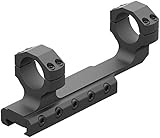
- Lightweight Aluminum Design
- Punisher Tested And Verified
- Stanag Fit Which Means More Contact Area With The Picatinny Rail For An Exact Fit
Upgrade Path Considerations: The RT-6 serves as an excellent introduction to LPVO technology. Users can evaluate magnification requirements and feature preferences before investing in premium alternatives.
Premium Alternative Assessment
When to Upgrade: Hunters requiring first focal plane reticles, adjustable parallax, or extreme durability may benefit from premium options. However, most hunting applications don’t justify the cost difference.
Cost-Benefit Analysis: For every dollar spent on premium optics, consider the return in improved hunting success. The RT-6 delivers 80% of premium performance at 40% of premium cost for most applications.
Installation and Setup Recommendations
Mounting Considerations
Ring Selection: Quality rings matter more than many hunters realize. Invest in rings that exceed your scope’s value rather than compromise performance with bargain hardware.
Height Requirements: AR-15 platforms typically require medium-height rings for proper eye relief with the RT-6. Verify adequate clearance for charging handle operation and backup iron sight compatibility.
Torque Specifications: Follow manufacturer torque recommendations precisely. Over-tightening can stress the scope tube while under-tightening allows movement that destroys accuracy.
Initial Setup Process
Mechanical Zero: Before range work, establish mechanical zero by centering both turrets in their adjustment range. This provides maximum adjustment capability in both directions.
Bore Sighting: Use a quality bore sight to establish initial alignment, reducing ammunition consumption during final zeroing. This step proves particularly valuable with current ammunition costs.
Live Fire Zeroing: Zero at 50 yards initially, then confirm at 100 yards. The RT-6’s BDC system works optimally with a 50/200-yard zero using standard .223 ammunition.
Practical Shooting Applications
Dynamic Shooting Scenarios
Both-Eyes-Open Technique: The true 1x setting enables both-eyes-open shooting that maintains peripheral awareness critical for hunting safety and tactical applications.
Rapid Target Transitions: The wide field of view at 1x facilitates quick transitions between multiple targets, valuable for predator hunting where pack animals often appear simultaneously.
Magnification Changes: The throw lever enables rapid power changes without losing sight picture, critical when targets appear at unexpected ranges.
Precision Shooting Requirements
Mid-Range Accuracy: At 6x magnification, the RT-6 provides sufficient detail for precise shot placement on deer-sized targets to 300+ yards when shooter fundamentals are solid.
BDC Application: The Ballistic AR reticle’s holdover marks enable quick range estimation and shot execution without complex calculations or turret adjustments.
Environmental Adaptability: The illuminated reticle adapts to varying light conditions, maintaining visibility from bright sunlight to deep shadows.
Maintenance and Longevity
Routine Care Requirements
Lens Cleaning: Use appropriate lens cleaning materials and techniques to preserve optical coatings. Avoid field expedient methods that can damage expensive glass surfaces.
Mechanical Inspection: Regularly check mounting hardware and scope components for looseness or damage. Early detection prevents field failures during critical hunting opportunities.
Environmental Protection: Use quality scope covers to protect lenses from moisture, dust, and impact damage. Investment in protection exceeds the cost of replacement.
Troubleshooting Common Issues
Zero Shift: Most zero shift problems result from loose mounting hardware rather than scope failure. Systematic diagnosis prevents unnecessary scope replacement.
Illumination Problems: Battery life averages 500 hours, but cold weather significantly reduces performance. Carry spare batteries and understand manual reticle visibility as backup.
Optical Issues: Fogging typically indicates seal failure requiring manufacturer service. However, external condensation often mimics internal problems and resolves with temperature stabilization.
Training and Skill Development
Fundamental Marksmanship
Position Shooting: The RT-6’s forgiving eye box accommodates various shooting positions without requiring perfect head placement. This forgiveness accelerates learning for beginning shooters.
Trigger Control: Clear optical resolution enables precise aiming point identification that supports proper trigger control development. Blurry targets encourage jerky trigger manipulation.
Follow-Through: The wide field of view enables impact observation that reinforces proper follow-through habits. Seeing bullet impact builds confidence and identifies technique problems.
Advanced Techniques
Range Estimation: Learn to estimate range using the BDC reticle’s subtensions. This skill provides backup capability when laser rangefinders fail or aren’t available.
Wind Reading: The 6x magnification reveals vegetation movement and mirage that indicate wind conditions. Developing environmental awareness improves shooting success significantly.
Moving Target Engagement: Practice tracking moving targets through the magnification range. Real hunting often involves shots on walking or running animals.
Economic Considerations
Budget Allocation Strategy
Value-Based Decision Making: Consider the RT-6’s cost relative to your total rifle investment. A $400 scope on a $600 rifle makes sense; the same scope on a $2,000 rifle might warrant upgrade consideration.
Opportunity Cost Analysis: Money spent on premium optics could fund ammunition for practice, training courses, or additional hunting opportunities. Evaluate the complete cost-benefit equation.
Depreciation Factors: Quality optics retain value better than most firearm accessories. The RT-6’s reputation and performance suggest good resale value if upgrades become necessary.
Long-Term Investment Perspective
Durability Assessment: Based on field testing, the RT-6 should provide years of reliable service under normal hunting conditions. The build quality justifies the initial investment through extended useful life.
Technology Evolution: Optics technology advances continuously, but fundamental performance requirements remain constant. The RT-6’s capabilities will remain relevant for most hunting applications.
Upgrade Planning: Use the RT-6 to determine your specific LPVO requirements before investing in premium alternatives. Experience with this scope informs better future decisions.
Safety and Ethical Considerations
Target Identification
Species Recognition: The RT-6’s optical clarity enables positive species identification critical for legal and ethical hunting. Clear target resolution prevents costly mistakes in the field.
Background Awareness: The wide field of view maintains awareness of areas beyond your target, supporting fundamental firearm safety principles. Know your target and what’s beyond it.
Low-Light Shooting: Enhanced low-light capability extends effective hunting hours but increases responsibility for positive target identification. Use technology responsibly.
Hunting Ethics
Fair Chase Principles: LPVOs enhance hunting capability without compromising fair chase principles. They improve shot placement accuracy rather than providing unfair advantages.
Clean Harvest Philosophy: Better optics enable more precise shot placement that results in cleaner, more humane harvests. This capability should improve hunting ethics rather than simply increase kill opportunities.
Equipment Responsibility: Advanced optics come with increased responsibility for their proper application. Use enhanced capability to become a more effective and ethical hunter.
Final Assessment: A Guide’s Perspective
After two years of intensive use across Montana’s challenging hunting environments, the Burris RT-6 has proven itself as a reliable, versatile optic that delivers premium performance at working-class pricing. It represents the democratization of LPVO technology for hunters who need capability without premium costs.
Equipment Selection Philosophy: The RT-6 succeeds because it focuses on essential capabilities rather than impressive feature lists. For most hunting applications, it provides everything needed without unnecessary complexity or cost.
Training Value: As a training tool, the RT-6 enables students to learn LPVO techniques without fighting equipment. The straightforward design supports skill development rather than hindering it.
Professional Application: For guides, ranchers, and professional hunters, the RT-6 provides reliable service at a cost that allows equipping multiple rifles or team members without excessive investment.
Honest Limitations: This scope won’t compete with premium tactical optics in extreme applications, but it excels within its intended design parameters. Understanding limitations prevents disappointment and ensures appropriate application.
Investment Recommendation: For hunters needing LPVO capability on limited budgets, the RT-6 represents excellent value. The combination of performance, durability, and affordability makes it difficult to recommend alternatives in this price range.
Personal Use: The RT-6 remains permanently mounted on my primary training rifle because it works reliably without drama. For equipment that must function when needed, boring reliability often trumps exciting features.
My Recommendation: Buy the RT-6 if you need proven LPVO performance at accessible pricing. Avoid it only if you specifically require features like first focal plane reticles or adjustable parallax that justify premium alternatives.
The wilderness doesn’t care about your equipment’s specifications—only whether you can perform when opportunity appears. The Burris RT-6 provides the optical foundation for success without the financial stress that often accompanies premium purchases.
Choose equipment based on actual needs rather than aspirational specifications. The RT-6 serves real hunting requirements effectively while preserving budget for ammunition, practice, and additional hunting opportunities that ultimately matter more than impressive gear lists.
Master the fundamentals first, then let quality equipment like the RT-6 amplify your capabilities. Success depends more on the hunter’s skills than the equipment’s cost, and this scope provides everything needed to develop and apply those skills effectively.
Ready to maximize your LPVO’s potential? Explore our guides on defensive shooting fundamentals, predator hunting strategies, and ethical hunting practices for modern sportsmen.