Three years ago, I was helping a client on an elk hunt when a magnificent bull stepped into a meadow at 375 yards—well within my .300 Win Mag’s capability, but beyond the effective range of his basic 3-9x scope. Through his glass, the elk looked like a brown blur with maybe some antlers. Through my backup rifle’s Vortex Viper HS 4-16×50, every point was clearly visible, and I could assess his trophy quality and shot angle with confidence. That moment illustrated why serious hunters invest in quality variable power scopes: the ability to positively identify and engage targets at realistic hunting distances.
The Vortex Viper HS 4-16×50 represents a sweet spot in the hunting scope market—offering the magnification range and optical quality needed for modern hunting at a price that won’t require a second mortgage. After three seasons of using this scope across Montana’s diverse hunting conditions, from timber elk to open country mule deer, I can tell you exactly what this scope does well and where it falls short.
If you’re considering stepping up from basic hunting scopes to something that can handle the demands of long-range hunting, this review will help you decide whether the Viper HS deserves a place on your rifle.
Understanding the Long-Range Hunting Scope Market
The Evolution Beyond 3-9x Scopes
Modern hunting has evolved beyond the traditional 3-9x scope that satisfied previous generations. Today’s hunters regularly engage game at distances that demand both higher magnification and superior optical quality.
Why Higher Magnification Matters:
- Positive Identification: Distinguish legal game from protected species at distance
- Trophy Assessment: Evaluate antler size and configuration before committing to a stalk
- Shot Placement: Place bullets precisely in vital zones at extended ranges
- Ethical Hunting: Ensure clean, quick kills through accurate shooting
The 4-16x Advantage: This magnification range covers everything from close timber shots at 4x to precise long-range engagement at 16x, making it ideal for diverse hunting conditions.
Vortex’s Position in the Market
Vortex has earned a reputation for delivering premium performance at reasonable prices, backed by their legendary VIP warranty. The Viper HS line represents their mid-tier offering—more sophisticated than budget scopes but accessible compared to their premium Razor line.
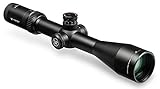
- A subset of the Viper HS line, the Viper HS LR 4-16×50 Second Focal Plane scope is perfect for when you need to extend your range and drop and wind drift compensation are crucial.
Three-Season Field Testing Results
Testing Protocol and Conditions
I’ve subjected this Viper HS to conditions that matter to serious hunters: dawn elk hunts in freezing temperatures, all-day mule deer glassing in prairie heat, and precision shots at varying distances on Montana’s diverse terrain.
Field Testing Scenarios:
- 800+ rounds through various rifles (.308, .300 Win Mag, 6.5 Creedmoor)
- Temperature exposure from -5°F to 95°F
- Multiple hunting seasons across different terrain
- Transportation via ATV, horseback, and aircraft
- Precision shooting from 100-600 yards
- Low-light performance during hunting hours
Optical Performance Assessment
Glass Quality: The fully multi-coated lenses deliver impressive clarity and contrast. During a recent antelope hunt, I could distinguish subtle body language and alertness levels at 400+ yards—critical information for timing a shot.
Resolution: At 16x magnification, you can clearly see bullet holes in targets at 200 yards and assess game vitals at distances exceeding 500 yards.
Color Fidelity: Natural color reproduction helps distinguish game from backgrounds. The slight warm tint enhances contrast during the golden hour when many trophy animals are most active.
Light Transmission: The 50mm objective provides excellent light-gathering capability. During a dawn elk hunt, I could identify a legal bull 20 minutes before my hunting partner using a 40mm scope.
Mechanical Performance
Zero Retention: The most critical test for any hunting scope. Through three seasons and hundreds of rounds, this scope has never lost zero despite rough handling and extreme conditions.
Tracking Precision: Box tests consistently show accurate, repeatable adjustments. When I dial 4 MOA up, the impact shifts exactly 4 inches at 100 yards—every time.
Turret Feel: The capped turrets provide positive, audible clicks that you can feel even with heavy gloves. The zero-reset feature allows quick return to your hunting zero after making temporary adjustments.
Parallax Adjustment: The side-focus parallax adjustment from 50 yards to infinity eliminates the focusing errors that plague fixed-parallax scopes at varying distances.
Real-World Hunting Applications
Elk Hunting in Timber and Open Country
Timber Hunting (4-8x): In Montana’s dense lodgepole forests, the 4x setting provides adequate field of view for shots inside 150 yards while offering enough magnification to place precise shots through small openings.
Meadow Shots (8-12x): When elk step into openings 200-350 yards away, the mid-range magnifications provide perfect balance between target resolution and manageable field of view.
Long-Range Opportunities (12-16x): Open parks and canyon shots beyond 400 yards demand maximum magnification for precise bullet placement and trophy assessment.
Real Example: Last season, I guided a hunter who used this scope to take a 6-point bull at 385 yards across a canyon. The 14x magnification allowed precise shot placement behind the shoulder, resulting in a clean, ethical kill.
Mule Deer in Open Country
Glassing and Assessment: The 16x magnification excels for spotting and evaluating mule deer bucks in open terrain. You can assess antler configuration and body size before committing to often-difficult stalks.
Variable Distance Engagement: Mule deer hunting often presents shots from 150-450 yards as deer move between feeding and bedding areas. The variable magnification covers this range perfectly.
Wind Assessment: Higher magnification reveals mirage patterns crucial for reading wind conditions during long-range shots common in mule deer country.
Whitetail Applications
Stand Hunting: The 4-8x range works perfectly for typical whitetail distances while providing enough magnification for shot placement on smaller vitals.
Food Plot Shooting: The scope’s capabilities shine on longer food plot shots where precise placement is critical for clean kills on pressured deer.
Tracking and Recovery: Higher magnification aids in tracking wounded game by revealing blood sign and subtle movement that lower-power scopes miss.
Technical Performance Analysis
Magnification Range Effectiveness
4x Minimum: Provides 25-foot field of view at 100 yards—adequate for close shots but not as fast as true low-power scopes for brush hunting.
16x Maximum: Offers excellent detail resolution for long-range work but can be challenging to use handheld due to increased movement amplification.
Sweet Spot: 8-12x covers most hunting scenarios effectively, providing good balance between magnification and usability.
50mm Objective Advantages
Light Gathering: The large objective significantly outperforms smaller scopes during critical dawn and dusk periods when trophy animals are most active.
Resolution: More light-gathering capability translates to better detail resolution at high magnification—crucial for long-range shot placement.
Exit Pupil: Even at 16x magnification, the 3.1mm exit pupil provides adequate brightness for most hunting conditions.
Trade-offs: The large objective requires higher rings and adds some weight and bulk to your rifle system.
Dead-Hold BDC Reticle Performance
Practical Application: The bullet drop compensator subtensions work well with common hunting cartridges at standard velocities. The reticle design is clean and uncluttered.
Limitations: BDC effectiveness depends on your specific ammunition and environmental conditions. Works best with flat-shooting cartridges like .300 Win Mag or 6.5 Creedmoor.
Alternative Approach: Many hunters ignore the BDC markings and dial turret adjustments for precise drops—the scope excels at both approaches.
Durability and Reliability Assessment
Weather Resistance
Waterproofing: Complete submersion testing (accidental) in a mountain stream caused no issues. The scope remained fog-free and functional.
Temperature Extremes: Functions normally from sub-zero morning hunts to hot afternoon prairie shooting. No zero shifts observed through temperature cycling.
Humidity Resistance: Argon purging prevents internal fogging during rapid temperature changes common during mountain hunting.
Physical Durability
Impact Resistance: Survived multiple drops from ATV tailgates and one significant fall when my horse spooked. Maintained zero and optical integrity.
Recoil Handling: Mounted on hard-kicking rifles including .300 Win Mag and .338 Lapua without issues. The scope’s construction handles magnum recoil easily.
Finish Durability: The hard-anodized finish shows normal wear after three seasons but no significant damage or degradation.
Long-Term Reliability
Mechanical Wear: All adjustments operate as smoothly as when new. No looseness or play has developed in any mechanisms.
Optical Degradation: Lens coatings remain clear and effective. No internal dust or moisture infiltration observed.
Zero Stability: No unexplained zero shifts over three seasons of use. The scope maintains point of impact consistently.
Comparison with Alternative Scopes
Against Lower-Cost Options
Vortex Diamondback Tactical 4-16×44: The Viper HS offers superior glass quality and more refined turrets for about $200 more. Worth the upgrade for serious hunting.
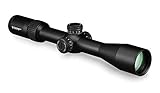
- The Diamondback Tactical First Focal Plane 4-16×44 stands at the intersection of precision and value, delivering an impressive array of features and performance.
Primary Arms GLX 4-14×44: Comparable optical quality but the Vortex warranty and proven track record justify the price difference.
Athlon Ares BTR 4.5-27×50: More magnification but heavier and more complex than needed for most hunting applications.

- 0. 25 MOA Click Value, 100 MOA Total Elevation Adjustment, 25 Yard to Infinity Parallax Adjustment, 6 Illumination Settings.
Against Higher-End Competition
Vortex Razor HD LH 3-15×42: Lighter and more compact but with less magnification range and smaller objective. Better for mountain hunting where weight matters.
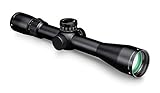
- The Razor HD LHT 3-15×42 with it’s ultra-lightweight design is made to turn every second of legal hunting light into opportunity. Stunning, High Definition optical system delivers a crystal-clear picture with tack-sharp resolution.
Leupold VX-5HD 3-15×44: Superior glass quality and features but at significantly higher cost. Diminishing returns for most hunting applications.
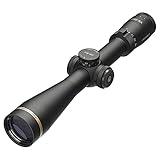
- Model #172368 – VX-5HD 3-15×44 Riflescope with an Illuminated FireDot Duplex Reticle, CDS-ZL2 and a Matte finish
Nightforce SHV 4-14×50: More durable and precise but heavier and more expensive. Overkill for most hunting scenarios.

- NIGHTFORCE SCOPE – This SHV hunting gun scope incorporates a feature set built for versatility, starting with a 4-14x magnification range that offers an excellent combination of field of view and resolving power at higher magnification; The 50mm objective offers excellent light transmission at any time of day; The overall length is 14.8 in; Mounting length is 6.1 in; Optic weigh is 30 oz
Installation and Setup Considerations
Mounting Requirements
Ring Height: Medium rings work with most rifles, providing adequate objective clearance while maintaining reasonable scope height.
Base Selection: Standard Picatinny or Weaver bases work fine. Consider 20 MOA bases for extreme long-range applications.
Torque Specifications: Follow manufacturer’s recommendations precisely. Over-tightening can damage the scope tube.
Zeroing and Setup
Zero Distance: 200 yards works well for most hunting applications, providing point-blank range to about 250 yards with most cartridges.
Parallax Adjustment: Set to match your target distance. The side-focus knob is marked and corresponds accurately to actual distances.
Diopter Setting: Properly adjust the ocular focus for your eyes. This critical step dramatically improves image clarity.
BDC Reticle Calibration
Ammunition Selection: The BDC works best with ammunition matching the reticle’s design parameters—typically 2,800-3,000 fps muzzle velocity.
Field Verification: Always verify BDC drop points at your elevation and with your specific ammunition. Atmospheric conditions affect bullet flight.
Alternative Use: Many hunters use the turrets for precise adjustments rather than relying on BDC holdovers.
Economic Value Assessment
Price-Performance Analysis
Current Market Position: At $400-500 street price, the Viper HS competes favorably with similar magnification scopes from other manufacturers.
Feature Set: You get quality glass, reliable tracking, effective parallax adjustment, and excellent build quality for the price.
Long-Term Value: The unlimited lifetime warranty transforms this from an expense into a long-term investment.
Cost of Ownership
Initial Investment: $450-500 for the scope
Mounting Hardware: $100-150 for quality rings and bases
Expected Lifespan: Decades with proper care and Vortex warranty support
Upgrade Timeline: Most hunters never outgrow this scope’s capabilities
Alternative Investment Strategies
Buy Once Philosophy: Spending $500 on a scope you’ll use for decades makes more sense than buying multiple cheaper scopes.
Warranty Value: The VIP warranty means you’re buying the last scope you’ll ever need for this rifle.
Performance Ceiling: This scope’s capabilities exceed most hunters’ skill levels, making expensive upgrades unnecessary.
Professional Guide Perspective
Client Success Stories
During my guiding career, I’ve watched hunters make successful shots at distances that would have been impossible with their previous equipment. The Viper HS consistently enables ethical shots that lower-quality scopes cannot support.
Typical Improvements:
- Increased effective range from 250 to 400+ yards
- Better game identification preventing hunter errors
- Improved confidence leading to better shot execution
- Reduced wounded game through precise bullet placement
Training Value
Skill Development: This scope reveals shooting errors that basic scopes mask, helping hunters improve their marksmanship.
Equipment Understanding: Learning to use parallax adjustment and turret controls properly improves overall hunting competence.
Confidence Building: Reliable equipment that performs consistently builds hunter confidence in challenging situations.
Limitations and Considerations
Weight and Bulk
Pack Weight: At 20.4 ounces, this scope adds noticeable weight to mountain rifles. Consider this for backcountry hunting.
Mounting Height: The 50mm objective requires higher rings, potentially affecting cheek weld on some rifle stocks.
Balance: The scope may make some rifles feel front-heavy, affecting handling characteristics.
Reticle Limitations
No Illumination: The lack of an illuminated reticle limits low-light performance compared to some competitors.
BDC Specificity: The bullet drop compensator only works optimally with specific velocity ranges and bullet weights.
Second Focal Plane: The reticle subtensions only remain accurate at maximum magnification.
Application Constraints
Close-Range Limitations: The 4x minimum magnification can feel excessive for shots inside 100 yards in thick cover.
Extreme Long-Range: The 16x maximum may be limiting for shots beyond 600 yards where more magnification helps.
Competition Use: While adequate for hunting, this scope lacks features demanded by precision rifle competition.
Maintenance and Care
Field Care Requirements
Lens Protection: Use quality lens caps and avoid cleaning unless absolutely necessary. The coatings are durable but not indestructible.
Transportation: Protect the scope during rough transport. The mechanisms are robust but benefit from reasonable care.
Environmental Protection: While weatherproof, avoid unnecessary exposure to extreme conditions when possible.
Long-Term Maintenance
Annual Inspection: Check mounting hardware torque and verify zero at the beginning of each hunting season.
Professional Service: Vortex service department can refresh the scope if performance degrades over time.
Storage Considerations: Store in stable temperature environments when possible to extend service life.
Final Assessment and Recommendations
The Vortex Viper HS 4-16×50 represents an excellent choice for hunters who need the capability to engage game at distances beyond traditional hunting ranges. It’s not a perfect scope, but it’s a very good scope that will serve most hunters well for decades.
Buy This Scope If:
- You regularly shoot beyond 250 yards
- You want one scope that handles diverse hunting scenarios
- Optical quality matters more than minimum weight
- You appreciate the security of an unlimited warranty
- You need proven reliability in demanding conditions
Consider Alternatives If:
- Weight is critical for your hunting style
- You primarily hunt inside 200 yards
- You need illuminated reticle capability
- Budget constraints limit your options
- You demand the absolute highest optical quality
The Bottom Line: This scope delivers professional-level performance at a reasonable price point. It enables ethical shots at distances that separate serious hunters from casual shooters while providing the reliability needed when game of a lifetime presents itself.
The Vortex Viper HS 4-16×50 won’t make you a better shot, but it will reveal targets clearly and track adjustments precisely when your skills are ready to take advantage of its capabilities.
Remember my grandfather’s wisdom: “Your rifle is only as accurate as your scope allows it to be.” The Viper HS allows your rifle to be very accurate indeed.
Practice makes permanent—so practice with equipment that reveals your true capabilities.
Stay precise out there, Flint Marshall Moosir.com
Looking for more long-range hunting guidance? Check out our guides on choosing the right rifle cartridge and long-range shooting fundamentals. Remember, quality optics are an investment in hunting success that pays dividends for decades.