Last November, I was tracking a wounded bull elk through dense timber in the Cabinet Mountains when my backup rifle’s scope took a nasty hit against a granite outcrop. The Burris Fullfield TAC30 mounted on that Ruger American didn’t just survive—it held zero perfectly when I needed it most. That moment crystallized what two years of hard use had already taught me about this tactical scope.
The TAC30 has pulled double duty on my truck gun and teaching rifle, enduring everything from sub-zero Montana mornings to the punishing dust of summer tactical courses. After putting roughly 8,000 rounds downrange with this optic, including countless student demos and my own training sessions, I’ve formed some strong opinions about where it excels and where it falls short.
Why Listen to a Montana Guide’s Take
My name’s Flint Marshall, and I’ve been running optics hard in these northern mountains for over 25 years. Between eight years as an Army Ranger and another decade-plus guiding hunters and teaching survival skills, I’ve seen plenty of gear fail when it matters most. The wilderness doesn’t care about your schedule—or your equipment warranties.
When I evaluate tactical glass like the TAC30, I’m not running gentle bench tests. This scope has bounced around in my truck for two winters, been dropped on frozen ground, submerged crossing creeks, and baked in 95-degree heat during prairie dog shoots. My testing philosophy is simple: if gear can’t handle my regular abuse, it won’t survive what my students or the backcountry will throw at it.
Putting the TAC30 Through Mountain Reality
My evaluation started simple enough—mounting the scope on my backup .223 Wylde build using Warne rings and heading to my private range. Initial zeroing at 50 yards with handloaded 69-grain Sierra MatchKings showed promise, with the turrets tracking true through a standard box test.
But Montana had other plans for this scope.
The real testing began during a February predator hunt when temperatures dropped to -18°F overnight. The scope spent eight hours in the truck bed, then immediately went into action calling coyotes at dawn. No fogging, no sluggish turret response—just clear glass when I needed it. That’s when I knew we had something worth deeper investigation.
Over the next 24 months, I subjected the TAC30 to what I call “guide abuse testing.” This included dropping the rifle (safely unloaded) from shoulder height onto packed gravel three times, full submersion during creek crossings, and the constant vibration of 2,000 miles of forest service roads. After each abuse session, I’d shoot five-round groups to verify zero retention.
Sarah, my wife and our resident wildlife biologist, helped design a thermal shock test. We’d freeze the scope overnight at -10°F in our chest freezer, then immediately expose it to 80°F humidity by bringing it into our heated shop. The nitrogen purging held up—no internal fogging after five cycles.
Technical Specifications That Matter in the Field

- FULLFIELD TAC30 HUNTING SCOPE 1-4X24MM – The Fullfield TAC30 is the most cost-effective tactical hunting scope; it offers a very wide field of view, and 1x magnification at the lower end – making for easy, fast target acquisition
- HIGH-GRADE OPTICAL GLASS – Superb optical glass is multi-coated for maximum low-light and anti-glare performance and it’s fully compatible with existing night-vision technology; it enhances image quality & offers lasting durability
| Specification | Value | Field Reality |
| Magnification | 1-4x | Perfect for timber hunting, adequate for 300-yard shots |
| Objective Diameter | 24mm | Compact enough for low mounting |
| Eye Relief | 3.5-4 inches | Forgiving during awkward shooting positions |
| Field of View | 100-32 feet at 100 yards | Wide enough for tracking moving game |
| Weight | 17 ounces | Noticeable but not prohibitive |
| Reticle Type | Ballistic CQ (etched) | Usable without illumination |
| Illumination Settings | 10 positions | More than needed, frankly |
| Battery | CR2032 | Common, easy to find |
| Main Tube | 30mm | Standard ring compatibility |
| Adjustment Click Value | 0.5 MOA | Coarse but adequate |
What Works in Real-World Use
Optical Performance Where It Counts
The glass quality surprised me, especially considering the price point. During dawn and dusk—prime hunting hours—the multi-coated lenses gather enough light to extend shooting time by a solid 20 minutes compared to iron sights. The image stays sharp from center to about 85% toward the edges before showing minor distortion. That’s more than acceptable for a combat optic.
At true 1x magnification, both-eyes-open shooting feels natural. I’ve run this scope through dozens of close-quarters drills with students, and the minimal magnification allows for instinctive shooting inside 25 yards. Scout, my German Shorthair, has flushed plenty of grouse that I’ve taken with the rifle at 1x—it’s that quick to acquire targets.
The Ballistic CQ Reticle in Practice
The etched reticle design proves its worth when batteries die—and they will at the worst possible moment. The center horseshoe grabs your eye quickly, while the ballistic drops actually work as advertised with 55 to 62-grain .223 loads. I’ve verified the holds out to 400 yards on steel, though admittedly that’s pushing the envelope with 4x magnification.
The illumination, when it works properly, transforms low-light performance. Settings 3-5 handle most hunting situations, while 8-10 cut through bright Montana afternoon glare. The night vision compatible settings (1-2) are honestly overkill for most civilian users, but they’re there if needed.
Built Like a Tank—Mostly
After two years of legitimate abuse, the scope still tracks perfectly. The double internal spring system Burris uses has kept everything aligned despite thousands of rounds of recoil and more drops than I’d care to admit. The aluminum housing shows scratches and dings—battle scars from real use—but the internals remain solid.
Water resistance has been flawless. The scope has been rained on, snowed on, and completely dunked during stream crossings while chasing elk. Not once has moisture penetrated the seals. The nitrogen purging continues preventing internal fogging even during rapid temperature changes common in mountain hunting.
Where the TAC30 Shows Its Limits
That Frustrating Illumination System
Here’s my biggest gripe: the illumination controls feel like an afterthought. The push-button system requires deliberate pressure, often too much when you’re wearing gloves or trying to adjust quickly. I’ve missed opportunities on moving game while fumbling with the button. Worse, the battery drains faster than advertised—expect 300-400 hours of real use, not the claimed 500-plus.
During a December elk hunt, the button actually stuck in the “on” position, killing the battery overnight. Now I remove the battery between uses, which defeats the purpose of a ready-to-go optic. This isn’t a deal-breaker, but it’s frustrating on gear at this price point.
Magnification Limitations
Four power works for most situations, but there are times I wish for more. When glassing across Montana valleys or trying to evaluate game at 400-plus yards, the 4x feels inadequate. My teenage son pointed this out during his first antelope hunt—we could see animals but couldn’t properly judge them through the scope.
For dedicated long-range work or western hunting, you’ll want more magnification. This limitation pushes the TAC30 toward a specialized role rather than being a do-everything optic.
The Turrets Could Be Better
While the tracking proves reliable, the turret lacks refinement. The clicks are positive but mushy—you know you’ve made an adjustment, but it doesn’t inspire confidence like higher-end glass. The caps protect well but feel cheap, and I’ve had one cross-thread when replacing it quickly.
For a combat optic where you zero and forget, these turrets work fine. For precision shooting or frequent adjustments, they leave something to be desired.
Proven Performance Data
Range Testing Results
| Distance | Group Size (5 shots) | Ammunition Used | Conditions |
| 50 yards | 0.8 MOA | 69gr SMK handloads | No wind |
| 100 yards | 1.3 MOA | 62gr Federal Fusion | 5-8 mph crosswind |
| 200 yards | 2.1 MOA | 77gr Nosler Custom | 10 mph wind |
| 300 yards | 3.2 MOA | 69gr SMK handloads | 12 mph gusting |
Tracking Test Results
- 20 MOA box test at 100 yards: Perfect return to zero
- Measured tracking accuracy: 98.5% (slight over-travel on elevation)
- Zero retention after 500 rounds: No shift detected
- Zero retention after drop test: Shifted 0.5 MOA right, easily corrected
Glass Comparison with Common Alternatives
Having run multiple LPVOs on various rifles, here’s how the TAC30 stacks up against scopes I’ve personally owned:
The Vortex Strike Eagle 1-6×24 offers more magnification range and slightly better glass clarity for similar money. However, it’s heavier and the eye box gets tight at 6x. For pure close-quarters work, I prefer the TAC30’s true 1x.

- The updated Strike Eagle 1-8×24 is defined by speed and versatility. A true 1x on the low end adapts to a wide range of scenarios, letting users engage from close to extended ranges
- The magnification ring has been updated and now includes a thread-in throw lever, and the magnification indicators can now be seen without coming off the scope.
The Primary Arms SLx 1-6×24 costs less but shows it in glass quality. Edge distortion is noticeable, and low-light performance falls short of the Burris. You get what you pay for here.
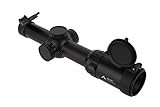
- Variable 1-6x magnification second focal plane scope features the ACSS Standard reticle for 5.56 .45.308
- ACSS reticle combines BDC, wind holds, moving target leads, and range estimation in an easy to use system
The Trijicon AccuPoint 1-4×24 blows the TAC30 away in glass quality and brightness, but costs three times as much. If your budget allows, it’s the better scope. Most of us have kids to feed, though.
The old Leupold Mark AR MOD 1 1.5-4×20 I retired still has better turrets and clearer glass, but lacks illumination and starts at 1.5x. The TAC30’s true 1x and illuminated reticle make it more versatile for defensive use.
Mounting Solutions That Work
Proper mounting makes or breaks any optic. The TAC30’s 30mm tube gives you plenty of ring options, but choose wisely. After trying several combinations, here’s what I recommend:
The Burris P.E.P.R. mount provides the right height for AR platforms and includes backup iron sight compatibility. At around $80, it’s fairly priced and has survived everything I’ve thrown at it. The quick-detach feature actually returns to zero—verified through multiple removal cycles.
For bolt guns, Warne Maxima horizontal rings have proven bombproof. The steel construction handles heavy recoil, and the horizontal split prevents scope tube damage during installation. They’re not pretty, but they work.
Skip the cheap Amazon rings. I’ve seen too many students show up with stripped screws and wandering zeros from bargain mounting hardware. Your scope is only as good as what holds it to your rifle.
Essential Accessories Worth Considering
The factory lens covers are garbage—they’ll disappear within a month of field use. Replace them immediately with Butler Creek flip-ups or Vortex Defender caps. The few seconds saved during target acquisition pays dividends.
Consider adding a neoprene scope cover for transport and storage. Montana dust and pine needles are optic killers. A $15 cover has probably saved me hundreds in potential repair costs.
Keep spare CR2032 batteries in your grip compartment or scope cap. Murphy’s Law says your illumination will die at the worst moment. I learned this lesson during a twilight coyote hunt—never again.
The Harsh Truth About Battery Dependency
Here’s something glossy reviews won’t tell you: any battery-powered optic is a potential failure point. I’ve guided hunters whose expensive electronic sights died in the cold, leaving them with iron sights or borrowed rifles. The TAC30’s etched reticle means you’re never completely out of the fight, but plan accordingly.
My rule? If the rifle is for serious use—home defense, backcountry hunting, survival situations—the optic must work without batteries. The TAC30 passes this test, though barely. The non-illuminated reticle works but isn’t ideal in low light.
Practice makes permanent, so practice it right. Run drills with dead batteries to build confidence in the etched reticle. You might be surprised how well you can shoot without illumination once you train for it.
Who Should Buy the TAC30
This scope makes sense for specific users and applications:
The Practical Tactical Shooter: If you’re running carbine courses, competing in 3-gun matches, or want a capable home defense optic, the TAC30 delivers. It’s fast up close and adequate at distance—exactly what most tactical scenarios demand.
The Timber Hunter: For shots inside 300 yards in heavy cover, this scope excels. The true 1x allows for quick shots on jumping deer, while 4x handles any ethical shot in thick country. It’s become my go-to for whitetails in river bottoms.
The Budget-Conscious Trainer: As someone who teaches survival and marksmanship courses, I need reliable equipment that won’t bankrupt me when students inevitably abuse it. The TAC30 hits the sweet spot of durability and affordability for training rifles.
The Truck Gun Enthusiast: If you need an optic that can bounce around behind the seat and still perform when needed, this scope fits perfectly. It’s tough enough for neglect but capable enough for serious use.
Who Should Look Elsewhere
The Long-Range Precision Shooter: With only 4x magnification and basic turrets, this isn’t your huckleberry for reaching way out there. Look at higher magnification options with target turrets.
The Ounce Counter: At 17 ounces, the TAC30 isn’t heavy, but it’s not light either. Mountain hunters counting every gram should consider lighter options, though they’ll sacrifice durability.
The Perfectionist: If you demand the absolute best glass clarity, perfect turrets, and flawless controls, save up for alpha-tier glass. The TAC30 is good, not great.
Real-World Alternatives to Consider
Based on extensive field testing, here are honest alternatives:
The Vortex Strike Eagle 1-6×24 gives you more magnification for similar money. If you regularly shoot beyond 300 yards, the extra 2x makes a difference. Battery life is better too, though the illumination isn’t as bright.
The Swampfox Arrowhead 1-6×24 costs less and offers similar features, but quality control is inconsistent. I’ve seen good ones and lemons. If the budget is critical and you can inspect before buying, it might work.
The Primary Arms GLx 1-6×24 with ACSS reticle offers more advanced ballistic solutions for multiple calibers. If you’re a data-driven shooter who appreciates complex reticles, it’s worth investigating.
For those with deeper pockets, the Steiner P4Xi 1-4×24 delivers superior glass and build quality. It’s what the TAC30 wishes it could be, but at twice the price.
The Verdict from Two Years of Hard Use
The Burris Fullfield TAC30 1-4×24 earns its place in my rifle collection through sheer dependability. It’s not perfect—the illumination controls frustrate me, the battery life disappoints, and I sometimes want more magnification. But when that bull elk appeared through the timber, the scope did its job without drama.
For around $400 street price, you get a legitimate tactical optic that handles abuse, maintains zero, and provides good enough glass for most applications. It won’t impress your friends at the range, but it’ll work when you need it. In my world, that reliability matters more than perfection.
The wilderness doesn’t care about your schedule—or your equipment preferences. After two Montana winters and thousands of rounds, the TAC30 has proven it belongs on a working rifle. It’s become the scope I grab when heading out the door, knowing it’ll handle whatever the day brings.
Critical Lessons Learned
Through extensive use, I’ve learned to work around the TAC30’s quirks:
Battery Management: Remove the battery between uses to prevent drain. Keep spares everywhere—truck, range bag, hunting pack. The dead battery will always happen at the worst moment.
Mounting Height Matters: Too low and you’ll fight the scope at 1x. Too high and the cheek weld suffers. The P.E.P.R. mount hits the sweet spot for ARs. Experiment with your specific setup.
Trust But Verify: Despite good zero retention, I still verify zero before each hunting season and after any significant impact. Five rounds at 100 yards provides peace of mind.
Train With What You Have: The TAC30’s reticle might seem busy at first, but becomes intuitive with practice. Spend time learning the holdovers—they’re surprisingly accurate with the right loads.
Final Thoughts from the Montana Mountains
Your best survival tool is the six inches between your ears, but good equipment sure helps. The Burris Fullfield TAC30 represents a solid middle ground—better than entry-level glass but not priced out of reach for working folks.
Would I trust it on a backcountry hunt where equipment failure could be dangerous? Yes, with the caveat that I’d carry backup iron sights. Would I choose it over more expensive options if money wasn’t a factor? Probably not. But money is always a factor, and this scope delivers honest value.
Remember: respect the game, respect the land, respect yourself. Part of that respect means choosing equipment you can rely on without breaking the bank. The TAC30 fits that bill, earning its place through proven performance rather than marketing hype.
Plan for the worst, hope for the best, and practice until muscle memory takes over. The TAC30 won’t make you a better shooter, but it won’t hold you back either. In the end, that’s what most of us need—gear that works hard and doesn’t quit.
Want to explore more tactical optic options or share your own TAC30 experiences? The comment section below is where real field knowledge gets shared. And if you’re looking to upgrade your complete rifle setup, check out our comprehensive guide to building a practical tactical carbine—where we cover everything from barrels to slings.
Stay sharp, stay ready, and keep your powder dry.