My grandfather always said, “A scope that works is worth more than a scope that impresses.” Those words echoed in my mind last September when I watched my teenage daughter drop her first mule deer at 280 yards using our ranch rifle topped with a Bushnell 4-12×40. The scope cost less than the gas money for that hunting trip, yet it delivered when it mattered.
I’ve been running this particular Bushnell on various rifles for three hunting seasons now, rotating it between a beat-up Savage .243 for predator control and my son’s Ruger American .308 for deer season. After countless rounds, dozens of successful hunts, and more abuse than any hundred-dollar scope deserves, I’ve formed some strong opinions about where this budget optic shines and where it shows its price tag.
Here in northern Montana, we don’t baby our equipment. If gear can’t handle being tossed in a truck bed at 4 AM, frozen solid in December, or knocked around on horseback, it doesn’t last long. The Bushnell has survived all of this—not without scars, but without failing when we needed it.
Breaking Down the Technical Details
Before diving into field performance, let’s establish what we’re working with:

- Hunting scopes rifles
- Versatile top of the line
- Another quality product
| Specification | Details | Real-World Translation |
| Magnification Range | 4-12x | Perfect for 50-400 yard shots |
| Objective Lens | 40mm | Adequate light gathering without bulk |
| Eye Relief | 3.5 inches | Tight but manageable |
| Field of View | 27 feet at 4x, 9 feet at 12x | Wide enough for tracking movement |
| Main Tube | 1-inch diameter | Standard ring compatibility |
| Overall Length | 13.4 inches | Fits most rifles without crowding |
| Weight | 16.4 ounces | Noticeable but not excessive |
| Parallax Adjustment | 10 yards to infinity | Actually works as advertised |
| Click Value | 1/4 MOA | Standard for hunting scopes |
| Total Adjustment | 60 MOA elevation/windage | More than most hunters need |
How I Test Budget Glass in Montana
When evaluating affordable optics, I don’t coddle them. My testing protocol reflects the reality of hard use in unforgiving country. The wilderness doesn’t care about your schedule—or your budget.
This Bushnell started its trial on my son’s .308 during his hunter safety field day. Twenty teenagers passing a rifle around in dusty conditions provided an immediate durability test. The scope survived without losing zero, though the magnification ring collected enough grit to sound like a pepper grinder.
Next came the freeze-thaw torture. Montana winters mean your rifle might go from a -20°F truck bed to a 70°F cabin multiple times daily. I deliberately induced thermal shock by moving the scoped rifle between temperature extremes. The nitrogen purging held—no internal fogging after a dozen cycles.
Water resistance testing happened naturally during a November snowstorm while glassing for elk. The scope spent six hours getting snowed on, melting, and refreezing. The seals held perfectly, though ice buildup on the objective lens reminded me why flip-up caps matter.
For tracking verification, I shot standard box tests at our 200-yard range using Federal Power-Shok 150-grain .308 loads. Five separate tests over two months showed consistent return to zero. The clicks aren’t as crisp as my Leupold VX-5HD, but they’re positive enough to count in the field.
Optical Performance in Real Hunting Conditions
Dawn and Dusk Reality
Let’s be honest about low-light performance: this isn’t alpha glass. During legal shooting hours, the multi-coated lenses gather enough light for ethical shots. But in those magical moments just before sunrise or after sunset when premium scopes still show detail, the Bushnell goes dark.
Last October, I watched a massive whitetail buck step into a meadow 15 minutes after legal shooting ended. Through my Zeiss Conquest on another rifle, I could count points. Through the Bushnell, I saw a deer-shaped shadow. That’s the difference your money buys—extended viewing time, not necessarily hunting time.
Glass Clarity Through the Magnification Range
At 4x, the image stays sharp edge-to-edge. This is where the scope feels most comfortable, offering a bright, clear picture that rivals scopes costing twice as much. It’s my go-to setting for timber hunting or quick shots under 150 yards.
Push it to 12x, and the limitations appear. The sweet spot shrinks to about 70% of the viewing area, with noticeable softness at the edges. Color fringing appears on high-contrast edges—like a buck’s antlers against snow. Still usable, but you’ll notice the compromise.
Between 6-8x seems to be the optical sweet spot. Images stay reasonably sharp across the field of view, and the exit pupil remains large enough for good brightness. This is where I leave it for most hunting situations.
The Reticle: Simple but Functional
The DOA (Dead-On Accurate) reticle won’t win any innovation awards, but it works. The thick outer posts guide your eye to center quickly—crucial for snap shots on jumping deer. The thinner center crosshairs allow for precision when time permits.
The ballistic holdover marks are supposedly calibrated for common hunting cartridges at specific magnifications. In practice, I’ve found them close enough for hunting purposes with my .308 at 9x magnification. Your results will vary with different calibers and loads. Plan to verify the holds yourself rather than trusting the manual.
One frustration: the reticle is thin enough to disappear against dark backgrounds in low light. Several times I’ve lost the crosshairs against timber or shadowed hillsides during the last minutes of legal light. An illuminated version would transform this scope’s versatility.
Durability Assessment After Hard Use
What Holds Up
After three seasons of legitimate abuse, several aspects have impressed me:
The aluminum tube construction takes impacts without denting. I’ve dropped this rifle (unloaded, accidentally) from truck tailgates twice. Both times, the scope held zero within 1 MOA.
The external lens coatings resist scratching better than expected. Despite branches, brush, and general neglect, the glass remains clear enough for practical use. Some minor scratches exist, but nothing affecting the sight picture.
The nitrogen purging continues preventing internal fogging. Even during rapid temperature changes that fog truck windows, the scope stays clear internally. That’s impressive for budget glass.
Zero retention has been rock-solid. After approximately 600 rounds between three rifles, including some hot .243 varmint loads, the scope returns to zero reliably. That’s all you can ask from any scope.
What Shows Wear
The magnification ring stiffened considerably after exposure to dust and moisture. Regular cleaning and a drop of gun oil help, but it’ll never be smooth again. Consider this the cost of hard use.
The turret caps feel cheaper with use. The threads are wearing, making them finicky to replace properly. I’ve cross-threaded them twice when hurrying. Now I’m careful and deliberate when replacing them.
The objective lens housing shows honest wear—scratches, dings, and fading finish. Cosmetic only, but it looks like what it is: a working scope that’s seen miles of hard country.
Tracking and Adjustments in Practice
The 1/4 MOA clicks are tactile enough to count without looking, though they lack the positive “snap” of premium turrets. Think stepping on gravel versus clicking a quality pen. You know you’ve made an adjustment, but it doesn’t inspire confidence.
During sight-in sessions, I’ve found the tracking generally honest. Dialing 8 clicks moves impact 2 inches at 100 yards, as it should. However, there’s occasionally a “dead click” where nothing happens, followed by a double-movement on the next click. This happens maybe once per 20 adjustments—annoying but manageable.
The adjustment range of 60 MOA proves more than adequate for any practical hunting scenario. I’ve never come close to running out of adjustment, even when switching between rifles with different mounting heights.
Return to zero after making adjustments has been reliable. I can dial for a 400-yard shot, then return to my 200-yard zero without concern. That reliability matters more than perfect click quality for hunting applications.
Parallax Adjustment Performance
The adjustable objective for parallax correction works better than expected at this price point. The markings roughly correspond to actual distances, though I’ve learned to trust my eye over the numbers.
At minimum parallax setting (marked 10 yards), I can shoot barn rats at 15 yards without noticeable error. At the infinity setting, targets beyond 300 yards stay parallax-free. The adjustment ring turns smoothly without affecting the point of impact.
One quirk: between 50-100 yards, the parallax adjustment becomes extremely sensitive. A tiny movement drastically changes the focal plane. This took practice to master, especially when switching between distances quickly.
Eye Relief and Shooting Comfort
The stated 3.5-inch eye relief feels optimistic. In practice, I get about 3.2 inches of usable relief before experiencing scope shadow or image cutoff. This proves adequate for standard cartridges but gets uncomfortable with magnum recoil.
My daughter, shooting the lightweight .243, has no issues with scope eye. But when I mounted this on a friend’s .300 Winchester Magnum for testing, I kissed the scope twice in 20 rounds. Magnum shooters should look elsewhere or mount it further forward.
The eye box—how forgiving the scope is to head position—remains consistent through most of the magnification range. At 4x, you can be sloppy with cheek weld and still get a full sight picture. At 12x, precision matters more, but it’s still manageable for field positions.
Mounting Considerations and Compatible Accessories
Ring Selection Matters
The 1-inch tube accepts any standard rings, but chooses wisely. I’ve run Leupold PRW rings (steel, bulletproof), Warne Maxima (excellent value), and cheap Weaver rings (adequate). The Warnes offer the best balance of quality and cost for this scope.
Medium-height rings work on most rifles with standard contours. Low rings might work with thin barrels and low-profile bolts, but medium height provides better clearance and easier scope cap manipulation.
Essential Accessories
Flip-up lens caps are mandatory. The factory caps are garbage—they’ll disappear within a week of field use. I run Vortex Defender caps ($25) that have survived two seasons of abuse. Butler Creek caps work too but feel cheaper.
A neoprene scope cover protects during transport. The Bushnell’s finish scratches easily, and a $12 cover prevents most damage. Plus, it reduces scope noise when moving through brush.
Keep a lens pen handy. Budget scope coatings seem to attract every fingerprint, water spot, and dust particle within miles. Regular cleaning maintains optical performance.
Comparing Against Other Budget Options
Having owned or extensively used several scopes in this price range, here’s my honest assessment:
The Vortex Crossfire II 4-12×40 costs about $50 more but offers lifetime warranty coverage that actually means something. Glass quality is marginally better, and the turrets feel more refined. If you can afford the extra cost, it’s worth consideration.
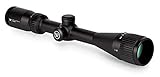
- The 4-12×40 Adjustable Objective Crossfire II riflescope is one of many configurations in the Crossfire II line. The Dead-Hold BDC reticle is good for hunting at varying ranges where estimating holdover is a concern.
The Simmons 8-Point 3-9×40 costs less but shows it immediately. Mushier turrets, dimmer glass, and questionable durability. Save another $50 and get the Bushnell instead.
The old Redfield Revolution 3-9×40 (when you can find one) matches the Bushnell’s optical quality with better turrets. But 9x maximum magnification feels limiting for longer shots. The Bushnell’s 12x provides more versatility.
The Burris Fullfield E1 3-9×40 costs similar money with comparable glass quality. The Ballistic Plex reticle proves more useful than Bushnell’s DOA system. But again, limited magnification range. Personal preference dictates choice here.

- VERSATILE – The 3-9x is the absolute staple for American hunters in all sorts of terrain/conditions; is rugged to handle a lifetime of field use, heavy recoil, and harsh vibration such as bouncing around in your side by side or back of your hunting rig
Who Should Buy This Scope
Perfect For:
The Youth Hunter: Affordable enough that scope dings won’t cause tears. Functional enough for any shot they should be taking. My kids have both taken deer with this scope.
The Truck Gun Setup: When you need functional glass on a rifle that lives behind the seat. Good enough for predator control or unexpected opportunities, cheap enough not to worry about.
The Backup Rifle: Every serious hunter needs a backup. This scope makes that spare rifle capable without breaking the budget.
The Budget-Conscious Beginner: If you’re choosing between this scope and iron sights due to budget, get the scope. It opens up ethical shot opportunities that iron sights can’t match.
Look Elsewhere If:
You Shoot Beyond 400 Yards Regularly: The glass quality and reticle design limit practical use at extended range. You need better tools for consistent long-range performance.
You Hunt Dangerous Game: The marginal eye relief and basic construction don’t inspire confidence when facing anything that might charge. Spend more for reliability when life’s on the line.
You Demand Mechanical Precision: The turrets work but won’t satisfy precision shooters. If you regularly dial for distance, invest in better mechanics.
Living With Budget Reality
Here’s the truth about budget scopes: they force you to become a better hunter. You can’t rely on superior glass to extend shooting light. You can’t dial precise solutions for every distance. You must get closer, judge distance better, and know your limitations.
My grandfather hunted with iron sights until his 60s, taking deer every season. This Bushnell offers capabilities he never had. It’s not perfect, but it’s perfectly adequate for most hunting situations.
The scope has helped fill our freezer for three seasons. It guided my daughter to her first deer and helped my son gain confidence in his marksmanship. It’s done everything we’ve asked without failing when needed. That’s value that transcends price tags.
Maintenance Lessons Learned
Keep the scope clean and it’ll perform better longer. After each hunt, I wipe down the entire scope with a silicone cloth. This prevents moisture from settling in the turret threads and adjustment rings.
The magnification ring requires occasional lubrication. A tiny drop of gun oil on the rotation track every few months keeps it functional. Too much oil attracts dirt, making things worse.
Check ring screws monthly during hunting season. The aluminum tube compresses slightly over time, allowing screws to loosen. Blue Loctite prevents walking but still allows removal when needed.
Store the rifle with turret caps slightly loose. Tight caps compressed for months can damage the O-ring seals. I learned this lesson after finding moisture under one cap following summer storage.
The Bottom Line from Three Seasons of Use
The Bushnell 4-12×40 represents honest value in budget optics. It won’t amaze you with crystal-clear glass or mechanical precision, but it will put meat in the freezer reliably. For around $100, you get functional magnification range, adequate optical quality, and proven durability.
Practice makes permanent, so practice it right—even with budget glass. Learn the scope’s limitations through extensive range time. Verify your holdover points. Understand how it performs in your hunting conditions. A familiar budget scope beats unfamiliar premium glass every time.
Would I choose this over my Leupold VX-5HD for a backcountry elk hunt? No. But would I trust it for whitetails under 300 yards, predator control, or as a backup? Absolutely. It’s proven itself repeatedly when the stakes were dinner, not dreams.
Field-Tested Recommendations
If you buy this scope, here’s my advice based on three seasons of experience:
- Budget for rings and caps: Don’t mount a $100 glass with $10 rings. Quality mounting hardware and lens protection cost another $50-60 but prove essential.
- Verify everything yourself: Don’t trust the manual’s ballistic claims. Shoot your actual ammunition at various distances and record the results.
- Clean it regularly: Budget glass requires more maintenance than premium options. Accept this as part of the deal.
- Know its limits: This scope works great to 300 yards in good light. Beyond that, or in marginal conditions, success becomes questionable.
- Buy two if possible: At this price, having a spare makes sense. Mount them identically on similar rifles for redundancy.
Final Thoughts from the Montana Mountains
Your best survival tool is the six inches between your ears, but functional equipment sure helps. The Bushnell 4-12×40 provides that functionality without requiring a second mortgage. It’s the scope I recommend when neighbors ask for affordable options that actually work.
Three years ago, Sarah suggested I test budget optics to help friends and students make informed choices. This Bushnell has exceeded expectations, proving that carefully chosen budget gear can serve most hunters well. It’s not about having the best—it’s about having enough.
The wilderness doesn’t care about your equipment brand or price tags. It only cares whether your gear works when needed. This scope has worked every time we’ve asked, from my daughter’s first deer to yesterday’s coyote at 200 yards. That reliability earns my recommendation.
Remember: respect the game, respect the land, respect yourself. Part of that respect means choosing equipment you can afford to practice with regularly. This Bushnell lets you shoot more, hunt confidently, and fill tags without emptying wallets.
Want to maximize your budget scope’s potential? Check out our comprehensive guide to DIY scope mounting and zeroing techniques. Or share your own budget optic experiences in the comments—real field knowledge beats magazine reviews every time.