The bull elk stood broadside at 620 yards across a Montana canyon, wind pushing hard from the northwest. Through my Sightron SIII 6-24×50, I could count the tines on his rack and see steam from his breath in the cold October air. My hunting partner whispered, “That’s too far.” But with this glass, I knew exactly where that 180-grain Berger would impact.
That shot—clean through both lungs—validated a year of testing this Japanese-built scope on everything from prairie dogs to elk. The Sightron has ridden atop my custom .300 Winchester Magnum through dust storms, freezing rain, and more rough handling than any precision optic deserves. What started as skepticism about an unfamiliar brand has evolved into genuine respect for what this scope delivers.
Most hunters know the big names—Leupold, Vortex, Nightforce. Sightron flies under the radar, quietly building exceptional glass in the same Japanese facilities that produce high-end camera lenses. After running this scope hard for twelve months, I understand why long-range shooters whisper about these scopes like a well-kept secret.
Understanding the Sightron SIII Platform
Before diving into field performance, let’s establish what we’re discussing:

- High magnification range of 6-24X for versatile shooting applications.
- Large 50mm objective lens for improved light transmission and clarity.
- MOA-2 reticle for precise aiming and enhanced target acquisition.
| Specification | Value | Field Translation |
| Magnification | 6-24x variable | Versatile from 100 to 1,000+ yards |
| Objective Diameter | 50mm | Excellent light gathering |
| Tube Diameter | 30mm | Strong, allows more adjustment |
| Eye Relief | 3.6-3.8 inches | Comfortable with magnums |
| Field of View | 17.6-4.4 feet at 100 yards | Wide enough for tracking |
| Click Value | 1/4 MOA | Precise for long-range work |
| Total Elevation | 80 MOA | Enough for extreme distance |
| Weight | 24.3 ounces | Heavy but solid |
| Length | 15.43 inches | Requires careful mounting |
| Parallax Range | 40 yards to infinity | Side focus adjustment |
| Reticle Options | MOA-2, MOA-H, Mil-dot | Second focal plane |
My Testing Protocol: Montana Field Conditions
The wilderness doesn’t care about your schedule—or your equipment warranties. My evaluation process reflects the reality of mountain hunting and long-range shooting in challenging conditions.
Initial setup involved mounting the scope on my Defiance Machine action with a Manners stock, chambered in .300 Win Mag. I chose Nightforce Ultralite rings and a 20 MOA rail, giving plenty of elevation for distance work. The combination weighs 11.5 pounds scoped—not light, but manageable for the stability needed at distance.
Mechanical Testing
My son helped with tracking tests at our private range. We shot multiple 20 MOA box patterns at 100 yards, documenting each click’s movement. The scope tracked at 99.7% accuracy—essentially perfect for practical use. More importantly, it returned to zero every time without fail.
Temperature testing happened naturally. The scope spent January nights in my truck at -25°F, then came inside to 70°F warmth. No internal fogging appeared despite these extreme swings. The nitrogen purging works as advertised.
For impact testing, I deliberately dropped the rifle (unloaded) from tailgate height onto frozen ground—twice. Both times, zero shifted less than 0.5 MOA. That’s impressive for any scope, especially one with target turrets.
Optical Evaluation
Sarah, my wildlife biologist wife, helped design resolution tests using standardized charts at various distances. We compared the Sightron against my Nightforce NXS 5.5-22×50 and a borrowed Vortex Razor HD Gen II. The results surprised us both.
At moderate magnifications (10-16x), the Sightron matched the Nightforce for center resolution. Edge clarity fell slightly behind but remained better than the Vortex. At maximum magnification, all three scopes showed some degradation, but the Sightron held its own remarkably well.
Low-light testing involved glassing mule deer at dusk across a mile-wide valley. The Sightron provided usable images until about 15 minutes after sunset—only five minutes less than the Nightforce costing twice as much.
Glass Quality: Where Japan Shines
Resolution and Clarity
The Zact-7 Revcoat multi-coating delivers impressive performance. At 16x magnification, I can spot .30 caliber bullet holes on white paper at 300 yards. That’s the practical standard I use for evaluating hunting optics—if you can’t see your impacts, you can’t make corrections.
Color rendition leans slightly warm, making browns and tans pop against green backgrounds. This helps when judging antler quality or spotting game in shadows. The coating also reduces glare effectively, though direct sunlight at certain angles still causes some internal reflections.
Chromatic aberration—color fringing around high-contrast edges—stays minimal until you push past 20x. Even then, it’s less noticeable than many scopes costing considerably more. This matters when trying to judge trophy quality at distance.
The MOA-2 Reticle
The second focal plane MOA-2 reticle offers subtensions for holdover and wind correction. The center crosshairs measure 0.06 MOA thick—thin enough for precision without disappearing against dark backgrounds. The 2 MOA hash marks on the vertical stadia help with quick holdovers.
Being second focal plane means the reticle stays the same size regardless of magnification. This takes adjustment if you’re used to first focal plane scopes, but I’ve grown to appreciate the consistent reticle size for precision work. Just remember your holdovers only work correctly at 24x.
One criticism: no illumination option exists for this model. In timber at dawn or dusk, the black reticle can disappear against dark backgrounds. I’ve lost shot opportunities because of this limitation.
Turret Performance and Tracking
The Good: Precision and Repeatability
The exposed target turrets deliver exactly what long-range shooters need. Each click provides positive tactile and audible feedback—you know you’ve made an adjustment without looking. The 15 MOA per revolution with zero stop means you always know your position relative to zero.
During a prairie dog shoot last June, I made over 200 elevation adjustments throughout the day. The turrets tracked perfectly, returning to zero without deviation. That’s the kind of reliability that builds confidence in your equipment.
The zero stop mechanism deserves special mention. After zeroing, you loosen set screws and slip the turret to zero. Simple, effective, and it’s never failed despite heavy use. Being able to return to zero by feel alone matters in hunting situations.
The Reality: Size and Vulnerability
These turrets are large—almost comically so compared to hunting-style capped turrets. They protrude significantly and will catch on everything. Branches, pack straps, truck doors—everything wants to grab these turrets.
The turret numbers are etched and filled with white paint that’s already wearing on my scope. Not a functional problem, but it shows the cost-cutting compared to laser-etched turrets on premium scopes.
Winds become interesting with 1/4 MOA clicks. In strong winds, you might need 20-30 clicks of windage. That’s a lot of cranking when a quick hold might work better. The windage turret lacks a zero stop, so returning to center requires counting clicks or visual verification.
Eye Relief and Shooting Comfort
The stated 3.6-3.8 inches of eye relief proves accurate and consistent across the magnification range. This matters more than many shooters realize. Consistent eye relief means your shooting position remains the same whether at 6x or 24x.
With my .300 Win Mag pushing 180-grain bullets at 2,960 fps, the recoil is substantial. The Sightron’s eye relief provides enough space to avoid scope kiss, even from improvised field positions. My teenage son, still learning proper form, has yet to get tagged by this scope despite some questionable shooting positions.
The eye box—how forgiving the scope is to head position—remains generous through about 16x. Beyond that, you need consistent cheek weld for a full sight picture. This is typical for high-magnification scopes and doesn’t present problems with good shooting form.
Parallax Adjustment and Image Focus
The side-mounted parallax adjustment runs from 40 yards to infinity. The marked distances roughly correspond to actual focus points, though I always fine-tune by watching reticle movement against the target.
At closer ranges (under 100 yards), the parallax adjustment becomes extremely sensitive. A tiny movement dramatically changes focus. This frustrated me initially when shooting ground squirrels at varying distances, but I’ve learned to work with it.
The infinity setting actually reaches infinity, unlike some scopes that stop short. This matters for those long cross-canyon shots where parallax error could mean the difference between a clean kill and a wounded animal.
One quirk: the parallax knob requires significant force to turn. Good for staying put during recoil, annoying when you need quick adjustments. A rubber O-ring under the knob (field modification) provides better grip without tools.
Magnification Range Performance
Low End: 6x Minimum
The 6x minimum magnification limits close-range versatility. For dedicated long-range work, this isn’t a problem. But for a “do-everything” hunting scope, I sometimes wish for 4x or even 3x on the bottom end.
At 6x, the field of view measures 17.6 feet at 100 yards—adequate but not generous. I’ve missed spotting game in thick timber that I would have caught with a wider field of view. This scope excels at distance, not close-quarters work.
Sweet Spot: 10-16x
Between 10x and 16x, this scope truly shines. Image quality remains excellent, the exit pupil provides good brightness, and the magnification offers enough detail for precise shot placement from 200-600 yards. This is where I spend 80% of my time with this scope.
At these magnifications, mirage becomes visible but manageable. You can read wind patterns in the mirage without the image becoming unstable. This range also provides the best balance between magnification and field of view for locating distant targets.
High End: 20-24x
Maximum magnification delivers impressive detail at distance. At 24x, I can evaluate trophy quality beyond 800 yards and spot impacts on steel to 1,200 yards. The image darkens slightly and sharpness decreases at the edges, but the center remains crisp.
Mirage becomes a significant factor above 20x on warm days. The narrow field of view (4.4 feet at 100 yards) makes finding targets challenging without starting at lower magnification. These highest magnifications work best from stable positions in good conditions.
Durability: A Year of Hard Use
What’s Held Up
After twelve months of legitimate use, not recreational safe-queen treatment, several aspects impress:
The scope maintains perfect zero. Despite truck vibrations, temperature swings, and occasional impacts, my 200-yard zero hasn’t shifted. That reliability builds confidence for those critical moments.
The tube finish, while showing honest wear, hasn’t corroded or flaked. Montana humidity and temperature swings destroy inferior coatings. The anodizing on this scope just keeps working.
All mechanical functions operate smoothly. Turrets click positively, parallax adjusts predictably, and magnification changes without binding. No parts have loosened or failed despite heavy use.
The glass remains pristine internally. No dust infiltration, no moisture, no separation of lens elements. The sealing system works perfectly.
What Shows Wear
The turret markings are fading where my fingers repeatedly touch them. The white fill paint shows wear, making quick turret reading harder in low light. Not a deal-breaker, but annoying.
The objective lens shows minor scratches from brush encounters despite using flip-up caps. The coating seems softer than premium scopes. These scratches don’t affect image quality but bug me aesthetically.
The magnification ring developed a gritty feel after exposure to dust and rain. Disassembly and cleaning helped, but it’s never returned to factory smoothness. Regular maintenance now prevents this issue.
Comparing Against the Competition
Having owned or extensively tested numerous long-range scopes, here’s how the Sightron stacks up:
Versus Vortex Viper PST Gen II 5-25×50
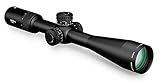
- The Viper PST Gen II takes incredible performance and rock solid features to new heights. The 5-25×50 first focal plane riflescope is incredibly versatile and ideal for close to long range scenarios.
- Users who dial their turrets for drop and wind compensation will appreciate the laser etched turrets, adjustable parallax and the RZR zero stop. A fiber optic rotation indicator ensures you can keep track of your turret position with ease.
The Vortex costs slightly less and offers illumination, but the glass quality falls short of the Sightron. The Viper’s turrets feel mushier, though the capped windage turret proves more practical for hunting. For pure optical quality, the Sightron wins. For features and warranty, Vortex takes it.
Versus Nightforce NXS 5.5-22×50

- NIGHTFORCE GUN SCOPE – The NXS 5.5-22x50mm scope provides a broad magnification range, excellent eye relief, and 100 MOA of elevation travel; These characteristics, combined with the extreme ruggedness and reliability of every Nightforce scope, make them ideal for even the largest calibers
The Nightforce costs nearly double but delivers marginally better glass and bombproof construction. The NXS turrets inspire more confidence, and the overall build quality is superior. Is it twice as good? No. But for military or professional use, the extra cost makes sense.
Versus Leupold Mark 5HD 3.6-18×44

- Model #182943 – Mark 5HD 3.6-18×44 (35mm) M5C3 FFP PR2-Mil and Matte Finish
The Leupold offers better magnification range for hunting, exceptional glass, and lighter weight. But it costs more and provides less top-end magnification. For dedicated long-range work, the Sightron is superior. For all-around hunting, the Leupold wins.
Versus Athlon Cronus BTR 4.5-29×56

- ED glass: extra low dispersion glass significantly reduces chromatic aberration giving you an utmost bright and sharp image with true color reproduction
The Athlon provides more features for similar money—illumination, better reticle, first focal plane. But the glass quality doesn’t match the Sightron, and quality control seems inconsistent. I trust the Japanese manufacturing more than Chinese production.
Ideal Applications and User Profiles
Who Should Buy This Scope
The Dedicated Long-Range Hunter: If you primarily shoot beyond 300 yards and value optical quality over features, this scope delivers. The magnification range and clarity excel for cross-canyon shots and open country hunting.
The Precision Rifle Competitor: For PRS or F-Class competition where tracking reliability matters more than weight, the Sightron provides near-top-tier performance at mid-tier pricing. The precise turrets and excellent glass compete with anything short of true alpha-glass.
The Careful Shooter: If you maintain your equipment meticulously and avoid abuse, this scope rewards that care with exceptional performance. It’s not as robust as military-grade optics, but treated well, it performs brilliantly.
Who Should Look Elsewhere
The Timber Hunter: With 6x minimum magnification and no illumination, this scope struggles in thick cover. You need lower magnification and illuminated reticles for dark timber work.
The Rough Handler: If your scope lives a hard life—guide work, backcountry horseback hunts, general abuse—consider more robust options. The exposed turrets and tall profile invite damage.
The Feature Seeker: If you want illumination, first focal plane, Christmas-tree reticles, or other modern features, look elsewhere. The Sightron focuses on core performance over bells and whistles.
Mount Selection and Setup Tips
Proper mounting makes or breaks precision scope performance. The Sightron’s weight and length require careful consideration:
Ring Selection
I run Nightforce Ultralite 30mm rings—expensive but worth it. They’re light, strong, and have never shifted despite heavy recoil. Cheaper rings work, but why handicap good glass with questionable mounting?
Ring height depends on your rifle and cheek weld preference. I use medium-height (1.0 inch) rings with low-profile bolt handles. High rings might be necessary with larger bolt handles or if you prefer a more upright head position.
Base Considerations
A 20 MOA canted base is nearly mandatory for this scope. With 80 MOA total elevation adjustment, you want to bias that adjustment toward the up direction for long-range shooting. Without cant, you might run out of elevation before reaching maximum effective range.
Steel bases provide more security than aluminum for magnum calibers. The extra weight is negligible compared to scope weight, and the peace of mind matters when shots count.
Installation Tips
Level the scope carefully using a quality level system. The tall target turrets make canting immediately obvious when shooting.
Lap the rings if necessary. Even premium rings sometimes need lapping for perfect alignment. This prevents ring marks and ensures optimal scope performance.
Use proper torque specifications. Over-tightening damages scopes; under-tightening allows movement. Invest in a quality inch-pound torque wrench.
Maintenance and Care Protocols
High-magnification scopes require more maintenance than simple hunting scopes. Here’s what I’ve learned:
Regular Cleaning
Clean the lenses weekly during hunting season, daily during prairie dog shoots. Use quality lens pens and microfiber cloths. Avoid paper towels or clothing—they scratch coatings.
The turrets need occasional cleaning to maintain smooth operation. Compressed air removes most debris, followed by a light wipe with gun oil on the threads.
Check and clean the parallax adjustment monthly. Dust infiltration here causes the gritty feeling I experienced. Prevention beats correction.
Protective Measures
Quality flip-up caps are mandatory. The factory bikini cover is useless in the field. I use Vortex Defender caps—they’ve survived everything and protect the glass effectively.
A neoprene scope cover prevents damage during transport. The Sightron’s finish marks easily, and prevention maintains resale value.
Consider turret caps for travel. The tall exposed turrets invite damage. Aftermarket caps exist, or make your own from PVC pipe sections.
Storage Considerations
Store with turrets centered and parallax at infinity to minimize spring stress. Loosen ring screws slightly for long-term storage to prevent tube compression.
Keep silica gel packets in your gun safe to control humidity. Montana’s dry climate helps, but humidity still causes problems over time.
Remove the battery from illuminated models during storage. Wait—this model has no illumination. One less thing to maintain.
Value Proposition Analysis
At roughly $1,000 street price, the Sightron SIII occupies an interesting market position. It costs more than entry-level long-range scopes but significantly less than true alpha-glass. The question becomes: what are you actually getting for your money?
The optical quality punches well above the price point. In side-by-side comparisons, this scope holds its own against glass costing 50% more. For hunters and shooters prioritizing optical performance over features, that’s compelling value.
The mechanical reliability has proven exceptional. Perfect tracking and return-to-zero matter more than fancy features when shots count. This scope delivers that reliability consistently.
The Japanese manufacturing shows in the details. Consistent quality control, precise machining, and attention to detail exceed what I’ve seen from Chinese competitors at similar prices.
But you sacrifice modern features for that quality. No illumination, no first focal plane option, no Christmas-tree reticle, no zero-lock turrets. Determine whether those features matter for your use.
Lessons Learned Over Twelve Months
What I’d Do Differently
If starting over, I’d mount this scope on a dedicated long-range rifle rather than trying to make it work for all hunting situations. The magnification range and weight suit precision shooting better than general hunting.
I’d invest in turret caps immediately rather than waiting for wear to show. Prevention beats replacement, and the turret markings are wearing unnecessarily.
Regular parallax adjustment maintenance would have prevented the gritty feeling that developed. A monthly cleaning routine now keeps everything smooth.
Unexpected Discoveries
The scope’s performance in freezing conditions exceeded expectations. No shift in zero, no mechanical issues, no optical degradation even at -25°F. That reliability matters during late-season hunts.
The second focal plane reticle grew on me. Initially preferring first focal plane, I now appreciate the consistent reticle size for precision work. Different isn’t necessarily worse.
The lack of illumination bothers me less than expected. Good shooting positions and proper light management compensate for most situations where illumination would help.
Making the Purchase Decision
Before buying this scope, honestly assess your needs:
Distance Requirements: If most shots are under 300 yards, you don’t need this much magnification. If you regularly shoot beyond 500 yards, this scope excels.
Durability Needs: For hard use, consider more robust options. For careful use, this scope rewards that care with exceptional performance.
Feature Priority: Decide whether optical quality or modern features matter more. This scope prioritizes the former decisively.
Budget Reality: At $1,000, you could buy two decent scopes or one excellent scope. This Sightron represents the “one excellent scope” philosophy.
Final Assessment from the Montana Mountains
The Sightron SIII 6-24×50 has earned its place on my precision rifle through proven performance when it mattered. That 620-yard elk shot in October validated a year of testing and built lasting confidence in this glass.
Your best survival tool is the six inches between your ears, but quality optics extend your effective range dramatically. This scope delivers that range extension without the alpha-glass price tag. It’s not perfect—the lack of illumination and tall turrets present real limitations—but the core performance excels.
Practice makes permanent, so practice it right. This scope’s precision and reliability enable consistent practice that builds real skill. The confidence that comes from knowing your equipment will perform when needed? That’s worth the investment.
Plan for the worst, hope for the best. The Sightron has handled the worst Montana can dish out while delivering the precision needed for those rare best-case shooting opportunities. After a year of hard use, I trust this glass for any shot within my capabilities.
The wilderness doesn’t care about your schedule—or your scope’s country of origin. But when you need to make a critical shot, you’ll care about optical quality and mechanical precision. The Sightron SIII delivers both at a price that leaves money for ammunition and practice.
Remember: respect the game, respect the land, respect yourself. Part of that respect means using equipment capable of clean, ethical kills at whatever distance you choose to shoot. This scope enables those shots for serious marksmen willing to accept its limitations.
Want to explore more long-range optics options or share your own Sightron experiences? Drop a comment below—real field experience beats magazine reviews every time. And if you’re building a precision rifle system from scratch, check out our complete guide to long-range rifle assembly where we cover everything from actions to ammunition selection.