Three weeks into guiding a group of first-time hunters through the Bob Marshall Wilderness, one of them dropped his rifle down a talus slope. His fancy European red dot shattered like a Christmas ornament, but the loaner rifle I’d equipped with a Sig Romeo-MSR Gen II kept running after bouncing off granite twice. That moment perfectly captured what I’ve learned about this budget optic over six months of testing – it performs way above its pay grade when the wilderness tests your gear’s limits.
I picked up the Romeo-MSR Gen II last spring after watching it survive a particularly brutal carbine course where half the participants’ optics failed in the dust and rain. At around $130, I figured it would make a decent backup or loaner sight. Instead, it’s earned a permanent spot on my truck gun and taught me that you don’t need to spend Aimpoint money to get reliable performance.
The Gen II improvements over the original Romeo-MSR address real problems I’ve encountered in the field. The redesigned see-through mount allows co-witnessing with backup irons – critical when Murphy’s Law strikes 20 miles from the nearest road. The ruggedized housing handles impacts that would sideline lesser optics. After running this sight through Montana’s worst weather, thousands of rounds, and more abuse than any reasonable person would inflict, I’ve formed some strong opinions about where it excels and where corners were cut.

- PINPOINT PRECISION – The SIG SAUER ROMEO-MSR GEN II 2 MOA Green Dot Sight delivers exceptional precision and accuracy, making it ideal for MSR rifle platforms; Engineered with a parallax-free optical design, this sight ensures that the 2 MOA dot remains precisely aligned with the target, allowing shooters to achieve pinpoint accuracy with every shot
Breaking Down the Build: Understanding What $130 Buys You
Let’s address the elephant in the room – this is a Chinese-manufactured optic wearing Sig’s badge. Five years ago, that would have been a deal-breaker for me. But manufacturing quality has improved dramatically, and Sig’s quality control makes the difference. The Romeo-MSR Gen II feels solid in hand, not like the airsoft-grade junk that flooded the market a decade ago.
The aluminum housing uses a 6061-T6 alloy that’s plenty tough for real use. It’s not the 7075 aluminum you’ll find on military contract optics, but it doesn’t need to be. I’ve watched this sight bounce off rocks, get submerged in creek crossings, and endure temperature swings from -15°F to 95°F without failing. The anodized finish shows wear at contact points after hard use, but that’s cosmetic – the sight keeps working.
Weight comes in at 5.7 ounces with the mount, heavier than premium micro dots but lighter than most LPVOs. On a 7-pound rifle, you’ll notice it but won’t hate it. My grandfather would have called it “sturdy enough to hammer nails with” – high praise from a man who broke everything he touched.
The IPX-7 waterproof rating means it’ll survive submersion to one meter for 30 minutes. I tested this accidentally when I slipped crossing Spotted Bear Creek with my rifle. The sight spent a good five seconds underwater before I recovered it. No fogging, no water intrusion, no problems. That’s confidence-inspiring performance for a budget optic.
Optical Performance: Clarity That Surprises
The 20mm objective lens provides a decent sight picture, though you won’t mistake it for an Aimpoint’s generous window. The anti-reflective coating works better than expected – I’ve used it hunting open meadows at midday without excessive glare issues. The slight blue tint common to budget optics is present but minimal, not enough to affect target identification.
The 2 MOA dot hits the sweet spot for versatility. Fine enough for precision work on small targets, large enough to pick up quickly during rapid engagement. With my mild astigmatism, the dot shows minimal starburst effect – better than some red dots costing three times as much. At maximum brightness, there’s slight bloom around the edges, but settings 6-8 provide a crisp dot for daylight use.
Glass clarity impressed me more than expected. No, it won’t match premium Japanese or German glass, but it’s perfectly adequate for a combat optic. I can clearly identify targets out to 200 yards, which covers 95% of practical shooting scenarios. The lens stays clear enough in rain and snow that I rarely need to wipe it during use.
One surprise: the parallax-free design actually works. During training drills with compromised shooting positions, the dot stays on target even with poor cheek weld. This matters more than most shooters realize until they’re shooting from behind cover or in awkward positions.
Illumination Settings: More Options Than You Need
Twelve brightness settings might seem excessive, but the range proves useful in Montana’s varied conditions. Settings 1-2 work for night vision compatibility, though I rarely use them since I’m not running NVGs on my ranch rifles. Settings 3-5 handle indoor and low-light conditions perfectly. Settings 6-9 cover everything from overcast days to bright sunlight. Settings 10-12 are genuinely daylight bright – visible even against snow on sunny days.
The rotary dial beats push-button controls for gloved operation. During a late-season elk hunt with temperatures hovering around zero, I could adjust brightness wearing heavy gloves without removing them. The clicks between settings are positive enough to feel but not so stiff that adjustment requires excessive force.
No auto-off feature means you’ll occasionally drain batteries through forgetfulness. I’ve left it on overnight more times than I care to admit. But with 40,000-hour battery life from a CR2032, one battery lasts months even with my absent-minded habits. Keep a spare in your grip compartment and stop worrying about it.
MOTAC Technology: Marketing or Magic?
Sig’s Motion Activated Illumination (MOTAC) actually works as advertised. After two minutes of inactivity, the sight powers down. Any movement instantly reactivates it. During a three-day backcountry hunt, this feature extended battery life noticeably compared to leaving it constantly on.
The activation sensitivity seems well-calibrated. Walking with the rifle slung keeps it active. Setting it in a rack lets it sleep. I haven’t experienced any delays in reactivation during rapid deployment drills – the dot appears instantly when shouldering the rifle.
Some users report MOTAC occasionally failing to activate, but I haven’t experienced this in six months of use. Maybe I got a good unit, or maybe the complaints come from people who don’t understand the feature. Either way, it works on mine and adds real value.
Zeroing Process: Simple But Tool-Dependent
Here’s my main gripe with the Romeo-MSR Gen II: adjustment requires a tool. Not a standard hex key or flathead screwdriver – a proprietary tool that you’ll inevitably lose when you need it most. I’ve zip-tied one to my rifle’s sling and keep spares in my range bag and truck. Learn from my frustration.
Once you have the tool, zeroing is straightforward. The turrets provide positive clicks at 1 MOA per click. I zero at 50 yards for a good balance between close and medium-range performance. The adjustments track accurately – dialing 10 clicks moves impact exactly 10 MOA. No mushiness, no play, just predictable mechanical precision.
Zero retention has been flawless. After roughly 3,000 rounds of mixed .223 and 5.56, including some hot handloads that punish optics, zero hasn’t shifted. I’ve verified this monthly, and it returns to the same point of impact every time. That’s impressive for any optic, let alone one at this price point.
Field Testing: Six Months of Hard Lessons
My testing protocol goes beyond shooting paper at a covered range. This sight has endured:
Temperature Torture: Left in my truck during -15°F nights and 95°F days. Also deliberately transitioned from heated indoor to subzero outdoor conditions repeatedly. No fogging, no thermal drift in zero.
Impact Testing: Dropped from shoulder height onto gravel (three times), concrete (once), and frozen ground (twice). Also took a direct hit from a falling tree branch during a windstorm. Sight kept working, zero remained true.
Environmental Exposure: Used in driving rain, heavy snow, dust storms, and creek crossings. The sight stayed functional throughout, though heavy rain does require occasional lens wiping for optimal clarity.
Round Count: Approximately 3,000 rounds total, split between:
- 55-grain FMJ bulk ammunition (2,000 rounds)
- 77-grain match loads (500 rounds)
- 62-grain penetrators (300 rounds)
- Various hunting loads (200 rounds)
Practical Use: Carried on four hunts, used in two carbine courses, mounted on three different rifles, and served as primary optic during numerous pest control operations.
Real-World Accuracy Testing
Bench accuracy tells only part of the story. Yes, the Romeo-MSR Gen II helped me shoot 1.5 MOA groups at 50 yards and 2.2 MOA at 100 yards with quality ammunition. But practical accuracy matters more.
During rapid fire drills at 25 yards, I consistently kept shots within a 3-inch circle. Moving to multiple targets, transition times averaged under one second between 10-yard plates. The dot acquisition speed rivals more expensive optics, partly due to the effective brightness range and partially due to good eye box characteristics.
At 200 yards on steel silhouettes, hit probability exceeds 90% from field positions. That’s the practical limit for a 2 MOA dot – you can stretch further, but the dot starts covering too much target for precision work. For a general-purpose carbine, that’s more than adequate.
Running the rifle with backup irons through the see-through mount proved interesting. The sight picture isn’t as clean as with traditional absolute co-witness, but it’s usable for emergency situations. I wouldn’t choose this configuration for precision shooting, but it beats no backup sighting system.
Compared to the Competition: Honest Assessment
Versus Holosun HS403B ($150):

- HOLOSUN GREEN DOT SIGHT – HE403C-GR is a solar and battery powered 20mm micro sight designed for rifle and carbine applications; This rifle sight features Holosun’s Green Super LED with 50k hour battery life and 12 reticle intensity settings; Its housing is made from 6061 aluminum and includes both a lower 1/3 co-witness mount (1.63″) and a low mount (.75″) for low-comb height rifle applications
The Holosun offers shake-awake technology and slightly better glass clarity. But it’s also lighter built and lacks the see-through mount option. For pure red dot performance, the Holosun edges ahead. For versatility, the Romeo-MSR Gen II wins.
Versus Vortex SPARC II ($200):
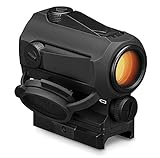
- The updated SPARC features rugged construction that’s still compact, with a lightweight form-factor. The 2 MOA dot is quick to acquire in close ranges, but fine enough for pin-point accuracy at extended ranges.
The Vortex was my previous budget recommendation, but shorter battery life and recent quality control issues changed that. The Romeo-MSR Gen II offers better battery life and equal durability at lower cost. Unless you need Vortex’s lifetime warranty, go Sig.
Versus Aimpoint Micro T-2 ($850):
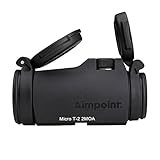
- Features advanced lens system for better light transmission and unmatched optical clarity
Let’s be realistic – the Aimpoint is superior in every measurable way. Better glass, bombproof construction, proven military service. But it costs six times more. For most shooters, that money is better spent on training and ammunition.
Versus Primary Arms Classic ($90): The PA Classic represents the absolute budget floor for acceptable red dots. It works, barely. Spend the extra $40 for the Romeo-MSR Gen II and get dramatically better build quality, glass clarity, and battery life.
Mounting Considerations: Making It Work
The included see-through riser mount deserves discussion. It positions the optic at lower 1/3 co-witness height with standard AR sights. This provides a comfortable heads-up shooting position while maintaining iron sight capability. The mount feels solid, though I’d add blue Loctite for peace of mind.
For absolute co-witness fans, Sig sells a low-profile mount separately. Various aftermarket options exist, but ensure compatibility with the Romeo-MSR’s unique footprint. I’ve successfully mounted mine in a Scalarworks LEAP mount, though that seems silly on a budget optic.
The mounting interface uses a standard Picatinny clamp that provides solid attachment. Torque to 27 inch-pounds for optimal security without stressing the mount. I’ve seen no shift or loosening even after extended vehicle vibration and repeated impacts.
Practical Accessories That Make Sense
While keeping the budget theme, these additions enhance functionality:
Flip-up lens covers: The exposed lenses benefit from protection. I use Butler Creek covers cut to fit – total cost under $20.
Kill flash ARD: Reduces lens signature and provides impact protection. The 3D-printed versions work fine for $15.
Backup battery holder: Attach a spare CR2032 in a holder to your rifle stock. When (not if) you forget to turn it off, you’ll appreciate the backup.
Lens pen: Keep one in your range bag. The Romeo’s coating cleans easily with proper tools.
Long-Term Durability Observations
After six months, wear patterns tell the story. The adjustment turret covers show scratches from brush and equipment contact. The mount has witness marks from repeated installation/removal. The housing displays honest wear at corners and edges. But everything still functions perfectly.
The lens coatings have survived repeated cleaning without degradation. No internal debris or moisture has appeared. The battery compartment O-ring maintains a good seal. Electronics continue functioning without glitches or intermittent failures.
This level of durability exceeds expectations for the price point. While it won’t match military-contract optic longevity, it should provide years of reliable service for recreational shooters and hunters.
Training Applications: Teaching Tool Excellence
I’ve equipped several loaner rifles with Romeo-MSR Gen IIs for student use. They survive beginners’ abuse while teaching proper red dot fundamentals. The clear glass and crisp dot help new shooters understand sight picture concepts. The manual brightness adjustment forces students to think about environmental conditions.
For teaching co-witness concepts, the see-through mount provides perfect visual demonstration. Students immediately understand the relationship between optic and irons. This educational value alone justifies keeping several in my training inventory.
Who Should Buy This Optic?
Perfect for:
- First-time red dot buyers learning fundamentals
- Budget-conscious shooters wanting reliable performance
- Truck guns and ranch rifles seeing hard use
- Backup optics for serious shooters
- Training rifles and loaner guns
Skip if you need:
- Maximum durability for military/law enforcement use
- Premium glass clarity for competition
- Advanced features like solar panels or shake-awake
- Snob appeal at the range
- Night vision primary use
Common Issues and Solutions
Problem: Dot appears blurry or star-shaped Solution: Usually astigmatism, not the optic. Try different brightness settings or look through the sight with your glasses/contacts.
Problem: Lost adjustment tool Solution: Buy spares immediately. Attach one to your sling with ranger bands. Keep others in range bag and vehicle.
Problem: Battery dies frequently Solution: You’re forgetting to turn it off. MOTAC helps but isn’t foolproof. Develop better habits or accept buying batteries monthly.
Problem: Mount seems loose Solution: Probably under-torqued. Use proper inch-pound torque wrench set to 27 in-lbs. Add blue Loctite for insurance.
The Bottom Line: Exceeding Expectations
The Sig Romeo-MSR Gen II shouldn’t be this good for $130. It delivers 80% of premium red dot performance at 20% of the price. No, it won’t match an Aimpoint’s bombproof construction or Trijicon’s glass clarity. But it will reliably put rounds on target in conditions that sideline lesser optics.
After six months of deliberately brutal testing, I trust this sight enough to hunt with it and recommend it to students. It’s proven that budget doesn’t always mean compromise. Smart engineering and decent quality control can deliver surprising value.
The Romeo-MSR Gen II represents the new baseline for acceptable red dot performance. Anything cheaper risks reliability. Anything more expensive needs to justify the cost with meaningful capability improvements. For most shooters building practical rifles on realistic budgets, this sight makes sense.
Remember, your optic is just one part of an effective rifle system. A Romeo-MSR Gen II with proper training beats an Aimpoint with no practice every time. Spend the money you save on ammunition and training. The wilderness doesn’t care about brand names – only whether your equipment works when tested.
Practice makes permanent, so practice it right. Even budget optics can deliver hits if you do your part.
Want more honest gear reviews and practical shooting instruction? Check out our complete selection of optics guides and training articles at Moosir.com. Your best survival tool is the six inches between your ears – everything else just helps it work better at distance.