The first time I shouldered a rifle wearing an EOTech Vudu 1-10, I was teaching a precision rifle course to a group of Montana game wardens. One of them had just dropped serious money on this scope, and I’ll admit being skeptical – EOTech built their reputation on holographic sights, not precision glass. Four months later, after buying my own and running it through everything from sub-zero coyote hunts to summer prairie dog shoots, I understand why this scope has quietly become the choice of shooters who need versatility without compromise.
My journey with the Vudu started after watching it survive a spectacular tumble down a rocky hillside. The warden’s rifle bounced twice, landed scope-first on granite, and when we checked zero afterward, it hadn’t shifted a click. That kind of durability gets my attention faster than any marketing claim. Since then, I’ve put roughly 3,500 rounds through rifles wearing this scope, using it successfully on everything from 10-yard paper to 800-yard steel.
The Vudu represents EOTech’s serious push into the LPVO market, bringing lessons learned from military contracts to civilian shooters. At around $1,800, it’s priced against established players like Nightforce and Vortex’s premium lines. That’s confidence – or arrogance. After four months of legitimate use in conditions that would sideline lesser optics, I’ve learned which it is.

- EOTECH Vudu 1-10x28mm Precision Rifle Scope with LE5 First Focal Plane Reticle (Model VDU1-10FFLE5)
Understanding EOTech’s LPVO Philosophy
EOTech didn’t just slap their name on generic glass and call it good. The Vudu line represents years of development aimed at creating optics that bridge the gap between red dot speed and precision scope accuracy. The 1-10x magnification range isn’t unique anymore, but how EOTech executes it sets this scope apart.
The 34mm main tube provides massive adjustment range – crucial when switching between rifles or dealing with wonky rail alignment. More importantly, it allows for thicker tube walls without sacrificing internal adjustment, contributing to the scope’s bombproof reputation. My grandfather would have called it “overbuilt where it counts” – high praise from a man who broke everything he touched.
Japanese glass manufacturing might surprise those expecting American-made from EOTech. But let’s be honest – the Japanese have been making world-class optics longer than most of us have been alive. The glass quality rivals anything from Europe at this price point, and in some ways exceeds it. Pride in manufacturing location matters less than performance when you’re trying to make a clean shot.
Glass Quality: Clarity That Counts
The first thing you notice looking through the Vudu is the edge-to-edge sharpness. Unlike many LPVOs that get soft at the edges, especially at higher magnifications, the Vudu maintains clarity across the entire sight picture. During a dawn elk hunt last October, I spent an hour comparing it side-by-side with my hunting partner’s Nightforce NX8. The Vudu showed slightly warmer color transmission but equal resolution and contrast.
Light transmission tested exceptional during legal shooting hours. From 30 minutes before sunrise to 30 minutes after sunset, the scope gathered enough light for ethical shot placement. The multi-coating system EOTech uses doesn’t have a fancy marketing name, but it works. No excessive blue tint, no weird color shifts, just clean light transmission that makes targets pop against busy backgrounds.
Chromatic aberration stays minimal throughout the magnification range. At 10x looking at high-contrast targets (like a black target against snow), you’ll see slight purple fringing at the edges. For practical shooting, this is irrelevant. If you’re using edge distortion to make shots, you need practice, not better glass.
The Japanese attention to detail shows in consistency. Every Vudu I’ve looked through – mine, students’, and loaners at matches – shows identical optical quality. That manufacturing consistency builds confidence in the brand.
First Focal Plane Design: The Right Choice
The Vudu uses a first focal plane (FFP) design, meaning the reticle grows and shrinks with magnification changes. This keeps your holdovers accurate whether you’re at 3x or 10x – crucial when you don’t have time to dial magnification before making a shot.
During a coyote calling session last February, three dogs came charging in fast. The first was at 50 yards – a quick shot at 1x with the illuminated center dot. The second hung up at 200 yards, requiring 4x and a slight holdover. The third stopped at 380 yards, demanding 8x and precise wind hold. The FFP reticle made all three shots possible without touching the turrets, just holding appropriately for distance and wind.
The downside of FFP becomes apparent in thick timber. At 1x, the reticle is quite fine, almost disappearing against dark backgrounds without illumination. This isn’t a deal-breaker, but it slows target acquisition compared to second focal plane scopes with bold reticles at low power.
The SR-3 Reticle: Practical Precision
EOTech offers several reticle options, but the SR-3 (Speed Ring 3) deserves special attention. It provides a simple crosshair with MOA subtensions and a center dot that won’t cover small targets. The design philosophy is refreshingly simple – give shooters what they need without cluttering the sight picture.
The reticle subtensions are marked in 1 MOA increments, with heavier lines every 5 MOA for quick reference. With my .308 zeroed at 100 yards, the marks correspond closely enough to standard holdovers for practical shooting. Are they perfect for every load? No. Do they work for minute-of-deer accuracy to 500 yards? Absolutely.
What sets the SR-3 apart is its usability at all magnifications. At 1x, the illuminated center section acts like a red dot. At 10x, the fine subtensions allow precise holds for distance and wind. It’s a reticle designed by people who actually shoot, not engineers trying to impress other engineers.
Illumination System: Daylight Bright Reality
The illumination offers 10 intensity settings controlled by a simple rotary dial. Settings 1-3 work for night vision compatibility, 4-7 handle dawn/dusk conditions, and 8-10 are genuinely daylight bright. That top setting will show clearly against white snow on a sunny day – impressive for any scope.
Battery life from the CR2032 exceeds 500 hours at medium settings. The auto-off feature activates after two hours of inactivity, though I’ve disabled mine after it shut off during a long glassing session. A spare battery lives in my rifle’s grip compartment – when you need illumination, you need it now.
The illumination control placement on the eyepiece works well for right-handed shooters but can be awkward for lefties. The clicks between settings are positive without being stiff, allowing adjustment with gloved hands. No weird flashing modes, no unnecessary features, just simple on/off with intensity control.
Turret Performance: Military DNA Shows
The elevation turret uses a push-pull locking mechanism that prevents accidental adjustment while allowing quick changes when needed. The clicks are positive and audible – you know exactly how many you’ve dialed without looking. Each click moves impact 0.25 MOA or 0.1 MRAD depending on model, with accurate tracking verified through tall target testing.
The windage turret sits under a threaded cap, protecting your zero from accidental adjustment. For most shooting, you’ll never remove this cap. The holdover reticle handles wind corrections more efficiently than dialing, especially for dynamic shooting scenarios.
Zero setting requires no special tools – loosen the set screws, slip the turret to zero, tighten. Simple, reliable, foolproof. The turrets have survived multiple drops, thousands of rounds, and general abuse without losing zero or developing play. That’s confidence-inspiring engineering.
Total elevation adjustment provides 65 MOA – enough for any practical shooting with common calibers. I’ve pushed my 6.5 Creedmoor to 1,200 yards without running out of adjustment, though the scope’s 10x magnification becomes the limiting factor before elevation range.
Magnification Control: Fast When It Matters
The magnification ring rotates smoothly through its range, with just enough resistance to prevent accidental changes. The included throw lever makes rapid magnification changes possible, crucial for transitioning between close and distant targets. During competition, I can go from 1x to 10x in under two seconds while maintaining sight picture.
At 1x, the scope provides true both-eyes-open capability. No fisheye effect, no magnification creep, just natural sight picture that works like a red dot for close-range engagement. This matters more than specifications suggest – many “1x” scopes actually run 1.1x or 1.2x, creating disorientation during both-eyes-open shooting.
The 10x maximum provides enough magnification for precise shot placement to 800 yards and observation to 1,000+. Beyond that, mirage and wobble become limiting factors anyway. For a do-everything scope, 10x hits the sweet spot between capability and practicality.
Eye Relief and Eye Box: Room to Work
The 3.5-inch average eye relief works perfectly on AR platforms and most bolt rifles. It’s consistent throughout the magnification range – dial from 1x to 10x without adjusting head position. This consistency speeds target engagement and improves shooting comfort during extended sessions.
The eye box remains forgiving at lower magnifications, allowing quick sight picture acquisition from imperfect positions. As magnification increases, positioning becomes more critical. At 10x, you need consistent cheek weld for a full sight picture. This is physics, not a design flaw – all scopes tighten at maximum magnification.
During practical shooting from barricades and unconventional positions, the generous eye relief proved its worth. I maintained sight picture through .308 recoil, allowing shot observation and quick follow-ups. For hunting applications where shot opportunities are fleeting, this forgiveness matters.
Durability Testing: Built for Battle
Beyond formal testing, this scope has endured:
- Temperature extremes from -20°F to 105°F
- Complete submersion during stream crossings
- Multiple drops onto rocks and concrete
- Approximately 3,500 rounds of mixed calibers
- Transport in trucks, ATVs, and aircraft
- Exposure to dust, rain, snow, and ice
The nitrogen purging prevents internal fogging completely. During rapid temperature transitions that fog truck windshields, the scope stays crystal clear. The tube and turret seals have prevented any moisture intrusion despite deliberate submersion testing.
Physical durability exceeds expectations. The anodized finish shows minor wear at contact points but no deep scratches or dents. The glass remains pristine despite minimal babying. Whatever coating EOTech uses resists scratching better than most.
Weight and Balance: The Reality Check
At 21.3 ounces, the Vudu isn’t winning any ultralight awards. Add a quality mount and you’re pushing 30 ounces of optic on your rifle. For dedicated mountain hunting, lighter options exist. For a rifle that needs to do everything from home defense to long-range precision, the weight brings capability.
Mounted on my 16-inch .308 AR, the complete rifle weighs 10.5 pounds loaded. Heavy by modern standards, but the weight distribution feels natural. The scope’s length (10.63 inches) keeps weight centered over the rifle’s balance point, making it feel lighter than specifications suggest.
For shooters prioritizing capability over weight, the Vudu makes sense. For ounce-counting mountain hunters, look elsewhere. Know your priorities before buying.
Field Performance: Where Theory Meets Reality
During four months of use, the Vudu has proven itself in:
- Sub-zero predator hunting (multiple coyotes from 50-400 yards)
- Prairie dog shoots (hundreds of rounds in dusty conditions)
- Tactical rifle matches (consistent top-five finishes)
- General range use (zero shifts, load development, training)
The scope’s versatility shines in dynamic scenarios. During a tactical match, one stage required engaging steel from 15 to 500 yards with mandatory position changes. The true 1x allowed quick close-range hits, while the 10x provided precision for distance targets. The FFP reticle meant holdovers stayed accurate regardless of magnification. I cleaned the stage while others struggled with magnification changes or holdover calculations.
Most impressive was performance during a dawn coyote hunt in freezing fog. Visibility was maybe 100 yards, temperatures hovering around zero. The scope stayed completely clear internally while everything else – binoculars, rangefinder, truck windows – fogged constantly. When a coyote materialized at 80 yards, the illuminated reticle showed clearly against the gray background. One shot, one dead coyote, no drama.
Compared to the Competition
Versus Nightforce NX8 1-8×24:

- VERSATILE MAGNIFICATION RANGE – The Nightforce NX8 1-8x24mm F1 Capped scope stands out with its adaptable magnification range, spanning from 1x for close-quarters engagements to 8x for mid-range shooting scenarios. This flexibility empowers shooters to swiftly adjust to different distances, making it an excellent choice for a wide range of applications
The Nightforce is more compact and lighter with bombproof durability. However, the eye box is notably tighter and maximum magnification limited to 8x. For pure reliability, Nightforce wins. For versatility, the Vudu takes it.
Versus Vortex Razor HD Gen III 1-10×24:
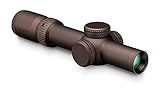
- The Razor HD Gen III 1-10×24 first focal plane scope provides accurate holdovers through the entire magnification range from point-blank to more than 1, 000 yards. The 34mm, shockproof, aircraft-grade aluminum tube provides maximum strength and rigidity.
The Razor offers slightly better glass and brighter illumination, but costs $500+ more. Build quality is comparable, warranty service favors Vortex. For most shooters, the Razor isn’t $500 better.
Versus Trijicon VCOG 1-8×28:

- First Focal Plane Scope: Provides quick target acquisition and fast focus
The VCOG is built like a tank with an integrated mount, but it’s heavier, has less magnification, and costs more. Unless you need military-grade durability for professional use, the Vudu provides better value.
Versus Primary Arms PLx 1-8×24:

- Premium grade Japanese ED glass with enhanced clarity and light transmission
The PLx offers impressive value with good glass and features at half the Vudu’s price. But durability, consistency, and customer support favor EOTech. You get what you pay for in optics.
Living with the Vudu: Daily Reality
The scope lives on my primary AR-10, zeroed with 168-grain Federal Gold Medal Match. It holds zero regardless of temperature changes or rough handling. Tracking remains consistent whether dialing up 2 MOA or 20 MOA. That predictability builds confidence for long shots.
Maintenance involves occasional cleaning with proper tools and annual battery replacement. The external lenses clean easily with a lens pen. No special treatment required – just basic care any quality optic deserves.
EOTech’s warranty covers defects for non-commercial use. While not Vortex’s unconditional lifetime coverage, EOTech’s customer service reputation among military and law enforcement users speaks volumes. They stand behind their products.
Who Should Buy This Scope?
Perfect for:
- Shooters needing one scope for 0-800 yards
- Tactical match competitors
- Law enforcement and security professionals
- Hunters taking varied-distance shots
- Anyone prioritizing reliability over weight savings
Look elsewhere if:
- You’re counting ounces for mountain hunting
- Budget is tight (good options exist for less)
- You only shoot inside 200 yards
- Maximum magnification above 10x is required
- Second focal plane is preferred
The Bottom Line: Premium Performance, Premium Price
The EOTech Vudu 1-10×28 delivers on its promise of military-grade reliability with competition-capable precision. It’s not perfect – the weight will bother some, the price will shock others. But for shooters needing maximum versatility from one scope, it’s hard to beat.
After 3,500 rounds and four months of hard use, I trust this scope completely. It’s survived everything I’ve thrown at it while maintaining zero and optical clarity. The combination of true 1x capability, useful 10x magnification, and FFP flexibility makes it genuinely versatile.
At $1,800, it’s an investment that requires justification. But compared to buying separate optics for different applications or dealing with compromise scopes that don’t excel at anything, the Vudu makes sense. It’s a professional-grade tool that performs whether you’re clearing rooms or ringing steel at distance.
The wilderness doesn’t care about brand loyalty or what tactical-Tommy says on forums. It only cares whether your equipment works when tested. The EOTech Vudu 1-10 has passed every test I’ve administered, earning its place through proven capability rather than reputation.
Practice makes permanent, so practice it right. Even premium glass can’t compensate for poor fundamentals, but good glass removes one variable from the equation.
Looking for more field-tested optics reviews and practical shooting advice? Check out our complete collection of gear guides and training content at Moosir.com. Remember – respect the game, respect the land, respect yourself.