During a February blizzard in the Flathead Valley, I watched my Aimpoint Comp M4 accumulate half an inch of ice while waiting for a problem grizzly that had been killing cattle. Temperature dropped to minus eighteen that night. When the bear finally showed at dawn, that frozen Aimpoint fired up instantly, dot crisp and bright as ever. That’s when theory about “mil-spec durability” became personal experience about equipment you’d bet your life on.
I’ve carried Aimpoints professionally since the early 2000s—first Comp M2s in Afghanistan’s mountains, later various models through military service and into civilian life as a hunting guide and instructor. When students ask about the PRO versus Comp M4s debate, I don’t recite specifications. I share what two decades of hard use in unforgiving conditions has taught me about these legendary optics.
Both the PRO and Comp M4s currently serve on my working rifles. The PRO rides on my truck gun—a basic but reliable AR that handles everything from coyote control to emergency response. The Comp M4s lives on my primary defensive carbine, the one that goes when things get serious. After thousands of rounds and countless field hours with both, I can tell you exactly where each excels and which deserves your investment.
The Aimpoint PRO: Professional Grade Without the Premium
When Aimpoint introduced the Patrol Rifle Optic, they aimed to deliver military-grade reliability at a price point law enforcement agencies could actually afford. Having run one hard for five years now, I can confirm they succeeded beyond expectations.
Construction That Survives Reality
The PRO’s aluminum housing might not match the Comp M4’s reinforced construction, but it’s proven plenty tough for real-world abuse. Last summer, my PRO-equipped rifle fell from my truck rack onto gravel—about a six-foot drop landing directly on the optic. Besides cosmetic scratches, it maintained perfect zero and full function.
That claimed 150-foot waterproof rating isn’t marketing fiction. During a river crossing that went sideways, my rifle spent several minutes completely submerged in the Flathead River. The PRO worked perfectly once recovered, though I’ll admit those were tense moments fishing it out of four feet of moving water.
The included QRP2 mount deserves special recognition. This tool-free quick-release system returns to zero reliably after removal—I’ve verified this across dozens of mounting cycles. The anti-rotation interface prevents the subtle shifting that plagues lesser mounts under recoil. For an included mount, it’s remarkably solid.
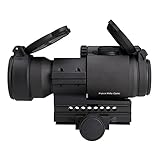
- Absolute co-witness with iron sights (with the supplied spacer installed)
Battery Life: The Hidden Variable
Aimpoint claims 30,000 hours—roughly three years—from the PRO’s DL 1/3N battery. Real-world results vary significantly. My first PRO delivered two and a half years of constant-on operation before dimming. The replacement battery lasted fourteen months. Currently, I’m eighteen months into the third battery with no issues.
Here’s what affects battery life: temperature extremes, brightness settings, and battery quality. Montana’s temperature swings from -30°F to 100°F stress batteries harder than stable climates. Running higher brightness settings for sunny day shooting drains power faster than indoor range use.
The DL 1/3N battery presents a logistics challenge. You won’t find replacements at rural gas stations or even most sporting goods stores. I order them in bulk online and cache spares everywhere—truck console, range bag, hunting pack, workshop. At $3-5 each, keeping extras makes sense.
Optical Performance
The PRO’s 30mm tube and multi-coated lenses deliver a clear, usable sight picture in all lighting conditions. The 2 MOA dot appears crisp and round to my eyes, though shooters with astigmatism might see some starburst effect—common to all red dots.
Field of view through the PRO feels generous compared to micro red dots but narrower than the Comp M4s’s design. This becomes noticeable during rapid target transitions or tracking moving game. Not a dealbreaker, but worth noting for competition shooters who count fractions of seconds.
Ten brightness settings (six daylight, four night vision) cover most scenarios adequately. The brightest setting handles Montana’s intense high-altitude sun reflecting off snow. The dimmest preserves night vision during predawn setups. I’d prefer more granularity between settings, but it’s workable.
Real-World Accuracy
The PRO’s half-MOA adjustments provide precise zeroing capability. Each click moves impact roughly 0.18 inches at 100 yards—fine enough for precision work yet positive enough to count clicks by feel.
From stable positions with quality ammunition, my PRO-equipped rifles consistently deliver 2-inch groups at 100 yards—exactly what the 2 MOA dot size predicts. That’s more than adequate for defensive carbines or hunting rifles used inside 300 yards.
The capped turrets protect your zero during transport and rough handling. I’ve never had a PRO lose zero from inadvertent adjustment, though the caps can work loose over time. A drop of blue Loctite during initial setup prevents this entirely.
The Comp M4s: When Only the Best Will Suffice
The Comp M4s represents Aimpoint’s no-compromise approach to combat optics. After watching these survive conditions that would destroy lesser sights, I understand why military units worldwide trust them implicitly.
Military-Grade Durability Defined
The Comp M4s’s reinforced aluminum alloy housing and redundant sealing systems create near-indestructibility. During winter survival training, we literally froze one in a block of ice overnight, then thawed it with direct flame. It held zero and functioned perfectly—try that with budget optics.
My personal Comp M4s has endured everything from Afghan dust storms to Montana blizzards. It’s been dropped, submerged, frozen, and baked in vehicle interiors reaching 140°F. The only evidence of this abuse? Minor finish wear where the mount interfaces with the rail.
The included QRP2 mount matches the optic’s durability. After thousands of rounds of .308 and hundreds of mounting cycles, it returns to within half-MOA of zero—remarkable for any quick-detach system. The spacer allows perfect lower-third co-witness with standard AR iron sights.
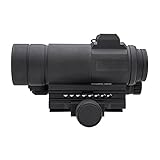
- Advanced lens system for better light transmission and unmatched optical clarity
- High quality components
- Includes anti-reflective device
- Over 8 years of continuous operation using one AA battery
- Customizable with a full line of accessories available
The 80,000-Hour Advantage
The Comp M4s’s claimed 80,000-hour battery life from a single AA sounds impossible until you understand the engineering behind it. Using widely available AA batteries was brilliant—you can find replacements anywhere from Kabul to Kalispell.
My oldest Comp M4s is approaching six years on its second battery. The first lasted four years of constant-on operation through temperature extremes and regular use. At this rate, the advertised nine-year battery life seems achievable in moderate climates.
This extreme battery life changes operational mindset. You stop thinking about the optic as electronic equipment requiring management. It becomes as reliable as iron sights but with red dot advantages. That confidence matters when your life depends on equipment functioning.
Advanced Illumination System
Sixteen brightness settings (nine daylight, seven night vision) provide perfect granularity for any lighting condition. The difference between each setting is noticeable but not dramatic, allowing precise adjustment for ambient conditions.
The brightest settings overcome any background illumination I’ve encountered, including bright snow under intense mountain sun. More importantly, the advanced circuitry maintains consistent brightness as batteries deplete—no gradual dimming that goes unnoticed until critical moments.
Night vision settings preserve natural night adaptation while providing usable aiming reference. During predator hunting with night vision equipment, these settings prove invaluable. The PRO’s four NV settings work, but the Comp M4s’s seven settings offer better fine-tuning.
Optical Excellence
The Comp M4s’s advanced lens system delivers marginally better light transmission than the PRO, though both excel in practical use. The difference becomes noticeable in extreme low light—those critical minutes at dawn and dusk when game moves.
The wider field of view compared to the PRO aids situational awareness during dynamic shooting. Competition shooters will appreciate faster target acquisition and easier tracking of moving targets. For hunting running hogs or multiple coyotes, that extra field of view proves valuable.
Both eyes open shooting feels more natural with the Comp M4s’s design. The sight housing disappears into peripheral vision, leaving just the dot superimposed on your target. This advantage matters most in defensive scenarios where tunnel vision threatens situational awareness.
Head-to-Head Field Testing
Running both optics side-by-side through identical conditions reveals subtle but important differences.
Subzero Performance
During a minus-twenty-degree morning last January, both optics functioned perfectly, but the Comp M4s’s dot appeared marginally brighter at identical nominal settings. This suggests more efficient LED performance in extreme cold, though both remained completely usable.
Battery compartment design affects cold weather operation. The PRO’s smaller battery compartment can freeze shut with ice accumulation—I’ve had to thaw it with hand warmth to change batteries. The Comp M4s’s AA compartment resists freezing and opens easily even with gloves.
Water Submersion Testing
Both optics survived complete submersion during stream crossings, but recovery differed. The PRO required lens wiping to restore clear sight picture. The Comp M4s’s lens coatings shed water more effectively, often clearing with a quick shake.
Neither optic showed internal fogging after submersion in cold water followed by exposure to warm air—testament to quality sealing. Lesser optics often fog internally during such transitions, potentially failing at critical moments.
Impact Resistance
I’ve unintentionally drop-tested both optics multiple times. The PRO survived a fall from truck hood height onto concrete, maintaining zero. The Comp M4s took a similar fall plus rolled down a rocky slope, emerging functional with only cosmetic damage.
Both mounts showed remarkable durability during impacts. The anti-rotation interfaces prevented loosening, and quick-detach mechanisms maintained function. This level of mount quality included with purchase adds significant value.
Long-Term Reliability
After years of use, both optics show minimal degradation. The PRO’s adjustment clicks remain positive, though perhaps slightly less crisp than when new. The Comp M4s feels identical to its first day—mechanical perfection maintained through thousands of adjustments.
Electronics in both units proved completely reliable. No flickering, no intermittent failures, no mysterious battery drains. This consistency builds trust that transcends specifications—you know it’ll work when needed.
Application-Specific Recommendations
Your mission determines optimal equipment selection. Here’s where each optic excels based on real-world use.
Home Defense
For dedicated home defense carbines, the PRO provides everything needed at reasonable cost. The 2 MOA dot offers sufficient precision for across-the-room engagements. Constant-on operation means it’s always ready. The money saved buys ammunition for practice—more valuable than premium features for most defenders.
Mount it, zero it, confirm function monthly, and trust it’ll work when bump-in-the-night becomes reality. The QRP2 mount allows easy removal for maintenance without losing zero.
Patrol and Duty Use
Law enforcement applications justify the Comp M4s investment. Extended battery life reduces administrative burden—fewer battery changes mean fewer opportunities for Murphy’s Law. Superior brightness range handles everything from dark building searches to bright daylight traffic stops.
The wider field of view aids threat scanning and situational awareness. When seconds count and lives hang in balance, every advantage matters. Department budgets permitting, the Comp M4s represents cheap insurance.
Competition Shooting
Three-gun and tactical competitions favor the Comp M4s’s advantages. Wider field of view speeds target transitions. Additional brightness settings allow perfect dot intensity for varying stage conditions. The psychological confidence from military-grade equipment eliminates one variable from performance equation.
That said, many successful competitors run PROs. The fundamentals matter more than equipment nuances. A skilled shooter with a PRO will outperform a novice with a Comp M4s every time.
Hunting Applications
For dangerous game backup rifles or driven hunt firearms, the Comp M4s earns its premium. When facing charging bears or multiple hogs, equipment failure isn’t acceptable. The absolute reliability and superior battery life provide peace of mind worth the investment.
General hunting applications work perfectly with the PRO. Mounted on brush guns or truck rifles, it delivers red dot advantages without breaking budgets. For most hunting scenarios inside 200 yards, the PRO equals the Comp M4s in practical performance.
Military and Contractor Use
For those heading into harm’s way professionally, buy the Comp M4s without hesitation. The marginal advantages compound under stress. Superior battery life means one less logistical concern. Better environmental resistance handles any theater of operations. It’s what I’d choose if returning to military service.
The Economics of Excellence
Let’s address the elephant in the room—price differential. The PRO streets around $450-500, while the Comp M4s commands $850-950. That $400 difference buys substantial ammunition, training courses, or other gear.
Consider total system cost. On a $2,500 precision AR build, the Comp M4s makes proportional sense. Mounted on a $600 budget carbine, the PRO maintains reasonable balance while delivering professional capability.
The Comp M4s’s extreme battery life saves money long-term. Over a decade, you might spend $30 on batteries for the PRO versus $5 for the Comp M4s. Not significant, but worth noting for institutional purchases equipping multiple rifles.
Resale values strongly favor both Aimpoints over lesser brands. A five-year-old PRO still commands 70% of retail. Comp M4s units hold 80% or better. This residual value offsetts initial investment if you later upgrade or change directions.
Making the Choice: Practical Decision Framework
After extensive experience with both optics, here’s my honest recommendation framework:
Choose the Aimpoint PRO if:
- Budget constraints exist but you refuse to compromise core capability
- Your shooting stays within typical defensive or hunting ranges
- You can source replacement batteries and don’t mind annual changes
- This represents your entry into professional-grade optics
- You need multiple rifles equipped and must spread budget
Choose the Comp M4s if:
- Budget allows for optimal rather than adequate equipment
- You’re building a no-compromise defensive or duty rifle
- Extreme battery life provides operational advantage
- You operate in austere environments with limited resupply
- The rifle serves life-safety roles where failure isn’t acceptable
Consider alternatives if:
- You need magnification for longer-range precision
- Weight reduction takes priority over ultimate durability
- Budget won’t stretch to either Aimpoint
- Specialized applications require different features
Living With Your Choice
Regardless of selection, certain practices maximize your investment:
Document your zero meticulously. Both optics hold zero remarkably, but knowing exact adjustments from mechanical zero saves time if service becomes necessary.
Keep the lens covers that come with both optics. Yes, they’re basic rubber bikini covers, but they prevent 90% of field damage. Lens replacement costs more than you’d expect.
Change batteries preemptively rather than reactively. Mark battery installation dates on the optic with paint pen. For the PRO, annual replacement before hunting season ensures reliability. The Comp M4s can run longer, but three-year intervals provide insurance.
Verify zero after any impact, temperature extreme, or extended storage. Both optics rarely shift, but confidence requires confirmation. Three rounds at 50 yards takes minutes but provides peace of mind.
Train with your equipment regularly. Red dots require different techniques than magnified optics or iron sights. Both-eyes-open shooting, holdover estimation, and target focus versus reticle focus need practice to master.
Final Assessment: Excellence at Different Price Points
After years of professional use, both Aimpoints have earned my complete trust. The PRO delivers 90% of the Comp M4s capability at 50% of the cost—remarkable value for civilian users. The Comp M4s provides that last 10% of performance that matters when equipment failure means mission failure or worse.
Neither represents the latest technology. Newer designs offer lighter weight, smaller profiles, or additional features. But both deliver what matters most: absolute reliability under any conditions you’ll likely encounter. When your shot must count, fancy features matter less than equipment that simply works.
The outdoor industry loves selling upgrades and “improvements,” but some designs achieve such excellence that innovation becomes unnecessary. Both Aimpoints represent such designs—proven through decades of military service and millions of rounds fired.
Your choice between them should reflect honest assessment of your needs versus wants. The PRO handles any civilian application admirably. The Comp M4s provides extra margin for those who need—or simply want—the best available.
Remember, the wilderness doesn’t care about your equipment specifications or what you paid for your optic. It only respects competence earned through practice with reliable equipment. Both Aimpoints deliver that reliability. The rest is up to you.
Plan for the worst, hope for the best, and always remember—your best survival tool is the six inches between your ears, but when violence is imminent and lives are at stake, professional-grade optics that work every time aren’t luxury items—they’re life insurance.