In 2004, my squad was pinned down in a bombed-out building outside Fallujah. Sand and dust filled the air like fog. Through it all, my Aimpoint CompM2 kept working—caked in Iraqi moon dust, battered from diving behind rubble, running on the same battery since deployment. Meanwhile, my buddy’s EOTech 552 had died two days earlier from dead batteries. That day taught me the real difference between these two optics isn’t found in spec sheets—it’s discovered when everything goes wrong.
After twenty years of running both systems—from Afghanistan’s mountains to Montana’s backcountry, from competition stages to patrol rifles—I’ve learned that the Aimpoint versus EOTech debate misses the point. They’re different tools solving different problems.
Let me share what two decades and tens of thousands of rounds through both platforms have taught me about these legendary optics.
The Quick Truth for Busy Folks
Aimpoint:
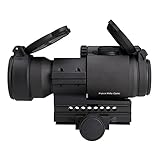
- Absolute co-witness with iron sights (with the supplied spacer installed)
The Toyota Land Cruiser of optics. Utterly reliable, simple, runs forever on one battery. Perfect when failure means death.
EOTech:

- EOTECH 512.A65 – Holographic Weapon Sight in black with 68 MOA ring & 1 MOA dot reticle
The Formula One car of optics. Faster, more precise, feature-rich, but requires more maintenance. Perfect when speed and precision matter most.
My verdict: Aimpoint for serious/defensive use, EOTech for competition/specialized applications. But the details matter, so keep reading.
Understanding the Technology Difference
Aimpoint: LED Simplicity
Aimpoints use a simple LED projected onto a coated lens. Think of a laser pointer bouncing off a mirror. This simplicity is their superpower.
Benefits of this design:
- Minimal battery drain (LED uses microamps of power)
- Fewer failure points (no complex electronics)
- Temperature stable (LEDs don’t care about cold)
- True “always on” capability
Drawbacks:
- Dot can appear fuzzy with astigmatism
- Limited reticle options
- Dot size grows with magnification
EOTech: Holographic Complexity
EOTechs use laser-driven holographic technology. A laser illuminates a holographic film containing the reticle pattern. Think of it like a tiny 3D movie projected in your sight window.
Benefits of holographic design:
- Reticle stays same size under magnification
- Multiple reticle patterns possible
- Clearer for people with astigmatism
- Faster target acquisition with 68 MOA ring
Drawbacks:
- Power hungry (laser needs serious juice)
- Temperature sensitive electronics
- More complex = more failure points
- Cannot leave on continuously
Real-World Performance: 20 Years of Data
Battery Life: The Eternal Divide
Aimpoint Reality: My oldest Aimpoint PRO has been on continuously since 2018. Same battery. Still bright. That’s six years and counting. My CompM4s typically runs 7-8 years on one battery.
During a week-long backcountry elk hunt, I forgot spare batteries. Didn’t matter. The Aimpoint doesn’t care about your poor planning. It just works.
EOTech Reality: My EXPS3 needs new batteries every 2-3 months with regular use. The auto-shutoff helps (4 or 8 hours depending on button used), but forgetting to turn it on before a bump in the night? That’s a problem.
I budget $40 annually for EOTech batteries. That adds up over a decade of ownership.
Glass Clarity and Reticle Design
Through the Aimpoint: The view is crystal clear, but simple. You get a dot—2 MOA, 4 MOA, or 6 MOA depending on model. That’s it. No ranging features, no holdovers, just a dot.
For defensive use, this simplicity is perfect. Put dot on target, press trigger. My grandmother could figure it out in seconds.
The dot appears crisp to normal eyes but can bloom or starburst with astigmatism. My mild astigmatism makes a 2 MOA dot look like 4 MOA.
Through the EOTech: The 68 MOA ring with 1 MOA center dot is genius. The ring naturally draws your eye to center, making target acquisition notably faster. In timed drills, I’m consistently 0.2-0.3 seconds faster with EOTech.
The holographic reticle appears cleaner with my astigmatism—still not perfect, but better than the Aimpoint’s LED dot. The 1 MOA center allows precision shots that a 2 MOA Aimpoint dot would cover.
Durability: Combat vs. Competition
Aimpoint Torture Testing:
- Frozen at -40°F in Montana: Worked perfectly
- Submerged in river during crossing: No issues
- Dropped 30 feet from helicopter (training accident): Held zero
- 50,000+ rounds on same T2: Still perfect
- Covered in concrete dust during construction: Didn’t care
My issued CompM4 survived two IED blasts mounted on my M4. The rifle needed replacing; the Aimpoint went on the new one.
EOTech Experiences:
- Failed at -20°F during Montana predator hunt
- Thermal drift issues (since addressed in new models)
- Electronics died after hard drop onto rocks
- Excellent through 30,000 rounds when babied
- Reticle flickered after getting soaked
EOTechs are tough by civilian standards but fragile compared to Aimpoints. They’re competition tough, not combat tough.
Weight and Size Considerations
Aimpoint Footprint:
- PRO: 11.6 oz (hefty but bombproof)
- T2: 3.0 oz (perfect for lightweight builds)
- CompM5: 5.2 oz (sweet spot)
Aimpoints are generally more compact. The tube design minimizes snag points and allows for lower mounting.
EOTech Profile:
- 512: 11.5 oz
- EXPS3: 11.2 oz
- XPS2: 9.0 oz
EOTechs are wider and boxier. They snag on gear and brush more easily. The larger window is nice until you’re crawling through thick timber.
Temperature Performance
This is where EOTech’s Achilles heel shows. During a December coyote hunt at -25°F, my EXPS3 wouldn’t turn on. Meanwhile, my backup rifle’s Aimpoint worked perfectly.
EOTech has addressed cold weather issues in newer models, but they still struggle below -20°F. Aimpoints laugh at temperature extremes, functioning from -45°F to +160°F.
Magnification Compatibility
With Aimpoint
Adding a 3x magnifier to a 2 MOA dot makes it a 6 MOA dot. Fine for torso shots at 300 yards, but precision suffers. The dot covers too much target.
With EOTech
The 1 MOA center dot remains 1 MOA under magnification. The 68 MOA ring helps with holdovers. This is significantly better for precision work at distance.
If you plan to use magnification, EOTech wins decisively.
Night Vision Considerations
Both work with night vision, but differently:
Aimpoint: Dedicated NV settings that preserve both battery and your natural night vision. The lower settings are invisible to naked eye but perfect through NVGs.
EOTech: NV settings work but drain battery faster. The holographic technology requires more power even in NV mode.
For serious NV use, Aimpoint is superior.
Practical Applications: Which for What
Home Defense
Winner: Aimpoint
When something goes bump at 3 AM, I want a sight that’s always on, always ready. No buttons, no activation, just present rifle and the dot is there. Battery life means I check it annually, not daily.
Competition/3-Gun
Winner: EOTech
The 68 MOA ring is measurably faster for target transitions. The 1 MOA dot allows precision shots. Auto-shutoff isn’t a concern when you’re turning it on for each stage.
Patrol/Duty Use
Winner: Aimpoint
Duty guns sit in racks for months, get banged around, face temperature extremes. They need to work immediately when grabbed. Aimpoint’s always-on reliability is unmatched.
Hunting
Winner: Depends
For spot-and-stalk western hunting where shots might reach 300+ yards: EOTech with magnifier.
For tree stand whitetail hunting where reliability matters more than precision: Aimpoint.
Military/Combat
Winner: Aimpoint
No contest. When resupply is uncertain, conditions are harsh, and failure means death, Aimpoint’s reliability dominates. There’s a reason special operations units worldwide choose Aimpoint.
Cost Analysis: Total Ownership
Aimpoint Investment
- Initial: $450-$850
- Batteries (10 years): $10
- Total 10-year cost: $460-$860
- Cost per year: $46-$86
EOTech Investment
- Initial: $400-$700
- Batteries (10 years): $400
- Total 10-year cost: $800-$1,100
- Cost per year: $80-$110
EOTech’s lower initial price is offset by battery costs. Over a decade, Aimpoint is actually cheaper.
Models I Actually Recommend
Aimpoint Picks
Best Overall: Aimpoint PRO (~$450)
- Bomb-proof reliability
- 30,000-hour battery
- Complete package with mount
- Perfect for serious use
Best Lightweight: Aimpoint T2 (~$750)
- 3 ounces total weight
- 50,000-hour battery
- Incredible durability
- Worth the premium
Best Value: Aimpoint ACO (~$350)
- Identical internals to PRO
- Simpler mount
- Same reliability
- Budget friendly
EOTech Picks
Best Overall: EXPS3-0 (~$650)
- Lower 1/3 co-witness height
- Side buttons (better with magnifier)
- Quick detach mount
- Current generation improvements
Best Value: 512 (~$400)
- Proven AA battery system
- Same reticle and performance
- Bulkier but cheaper
- Good entry point
The Astigmatism Factor
If you have astigmatism, try before you buy. Generally:
- Mild astigmatism: EOTech usually better
- Severe astigmatism: Prism sights or irons
- No astigmatism: Both work fine
Don’t trust internet opinions—your eyes are unique. Rent or borrow both before purchasing.
My Personal Setup
After 20 years of experimentation:
Home Defense AR: Aimpoint PRO
- Always on, always ready
- No thinking required
- Proven reliability
Competition AR: EOTech EXPS3 + G33 Magnifier
- Fast acquisition
- Precision capability
- Match-winning combination
Truck Gun: Aimpoint ACO
- Affordable reliability
- Don’t cry if stolen
- Works despite neglect
Hunting Rifle: EOTech EXPS3
- Better with magnification
- Precise enough for ethical shots
- Accept battery management
Common Misconceptions Corrected
“EOTechs Are Fragile”
False. They’re tough by normal standards, just not Aimpoint-tough. For 99% of users, EOTech is plenty durable.
“Aimpoint Dots Are Too Big”
The 2 MOA T2 is precise enough for head shots at 100 yards. If you need more precision than that, you need a magnified optic.
“EOTech Battery Life Is Terrible”
It’s shorter than Aimpoint but manageable with discipline. Auto-shutoff and spare batteries solve most issues.
“Holographic Is Always Better for Astigmatism”
Not true. Some astigmatic eyes prefer LED dots. Test both yourself.
The Bottom Line
After 20 years and hundreds of thousands of rounds, here’s my truth:
Choose Aimpoint when:
- Reliability is paramount
- Simplicity matters
- Battery logistics are difficult
- It’s for defensive use
- Budget allows for higher initial cost
Choose EOTech when:
- Speed is critical
- Precision at distance matters
- You’ll use magnification
- Battery management isn’t an issue
- Competition/sport use
Both are excellent optics that have earned their reputations. The “best” depends entirely on your specific needs.
For most people reading this, an Aimpoint PRO will serve better than an EOTech. It’s simpler, more reliable, and requires less thinking. But if you need EOTech’s specific advantages, accept the tradeoffs and battery costs.
Remember: Both have served successfully in combat worldwide. Both have won competitions. Both will outlast your barrel. Choose based on your actual needs, not internet arguments.
The best optic is the one that works when you need it. Everything else is just specs on paper.
Practice makes permanent, so practice it right.
See clearly,
Flint Marshall
Northern Montana
Questions about specific models or applications? Used both and have different experiences? Drop a comment below or check out more hard-tested gear reviews at Moosir.com. Remember—respect the gear, respect the mission, respect yourself.