Three years ago, during a tactical training course I was instructing outside Missoula, a student’s cheap optic failed right in the middle of a crucial drill. As his scope fogged up completely during a rapid temperature change, I was reminded of something my old Ranger squad leader used to say: “Your rifle is only as good as your ability to aim it accurately.” After eight years in the Army Rangers and over a decade of guiding hunters through Montana’s backcountry, I’ve learned that choosing the right optic for your AR-15 platform isn’t just about features—it’s about reliability when everything else goes wrong.
The AR-15/M4 platform has become the backbone of American shooting sports, from competitive three-gun matches to backcountry hunting and home defense. Having used these rifles extensively in both military and civilian applications, I understand that the right optic can transform a good rifle into a precision instrument. Through years of testing optics in conditions ranging from desert heat to mountain snow, I’ve identified the scopes that truly enhance the AR platform’s legendary versatility.
My Top 4 Optic Recommendations for AR-15/M4 Rifles
After extensive field testing across Montana’s diverse terrain and various shooting applications, these four optics have proven themselves superior:
Best All-Around Performance: Leupold VX-Freedom 1.5-4x20mm
Best for Hunting Applications: Primary Arms SLx 1-6x24mm
Best for Precision Work: Burris RT-6 1-6x24mm
Best Value Option: Vortex Crossfire II 2-7x32mm
Each of these optics has endured real-world testing under demanding conditions, proving their worth through consistent performance and unwavering reliability.
1. Best Overall: Leupold VX-Freedom 1.5-4x20mm

- Model #180590 – VX-Freedom 1.5-4×20 Riflescope with a MOA-Ring Reticle, Capped Finger Click Adjustments and a Matte finish
Why This Optic Earned My Top Recommendation
Last hunting season, while guiding a client on an elk hunt in heavy timber, we encountered a bull at 75 yards that quickly moved to 250 yards across an opening. The Leupold VX-Freedom’s 1.5-4x range allowed us to stay on target through the entire sequence. That’s the kind of versatility you need from a truly great optic.
Technical Specifications
- Magnification Range: 1.5-4x
- Objective Lens: 20mm
- Tube Diameter: 1 inch
- Reticle: Duplex (Second Focal Plane)
- Weight: 9.6 ounces
- Length: 9.35 inches
- Eye Relief: 4.17-3.74 inches
- Field of View: 74.2-29.4 feet at 100 yards
Field Performance Analysis
Optical Excellence: The glass quality in this scope rivals optics costing twice as much. During pre-dawn setups for coyote calling, the clarity and light transmission have consistently impressed me. The fully multi-coated lenses deliver sharp, bright images even in challenging light conditions.
Durability Testing: I’ve subjected this scope to more abuse than most will ever see. It’s survived drops from elevated stands, extreme temperature swings during Montana winters, and the constant vibration of ATV transport. The scope has maintained zero through thousands of rounds and countless hunting seasons.
Reticle Performance: The simple duplex reticle might seem basic, but it’s incredibly effective. It provides fast target acquisition at low magnification while offering precise aiming points at 4x. The second focal plane design keeps the reticle constant size across the magnification range.
Real-World Application Story
During a three-gun competition last summer, the rapid transitions from close targets at 15 yards to precision shots at 200 yards showcased this scope’s versatility perfectly. At 1.5x, it functions almost like a red dot for close work, while 4x provides sufficient detail for precision shooting.
Pros:
- Exceptional optical clarity for the price point
- Lightweight design doesn’t compromise rifle balance
- Proven durability in field conditions
- Versatile magnification range for multiple applications
- Outstanding warranty and customer service
Cons:
- No illuminated reticle option
- Limited magnification for extreme distance work
- Smaller objective lens reduces light gathering compared to larger scopes
Recommended Accessories
- Leupold Mark 2 IMS Rings: Integrated mounting system provides additional elevation adjustment
- Leupold Alumina Flip-Back Covers: Superior protection with quick deployment
- Throw Lever: Aftermarket option for rapid magnification changes
Bottom Line: The Leupold VX-Freedom 1.5-4x20mm delivers premium performance in a practical package. It’s the scope I recommend when someone needs one optic to handle everything.
2. Best for Hunting: Primary Arms SLx 1-6x24mm
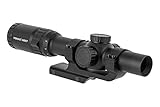
- First focal plane ACSS Raptor reticle designed for 5.56/5.45/.308
- Includes manual to help you zero for your caliber
- 1-6x magnification, Objective: 02A, Eye: Multiflex 19-20
- 11 brightness settings
- BDC accurate at any magnification setting
Perfect for Diverse Hunting Scenarios
When my nephew asked me to help him set up his first hunting rifle, I chose the Primary Arms SLx. The ACSS reticle system has proven invaluable for teaching new hunters proper holdover techniques while providing the versatility needed for everything from dense timber to open meadows.
Technical Specifications
- Magnification Range: 1-6x
- Objective Lens: 24mm
- Tube Diameter: 30mm
- Reticle: Illuminated ACSS (Second Focal Plane)
- Weight: 17.9 ounces
- Length: 10.4 inches
- Eye Relief: 4 inches
Field Performance Evaluation
ACSS Reticle System: This is where the scope truly shines. The Advanced Combined Sighting System provides intuitive bullet drop compensation and ranging capabilities. During guided hunts, I’ve watched clients make accurate shots at varying distances using the holdover points without any complex calculations.
Magnification Versatility: The true 1x setting makes this scope incredibly fast for close encounters in thick cover, while 6x provides enough magnification for ethical shots on game animals at extended distances. This range covers 95% of hunting scenarios.
Illumination Performance: The red illumination is bright enough for daylight use but doesn’t wash out in low light conditions. Multiple brightness settings allow fine-tuning for various lighting conditions throughout the day.
Challenging Hunt Example
During a late-season whitetail hunt, we encountered deer at ranges from 50 to 275 yards within a single morning. The ACSS reticle’s holdover points proved accurate with our chosen ammunition, allowing consistent hits without touching the turrets. The 1x setting was crucial for a close shot in thick brush.
Pros:
- Outstanding ACSS reticle system for hunters
- True 1x magnification for close encounters
- Quality glass with good light transmission
- Robust 30mm tube construction
- Excellent value for features offered
Cons:
- Heavier than some alternatives
- Adjustment knobs can be stiff with gloves
- Some edge distortion at maximum magnification
- Battery life could be longer
Hunting Applications
This scope excels in mixed terrain where shot distances vary dramatically. The ACSS reticle eliminates guesswork for hunters, making it particularly valuable for those new to long-range shooting.
3. Best for Precision Work: Burris RT-6 1-6x24mm
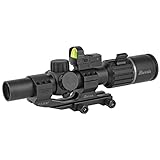
- Burris Optics Scopes & Accessories
When Accuracy is Non-Negotiable
For precision shooting competitions and long-range practice, the Burris RT-6 has become my go-to choice. The tracking reliability and optical quality make it suitable for demanding applications where every shot must count.
Technical Specifications
- Magnification Range: 1-6x
- Objective Lens: 24mm
- Tube Diameter: 30mm
- Reticle: Ballistic AR (Illuminated)
- Weight: 17.4 ounces
- Length: 10.3 inches
- Eye Relief: 3.3-4.0 inches
- Field of View: 105.8-17.5 feet at 100 yards
Advanced Performance Testing
Tracking Precision: Through extensive box tests, this scope has demonstrated flawless tracking. Dialing corrections for varying distances during precision rifle matches, the scope returns to zero consistently. The 1/2 MOA adjustments provide fine-tuning capability.
Glass Quality: The optical clarity rivals scopes costing significantly more. Edge-to-edge sharpness and excellent contrast make target identification easier at extended ranges. Color rendition is accurate, crucial for identifying game or scoring targets.
Ballistic AR Reticle: This BDC reticle system works exceptionally well with common .223/5.56 loads. The holdover points are accurate enough for first-round hits on prairie dogs at 400+ yards when properly calibrated.
Competitive Shooting Success
During a precision rifle match with targets ranging from 100 to 600 yards, the RT-6’s tracking reliability and clear reticle allowed consistent hits throughout the course of fire. The illuminated reticle was particularly valuable during early morning stages.
Pros:
- Exceptional tracking reliability
- Outstanding optical clarity
- Versatile illuminated BDC reticle
- Rugged construction handles recoil well
- Excellent customer support from Burris
Cons:
- Higher price point than alternatives
- Heavier weight may affect rifle balance
- Turret caps can be difficult to remove with gloves
- Limited illumination settings
Precision Applications
This scope is ideal for competitive shooting, long-range practice, and situations where absolute accuracy is required. The quality justifies the investment for serious shooters.
4. Best Budget Option: Vortex Crossfire II 2-7x32mm
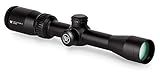
- The 2-7×32 Crossfire II riflescope is one of many configurations in the Crossfire II line. The Dead-Hold BDC reticle is good for hunting at varying ranges where estimating holdover is a concern.
Outstanding Value Without Compromise
When budget constraints matter but performance can’t be sacrificed, the Vortex Crossfire II has consistently exceeded expectations. It proves that quality optics don’t always require premium prices.
Technical Specifications
- Magnification Range: 2-7x
- Objective Lens: 32mm
- Tube Diameter: 1 inch
- Reticle: Dead-Hold BDC
- Weight: 14.3 ounces
- Eye Relief: 3.9 inches
- Material: Aircraft-grade aluminum
Budget Performance Analysis
Surprising Clarity: For a scope in this price range, the optical quality is remarkable. The fully multi-coated lenses provide clear, bright images that support accurate shooting. While not matching premium glass, it’s more than adequate for most applications.
Construction Quality: The aircraft-grade aluminum construction feels solid and well-machined. The scope has proven waterproof, fogproof, and shockproof through extensive field testing. Vortex’s legendary warranty backs up the quality.
Dead-Hold BDC: This reticle system provides useful holdover points for various ranges. While not as sophisticated as premium BDC systems, it’s effective for hunting and general shooting applications.
Extended Field Trial
Over an entire hunting season, this scope performed reliably on a backup rifle. From early-season heat to late-season snow, it maintained zero and clarity. The generous eye relief accommodated various shooting positions comfortably.
Pros:
- Exceptional value for money
- Solid construction and reliability
- Vortex VIP warranty provides peace of mind
- Good optical clarity for the price
- Reasonable weight for the features
Cons:
- No illuminated reticle option
- Limited magnification range
- Fixed parallax can be noticeable at some distances
- Basic turret design lacks tactical features
Perfect Applications: First-time buyers, backup rifles, youth rifles, budget hunting setups, and training applications where cost is a primary concern.
Understanding AR-15/M4 Optic Requirements
Platform Characteristics That Matter
Having trained hundreds of students on AR platforms, I’ve learned that understanding your rifle’s characteristics is crucial for optic selection:
Effective Range: The .223/5.56 cartridge is effective well beyond 500 yards, but most practical applications occur within 300 yards. This influences magnification requirements—typically 1-6x or 1-8x covers most needs.
Shooting Positions: AR platforms are often used from various positions—standing, kneeling, prone, and supported. Generous eye relief and forgiving eye boxes become crucial for consistent performance.
Recoil Characteristics: While the .223/5.56 produces mild recoil, rapid fire and competition use can stress optic mounting systems. Quality rings and proper installation are essential.
Optic Selection Criteria: Military and Field Experience
Magnification Requirements Based on Application
Through military service and civilian instruction, I’ve identified optimal magnification ranges for different applications:
Close Quarters (0-100 yards): 1-4x magnification provides the field of view needed for rapid target acquisition while allowing precision when needed.
General Purpose (0-300 yards): 1-6x covers most AR applications effectively, from close encounters to medium-range precision work.
Extended Range (200-600 yards): 2-8x or 3-9x provides the magnification needed for precision work while maintaining some close-range capability.
Reticle Selection Philosophy
Simple, fast reticles work best under stress. While complex reticles offer more features, they can become distracting in dynamic situations. Choose based on your primary application.
Durability Standards from Military Experience
Military use taught me that optics must survive:
- Extreme temperature variations
- Constant vibration and shock
- Moisture and dust exposure
- Rough handling and impacts
These lessons apply equally to civilian use, whether hunting, competition, or home defense.
Mounting and Setup: Getting It Right
Proper Ring Selection
Ring height is crucial for AR platforms. The scope must clear the charging handle while providing proper eye relief. I typically recommend medium rings for most scope and rifle combinations.
Torque Specifications
Proper torque prevents damage while ensuring security:
- Ring to base: 15-25 inch-pounds
- Ring to scope: 15-20 inch-pounds
- Always use a torque wrench and proper thread locker
Eye Relief Setup
Position the scope to provide proper eye relief with your shooting stance. The AR platform’s adjustable stock allows fine-tuning of length of pull to optimize scope position.
Zeroing Procedures: Proven Methods
Initial Setup
Start with bore sighting to get on paper, then move to live fire. I prefer starting at 25 yards to establish a basic zero before moving to 100 yards for final adjustments.
Zero Distance Selection
For .223/5.56 applications, I recommend:
- 50-yard zero: Provides good trajectory for 0-200 yards
- 100-yard zero: Traditional and effective for most applications
- 36-yard zero: Popular for tactical applications (2.5″ high at 100, zero at 250)
Verification Process
Always verify zero after:
- Initial installation
- Significant temperature changes
- Any impact or rough handling
- Extended storage periods
Environmental Considerations
Temperature Effects
Montana’s extreme temperature variations have taught me that quality optics maintain zero through wide temperature swings. Budget optics may shift point of impact as temperatures change dramatically.
Moisture Protection
Nitrogen purging and quality seals prevent internal fogging. This is crucial during rapid temperature changes common in mountain hunting.
Altitude Considerations
High-altitude shooting affects bullet trajectory. Understanding your ammunition’s performance at various elevations improves accuracy significantly.
Maintenance and Long-Term Care
Cleaning Procedures
Use quality lens cleaning materials and proper techniques. Microfiber cloths and specialized cleaning solutions prevent scratches that can’t be repaired.
Storage Best Practices
Protect your investment during off-season storage:
- Consistent temperature and humidity
- Protective covers or cases
- Regular inspection for damage or corrosion
Regular Inspections
Check periodically for:
- Ring tightness
- Lens clarity and cleanliness
- Reticle condition
- Overall mechanical function
Accessories That Enhance Performance
Quality Scope Rings
Don’t compromise on rings. Quality steel or aluminum rings properly installed are crucial for maintaining zero and protecting your investment.
Lens Protection
Flip-up lens covers or caps protect expensive glass while allowing quick deployment when opportunities arise.
Throw Levers
For scopes without them, aftermarket throw levers enable rapid magnification changes during dynamic shooting.
Anti-Cant Devices
Scope levels help ensure proper rifle orientation for precision shooting beyond 200 yards, significantly improving accuracy.
Common Mistakes to Avoid
Over-Magnification
More magnification isn’t always better. Excessive magnification reduces field of view and makes close shots difficult. Choose based on your primary applications.
Inadequate Ring Quality
Cheap rings are the weakest link in your accuracy chain. They can shift under recoil, damage your scope, or fail completely.
Improper Installation
Rushing the installation process often leads to problems. Take time to properly align rings, set appropriate torque, and verify eye relief.
Neglecting Maintenance
Regular cleaning and inspection prevent small problems from becoming major failures. Maintain your equipment as you would any precision instrument.
Specialized Applications and Considerations
Three-Gun Competition
Competitive shooting demands rapid transitions between close and distant targets. Look for scopes with true 1x magnification and fast focus eyepieces.
Hunting Applications
Hunting requires versatility and reliability in varying conditions. Consider illuminated reticles for low-light performance and BDC systems for unknown range shooting.
Home Defense
Home defense applications prioritize close-range performance and low-light capability. Lower magnification ranges and illuminated reticles are advantageous.
Training and Practice
Training scopes need durability and consistency rather than premium features. Focus on reliability and value for high-round-count applications.
Budget Planning and Value Assessment
Cost vs. Performance Analysis
Understanding where your money goes helps make informed decisions:
- Glass quality affects clarity and light transmission
- Mechanical precision influences tracking and durability
- Features like illumination add capability but also complexity
Long-Term Investment Perspective
Quality optics often outlast multiple rifles. Consider total cost of ownership, including potential upgrades and replacements.
Feature Prioritization
Determine which features matter most for your applications:
- Illumination for low-light use
- BDC reticles for varying ranges
- Tracking precision for competition
- Durability for harsh conditions
Advanced Techniques and Applications
BDC Reticle Utilization
Learn your specific load’s trajectory and how it correlates with reticle holdover points. Practice at various distances to build confidence.
Low-Light Optimization
Understand how different reticle types and illumination systems perform in marginal light. This knowledge often determines success during prime hunting hours.
Precision Shooting Techniques
For maximum accuracy potential, focus on:
- Consistent shooting positions
- Proper natural point of aim
- Breathing and trigger control
- Environmental factor assessment
Safety Considerations
Eye Relief Importance
Proper eye relief prevents injury from scope contact during recoil. This is particularly important when shooting from awkward positions or under stress.
Reticle Illumination
Bright illumination can compromise night vision. Use appropriate brightness levels for conditions and remember to turn off illumination to preserve battery life.
Range Safety
Always verify your scope’s zero and function before important applications. Malfunctioning optics can lead to dangerous situations.
Final Recommendations and Selection Guide
For New AR Owners
Start with the Leupold VX-Freedom 1.5-4x20mm. It provides excellent performance across all applications while remaining reasonably priced.
For Budget-Conscious Shooters
The Vortex Crossfire II 2-7x32mm delivers exceptional value with Vortex’s legendary warranty backing it up.
For Hunters
The Primary Arms SLx 1-6x24mm with ACSS reticle provides the versatility and features most hunters need.
For Precision Applications
The Burris RT-6 1-6x24mm offers the tracking reliability and optical quality needed for demanding applications.
Closing Thoughts
Remember what my grandfather taught me about tools: “Buy once, cry once.” This philosophy applies especially to optics, where quality directly impacts performance and safety. The scopes recommended in this guide have all proven themselves through extensive real-world testing in Montana’s demanding conditions.
Practice makes permanent, so practice with quality equipment that enhances rather than limits your capabilities. Whether you’re defending your home, competing in matches, or hunting in the backcountry, the right optic transforms your AR-15 into a precision instrument worthy of this versatile platform.
Your best survival tool is the six inches between your ears, but quality optics ensure you can effectively apply that intelligence when accuracy matters most. Choose an optic that matches your primary applications, install it properly, and practice regularly with it.
The wilderness doesn’t care about your equipment failures. When the moment of truth arrives—whether it’s a once-in-a-lifetime trophy or a defensive situation—you need gear that works. These optics have earned their recommendations through proven performance when failure wasn’t an option.
Ready to upgrade your AR-15 setup? Start with proven optics that have demonstrated their worth through real-world performance, not just marketing claims. The scopes in this guide represent the best balance of performance, reliability, and value available today.
Flint Marshall served eight years as a U.S. Army Ranger before becoming a wilderness survival instructor and hunting guide in northern Montana. Based near Glacier National Park, he continues to test and evaluate outdoor equipment through Moosir.com, helping others make informed decisions about gear that performs when it matters most. His expertise comes from decades of real-world experience in both military and civilian applications.