Five years ago, at my first 3-gun match near Billings, I watched a nationally ranked shooter lose a stage because his $3,000 scope’s illumination died mid-run. Standing next to him, a local plumber running a $400 Strike Eagle cleaned the stage and took match high overall. That day taught me what matters in 3-gun optics: reliability beats reputation, and features only matter if they work when the timer’s running.
3-gun competition demands versatility from your optics like no other shooting discipline. One moment you’re engaging 6-inch plates at 300 yards, the next you’re clearing a shoot house at bad-breath distance. After four years of monthly matches, teaching dynamic carbine courses, and watching hundreds of shooters succeed or fail based on their optic choices, I’ve learned which scopes actually deliver under pressure.
This isn’t about recommending what sponsors want you to buy. It’s about understanding which tools help you hit targets faster when the clock is ticking and movement matters more than MOA.
Testing Reality: Competition vs. Square Range
My evaluation process reflects actual match conditions, not controlled environments:
Testing Platforms:
- Primary: BCM Recce 16 (competition rifle)
- Secondary: Aero Precision M4E1 (backup/loaner)
- Training guns: Various student rifles
Competition Experience:
- 48+ local matches over 4 years
- 6 major regional competitions
- 500+ students trained in dynamic carbine
- 20,000+ rounds fired in competition/training
Environmental Range:
- Temperature: -15°F to 105°F
- Conditions: Rain, snow, dust, mud
- Lighting: Night stages to bright sun
Understanding 3-Gun Optic Requirements
Before diving into specific scopes, let’s clarify what makes a successful 3-gun optic:
Speed Over Precision
3-gun targets are generous compared to precision rifle competitions. An 8-inch plate at 200 yards doesn’t require benchrest accuracy – it requires finding it fast and hitting it first try. Your optic must prioritize rapid target acquisition over sub-MOA precision.
Versatility Across Distances
Stage designers love mixing distances. I’ve shot stages requiring hits from 5 to 400 yards without changing position. Fixed magnification handicaps you at one end or the other. Variable power from true 1x to at least 4x is essential.
Durability Under Movement
You’re not shooting from a bench. You’re diving into positions, slamming into barricades, and transitioning rapidly between multiple shooting positions. Your optic must handle impacts, maintain zero, and keep functioning when covered in dust or rain.
Illumination That Works
Daylight-bright illumination isn’t optional – it’s mandatory for competitive times. Shooting from bright sunlight into dark structures requires an illuminated reticle you can see in any condition.
The Top Four: Proven Performers
After four years of competition and thousands of students, four scopes consistently deliver:
1. Vortex Razor HD Gen II-E 1-6×24: The Competition King
When serious competitors show up to major matches, the Razor HD dominates the firing line. There’s a reason: it works, every time, in every condition.
Why It Wins Matches
The Razor’s combination of glass quality, daylight-bright illumination, and bulletproof reliability creates a package that excels when seconds matter. My personal Razor has over 15,000 competition rounds through it without a single failure.
Technical Specifications
- Magnification: 1-6x (true 1x)
- Objective: 24mm
- Weight: 21 ounces
- Eye Relief: 4 inches
- Reticle: JM-1 BDC (Second Focal Plane)
- Illumination: 11 settings
- Adjustment: 0.25 MOA
Real Match Performance
At last year’s Montana State Championship, I watched the Razor prove its worth. Stage 8 required engaging steel from 15 to 350 yards through multiple positions. The daylight-bright illumination let me track the dot through shadows and bright sun seamlessly. The true 1x meant no fishing for targets up close.
Result: Stage win by 3 seconds.
The JM-1 reticle, designed with Jerry Miculek’s input, excels for competition. The bold outer posts draw your eye naturally to center, while the fine center dot allows precision at distance. The BDC hashmarks prove surprisingly accurate with 55-77 grain .223/5.56 loads.
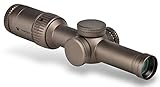
- The Razor HD Gen II-E sheds nearly a 1/4 pound from its predecessor, is feature rich, and extremely accurate in short to medium applications. The JM-1 BDC reticle features an illuminated center dot.
Glass Quality Excellence
Side-by-side with scopes costing twice as much, the Razor’s glass holds its own. Edge-to-edge clarity means you can use your full field of view for target acquisition. No distortion, minimal chromatic aberration, and excellent light transmission even at dawn/dusk.
During a low-light stage at our September night match, the Razor’s superior coatings meant I could identify and engage targets 2-3 seconds faster than shooters running lesser glass.
The Reality Check
Yes, it’s expensive. But calculate cost per round over its lifespan, and it’s pennies. More importantly, it won’t fail when a match win is on the line. I’ve seen too many shooters lose stages to save $500 on their optic.
Minor Complaints
The magnification ring starts stiff and stays firmer than ideal even after break-in. A throw lever is mandatory (and should be included at this price). The scope is also heavy compared to newer LPVO designs, though the weight helps dampen recoil movement.
2. Strike Eagle 1-8×24 Gen 2: The Value Champion
Don’t let the price fool you – the Strike Eagle punches way above its weight class. It’s become my go-to recommendation for shooters entering 3-gun or building backup rifles.
Specifications That Matter
- Magnification: 1-8x (slight fisheye at 1x)
- Objective: 24mm
- Weight: 17.6 ounces
- Eye Relief: 3.5 inches
- Reticle: AR-BDC3 (Second Focal Plane)
- Illumination: 11 settings
- Adjustment: 0.5 MOA
Why It Works
The Strike Eagle delivers 80% of the Razor’s performance at 30% of the price. For local matches and training, that’s more than adequate. The extra 2x magnification (1-8x vs 1-6x) helps on longer stages increasingly common in modern 3-gun.
Match Performance Reality
I’ve loaned Strike Eagle-equipped rifles to dozens of students who’ve gone on to place well in local matches. One student, using my backup rifle, took 3rd in Limited division his first match. The optic didn’t hold him back.
The AR-BDC3 reticle is simpler than the JM-1 but still effective. The horseshoe-dot combination speeds close-range acquisition while maintaining precision capability at distance.

- The updated Strike Eagle 1-8×24 is defined by speed and versatility. A true 1x on the low end adapts to a wide range of scenarios, letting users engage from close to extended ranges
Durability Testing
My training Strike Eagle has endured:
- 8,000+ rounds of student abuse
- Multiple drops onto gravel
- Complete submersion (student fell in creek)
- Temperature extremes during vehicle storage
Still holds zero, still functions perfectly.
The Trade-offs
Illumination isn’t as daylight-bright as premium options. In direct sun, you might lose the dot. The glass shows some distortion at 1x (slight fisheye effect). At 8x, edge clarity degrades noticeably.
For the price? These are acceptable compromises.
3. Trijicon ACOG 3.5×35: The Different Approach
The ACOG seems out of place in 3-gun, but hear me out. For specific divisions and shooting styles, fixed magnification works.
The Specifications
- Magnification: 3.5x fixed
- Objective: 35mm
- Weight: 14 ounces
- Eye Relief: 2.4 inches
- Reticle: Various (Crosshair tested)
- Illumination: Fiber optic/tritium
Where It Excels
In Tactical division where you’re limited to one optic, the ACOG’s bomb-proof reliability and always-on illumination shine. No batteries to die, no electronics to fail. The fiber optic automatically adjusts brightness to ambient conditions.
For shooters who prefer simplicity, the ACOG delivers. No magnification ring to adjust, no parallax to consider, just put crosshair on target and press.
Competition Reality
At a match last summer, temperatures hit 102°F. Multiple competitors experienced electronic failures in their optics. The guy running an ACOG? Zero issues, took second overall.
The 3.5x magnification hits a sweet spot for 3-gun. Close enough for 10-yard targets (with practice), enough magnification for 300-yard precision. The key is mastering both-eyes-open shooting for close targets.

- Red LED Illuminated .223 Horseshoe/Dot Reticle
Learning Curve
The short eye relief requires consistent cheek weld. The fixed magnification demands adaptation. But once mastered, the ACOG enables incredibly fast shooting. No thinking about magnification settings, just see and shoot.
Who Should Run ACOG
- Tactical division competitors
- Shooters who value reliability over features
- Those comfortable with both-eyes-open technique
- Anyone wanting zero battery dependency
4. Athlon Midas BTR Gen 2 1-6×24: The Dark Horse
Athlon doesn’t have Vortex’s marketing or Trijicon’s reputation, but they build solid optics. The Midas BTR Gen 2 surprises everyone who tries it.
Specifications
- Magnification: 1-6x
- Objective: 24mm
- Weight: 17.3 ounces
- Eye Relief: 3.8 inches
- Reticle: AHMR MOA (Second Focal Plane)
- Illumination: 11 settings
- Adjustment: 0.25 MOA
Hidden Excellence
The Midas delivers glass quality approaching scopes twice its price. During a side-by-side comparison with a student’s Razor, experienced shooters struggled to identify which was which based on glass alone.
The AHMR reticle balances simplicity with functionality. Not as refined as the JM-1, but completely functional for competition use.

- 0.25 MOA Click Value, 150 MOA Total Elevation Adjustment, 100 yard Fixed Parallax
Real-World Performance
A student bought one based on my recommendation, used it for his first full season, and took multiple stage wins at local matches. For $450, that’s remarkable value.
Tracking tested perfectly through multiple box tests. The turrets, while capped, adjust precisely when needed. The illumination gets bright enough for all but the most extreme conditions.
Why It’s Not More Popular
Marketing and brand recognition. Athlon lacks Vortex’s warranty reputation and dealer network. But for shooters willing to try something different, the Midas delivers exceptional value.
The Verdict
For new 3-gun shooters or budget-conscious competitors, the Midas BTR Gen 2 offers near-premium performance at mid-tier pricing. It’s my recommendation for anyone unsure about committing to competition.
Installation and Setup: Getting It Right
Proper mounting makes or breaks your match performance:
Mount Selection
For Competition:
- Cantilever mounts position weight forward
- QD unnecessary (adds weight/complexity)
- 1.7″ height for heads-up shooting position
- Recommend: Aero Precision Ultralight or LaRue LT104
Ring Torque
Follow manufacturer specifications exactly:
- Typical: 15-18 inch-pounds for rings
- 65 inch-pounds for mount-to-rail
- Use quality torque wrench
- Blue Loctite on all screws
Zero Distance
For 3-gun, zero at 50 yards:
- Provides flat trajectory to 200 yards
- Minimal holdover inside 250 yards
- Works with common .223/5.56 loads
- Simplifies hold-overs under timer stress
Throw Lever Installation
Mandatory for competition:
- Allows rapid magnification changes
- Maintains shooting position
- Various aftermarket options available
- MK Machining makes excellent affordable options
Training Techniques: Speed Through Practice
Equipment only enables performance – training creates it:
1x to Maximum Drill
Start at 1x, engage close target, zoom to maximum, engage distant target, return to 1x. Time yourself. Goal: Under 5 seconds for complete sequence.
This builds muscle memory for magnification changes under stress.
Box to Box Transitions
Set up targets at 25, 50, 100, and 200 yards. Engage in random order on timer. Forces rapid magnification and hold-over decisions.
Barricade Work
Practice shooting through/around barriers at various heights. Your optic must maintain useability from awkward positions. High mounts help significantly here.
Both-Eyes-Open Training
Essential for speed at 1x:
- Focus on target, not reticle
- Let dot superimpose on vision
- Practice dry fire extensively
- Builds massive speed advantage
Match Day Reality: Lessons Learned
Four years of competition taught expensive lessons:
Battery Management
- Change batteries before major matches
- Carry spares in grip compartment
- Test illumination before each stage
- Document battery change dates
Lens Protection
- Remove covers for stages
- Clean between stages if dusty
- Rain-X helps in wet conditions
- Lens pen in pocket always
Zero Confirmation
- Confirm zero before every match
- Shoot steel at known distance
- Have backup zero data documented
- Account for temperature changes
Stage Planning
- Determine magnification needs during walkthrough
- Default to lower magnification when unsure
- Plan magnification changes during movement
- Practice unusual positions
Common Mistakes to Avoid
Watching hundreds of shooters revealed patterns:
Equipment Errors
- Over-magnifying for distance
- Under-magnifying for precision
- Forgetting to activate illumination
- Poor mount selection/installation
- Choosing price over reliability
Technique Failures
- Closing non-dominant eye at 1x
- Fighting the optic instead of trusting holds
- Adjusting magnification while shooting
- Searching for perfect sight picture
- Overthinking simple shots
Preparation Mistakes
- No spare batteries at matches
- Dirty lenses affecting visibility
- Loose mounting hardware
- Unknown hold-overs for distance
- Unfamiliarity with reticle
Division Considerations
Different divisions have different requirements:
Open Division
- No magnification limits
- 1-8x or 1-10x preferred
- Weight less critical
- Maximum features desired
Tactical Division
- Iron sights required
- Single optic only
- Reliability paramount
- Fixed power viable
Limited Division
- Balance of features/weight
- 1-6x sweet spot
- Reliability crucial
- Price consciousness common
Heavy Metal
- .308 recoil consideration
- Longer range emphasis
- 1-8x minimum recommended
- Robust construction mandatory
Budget Reality: True Costs
Let’s examine actual competition costs:
Premium Setup (Razor HD)
- Optic: $1,400
- Mount: $150
- Throw lever: $50
- Total: $1,600
- Cost per match (100 matches): $16
Budget Setup (Strike Eagle)
- Optic: $430
- Mount: $80
- Throw lever: $35
- Total: $545
- Cost per match (100 matches): $5.45
The premium option costs 3x more but may provide the confidence and reliability that wins matches. Value depends on your competition goals.
Environmental Considerations
Matches happen regardless of weather:
Rain/Snow
- Quality coatings matter
- Flip caps protect during movement
- Hydrophobic treatments help
- Illumination becomes critical
Dust/Sand
- Sealed turrets prevent infiltration
- Smooth magnification rings resist grit
- Lens covers between stages mandatory
- Compressed air can helpful
Temperature Extremes
- Zero shifts possible with major changes
- Battery performance degrades in cold
- Thermal mirage affects precision
- Lubrication stiffens in extreme cold
The Decision Matrix
Choose Razor HD if:
- Competing seriously
- Budget allows premium
- Reliability absolutely critical
- Want “no excuses” equipment
Choose Strike Eagle if:
- Entering 3-gun
- Budget conscious
- Building backup rifle
- Local match focus
Choose ACOG if:
- Prefer fixed magnification
- Value bombproof reliability
- Shooting Tactical division
- Hate batteries
Choose Midas BTR if:
- Want premium features cheaply
- Willing to try lesser-known brands
- Need proven performance
- Budget absolutely tight
Final Thoughts: Speed Through Simplicity
After four years and thousands of stages, I’ve learned that 3-gun success comes from consistency, not equipment. The best scope is the one you trust completely and operate instinctively.
My competition rifle wears the Razor HD because when standings matter, I want zero equipment doubts. My backup and loaner rifles run Strike Eagles because they deliver reliable performance at a price that lets me equip multiple rifles.
For new competitors, I recommend starting with the Strike Eagle or Midas BTR. Learn what you actually need through experience, then upgrade if necessary. Many shooters discover the “budget” option is completely adequate for their goals.
Remember: In 3-gun, the timer doesn’t care what your optic costs. It only measures how fast you hit targets. Choose accordingly.
Practice makes permanent, so practice it right.
Ready to dominate your next 3-gun match? Check out my comprehensive guide to stage planning and strategy, or explore our detailed breakdown of essential 3-gun gear beyond optics. Your match performance depends on preparation – both equipment and mental.
What’s your 3-gun optic experience? Found a setup that transformed your match performance? Share your competition stories below – I personally respond to every comment, and real match experience helps everyone improve.