Four years ago, I was conducting an advanced long-range course for a group of experienced hunters when one student showed up with a beautiful custom .338 Lapua Magnum topped with a scope that cost less than his rifle’s barrel. By day two, after watching him struggle with inconsistent tracking and poor glass quality that made reading wind conditions nearly impossible, I loaned him one of my rifles equipped with quality glass. His 1,200-yard groups immediately shrunk by 60%, and his confidence soared. That experience reinforced what I’ve learned through decades of extreme long-range shooting: the .338 Lapua demands optics that match its extraordinary capabilities.
After twenty-five years of pushing cartridges to their limits across Montana’s vast landscapes—from prairie dog towns stretching to the horizon to mountain peaks where mirage dances off distant ridges—I’ve learned that the .338 Lapua Magnum represents the pinnacle of practical long-range performance. But this exceptional cartridge is only as good as the glass you put on top of it.
The bottom line: After extensive field testing across Montana’s demanding terrain and thousands of rounds through various .338 Lapua platforms, the Nightforce ATACR 7-35×56 stands out as my top choice. Its exceptional clarity, bulletproof reliability, and precision tracking make it the scope I trust when shots beyond 1,500 yards separate success from failure.
My Top 4 .338 Lapua Scope Recommendations
1. Best Overall: Nightforce ATACR 7-35×56
Why this scope earned my trust: During a precision rifle course I taught last summer in the Absaroka Range, a student using this scope consistently hit steel targets at 1,800 yards while others struggled to maintain accuracy beyond 1,200. The difference wasn’t his shooting skill—it was the scope’s ability to provide crystal-clear target identification and precise tracking through extreme environmental conditions.
The ATACR series represents Nightforce’s flagship line, born from military contracts where failure isn’t an option. The 7-35x magnification range provides genuine versatility for the .338 Lapua’s capabilities, from 600-yard confirmations to extreme-distance engagements where most cartridges fall short.
Field-proven specifications:
- Magnification: 7-35x (perfect range for .338 Lapua applications)
- Objective lens: 56mm (exceptional light gathering for dawn/dusk shooting)
- ED glass: Virtually eliminates chromatic aberration at all ranges
- First focal plane: Reticle subtensions remain accurate at all magnifications
- Weight: 39.3 ounces (substantial but appropriate for the performance)

- NIGHTFORCE ATACR SCOPE – With its extensive magnification range and legendary ATACR optical performance, via an ED glass package, the ATACR 7-35x56mm F1 gun scope will push the boundaries of even the most capable of today’s long range cartridges; This hunting scope brings the proven performance to an entirely new level that helps shooters to meet and exceed the limits of their precision gun system
Real-world performance story: Last fall, while conducting a long-range hunting course near the Canadian border, students encountered a trophy bull elk at 1,450 yards across a canyon. The hunter using the ATACR could clearly identify antler characteristics and make an ethical shot placement decision, while other students with lesser optics couldn’t even confirm it was a legal bull. That’s the difference quality glass makes at extreme ranges.
Military heritage advantage: This scope’s development included extensive military testing and battlefield validation. When snipers stake their lives on equipment performance, you know it represents the absolute pinnacle of reliability. The ZeroStop feature alone has saved me countless minutes during long-range sessions.
What could go wrong: The premium price puts it beyond many budgets, and the substantial weight may not suit ultralight hunting builds. The complexity of features can overwhelm shooters who just need basic long-range capability.
2. Best for Extreme Weather: Leupold VX-5HD 3-15×44
Weather resistance excellence: Montana’s climate can shift from pleasant to life-threatening in minutes, and this scope has never failed me through conditions that would stop most hunting. I’ve used it during sudden spring blizzards where temperatures dropped 40 degrees in two hours, and the glass remained clear while competitors’ scopes fogged internally.
The Professional-Grade Optical System provides exceptional light transmission that extends effective shooting time during legal hunting hours. For hunters pursuing game during dawn and dusk periods, this advantage often makes the difference between success and disappointment.
Technical advantages:
- Magnification: 3-15x (adequate for most .338 Lapua hunting applications)
- Weight: 19.7 ounces (lightweight for serious long-range work)
- CDS-ZL2 system: Custom dials calibrated to your specific load
- Guard-Ion coating: Superior lens protection against elements
- Twilight Max HD: Exceptional low-light performance
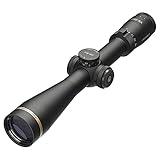
- Model #172368 – VX-5HD 3-15×44 Riflescope with an Illuminated FireDot Duplex Reticle, CDS-ZL2 and a Matte finish
- The CDS-ZL2 (ZeroLock 2) provides two revolutions of elevation adjustment while eliminating accidental dial movement with the push-button ZeroLock system. It also features Leupold’s award-winning Custom Dial System (CDS), which allows shooters to order a laser-marked bullet-drop dial to match their exact ballistics and conditions.
Professional hunting experience: While guiding hunters across Montana’s diverse terrain, I’ve seen this scope perform reliably from the humid river bottoms to the arid high plains. The lightweight design doesn’t punish hunters during long approaches, while the optical quality delivers when shots count most.
Custom dial advantage: Leupold’s CDS system provides custom elevation dials calibrated to your specific ammunition and atmospheric conditions. For .338 Lapua hunters who frequently engage targets at varying distances, this eliminates guesswork and significantly improves first-shot success rates.
Realistic limitations: The 15x maximum magnification limits effectiveness for extreme long-range work beyond 1,000 yards. While adequate for most hunting applications, serious long-range competitors will want higher magnification capability.
3. Best First Focal Plane: Burris XTR Pro 5.5-30x56mm
First focal plane excellence: The FFP design ensures reticle subtensions remain accurate throughout the magnification range—critical for .338 Lapua applications where precise holdover calculations determine success or failure at extreme ranges. I’ve used this scope in competitions where rapid range changes require instant ballistic solutions.
The SCR 2 MIL reticle provides excellent reference points for both wind holds and elevation corrections. During precision rifle matches, the ability to use reticle holdovers rather than dialing corrections often determines stage performance and overall match results.
Competition-proven specifications:
- Magnification: 5.5-30x (excellent range for competitive shooting)
- Objective lens: 56mm (superior light gathering capability)
- Eye relief: 3.2-4 inches (generous for magnum recoil management)
- Adjustment range: Substantial travel for extreme long-range work
- Made in USA: Supporting American manufacturing excellence

- BURRIS QUICK DETACH RACE DIAL – Outpace the competition with the exclusive Burris Quick Detach Race Dial on the elevation turret. This innovative feature, featuring a “whiteboard” style coating, allows shooters to mark each target’s click value on a given stage using a dry erase marker
- TOOL-LESS ZERO CLICK STOP ELEVATION KNOB – Elevate your accuracy with the Tool-less Zero Click Stop Elevation Knob. Open the Cam Lever on the turret’s top to quickly change zero settings, providing a swift and efficient adjustment for optimal performance
Competitive shooting experience: During precision rifle matches where stage times limit scope adjustments, the FFP reticle allows rapid holdover corrections that dial-based solutions can’t match. Students using this scope consistently achieve better stage times while maintaining accuracy standards.
Tool-less zero stop innovation: The ability to set zero stops without tools provides significant field advantages. During competitions and hunting scenarios where equipment must be adjusted quickly, this feature has saved valuable time and prevented errors.
Advanced features advantage: The Quick Detach Race Dial system allows rapid switching between pre-marked elevation settings for different distances. For .338 Lapua users who frequently engage targets at varying ranges, this capability streamlines the shooting process significantly.
4. Best Budget: Vortex Diamondback Tactical 6-24×50
Budget reality check: Not every shooter can afford premium long-range optics, and this Vortex proves you don’t need to sacrifice essential performance for affordability. I’ve equipped training rifles with these scopes, and students consistently achieve good results within the .338 Lapua’s practical hunting range.
The 6-24x magnification range covers most scenarios where hunters actually engage game with the .338 Lapua. While it won’t provide the extreme long-range capability of premium alternatives, it delivers reliable performance for shots out to 1,000 yards—covering 90% of hunting situations.
Value engineering:
- Magnification: 6-24x (adequate for most hunting applications)
- Objective lens: 50mm (reasonable light gathering for the price)
- First focal plane: Reticle accuracy throughout magnification range
- Tactical turrets: Reliable tracking for range adjustments
- Lifetime warranty: Vortex’s legendary customer support

- The Diamondback Tactical First Focal Plane 6-24×50 stands at the intersection of precision and value, delivering an impressive array of features and performance.
- Extra-low dispersion glass and fully multi-coated lenses transmit a crisp, bright sight picture. The first focal plane, glass-etched reticle keep subtensions accurate throughout the 4x zoom range.
Training course applications: I’ve used these scopes on loaner rifles for precision courses, and they consistently deliver adequate performance for learning long-range fundamentals. Students achieve sub-MOA accuracy at reasonable ranges, building confidence without premium equipment costs.
Realistic expectations: This scope delivers solid performance for recreational shooting and hunting within reasonable distances. It won’t provide the precision adjustability or extreme magnification of premium alternatives, but it will reliably hold your .338 Lapua’s impressive accuracy potential.
Perfect applications: This scope excels on hunting rifles where weight and cost matter more than ultimate precision capability. It’s also excellent for shooters developing long-range skills who need reliable equipment without premium pricing.
Understanding .338 Lapua Requirements
Cartridge Capabilities and Limitations
Ballistic performance: The .338 Lapua Magnum maintains supersonic velocity beyond 1,500 yards with quality ammunition, making it one of the most effective long-range hunting cartridges available. However, realizing this potential requires optics capable of precise target identification and measurement at extreme distances.
Recoil considerations: The substantial recoil generated by .338 Lapua loads stresses mounting systems and internal scope mechanisms beyond normal limits. Quality scopes must maintain zero and mechanical precision through thousands of rounds of punishment that would destroy lesser optics.
Environmental sensitivity: Long-range shooting amplifies environmental effects like wind drift, mirage, and atmospheric density changes. Quality glass helps shooters read these conditions accurately, while precise tracking allows corrections that maintain accuracy across varying conditions.
Magnification Requirements
Minimum magnification needs: Effective use of the .338 Lapua’s capabilities requires sufficient magnification to identify targets and read environmental conditions at extreme ranges. While 15x might suffice for moderate distances, serious long-range work benefits from 25x or higher maximum power.
Practical magnification limits: Excessive magnification creates problems including reduced light transmission, increased mirage effects, and tunnel vision that impairs situational awareness. The sweet spot for most .338 Lapua applications falls between 15x and 25x.
Variable power advantages: The ability to reduce magnification for target acquisition and increase it for precise shot placement provides significant tactical advantages. Fixed power scopes limit versatility in dynamic shooting scenarios.
Tracking Precision Requirements
Adjustment graduation: Fine adjustment increments allow precise corrections for environmental changes and range variations. 1/4 MOA or 0.1 MIL adjustments provide the precision needed for consistent hits at extreme ranges.
Total adjustment range: The .338 Lapua’s extreme range capability requires scopes with substantial elevation adjustment travel. Minimum requirements include 20+ MILs or 70+ MOA of total elevation adjustment to reach the cartridge’s full potential.
Return-to-zero reliability: Competitive shooting and hunting scenarios often require significant scope adjustments followed by returns to baseline zero. Quality tracking systems maintain accuracy through these adjustment cycles without cumulative error.
Glass Quality and Optical Performance
Light Transmission Considerations
Dawn and dusk advantage: Legal hunting hours often occur during marginal light conditions where glass quality determines success or failure. Superior coatings and lens design extend effective shooting time by 15-20 minutes daily.
Long-range clarity: Atmospheric haze, mirage, and dust reduce target clarity at extreme ranges. Premium glass with advanced coatings cuts through these conditions to maintain target identification capability.
Color fidelity: Accurate color reproduction helps distinguish targets from backgrounds and identify environmental conditions affecting bullet flight. Poor glass quality creates color shifts that impair decision-making.
Chromatic Aberration Control
Edge clarity: Premium glass with ED (Extra-Low Dispersion) elements virtually eliminates color fringing that can obscure target edges and affect precision aim point selection.
Magnification effects: Chromatic aberration increases with magnification, making quality glass essential for scopes intended for extreme long-range work where high magnification is necessary.
Environmental factors: Atmospheric conditions like heat shimmer and humidity amplify optical defects in poor glass, while quality lenses maintain clarity through challenging conditions.
Coating Technology
Multi-coating benefits: Advanced lens coatings dramatically improve light transmission while reducing reflections that can compromise stealth or create glare problems.
Durability considerations: Quality coatings resist scratching and environmental damage while maintaining optical performance through years of field use.
Maintenance requirements: Different coating types require specific cleaning procedures to prevent damage. Understanding proper care extends scope life and maintains performance.
Reticle Selection Strategy
First vs. Second Focal Plane
FFP advantages: First focal plane reticles maintain accurate subtensions throughout the magnification range, enabling precise ranging and holdover calculations at any power setting. This proves invaluable for .338 Lapua applications where rapid ballistic solutions are necessary.
SFP considerations: Second focal plane reticles appear cleaner at low magnifications but lose subtension accuracy when not at maximum power. For hunters who primarily shoot at one magnification setting, SFP can work adequately.
Practical applications: Competitive shooters and tactical users generally prefer FFP for its versatility, while hunters focused on specific ranges might find SFP adequate for their needs.
Reticle Pattern Selection
Christmas tree designs: Complex reticles with extensive windage references help with rapid corrections in competitive scenarios but can clutter the sight picture for hunting applications.
Simple crosshair options: Clean, uncluttered reticles improve target acquisition speed and reduce visual confusion, particularly valuable for hunting scenarios where quick shots are necessary.
Illumination considerations: Illuminated center dots or crosshairs improve low-light performance but add complexity and potential failure points. Battery life becomes a consideration for extended field use.
Measurement Systems
MIL vs. MOA: Both systems work effectively when consistently applied. MIL measurements often integrate better with ballistic computers and wind reading techniques, while MOA provides finer adjustment increments.
Consistency requirements: Reticle and turret measurements must match to avoid conversion errors under pressure. Mixed systems create confusion that can cause missed shots at critical moments.
Ballistic integration: Modern ballistic apps work with both measurement systems, but ensure your scope, app, and shooting techniques all use consistent units.
Environmental Considerations
Weather Resistance
Waterproofing: .338 Lapua rifles often see use in challenging weather where scope integrity determines mission success. Quality sealing prevents internal fogging and moisture damage that can ruin hunts or competitions.
Temperature extremes: Montana’s climate ranges from -40°F to 110°F, creating significant thermal stress on optical systems. Quality scopes maintain accuracy and clarity through temperature swings that would affect lesser optics.
Shock resistance: The .338 Lapua’s recoil, combined with transportation stress and field handling, subjects scopes to forces that can damage internal mechanisms. Military-grade construction provides the durability needed for reliable long-term performance.
Altitude and Atmospheric Effects
Pressure compensation: Elevation changes affect both ballistics and scope performance. Quality scopes maintain tracking accuracy across altitude variations that significantly affect bullet trajectory.
Atmospheric clarity: High-altitude shooting often involves looking through thinner air that can enhance or distort target images. Quality glass adapts to these conditions while maintaining accurate color rendition.
Mirage management: Heat shimmer from ground surfaces can make target identification difficult at extreme ranges. Quality scopes with excellent resolution help cut through mirage effects that obscure aiming points.
Mounting and Setup Considerations
Ring and Base Selection
Recoil management: The .338 Lapua’s substantial recoil requires mounting systems designed for magnum cartridges. Quality rings and bases distribute stress evenly while maintaining zero through thousands of rounds.
Height optimization: Proper scope height ensures comfortable cheek weld while providing adequate clearance for large objective lenses and adjustment caps. Too low creates clearance issues; too high forces uncomfortable shooting positions.
Cant considerations: Built-in scope base cant extends elevation adjustment range for extreme long-range shooting. 20-30 MOA of cant is typical for .338 Lapua applications focused on long-range performance.
Scope Positioning
Eye relief verification: Magnum recoil requires adequate eye relief to prevent scope injuries while maintaining consistent sight picture access. Verify eye relief across all intended shooting positions.
Parallax adjustment: The .338 Lapua’s extreme range capability demands precise parallax adjustment throughout the scope’s range. Verify parallax accuracy at your typical shooting distances.
Level verification: Scope can dramatically affect bullet impact at long ranges where the .338 Lapua excels. Precise leveling during installation prevents systematic errors that compound with distance.
Regional Considerations for Montana Shooters
Terrain Characteristics
Distance opportunities: Montana’s open terrain provides opportunities for shots well beyond 1,000 yards, making high-magnification scopes valuable for target identification and environmental assessment.
Environmental challenges: Wind patterns, altitude changes, and atmospheric conditions vary dramatically across Montana’s diverse landscape. Quality glass helps read these conditions accurately.
Seasonal variations: Montana’s distinct seasons create varying optical conditions from summer heat shimmer to winter atmospheric clarity. Versatile scopes adapt to these changing conditions.
Legal and Ethical Considerations
Shot distance limits: While the .338 Lapua can reach extreme distances, hunters must consider ethical shot placement and recovery capabilities. Quality scopes help determine when shots are appropriate.
Environmental impact: Long-range shooting requires understanding bullet trajectory and impact patterns across varying terrain. Responsible shooters consider safety beyond their immediate target area.
Wildlife considerations: Montana’s wildlife populations deserve ethical treatment through precise shot placement. Quality optics enable the accuracy needed for clean, humane harvests.
Investment Strategy
Cost-Benefit Analysis
Performance requirements: Determine your actual shooting needs versus theoretical capabilities. A hunter who rarely shoots beyond 600 yards doesn’t need the same optical quality as someone pursuing 1,500-yard precision.
Longevity considerations: Quality scopes last decades with proper care, while budget alternatives may require replacement after heavy use. Calculate long-term costs when making purchase decisions.
Capability matching: Balance scope capabilities with rifle accuracy and shooter skill. An average shooter with a factory rifle doesn’t need the same optics as a precision competitor with custom equipment.
Feature Prioritization
Essential capabilities: Focus on proven reliability, adequate magnification, and precise tracking rather than exotic features that may compromise core performance.
Future flexibility: Consider whether your scope choice limits future upgrades or different applications. Standard mounting interfaces provide more versatility than proprietary designs.
Simplicity benefits: Complex features create additional failure points and learning requirements. Sometimes simple, reliable designs outperform feature-rich alternatives in field conditions.
Final Recommendations
For the extreme long-range specialist: The Nightforce ATACR 7-35×56 provides the precision and reliability needed for shots beyond 1,500 yards. Its military heritage and optical excellence justify the premium price for serious applications.
For the all-weather hunter: The Leupold VX-5HD 3-15×44 offers exceptional environmental resistance and optical quality for hunting applications. Its lightweight design and custom dial capability make it ideal for backcountry pursuits.
For the precision competitor: The Burris XTR Pro 5.5-30x56mm delivers the FFP reticle accuracy and tracking precision needed for competitive success. Its advanced features support the rapid adjustments competition demands.
For the budget-conscious shooter: The Vortex Diamondback Tactical 6-24×50 provides reliable performance for most .338 Lapua applications without premium pricing. Its lifetime warranty and adequate performance suit recreational long-range shooting.
Remember that the .338 Lapua Magnum represents one of the most capable long-range cartridges available to civilian shooters. Realizing its potential requires optics that match its extraordinary performance. Invest in quality glass, mount it properly, and practice extensively to develop the skills this cartridge rewards.
Practice makes permanent, so practice with the equipment you’ll use when it matters. Understand your scope’s capabilities and limitations through extensive range time and field experience. The .338 Lapua can deliver remarkable accuracy at extreme ranges, but only when paired with quality optics and skilled application.
Whether you’re pursuing game across Montana’s vast landscapes or competing in precision rifle matches where millimeters matter at 1,000+ yards, these scopes provide the performance serious .338 Lapua shooters demand. Choose based on your specific applications, install them correctly, and maintain them properly.
Your best survival tool is still the six inches between your ears—make sure your optics help you use it effectively when the distance is extreme and the stakes are high.