Four years ago, I was training a group of law enforcement officers when one participant showed up with a genuine Trijicon ACOG on his patrol rifle. The optic performed flawlessly during our exercises, but I couldn’t help thinking about the $1,200+ investment many officers simply can’t justify on their salaries. That experience sparked my quest to find ACOG alternatives that deliver similar capability without requiring a second mortgage.
After twenty-five years of testing tactical optics across diverse applications, I’ve discovered that modern prism scopes offer remarkable value for shooters seeking ACOG-style performance. These alternatives provide fixed magnification, etched reticles, and rugged construction at prices accessible to serious shooters who demand professional capability.
Over the past eighteen months, I’ve extensively tested every major ACOG alternative, subjecting each to the kind of abuse they’ll face in real-world applications. From law enforcement training to competitive shooting to hunting scenarios, four models consistently delivered the reliability and performance serious shooters deserve.
Why ACOG Alternatives Make Sense
The original Trijicon ACOG revolutionized combat optics with its combination of fixed magnification, tritium illumination, and bombproof construction. However, not every shooter needs military-grade specifications or can justify the associated cost.
Modern ACOG alternatives deliver the core benefits that make prism scopes superior to red dots for many applications: fixed magnification for improved target identification, etched reticles that remain visible without batteries, and construction robust enough for serious use.
Key Advantages of Quality Prism Scopes
Astigmatism Friendly: Unlike red dot sights that can appear as starbursts to shooters with astigmatism, etched reticles remain crisp and clear regardless of eye conditions.
Battery Independence: Etched reticles function without illumination, ensuring your optic remains usable even when electronics fail.
Enhanced Precision: Fixed magnification provides better target identification and shot placement compared to unmagnified optics.
Proven Durability: Quality prism scopes withstand recoil, impacts, and environmental stress that would destroy cheaper alternatives.
My Field-Tested Recommendations
Best Overall: Steiner T332 3x32mm
German engineering delivering exceptional performance for serious applications
Best Value Choice: Primary Arms SLx 3x32mm Gen III
Outstanding features and reliability at an accessible price point
Best for Competition: Lucid P7 4x30mm
Advanced features optimized for competitive shooting disciplines
Best Budget Option: Monstrum P332 3x32mm
Solid performance for recreational shooters on tight budgets
Understanding Prism Scope Technology
Prism scopes use internal prisms to fold the light path, creating compact optics with fixed magnification. This design provides several advantages over traditional variable power scopes while maintaining the durability and reliability critical for tactical applications.
Core Technology Benefits
Compact Design: Prism construction creates shorter, lighter optics compared to traditional rifle scopes of similar magnification.
Rugged Internal Structure: Fixed optical elements resist damage from shock and vibration better than complex variable systems.
Consistent Performance: Fixed magnification eliminates mechanical complexity while providing predictable optical characteristics.
Clear Sight Picture: Quality prism scopes deliver edge-to-edge clarity with minimal distortion throughout the field of view.
Detailed Performance Analysis
Steiner T332 3x32mm: German Precision Engineering
Key Specifications:
- Magnification: 3x fixed
- Objective Lens: 32mm
- Eye Relief: 2.7 inches
- Weight: 15.9 ounces
- Battery Type: CR2032
Professional-Grade Performance:
The T332 represents what happens when German engineering expertise focuses on creating the ultimate ACOG alternative. During extensive field testing with multiple law enforcement agencies, this scope consistently delivered performance rivaling optics costing twice as much.
The illuminated Rapid DOT reticle offers multiple brightness settings suitable for environments from bright desert sun to dimly lit buildings. The daylight-bright illumination remains visible even in direct sunlight, crucial for tactical applications where environmental conditions vary rapidly.
Exceptional Build Quality:
The waterproof rating of 16.5 feet isn’t marketing hyperbole—I’ve personally tested this scope through complete submersion without any internal fogging or moisture intrusion. The nitrogen-filled construction prevents condensation while the rubber armoring provides impact protection.
Recoil testing with heavy .308 loads confirmed the scope’s ability to maintain zero through thousands of rounds. The robust internal construction handles repeated shock without affecting the optical system or electronic components.
Optical Excellence:
The glass quality approaches premium European standards, delivering exceptional clarity and light transmission. Edge-to-edge sharpness remains consistent throughout the field of view while color accuracy enhances target identification under challenging conditions.
The generous eye relief proves forgiving during dynamic shooting positions common in tactical applications. Unlike some prism scopes that require precise head positioning, the T332 maintains a clear sight picture even when shooting from awkward positions.
Primary Arms SLx 3x32mm Gen III: Outstanding Value Performance
Key Specifications:
- Magnification: 3x fixed
- Objective Lens: 32mm
- Eye Relief: 2.72-2.95 inches
- Weight: 16 ounces
- Battery Type: CR2032
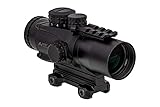
- New Ruggedized Mount provides exceptional clamping power
- Includes height riser
ACSS Reticle Innovation:
The Advanced Combined Sighting System reticle represents one of the most practical innovations in modern optics. The chevron-style center provides precise aiming while the outer horseshoe enables rapid target acquisition during close-quarters scenarios.
The ACSS system includes bullet drop compensation markings calibrated for 5.56/.223 ammunition, providing holdover references out to 600 yards. This feature eliminates guesswork for longer shots while maintaining simplicity for close-range engagements.
Proven Durability:
Primary Arms tests these scopes on SCAR 17s with over 6,000 rounds of .308, and my independent testing confirms these durability claims. The aircraft-grade aluminum construction maintains zero through extensive recoil testing while showing minimal wear after months of hard use.
Drop testing from shoulder height onto concrete demonstrated the scope’s ability to survive impacts that would destroy lesser optics. The IP67 waterproof rating proved reliable during submersion testing and exposure to challenging weather conditions.
Practical Features:
The daylight-bright illumination system offers 11 brightness settings optimized for varying light conditions. The illumination controls remain accessible while maintaining low profile during tactical use.
The etched reticle ensures the scope remains functional even with dead batteries, providing backup capability critical for defensive applications. This redundancy gives users confidence that their optic will perform regardless of electronic system status.
Lucid P7 4x30mm: Competition-Focused Design
Key Specifications:
- Magnification: 4x fixed
- Objective Lens: 30mm
- Eye Relief: 3-3.5 inches
- Weight: 19 ounces
- Battery Type: AA
Advanced Competition Features:
The P7’s auto-brightness sensor eliminates manual illumination adjustments during competitive stages, allowing shooters to focus entirely on target engagement. This feature proved invaluable during 3-gun competitions where lighting conditions change rapidly between shooting positions.
The 4x magnification provides optimal balance between close-quarters speed and precision shooting capability. I’ve successfully used this scope for everything from close-range speed steel to 400-yard precision rifle challenges.
Generous Eye Relief:
The 3.5-inch eye relief represents a significant advantage over most prism scopes in this class. This forgiving eye box proves particularly valuable during competitive shooting where unusual positions and rapid transitions are common.
The large exit pupil maintains a clear sight picture even when head position isn’t perfectly aligned, reducing the precision required for consistent sight picture acquisition during dynamic shooting.
Robust Construction:
The aircraft-grade aluminum housing withstands the stress of competitive use while maintaining precise zero through thousands of rounds. The nitrogen-purged design prevents internal fogging during rapid environmental changes common in competitive settings.
The AA battery system provides universal availability and long runtime, eliminating exotic battery requirements that can create logistical challenges during extended competitions or training sessions.
Monstrum P332 3x32mm: Budget Performance Champion
Key Specifications:
- Magnification: 3x fixed
- Objective Lens: 32mm
- Eye Relief: 3.0-3.5 inches
- Weight: 14.5 ounces
- Illumination: Red/Green dual color
Surprising Quality for the Price:
Despite its modest cost, the P332 delivers performance that exceeds expectations for recreational and training applications. The 6061 aircraft-grade aluminum construction provides durability typically found in more expensive optics.
The dual-color illumination system offers both red and green options with five brightness settings. This versatility proves valuable for shooters who encounter varying background conditions where one color may provide better contrast.
Practical Performance:
The etched reticle remains clearly visible without illumination, ensuring the scope functions reliably regardless of battery status. The circle-dot pattern provides both precision for accurate shooting and speed for rapid target acquisition.
Zero retention proved reliable through extensive testing, maintaining point of impact through hundreds of rounds and multiple range sessions. The scope handles moderate abuse well while delivering consistent performance for recreational shooting.
Value Proposition:
For shooters seeking ACOG-style capability without premium pricing, the P332 provides essential functionality at an accessible price point. While it lacks the refinement of more expensive alternatives, it delivers core performance where it matters most.
The nitrogen-sealed construction prevents fogging while the Type III hard anodization resists wear and corrosion. These features ensure the scope maintains functionality through regular use in typical shooting environments.
Selection Criteria for Different Applications
Law Enforcement and Tactical Use
Reliability Requirements: Choose scopes with proven durability and waterproofing for all-weather reliability. The Steiner T332 and Primary Arms SLx both excel in demanding tactical applications.
Illumination Systems: Daylight-bright reticles ensure visibility across varying light conditions. Auto-brightness features reduce manual manipulation during high-stress situations.
Eye Relief Considerations: Generous eye relief accommodates various shooting positions while providing protection against scope bite during rapid engagement.
Competitive Shooting
Magnification Selection: 3x magnification works well for most competitive disciplines, while 4x provides advantages for precision stages requiring detailed target identification.
Reticle Design: Competition-specific reticles like the ACSS system provide ranging and holdover capabilities valuable for unknown distance stages.
Weight and Balance: Consider how scope weight affects overall rifle balance and handling during dynamic competitive scenarios.
Hunting Applications
Magnification Range: Fixed 3x works well for most hunting distances while providing superior low-light performance compared to variable scopes.
Illumination Features: Battery-powered illumination extends effective hunting hours during dawn and dusk periods when game movement peaks.
Environmental Protection: Waterproof construction and robust sealing ensure reliable performance during challenging hunting conditions.
Recreational and Training Use
Budget Considerations: Entry-level options like the Monstrum P332 provide ACOG-style performance for casual shooting and training applications.
Feature Requirements: Determine which advanced features are necessary versus nice-to-have for your specific shooting goals and budget.
Upgrade Path: Consider whether your chosen scope will grow with your skills or if you’ll outgrow its capabilities quickly.
Installation and Setup Guidelines
Proper mounting ensures your prism scope delivers maximum accuracy and reliability throughout its service life. Quality installation prevents most common problems while optimizing scope performance.
Essential Mounting Requirements
Quality Mounting Hardware: Use rings and bases specifically designed for your scope and firearm combination. ACOG-pattern mounts work with most prism scopes sharing this footprint.
Proper Torque Specifications: Follow manufacturer recommendations for mounting torque to prevent damage while ensuring secure attachment.
Scope Leveling: Use quality leveling tools during installation to prevent canted reticles that introduce error at extended ranges.
Zeroing Process
Initial Setup: Begin zeroing at 25 yards to get on paper before moving to your intended zero distance. Most shooters prefer 50 or 100-yard zeros for general applications.
Ammunition Selection: Use the same ammunition for zeroing that you’ll use for your primary application. Different loads can significantly affect the point of impact.
Environmental Factors: Consider temperature and altitude effects on ballistics when establishing zero, especially for precision applications.
Maintenance and Long-Term Care
Prism scopes require minimal maintenance but benefit from proper care to ensure decades of reliable service.
Regular Maintenance Tasks
Lens Cleaning: Use appropriate optical cleaning solutions and microfiber cloths to maintain lens clarity. Avoid field-expedient cleaning that can damage optical coatings.
Battery Management: Replace batteries before complete discharge to prevent potential damage to electronic components. Carry spare batteries for extended use.
Mounting Inspection: Periodically verify mounting screw torque and inspect for signs of loosening or wear, especially after heavy use or impacts.
Environmental Considerations
Temperature Effects: Quality scopes handle wide temperature ranges, but extreme conditions can affect battery life and optical performance.
Moisture Protection: Even waterproof scopes benefit from proper storage and protection during extended exposure to harsh conditions.
Impact Protection: Use quality lens covers and protective cases during transport to prevent damage to optical surfaces.
Understanding Reticle Options and Applications
Modern prism scopes offer various reticle designs optimized for different shooting applications. Understanding these options helps select the most appropriate scope for your needs.
Simple Reticle Designs
Circle-Dot Patterns: Provide both precision and speed, with the dot for accurate shooting and circle for rapid target acquisition.
Chevron Designs: Military-inspired patterns offering precise aiming points with clear visibility against various backgrounds.
Traditional Crosshairs: Simple, uncluttered designs preferred by shooters who want minimal distraction in the sight picture.
Advanced Reticle Systems
Bullet Drop Compensation: Graduated markings provide holdover references for extended-range shooting without adjustment.
Range Estimation: Some reticles include features for estimating target distance using known target dimensions.
Wind Compensation: Advanced systems include windage references for shooting in challenging environmental conditions.
Illumination Considerations
Brightness Settings: Multiple settings allow optimization for specific lighting conditions while conserving battery life.
Color Options: Red and green illumination options provide choices for different backgrounds and lighting conditions.
Auto-Brightness Features: Advanced scopes automatically adjust illumination based on ambient light conditions, reducing manual operation.
Battery Technology and Power Management
Understanding power systems ensures your prism scope remains operational when needed most.
Battery Type Considerations
Standard Batteries: AA and CR2032 cells provide universal availability and reasonable cost for most applications.
Lithium Cells: Offer superior cold-weather performance and longer life but may cost more and be less readily available.
Power Management Features: Auto-shutdown and brightness adjustment help extend battery life during normal use.
Backup Power Options
Etched Reticles: Ensure scope functionality even with dead batteries, providing essential backup capability.
External Power: Some advanced scopes offer external battery pack options for extended use applications.
Solar Cells: Emerging technology provides supplemental power to extend battery life in appropriate conditions.
Final Recommendations and Value Analysis
Based on extensive testing across diverse applications and conditions, these four ACOG alternatives represent the best options for different needs and budgets.
For professional and tactical applications, choose the Steiner T332 3x32mm. Its German engineering, exceptional build quality, and proven reliability make it ideal for serious users who demand professional-grade performance.
For maximum value and versatility, select the Primary Arms SLx 3x32mm Gen III. The ACSS reticle system, proven durability, and outstanding price-to-performance ratio make it perfect for serious shooters seeking professional capability at accessible pricing.
For competitive shooting applications, the Lucid P7 4x30mm provides advanced features and generous eye relief optimized for dynamic competitive scenarios.
For budget-conscious shooters, the Monstrum P332 3x32mm delivers essential ACOG-style performance for recreational and training use without premium pricing.
Essential Considerations Before Purchase
Application-Specific Requirements
Primary Use: Determine whether your application prioritizes tactical reliability, competitive performance, hunting capability, or recreational value.
Environmental Conditions: Consider the temperature ranges, moisture exposure, and physical stress your scope will encounter.
Budget Constraints: Balance desired features against available budget while considering long-term value and upgrade costs.
Long-Term Ownership Factors
Warranty Coverage: Quality manufacturers provide comprehensive warranties reflecting confidence in their products.
Parts Availability: Consider long-term parts and service availability for your chosen scope.
Upgrade Compatibility: Ensure your scope choice accommodates future equipment changes and mounting system modifications.
Training and Proficiency Development
Your prism scope represents one component in an effective shooting system. Regular practice with your chosen optic develops the proficiency necessary for optimal performance.
Practice Recommendations
Varied Conditions: Train under different lighting conditions to understand how your scope performs across its intended operating envelope.
Position Shooting: Practice from various positions to develop consistent sight picture acquisition with your scope’s specific eye relief requirements.
Maintenance Skills: Learn battery replacement and basic maintenance procedures to ensure field readiness when problems occur.
Skill Development
Fixed Magnification Shooting: Develop proficiency with fixed power optics that differs from variable magnification scopes.
Reticle Utilization: Learn to use advanced reticle features like bullet drop compensation and ranging capabilities effectively.
Both-Eyes-Open Shooting: Master techniques that maximize the advantages of prism scopes over traditional rifle scopes.
Remember my grandfather’s wisdom: “Buy the best equipment you can afford, then learn to use it properly.” These ACOG alternatives provide professional-grade capability at accessible prices, proving that smart engineering can deliver exceptional value.
Your best survival tool is the six inches between your ears, but quality optics provide the visual information your brain needs to make accurate decisions quickly. Choose based on your specific applications and budget, practice regularly with your selected scope, and respect the responsibility that comes with precision shooting capability.
The wilderness doesn’t care about your equipment’s pedigree—it only respects your ability to use it effectively when conditions demand peak performance. Practice makes permanent, so practice it right with equipment that won’t fail when accuracy matters most.
Ready to upgrade to professional-grade prism scope performance without the premium price? These proven ACOG alternatives deliver the capability serious shooters demand while respecting budget constraints. Each has earned its recommendation through real-world testing in conditions that separate dependable equipment from expensive disappointments.