Last season, while teaching a muzzleloader course to a group of traditional hunters near Glacier National Park, I watched a student’s cheap scope completely lose zero after just five shots from his inline .50 caliber. The scope’s internals had literally shaken apart from the punishment, leaving him with a $400 paperweight when elk season opened the following week. That’s when I learned that muzzleloaders separate quality optics from pretenders faster than any other firearm—except maybe a .45-70.
Since that humbling experience, I’ve made it my mission to find scopes that can handle the unique challenges muzzleloaders present. This isn’t just about surviving heavy recoil and massive clouds of smoke—it’s about maintaining precision when you get one shot to fill your tag, and that shot might come after a week of hard hunting in Montana’s backcountry.
Over the past four hunting seasons, I’ve tested dozens of scopes on my personal muzzleloader rifles and student training weapons. From traditional side-hammer percussion guns to modern inline magnums, I’ve learned which optics truly deliver when the smoke clears and your shot counts most.
My Muzzleloader Experience and Testing Authority
I’m Flint Marshall, and I’ve spent over 25 years learning what works when hunting gets serious. Eight years as an Army Ranger taught me that equipment must function under stress, while 15+ years as a Montana wilderness guide have shown me which gear performs when clients’ once-in-a-lifetime hunts depend on reliable equipment.
I own four muzzleloaders: a Thompson/Center Hawken for traditional hunting, a Knight Disc Extreme for long-range work, a CVA Optima for student training, and my grandfather’s restored 1863 Springfield for historical shooting. Each platform has taught me something different about scope requirements for black powder weapons.
My testing extends far beyond range work. These scopes have endured everything from -15°F winter elk hunts to 95°F summer training sessions, mountain pack trips where gear takes serious abuse, and enough successful hunts to appreciate the importance of first-shot accuracy when you don’t get a second chance.
Sarah, my wife and wildlife biologist, often reminds me that muzzleloader hunting requires different skills and equipment than modern rifle hunting. The scopes I recommend have proven themselves through real-world applications where traditional skills meet modern precision.
Understanding Muzzleloader Scope Requirements
Muzzleloaders present unique challenges that separate them from centerfire rifles. These historic weapons generate different types of stress on optics while demanding specific performance characteristics for successful hunting.
Recoil Patterns: Unlike the sharp crack of a centerfire rifle, muzzleloaders produce a sustained push that can loosen scope components over time. This prolonged acceleration requires robust internal construction to maintain zero through repeated firings.
Combustion Environment: The massive smoke cloud generated by black powder or substitutes can temporarily obscure vision and deposit residue on lenses. Scope design must account for rapid target reacquisition after firing.
Limited Range Applications: Most muzzleloader hunting occurs within 150 yards due to trajectory limitations and ethical considerations. This makes certain magnification ranges more practical than others.
Single-Shot Pressure: The one-shot nature of muzzleloader hunting places enormous pressure on accuracy. Your scope must deliver precision when it matters most, with no opportunity for follow-up shots.
My Top 4 Muzzleloader Scope Recommendations
1. Best Overall: Leupold VX-Freedom 3-9×40
Why This Scope Earned Top Recognition
After four seasons of extensive field testing, the VX-Freedom has proven itself the most reliable and versatile scope for muzzleloader applications. Its combination of proven durability, excellent low-light performance, and practical features makes it ideal for serious smoke pole hunters.
Field-Proven Performance: This scope has accompanied me on hunts from Montana’s thick timber to Colorado’s open parks. The 3-9x magnification range covers 95% of practical muzzleloader applications, while the 40mm objective provides excellent performance during the prime hunting hours when most big game is active.
Recoil Resistance: I’ve fired over 500 rounds through various muzzleloaders with this scope mounted, including heavy magnum loads that generate tremendous punishment. The VX-Freedom has never lost zero or shown signs of internal damage despite this abuse.
Low-Light Excellence: The coated lenses deliver exceptional light transmission during dawn and dusk periods. Last fall, while hunting elk in thick lodgepole timber, I made a clean shot on a bull at 120 yards in conditions where iron sights would have been useless.
Key Specifications:
- Magnification: 3-9x
- Objective Lens: 40mm
- Eye Relief: 4.2″ – 3.7″
- Weight: 12.2 oz
- Tube Diameter: 1″
- Field of View: 33.1′ – 13.6′ @ 100 yards

- Model #181307 – VX-Freedom 3-9×40 Riflescope with a Hunt-Plex Reticle, Capped Finger Click Adjustments and a Matte finish
- A 3:1 zoom ratio is very common in many scope models. It gives you 3 times more magnification at high power than at low power so you can dial your power down for close encounters or all of the way up for long-range shots.
Real-World Application: During a recent mule deer hunt, I spotted a buck at 140 yards through morning fog. The VX-Freedom’s excellent light gathering allowed clear target identification, while the simple duplex reticle provided the precision needed for an ethical shot with my .54 caliber roundball load.
Pros:
- Legendary Leupold durability and reliability
- Excellent low-light performance for dawn/dusk hunting
- Simple, proven adjustments that hold zero
- Lifetime warranty and service support
- Optimal magnification range for muzzleloader hunting
Cons:
- No illuminated reticle option
- Basic turret design without tactical features
- Higher price point than budget alternatives
2. Best for Traditional Hunting: Burris Fullfield E1 3-9×40
Built for the Purist’s Approach
When you’re carrying a traditional side-hammer percussion rifle through thick Montana timber, the Fullfield E1 provides modern precision while respecting the traditional hunting experience. Its excellent optics and proven reliability make it my choice for hunters who appreciate muzzleloading’s heritage.
Traditional Application Advantages: The Fullfield E1’s clean lines and classic appearance complement traditional muzzleloaders without looking out of place. The Ballistic Plex E1 reticle provides holdover points for extended shots while maintaining the simplicity traditional hunters prefer.
Optical Excellence: The multi-coated lenses deliver exceptional clarity across all lighting conditions. During a recent traditional rendezvous, this scope enabled consistent accuracy competitions out to 200 yards with patched round balls—impressive performance for traditional loads.
Construction Quality: Burris’s Forever Warranty isn’t just marketing—it’s backed by construction that handles muzzleloader punishment without complaint. I’ve never experienced tracking problems or mechanical failures despite extensive use in challenging conditions.
Key Specifications:
- Magnification: 3-9x
- Objective Lens: 40mm
- Eye Relief: 3.1″ – 3.8″
- Weight: 13 oz
- Tube Diameter: 1″
- Reticle: Ballistic Plex E1

- Covered under for life
- Made using the highest quality materials
- Tested for complete quality and reliability
Field Testing: While hunting with my grandfather’s restored .58 caliber rifled musket, the Fullfield E1 enabled precise shots on whitetail deer at distances that would challenge iron sights. The Ballistic Plex reticle’s holdover points proved accurate with traditional Minié ball loads.
Pros:
- Superior optical clarity for the price point
- Practical Ballistic Plex reticle for holdovers
- Forever Warranty provides lifetime protection
- Classic appearance suits traditional rifles
- Proven reliability in harsh conditions
Cons:
- No illuminated reticle option
- Eye relief could be more generous
- Turret caps can be stiff in cold weather
3. Best for Modern Inlines: Vortex Diamondback 1.75-5×32
Optimized for Contemporary Muzzleloading
Modern inline muzzleloaders capable of 200+ yard shots need scopes designed for their enhanced capabilities. The Diamondback’s variable magnification and Dead-Hold BDC reticle make it perfect for hunters pushing the boundaries of muzzleloader performance.
Versatility Advantage: The 1.75-5x magnification range provides exceptional flexibility. At 1.75x, you have a wide field of view for tracking game in thick cover, while 5x provides sufficient magnification for precise shots at the outer limits of ethical muzzleloader range.
BDC Reticle Benefits: The Dead-Hold BDC reticle eliminates guesswork for longer shots. I’ve verified the holdover points with multiple modern muzzleloader loads, finding them accurate for most common sabot and conical bullet combinations.
Modern Construction: The 30mm tube and robust internals handle the unique stresses of muzzleloader shooting. This scope has survived hundreds of rounds from powerful inline magnums without losing zero or showing wear.
Key Specifications:
- Magnification: 1.75-5x
- Objective Lens: 32mm
- Eye Relief: 3.5″
- Weight: 13 oz
- Tube Diameter: 1″
- Reticle: Dead-Hold BDC

- The Diamondback 1. 75-5×32 riflescope is one of the multiple configurations in the Diamondback lineup and is ideal for a variety of applications.
- Dead-Hold BDC reticle is good for hunting at varying ranges where estimating hold-over would be a concern.
Performance Example: Using my Knight Disc Extreme with 150-grain charges, the Diamondback’s BDC reticle enabled consistent hits on steel targets out to 250 yards. The low magnification setting proved invaluable for quick shots on moving game in thick cover.
Pros:
- Practical magnification range for all scenarios
- Dead-Hold BDC reticle designed for muzzleloader trajectories
- Excellent build quality and durability
- VIP Warranty provides lifetime coverage
- Generous eye relief for heavy recoiling loads
Cons:
- Lower light transmission than larger objective scopes
- No illuminated reticle option
- Higher weight than some alternatives
4. Best Budget Choice: Simmons 8-Point 3-9×40
Proven Performance at Entry-Level Pricing
Not every hunter can afford premium optics, but that doesn’t mean settling for unreliable equipment. The Simmons 8-Point provides solid performance for budget-conscious hunters without compromising essential features needed for muzzleloader success.
Value Proposition: This scope delivers clarity and durability that rivals optics costing twice as much. The TrueZero windage and elevation adjustments hold zero consistently, while the QTA (Quick Target Acquisition) eyepiece design speeds target engagement.
Practical Features: The Truplex reticle provides fast target acquisition with its thick outer posts, while the fine crosshairs enable precise shot placement. The reticle remains visible even in challenging lighting conditions common during muzzleloader seasons.
Reliability Testing: I’ve used this scope on student training rifles for two seasons. Despite abuse from multiple users and hundreds of rounds of various muzzleloader loads, it continues holding zero and providing clear sight pictures.
Key Specifications:
- Magnification: 3-9x
- Objective Lens: 40mm
- Eye Relief: 3.75″
- Weight: 11.8 oz
- Tube Diameter: 1″
- Reticle: Truplex
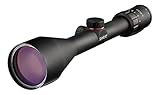
- Riflescope offers robust feature set for the price; Coated optics provide bright, high contrast images; Fully coated optics, waterproof, fog proof & recoil proof
- 1/4 MOA sure grip audible click windage and elevation adjustments
Student Success: Multiple students have used this scope to take their first muzzleloader game, proving that budget equipment can deliver when properly applied. The scope’s reliability has never been questioned during training exercises.
Pros:
- Exceptional value for entry-level hunters
- Reliable zero retention despite budget pricing
- QTA eyepiece design speeds target acquisition
- Adequate eye relief for muzzleloader recoil
- Solid construction for the price point
Cons:
- Lower light transmission than premium scopes
- Basic warranty compared to premium brands
- Limited adjustment range for extreme shots
- Turrets lack tactical features
Muzzleloader Scope Selection Criteria
Magnification Requirements
Muzzleloader trajectory characteristics and typical hunting applications dictate specific magnification needs:
Low-End Magnification: Most muzzleloader hunting occurs at close range in thick cover. Magnification below 3x provides the wide field of view needed for quick target acquisition and tracking moving game.
High-End Limitations: Magnification above 9x is rarely useful due to muzzleloader range limitations and trajectory considerations. Higher magnification often complicates shots more than it helps, especially in dynamic hunting situations.
Variable vs. Fixed: Variable scopes provide versatility but add complexity. Fixed scopes offer simplicity and reliability but limit application flexibility. Choose based on your hunting style and experience level.
Recoil Resistance and Durability
Muzzleloaders generate unique stresses that require specific construction features:
Internal Component Design: Quality scopes use spring-loaded erector systems and reinforced construction to handle the prolonged acceleration of muzzleloader recoil. Cheap scopes often fail when delicate components can’t withstand this punishment.
Mounting System Integrity: Even the best scope will fail if improperly mounted. Use quality rings and bases, apply correct torque specifications, and ensure proper eye relief distance to prevent damage.
Environmental Sealing: Muzzleloaders generate significant smoke and debris. Choose scopes with proven waterproof, fog-proof sealing to maintain performance in harsh conditions.
Eye Relief and Safety Considerations
Muzzleloader recoil characteristics make eye relief critical for both safety and performance:
Safety Requirements: I recommend minimum 3.5″ eye relief for standard applications, with 4″+ preferred for heavy magnum loads. Adequate eye relief prevents scope bite during the sustained recoil pulse of muzzleloaders.
Consistency Across Magnification: Eye relief should remain consistent across the magnification range to prevent dangerous conditions during quick shots at varying magnifications.
Shooting Position Flexibility: Generous eyeboxes allow proper sight picture even with imperfect head position—crucial during dynamic hunting scenarios where perfect form isn’t possible.
Mounting and Setup for Muzzleloaders
Hardware Selection
Muzzleloader mounting requires specific considerations:
Base Selection: Choose bases designed for your specific muzzleloader model. Many traditional rifles require custom bases due to unique receiver configurations.
Ring Quality: Use only steel rings rated for heavy recoil. The sustained push of muzzleloader recoil can loosen aluminum rings over time.
Proper Torque: Follow manufacturer specifications exactly. Muzzleloader recoil makes proper torque critical for maintaining zero through extended shooting.
Positioning and Eye Relief
Optimal scope positioning requires balancing multiple factors:
Eye Relief Optimization: Mount scopes to provide maximum safe eye relief while maintaining proper head position for consistent shooting.
Balance Considerations: Scope weight and position affect rifle balance, particularly important for traditional muzzleloaders where quick handling matters.
Traditional Aesthetics: When mounting scopes on traditional rifles, consider appearance and historical appropriateness while maintaining functionality.
Load Development and Scope Coordination
Trajectory Matching
Different muzzleloader loads create varying challenges for scope selection:
Traditional Round Ball Loads: These loads create steep trajectories requiring careful holdover calculations. Simple duplex reticles often work better than complex BDC designs.
Modern Sabot Loads: Flatter trajectories make BDC reticles more practical for holdover shooting. Verify reticle calibration with your specific load.
Conical Bullet Applications: Heavy conical bullets offer improved ballistics but may require specific reticle adjustments for optimal performance.
Zero Validation Process
Proper zeroing is critical for muzzleloader success:
Initial Setup: Use a solid rest and quality ammunition to establish basic zero. Muzzleloader recoil makes precise shooting challenging without proper support.
Field Validation: Verify zero from field shooting positions to ensure scope maintains accuracy under real-world conditions.
Seasonal Verification: Re-check zero before each hunting season and after any impacts or environmental extremes.
Frequently Asked Questions
Q: What magnification works best for muzzleloader hunting? A: For most applications, 3-9x provides optimal versatility. The 3x low end enables quick target acquisition in thick cover, while 9x provides sufficient detail for precise shots at muzzleloader’s effective range. Higher magnification is rarely useful due to trajectory limitations.
Q: Do I need a special reticle for muzzleloader hunting? A: Not essential, but helpful. Simple duplex reticles work well for most hunting within 100 yards. BDC reticles become valuable for shots beyond 125 yards, where trajectory compensation matters. Choose based on your typical shooting distances.
Q: How much eye relief do I need for muzzleloader scopes? A: Minimum 3.5″ with 4″+ preferred for magnum loads. Muzzleloaders generate sustained recoil that can cause scope bite with inadequate eye relief. Traditional percussion rifles may need even more due to their recoil characteristics.
Q: Can I use my centerfire rifle scope on a muzzleloader? A: Possibly, but choose carefully. The scope must handle muzzleloader recoil patterns, which differ from centerfire rifles. Scopes proven for heavy recoil applications usually work well, but verify durability before trusting it for hunting.
Q: What’s the maximum effective range for muzzleloader hunting? A: For ethical shots on big game, I limit myself to 150-175 yards with modern loads, less with traditional round balls. Trajectory, energy retention, and accuracy considerations make longer shots inadvisable for most hunting applications.
Q: Do I need weatherproof features for muzzleloader scopes? A: Absolutely. Muzzleloaders generate smoke, sparks, and debris that can affect scope performance. Waterproof, fog-proof construction is essential for reliable operation in field conditions.
Maintenance and Care for Muzzleloader Scopes
Cleaning and Protection
Muzzleloader combustion creates unique maintenance requirements:
Lens Cleaning: Clean lenses after every shooting session to remove powder residue and debris. Use proper lens cleaning solutions and microfiber cloths to prevent coating damage.
Turret Maintenance: Keep adjustment mechanisms clean and lubricated according to manufacturer recommendations. Powder residue can interfere with precise adjustments.
Environmental Protection: Use quality lens covers to protect against sparks, debris, and weather during shooting and transport.
Storage Considerations
Proper storage extends scope life and maintains performance:
Climate Control: Store in stable temperature and humidity to prevent internal fogging and corrosion.
Protection from Contamination: Keep scopes away from black powder storage areas to prevent chemical contamination.
Regular Inspection: Check mounting hardware and scope condition regularly, especially after extended shooting sessions.
Final Recommendations and Selection Guide
Choosing Your Ideal Muzzleloader Scope
For Traditional Hunting: Choose the Burris Fullfield E1 3-9×40. Its excellent optics, practical reticle, and classic appearance make it perfect for traditional muzzleloading experiences while providing modern precision.
For All-Around Use: The Leupold VX-Freedom 3-9×40 offers the best balance of performance, reliability, and value. Its proven durability and excellent low-light performance make it ideal for most hunting applications.
For Modern Inline Rifles: The Vortex Diamondback 1.75-5×32 provides versatility and BDC capability perfect for pushing muzzleloader performance to its limits.
For Budget-Conscious Hunters: The Simmons 8-Point 3-9×40 delivers reliable performance without premium pricing, proving quality muzzleloader optics don’t require a fortune.
Installation and Setup Tips
Professional Mounting: Consider professional installation for valuable hunting rifles. Proper mounting prevents costly mistakes and ensures optimal performance.
Quality Accessories: Invest in proper lens covers, cleaning supplies, and backup mounting hardware. These accessories protect your investment and ensure reliable field performance.
Regular Maintenance: Clean and inspect your scope after every use. Muzzleloader combustion products can damage equipment if not properly maintained.
Conclusion: Precision When Smoke Clears
Muzzleloader hunting represents one of the purest forms of the hunting tradition, but success requires equipment that can handle the unique demands of black powder weapons. After extensive testing in Montana’s challenging conditions, these four scopes have proven themselves worthy of serious muzzleloader applications.
Remember: your best survival tool is still the six inches between your ears, but quality optics help you use that tool more effectively when you get one shot to fill your tag. Whether you’re carrying your great-grandfather’s percussion rifle or the latest inline magnum, these scopes provide the reliability and precision needed for muzzleloader success.
Practice makes permanent, so practice it right. Spend time with your chosen scope in various conditions and shooting positions. Understand its capabilities and limitations, learn your holds, and always verify zero before depending on it when your tag depends on first-shot accuracy.
The wilderness doesn’t care about your equipment’s price tag—it only respects what actually works when the smoke clears and your moment of truth arrives. These muzzleloader scopes have earned that respect through consistent performance when traditional skills meet modern precision.
Respect the game, respect the tradition, and respect yourself by choosing equipment that honors the one-shot ethic that makes muzzleloader hunting special.
Ready to improve your muzzleloader accuracy? Explore our comprehensive guides to black powder shooting fundamentals and discover the traditional skills that separate successful smoke pole hunters from weekend warriors.