Two autumns back, I was guiding a client through thick timber in the Cabinet Mountains when a bull elk materialized at thirty yards—too close for his variable scope dialed to 9x for long-range shots. As he fumbled with the magnification ring, that magnificent animal melted back into the forest like smoke. That evening, we rigged an offset red dot to his rifle, and he tagged a nice six-point the next morning when opportunity knocked again. Sometimes the difference between success and regret is measured in seconds, not yards.
After twenty-five years of military service and wilderness guiding, I’ve learned that versatility wins in the field. The same rifle that needs to reach out to 400 yards across a canyon might face a charging black bear at spitting distance. Offset red dots solve this problem elegantly—they give you lightning-fast close-range capability without compromising your primary optic’s long-range precision.
My grandfather used to say, “The wilderness doesn’t care about your schedule,” and neither does game. When that shot opportunity presents itself, your equipment needs to be ready. An offset red dot isn’t just tactical gear—it’s practical hunting insurance.
My Field-Tested Recommendations
Best Overall: Trijicon RMR Type 2
Why This Sight Earned My Trust: I’ve run this optic through everything Montana can throw at it—from forty-below elk hunts to scorching August antelope expeditions. The RMR Type 2 simply works, every time, without fail. It’s the same sight I trust on my personal hunting rifle, and it’s never let me down when it mattered most.
Real-World Performance:
- Four-year battery life means set-it-and-forget-it reliability
- 3.25 MOA dot provides perfect balance for hunting scenarios
- Waterproof to 66 feet handles any weather condition
- Auto-brightness adjusts instantly to changing light conditions

- Finish: Cerakote flat dark earth
- Magnification: 1x
- Illumination source: LED
Field Experience: Last November, while guiding near Glacier National Park, my client’s rifle took a tumble down a steep slope. The RMR maintained perfect zero despite the impact—we verified with a 50-yard shot before continuing the hunt. That’s the kind of reliability that builds confidence in the backcountry.
Investment Consideration: Yes, it’s expensive. But as my grandfather used to say, “Buy once, cry once.” Quality equipment pays for itself when you’re fifty miles from the nearest road and opportunity knocks only once.
Best Value: Holosun 507C X2
Modern Innovation Meets Field Reliability: The 507C X2 represents everything I love about modern hunting technology—solar backup power, shake-awake activation, and a 50,000-hour battery life that outlasts most hunting careers. The multiple reticle options adapt to any hunting scenario.
Practical Features:
- Solar panel provides backup power in any lighting condition
- Shake-awake technology activates instantly when you shoulder the rifle
- Side-loading battery eliminates re-zeroing after battery changes
- Multi-reticle system adapts to different hunting situations

- HOLOSUN RED DOT SIGHT – The HS507C X2 is an open reflex sight designed for full-sized pistol applications; This handgun sight features Lock Mode that locks the buttons preventing inadvertent setting changes; T10 L Key, CR1632 Battery, Lens Cloth, and User Manual are included
- HIGH PERFORMANCE – The HS507C X2 pistol sight features Holosun’s Red Super LED with up to 50k hour battery life, Solar Failsafe, Multi-Reticle System, and Shake Awake; The durable housing is made from 7075 Aluminum, uses an industry standard footprint, and houses the 1632 battery in a side-mounted tray for easy replacement when needed
Guide’s Assessment: I’ve guided hunters using this optic through everything from dawn patrol whitetail hunts to alpine sheep expeditions. The combination of features and reliability makes it an excellent choice for serious hunters who want premium performance without premium pricing.
Best for Competition and Precision Work: Leupold DeltaPoint Pro
American-Made Precision: When hunting situations demand absolute precision—like picking out a specific buck in a group or making that one perfect shot count—the DeltaPoint Pro delivers. The crystal-clear glass and wide field of view excel in demanding hunting scenarios.
Superior Optics:
- DiamondCoat lens coatings provide exceptional clarity
- Wide field of view maintains situational awareness
- 2.5 MOA dot perfect for precise shot placement
- Tool-free battery changes keep you in the field longer
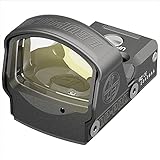
- Model #119688 – DeltaPoint Pro Red Dot Sight, 2.5 MOA Dot and a Matte finish
- Leupold’s Professional-Grade Red Dot Optical System offers unmatched light transmission that’s designed to outperform in the most challenging lighting conditions, industry-leading glare reduction for a clear image in harsh, direct light, and the resolution and clarity that professional guides and shooters demand in the field.
Reality Check: Battery life isn’t class-leading, but the Motion Sensor Technology helps manage power consumption. For hunters who demand the absolute best optical quality, this sight delivers.
Best Budget Option: Sig Sauer Romeo5
Honest Value for Working Hunters: Not every hunter needs a thousand-dollar sight. The Romeo5 provides solid performance at a price that won’t require taking out a second mortgage. I’ve guided hunters with this sight who’ve made clean kills on elk at 150 yards.
Practical Performance:
- MOTAC technology activates with rifle movement
- 40,000-hour battery life reduces maintenance concerns
- 2 MOA dot provides adequate precision for hunting
- Waterproof construction handles field conditions

- ROMEO5 GUN SIGHT – The ROMEO5 1X20mm Red Dot Sight mounts on any platform, and even though it’s small, it’s tough; The solid, lightweight aluminum design gives peak performance & years of service, so you can be on the top of a hunt or shooting competition
- 2 MOA RED-DOT – For those avid shooters who admire classic red dot reticles on their gun sights, the Romeo5 has 2-MOA Red-Dot, which is also adjustable; It provides 10 illumination settings (8 daylight plus 2 NV) for visibility in all light conditions
The Reality: You’ll notice some compromises compared to premium sights, but for most hunting scenarios within 200 yards, the Romeo5 performs admirably. It’s honest equipment that won’t let you down when a game appears.
Understanding Offset Red Dot Applications in Hunting
The Backup Sight Philosophy
An offset red dot isn’t about being tactical—it’s about being prepared. When your primary scope is dialed to 12x for a long shot and a bear appears at thirty feet, you need options. The offset sight provides instant close-range capability without touching your primary optic’s settings.
Hunting Scenarios Where Offset Sights Shine
Thick Timber Hunting:
- Dense cover requires fast target acquisition
- Variable lighting conditions favor illuminated reticles
- Close shots demand wide field of view
Stand Hunting:
- Game may appear at any distance
- Quick transitions between ranges save opportunities
- Silent operation prevents spooking game
Dangerous Game Backup:
- Bear country demands instant target acquisition
- Reliability under stress is non-negotiable
- Simple operation when adrenaline peaks
Mounting Considerations for Hunting Rifles
Height and Clearance
Proper mounting height ensures the offset sight doesn’t interfere with your primary scope’s operation or your rifle’s balance. I prefer mounts that position the red dot at approximately 45 degrees—steep enough for quick acquisition but not so extreme that it feels awkward.
Quality Mount Selection
Essential Features:
- 7075-T6 aluminum construction for durability
- Proper torque specifications to prevent loosening
- Clear access to scope turrets and controls
- Minimal impact on rifle balance
Mounting Philosophy: Your mount is only as strong as its weakest component. Use quality rings, proper torque specifications, and thread locker on all screws. A loose mount is worse than no mount at all.
Balance Considerations
Adding an offset sight changes your rifle’s balance point. Practice extensively with the new configuration to understand how it affects your shooting. The added weight is usually minimal, but the psychological effect can be significant until you adapt.
Dot Size Selection for Hunting
Understanding MOA in Hunting Context
2 MOA Dots:
- Precise for longer shots (100+ yards)
- May be harder to acquire quickly in low light
- Ideal for precision hunting scenarios
3.25 MOA Dots:
- Perfect balance for most hunting applications
- Fast acquisition in challenging light conditions
- Adequate precision for ethical shot placement
6 MOA Dots:
- Excellent for close-range dangerous game
- Very fast acquisition but covers more target area
- Better for brush hunting and thick cover
My Recommendation:
For most hunting applications, a 3.25 MOA dot provides the best compromise between speed and precision. It’s large enough for quick acquisition but small enough for ethical shot placement at reasonable ranges.
Battery Life and Power Management
Field Reliability Priorities
In the backcountry, battery failure isn’t just inconvenient—it can end your hunt. Choose sights with multi-year battery life or solar backup systems. I always carry spare batteries, but I prefer equipment that doesn’t require them.
Temperature Considerations
Montana’s temperature extremes test battery performance. Quality sights maintain brightness and responsiveness even in sub-zero conditions. Cheap electronics fail when you need them most.
Power-Saving Features:
- Auto shut-off: Conserves battery during transport
- Motion activation: Powers up when rifle moves
- Solar backup: Supplements battery power in daylight
- Low battery indicators: Warn before complete failure
Environmental Durability Requirements
Waterproofing Standards
Your offset sight needs to handle everything from morning dew to driving sleet. Look for IPX7 rating minimum—full submersion protection ensures your sight survives any hunting condition.
Impact Resistance
Hunting rifles take abuse. They fall off ATVs, get knocked against rocks, and endure the punishment of mountain hunting. Your offset sight must maintain zero through all of it.
Temperature Cycling
Montana hunts can see forty-degree temperature swings in a single day. Quality optics handle thermal cycling without losing zero or developing internal fogging.
Zeroing and Practice for Hunting Applications
Recommended Zero Distances
25-Yard Zero:
- Good for close-range hunting
- Simple to achieve at most ranges
- Adequate for brush hunting scenarios
50-Yard Zero:
- Versatile for most hunting distances
- Provides good trajectory out to 150 yards
- My preferred zero for general hunting
Practice Drills for Hunters
Transition Drills: Practice moving between your primary scope and offset sight. Start slow, focusing on smooth rifle cant and consistent sight picture. Speed comes with repetition.
Position Training: Practice shooting with the offset sight from various hunting positions—prone, sitting, kneeling, and standing. The sight picture changes with position, so train accordingly.
Low-Light Practice: Most hunting happens in marginal light conditions. Practice with your offset sight during legal shooting hours to understand its capabilities and limitations.
Regional Considerations for Western Hunting
Open Country Applications
Western hunting often involves long shots across open country, but close opportunities still arise. An offset sight provides insurance when game appears unexpectedly close or when thick cover demands fast shooting.
Elevation Effects
High-altitude hunting presents unique challenges. Ensure your offset sight maintains zero across elevation changes and temperature extremes common in mountain hunting.
Wind and Weather
Mountain weather changes quickly. Your offset sight must perform in driving snow, freezing rain, and the bright sun of alpine environments. Quality optics handle these extremes without failure.
Maintenance in the Field
Cleaning and Care
Keep lens cleaning supplies in your pack. A dirty sight is useless when opportunity arrives. I carry lens pens and microfiber cloth in waterproof containers.
Periodic Checks
Verify zero before each hunting season and after any impacts. Check mounting screws for tightness—mountain hunting vibration can loosen hardware over time.
Battery Management
Replace batteries annually, regardless of apparent charge level. Mark replacement date inside your scope caps. Dead batteries always fail at the worst possible moment.
Integration with Primary Optics
Scope Selection Compatibility
Choose primary scopes that work well with offset mounting. Avoid scopes with oversized turrets or unusual dimensions that interfere with offset sight placement.
Magnification Considerations
Your offset sight works best when your primary scope is set to higher magnifications. Plan your scope’s magnification range accordingly—lower powers overlap with offset capability.
Height Matching
Ensure your primary scope height coordinates well with offset mounting. Extreme scope heights can make offset sight use awkward or impossible.
Ethical Hunting Considerations
Shot Placement Responsibility
An offset sight enables faster shots, but shot placement remains your responsibility. Practice extensively to ensure you can make clean, ethical kills with either sighting system.
Range Limitations
Understand your offset sight’s effective range. Most hunting situations requiring offset sights occur within 150 yards, but know your equipment’s capabilities and your personal limitations.
Equipment Reliability
Game animals deserve our respect through reliable equipment and practiced skills. Choose gear that won’t fail when an animal’s life hangs in the balance.
Final Thoughts from the High Country
Your hunting rifle is a tool, and like any tool, it should be configured for the job at hand. An offset red dot isn’t about looking tactical—it’s about being prepared for hunting’s unpredictable nature. When that bull elk appears in thick timber or a black bear emerges at close range, you’ll be grateful for the preparation.
The Bottom Line: Choose quality equipment, practice extensively, and understand your limitations. The wilderness rewards preparation and punishes shortcuts. Your offset sight should enhance your hunting capability, not become a liability.
Respect the Game: Fast shots enabled by offset sights still require precise placement. Practice enough to ensure clean, ethical kills regardless of which sighting system you use. The animals we pursue deserve nothing less than our best effort and equipment.
Ready to explore more ways to enhance your hunting success? Discover our comprehensive guides on rifle setup, ethical hunting practices, and wilderness skills at Moosir.com. Remember: respect the game, respect the land, respect yourself.