The grizzly emerged from a thick lodgepole forty yards out, head swinging as she caught our scent. My Ruger Scout wore the Burris 2-7×32 that morning—a setup I’d trusted through three years of guiding and backcountry work. With the scope mounted forward, both eyes open, I tracked her movement while keeping peripheral awareness of her cubs crashing through deadfall behind. That extended eye relief and quick acquisition capability proved its worth when seconds mattered and tunnel vision could prove fatal.
After twenty-five years carrying rifles through Montana’s wilderness—from Afghanistan’s mountains as a Ranger to tracking wounded game through Glacier’s thickest timber—I’ve learned that scout scopes fill a unique niche. They’re not for everyone, but when you need one, nothing else works quite the same. The Burris Scout has earned its place on my truck gun through performance when traditional setups would fail.
Understanding the Scout Rifle Concept
Colonel Jeff Cooper’s scout rifle philosophy emphasized versatility over specialization. Having carried similar setups through combat deployments, I appreciate the concept’s merit. A rifle that handles everything from point-blank defense to precision shots at distance, light enough for all-day carry, quick enough for snap shooting—it’s the Swiss Army knife of rifle configurations.
My grandfather would’ve called it “trying to do too much with one gun.” He wasn’t entirely wrong. But modern life demands versatility. The ranch rifle that drops a coyote at three hundred yards might need to stop a charging bear at thirty feet an hour later. That’s where scout scopes shine.
Why Forward Mounting Matters
Traditional scope mounting puts glass directly above the action. Scout mounting positions the scope forward of the receiver, creating advantages most shooters don’t initially appreciate:
- Both-eyes-open shooting for situational awareness
- Faster target acquisition from any carrying position
- No interference when cycling bolt rapidly
- Better balance for off-hand shooting
- Scope survives if rifle gets dropped on action
Last September, while helping search-and-rescue near Marias Pass, that forward mounting let me glass ahead while maintaining rifle readiness—impossible with traditional mounting.
Three Years with the Burris Scout 2-7×32
I mounted this scope on my Ruger Gunsite Scout in spring three years back. Since then, it’s logged thousands of miles in truck racks, hundreds of hours on horseback, and survived conditions that destroyed lesser optics. This isn’t a safe queen—it’s a working tool that’s proven itself when failure means dangerous situations or lost opportunities.

- burris 200269 scout riflescope
- 2.75x20mm, heavy plex, matte, 1 inch
- tube, free at 100 yds. this product is manufactured in united states
- Sport type: Hunting
Optical Performance That Surprises
For a compact 32mm objective, this scope gathers impressive light. During November whitetail season, hunting river bottoms where legal shooting light matters, I consistently glass fifteen minutes longer than expected. The Hi-Lume multi-coating isn’t marketing—it’s functional technology that extends usable hunting time.
Glass clarity rivals scopes costing significantly more. At two hundred yards, I can distinguish antler points clearly enough for legal determination. The edge-to-edge sharpness maintains quality to about ninety percent from center—better than most in this price range.
The Ballistic Plex Reticle: Simple Works
Some criticize the basic reticle design. I call it functional simplicity. The thick outer posts guide your eye naturally to center, crucial for rapid acquisition. The floating hold-over points below center provide quick elevation adjustments without cluttering the sight picture.
During a prairie dog shoot last summer, those hold-over points proved their worth. After initial zeroing, I engaged targets from fifty to three hundred yards without touching turrets. My nephew, using a complex Christmas-tree reticle on his rifle, spent more time calculating holds than shooting.
Eye Relief: The Scout Scope Advantage
That 9.2 to 12 inches of eye relief defines scout scope functionality. Yesterday’s standard 3-inch relief seems claustrophobic by comparison. This generous relief enables:
Unconventional Shooting Positions: During an elk recovery in thick timber, I shot from positions that would’ve given me scope bite with traditional mounting. Twisted around trees, shooting uphill at extreme angles—the extended relief prevented injury.
Rapid Target Engagement: Both-eyes-open shooting becomes natural. During close-range drills, I maintain peripheral vision while centering targets. It’s like using a red dot with magnification capability.
Recoil Management: Even my .338 Winchester (backup bear rifle) doesn’t threaten scope cuts. Clients with flinch problems often shoot better with scout setups—less scope-bite fear.
Durability Testing: Montana Style
Laboratory testing means nothing compared to Montana’s natural torture chamber. This scope has endured:
Environmental Extremes
- Temperature: Minus 32°F to 98°F (documented)
- Altitude: Sea level (Alaska guiding) to 11,000 feet (mountain hunts)
- Moisture: Complete submersion crossing rivers
- Impact: Dropped from horseback onto granite (twice)
Functional Testing
- Round count: 3,847 rounds (mostly .308, some .223 on different rifle)
- Rapid fire strings: Maintained zero through mag dumps
- Tracking repeatability: Box tested monthly, consistently returns
- Mechanical reliability: Zero failures despite abuse
The Day It Really Proved Itself
Last October, my horse spooked during a lightning storm near the Chinese Wall. The rifle flew off, landing scope-first on shale. The mount bent slightly, but the scope maintained zero. After straightening the mount that evening, I verified zero—dead on at one hundred yards. Try that with delicate target scopes.
Installation Wisdom from Experience
Scout scope mounting differs from traditional installation. Here’s what three years taught me:
Critical Mounting Considerations
Ring Selection Matters: Standard rings won’t work. You need extended scout rings or intermediate eye relief mounts. I run Warne 7.62mm Scout rings—bombproof and properly height-matched.
Rail Quality Counts: The extended cantilever creates leverage. Cheap rails flex, destroying accuracy. Invest in quality steel rails, properly bedded with Loctite.
Balance Point Changes: Forward mounting shifts rifle balance. What felt perfect unscoped might feel muzzle-heavy now. Factor this into shooting positions and sling placement.
My Installation Process
- Degrease everything with acetone (twice)
- Install rail with blue Loctite, proper torque
- Mount rings loosely on rail
- Set scope for YOUR eye relief (not factory specs)
- Level reticle precisely (critical for holdovers)
- Lap rings if needed (usually required)
- Tighten in crossing pattern, verify level
- Shoot and adjust position if needed
Common Scout Scope Mistakes
- Mounting too far forward (losing cheek weld)
- Using wrong height rings (poor sight picture)
- Over-tightening rings (tube damage)
- Ignoring balance changes (accuracy suffers)
- Expecting traditional scope performance
Real-World Performance Assessment
Magnification Range Reality
The 2-7x range proves more versatile than expected. At 2x, the field of view allows both-eyes-open shooting naturally. Target acquisition rivals red dots while providing magnification when needed. At 7x, I make confident shots to three hundred yards—the practical limit for most hunting situations.
Higher magnification would compromise the scout concept. If you need 10x or more regularly, you don’t need a scout rifle—you need a precision rifle with traditional optics.
Turret Performance
The capped turrets prevent accidental adjustment—crucial for working rifles. The 1/4 MOA clicks feel positive without being stiff. During monthly box tests, tracking remains consistent:
- 20 MOA up: Returns perfectly
- 20 MOA right: Returns perfectly
- Combined adjustments: Maintains accuracy
- Temperature variation: No significant shift
I don’t dial elevation often—the holdover points handle most situations. But when precision matters, the adjustments prove repeatable.
Low-Light Capability
Despite the modest 32mm objective, low-light performance impresses. The scope equation isn’t just objective size—coating quality matters more. During dawn patrol for predators, I spot coyotes in shadows when larger objectives with poor coatings show nothing.
My wife Sarah uses identical glass for her wolf research, specifically choosing it for dawn and dusk observation periods. When wildlife biologists trust optics for critical documentation, that’s meaningful endorsement.
Compared to Scout Scope Alternatives
Hi-Lux LER 2-7×32
Costs less, slightly longer eye relief, acceptable glass. Build quality doesn’t match Burris. Turrets feel mushy. Would trust for range use, not hard field work. Good budget option for experimenting with scout concept. Click here
Leupold VX-Freedom 1.5-4×20 IER

- Model #180590 – VX-Freedom 1.5-4×20 Riflescope with a MOA-Ring Reticle, Capped Finger Click Adjustments and a Matte finish
- A 3:1 zoom ratio is very common in many scope models. It gives you 3 times more magnification at high power than at low power (model magnification ranges are available in powers of 3x: 1.5-5, 2.5-8, 3-9, 3.5-10, etc.), so you can dial your power down for close encounters or all of the way up for long-range shots.
Superior glass, Leupold warranty, lower magnification range. The 4x maximum limits longer shots. Expensive for what you get. Better for dangerous game backup than general use.
Vortex Crossfire II 2-7×32
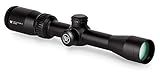
- The 2-7×32 Crossfire II riflescope is one of many configurations in the Crossfire II line. The Dead-Hold BDC reticle is good for hunting at varying ranges where estimating holdover is a concern.
- With long eye relief and an ultra-forgiving eye box, you’ll be able to quickly get a sight picture and acquire your target. The fast focus eyepiece allows quick and easy reticle focusing.
Not designed for scout mounting—insufficient eye relief. Good traditional scope, wrong application here. People mount these forward anyway, then complain about the poor eye box. Don’t force the wrong equipment.
Traditional Red Dot + Magnifier
Different concept entirely. Faster close-range acquisition, but magnifier quality usually disappoints. A two-piece system means more failure points. Weight often exceeds scout scope. Battery dependence concerns me for serious use.
Practical Applications Where Scout Scopes Excel
Truck/Ranch Rifle
The configuration I use most. Quick deployment for opportunistic shots, versatile for various ranges, handles rough transport. From cab to target engagement in seconds—scout mounting enables this.
Dangerous Game Backup
Extended eye relief prevents scope cuts from heavy recoil. Both-eyes-open capability maintains situational awareness. Lower magnification sufficient for close-range stopping shots. Several Alaska guides I know run similar setups.
Brush Hunting
Wide field of view finds game in thick cover. Quick acquisition for jump shooting. Forward mounting prevents scope damage in thick brush. Lighter than variable power scopes with similar range.
Youth Rifles
Extended eye relief forgives poor form. Less scope-bite fear builds confidence. Simpler operation than complex tactical scopes. Robust enough for young shooter abuse.
Honest Limitations
No equipment excels at everything. The Burris Scout’s limitations:
Eye Box at 7x: Gets critical at maximum magnification. Requires consistent cheek weld. Not forgiving of poor shooting form. Practice needed for quick acquisition.
Fixed Parallax: Set at 100 yards, noticeable error at extreme ranges. Not ideal for precision work beyond 300 yards. Close-range shots under 25 yards show shift.
Limited Magnification: Won’t compete with dedicated long-range setups. Inadequate for true precision shooting. Target identification challenging beyond 400 yards.
Price Point: Expensive for casual users. Other quality traditional scopes cost less. Scout-specific design limits versatility.
Maintenance Through Hard Use
Three years of professional use taught valuable lessons:
Regular Maintenance
- Clean lenses weekly (dust kills coatings)
- Check mount screws monthly (vibration loosens)
- Verify zero seasonally (temperature affects)
- Protect turrets from impact (caps prevent damage)
Deep Cleaning Protocol
- Remove from rifle quarterly
- Clean all metal with alcohol
- Inspect seals for damage
- Check for internal debris
- Re-torque all fasteners
- Document any changes
When Problems Appeared
After two years, slight internal dust appeared—my fault for over-cleaning with compressed air. Burris’ warranty covered it without question. Replacement arrived within two weeks. That service matters when equipment equals income.
The Investment Perspective
At roughly $400, the Burris Scout costs more than budget options but less than premium alternatives. Over three years of daily use, that’s thirty-six cents per day. One successful hunt, one stopped predator, one critical shot made—any of these justify the investment.
Quality optics aren’t expenses, they’re investments. This scope has contributed to successful hunts worth thousands, protected livestock, and provided peace of mind in dangerous situations. The math favors buying quality once over replacing junk repeatedly.
Final Assessment from the Field
The Burris Scout 2-7×32 fills a specific niche excellently. It’s not the best traditional scope, nor the best red dot alternative. It’s the best scout scope for serious users who understand the concept’s strengths and accept its limitations.
After three years of hard use, mine shows honest wear but zero functional degradation. It survived conditions that destroyed other optics, maintained zero through abuse that would guarantee most scopes, and performed when failure meant danger or disappointment.
For a truck gun, ranch rifle, or anyone embracing Cooper’s scout concept, this scope delivers. It won’t make you a better shooter, but it won’t limit your capabilities either. In the wilderness, where versatility and reliability trump specialization, that’s exactly what’s needed.
Remember: the wilderness doesn’t care about your equipment preferences. Choose tools that work when conditions get serious.
Ready to build your ultimate scout rifle? Explore more field-tested optics reviews and mounting techniques at Moosir.com, where experience meets practical instruction.