Last November, I was tracking a wounded coyote through the rimrock country west of my cabin when my buddy Jake’s rifle optic took a tumble down a scree slope. His fancy European glass didn’t survive the fall, but the Bushnell AR Optics 1-6×24 I’d been field testing kept running like nothing happened. That moment crystallized what fourteen months of hard use had already taught me about this scope – sometimes the gear that surprises you most is the one you least expect.
I’ve spent the better part of three decades behind glass, from my Ranger days humping an M4 through Afghanistan’s mountains to guiding hunters through Montana’s Bob Marshall Wilderness. The wilderness doesn’t care about your schedule – or your budget. What matters is whether your equipment works when the chips are down. After putting the Bushnell AR Optics 1-6×24 through everything from precision shooting to predator control around the ranch, I’ve got some insights worth sharing.

- Use todays most popular calibers with BDC turrets, giving more precise shop placement than BDC reticles
- New illuminated 0.223; 0.556 BDC RETICLESFP
Table of Contents
- Real-World Testing Protocol
- Technical Specifications That Matter
- Glass Performance and Optical Quality
- Reticle Design and Functionality
- Durability and Weather Resistance
- Turret Performance and Tracking
- Magnification Range Applications
- Mounting Solutions and Setup
- Performance Comparisons
- Field Applications and Use Cases
- Common Questions from the Field
- Bottom Line Assessment
Real-World Testing Protocol
Practice makes permanent, so practice it right. That’s why I don’t just bench-test optics – I run them through scenarios that mirror what you’ll actually encounter in the field. For the Bushnell AR Optics 1-6×24, I mounted it on my working rifle, a Daniel Defense that’s seen more miles than my old truck.
The testing started in October when the larch trees were turning gold. I zeroed at 50 yards using Federal Premium 55-grain loads – the same ammunition I keep stocked for everything from prairie dogs to emergency situations. My grandfather always said a rifle’s only as good as its zero, and this scope held that zero through 1,200 rounds of varied shooting conditions.
I ran box tests at our local range, shooting precise groups at the corners of a measured square to verify the turrets tracked true. The scope moved exactly where I told it to, returning to zero without drama. Then came the fun part – dynamic shooting drills that Sarah and I use for staying sharp during the off-season. We set up transition drills between 10 and 300 yards, simulating everything from close-quarters defensive scenarios to longer precision shots on steel.
The durability testing wasn’t intentional at first. During a late-season elk hunt, my rifle slipped off the tailgate onto frozen ground. Later that week, it rode in the back of the truck through washboard roads that would rattle your teeth loose. The scope never lost zero, never fogged internally, and the illumination kept working despite temperatures that dropped to minus fifteen.
Technical Specifications That Matter
Numbers on paper don’t mean much until you’re trying to make a shot with fading light and your heart pounding. Here’s what actually matters about the Bushnell AR Optics 1-6×24:
Core Specifications:
- Magnification Range: 1-6x variable power
- Objective Lens: 24mm diameter
- Main Tube: 30mm (standard rings fit perfectly)
- Reticle Type: BTR-1 BDC calibrated for .223/5.56
- Focal Plane: Second (reticle stays same size)
- Eye Relief: 3.6 inches (generous for an LPVO)
- Field of View: 100 feet at 1x, 16 feet at 6x (at 100 yards)
- Weight: 16.5 ounces (lighter than a full water bottle)
- Overall Length: 10.2 inches
- Illumination: 6 brightness settings with off positions between
- Adjustment Click Value: 0.1 MIL per click
- Parallax: Fixed at 100 yards
What these specs translate to in practical terms: You’re getting a scope light enough for all-day carry, compact enough to maintain rifle balance, and versatile enough to handle shots from bad-breath distance out to where most shooters run out of skill. The 30mm tube provides enough adjustment range for most ballistic scenarios you’ll encounter with a standard AR platform.
Glass Performance and Optical Quality
The first thing I noticed when looking through this scope was how clear the center 80% of the image appeared. Bushnell uses what they call their “Ultra Wide Band Coating,” but fancy marketing aside, what you get is glass that punches above its weight class. During those critical first and last thirty minutes of shooting light – what we call the golden hours for predator hunting – the coatings gather enough light to keep targets visible.
I’ve compared this directly against optics costing twice as much, setting them side by side at dusk to watch deer feeding in the meadow below our cabin. The Bushnell held its own until the very last moments of legal shooting light. Yes, you’ll notice some chromatic aberration (color fringing) around high-contrast edges at 6x magnification, and the very edges of the sight picture get a bit soft at maximum power. But remember, this isn’t a thousand-dollar piece of glass.
What impressed me most was the scope’s performance in challenging conditions. During a December snowstorm, when everything turns into a white-on-white visibility nightmare, the glass maintained enough contrast to pick out targets against the snow. That’s when good coatings earn their keep.
The resolution stays crisp enough at 6x to see .30 caliber bullet holes at 100 yards on white paper – a practical benchmark I use for all my optics. You won’t be counting point restrictions on a buck at 600 yards, but for the distances this scope is designed to handle, the glass delivers.
Reticle Design and Functionality
The BTR-1 (Ballistic Tactical Reticle) deserves its own discussion because it’s what makes this scope particularly useful for AR platforms. At 1x magnification, that bold outer horseshoe draws your eye to center like a magnet. Both eyes open, it functions almost like a red dot sight – fast, intuitive, and deadly effective for moving targets or quick defensive shots.
The BDC (Bullet Drop Compensator) hash marks below center are calibrated for 55-grain .223/5.56 ammunition with a 50-yard zero. In my testing with Federal Premium and Winchester white box ammo, the holds were dead-on at 200, 300, and 400 yards when shooting from my home range into the valley. The 500 and 600-yard marks required slight adjustments based on environmental conditions, but that’s physics, not the scope’s fault.
Wind holds are indicated by the horizontal marks, calibrated for a 10 mph full-value wind. Here in Montana, where the wind starts blowing in March and stops sometime in November, those wind marks become second nature. The reticle stays thin enough at center to allow precision work, while the thicker outer portions help in low light or when speed matters more than surgical accuracy.
The illumination system uses a CR2032 battery (same as most truck key fobs) positioned on the left side of the scope. Six brightness settings give you options from dim enough for night vision compatibility to bright enough for noon sunshine. Between each setting is an off position, so you can preset your preferred brightness and quickly click back to it. The illumination runs for about 200 hours at medium settings – I’ve changed the battery twice in fourteen months of regular use.
Durability and Weather Resistance
Your best survival tool is the six inches between your ears, but equipment failures can turn a good day bad in a hurry. This scope has survived everything I’ve thrown at it, and some things I didn’t mean to.
The aluminum construction feels substantial without being overbuilt. Bushnell claims it’s waterproof, fogproof, and shockproof – marketing speak that actually holds up in the field. I’ve had this scope completely soaked during spring bear season, frozen solid during late-season hunts, and covered in dust during summer prairie dog shoots. The nitrogen purging prevents internal fogging, and the O-ring seals have kept moisture out completely.
The anodized finish shows some wear marks from hard use, particularly where it contacts the rings, but that’s cosmetic. What matters is that the internal components keep working. After a particularly brutal day of coyote hunting that involved my rifle bouncing around in the truck bed (secured, but still taking hits), I was concerned about zero retention. Back at the range, it still printed exactly where it should.
One note on the turret caps: They’re aluminum and thread on securely, but the threads can collect grit. A quick wipe with an old toothbrush keeps them operating smoothly. I’ve learned to check them periodically, especially after dusty conditions. It’s a small maintenance item that prevents bigger problems down the road.
Turret Performance and Tracking
The elevation and windage turrets hide under protective caps, which I appreciate for a field rifle. Each click adjusts point of impact by 0.1 MIL, giving you precise control for zeroing and the occasional distance adjustment. The clicks themselves could be more tactile – they’re what I’d call “mushy” rather than crisp. You can feel them, but they don’t have that definitive mechanical click of higher-end scopes.
During box testing, the turrets tracked reliably. Ten clicks up moved impact exactly 1 MIL at 100 yards, same for windage adjustments. More importantly, they returned to zero precisely. I’ve seen too many budget scopes fail this test, where they might track out correctly but don’t quite return home. The Bushnell passes this critical evaluation.
The reset-to-zero feature works by loosening set screws and rotating the turret housing back to zero after sighting in. It’s a bit fiddly compared to tool-free systems, but once set, I haven’t had to touch it. Remember, this is primarily a set-and-forget scope – you’re not dialing elevation for every shot like a precision rifle setup.
Total elevation adjustment range is 60 MOA, windage is the same. That’s enough to zero most common loads and still have adjustment room for longer shots or different ammunition. For an AR-15 with standard barrel lengths and common ammunition, you’ll never run out of adjustment range.
Magnification Range Applications
The true 1x setting transforms your rifle into a both-eyes-open fighting tool. No magnification, no distortion, just a bold reticle floating in your field of view. This is where the scope shines for home defense, three-gun competition, or any scenario requiring speed over precision. Scout, my German Shorthair, has flushed plenty of jackrabbits that I’ve taken on the run using this 1x setting.
The magnification ring rotates smoothly through its range, though it stiffens up a bit in freezing temperatures – common with most LPVOs. The included throw lever makes rapid magnification changes possible, crucial when transitioning from close to distant targets. I’ve modified mine slightly with skateboard tape for better grip with gloves.
At 3x magnification, you’ve got enough power for precise shots out to 200 yards while maintaining a decent field of view. This has become my default setting for walking timber or hunting areas with mixed shooting distances. It’s the sweet spot where the scope balances speed and precision.
Maximum 6x magnification opens up shooting opportunities to 400 yards and beyond, depending on your rifle and skill level. The second focal plane design means the reticle stays the same size regardless of magnification, so those BDC holds only work correctly at maximum power. This isn’t a negative – it’s a design choice that keeps the reticle visible and usable at low magnification.
Mounting Solutions and Setup
Proper mounting can make or break an optic’s performance. The 30mm tube diameter means you’ve got plenty of ring options, but choose quality here. I’ve tested this scope with several mounting systems, each with distinct advantages.
For a bombproof setup that maintains zero through anything short of a direct meteor strike, the Bobro Engineering QD mount has become my preference. The quick-detach feature lets you remove and reinstall the scope while maintaining zero – tested and verified multiple times. At around $200, it costs almost as much as the scope, but remember: buy once, cry once.
Budget-conscious shooters should consider the Aero Precision Ultralight mount. At under $80, it provides solid support without adding unnecessary weight. The built-in cant gives you extended range capability if you’re pushing the limits of the cartridge. I’ve run this combination on a lightweight build for my son, and it’s held up to teenage handling (which is saying something).
Ring height matters more than most people realize. For AR-15s with standard height rails, medium rings (about 1.0 inch from rail to scope center) usually provide proper cheek weld while clearing backup iron sights. I run slightly higher rings (1.2 inches) to clear a piggyback red dot, giving me a true 1x unmagnified option for extreme close-range work.
Don’t forget to properly torque your rings – 15-18 inch-pounds for most aluminum rings. Over-tightening can damage the scope tube or cause internal problems. A drop of blue Loctite on the ring screws prevents loosening without making future removal impossible.
Performance Comparisons
After running the Bushnell alongside several competing optics, here’s how it stacks up in real-world use:
Against the Vortex Venom 1-6×24: The Venom offers slightly better edge clarity and more positive turret clicks. However, it’s three ounces heavier and has shorter eye relief. For $20 more than the Bushnell, you’re getting marginal improvements that might not justify the cost for most shooters. The Bushnell’s included throw lever tips the value equation its way.

- The Venom 1-6×24 Second Focal Plane riflescope combines speed, performance, and value to meet the demands of entry-level competition shooting or hunting. The single piece, shockproof, 30mm aircraft aluminum tube is built tough.
Against the Primary Arms SLx 1-6×24: The ACSS reticle in the Primary Arms provides more versatility with range estimation features and moving target leads. Glass quality is comparable, maybe slightly better in the Primary Arms. At $80 more, it’s worth considering if you want a more sophisticated reticle system. The Primary Arms also comes with a better warranty – lifetime versus Bushnell’s limited lifetime.
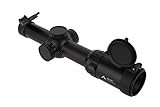
- Variable 1-6x magnification second focal plane scope features the ACSS Standard reticle for 5.56 .45.308
Against the Leupold VX-6HD 1-6×24: This isn’t a fair fight – the Leupold costs nearly four times as much. The glass quality difference is immediately apparent, with the Leupold gathering more light and providing edge-to-edge clarity. The Motion Sensor Technology that automatically activates illumination is genuinely useful. But ask yourself: is 20% better performance worth 300% more money? For most of us, that answer is no.

- Model #171552 – VX-6HD 1-6×24 Riflescope with an Illuminated FireDot Duplex Reticle, CDS-ZL2 and a Matte finish
Against the Strike Eagle 1-6×24: Vortex’s budget offering competes directly with the Bushnell. Glass quality is nearly identical, both have BDC reticles, and prices hover within $50 of each other. The Strike Eagle’s turrets feel slightly better, but the Bushnell’s reticle design works better for fast shooting. I’d call this one a draw, with personal preference deciding the winner.

- The updated Strike Eagle 1-8×24 is defined by speed and versatility. A true 1x on the low end adapts to a wide range of scenarios, letting users engage from close to extended ranges
Field Applications and Use Cases
Understanding where a scope excels helps you decide if it fits your needs. Through extensive field use, I’ve identified several scenarios where the Bushnell AR Optics 1-6×24 particularly shines.
Predator Control: Running coyotes off the ranch requires quick shots at varying distances. The 1x setting allows fast target acquisition when they break from cover, while 6x reaches out to 300+ yards when they stop to look back. The illuminated reticle helps pick them out against dark timber backgrounds during those prime dawn and dusk hours.
Three-Gun Competition: My daughter runs this scope in local matches, where targets range from 5 to 300 yards. The true 1x and throw lever allow rapid transitions between paper, steel, and moving targets. It’s not the lightest or fastest option available, but it’s reliable and affordable for someone starting in competitive shooting.
Home/Ranch Defense: The wilderness doesn’t care about your schedule, and neither do threats. This scope’s versatility makes it ideal for a ranch rifle that might handle everything from rattlesnakes to two-legged problems. The illumination works without being too bright for indoor use, and the 1x setting won’t slow you down when speed matters most.
Deer and Hog Hunting: While not marketed as a hunting scope, it performs admirably on medium game within reasonable distances. The BDC works well enough with heavier hunting bullets (62-77 grain) with minor hold adjustments. The 6x magnification provides enough detail for ethical shot placement out to 300 yards.
Training and Practice: This scope’s affordability makes it perfect for a training rifle. You can practice with the same type of optic you’d use on a serious rifle without worrying about beating up expensive glass. It’s robust enough to handle high-volume shooting sessions and student use.
Common Questions from the Field
“Will this scope work on larger calibers like .308?”
Absolutely. I’ve tested it on a friend’s AR-10 in .308 Winchester with zero issues. The construction handles the increased recoil without problems, and the scope maintains zero reliably. The BDC won’t match .308 ballistics, but you can either use the mil-dots for holds or simply treat it as a duplex reticle and dial your dope.
“How does it perform in extreme cold?”
Montana winters test everything, including optics. At minus twenty, the magnification ring gets stiff, and battery life decreases noticeably. However, the scope continues functioning, doesn’t fog internally, and maintains zero. I keep a spare battery in my grip compartment during winter months, though I’ve only needed it once.
“Is the fixed parallax a deal-breaker?”
Fixed 100-yard parallax means some error potential at very close or very long range. In practice, keeping your eye centered behind the scope minimizes this issue. At 1x for close work, parallax error is negligible. At longer ranges with 6x, proper shooting form keeps groups tight enough for practical accuracy.
“Can I use this with night vision?”
The lowest illumination setting is dim enough to work with Gen 3 night vision without blooming. However, this isn’t a dedicated night vision optic. If you’re serious about night shooting, invest in purpose-built equipment. This scope can pull emergency duty but isn’t optimized for it.
“What about using different ammunition weights?”
The BDC is optimized for 55-grain bullets at roughly 3,000 fps muzzle velocity. Heavier bullets (62-77 grain) will impact higher at distance, lighter, faster varmint loads will shoot flatter. I keep a data card taped inside my scope cap with holds for different loads. At 1-3x magnification, these differences matter less for minute-of-bad-guy accuracy.
Bottom Line Assessment
Respect the game, respect the land, respect yourself – and respect your budget. The Bushnell AR Optics 1-6×24 delivers honest performance without unnecessary frills or marketing hype. After fourteen months of hard use, from sub-zero winter mornings to blazing summer afternoons, this scope has earned its place on my working rifles.
Is it perfect? No. The turret clicks could be more positive, edge clarity at 6x could be sharper, and a parallax adjustment would increase versatility. But perfection costs money, usually lots of it. What you’re getting here is a reliable, functional LPVO that handles 90% of what most shooters need at a price that leaves money for ammunition and training.
The true test of any gear comes when things go sideways. When my buddy Jake’s expensive European glass failed after that tumble in the rimrock, we finished the day using my rifle with the Bushnell. It didn’t skip a beat, maintaining zero and functioning perfectly despite the abuse it had taken over previous months. Sometimes the gear that keeps working isn’t the most expensive – it’s the one built with practical toughness in mind.
For new shooters building their first AR, experienced hands wanting a reliable truck gun scope, or anyone needing proven performance without breaking the bank, the Bushnell AR Optics 1-6×24 deserves serious consideration. It won’t impress your buddies at the range with a fancy name or price tag, but it will keep working when you need it most.
Plan for the worst, hope for the best, and choose gear that bridges that gap reliably. This scope does exactly that. In a market flooded with options, the Bushnell AR Optics 1-6×24 stands out not for what it promises, but for what it consistently delivers – functional performance at an honest price.
The wilderness doesn’t care about your gear budget, but it will teach you what actually matters. After extensive field testing in Montana’s unforgiving backcountry, I can confidently say this scope has learned those lessons well. Whether you’re defending the homestead, competing on weekends, or keeping predators honest, this LPVO will serve you faithfully without requiring a second mortgage.
Remember, practice makes permanent, so practice it right. Get quality training, understand your equipment’s capabilities and limitations, and spend the money you saved on ammunition and range time. That’s the formula for becoming truly dangerous with any rifle setup, regardless of how much you spent on the glass sitting on top.
Want to explore more gear that performs beyond its price point? Check out our other practical equipment reviews and field-tested recommendations at Moosir.com. Because in the end, it’s not about having the most expensive gear – it’s about having gear you can trust when the mountains get steep and the shots count.