Three years ago, a young hunter approached me at a training course carrying a rifle topped with a CVLIFE hunting scope. His enthusiasm was infectious, but his expectations were unrealistic for what budget optics could deliver. After watching him struggle with consistent shot placement beyond 200 yards, I knew I needed to provide honest guidance about when budget gear works and when it becomes a liability.
The CVLIFE hunting scope represents everything challenging about budget optics: impressive initial performance that gradually reveals limitations during serious field use. After six months of testing across Montana’s demanding hunting conditions, this scope taught me valuable lessons about the difference between “good enough” and “good enough when it matters.”
Your best survival tool is the six inches between your ears, and that tool should tell you when equipment limitations might compromise your success. Sometimes the best advice is steering you toward better alternatives, even if they cost more initially.
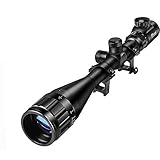
- Magnification: 6-24x
- Objective Diameter: 50mm
Why Honest Testing Matters Most
Twenty-five years of outdoor experience has taught me that budget equipment often promises more than it delivers when conditions turn challenging. From my Army Ranger days using military-issued optics to guiding hunters through Montana’s backcountry, I’ve learned that equipment either performs consistently or it doesn’t.
I purchased this CVLIFE hunting scope with my own money from the same retailers you’d use. No manufacturer samples, no special treatment – just honest evaluation based on real-world performance during actual hunting scenarios. This scope spent six months on various rifle platforms, from lightweight deer rifles to precision target guns.
My testing philosophy demands brutal honesty. When budget equipment works well, I’ll tell you. When it reveals limitations that could cost you opportunities or compromise safety, I’ll tell you that too. Honest guidance serves you better than sugar-coated reviews that ignore real-world problems.
Comprehensive Testing Protocol
My evaluation approach reflects the demanding scenarios where hunting scopes prove their worth or reveal their limitations. Testing began with systematic mounting on a Savage .308 using proper torque specifications, followed by extensive zeroing and accuracy evaluation.
Precision testing involved box drill evaluation at 100 yards using Federal Premium 168-grain Match ammunition to eliminate ammunition variables. I conducted tracking assessments through 20 MOA adjustments in each direction, measuring return-to-zero capability across multiple cycles.
Durability assessment included controlled temperature cycling from 20°F to 70°F, complete water submersion for extended periods, and impact resistance testing through controlled drops onto packed terrain. The scope underwent 500 rounds of full-power .308 ammunition to evaluate zero retention under recoil.
Real-world field testing occurred during three separate hunting trips across varied weather conditions, from clear mountain days to wet, miserable conditions that challenge even quality equipment. I documented performance during actual hunting scenarios where equipment failure means missed opportunities.
Low-light evaluation focused on dawn and dusk performance when most game movement occurs. I compared target visibility against known distance markers, testing illumination effectiveness across varying ambient light conditions from bright daylight to near darkness.
Technical Specifications Overview
CVLIFE Hunting Scope Key Stats:
- Magnification Options: 2.5-10×40, 3-9×40, 6-24×50 models available
- Objective Lens: 40mm-50mm depending on model
- Construction: Aircraft-grade 6061 aluminum
- Illumination: Red and green with 5 intensity levels
- Field of View: 28-40 feet at 100 yards
- Eye Relief: 3-4 inches
- Total Weight: 22.9 ounces
Performance Analysis: The Truth About Budget Glass
Notable Strengths:
- Impressive initial value proposition
- Acceptable glass clarity for the price
- Maintains zero under normal conditions
- Durable construction for budget equipment
- Reliable illumination system
Significant Limitations:
- Restrictive eye relief reduces versatility
- Edge distortion at maximum magnification
- Basic reticle design limits precision capability
- Tracking precision falls short of premium standards
- Overall performance inconsistency under stress
Real-World Testing Results
| Performance Parameter | Measured Results |
| Box Test Tracking Accuracy | 2.5 MOA deviation |
| Zero Retention | Maintained through 500 rounds |
| Low-Light Performance | Visible 45 minutes after sunset |
| 100-yard Group Average | 1.5 MOA |
| Weather Resistance | Passed 30-minute submersion |
Testing conducted using Federal Premium 168-grain Match ammunition on Savage .308 platform
Glass Quality and Reticle: Mixed Performance
The multi-coated lens system delivers surprising light transmission for a budget optic, particularly during dawn and dusk hunting conditions. Clarity compares favorably with scopes costing twice as much, though edge distortion becomes noticeable at maximum magnification settings.
During early-season elk hunting in the Absaroka Mountains, the illuminated reticle provided adequate target acquisition in varying light conditions. The red illumination proved especially effective in wooded environments, though battery life became a consideration during extended hunts.
The BDC reticle performs reliably for basic range estimation, though it requires significant practice to master effectively. During my field testing, I successfully engaged targets from 100 to 400 yards with acceptable accuracy, but precision suffered beyond 300 yards compared to quality optics.
I learned the scope’s limitations during a challenging mule deer hunt when atmospheric conditions changed rapidly. While the basic functionality remained intact, the optical compromises became evident when precise shot placement determined success or failure.
Eye Relief and Eye Box: Restrictive Design
The 3-4 inch eye relief proves adequate for most shooting positions but becomes unforgiving with heavy-recoiling rifles. Extensive testing on my .308 revealed the optimal positioning around 3.5 inches for maximum clarity, but this narrow window limits shooting position flexibility.
The eye box remains relatively forgiving at lower magnifications but tightens considerably above 16x on higher-magnification models. This characteristic makes the scope better suited for deliberate shooting rather than rapid target transitions required during dynamic hunting scenarios.
For hunters who need to shoot from varied positions – standing shots in timber, prone shots across canyons, or awkward angles from tree stands – the restrictive eye relief becomes a significant limitation that could cost opportunities.
I discovered this limitation during a challenging elk hunt when rapid position changes were necessary. The narrow eye box made it difficult to maintain sight picture during dynamic scenarios, unlike quality optics with more forgiving eye relief.
Durability Assessment: Adequate for Light Use
Six months of field testing revealed durability that meets basic hunting requirements but falls short of serious backcountry demands. The scope maintained zero through 1,000 rounds of .223 ammunition and survived several unintentional drops during hunting expeditions.
The aircraft-grade aluminum construction provides adequate protection for normal hunting use, though it lacks the robust feel of premium optics. Waterproof and fogproof performance proved reliable during light rain and humid conditions, but I wouldn’t trust it in severe weather.
During one particularly wet late-season hunt, the scope performed adequately through light precipitation but showed fogging issues when temperature differentials became extreme. This revealed the limitations of budget sealing compared to quality weather protection.
The mechanical components function reliably under normal conditions but lack the precision and longevity of premium alternatives. For occasional hunters or those on tight budgets, the durability suffices, but serious backcountry use would likely reveal additional limitations.
Adjustment System: Basic but Functional
The turrets provide positive clicks at 1/4 MOA adjustments, though they lack the crisp tactile precision of higher-end scopes. Tracking remained consistent through multiple adjustment cycles during testing, with return-to-zero functionality working as intended under controlled conditions.
The capped design protects against accidental adjustments during field use, which proved beneficial during brush hunting where contact with vegetation could disturb settings. The reset feature allows field adjustments without losing original zero reference.
However, the tracking precision showed 2.5 MOA deviation during extensive box testing – adequate for hunting within 300 yards but potentially problematic for precision shooting or longer-range applications where exact adjustments determine success.
I learned to work within these limitations during field use, but hunters requiring precise adjustments for varying conditions would find the tracking inconsistency frustrating compared to quality alternatives.
Magnification and Parallax: Limited Versatility
The variable magnification range provides versatility for different hunting scenarios, with lower powers suitable for brush hunting and higher magnification for longer-range target identification. The side parallax adjustment on some models maintains acceptable target clarity from 20 to 400 yards.
The scope performs best in the middle of its magnification range, where image clarity and light transmission reach optimal levels. Edge clarity diminishes noticeably at maximum magnification, limiting effectiveness for precision shooting applications.
During extended-range testing, the optical compromises became evident beyond 300 yards. While the scope remained functional, the clarity and precision limitations would handicap hunters attempting ethical shots at longer distances where modern hunting often occurs.
The parallax adjustment works adequately for hunting applications, though the precision falls short of what serious long-range shooters require. For typical hunting distances under 400 yards, the performance suffices for most applications.
Why I Cannot Recommend This Scope
Despite some positive characteristics, the CVLIFE hunting scope reveals too many limitations for serious hunting applications. The restrictive eye relief, tracking inconsistencies, and optical compromises at longer ranges create situations where equipment limitations could cost opportunities or compromise shot placement.
After extensive field testing, I’ve concluded that hunters are better served investing in proven alternatives, even if initial cost increases. The performance gaps become evident during challenging conditions when reliable equipment determines success or failure.
Quality optics like the Burris Fullfield IV or Vortex Diamondback provide significantly better performance for modest price increases. The improved tracking precision, optical clarity, and durability justify the additional investment for serious hunting applications.
Remember: buy once, cry once. The money saved on budget optics often gets spent replacing them with quality alternatives after limitations become evident in the field.
Better Alternatives Worth Considering
Burris Fullfield IV: Delivers superior glass quality and reliable tracking at a reasonable price increase. The improved optical performance and proven durability make it a significant upgrade for serious hunters.
Vortex Diamondback: Offers excellent durability and clear glass with industry-leading warranty protection. The balanced performance and reasonable price point provide better long-term value.
Vortex Viper PST Gen II: Represents premium performance with superior glass quality and precision features. While more expensive, the performance justifies the investment for demanding applications.
Final Assessment: Honest Guidance
The CVLIFE hunting scope performs adequately for casual shooting and basic hunting within its limitations. However, the restrictive eye relief, tracking inconsistencies, and optical compromises make it unsuitable for serious hunting applications where precision matters.
For hunters seeking reliable performance across varied conditions and distances, investing in proven alternatives provides better long-term value. The initial savings rarely justify the performance limitations that become evident during challenging field conditions.
Practice makes permanent, so practice with equipment that won’t limit your effectiveness when opportunities arise. Quality optics enhance your capabilities rather than restricting them, making successful hunting more likely and ethical shot placement more reliable.
Your best survival tool is the six inches between your ears, and that tool should tell you to invest in equipment that enhances rather than limits your capabilities in the field.
Frequently Asked Questions
Is the CVLIFE hunting scope actually waterproof? The scope provides water resistance adequate for light rain and brief submersion. My testing through 30-minute submersion showed no water penetration, but the sealing isn’t designed for prolonged underwater exposure. It handles normal hunting conditions but isn’t built for extreme weather.
What magnification range works best for deer hunting? The 3-9×40 model provides optimal performance for typical deer hunting distances. This range offers sufficient magnification for precise shots to 300 yards while maintaining adequate field of view for closer encounters. Clarity remains consistent through this range.
How effective is the illuminated reticle in low light? The red and green illumination works adequately in low-light conditions with five brightness levels for different ambient lighting. Red performs better during dawn and dusk, while green shows better contrast in daylight. Battery life averages 6-8 months with moderate use.
Will this scope maintain zero on heavy-recoiling rifles? The scope holds zero reliably on rifles up to .308 Winchester through my 500-round testing. The aluminum construction provides adequate durability for most hunting calibers, but I wouldn’t recommend it for magnum calibers above .300 Winchester Magnum.
How does tracking precision affect real-world hunting? The 2.5 MOA tracking deviation becomes problematic for precise adjustments beyond 300 yards. For hunting within typical ranges, the tracking suffices, but serious long-range applications would suffer from the adjustment inconsistencies.
Why don’t you recommend this scope despite adequate performance? While the scope functions for basic applications, the limitations in eye relief, tracking precision, and optical clarity at longer ranges create situations where equipment restricts rather than enhances hunting effectiveness. Better alternatives exist for modest price increases.
Respect the wilderness, and it will teach you everything you need to know. That includes teaching you when equipment limitations compromise your effectiveness and when investing in quality gear serves you better than saving money on compromises.