During my second deployment to Afghanistan, our squad leader ran an EXPS3 while I had the EXPS2. One moonless night outside Kandahar, his night vision compatibility saved our bacon when we needed positive target ID at 200 meters. That’s when I learned the hundred-dollar difference between these optics could mean everything or nothing, depending on your mission.
Now, seven years later, I run both EOTechs regularly – the EXPS2 on my competition carbine and the EXPS3 on my primary defensive rifle. After thousands of rounds through each, plus real-world use from military service to Montana predator hunting, I know exactly where each excels and where they’re identical twins wearing different clothes.
Before we dive deep, understand this: both are combat-proven holographic sights that work when lives depend on them. The question isn’t whether they’re good – they’re excellent. It’s about which fits your specific needs and whether that extra Benjamin for the EXPS3 makes sense for your application.
Quick Comparison Table
| Feature | EXPS2 | EXPS3 |
| Weight | 11.2 oz | 11.2 oz |
| Battery | CR123 | CR123 |
| Battery Life | 600-1000 hours | 600-1000 hours |
| Brightness Settings | 20 daylight | 20 daylight + 10 NV |
| Night Vision | No | Yes |
| Reticle Options | 2 (1 or 2 MOA) | 3 (1, 2, or 4 MOA) |
| Water Resistance | 33 feet | 33 feet |
| Street Price | ~$575 | ~$675 |
Glass Quality and Reticle Performance
The Holographic Difference
Both sights use true holographic technology – not just a reflected LED like most “red dots.” This means if your window gets partially obstructed by mud, blood, or damage, you can still aim through the clear portion. Learned this firsthand when shrapnel cracked my EXPS2’s window during a firefight – still got rounds on target.
The glass clarity is identical between models. EOTech’s anti-reflective coating works – no telltale glint giving away your position. During a spring turkey hunt last year, that non-reflective window let me stay hidden in a ground blind even with sunlight hitting the lens directly.
Reticle Comparison
EXPS2:
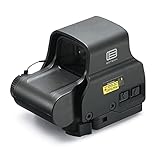
- EOTECH EXPS2-0 – Holographic Sight in black with 68 MOA ring & 1 MOA dot reticle
The 68 MOA ring with 1 MOA center dot is legendary for a reason. At room distance, that ring becomes your CQB reticle – both eyes open, superimpose the ring on target, press trigger. The 1 MOA dot enables precision to 300+ yards. Simple, fast, effective.
EXPS3:
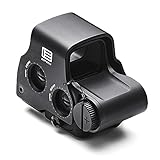
- EOTECH EXPS3-0 – Holographic Weapon Sight in black with 68 MOA ring & 1 MOA dot reticle
Same ring-and-dot system, but with additional 2 and 4 MOA options. Sounds minor until you’re trying to hit a coyote at 400 yards and that 1 MOA dot disappears in mirage. The 2 MOA setting has become my default – visible enough for speed, precise enough for distance.
Neither has the “starburst” effect that plagues many red dots for astigmatic eyes. My student with severe astigmatism could use these when he couldn’t see a clean dot through an Aimpoint.
Real-World Performance
Last month during a carbine course, my EXPS2 tracked through 1,500 rounds in one day. Temperature hit 95°F, the sight got covered in dust and carbon, but the reticle stayed crisp. That’s the beauty of sealed holographic systems – internal components stay protected.
The heads-up display works as advertised. Unlike tube red dots, you maintain peripheral vision. During force-on-force training, that wider field of view meant seeing flanking threats others missed.
Battery Life Reality
Same Battery, Same Life
Both use CR123 batteries lasting 600-1000 hours depending on brightness. Real world? I change batteries every six months regardless of use. The wilderness doesn’t care about manufacturer specs – fresh batteries are cheap insurance.
Auto-shutoff after 8 hours saves batteries but has bitten me. Now I habitually turn it off after each range session. The automatic battery check on startup gives peace of mind – watch for that brief reticle flicker indicating low battery.
Battery Change Process
Changing batteries with the sight mounted requires care. That cap cross-threads easier than a teenager’s first oil change. Go slow, ensure proper thread engagement. I’ve seen students strip these threads forcing it. Once stripped, you’re sending it back to EOTech.
Pro tip: Keep a spare CR123 in your grip compartment. When you need it, you’ll have it.
Night Vision Capability – The Big Difference
EXPS3’s Party Trick
The EXPS3’s night vision compatibility changes everything for serious users. Those 10 additional NV settings aren’t just dimmer – they’re specifically calibrated to prevent bloom through Gen 3 tubes.
During a nighttime hog hunt, I ran my EXPS3 behind a PVS-14. The reticle stayed crisp without washing out the image intensifier. Try that with a standard red dot and you’ll get a useless starburst.
EXPS2 Limitations
The EXPS2 works at night – with white light. For home defense or with a weapon light, it’s perfectly adequate. But behind night vision? Forget it. The lowest daylight setting still blooms terribly through NV devices.
If you’ll never own night vision, save the hundred bucks. But night vision prices keep dropping. That PVS-14 that cost $4,000 five years ago? Now under $2,500. Plan for the future.
Durability Testing
What They’ve Survived
My EXPS2 has endured:
- 5,000+ rounds of 5.56
- Dropped onto concrete from truck hood
- -20°F Montana winter to 115°F Afghan summer
- Submerged during river crossing
- Covered in moon dust at Thunder Ranch
Still holds zero. Still works perfectly.
The EXPS3 survived similar abuse plus:
- Direct mortar blast effects (not recommended)
- Three years of patrol rifle duty
- Scout knocking rifle off tailgate
- Sarah borrowing it for her research (scientist handling)
Water Resistance
Both handle 33 feet submersion. Tested this accidentally when I slipped during a creek crossing, dunking my rifle completely. After shaking out water, the EXPS3 worked fine. The sealed design means no internal fogging even with extreme temperature changes.
One weakness: the battery compartment O-ring degrades over time. Replace it annually or risk water intrusion. Learned this when my buddy’s EXPS2 died after a rainstorm – water in the battery compartment.
Controls and Adjustments
Button Placement Genius
Side-mounted controls make sense once you run magnifiers. Rear buttons would be blocked by a G33 magnifier. The up/down buttons fall naturally under your support hand thumb when mounted properly.
The EXPS3 adds an NV button – hold both arrow buttons simultaneously. Took me exactly one range session to memorize. Now it’s muscle memory.
Zeroing Process
Both zero identically:
- Bore sight first (saves ammo)
- Fire 3-round group at 25 yards
- Adjust with coin or flathead
- Confirm at 50 yards
- Fine-tune at your preferred zero distance
The clicks are positive and audible. Each click moves impact 0.5 MOA at 100 yards. I zero at 50/200 yards for general purpose, 36 yards for strictly CQB work.
Mounting Considerations
QD System Excellence
The integrated QD mount returns to zero reliably. I’ve removed and remounted my EXPS2 dozens of times for cleaning – always returns within 1 MOA. That’s good enough for government work.
Both consume minimal rail space – crucial on shorter rails. The fixed 1/3 co-witness height works with most backup iron sights. If running fixed front sights, you’ll see the post in the lower third of the window. Folding BUIS? Even better.
Rail Space Reality
At 3.8 inches long, these fit on carbine-length rails with room for backup sights. Compare that to traditional tube red dots plus mounts eating up 5+ inches. On SBRs or pistols, that matters.
Real-World Applications
Where EXPS2 Excels
Competition: The EXPS2 dominates 3-gun. Fast 1x for close targets, precise enough for 300-yard rifle targets. The daylight-only limitation doesn’t matter when matches happen during daytime.
Home Defense: With a weapon light, the EXPS2 provides everything needed. That 68 MOA ring guides you onto target instantly in high-stress situations.
Duty Use (Day Shift): Patrol rifles for daylight hours don’t need NV capability. Save department money for training ammo instead.
Budget-Conscious Buyers: If choosing between EXPS2 now or saving longer for EXPS3, get the EXPS2. Having good glass today beats perfect glass someday.
Where EXPS3 Dominates
Military/LE Night Operations: The NV compatibility isn’t optional here – it’s mandatory. That extra hundred dollars is nothing compared to mission success.
Serious Preparedness: If you own or plan to own night vision, get the EXPS3. Retrofitting isn’t possible – you’d need to sell and upgrade.
Hog Hunting: Night hunting with thermal or NV clip-ons requires NV-compatible optics. The EXPS3 earns its keep here.
Long-Term Investment: Buy once, cry once. The EXPS3 covers all bases, eliminating future upgrade costs.
Common Issues and Solutions
Parallex at Close Range
Both exhibit slight parallax inside 25 yards. Not enough to miss a torso, but noticeable on precision targets. Solution: maintain consistent cheek weld.
Battery Contact Problems
Occasionally, battery contacts corrode or compress. Symptoms include flickering reticle or intermittent operation. Fix: clean contacts with pencil eraser, slightly bend contact tabs outward.
“Thermal Drift”
Both models can shift zero slightly when very hot. After 500 rounds rapid-fire, I’ve seen 1-2 MOA shift. Returns to original zero when cooled. Plan accordingly for high-volume training.
The Price Question
EXPS2 at ~$575
At this price, you’re getting 90% of EXPS3 capability. For most shooters, that’s enough. The money saved buys 1,000 rounds of ammunition for training. Practice makes permanent, and trigger time beats equipment every time.
EXPS3 at ~$675
That extra hundred dollars buys future-proofing and versatility. If your mission might include darkness, it’s worth it. Consider it insurance – better to have NV capability unused than need it and not have it.
The Bottom Line
After running both extensively, the EXPS3 wins for serious users. The night vision capability alone justifies the price difference. Even if you don’t own NV now, you might later. The additional reticle options and brightness settings are bonuses.
But the EXPS2 remains excellent for:
- Competition shooters
- Home defense
- Budget-conscious buyers
- Daylight-only applications
Both represent American-made quality that works when it matters. The FBI HRT, Delta, and SEAL teams run these for a reason – they perform under pressure.
Your best survival tool is the six inches between your ears, but having proven equipment helps. Either EOTech will serve you well if you do your part.
Recommended Accessories
For both models:
- G33 Magnifier: Instant 3x magnification when needed
- UNITY FAST Riser: For better heads-up shooting position
- Tango Down Cover: Protect the lens during transport
- Spare CR123 Batteries: Because Murphy’s Law is real
Final Wisdom
Equipment doesn’t make the shooter – training does. I’ve seen experts with iron sights outshoot novices with EXPSs. But when skill levels are equal, better equipment provides an edge.
Choose based on realistic mission requirements, not fantasy scenarios. Then train with whatever you choose until operation becomes instinctive. The wilderness – or the battlefield – doesn’t care what you paid. It cares whether you can deliver rounds on target when it counts.
Practice makes permanent, so practice it right.
Want to maximize your EOTech’s potential? Check out my guides on zeroing distances, both-eyes-open shooting, and integrating magnifiers with holographic sights.
About Flint: After 8 years as an Army Ranger running EOTechs in combat and 15+ years teaching carbine courses, I’ve seen these optics perform when lives were on the line. When not instructing or guiding hunts, you’ll find me testing gear with Scout and River, always seeking equipment that works when failure isn’t an option.