Six months ago, a rancher friend called at 2 AM about coyotes decimating his chicken coop. By the time I arrived with traditional night vision gear, we’d spent 20 minutes fumbling with IR illuminators, helmet mounts, and backup red dots. Meanwhile, his teenage son grabbed his AR wearing a Holosun DRS-NV, flipped one switch, and dropped two coyotes before I had my PVS-14 focused. Sometimes the future arrives while you’re still adjusting the past.
The DRS-NV represents Holosun’s ambitious attempt to democratize night vision by combining a solid red dot with digital night capabilities in one package. After running this hybrid optic through Montana’s worst weather and darkest nights for eight months, I can tell you exactly where this technology shines and where traditional night vision still reigns supreme.
Understanding Digital Night Vision
Before diving into specifics, let’s address what digital night vision actually means. Unlike traditional tube-based night vision that amplifies existing light through phosphor screens, digital NV uses a CMOS sensor (like a camera) to capture images and display them on a tiny screen. Think of it as the difference between looking through binoculars versus watching live video on a screen.
During my Ranger days, we used $40,000 worth of night vision per soldier. The DRS-NV costs about $800 and gives you 70% of that capability for defensive distances. That’s either revolutionary or compromised, depending on your perspective and needs.
Technical Reality Check
Core Specifications
The Numbers That Matter:
- Weight: 18.5 ounces (heavier than two red dots)
- Dimensions: 4.8″ x 2.4″ x 3.0″
- Reticle: 2 MOA dot with 65 MOA circle
- Display: 1024×768 OLED
- Digital Zoom: 1x, 2x, 4x, 8x
- Refresh Rate: 60 FPS
- Battery: 18350 rechargeable
- Battery Life: 6 hours full function, 20+ hours red dot only
- Recording: Built-in with MicroSD
- Construction: 7075-T6 aluminum
- Waterproof: IP67 rated
- Night Vision Range: 150 yards detection, 100 yards recognition
Those specs tell you what it is. Eight months of use tells you what it does.
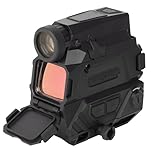
- Combines red dot sight technology with digital night vision capabilities for versatile use.
- Features a 1024×768 resolution digital night vision sensor with 60fps for clear imaging.
Eight Months in Big Sky Country
Test Platforms and Conditions
Primary testing occurred on:
- BCM RECCE 16 – Home defense and ranch rifle
- Daniel Defense MK18 – Vehicle gun
- Ruger American Ranch 300 BLK – Suppressed predator setup
Montana provided the testing conditions:
- Temperature range: -28°F to 102°F
- Elevation: 4,000 to 9,000 feet
- Weather: Everything from blizzards to dust storms
- Targets: Coyotes, training courses, and too many paper targets
Daytime Performance: The Foundation
Forget the night vision for a moment. As a red dot, the DRS-NV performs admirably. The 2 MOA dot stays crisp, the 65 MOA circle speeds up close-range acquisition, and the glass clarity rivals my Aimpoint PRO. During daylight training courses, nobody knew I was running a night vision capable optic until I mentioned it.
Groups at 100 yards averaged 1.5 MOA with quality ammunition – exactly what you’d expect from a good red dot. The controls are intuitive, the brightness settings cover every lighting condition Montana offers, and the shake-awake feature actually works.
But at 18.5 ounces, it’s heavy. My BCM went from handy to hefty. After long training days, that weight becomes noticeable. It’s like carrying a red dot with a boat anchor attached.
Night Vision: The Game Changer
Here’s where things get interesting. Push the button, flip up the cover, and suddenly you’re looking at a green-tinted digital display showing the darkness illuminated. It’s not Gen 3 tube quality, but it’s functional night vision for under a thousand dollars.
What Works: Under starlight or partial moon, I can identify man-sized targets to 150 yards and engage effectively to 100 yards. With the included IR illuminator or moonlight, those ranges extend slightly. The 60 FPS refresh rate means no lag when tracking moving targets – crucial for predator control.
Last month, I watched a pack of coyotes work their way across a pasture at 75 yards. Through the DRS-NV, I could distinguish individual animals, track their movement, and make clean shots. That’s practical capability, not spec-sheet fantasy.
What Doesn’t: In complete darkness without IR illumination, range drops to 30-50 yards. The image gets grainy quickly, especially at higher zoom levels. 4x zoom is marginally useful, 8x is digital garbage. This isn’t a reconnaissance tool – it’s a fighting optic with night capability.
The digital image lacks the depth and clarity of quality tube night vision. Details that would be clear through my PVS-14 become suggestions through the DRS-NV. It’s the difference between HD television and 1990s cable – functional but not beautiful.
The IR Illumination Question
The DRS-NV needs IR light like fish need water. Under good ambient conditions, the built-in sensor works adequately. Add any IR illuminator, and performance improves dramatically. I run a Streamlight TLR-VIR II, which transforms the DRS-NV from “it works” to “this is useful.”
Sarah tested it during her wildlife surveys and noted that the IR illumination doesn’t spook animals like white light. That’s valuable for both hunting and observation. However, remember that IR illuminators are visible to anyone else with night vision – tactical considerations matter.
Battery Life: The Achilles Heel
Six hours of full night vision operation sounds reasonable until you’re actually using it. A long night of predator hunting or security work drains it completely. The red dot function runs much longer, but if you bought this for night vision, six hours feels restrictive.
The USB-C charging is convenient, and I’ve run it off a battery bank during static positions. But needing to charge your optic like a phone feels wrong. I keep spare 18350 batteries, but changing them in the dark while maintaining security isn’t ideal.
For comparison, my PVS-14 runs 40+ hours on a single AA battery. Different technology, different limitations.
Recording Capability: Unexpected Value
The ability to record what you’re seeing proved more useful than expected. After dropping a problem coyote, I had video proof for the rancher’s insurance claim. During training, reviewing footage revealed bad habits invisible in real-time. It’s not a primary feature, but it adds value.
The microSD card slot is protected but accessible. Video quality matches what you see through the optic – functional but not YouTube-worthy.
Durability: Built Like a Brick
Whatever else you say about the DRS-NV, it’s tough. It’s survived:
- Multiple drops from truck height
- Complete submersion in creek crossings
- -28°F overnight in the truck
- Prairie dust storms that killed lesser electronics
- 3,000+ rounds including .300 BLK supers
Zero retention has been perfect. The housing shows wear but no damage. The electronics continue functioning despite Montana’s best efforts to break them. Holosun built this thing to last.
The flip-up lens covers are simple but effective. They protect the sensitive sensors while allowing instant deployment. No buttons to find in the dark, no caps to lose – just flip and shoot.
Practical Applications
Home Defense: Nearly Perfect
For home defense, the DRS-NV excels. Inside 50 yards, it provides clear target identification in complete darkness. The transition from light to dark happens instantly – no fumbling with separate devices. One rifle handles any lighting condition.
The weight matters less on a staged defensive rifle. Battery life is adequate for any realistic scenario. The recording capability could prove valuable legally. This is the DRS-NV’s sweet spot.
Ranch and Property Work: Excellent
Checking livestock at night, dealing with predators, investigating disturbances – the DRS-NV handles it all. The ability to switch from day to night instantly proves invaluable. Range limitations rarely matter on most properties.
My neighbor borrowed my setup for a week of calving season. He could check cows without disturbing them with white light, identify problems quickly, and maintain security. He bought his own the next week.
Hunting: Conditional
Where legal, the DRS-NV works for night hunting within its limitations. Coyotes, hogs, and other nighttime game inside 100 yards are perfectly manageable. The digital zoom helps with identification but not shooting.
However, traditional night vision or thermal still outperforms for serious night hunting. The DRS-NV is adequate, not optimal.
Law Enforcement/Security: Consider Carefully
For patrol rifles that might encounter darkness, the DRS-NV offers capability without complexity. One optic, all conditions. The recording feature provides evidence. The durability handles hard use.
But battery life limits extended operations. Image quality might not meet evidentiary standards. Agencies should test thoroughly before committing.
Compared to Alternatives
Versus Traditional Night Vision
PVS-14 + Red Dot :
- Superior image quality
- Better battery life
- More complex setup
- Significantly more expensive
- Requires training
The PVS-14 wins on capability, the DRS-NV wins on simplicity and price.
Versus Thermal + Red Dot
Thermal detection beats everything for finding heat signatures. But thermal doesn’t show details like night vision. Different tools for different missions. The DRS-NV provides good-enough capability for most users at a fraction of the cost.
Versus EOTech EXPS3 + G43 Magnifier
No night vision capability but superior daytime performance. Lighter weight, proven reliability, better battery life. If you don’t need night vision, traditional optics remain superior for day use.
Versus Other Digital Night Vision
The DRS-NV leads the digital night vision market. Competitors either lack red dot capability or night vision quality. Holosun hit the sweet spot of features and price, even with limitations.
Living with Limitations
Every tool has compromises. The DRS-NV’s are manageable with understanding:
Weight: Accept it or train harder. The capability justifies the ounces for many users.
Battery Life: Carry spares, invest in portable chargers, or accept the limitation.
Image Quality: It’s not Gen 3 night vision. Adjust expectations accordingly.
Bulk: This isn’t for minimalist builds. It’s for capability over aesthetics.
Training Considerations
The DRS-NV requires different training than traditional optics:
- Practice transitioning between modes
- Learn to interpret digital images
- Understand IR illumination principles
- Master battery management
- Develop realistic capability expectations
I run monthly night training sessions. Students with DRS-NV setups consistently perform well within the optic’s limitations. It’s not about having the best equipment – it’s about knowing your equipment’s capabilities.
The Value Proposition
At $800-900 street price, the math is compelling:
- Decent red dot: $400
- Entry-level night vision: $2,000+
- Combined capability: Priceless (or at least $800)
For users needing occasional night capability without dedicating a rifle to night operations, the DRS-NV makes sense. It’s not the best at anything, but it’s good enough at everything.
Field Intelligence Summary
Who Should Buy This
- Home defenders wanting 24-hour capability
- Ranchers/farmers dealing with predators
- Budget-conscious users needing night vision
- Anyone wanting simplified night operations
- Preppers building versatile rifles
Who Should Look Elsewhere
- Military/LE needing maximum capability
- Serious night hunters
- Weight-conscious builders
- Users requiring extended battery life
- Anyone expecting Gen 3 performance
The Bottom Line
The Holosun DRS-NV isn’t perfect, but it’s perfectly adequate for most defensive and practical applications. It democratizes night vision technology, making previously elite capability available to average shooters. That’s revolutionary, even with compromises.
After eight months, it’s earned permanent residence on my ranch rifle. Not because it’s the best optic I own, but because it’s the most versatile. One button transforms a daytime rifle into a nighttime problem solver. That simplicity has value beyond specifications.
Your best survival tool is the six inches between your ears, but those six inches work better when they can see in the dark. The DRS-NV provides that capability at a price that doesn’t require selling kidneys.
Final Assessment
The DRS-NV represents the future of integrated optics – not perfect, but practical. It won’t replace dedicated night vision for professionals, but it brings legitimate capability to civilians. The recording feature, durability, and simplicity offset the weight and battery limitations for most users.
Practice makes permanent, and practicing with night vision makes you dangerous in the dark. The DRS-NV makes that practice affordable and accessible.
The wilderness doesn’t care about your night vision generation, only whether you can see the threat before it sees you. The DRS-NV provides that capability reliably, if not beautifully.
Plan for the worst, hope for the best, and remember – any night vision beats no night vision when the lights go out.
Want more real-world gear reviews? Check out our comprehensive testing at Moosir.com where we evaluate equipment in conditions that matter, not climate-controlled ranges. Because knowing what works in the dark is just as important as knowing what works in daylight.