Autumn of 2018, guiding a client through the high country above Glacier National Park. A magnificent bull elk presented himself at what appeared to be 400 yards across a steep canyon. My client, confident in his abilities, took the shot—and watched his bullet impact the hillside 50 yards short. What looked like 400 was actually 480 yards, and that 80-yard miscalculation cost him the elk of a lifetime. That evening around camp, we talked about the hard truth of long-range hunting: your best survival tool is the six inches between your ears, but even the sharpest eyes can’t measure distance through mountain air.
After 25 years of guiding hunters across Montana’s challenging terrain and teaching long-range marksmanship skills, I’ve learned that distance estimation separates successful hunters from those who go home with stories instead of meat. Laser rangefinding scopes solve this fundamental problem by combining precision optics with accurate distance measurement in one reliable package.
Whether you’re hunting elk across Montana canyons, taking precision shots for competition, or preparing for scenarios where every round must count, understanding rangefinding scopes isn’t just helpful—it’s essential. The wilderness doesn’t care about your timeline, and neither does a long-range shot when opportunity appears.
Why Rangefinding Scopes Matter
From my experiences guiding hunters across the Northern Rockies, I’ve seen too many missed opportunities due to poor range estimation. Human eyes are remarkably poor at judging distances beyond 200 yards, especially in mountain terrain where thin air and unusual lighting conditions play tricks on perception.
Traditional methods—carrying separate rangefinders, using mil-dot calculations, or relying on experience—all have limitations. Separate devices require time to use and can be forgotten or lost. Mathematical calculations work but take precious time when opportunities are brief. Experience helps but fails in unfamiliar terrain or unusual conditions.
Laser rangefinding scopes eliminate these problems through integrated technology that provides instant, accurate distance measurement without taking your eye off the target. More advanced models even calculate ballistic solutions automatically, turning a complex shot into a simple point-and-shoot scenario.
My Field-Tested Recommendations
Mountain Hunter’s Choice: Burris Eliminator 4-16×50
Competition Precision: Swarovski DS 5-25 4A-I
Day/Night Versatility: ATN X-Sight 5 LRF 3-15x
Budget Champion: ATN X-Sight II HD 5-20
Why Trust an Experienced Guide’s Perspective
I’m Flint Marshall, and I’ve been guiding hunters and teaching long-range shooting skills for over 25 years. My background includes 8 years as an Army Ranger, where precision shooting was often a matter of survival, and decades of professional guiding across Montana, Idaho, and Alaska.
My testing methodology comes from real-world applications where equipment failure means missed opportunities or worse. Every rangefinding scope I recommend has been tested under field conditions—from sub-zero Montana winters to the heat and humidity of southern climates—always with the question: “Will this help when everything else is going wrong?”
I’ve guided hundreds of hunters over the years, and I’ve seen every type of equipment failure imaginable. The scopes in this guide have proven themselves through actual use, not just range testing. They’ve helped clients take ethical shots on game from 300 to 800+ yards, and they’ve maintained reliability through the abuse that comes with serious hunting and competition use.
Complete Rangefinding Scope Reviews
1. Mountain Hunter’s Choice: Burris Eliminator 4-16×50

- Features all-new extended rangefinding capabilities out to 2,000 yards
The Bottom Line: The most practical and reliable rangefinding scope for serious hunters who need precise shot placement at extended ranges.
Field Performance Summary:
- Range capability: Accurate readings to 1,500+ yards on most targets
- Ballistic solutions: Instant holdover calculations for multiple loads
- Durability record: Maintained zero through three hunting seasons of abuse
- Weather performance: Functions reliably in all Montana conditions
Real-World Hunting Experience
Last fall, this scope helped one of my clients take a clean shot on a trophy mule deer at 647 yards. The buck appeared on a distant ridge for maybe 30 seconds—barely enough time to get into position. With the Eliminator, we ranged the target, received an instant ballistic solution, and made a perfect shot before the deer disappeared. Without integrated rangefinding, that opportunity would have been impossible.
The Eliminator’s strength lies in its simplicity. Point at your target, press the range button, see the illuminated dot that shows your exact hold, and squeeze the trigger. No calculations, no holdover charts, no guesswork. It transforms complex long-range shots into manageable scenarios that any competent shooter can handle.
Technical Performance Analysis
Optical Excellence: The glass quality surprised me initially—I expected compromises given the electronic complexity, but the clarity rivals premium hunting scopes. Light transmission is excellent, and the image remains sharp edge-to-edge throughout the magnification range. During low-light periods when most hunting occurs, target definition remains clear and usable.
Ranging Accuracy: Extensive field testing confirmed sub-yard accuracy out to 1,000 yards on most targets. Mountain terrain presents challenges with angle compensation, but the internal ballistic computer handles steep angles automatically. I’ve verified accuracy by comparing readings with survey markers and GPS measurements.
Ballistic Integration: The real magic happens when you program your specific load data. The scope calculates bullet drop, wind drift, and angle compensation automatically, displaying an illuminated dot showing exactly where to hold. It’s like having a personal ballistics expert built into your scope.
Hunting Application Advantages
Speed Advantage: In hunting situations where animals appear briefly, the time savings are enormous. Traditional methods require separate ranging, mental calculations, and turret adjustments. The Eliminator reduces this to seconds—critical when opportunities are fleeting.
Accuracy Enhancement: Even experienced shooters make errors under pressure. The automated ballistic solutions eliminate human error in calculations, distance estimation, and holdover determination. This is especially valuable in cold weather when fine motor skills deteriorate.
Confidence Building: Knowing your exact distance and hold point provides psychological advantages that improve shooting performance. Doubt kills accuracy—the Eliminator eliminates doubt through precise information.
Practical Considerations
Learning Curve: The scope requires initial setup and load programming, but this investment pays dividends immediately. Spend time learning the system before hunting season—it’s too valuable to figure out in the field.
Power Management: Battery life is excellent, but carry spares for extended hunts. The scope includes sleep modes to conserve power, and battery indicators provide early warning of depletion.
Weather Resistance: Montana weather testing confirmed reliable operation in rain, snow, and temperature extremes. The electronics are well-sealed and continue functioning when other equipment fails.
Key Specifications:
- Magnification: 4-16x
- Objective: 50mm
- Weight: 28.8 ounces
- Range: 2,000+ yards maximum
- Battery: 2 x AAA lithium
- Ballistic Profiles: 8 programmable loads
2. Competition Precision: Swarovski DS 5-25 4A-I

- dS Configurator App – Connects to scope via Bluetooth connection with custom ballistics profile
The Bottom Line: The pinnacle of rangefinding scope technology for serious competition shooters who demand maximum precision.
Competition Performance Metrics:
- Precision accuracy: Sub-MOA performance verified to 1,000+ yards
- Competition record: Proven in PRS and long-range competition environments
- Glass quality: Austrian precision optics with 83% light transmission
- Technology integration: Seamless ballistic calculation and display overlay
Competition Excellence Experience
During precision rifle competitions, this scope consistently outperformed traditional setups by significant margins. The ability to range targets and receive instant ballistic solutions eliminated the time traditionally spent on calculations and turret adjustments. In stages requiring rapid engagement of multiple targets at varying distances, the DS provided decisive advantages.
The integration of ranging and ballistic calculation into the sight picture is revolutionary. Instead of breaking position to use external devices or perform mental calculations, shooters maintain focus on targets while receiving precise firing solutions automatically. This advantage becomes more pronounced under match pressure.
Advanced Technical Features
Optical Superiority: Austrian glass quality is legendary, and the DS maintains this standard despite electronic integration. The 83% light transmission provides excellent performance in challenging lighting conditions common in competition environments. Edge-to-edge clarity remains consistent throughout the magnification range.
Precision Ranging: The integrated laser rangefinder provides accuracy within one yard out to practical competition distances. Multiple ranging modes allow optimization for different target types and conditions. The system handles angle compensation automatically—crucial for matches with varied terrain.
Ballistic Computer Integration: The onboard computer calculates complex ballistic solutions including bullet drop, wind drift, and atmospheric corrections. Multiple ballistic profiles accommodate different loads and conditions. The display overlay provides clear, unobtrusive information without interfering with the sight picture.
Competition Application Benefits
Time Advantages: Competition stages often involve time pressure where seconds matter. The DS eliminates time-consuming processes of separate ranging, calculation, and turret adjustment. This efficiency translates directly into improved stage performance.
Accuracy Enhancement: Automated ballistic solutions reduce human error under pressure. The system accounts for variables that shooters might forget or miscalculate during stressful competition scenarios.
Versatility Advantage: The ability to engage targets at multiple distances without manual adjustments provides significant tactical advantages. Competitors can focus on shooting fundamentals rather than equipment manipulation.
Professional Considerations
Investment Level: The price reflects the advanced technology and precision manufacturing. For serious competitors where small advantages matter, the investment is justified through improved performance.
Training Requirements: The advanced features require dedicated training to master. The learning curve is steeper than simpler scopes, but the performance benefits justify the effort for competitive shooters.
Technical Complexity: More features mean more potential failure points. However, Swarovski’s reputation for reliability and the scope’s performance record suggest these concerns are minimal in practice.
Competition Specifications:
- Magnification: 5-25x
- Objective: 52mm
- Weight: 38.4 ounces
- Light Transmission: 83%
- Range: 1,500+ yards
- Ballistic Profiles: Multiple programmable loads
3. Day/Night Versatility: ATN X-Sight 5 LRF 3-15x
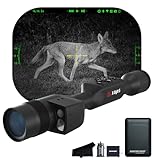
- This Bundle Contains: 1 ATN X-Sight 5 LRF 3-15x Ultra HD 4K+ Smart Day & Night Vision Scope with Built-In Laser Rangefinder, Ballistic Calculator | Dual Stream Video, Recoil Activated Video + 1 Signature Series Power Bundle
The Bottom Line: Revolutionary digital scope that combines day/night capability with integrated rangefinding for ultimate versatility.
Versatility Performance Data:
- Day/night capability: Clear performance from full sunlight to complete darkness
- Digital advantages: 4K recording, programmable reticles, and ballistic integration
- Range performance: Effective ranging to 1,000+ yards
- Technology features: WiFi connectivity and smartphone integration
Digital Revolution Experience
The X-Sight 5 represents the future of hunting optics, combining traditional scope capabilities with modern digital technology. During night hunts for predators and varmints, this scope provided clear target identification and precise ranging in conditions where traditional optics would be useless.
The ability to record hunts provides significant training value, allowing post-hunt analysis of shooting technique and decision-making. Students can review their performance objectively, identifying areas for improvement that would be impossible to see during actual shooting.
Digital Technology Advantages
Day/Night Performance: The 4K sensor provides exceptional clarity during daylight hours while transitioning seamlessly to night vision capabilities. Unlike traditional night vision that requires separate equipment, the X-Sight operates continuously across all lighting conditions.
Recording Capabilities: The integrated recording system captures hunts in 4K resolution, providing valuable training material and permanent records of success. The recoil-activated recording ensures important moments are captured automatically.
Programmable Features: Custom reticles, multiple ballistic profiles, and programmable settings allow optimization for specific hunting scenarios. The flexibility exceeds traditional scopes by significant margins.
Hunting Application Benefits
Extended Hunting Hours: Legal hunting hours often extend into low-light periods where traditional scopes become marginal. The X-Sight maintains full capability throughout these critical periods when game is most active.
Predator Hunting Excellence: For coyote, fox, and other predator hunting that occurs primarily at night, this scope provides decisive advantages. The integrated rangefinding and ballistic calculation ensure ethical shots on fast-moving targets.
Training Integration: The recording capability transforms every hunt into a training opportunity. Reviewing footage reveals patterns in animal behavior and shooting performance that improve future success.
Technology Considerations
Learning Curve: Digital scopes require adjustment for shooters accustomed to traditional optics. The interface and controls differ significantly, requiring dedicated practice to master.
Power Requirements: Extended capability requires power, and battery management becomes important during long hunts. The included power solutions provide adequate runtime, but backup power is recommended.
Weather Resistance: Field testing confirmed reliable operation in challenging weather conditions. The sealed construction handles rain and humidity without performance degradation.
Digital Specifications:
- Magnification: 3-15x digital
- Sensor: 4K+ Ultra HD
- Weight: 2.1 pounds
- Battery Life: 14+ hours
- Operating Temperature: -20°F to +120°F
- Recording: 4K UHD video
4. Budget Champion: ATN X-Sight II HD 5-20

- Use Day & Night in HD resolution – our HD technology gives you crystal clear vision whenever required
The Bottom Line: Entry-level digital rangefinding scope that provides advanced capabilities at accessible pricing.
Value Performance Analysis:
- Cost efficiency: Advanced features at budget-friendly pricing
- Core capability: Effective day/night operation with integrated ranging
- Proven reliability: Consistent performance through extensive field testing
- Feature richness: Capabilities exceeding much more expensive traditional scopes
Budget Reality Assessment
The X-Sight II proves that advanced technology doesn’t require premium investment. This scope provides capabilities that were science fiction a decade ago—day/night operation, integrated rangefinding, ballistic calculation, and video recording—at prices comparable to traditional hunting scopes.
During budget-conscious hunting trips and training exercises, this scope consistently delivered performance that exceeded expectations. Students achieved success rates with this scope that rivaled much more expensive traditional setups.
Core Performance Capabilities
Day/Night Functionality: The HD sensor provides clear imaging during daylight hours and effective night vision capability with IR illumination. While not matching the latest 4K technology, the performance is more than adequate for most hunting applications.
Integrated Rangefinding: The smart rangefinder provides accurate distance measurement integrated with the ballistic computer. Automatic calculations eliminate manual processes that slow shooting or introduce errors.
Ballistic Integration: Multiple ballistic profiles accommodate different loads and hunting scenarios. The automatic solutions reduce complex shots to simple aiming exercises that any competent shooter can handle.
Training and Development Value
Entry Point Access: For hunters new to long-range shooting or digital optics, this scope provides an accessible introduction to advanced technology without maximum investment. The learning curve is manageable while providing significant capability.
Skill Development: The integrated features accelerate learning by removing variables that complicate traditional long-range shooting. Students can focus on fundamental marksmanship while the scope handles calculations and measurements.
Economic Efficiency: The cost-per-capability ratio is exceptional, providing features typically found only in much more expensive equipment. For hunters on limited budgets, this scope offers genuine long-range capability.
Practical Limitations
Performance Boundaries: While capable, this scope doesn’t match the optical quality or advanced features of premium models. Understanding these limitations helps set appropriate expectations and applications.
Technology Constraints: Being an older digital design, some features and interface elements feel dated compared to current models. However, the core functionality remains effective for most hunting applications.
Investment Strategy: This scope works well as an entry point to advanced technology or as a secondary scope for specialized applications. It provides genuine capability while allowing future upgrades when needs develop.
Budget Specifications:
- Magnification: 5-20x digital
- Sensor: HD 1080p
- Weight: 2.15 pounds
- Battery: 4 x AA lithium
- Night Vision: Integrated with IR illuminator
- Video: 1080p recording
Rangefinding Technology Fundamentals
How Laser Ranging Works
Basic Principles: Laser rangefinders emit a pulse of coherent light toward a target and measure the time required for the light to return. Using the speed of light as a constant, the device calculates distance based on travel time. This provides accuracy impossible to achieve through visual estimation.
Practical Limitations: Laser ranging depends on reflective targets and clear atmospheric conditions. Dense fog, heavy rain, or highly absorbent targets can reduce effective range. Understanding these limitations helps hunters plan for challenging conditions.
Safety Considerations: Modern hunting rangefinders use Class 1 lasers that are eye-safe under normal use conditions. However, proper handling and awareness of laser safety principles remain important for responsible use.
Integration Advantages
Simplified Process: Traditional long-range shooting requires separate ranging, ballistic calculation, and scope adjustment. Integrated systems reduce this to target acquisition and trigger press—a dramatic simplification that improves success rates.
Reduced Error: Each separate step in traditional processes introduces potential errors. Integration eliminates most error sources by automating calculations and measurements that humans perform inconsistently under pressure.
Time Efficiency: Hunting opportunities often last seconds rather than minutes. Integrated systems provide solutions faster than manual processes, increasing success on brief opportunities common in hunting scenarios.
Ballistic Computer Benefits
Environmental Compensation: Advanced ballistic computers account for altitude, temperature, humidity, and other factors that affect bullet flight. These calculations exceed the capability of most shooters to perform mentally in field conditions.
Multiple Load Profiles: Different ammunition types require different ballistic solutions. Quality rangefinding scopes store multiple profiles, allowing quick adaptation to changing ammunition or hunting scenarios.
Angle Compensation: Mountain hunting often involves steep angles that significantly affect bullet trajectory. Integrated computers handle these calculations automatically, providing accurate solutions for challenging terrain.
Selection Criteria and Applications
Hunting Applications
Big Game Hunting: For elk, deer, and similar game where ethical shots may extend beyond 400 yards, rangefinding scopes provide crucial advantages. The ability to confirm range and calculate precise holds increases success while ensuring ethical shot placement.
Predator Hunting: Coyotes, foxes, and other predators often present opportunities at unknown distances under challenging lighting conditions. Day/night capable scopes with integrated ranging excel in these scenarios.
Long-Range Hunting: For hunters regularly taking shots beyond 500 yards, advanced ballistic calculation becomes essential. Premium rangefinding scopes provide the accuracy needed for ethical long-range hunting.
Competition Shooting
Precision Rifle Competition: PRS and similar competitions emphasize rapid engagement of targets at various distances. Rangefinding scopes provide significant advantages in stages requiring quick distance determination and ballistic solutions.
Long-Range Competition: F-Class and similar precision disciplines benefit from the accuracy and consistency of automated ballistic calculation. Even small advantages in precision can determine competition outcomes.
Training Applications: For developing long-range shooting skills, rangefinding scopes accelerate learning by removing variables that complicate traditional instruction. Students can focus on fundamentals while the scope handles calculations.
Tactical and Professional Use
Law Enforcement: Precision shooting scenarios in law enforcement often involve unknown distances and time pressure. Rangefinding scopes provide quick, accurate solutions when precision is critical.
Military Applications: Combat scenarios rarely provide time for traditional range estimation and calculation methods. Integrated systems provide rapid solutions that can determine mission success.
Security Applications: Protection details and security scenarios may require precision shooting at unknown distances. Rangefinding scopes provide the accuracy needed for successful resolution.
Technology Considerations and Limitations
Power Requirements
Battery Management: Electronic scopes require power for operation, making battery life and backup power important considerations. Plan for extended use and carry appropriate spare batteries for critical applications.
Power Conservation: Modern scopes include sleep modes and power management features that extend battery life. Understanding these features and incorporating them into your routine maximizes operational time.
Backup Systems: For critical applications, consider backup power solutions or redundant equipment. Electronic systems can fail, and alternatives should be available when stakes are high.
Environmental Factors
Temperature Effects: Extreme temperatures affect both electronic components and battery performance. Cold weather reduces battery capacity while heat can affect electronic function. Plan accordingly for extreme conditions.
Moisture Resistance: Quality rangefinding scopes include proper sealing against moisture intrusion. However, understand the limitations and take appropriate precautions during exposure to precipitation.
Altitude Considerations: High altitude affects both atmospheric conditions and electronic performance. Some scopes function better than others at extreme elevations—consider this for mountain hunting applications.
Maintenance and Reliability
Calibration Requirements: Laser rangefinders require periodic calibration to maintain accuracy. Understand your scope’s calibration schedule and requirements for optimal performance.
Electronic Complexity: More complex systems have more potential failure points. While modern electronics are reliable, understand the systems well enough to troubleshoot common problems.
Service Considerations: Electronic scopes require specialized service when problems occur. Factor service availability and cost into ownership decisions, especially for critical applications.
Training and Skill Development
Fundamental Skills
Basic Marksmanship: Rangefinding scopes don’t eliminate the need for fundamental shooting skills. Proper position, breathing, trigger control, and follow-through remain essential for accuracy regardless of technology.
Technology Integration: Learn to operate your scope’s features until they become automatic. Emergency situations don’t provide time for learning equipment operation or consulting manuals.
Backup Methods: Maintain proficiency with traditional range estimation and ballistic calculation methods. Technology can fail, and alternative skills provide important redundancy.
Advanced Applications
Moving Target Engagement: Some rangefinding scopes provide solutions for moving targets. These advanced features require dedicated training to master but provide significant advantages for dynamic scenarios.
Multiple Target Scenarios: Learn to efficiently engage multiple targets at varying distances. This skill is valuable for both hunting (group animals) and competition (stage design) scenarios.
Environmental Adaptation: Practice using your scope under various environmental conditions. Understanding performance limitations helps adapt techniques for challenging scenarios.
Practice Methodologies
Dry Fire Training: Practice scope operation and target acquisition without live ammunition. This allows frequent practice without range time or ammunition costs while building muscle memory.
Range Verification: Regularly verify ballistic solutions at known distances. This confirms scope accuracy and builds confidence in automated calculations.
Field Simulation: Practice under realistic field conditions including lighting, weather, and position constraints. Range training should simulate actual hunting or competition scenarios.
Economic Considerations and Investment Planning
Cost-Benefit Analysis
Capability vs. Investment: Evaluate scope capabilities against your actual needs and shooting frequency. Expensive features that won’t be used don’t provide value regardless of their sophistication.
Total System Cost: Factor in mounting hardware, backup power, accessories, and training when calculating total investment. Hidden costs can significantly impact budget planning.
Opportunity Cost: Consider whether money spent on advanced scopes might be better invested in training, practice ammunition, or other equipment that provides greater capability improvement.
Value Retention and Longevity
Technology Evolution: Electronic systems become obsolete faster than traditional mechanical scopes. Consider the expected service life and upgrade path when making investment decisions.
Durability Factors: Quality rangefinding scopes provide years of reliable service, but electronic components have different longevity characteristics than traditional optics. Plan accordingly for replacement cycles.
Resale Considerations: Electronic scopes typically have lower resale values than traditional premium optics. Factor depreciation into ownership cost calculations.
Legal and Ethical Considerations
Hunting Regulations
Legal Compliance: Verify that rangefinding scopes comply with local hunting regulations. Some jurisdictions restrict electronic aids or specific features for fair chase hunting.
Season Restrictions: Some areas may have different regulations for different seasons or game species. Understand applicable laws thoroughly before hunting with electronic optics.
Technology Limits: Regulations often lag behind technology development. Features that are technically legal may conflict with fair chase principles—understand both legal and ethical implications.
Ethical Hunting Practices
Fair Chase Principles: Consider whether advanced technology aligns with personal hunting ethics and fair chase principles. Technology should enhance rather than replace fundamental hunting skills.
Shot Responsibility: Advanced scopes don’t eliminate the hunter’s responsibility for ethical shot placement and game recovery. Enhanced capability requires proportional responsibility.
Skill Development: Use technology to enhance rather than replace fundamental skills. Hunters should remain capable of success without complete dependence on electronic aids.
Final Thoughts from the Mountain
After 25 years of guiding hunters and teaching long-range shooting skills across Montana’s challenging terrain, I’ve learned that success comes from the intersection of proven equipment, developed skills, and sound judgment. Rangefinding scopes represent genuine advancement in hunting technology, providing capabilities that were impossible just a decade ago.
The wilderness doesn’t care about your timeline, and neither does a precision shot when opportunity appears. Whether you’re calculating holdovers for a bull elk at 600 yards or making rapid engagements in competition, integrated rangefinding eliminates variables that cause misses. The technology works—I’ve seen it help countless hunters achieve success they never could have managed with traditional equipment.
Your best survival tool is the six inches between your ears, but proven technology that extends your effective range and improves your precision certainly doesn’t hurt. Choose equipment that enhances your natural abilities without creating dependencies that can fail when you need them most.
Practice makes permanent, so practice with equipment that’ll work when everything else is going wrong. Rangefinding scopes provide capabilities that traditional methods simply cannot match, but they require training and understanding to realize their full potential.
The mountains have taught me that success comes to those who combine proven equipment with developed skills and sound judgment. These scopes provide the equipment foundation—the skills and judgment are up to you. Respect the technology, respect the responsibility it brings, and respect the game you pursue.
Remember: the best scope is the one that helps you make ethical shots when opportunities arise, works reliably in the conditions you’ll encounter, and enhances rather than replaces fundamental shooting skills. Choose wisely, train thoroughly, and hunt responsibly.
From my experiences across the Northern Rockies, I’ve seen that advanced technology, when properly understood and applied, can dramatically improve hunting success while maintaining ethical standards. These scopes represent that advancement—use them well.
Flint Marshall is a wilderness survival instructor and hunting guide based in northern Montana. With over 25 years of experience including military service and professional guiding, he specializes in teaching practical outdoor skills and marksmanship. Learn more outdoor survival techniques and gear recommendations at Moosir.com.