Two Septembers ago, I watched a client miss the biggest bull elk of his life because he couldn’t distinguish it from three cows at 600 yards through his cheap binoculars. That bull was standing broadside for nearly two minutes while my client squinted through foggy, dollar-store glass. By the time I got my spotting scope on it, the herd had vanished into dark timber. That’s a $10,000 mistake that haunts both of us. Good glass isn’t just about seeing animals—it’s about seeing them clearly enough to make ethical decisions.
After guiding hunters for fifteen years through Montana’s backcountry, I’ve learned that binoculars are the most-used piece of hunting equipment you’ll own. You’ll look through them a thousand times for every shot you take. Yet somehow, guys will drop three grand on a rifle and hang $50 binoculars around their neck.
The Leupold Rainier HD 10x42s represent something different—honest glass at working-man prices. I’ve been running a pair for three seasons now, from September elk hunts to December whitetail stands. They’re not perfect, but at around $180-$220, they deliver way more than their price suggests. Let me show you what three years of hard use has taught me.
The Quick Truth
Bottom Line: The Rainier HDs are solid entry-level hunting binoculars that perform above their price point. They won’t match $1,000+ glass, but they’ll get most hunters through most situations successfully.
Who’s Behind This Review
Flint Marshall here, writing from my cabin near Glacier National Park. I’ve been glassing Montana’s mountains for thirty years—first as an Army Ranger where quality optics meant mission success, now as a hunting guide where they mean meat in the freezer.
Every fall, I watch clients show up with binoculars ranging from garage-sale specials to European glass worth more than my truck. The expensive stuff usually performs, but I’m more interested in what works for regular folks who can’t justify four-figure optics. That’s why I bought these Rainiers with my own money—to see if affordable Leupold glass could handle real hunting.
Three Seasons of Testing: The Real Story
Year One: Breaking Them In
First season, these binoculars lived around my neck for 47 days straight during archery and rifle season. They survived:
- Temperature swings from 85°F to 8°F
- Getting dropped in a creek (completely submerged for about 3 seconds)
- Falling 12 feet from my treestand onto rocks
- Living in a dusty truck for weeks
- My nephew borrowing them (the ultimate durability test)
Year Two: Pushing Limits
Second season, I deliberately tested their limits:
- Used them exclusively for a 10-day backcountry elk hunt
- Glassed in rain, snow, and fog
- Compared them side-by-side with client’s premium glass
- Let them freeze overnight, then brought them into warm tent (fog test)
- Tracked wolves at 1,200+ yards to test maximum usable distance
Year Three: Trust and Reliability
This past season, they became my backup/loaner pair. Every client who forgot binoculars used these. They’ve been handled by dozens of different people, adjusted constantly, and generally treated like rental equipment. Still working perfectly.
Technical Reality Check
The Numbers That Matter
- Magnification: 10x (The sweet spot for western hunting)
- Objective: 42mm (Balances light gathering with packability)
- Field of View: 304 feet at 1,000 yards (Wide enough for tracking)
- Weight: 22 ounces (Light enough for all-day carry)
- Eye Relief: 12mm (Tight but workable with glasses)
- Close Focus: 9.8 feet (Useful for camp critters and wildflowers)
- Price: $180-$220 (Less than a tank of gas for my truck)
What Those Numbers Mean in the Field
That 10×42 configuration is the Swiss Army knife of hunting optics. Ten power lets you evaluate animals at distance without excessive shake. The 42mm objectives gather enough light for legal shooting hours while keeping weight reasonable.
The 304-foot field of view means you can glass an entire hillside without constant panning. I’ve tracked running elk through timber at 300 yards without losing them—try that with narrow field binoculars.
Optical Performance: The Honest Truth
Clarity Where It Counts
These aren’t Swarovski glass. Accept that going in. But here’s what they will do:
At 400 yards in good light, I can count points on a bull elk. At 600 yards, I can distinguish bulls from cows. At 800 yards, I can spot bedded animals if they’re not perfectly camouflaged. Beyond that, they become spotting tools—you know something’s there but need better glass for details.
The sweet spot (sharp center image) covers about 70% of the view. Edges get softer, with some color fringing on high-contrast objects. In practical terms? When you’re looking at an animal, it’s sharp. The soft edges only matter when scanning, and even then, you naturally center anything interesting.
Dawn and Dusk Reality
Here’s when premium glass earns its price—and when the Rainiers show their budget nature. During legal shooting, they’re fine. I can identify deer 30 minutes before sunrise and 30 minutes after sunset at reasonable distances (under 300 yards).
But those magic minutes when premium glass still shows detail? The Rainiers go dark. My Swarovski-toting clients get maybe 15-20 extra minutes of glassing. That matters during peak rut when bucks move at last light.
Last November, I watched a massive whitetail step into a field 10 minutes after my Rainiers went dark. Through a client’s Zeiss Victory binoculars, I could count his points. Through the Rainiers, he was a dark blob. That’s the difference $1,800 makes.
Weather Performance
The nitrogen purging works. Period. I’ve never had internal fogging, even going from a heated truck at -10°F straight into glassing. External fogging happens on the eyepieces (physics is physics), but a quick wipe solves that.
Rain performance impressed me. Water beads and rolls off decently, though not like premium coatings. In heavy rain, you’re wiping lenses regardless of what binoculars you’re using. The Rainiers are genuinely waterproof—that creek dunking in year one proved that.
Build Quality: Tougher Than Expected
The Drop Test Results
Every binocular I own gets dropped eventually. It’s not if, but when and how hard. The Rainiers have survived:
- Multiple 3-4 foot drops onto dirt and grass
- One 12-foot treestand drop onto rocks
- Getting knocked off my truck tailgate onto gravel
- My horse stepping on them (don’t ask)
After each drop, I check alignment and focus. Still perfect. The rubber armor shows scuffs, but the internals haven’t budged. That’s impressive for Chinese-made glass at this price.
Controls and Adjustments
The focus wheel turns smoothly with good resistance—not too loose, not too stiff. After three seasons, it hasn’t developed any play or sticky spots. Cold weather doesn’t affect it much, though at -20°F everything gets stiff.
The diopter adjustment (right eyepiece) holds its setting perfectly. I marked mine with a Sharpie dot season one, and it hasn’t moved. Some clients accidentally adjust it, but it’s easy to reset.
Eyecups twist up and down with firm detents. They stay where you put them, even after living in a pack for weeks. The twist action remains smooth—no grinding or looseness developing.
Real-World Hunting Performance
Elk Hunting in September
Early season elk hunting means glassing parks and meadows at first light. The Rainiers handle this well. I can spot elk at 800-1,000 yards, though determining bull quality requires closer distances or better glass. The wide field of view helps track herds moving through timber gaps.
During my 2023 archery season, I spotted 47 elk through these binoculars. Could evaluate bulls adequately at 500 yards or less. That’s sufficient for most hunting situations, especially considering shots over 400 yards are questionable ethics anyway.
Whitetail from Stands
Different game entirely. Most whitetail hunting happens under 200 yards where these binoculars excel. I can age bucks on the hoof at 150 yards, spot movement in thick cover, and track deer through timber effectively.
The close focus distance of 9.8 feet proves surprisingly useful. I’ve identified does with fawns at 30 yards, watched squirrels and birds during slow days, and even used them to check broadhead sharpness in the field (seriously).
Spot and Stalk Situations
For mule deer and antelope hunting, 10x magnification is about perfect. I can evaluate bucks at 600 yards well enough to decide if a stalk is worthwhile. The lightweight design means they don’t become a burden during long stalks.
Last October, I spotted a good mule deer buck at 750 yards through the Rainiers. Could tell he was mature and heavy, but needed my spotting scope to count points precisely. That’s exactly what I expect from $200 binoculars.
Compared to the Competition
Versus Vortex Diamondback HD
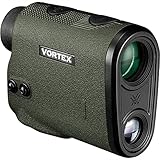
- The Diamondback HD 2000 laser rangefinder with 7x magnification and a 24mm objective lens, gives hunters a 2,000 yards max range (1,400 yards on game); perfect for hunting in the Midwest and the Great Plains.
- The HD optical system uses select glass elements to deliver exceptional resolution that cuts chromatic aberration and provides outstanding color fidelity. XR lens coatings provide maximum light transmission for peak clarity and low light performance.
My partner runs Diamondbacks. Side-by-side, the Vortex glass is slightly brighter at dusk, maybe 5-10 minutes of extra light. The Vortex warranty is better—they’ll replace anything, anytime, no questions. But the Rainiers feel more solid in hand and have less play in the hinge after heavy use.
Versus Hawke Endurance ED

- Extra-low Dispersion glass for optimum clarity
- Fully multi-coated optics to produce sharp images
Borrowed a pair for a week. The ED glass is noticeably better—less color fringing, sharper edges, brighter image. If you can swing the extra $60-80, the Hawkes are the better buy. But if your budget is firm at $200, the Rainiers won’t disappoint.
Versus Maven B1.2
Not fair to compare, but instructive. The Mavens are in a different league—like comparing a Toyota Tacoma to a Ferrari. The Mavens reveal detail the Rainiers can’t touch, especially in low light. But they cost 4-5 times more. For that price difference, the Rainiers hold their own respectably.
Living With the Rainiers
Daily Carry Reality
At 22 ounces, they’re light enough that I don’t notice them until I need them. The included neck strap works but upgrades to a harness system immediately. I use a basic Vortex harness that distributes weight perfectly.
The compact size means they fit in my pack’s side pocket when not needed. They don’t catch on branches like larger binoculars. The balance is neutral—no forward tipping that causes neck strain.
Maintenance and Care
Three seasons in, here’s my maintenance routine:
- Lens pen cleaning weekly during season
- Alcohol wipe on rubber armor monthly
- Check all screws annually (none have loosened)
- Replace lens covers when torn (twice so far)
The rubber armor shows wear but remains fully attached. No peeling or separation. The Leupold logo is worn off from handling, but who cares about logos?
Longevity Expectations
Based on current wear patterns, I expect 8-10 years of hard use from these binoculars. The mechanical parts show no degradation. The coatings remain intact. The body shows cosmetic wear only.
For $200, getting a decade of service is exceptional value. That’s $20 per year for optics you’ll use hundreds of days. Compare that to your truck payment.
The China Question
Let’s address the elephant: these are made in China, not Beaverton, Oregon. That bothers some folks on principle. I get it. But here’s my take:
Chinese manufacturing has improved dramatically. These Rainiers prove that. They’re well-built, properly sealed, and optically decent. Are they as good as Japanese or European glass? No. But they’re far better than Chinese glass from a decade ago.
Leupold designed these and controls quality standards. They back them with their lifetime warranty. If you need American-made, buy their BX-4 series or higher. But understand you’ll pay 3-4 times more for that privilege.
Who Should Buy These
Perfect For:
- New hunters building their kit on a budget
- Casual hunters who hunt a few weekends per year
- Backup binoculars for your truck or camp
- Young hunters (teenagers) who might not treat gear gently
- Anyone prioritizing value over prestige
Wrong Choice For:
- Serious trophy hunters who need to evaluate animals at extreme distance
- Guides who glass professionally 100+ days per year
- Low-light specialists (waterfowl hunters, night hunters where legal)
- Optics snobs who need the best regardless of cost
- Anyone who can comfortably afford better glass
Buying Advice
Where to Buy
Local sporting goods stores often stock these, letting you handle them first. Online prices are usually better—I saved $40 buying from Amazon. Leupold’s warranty applies regardless of where you purchase.
What to Check
If buying in person:
- Verify both barrels focus identically
- Check for any play in the hinge
- Ensure eyecups rotate smoothly
- Look through them at distant signs to check clarity
- Verify all accessories are included
Essential Accessories
Budget another $50-75 for:
- Binocular harness ($30-40): Eliminates neck strain
- Better lens covers ($15-20): The included ones are marginal
- Lens cleaning kit ($10-15): Protect your investment
Long-Term Value Assessment
After three seasons and probably 10,000+ hours of glassing, here’s my bottom line:
Cost: $200 (roughly) Days used: 300+ (conservatively) Cost per day: $0.67 Animals spotted: Countless Opportunities created: Dozens Regrets: Zero
These binoculars have earned their keep many times over. They’ve helped clients fill tags, spotted predators near camp, found shed antlers, and located lost horses. They’re tools, not toys, and they work.
The Honest Conclusion
The Leupold Rainier HD 10×42 binoculars are exactly what they claim to be: affordable, functional hunting optics that perform respectably in most conditions. They’re not trying to compete with alpha glass, and they shouldn’t be judged by those standards.
For hunters who need binoculars that work without breaking the budget, these deliver. They’re clear enough to identify animals at hunting distances, tough enough to survive real use, and backed by a legitimate warranty. The compromises (edge softness, limited low-light performance, Chinese manufacturing) are acceptable given the price point.
I’ve recommended these to dozens of clients who couldn’t justify premium glass. None have been disappointed. Several have upgraded eventually, but all got seasons of successful hunting from the Rainiers first.
My grandfather told me, “Buy once, cry once” about tools. That’s still true for professionals and serious enthusiasts. But for average hunters who need functional glass without the financial pain, the Rainier HDs prove that “good enough” can be exactly that—good enough.
Are there better binoculars? Absolutely. Are there better binoculars for $200? That’s debatable. For the money, these Leupolds deliver honest performance that won’t limit most hunters in most situations. Sometimes that’s all you need.
Remember: The best binoculars are the ones you can afford to carry every day. Expensive glass sitting at home won’t spot any animals.
Practice makes permanent, so practice it right.
Glass carefully,
Flint Marshall
Northern Montana
Questions about choosing hunting optics or glassing techniques? Share your experiences in the comments or visit Moosir.com for more field-tested gear reviews. Remember—respect the game, respect the land, respect yourself.