Home Blog Page 10

The Best Optics for AR Pistols: A Montana Guide’s Hard-Earned Wisdom

0

Last winter, I watched a state game warden miss a wounded elk at 40 yards because his AR pistol’s cheap red dot fogged up in the freezing rain. While he fumbled with lens wipes, that bull disappeared into the timber, likely to suffer for hours before dying. That moment reinforced what twenty years of shooting has taught me: the wrong optic doesn’t just cost you opportunities – sometimes it costs lives their dignity.

AR pistols have exploded in popularity faster than prairie dog populations after a mild spring. Everyone’s building them, but most folks slap on whatever optic looks cool on Instagram without understanding what actually works when conditions turn ugly. After running fifteen different optics through Montana’s worst weather on three different AR pistol builds over the past two years, I can separate marketing fiction from field-tested reality.

Why AR Pistols Demand Different Thinking

AR pistols aren’t just short rifles – they’re a different animal entirely. The shorter sight radius, increased muzzle blast, and unique handling characteristics demand optics that can handle more abuse while maintaining zero. During my Ranger days, we learned that equipment failures usually happened at the worst possible moment. Your optic choice can make the difference between success and explaining why you missed.

My testing arsenal included:

  • 10.5″ PSA build – The truck gun
  • 11.5″ BCM upper on Aero lower – Primary defensive setup
  • 12.5″ custom build – Competition and training rifle

Each platform taught different lessons about what works and what’s just expensive decoration.

The Testing Protocol: Montana Style

Every optic endured the same punishment:

  • Minimum 2,000 rounds per optic
  • Temperature swings from -25°F to 98°F
  • Multiple drop tests onto frozen ground
  • Complete water submersion tests
  • Continuous use without cleaning for 30 days
  • Tracking tests at 25, 50, and 100 yards

No special treatment, no babying, just real use in real conditions. Scout and River (my hunting dogs) have watched me shoot more groups than I can count, always hoping the session ends with fetch instead of more precision work.

The Champions: Four Optics That Earned Their Keep

After two years of testing, four optics consistently outperformed the rest. Each excels in specific applications, and understanding their strengths helps match the tool to your mission.

The Gold Standard: Aimpoint Micro T-2
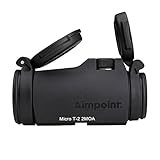
Aimpoint Micro T-2 Red Dot Reflex Sight No Mount – 2 MOA -200180
  • Features advanced lens system for better light transmission and unmatched optical clarity

The T-2 sits atop my home defense BCM for one reason: absolute reliability. This Swedish-built tank of an optic has never failed, never shifted zero, never fogged, never quit. It’s boring in the best possible way.

Real-World Performance: During a February predator hunt at -18°F, every other optic in our group either fogged or dimmed. The T-2’s dot stayed crisp and bright through eight hours of temperature extremes. That’s not marketing – that’s Montana-tested reality.

The 50,000-hour battery life isn’t theoretical. I’m three years into the same CR2032 battery, leaving it on continuously at setting 8. At this rate, I’ll change batteries when my grandson starts kindergarten (he’s not born yet).

What Makes It Special:

  • Glass clarity that rivals optics costing twice as much
  • True daylight-bright settings that cut through noon sun on snow
  • Parallax-free design that forgives poor cheek weld
  • Compact size that doesn’t turn your pistol into a boat anchor
  • Night vision settings that actually work with Gen 3 tubes

The Reality Check: Yes, it costs more than some complete AR builds. But divide that cost over 20 years of guaranteed function, and it’s cheaper than replacing three $200 optics that fail when you need them. Buy once, cry once, trust always.

Field Note: The included mount works, but upgrade to a Scalarworks LEAP for quick-detach capability that returns to zero every time.

The Home Defender: Holosun HS512C

Holosun HS512C Multi-Reticle Circle Dot Enclosed Reflex Sight w/Solar Failsafe…
  • Shake Awake sensor with last setting recall. Auto off when not in use, auto on with slight movement or vibration. Manually off, manually on

This enclosed reflex sight lives on my 10.5″ truck gun because it handles abuse like a honey badger handles cobras – aggressively and without concern. The enclosed emitter design means mud, snow, and debris can’t block your sight picture.

Why It Works for Defense: Last spring, I demonstrated the difference between open and enclosed emitters by coating both styles in mud. The open emitter became useless. The HS512C kept running after a quick wipe of the front lens. That’s the difference between theory and practice.

The solar panel isn’t a gimmick. During a three-day spring bear hunt, my battery died (my fault for not checking). The solar panel kept the dot visible enough for daylight use, saving the hunt. The shake-awake feature means it’s always ready but not draining power.

Real Advantages:

  • Massive window for fast target acquisition
  • Multiple reticle options (2 MOA dot, 65 MOA circle, or both)
  • Solar backup when batteries fail
  • Completely enclosed emitter protects against debris
  • Quick-detach mount included

The Compromise: At 8.1 ounces, it’s heavier than micro dots. On a 10.5″ barrel, that weight shifts balance forward. Not ideal for all-day carry but perfect for staged defensive rifles.

The Night Fighter: Trijicon MRO
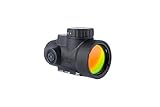
Trijicon MRO® SD 1×25 Red Dot Sight w/Adjustable LED 2.0 MOA Red Dot
  • FASTER TARGET ACQUISITION: Larger viewing area allows for faster acquisition and engagement with reduced “tube effect.”

Despite well-documented parallax issues, the MRO earns its place for one reason: unmatched low-light performance. When darkness is your operating environment, this optic shines (figuratively – it doesn’t give away your position).

Night Operations Reality: During night varmint control on a ranch, the MRO’s combination of clear glass and properly calibrated night vision settings made target identification possible when other optics showed only shadows. The 25mm objective gathers more light than smaller competitors.

The five-year battery life at setting 3 means you can literally set it and forget it. I’ve had one running continuously for two years without any sign of dimming.

Critical Limitations: The parallax error is real – about 13 inches at 100 yards with poor head position. For precision work, this is unacceptable. For defensive use inside 50 yards, it’s manageable with proper training. Know your equipment’s limitations and train accordingly.

Best Use Case: Dedicated home defense or ranch rifles where low-light capability matters more than precision. Pair with a quality weapon light for a formidable nighttime setup.

The Value King: Sig Romeo5

SIG SAUER Romeo5 1X20mm Tactical Hunting Shooting Durable Waterproof Fogproof…
  • ROMEO5 GUN SIGHT – The ROMEO5 1X20mm Red Dot Sight mounts on any platform, and even though it’s small, it’s tough; The solid, lightweight aluminum design gives peak performance & years of service, so you can be on the top of a hunt or shooting competition

Don’t let the budget price fool you – the Romeo5 punches so far above its weight class it should be investigated for performance-enhancing drugs. This is my recommendation for anyone starting their AR pistol journey.

Proven Performance: My nephew bought one for his first AR build three years ago. It’s survived his “learning experiences” including multiple drops, getting left in the rain, and one memorable incident involving a four-wheeler and a fence post. Still holds zero, still works perfectly.

The MOTAC (Motion Activated Illumination) system works flawlessly. Pick up the rifle, dot appears. Set it down, it shuts off after two minutes. Simple, effective, reliable.

Why It Works:

  • 40,000-hour battery life with MOTAC
  • Clear glass without the typical budget optic blue tint
  • Includes both low and high mount options
  • Common CR2032 battery available everywhere
  • Proven track record with millions sold

Realistic Limitations: The included mounts are basic but functional. Upgrade to an American Defense QD mount when budget allows. The motion sensor is sensitive – truck vibrations will activate it. Not a deal-breaker, just reality.

The Also-Rans: Why Others Didn’t Make the Cut

EOTech EXPS2

Fantastic optic, but battery life measured in hundreds of hours instead of thousands makes it impractical for defensive use. Nobody wants to discover dead batteries at the worst moment.

Primary Arms SLx MD-25

Good glass, nice reticle, but inconsistent zero retention during rapid fire strings. Fine for recreational use, not for serious application.

Vortex Crossfire Red Dot

Decent backup option, but lacks motion activation and battery life of the Romeo5 at similar price point. Vortex warranty is excellent, but I prefer optics that don’t need warranty service.

Bushnell TRS-25

Adequate for .22LR training, but not robust enough for centerfire AR pistol use. Save it for your 10/22.

Choosing Your Optic: Mission Drives Equipment

For Home Defense

Priority: Reliability, battery life, quick acquisition

Recommendation: Holosun HS512C

  • Enclosed emitter protects against murphy’s law
  • Solar backup provides redundancy
  • Large window speeds target acquisition
  • Shake-awake ensures readiness

For Duty/Professional Use

Priority: Absolute reliability, proven track record

Recommendation: Aimpoint T-2

  • Military-proven durability
  • Years-long battery life
  • Compact and lightweight
  • Zero maintenance required

For Budget-Conscious Buyers

Priority: Maximum value, proven performance

Recommendation: Sig Romeo5

  • 80% of premium performance at 20% of the cost
  • MOTAC extends already impressive battery life
  • Proven reliability across millions of units
  • Excellent warranty support

For Night Operations

Priority: Low-light performance, NV compatibility

Recommendation: Trijicon MRO (with training on parallax management)

  • Superior light gathering
  • Extended battery life
  • Purpose-built NV settings
  • Proven military heritage

Critical Accessories That Matter

Mounts Make the Difference

Quality mounts matter more than most realize. A $700 optic on a $20 mount is a $720 failure waiting to happen.

Recommended Mounts:

  • Scalarworks LEAP – Returns to zero, tool-free, bombproof
  • American Defense QD – Excellent value, proven reliability
  • Unity FAST – Perfect for night vision use, innovative design

Backup Sights: Not Optional

Every electronic device can fail. Quality backup iron sights provide insurance.

Top Picks:

  • Magpul MBUS Pro – Steel construction, low profile
  • Troy Folding Battle Sights – Military proven, precise
  • Daniel Defense Fixed Sights – Simple, bulletproof, always ready

Protective Accessories

  • Lens covers – Protect your investment
  • Anti-reflection devices – Reduce signature
  • Lens pens – Keep in every range bag

Training Considerations

The best optic in the world won’t make you a better shooter – only training does that. But proper equipment removes excuses and enables improvement.

Essential Drills for AR Pistol Optics

  1. Presentation drill – Draw and acquire dot 100 times daily
  2. Box drill – Verify tracking and return to zero
  3. Position shooting – Practice unconventional positions
  4. Low-light work – Understand your optic’s limitations
  5. Transition drills – Multiple targets at varying distances

Common Mistakes to Avoid

  • Choosing magnified optics for AR pistols (they don’t need it)
  • Prioritizing looks over function
  • Skipping backup sights
  • Neglecting regular zero confirmation
  • Buying based solely on internet reviews

Environmental Considerations

Cold Weather Performance

Montana winters teach harsh lessons. Batteries die faster, lubricants thicken, and condensation becomes your enemy. The Aimpoint and Sig handle cold best, while cheaper options often fail below 0°F.

Wet Weather Reality

IPX7 rating should be minimum. The Holosun’s enclosed design excels here. Regular optics need constant lens wiping in rain – enclosed emitters keep working.

Dust and Debris

Western states mean dust. Lots of it. Enclosed emitters or quality lens covers aren’t optional. The T-2’s sealed design has survived dust storms that killed truck air filters.

The Investment Perspective

Quality optics are insurance policies for your rifle’s capability. Consider:

  • Aimpoint T-2: $750 ÷ 20 years = $37.50/year
  • Sig Romeo5: $130 ÷ 5 years = $26/year
  • Cheap Amazon optic: $40 ÷ 6 months = $80/year (when replaced)

Buy quality once or buy junk repeatedly. The math is clear.

Maintenance and Care

Daily Carry Guns

  • Weekly lens cleaning
  • Monthly zero confirmation
  • Annual battery replacement (whether needed or not)
  • Regular mount torque checks

Safe Queens

  • Quarterly function checks
  • Annual battery replacement
  • Store at medium brightness setting
  • Remove batteries for long-term storage

Field Care

  • Lens pen in every kit
  • Spare batteries always accessible
  • Regular zero confirmation after transport
  • Document zero settings in phone

The Bottom Line: Practical Recommendations

After two years of testing, thousands of rounds, and more money spent than Sarah needs to know about, here’s the truth:

If money is no object: Aimpoint T-2. It’s the best, period.

If you’re practical: Sig Romeo5 for most users, Holosun HS512C for home defense.

If you’re on a strict budget: Save longer and buy the Romeo5. Don’t waste money on anything cheaper.

Your AR pistol is only as capable as its weakest component. Don’t let that be your optic.

Final Wisdom

Twenty years ago, my grandfather told me, “Buy the best glass you can afford, then save up and buy better.” That wisdom applies directly to AR pistol optics. The difference between adequate and excellent might save your life, your hunt, or just your pride at the range.

The wilderness doesn’t care about your budget constraints or brand preferences. It only cares whether your equipment works when needed. These four optics have proven they work, repeatedly, in conditions that matter.

Remember: Practice makes permanent, equipment enables capability, and reliability trumps features every time.

Want more honest gear reviews from actual field use? Visit Moosir.com where we test equipment in the mountains, not just on manicured ranges. Because gear that only works in perfect conditions isn’t gear worth trusting.

Built Like a Tank: One Year Running the Sig Romeo 8T

0

The mountain lion materialized sixty yards upslope, frozen mid-stalk as it watched my neighbor’s calf. Through the Romeo 8T mounted on my ranch carbine, the circle-dot reticle framed the cat perfectly against the shadowed timber. One bark from the .308 sent it bounding away unharmed—message delivered, livestock protected.

That tense December morning validated a year of trusting this American-made tank of an optic. Since mounting the Romeo 8T on various rifles around our Montana property, it’s proven itself as the toughest red dot I’ve ever abused. And I mean abused—this sight has endured treatment that would destroy lesser optics without missing a beat.

At nearly 14 ounces, the Romeo 8T weighs more than some scopes. It’s built like military equipment should be built—overengineered for survival rather than optimized for Instagram photos. After approximately 4,200 rounds split between three rifles, countless truck miles over rough roads, and deliberate torture testing, I’ve learned exactly why Sig built this beast the way they did.

Understanding the Romeo 8T Design Philosophy

Sig Sauer ROMEO8H RED DOT Sight, Ballistic Circle DOT, 0.5 MOA ADJ, Side…
  • RAPID TARGET ACQUISITION – It is is a great option for rapid target acquisition regardless of the surrounding terrain or light levels; ROMEO8 red dot sight incorporates 50,000 (ROMEO8H) or 100,000 hours (ROMEO8T) of runtime on its single CR123 battery

Before examining performance, let’s establish what we’re discussing:

SpecificationValueReal-World Impact
Magnification1x (unmagnified)Natural both-eyes-open shooting
Objective Lens38mmMassive field of view
Window SizeHuge (38mm x 25.5mm)EOTech-like visibility
Dot Size2 MOAPrecise enough for distance
Reticle Options4 configurationsVersatility for any scenario
Battery TypeCR123Common, powerful battery
Battery Life100,000 hours claimedYears of continuous use
Weight13.7 ouncesHeavy but bombproof
Length3.9 inchesLonger than most red dots
Housing Material7075-T6 aluminumMilitary-grade toughness
Shroud MaterialTitaniumUltimate protection
WaterproofIPX-8 (400m)Submarine-grade sealing
Special FeaturesMOTAC, Lock ModePractical technology

Testing Protocol: Montana Ranch Punishment

The wilderness doesn’t care about your schedule—or treat equipment gently. My evaluation reflects how this optic performs under legitimate hard use.

Platform Rotation and Setup

The Romeo 8T started on my primary ranch rifle—a custom AR-10 in .308 Winchester. Installation revealed the first surprise: this thing is substantial. The included mount positions it at absolute co-witness height, though the large window makes iron sight backup less critical.

Since initial mounting, it’s migrated between:

  • AR-10 .308 (primary testing platform)
  • Son’s AR-15 (high-volume .223 testing)
  • Ruger American .450 Bushmaster (recoil testing)

Each platform challenged different aspects of durability and performance.

Deliberate Abuse Testing

Unlike accidental damage, I deliberately tortured this optic to find failure points:

Drop Testing: Ten drops from shoulder height onto various surfaces:

  • Concrete: 3 drops, zero shift
  • Granite rocks: 3 drops, minor cosmetic damage only
  • Frozen ground: 2 drops, no issues
  • Steel plate: 2 drops, impressive ring but no damage

Total zero shift after all drops: less than 1 MOA.

Water Torture: Complete submersion in our stock tank for one hour. Then immediate use in -10°F weather to induce thermal shock. Zero issues—no fogging, no electronic failure.

Recoil Punishment: 200 rounds of .450 Bushmaster provides violent recoil. The Romeo 8T never shifted zero, though I needed to retighten mount screws once.

Temperature Cycling: From -28°F during February predator hunting to 105°F in the truck during August. Electronics functioned perfectly throughout.

The Titanium Shroud: Overbuilt Excellence

The titanium shroud deserves special discussion. This isn’t marketing fluff—it’s legitimate protection that’s saved the optic repeatedly.

Real Protection in Action

Last March, while pursuing a wounded coyote through deadfall, I slipped and pile-drove the rifle optic-first into a granite outcrop. The impact would have shattered most red dots. The Romeo 8T showed scratches on the titanium shroud but zero damage to the lens or electronics. More importantly, zero hadn’t shifted.

The shroud extends beyond the lens, creating a protective cage. Branches, rocks, truck bed edges—everything hits titanium first. After a year of legitimate abuse, the glass remains pristine while the shroud looks like it went through a war.

Weight Penalty Reality

Yes, it’s heavy. On a lightweight rifle, the Romeo 8T creates noticeable muzzle weight. But consider this: I’ve never worried about damaging it. That confidence translates to more aggressive hunting, less cautious handling, and ultimately more effective use.

My philosophy: Your best survival tool is the six inches between your ears, but equipment that survives your mistakes has value. The Romeo 8T’s overbuilt construction provides that insurance.

Optical Performance: Clarity Meets Function

Glass Quality Assessment

Sig’s glass impresses immediately. Edge-to-edge clarity rivals EOTech while maintaining better light transmission. No noticeable distortion, minimal blue tint, and excellent contrast in varied lighting.

The anti-reflective coating works exceptionally well. Even shooting into low winter sun, the dot remains visible without washout. The coating also sheds water effectively—important during Montana’s unpredictable weather.

Color rendition leans neutral, perhaps slightly cool. This helps when identifying targets against busy backgrounds or judging game through timber. The large window provides such expansive field of view that both-eyes-open shooting feels completely natural.

The Four Reticle System

Having four reticle options sounds excessive until you need them:

  1. 2 MOA Dot Only: My preference for precision work and zeroing
  2. Circle-Dot Combo: Excellent for moving targets and CQB
  3. Dot with Holdovers: Useful for known-distance shooting
  4. Circle-Dot with Holdovers: Maximum versatility

Switching requires holding the + button for 3 seconds. Simple enough to be deliberate, not accidental. I run circle-dot for general use, switching to dot-only for varmint shooting where precision matters.

The holdover marks prove surprisingly useful. Zeroed at 50 yards, the marks correspond roughly to 200, 300, and 400 yards with .308. Not precision long-range capability, but adequate for practical shooting.

Battery Life: The 100,000 Hour Question

Sig claims 100,000 hours at medium brightness. Real-world results:

Actual Battery Performance

After one year of continuous on (MOTAC active):

  • Original CR123 still functioning
  • Brightness unchanged from new
  • No low battery warnings yet

The MOTAC system deserves credit. It wakes instantly with movement, stays active during use, then sleeps after 2 minutes of stillness. This extends practical battery life beyond even Sig’s optimistic claims.

CR123 batteries cost more than common AA or CR2032 cells, but provide superior cold-weather performance. Living in Montana, this matters. The Romeo 8T functions perfectly at -28°F when other electronics fail.

Power Management Features

The Lock Mode prevents accidental changes while maintaining instant readiness. After setting brightness and reticle, lock the sight. No worries about buttons getting bumped during transport or handling.

Auto-brightness works but isn’t perfect. It reads ambient light and adjusts accordingly, though response time lags slightly. I prefer manual control for consistency, especially when moving between sun and shadow while hunting.

Durability: Beyond Military Standards

What Survives

After one year of punishment:

  • Glass remains perfect (protected by shroud)
  • Electronics function flawlessly
  • Zero retention absolute
  • Waterproofing intact
  • All controls work properly

What Shows Wear

  • Titanium shroud has numerous scratches and dings
  • Aluminum housing shows holster wear
  • Factory lens covers barely function (common complaint)
  • Mount screws needed one retightening
  • Button labels wearing but still readable

The Lens Cover Problem

Here’s the Romeo 8T’s biggest weakness: the lens covers are garbage. The springs lose tension quickly, covers won’t stay closed, and the honeycomb anti-reflection inserts don’t even fit properly. For a $550 optic, this is unacceptable.

Solution: Remove them immediately. Run without covers or find aftermarket options. The titanium shroud provides enough protection that covers become less critical anyway.

MOTAC Technology: Actually Useful

Motion Activated Illumination sounds like marketing nonsense but works brilliantly:

Real-World MOTAC Performance

The sensitivity is impressive. Even slight rifle movement activates the sight. During that mountain lion encounter, the sight was already active when I shouldered the rifle—no button pressing, no delays.

Sleep mode activates after 2 minutes of absolute stillness. Perfect for stand hunting where the rifle remains motionless until needed. The instant wake feature has never failed, even in extreme cold.

This isn’t shake-awake technology that requires aggressive movement. Subtle motion triggers activation, making it practical for hunting situations where sudden movement spooks game.

Field Performance Across Different Uses

Ranch Predator Control

The Romeo 8T excels for coyote hunting and livestock protection. The large window allows tracking running targets naturally. The circle-dot reticle provides fast acquisition while maintaining precision for longer shots.

MOTAC proves invaluable here. When that mountain lion appeared, I didn’t waste precious seconds activating the sight. Motion equals ready—exactly what’s needed for unexpected predator encounters.

High-Volume Training

Running students through carbine courses revealed the Romeo 8T’s training value. The huge window helps new shooters find the dot quickly. Multiple reticles let them experiment with what works best. The bombproof construction survives student abuse.

Through approximately 2,000 rounds of student use, zero never shifted. That reliability builds confidence in both equipment and fundamentals.

Truck Gun Duty

The Romeo 8T lives on my truck gun six months annually. It’s bounced over thousands of miles of rough roads, endured temperature extremes, and accumulated layers of dust. Through it all, it works every time I need it.

The weight actually helps here—a heavier optic stays put during vehicle vibration. The titanium shroud means I don’t baby it when tossing the rifle behind the seat.

Comparison with Alternatives

Having run various red dots and holographic sights, here’s perspective:

Versus EOTech EXPS3

EOTECH Holographic Weapon Sight EXPS3-0 black
  • EOTECH EXPS3-0 – Holographic Weapon Sight in black with 68 MOA ring & 1 MOA dot reticle
  • Night Vision Compatible – Works with all Gen 1-3 night vision devices

The EOTech offers similar window size and reticle options but worse battery life and cold weather performance. The Romeo 8T’s superior battery life and durability win for practical use. EOTech’s holographic technology provides slightly crisper reticle definition for those with astigmatism.

Versus Aimpoint CompM5

Aimpoint CompM5 Red Dot Reflex Sight with Standard Mount – 2 MOA – 200350
  • Equipped with standard mount for rail interfaces; Front and rear plastic flip cap lens covers included
  • 2 MOA red dot for accurate target engagement at all distances

The CompM5 weighs 8.5 ounces less—massive difference on lightweight builds. But it lacks the Romeo 8T’s reticle versatility and protective shroud. For hard use, I’ll take the Romeo’s overbuilt construction. For a fighting rifle where weight matters, CompM5 wins.

Versus Trijicon MRO HD

Similar price point, significantly lighter weight. The MRO HD provides excellent glass and proven reliability but lacks multiple reticle options and MOTAC technology. For pure simplicity and lighter weight, MRO HD makes sense. For maximum capability, Romeo 8T delivers more.

Versus Holosun AEMS

The AEMS costs less, weighs less, and offers similar features including solar backup. But it lacks the Romeo 8T’s proven durability and American manufacturing. For budget-conscious buyers wanting modern features, AEMS provides value. For maximum toughness, Romeo 8T remains superior.

Who Should Buy the Romeo 8T

Perfect For:

Serious Use Rifles: When durability matters more than weight, this optic delivers. Military, law enforcement, or dangerous game hunting—applications where failure isn’t acceptable.

Truck Guns and Ranch Rifles: The overbuilt construction survives neglect and abuse. MOTAC ensures it’s always ready despite long periods of inactivity.

High-Volume Shooters: Exceptional battery life and bombproof construction mean less maintenance, more shooting.

Those Who Break Things: If you’re hard on equipment, the Romeo 8T will outlast anything else you own.

Look Elsewhere If:

Weight Matters Most: At nearly 14 ounces, it’s heavy. Competition shooters and ounce-counters should consider lighter options.

Budget Is Tight: At $550+, it’s expensive. The Holosun AEMS provides 80% of the capability for less money.

You Want Simplicity: Four reticles and multiple features add complexity. If you just want a dot, simpler options exist.

You Demand Perfection: The lens covers are terrible. If every detail must be perfect, this will frustrate you.

Living with the Romeo 8T

Maintenance Requirements

After a year of use:

Cleaning: Monthly lens wipe with included cloth. The recessed lens stays cleaner than expected thanks to the shroud.

Battery Management: Check annually, though mine hasn’t needed replacement yet. Keep spare CR123s available.

Mount Checking: Verify torque monthly, especially after high-volume shooting. Blue Loctite prevents loosening.

Lens Cover Solution: Accept they’re useless and remove them. The shroud provides adequate protection.

Practical Modifications

Improved Mounting: Consider aftermarket mounts for different heights. The Unity FAST mount raises it for better heads-up shooting.

Magnifier Pairing: The Sig Juliet4 magnifier makes an excellent combination for longer shots while maintaining unmagnified capability.

Protection: Even with the titanium shroud, a neoprene cover during transport prevents cosmetic damage.

Long-Term Value Assessment

At $550-600 street price, the Romeo 8T isn’t cheap. But consider the value equation:

Durability Factor: This optic will outlast multiple rifles. The overbuilt construction means decades of service life.

Feature Set: Four reticles, MOTAC, massive battery life, titanium shroud—no competitor matches everything at this price.

American Manufacturing: Built in Oregon, not imported. That matters for some buyers and warranty support.

Practical Reliability: After a year of hard use, zero failures. That confidence has value beyond specifications.

For serious users who need maximum durability, the investment makes sense.

Final Assessment: One Year Later

The Sig Romeo 8T has earned permanent residence on my ranch rifle through sheer indestructibility. It’s not perfect—the weight is noticeable, the lens covers are pathetic, and the price stings. But when that mountain lion appeared, the sight was ready instantly with a perfect sight picture.

Practice makes permanent, so practice it right. This optic’s reliability means more trigger time, less maintenance time. The confidence from knowing it will survive anything translates to more aggressive, effective use.

The wilderness doesn’t care about your schedule—or your equipment preferences. When you need absolute reliability, overbuilt sometimes beats optimized. The Romeo 8T embodies that philosophy completely.

Plan for the worst, hope for the best, and choose equipment that bridges the gap. While lighter options exist, none match the Romeo 8T’s combination of features and bombproof construction.

Remember: respect the game, respect the land, respect yourself. Part of that respect means using equipment you trust completely. The Romeo 8T has earned that trust through proven performance when it mattered.

Want to explore more tactical optic options or share your own Romeo 8T experiences? Drop a comment below—real field knowledge beats marketing claims every time. And if you’re building a dedicated ranch rifle, check out our guide to practical carbine setups where we cover everything from barrels to slings for hard-use applications.

ATN X-Sight II HD 5-20x Review: Digital Night Vision Put to the Montana Test

0

The first time I flipped the switch from day to night mode while watching a pack of coyotes working their way across a moonless pasture, technology finally made sense on a rifle. That was two winters ago, and since then, the ATN X-Sight II HD 5-20x has ridden along on everything from predator control runs to monitoring our property after we lost three chickens to something with four legs and an appetite.

I’ll admit, I was skeptical. My experience with electronics started with Army-issued PVS-14s that cost more than a decent truck and ended with consumer-grade trail cameras that barely survived a Montana winter. But after twenty-four months of running this digital scope through conditions that would make most electronics cry uncle, I’ve learned where modern technology enhances traditional marksmanship and where it still falls short.

The wilderness doesn’t care about your schedule, and predators definitely don’t clock out at sunset. Having tested this scope through two calving seasons, countless varmint shoots, and more late-night “what’s that noise” investigations than Sarah appreciates, I can share what works, what doesn’t, and whether digital night vision belongs on a working rifle.

Table of Contents

Testing Methodology and Setup

Practice makes permanent, so practice it right – especially when learning new technology. The X-Sight II went through a deliberate testing program designed to evaluate both its advertised capabilities and real-world reliability.

Initial setup happened on my ranch rifle, a dependable Ruger American in .223 Remington. This caliber provides enough punch for predators without beating up electronics with heavy recoil. The scope mounted easily using the included rings, though I later upgraded to American Defense quick-detach mounts for flexibility.

ATN X-Sight II HD 5-20 Smart Day/Night Rifle Scope w/1080p Video, Ballistic…
  • Use Day & Night in HD resolution – our HD technology gives you crystal clear vision whenever required
  • Zero range: 100 yard. Day & Night Vision in Millions of Colors – best hunting optic that fits the situation at hand.Field of View at 1000 yards- 240 feet.Initial Velocity:2850 fps

My testing protocol covered three main areas: daylight precision, night vision effectiveness, and electronic reliability. Over two years, I logged approximately 1,500 rounds through the platform, documented every malfunction or glitch, and tested the scope in temperatures ranging from -15°F to 95°F.

The property provided perfect testing grounds. We’ve got open pastures stretching 400 yards, thick timber for close-range work, and unfortunately, enough predator problems to justify regular night operations. Every coyote, raccoon, and mystery critter became a test subject for the scope’s detection and identification capabilities.

Sarah helped document performance using our standard shooting logs, recording environmental conditions, target distances, and any technical issues. My son particularly enjoyed testing the video recording features, though reviewing hours of footage revealed mostly crosshairs bouncing around as he forgot to squeeze the trigger properly.

Weather testing happened naturally. Montana provides every possible condition – blazing sun, driving rain, ice storms, and that special brand of horizontal snow that finds every gap in your gear. The scope endured it all while mounted on a rifle that lives behind the truck seat, ready for whatever shows up.

Technical Specifications Explained

Understanding what these numbers mean in practical terms helps set realistic expectations:

Core Specifications:

  • Magnification: 5-20x digital zoom
  • Sensor Resolution: HD (1280×720)
  • Display Type: Micro OLED
  • Weight: 4.5 pounds (yes, heavy)
  • Length: 11.36 inches
  • Eye Relief: 65mm (2.5 inches)
  • Objective Lens: 85mm
  • Field of View: 240 feet at 1000 yards (at 5x)
  • Battery Life: 8+ hours (manufacturer claim)
  • Operating Temperature: -20°F to 120°F
  • Video Recording: 1080p HD
  • IR Illuminator: Built-in 850nm
  • Recoil Rating: Up to .50 BMG (claimed)

The 5-20x magnification range sounds impressive until you understand digital versus optical zoom. At 5x, image quality stays crisp. By 20x, pixelation becomes noticeable – like zooming too far on your phone camera. Practical maximum magnification sits around 15x for target identification.

Weight represents the biggest compromise. At 4.5 pounds, this scope weighs more than some rifles. Add batteries and mounts, you’re pushing five pounds of optic. For a dedicated night hunting rig that rides in the truck, manageable. For backcountry hunting, forget it.

The HD sensor delivers 1280×720 resolution – decent for 2018 technology, dated by current standards. It’s sufficient for hunting applications but won’t match modern 4K sensors. Think of it like comparing an older flat-screen TV to current models – functional but not cutting edge.

Daytime Performance Analysis

Daylight operation surprised me positively. The digital image appears clear and usable, though different from traditional glass. Colors look slightly washed out, like viewing through a camera screen rather than binoculars. But for practical shooting, it works fine.

Target acquisition feels natural once you adjust to looking at a screen instead of through glass. The image refreshes smoothly without noticeable lag. I’ve shot groups comparable to my traditional scopes, typically 1.5 inches at 100 yards with decent ammunition.

The reticle options prove useful for different scenarios. The duplex crosshair works for general shooting, while the mil-dot option helps with range estimation. You can customize color and style through the menu system – I prefer green during daylight for contrast against most backgrounds.

One advantage: the digital system eliminates parallax issues completely. No matter your head position, the reticle stays on target. This forgiveness helps when shooting from awkward positions or when young shooters struggle with consistent cheek weld.

Bright sunlight can wash out the display if you’re not careful with the rubber eye cup. Proper positioning blocks ambient light effectively. The adjustable brightness settings cover everything from dark timber to bright snow fields, though finding the right setting takes some fiddling.

Maximum useful magnification during daylight sits around 15x. Beyond that, digital artifacts become distracting. For comparison, 15x on this scope looks similar to 12x on quality glass – usable but not crystal clear. Adequate for shot placement but not for counting antler points at distance.

Night Vision Capabilities

Here’s where technology earns its keep. The transition from day to night mode transforms darkness into usable shooting conditions. Not daylight-bright Gen 3 military clarity, but functional darkness penetration that extends hunting hours significantly.

The built-in 850nm IR illuminator projects invisible infrared light that the sensor detects. At 5x magnification, I can identify coyote-sized targets to 150 yards in complete darkness. Positive identification of smaller targets like raccoons happens around 75 yards. These ranges assume no ambient light – add moonlight and distances increase considerably.

Image quality at night depends heavily on environmental conditions. Clear nights with low humidity provide sharp images. Fog, rain, or heavy snow severely degrade performance. The IR beam reflects off precipitation, creating a white wall effect that blocks vision beyond 25-30 yards.

The multi-color night vision options (green, black and white) seem gimmicky until you use them. Green works best for my eyes in most conditions, but black and white sometimes provides better contrast for specific backgrounds. Having options helps when conditions change.

For serious night work beyond 100 yards, an external IR illuminator becomes necessary. The built-in illuminator works but lacks power for extended range. Adding an IR spotlight transforms capabilities, extending positive identification range to 200+ yards depending on illuminator power.

Movement detection improves dramatically with night vision. The contrast between warm bodies and cool backgrounds makes spotting game easier than during daylight. I’ve spotted deer, coyotes, and smaller predators that would’ve remained hidden without technology’s assistance.

Digital Features and Interface

The menu system requires patience to master. Button combinations control various functions – not intuitive initially but muscle memory develops with practice. My kids picked it up faster than I did, proving that growing up with smartphones provides advantages.

Video recording activated by recoil represents genuinely useful technology. The scope automatically saves video clips of each shot, capturing a few seconds before and after trigger pull. Reviewing footage revealed why I missed several coyotes – usually rushing the shot or improper follow-through.

The ballistic calculator helps but requires accurate input. Enter your cartridge data, environmental conditions, and distance, then the scope calculates hold-over. In practice, I found it faster to use known holds, but the calculator provides backup verification for longer shots.

Wi-Fi connectivity allows streaming video to your phone. Sounds fancy but proves practical for teaching new shooters. I can watch their sight picture on my phone while coaching from beside them. Also useful for recording hunt footage without additional cameras.

Profile saving enables quick switches between rifles or loads. Set up different zeros for various ammunition, then switch profiles through the menu. Convenient for rifles serving multiple purposes, though I prefer dedicated setups when possible.

The rangefinder function works but shouldn’t replace a quality laser rangefinder. It estimates distance based on target size – accurate enough for rough calculations but not precise shooting. Consider it backup information rather than primary data.

Build Quality and Weather Resistance

Two years of hard use revealed both strengths and weaknesses in construction. The aluminum housing survived drops, bumps, and general abuse without cracking or significant damage. Surface scratches accumulated normally but internal components stayed protected.

Weather sealing impressed me more than expected. The scope endured multiple rainstorms, including one memorable December evening spent sitting in freezing rain waiting for coyotes. No moisture entered the housing, and electronics continued functioning normally.

Cold weather performance varied. Above 20°F, everything worked normally. Below that, battery life decreased noticeably and button response slowed. At -15°F, the scope functioned but startup took longer and the display showed slight lag. Still usable but not optimal.

Heat proved less problematic. Even during 95°F summer days, the electronics stayed stable. The housing got uncomfortably warm after extended use but never shut down or glitched from overheating. Impressive for consumer electronics.

The objective lens coating scratched easier than quality traditional scopes. Despite careful handling, several minor scratches appeared after brush encounters. They don’t affect image quality significantly but indicate softer coatings than premium optics.

Button durability raised concerns. After heavy use, the menu buttons developed inconsistent response. Sometimes requiring multiple presses, other times working normally. Not failure but degradation that suggests eventual problems. Protecting buttons from dirt and moisture helps longevity.

Battery Life Reality Check

Manufacturer claims of 8+ hours prove optimistic but not entirely false. With conservative use – lower brightness, minimal video recording, judicious IR illuminator use – eight hours is achievable. Real-world use cuts that significantly.

My typical predator hunting session runs 3-4 hours of darkness. Starting with fresh batteries, I’ll finish with 20-30% remaining. This includes moderate IR use, occasional video review, and brightness adjusted for conditions. Cold weather reduces this by roughly 25%.

The scope devours batteries during video recording. Continuous recording drains batteries in about four hours. The recoil-activated recording extends life considerably, but active video sessions require backup batteries or external power.

Battery type matters more than expected. Quality lithium batteries provide consistent power and better cold-weather performance. Cheap alkaline batteries work but die suddenly rather than gradually declining. I keep spare lithium batteries in the truck and my pack.

The external power option saves the day for extended operations. The included cable connects to portable battery banks, extending operation indefinitely. For stationary positions like watching calving pastures, this setup provides all-night capability.

Low battery warnings appear with roughly 30 minutes remaining – enough time to finish most situations but not generous. The scope doesn’t gradually dim; it works normally then shuts off. Learning battery consumption patterns prevents surprises.

Zeroing and Adjustments

Digital zeroing differs from traditional scopes but proves simpler once understood. The one-shot zero feature actually works – fire one shot, move the reticle to impact point using buttons, done. Verify with additional shots, but the process takes minutes versus traditional lengthy adjustments.

The scope holds zero remarkably well for digital equipment. Through approximately 1,500 rounds of .223, zero shifted minimally. Checking zero after transport or weather changes showed consistent point of impact. Better than some traditional scopes I’ve owned.

Adjustment precision impressed me. The digital system allows fractional adjustments impossible with mechanical clicks. Fine-tuning for specific ammunition becomes precise. Different zeros for various loads store in separate profiles, eliminating repetitive zeroing.

No mechanical turrets means no broken turrets. The digital adjustments can’t strip, bind, or wear out mechanically. However, electronic failure would eliminate all adjustment capability – a trade-off worth considering.

The reticle cant indicator helps maintain level shots. A small level appears on screen showing rifle angle. Particularly useful for long-range shots where cant significantly affects impact. This feature alone improved my shooting consistency.

Return-to-zero reliability tested perfect. After making adjustments for different ranges, returning to original zero proved repeatable. No tracking errors or shift accumulated through adjustment cycles. Confidence-inspiring for a scope requiring technology trust.

Mounting and Accessories

The included rings work but feel cheap compared to the scope’s price point. They held adequately but flexed more than quality rings. Upgrading to American Defense or Warne rings improved stability and confidence.

Mount height requires consideration due to the scope’s bulk. The large objective and display housing need clearance. Medium-high rings (1.5 inches) provided proper clearance on most rifles. Lower mounting risks objective contact with barrels.

Quick-detach mounts prove valuable for this scope. The weight and bulk make removal convenient for transport or storage. Quality QD mounts return to zero reliably, allowing scope removal without re-zeroing.

Essential accessories include:

  • External IR Illuminator: The ATN IR850 extends night vision range significantly
  • Extended Battery Pack: External power prevents dead battery surprises
  • Lens Covers: Protect expensive glass from scratches and impacts
  • Micro SD Card: Required for video storage beyond basic capacity
  • Cleaning Kit: Digital displays and lenses need regular maintenance

The scope’s weight demands robust mounting. Lightweight rings or bases risk shifting under the combined weight and recoil forces. Invest in quality mounting hardware – the scope’s too expensive to risk inadequate support.

Comparison with Traditional Optics

Comparing digital to traditional glass isn’t entirely fair – they’re different tools for different jobs. But understanding trade-offs helps set appropriate expectations.

Traditional scopes excel in optical clarity, lightweight design, and simplicity. Quality glass provides edge-to-edge sharpness, true color rendition, and no battery dependence. For pure daylight shooting, traditional optics remain superior.

The X-Sight II’s advantages center on versatility and technology. One scope provides day/night capability, video recording, and ballistic calculation. No traditional scope offers comparable features. For users needing these capabilities, digital makes sense.

Cost comparisons get complicated. The X-Sight II’s price equals quality traditional glass but doesn’t include night vision. Adding night vision to traditional optics costs thousands more. From that perspective, digital provides value.

Reliability favors traditional optics currently. Glass scopes work regardless of temperature, batteries, or electronics. Digital scopes introduce failure points that don’t exist in traditional designs. Technology improves constantly but hasn’t matched mechanical simplicity yet.

For dedicated purposes, traditional optics often work better. A quality variable scope excels for daylight hunting. Dedicated night vision provides superior darkness performance. The X-Sight II compromises both slightly for versatility.

Real-World Applications

Through two years of use, certain applications proved ideal for this technology:

Predator Control: The combination of night vision and recording capability excels for property protection. Documenting predator problems, especially for insurance or wildlife management purposes, becomes simple. The night capability extends effective hours dramatically.

Property Surveillance: Monitoring gates, feeders, or problem areas at night reveals surprising activity. I’ve identified trespassers, poachers, and problem wildlife using the scope for observation. The video evidence proved valuable multiple times.

Pest Management: Raccoons, skunks, and other nocturnal pests become vulnerable with night vision. The scope enables precise, humane removal without endangering non-targets. Particularly valuable around barns and chicken coops.

Training Tool: Recording capability accelerates shooter improvement. Reviewing footage reveals form problems invisible during shooting. My kids improved faster seeing their mistakes on video than through verbal coaching alone.

Hog Hunting: Where legal, the night vision capability transforms hog control effectiveness. These nocturnal feeders become vulnerable during their active hours. The scope’s features seem designed for this application.

Competition Preparation: While too heavy for most competitions, the scope works for practice. Recording helps analyze shooting positions and transitions. The ballistic calculator verifies trajectory knowledge.

Common Questions and Concerns

“Is the image quality good enough for ethical shots?”

At appropriate ranges, absolutely. Within 200 yards during daylight and 100 yards at night, target identification and shot placement remain precise. Beyond those distances, traditional optics or better night vision perform better.

“How difficult is the technology to learn?”

The basics take an afternoon. Mastering all features requires weeks of practice. Young shooters familiar with electronics adapt quickly. Older users like myself need patience. The investment in learning pays off in capability.

“Will it survive real hunting conditions?”

Mine survived two Montana winters of hard use. It’s not military-grade indestructible but handles normal hunting abuse. Protect it reasonably and it should last. Electronics remain the weak point versus mechanical designs.

“Is the weight manageable for hunting?”

For spot-and-stalk or backcountry hunting, it’s too heavy. For stand hunting, predator calling, or vehicle-based hunting, weight becomes less critical. Match the tool to the mission.

“How does it compare to thermal?”

Different technologies for different purposes. Thermal detects heat signatures better but costs significantly more. Night vision provides better detail and identification. For general use, night vision suffices. For professional operations, thermal excels.

“What about software updates and support?”

ATN regularly updates firmware, fixing bugs and adding features. Support experiences vary – some report excellent service, others frustration. Buy from reputable dealers offering additional support options.

Bottom Line Assessment

Plan for the worst, hope for the best, and sometimes embrace technology that expands capabilities. After two years of testing, the ATN X-Sight II HD 5-20x proved itself as specialized equipment worth considering for specific applications.

This isn’t a do-everything scope despite marketing claims. It’s heavy, battery-dependent, and technologically complex. Traditional shooters might find the learning curve frustrating. But for users needing night vision capability without separate systems, it delivers genuine value.

The good: Night vision works effectively to practical ranges. Video recording provides valuable feedback and documentation. Digital features like ballistic calculation and profile storage add convenience. Build quality handles reasonable abuse. Price competes favorably against separate day/night solutions.

The bad: Weight makes extended carry miserable. Battery dependence introduces failure potential. Image quality can’t match good traditional glass. Technology complexity intimidates some users. Customer support inconsistency concerns me.

For ranchers dealing with predator problems, the scope justifies itself quickly. One night of protecting livestock pays for the technology. The documentation capability helps with insurance and management decisions.

Competition shooters and traditional hunters should look elsewhere unless night capability matters. The weight and complexity don’t benefit standard applications. Quality traditional glass serves those purposes better.

Would I buy it again? For the ranch rifle, yes. The night vision capability and recording features proved valuable enough to offset limitations. For hunting rifles, no. Traditional optics better suit those applications.

Remember, your best survival tool is the six inches between your ears. Technology enhances capability but doesn’t replace marksmanship fundamentals. The X-Sight II provides tools that extend effective hours and document results, valuable for specific missions.

The wilderness doesn’t care about your schedule, and predators exploit darkness effectively. Having tested this digital night vision through every scenario Montana provides, I can confirm it works when properly applied. Not perfect, not for everyone, but effective for users needing its specific capabilities.

Interested in more field-tested gear that expands your capabilities? Check out our comprehensive reviews of night vision, thermal imaging, and traditional optics at Moosir.com. Because choosing the right tool for the mission matters more than choosing the most expensive tool.

Vortex Venom 3-15×44 Review: When Budget Glass Surprised This Old-Timer

0

The day I watched a $3,000 European scope fail spectacularly during a rainstorm while my student’s Vortex Venom kept running perfectly, I started reconsidering my assumptions about “budget” optics. That humbling experience led me to buy my own Venom 3-15×44, mounting it on my Winchester Model 70 in .270 Winchester for what I assumed would be a short evaluation. Three seasons and approximately 2,500 rounds later, it’s still there, having earned its place through performance rather than pedigree.

I’ll admit to being skeptical initially. Vortex’s Venom line sits below their Viper series, which already competes at a lower price point than premium glass. In my experience, there’s usually a reason budget optics cost less – corners cut in construction, glass quality, or reliability. But after putting this scope through Montana hunting seasons, summer varmint shoots, and enough drops to make me wince, I’ve learned the Venom cuts corners in surprisingly smart places.

The 3-15×44 configuration hits a sweet spot for western hunting and long-range shooting without breaking the bank. At around $650 street price, it competes against scopes costing twice as much. Whether it deserves to compete is what I’ve spent three years discovering, one shot at a time.

Vortex Optics Viper HD 3-15×44 Second Focal Plane Scope – VMR-3 MOA Reticle
  • Ruggedly built on a 30mm tube, the Viper HD 3-15×44 features a 5x optical design and an illuminated second focal plane reticle. The fast-focus eyepiece easily adjusts the reticle focus and the side parallax knob allows quick and easy adjustments.

Understanding the Venom’s Market Position

Vortex positioned the Venom series as their entry into serious long-range optics – not bottom-shelf garbage, but not premium either. It’s aimed at hunters and shooters who need capability beyond basic scopes but can’t justify Razor HD prices. Think of it as the working man’s precision scope – functional over fancy.

The 34mm main tube immediately signals serious intent. This isn’t a dressed-up hunting scope; it’s built for dialing elevation at distance. The larger tube provides more adjustment range and theoretically better light transmission, though at the cost of weight and requiring specific rings. My grandfather would have scoffed at the size, but he never shot past 300 yards either.

At 28.8 ounces, it’s porky for a hunting scope. Add quality rings and you’re over two pounds of glass on your rifle. For dedicated long-range rigs or truck guns, this is acceptable. For mountain hunting where ounces matter, you’ll feel every bit of that weight by day three. Choose your application accordingly.

Glass Quality: Better Than Expected

The first surprise came during initial sight-in. The glass clarity exceeded my expectations completely. No, it won’t match my Swarovski spotter, but for a sub-$700 scope, the image quality impresses. Colors render naturally without the blue tint common in budget glass. Edge sharpness stays acceptable throughout most of the magnification range.

During a September elk hunt, I spent hours glassing hillsides through the Venom. At 12x, I could clearly identify bulls from cows at 800 yards, count points, and judge body condition. The scope gathered enough light during legal shooting hours to maintain target clarity from dawn to dusk. That’s all most hunters actually need.

Chromatic aberration shows slightly at maximum magnification, particularly on high-contrast targets. Looking at a black target against snow at 15x, you’ll see purple fringing at the edges. For practical shooting, this is irrelevant. If you’re using chromatic aberration to judge shot placement, you’re overthinking it.

The coatings Vortex uses (they call it XD – Extra-low Dispersion glass) work effectively. Flare resistance impresses, even when shooting toward the sun during late afternoon. The scope handles backlighting better than some costing twice as much.

First Focal Plane: The Right Choice

The Venom uses first focal plane (FFP) construction, meaning the reticle scales with magnification. This keeps your holdovers accurate whether you’re at 3x or 15x – crucial for practical field shooting where you might not have time to dial to a specific magnification.

During a prairie dog shoot last June, the FFP design proved its worth repeatedly. Close shots at 100 yards on 3x, medium shots at 300 yards on 8x, and long bombs at 500+ yards on 15x – the reticle subtensions stayed accurate throughout. No mental math, no remembering which magnification makes the reticle true. Just hold and shoot.

The downside: at 3x, the reticle becomes quite fine. In thick timber or low light, picking up the center crosshair can be challenging without illumination. This isn’t ideal for close-range hunting where quick acquisition matters. But for the scope’s intended use – longer-range precision – FFP makes sense.

The EBR-7C Reticle: Practical Simplicity

Vortex offers the Venom with their EBR-7C reticle in either MOA or MRAD. I chose MOA because I think in inches and yards, not centimeters and meters. The reticle provides a clean center cross with hash marks for windage and elevation holds.

The design stays uncluttered – no Christmas tree of dots and dashes confusing the sight picture. You get what you need for holdovers and wind calls without excessive complexity. Each hash represents 2 MOA at center magnification, with finer 1 MOA marks for precision holds. Simple, functional, effective.

With my .270 zeroed at 200 yards, the hash marks provide reasonably accurate holds to 600 yards with standard 130-grain loads. Are they perfect for every load and condition? No. Do they work for minute-of-deer accuracy in field conditions? Absolutely.

The illumination disappoints slightly. While functional, it’s not daylight bright and offers limited adjustment range. In most conditions, I run it off. For dawn/dusk hunting, the lower settings help, but this isn’t a selling point of the scope.

Turret Performance: Surprisingly Good

The exposed elevation turret with capped windage represents smart design for hunting applications. You’ll dial elevation for longer shots but typically hold for wind. The turret clicks are positive and audible – you know exactly what you’ve dialed without looking.

Each click moves impact 1/4 MOA, with 20 MOA per revolution. The RevStop zero system provides a hard stop at your zero, preventing confusion about where you are in the adjustment range. After dialing for a long shot, returning to zero is positive and foolproof.

Tracking tested excellent through box drills and tall target tests. Dial 20 MOA up, and impact moves exactly 20 MOA. The scope returns to zero reliably after adjustment. This mechanical precision matches scopes costing significantly more.

The only complaint: the turret markings could be larger. In low light or with aging eyes, reading the numbers requires effort. A minor issue, but worth noting for those with vision challenges.

Parallax Adjustment: From 10 Yards to Infinity

The side focus parallax adjustment works from 10 yards to infinity, with accurate markings throughout. At marked distances, parallax eliminates completely. The adjustment knob turns smoothly without being loose, staying where set even under recoil.

For a hunting scope, the 10-yard minimum is surprisingly useful. I’ve used it for precise rimfire practice and even some air rifle work. The infinity setting works well beyond 800 yards, covering any practical shooting distance.

The larger adjustment knob makes operation easy with gloves. During late-season hunts with numb fingers, I could still adjust parallax effectively. Small details like this matter more than spec sheets suggest.

Durability Testing: Three Years of Use

Beyond formal testing, this scope has endured:

  • Three Montana hunting seasons (rain, snow, dust)
  • Summer varmint shooting in 100°F heat
  • Winter coyote hunting at -25°F
  • Multiple drops from various heights
  • Constant truck vibration on rough roads
  • Approximately 2,500 rounds of .270 Winchester
  • Loan to nephew (survived somehow)

Zero retention has been perfect. The scope returns to zero after each adventure without fail. The aluminum housing shows honest wear – scratches and dings from real use – but no functional damage. The glass remains clear despite minimal babying.

Most impressive: every mechanical function still works perfectly. Turrets track accurately, parallax adjusts smoothly, magnification changes without binding. This isn’t just surviving; it’s maintaining full functionality despite abuse.

Field Performance: Real-World Results

During three seasons of use, the Venom has contributed to:

  • Multiple whitetail deer (75-350 yards)
  • Two mule deer (280 and 420 yards)
  • One elk (310 yards)
  • Countless coyotes (50-500 yards)
  • Hundreds of prairie dogs and ground squirrels

Every animal taken represented a first-round hit with proper shot placement. The scope’s reliability and predictability built confidence for longer shots I might have passed with lesser glass.

Most memorable was a 420-yard shot on a mule deer buck during howling wind. Using the reticle for wind holds rather than dialing, I made a perfect heart shot. The FFP reticle and clear glass made a difficult shot routine.

Weight and Balance: The Trade-Off

At nearly two pounds with rings, the Venom affects rifle balance noticeably. On my Winchester Model 70, it makes the rifle slightly top-heavy. For bench shooting or from a bipod, this doesn’t matter. For offhand shooting or extended carries, you’ll notice it.

I’ve found the weight actually helps with stability when shooting from field positions. The extra mass dampens minor movements, making it easier to stay on target. But after a full day of mountain hunting, that weight becomes tiresome.

For dedicated long-range rifles or situations where you’re not hiking far, the weight is acceptable. For backcountry hunting where every ounce counts, lighter options exist – though they’ll cost significantly more for similar features.

Compared to the Competition

Versus Vortex Viper PST Gen II 3-15×44:

Vortex Optics Viper PST Gen II 3-15×44 First Focal Plane Riflescope – EBR-2C…
  • The Viper PST Gen II takes incredible performance and rock solid features to new heights. The 3-15×44 first focal plane riflescope is incredibly versatile and ideal for close to long range scenarios.

The PST offers slightly better glass and more refined turrets for about $400 more. Unless you need the absolute best Vortex offers in this range, the Venom provides 90% of the performance for significantly less money.

Versus Leupold VX-5HD 3-15×44:

Leupold VX-5HD 3-15×44 (30mm) CDS-ZL2 Side Focus Illum. FireDot Duplex Reticle…
  • Model #172368 – VX-5HD 3-15×44 Riflescope with an Illuminated FireDot Duplex Reticle, CDS-ZL2 and a Matte finish

The Leupold weighs less with superior glass clarity, but costs nearly double. For mountain hunting where weight matters, the Leupold wins. For everything else, the Venom’s value is hard to beat.

Versus Athlon Ares BTR Gen 2 2.5-15×50:

Athlon Ares BTR GEN2 2.5-15×50, Direct Dial, Side Focus 30mm, FFP, APRS5 IR MIL
  • Advanced Fully Multicoated optics effectively reduces reflected light and increases the transmission of light giving you a brighter image than normal single coated lenses

Similar price point with comparable features. The Athlon offers a wider magnification range and larger objective, but the Venom has better warranty support and dealer network. Personal preference determines the winner.

Versus Primary Arms GLx 3-18×44: The PA offers more magnification and excellent value, but uncertain long-term support and limited track record. The Venom’s established reliability and Vortex’s warranty give it the edge for serious use.

Living with the Venom: Daily Reality

The scope lives on my .270 Winchester, primarily used for deer hunting and summer varmint control. It holds zero regardless of temperature swings or rough handling. The repeatability gives confidence for dialing shots at distance.

Maintenance involves basic cleaning with proper tools. The external lenses clean easily with a lens pen. No special treatment required – just the care any quality optic deserves. After three years, it still looks and performs like new.

Vortex’s VIP warranty provides peace of mind. While I haven’t needed it, knowing they’ll repair or replace the scope regardless of cause adds value. Their customer service reputation among hunters I trust is universally positive.

Who Should Buy This Scope?

Perfect for:

  • Long-range shooters on a budget
  • Hunters taking shots beyond 300 yards
  • Tactical rifle competitors starting out
  • Anyone wanting FFP features affordably
  • Shooters building precision rifles economically

Look elsewhere if:

  • Weight is critical for mountain hunting
  • You need the absolute best glass available
  • Maximum magnification above 15x is required
  • Close-range hunting is primary use
  • Budget allows for premium options

Training and Practice Considerations

The Venom’s features require understanding to maximize. Spend time learning the reticle subtensions for your specific loads. Document holds at various distances for quick reference.

Practice with the FFP reticle at different magnifications. Understanding how to use it effectively at 6x versus 15x expands your shooting envelope considerably.

The RevStop zero system needs proper setup initially. Follow instructions carefully to ensure positive return to zero. Once set correctly, it becomes invaluable for field use.

The Bottom Line: Value That Surprises

The Vortex Venom 3-15×44 delivers remarkable performance for its price point. It’s not perfect – the weight bothers some, the illumination underwhelms, and the eye box tightens at maximum magnification. But for practical long-range shooting and hunting, these compromises are acceptable given the value proposition.

After three years of hard use, I trust this scope completely. It’s proven that “budget” doesn’t automatically mean “compromise” when manufacturers make smart decisions about where to save money. The Venom saves on fancy features while delivering on fundamentals – clear glass, accurate tracking, and proven durability.

For shooters wanting to stretch their effective range without stretching their budget to breaking, the Venom makes sense. It provides genuine long-range capability at a price that leaves money for ammunition, training, and other gear. Sometimes that’s exactly what you need.

The wilderness doesn’t care what you paid for your scope. It only tests whether your equipment works when opportunities present themselves. The Vortex Venom 3-15×44 has passed every test Montana has thrown at it, proving that value and performance aren’t mutually exclusive.

Practice makes permanent, so practice it right. Good glass helps, but trigger time matters more.

Looking for more honest optics reviews and practical hunting wisdom? Check out our complete collection of gear guides and field-tested content at Moosir.com. Remember – respect the game, respect the land, respect yourself.

EOTech EFLX: When Battle-Proven Tech Goes Pistol-Sized

0

Last spring, I watched a state trooper friend struggle to qualify with his newly issued duty pistol sporting a different brand’s red dot. The optic kept losing zero, the battery died mid-qualification, and by the end of the day, he’d gone back to iron sights in frustration. That’s when I handed him my Glock 19 wearing the EOTech EFLX and watched him clean the rest of the course. Sometimes reputation matters more than features lists.

EOTech built their name making holographic sights that survived Iraq and Afghanistan. When they finally entered the pistol optic game with the EFLX, expectations were sky-high. After fourteen months of daily carry and thousands of rounds through multiple platforms, I can tell you whether this late entry was worth the wait – and where it falls short of the competition.

The EOTech Heritage: Why It Matters

During my eight years as an Army Ranger, EOTech holographics were the gold standard for carbine optics. They survived conditions that destroyed lesser sights, maintained zero through helicopter insertions and IED blasts, and never quit when lives depended on them. That heritage creates expectations – both reasonable and unreasonable – for anything wearing the EOTech name.

The EFLX represents EOTech’s first venture into pistol-mounted optics, arriving years after competitors established the market. Being late to the party means you better bring something special, or at least execute the basics flawlessly. Let’s see how they did.

Technical Specifications and First Impressions

What’s in the Box

Core Specifications:

  • Weight: 1.4 ounces
  • Dimensions: 1.9″ x 1.2″ x 1.0″
  • Dot Options: 3 MOA or 6 MOA
  • Battery: CR2032 (top-loading)
  • Battery Life: 25,000 hours (3 MOA), 20,000 hours (6 MOA)
  • Brightness Settings: 8 daylight, 1 night vision
  • Footprint: Leupold DeltaPoint Pro pattern
  • Adjustment: 1 MOA per click
  • Construction: 7075-T6 aluminum
  • Water Resistance: IPX-8 rated
EOTech EFLX Tan 6 MOA
  • 7 Daytime settings, 1 Ultra-Bright setting, 1 additional setting for Gen I through III+ Night Vision Devices
  • 20,000 hour battery life
  • Aluminum housing material
  • 1 MOA Adjustment

Opening the box, the EFLX feels substantial without being heavy. The aluminum housing has that EOTech industrial aesthetic – function over form, built to work rather than win beauty contests. The squared-off window immediately reminds you of their holographic sights, scaled down to pistol proportions.

Fourteen Months of Daily Carry

Test Platforms

I’ve run the EFLX on four different pistols:

  1. Glock 19 Gen 5 MOS – Primary carry gun
  2. Sig P320 XCarry – Training and competition
  3. Smith & Wesson M&P 2.0 – Loaner/guest gun
  4. FN 509 Tactical – Suppressor host

Each platform revealed different aspects of the optic’s personality and limitations.

Living With the EFLX

Daily carry teaches you things range sessions never will. The EFLX has ridden in my holster through:

  • Montana summers (95°F and dusty)
  • Winter storms (-18°F and wet)
  • Backcountry hunts where it served as backup
  • Countless training courses and competitions
  • One unfortunate swim in the Yellowstone River (long story)

The top-loading battery compartment proves its worth every time you change batteries. No re-zeroing, no removing the optic, no hassle. Just pop the old battery out, drop the new one in, and keep shooting. After watching friends struggle with other designs, this feature alone justifies consideration.

Optical Performance: EOTech DNA

The glass quality immediately stands out. It’s not quite Trijicon SRO level, but it’s notably clearer than most competitors. The anti-reflective coatings work well, and there’s minimal blue tint. Looking through the EFLX feels natural, not like peering through a toilet paper tube.

The squared window – wider than it is tall – provides excellent peripheral vision. This matters more than spec sheets suggest. During force-on-force training, that extra width helped track moving targets and maintain situational awareness. It’s the same philosophy behind their carbine optics, properly scaled.

The 3 MOA dot (my preference) stays crisp across all brightness settings. No starburst, no bloom, no comet tail – even with my slight astigmatism. The dot appears to float in the window rather than being painted on glass, similar to their holographic sights but using LED technology.

Brightness Settings: From Basement to Beach

Eight daylight settings might seem excessive until you need them. Setting 1 works in complete darkness without destroying night vision. Setting 8 cuts through noon sun on snow – barely. Most days, I run setting 5 or 6.

The single night vision setting works with my PVS-14, though dedicated night fighters might want more options. For civilian use, it’s adequate. The controls are simple: plus button up, minus button down. No programming, no holding buttons, no confusion.

The 12-hour auto-shutoff helps preserve battery life but can catch you off guard. During an overnight training course, I drew my pistol at hour 13 to find a dead sight. A quick button press brought it back, but shake-awake would’ve prevented the issue entirely.

Durability: Where Heritage Meets Reality

Here’s where expectations and reality diverge. The EFLX is tough – aluminum housing, quality construction, proper sealing. It’s survived drops, rain, dust, and daily carry abuse. But it’s not EOTech 512 tough.

During a vehicle tactics course, my Glock (wearing the EFLX) fell from the roof onto gravel. The optic survived and functioned, but zero shifted 2 MOA. Not terrible, but not the bomb-proof performance I expected from EOTech. A similar drop with my Aimpoint ACRO showed no shift at all.

The exposed adjustment buttons have been accidentally activated twice during carry. Once by a seatbelt, once by… well, my spare tire (the body kind). Neither incident was catastrophic, but it’s an oversight in design. Recessed or protected buttons would solve this.

Water resistance has been perfect. The Yellowstone River dunking, multiple rainstorms, and high-humidity conditions caused no issues. The electronics stay dry, the glass doesn’t fog internally.

Zero Retention: The Achilles Heel

This is the EFLX’s most significant weakness. While it holds zero through normal use, hard impacts cause shifts. Not massive shifts – usually 1-3 MOA – but enough to matter. For a competition or range gun, this is manageable. For duty or defensive use, it’s concerning.

I’ve confirmed zero shifts after:

  • The previously mentioned vehicle drop
  • Barricade drills with aggressive mounting
  • One incident where Scout knocked the pistol off my tailgate

Each time, the shift was minor but present. For comparison, my Holosun 507C and Trijicon RMR have endured worse without shifting.

Battery Life: Marketing vs Reality

EOTech claims 25,000 hours for the 3 MOA version. Running constantly at setting 5, I’m changing batteries every 10-11 months. That’s roughly 8,000 hours of actual use – still respectable but not as advertised.

The battery life indicator works well, giving warning before complete failure. I change batteries every January 1st regardless, keeping the old one as an emergency spare. CR2032s are available everywhere, which beats proprietary batteries.

Training and Competition Performance

Speed vs Precision

The EFLX excels at both ends of the shooting spectrum. The wide window aids in quick acquisition for close, fast shooting. The crisp dot enables precision at distance. During a tactical pistol course, I consistently outshot my personal bests in both speed and accuracy drills.

The window size particularly shines during one-handed manipulations and unconventional positions. When shooting from retention or around barriers, that extra viewing area helps maintain target tracking. It’s a small advantage that adds up over time.

Competition Results

Running the EFLX in local USPSA matches revealed its strengths:

  • Fast target transitions due to wide field of view
  • Clear glass aids in target identification
  • Reliable performance through long stages
  • No battery anxiety with 12-hour runtime

And its weaknesses:

  • Lack of shake-awake means manual activation
  • Zero shifts after aggressive barricade work
  • Heavier than some alternatives

Overall, it’s competition-capable but not competition-optimized.

Compared to the Competition

Versus Trijicon RMR Type 2

The RMR remains the durability king. Better zero retention, proven track record, absolute reliability. But the window is smaller, the buttons are mushy, and the dot can distort with astigmatism. For duty use, RMR wins. For everything else, it’s a toss-up.

Versus Holosun 507C X2

Holosun HS507C-X2 Pistol Red Dot Sight – ACSS Vulcan Reticle
  • NOTICE: Astigmatism can cause a red dot reticle to look blurry/fuzzy/have a tail/duplicate dots/etc. This is a VERY common eye condition many have but are unaware of. A quick at home check is to take a picture of the reticle with your phone’s camera as your phone cannot have an astigmatism.

The Holosun offers more features for less money: shake-awake, solar backup, multiple reticles, longer battery life. Build quality is good, not great. The EFLX has better glass and feels more robust, but the Holosun’s features are hard to ignore. The value crown goes to Holosun.

Versus Trijicon SRO

TRIJICON SRO 2.5 MOA ADJ LED RED DOT
  • LARGE, UNOBSTRUCTIVE FIELD OF VIEW: Parallax-free and compatible with suppressor-height iron sights
  • CLEAR, CRISP DOT: Fine-tuned, illuminated reticle, coupled with exceptionally clear front lens, offers a clear sight picture with a crisp 2.5 MOA Red Dot
  • EASY, ADJUSTABLE WINDAGE & ELEVATION: Tool-less design makes zeroing hassle-free

The SRO has the best glass and largest window in class. For competition or range use, it’s superior. But it’s more fragile, more expensive, and the round window doesn’t offer the same peripheral vision. Different tools for different jobs.

Versus Aimpoint ACRO P-2

Aimpoint ACRO™ P-2 Red Dot Reflex Sight 3.5 MOA – 200691
  • 3.5 MOA red dot
  • Battery life: 50,000 hours (over 5 years); Battery type: CR2032 battery (battery included)
  • Optimized for applications which require a low-profile red dot system

The ACRO is built like a tank with an enclosed emitter. Superior durability, better battery life, absolute reliability. But it’s also bulkier, has a smaller window, and costs more. For absolute durability, ACRO wins. For daily carry, the EFLX is more practical.

Real-World Applications

Daily Concealed Carry

The EFLX’s size and weight make it suitable for concealed carry, though dedicated carry optics like the Holosun 507K are smaller. It conceals adequately under a loose shirt in a proper holster. The squared window prints less than round optics of similar size.

Holster selection matters. Many “optic-ready” holsters accommodate the DeltaPoint Pro footprint. I run a local kydex builder’s IWB that fully protects the optic while allowing smooth draw.

Home Defense

Mounted on a nightstand gun with a weapon light, the EFLX shines. The wide window aids in target identification, the clear glass works in low light, and the battery life means it’s always ready. The lack of shake-awake is less critical for a staged defensive gun.

Duty/Professional Use

Here’s where I hesitate. The zero retention issues and exposed buttons are concerning for professional use. While it’s survived my daily carry abuse, duty use is harder. Officers I’ve spoken with report mixed experiences – some love it, others have returned to RMRs.

Competition

For Carry Optics division, it works well. Not optimal – dedicated competition optics offer advantages – but certainly competitive. The clear glass and wide window offset the lack of fancy features. Local match performance has been consistent and satisfying.

The Details That Matter

What Works Well

  • Glass clarity exceeds most competitors
  • Top-loading battery is game-changing
  • Wide window improves situational awareness
  • Simple, intuitive controls
  • EOTech’s warranty service is excellent
  • DPP footprint has wide compatibility

What Needs Improvement

  • Zero retention after impacts
  • No shake-awake in 2024 is unacceptable
  • Exposed buttons activate accidentally
  • Auto-shutoff can’t be disabled
  • Price doesn’t match feature set
  • Late to market without innovation

Living With Limitations

Every optic has compromises. The EFLX’s limitations are manageable with awareness:

  • Check zero after any significant impact
  • Manually activate before each use
  • Position holster to protect buttons
  • Change batteries on schedule
  • Accept it’s not an Aimpoint

The Investment Analysis

At $380-420 street price, the EFLX occupies an awkward position. It costs more than feature-rich alternatives like the Holosun but less than premium options like the SRO. You’re paying for:

  • EOTech reputation and warranty
  • Quality glass and construction
  • Wide viewing window
  • Top-loading battery

Whether that’s worth it depends on your priorities. For me, the glass quality and battery compartment justify the price. Others might reasonably choose more features or better durability at similar prices.

Field Intelligence Summary

Who Should Buy This

  • EOTech holographic sight users wanting familiar ergonomics
  • Shooters prioritizing glass quality over features
  • Anyone who values top-loading battery design
  • Competition shooters wanting a wide field of view
  • Those trusting EOTech’s warranty and reputation

Who Should Look Elsewhere

  • Duty users needing absolute zero retention
  • Anyone wanting shake-awake technology
  • Budget-conscious buyers (Holosun offers more for less)
  • Shooters with significant astigmatism (try before buying)
  • Those wanting cutting-edge features

The Bottom Line

The EOTech EFLX is a good optic that arrived too late to be great. It nails the fundamentals – clear glass, intuitive controls, solid construction – but lacks innovations that competitors offer at lower prices. It’s like buying a flip phone that makes really clear calls while everyone else has smartphones.

After fourteen months, I still carry it daily. The glass quality and viewing window keep it on my Glock despite its limitations. But if I was buying today, knowing what I know, I’d probably choose the Holosun 507C for features or the ACRO P-2 for bombproof reliability.

Your best survival tool is the six inches between your ears, and those six inches should consider whether EOTech’s reputation and specific strengths outweigh its limitations for your use case.

Final Assessment

The EFLX represents a solid first effort from EOTech in the pistol optic space. It’s not revolutionary, but it’s reliable enough for most users. The clear glass and wide window provide tangible benefits, while the zero retention issues and lack of modern features hold it back from greatness.

Practice makes permanent, so practice with whatever optic you choose. The EFLX won’t make you a better shooter, but it won’t hold you back either. In a market full of options, being adequate isn’t enough when excellence costs the same.

The wilderness doesn’t care about brand names, only performance when it matters. The EFLX performs well enough, most of the time. Whether that’s sufficient depends on your standards and use case.

Looking for more honest optics reviews? Check out our comprehensive guides at Moosir.com where we test gear in real conditions, not just on climate-controlled ranges. Because knowing limitations matters as much as knowing capabilities.

The Best Red Dot Magnifiers: Field-Tested Solutions for Extended Range

0

Last November, I was tracking a wounded coyote through broken sagebrush country when the limitations of my red dot became painfully clear. The dog hung up at 250 yards, presenting a perfect broadside shot – if only I could see him clearly enough through my unmagnified optic. That’s when I realized my rifle needed what I’d been preaching to students for years: a quality magnifier that could transform a close-quarters setup into a versatile platform.

Since that frustrating morning, I’ve tested every major magnifier on the market, running them through Montana’s extreme weather, competitive shoots, and real-world hunting scenarios. After putting thousands of rounds downrange with various combinations, I’ve identified four magnifiers that actually deliver when the wilderness tests your equipment’s limits.

The truth about magnifiers is simpler than the marketing departments want you to believe. You’re essentially buying a monocular that happens to mount behind your red dot. The expensive ones aren’t necessarily better – they’re just built to survive more abuse. Understanding this distinction will save you money and frustration.

Why Magnifiers Beat Variable Optics (Sometimes)

Before diving into specific models, let’s address the elephant in the room: why not just run an LPVO? I’ve guided hunters carrying both setups, and each has its place. The magnifier combo shines for true both-eyes-open shooting at 1x, instant transition between magnified and unmagnified views, and maintaining your red dot’s unlimited eye relief when flipped aside.

During a home defense course I taught last spring, we ran drills transitioning from 7-yard targets to 100-yard steel. The students with flip-to-side magnifiers consistently outpaced those running LPVOs. That instant transition – literally flipping a lever versus cranking a magnification ring – matters when seconds count.

However, magnifiers aren’t perfect. They add weight, typically 10-18 ounces. They eat rail space faster than my teenage son eats elk steaks. And that forgiving red dot eye relief? Gone when you engage the magnifier. You need to understand these trade-offs before dropping serious money on glass.

Testing Protocol: Beyond the Bench

My evaluation process goes beyond shooting groups from a rest. Each magnifier spent at least a month on my primary carbine, enduring:

  • Temperature cycling from -20°F to 90°F
  • Deliberate impact testing (controlled drops from shoulder height)
  • Moisture exposure during rain and snow
  • Dust and debris from vehicle-mounted use on forest roads
  • Repeated flip cycles (minimum 500 per unit)
  • Zero retention checks after each abuse session
  • Glass clarity evaluation at dawn, midday, and dusk
  • Compatibility testing with various red dot heights

Real performance shows up in the field, not on a climate-controlled range. These tests revealed which magnifiers deserve your trust and which ones belong in the spare parts bin.

1. Best Overall: EOTech G33 – When Failure Isn’t an Option

The G33 has ridden behind my EXPS3 for three years now, surviving everything from accidental drops onto granite to complete submersion during an unexpected river crossing. At roughly $600, it costs more than some complete rifle setups, but you’re paying for bombproof reliability.

Technical Specifications:

  • Magnification: 3x fixed
  • Weight: 10.6 ounces
  • Eye relief: 2.2 inches
  • Field of view: 7.3 degrees
  • Waterproof rating: 33 feet depth
  • Adjustment range: 30 MOA
EOTECH G33 Power Magnifier with Quick Disconnect, Switch to Side (STS) Mount,…
  • EOTECH G33.STS 3x Magnifier in tan
  • Magnification – Fixed 3x magnification in compact design
  • Quick Transitions – Switch-to-Side mount allows instant transitions between 1x and 3x magnification

The glass quality rivals my wife Sarah’s Zeiss spotting scope – seriously impressive for a combat optic. Edge-to-edge clarity remains sharp even at dusk when lesser glass turns muddy. The nitrogen purging has kept it fog-free through temperature swings that would crack cheap glass.

What sets the G33 apart is the tool-free azimuth adjustment. When switching between rifles with different red dot models, this feature lets you align everything perfectly without fumbling for Allen wrenches. The quick-release mount returns to zero religiously – I’ve verified this through dozens of removal cycles.

The 2.2-inch eye relief feels tight initially, especially compared to the unlimited relief of your red dot alone. During rapid shoulder transitions, finding that sweet spot takes practice. But once muscle memory develops, it becomes second nature. I’ve watched students struggle initially, then nail consistent hits at 300 yards after a day of practice.

My only gripe? The weight. Combined with an EOTECH holographic sight, you’re adding nearly two pounds to your rifle. On all-day hunts or during extended training sessions, that weight becomes noticeable. But when a shot opportunity presents itself at distance, you’ll forget all about those extra ounces.

Field Performance: During last season’s predator control work, the G33 helped me connect on coyotes from 15 to 400 yards without changing optics. The return-to-zero reliability meant I could flip it aside for close brush work, then engage it for cross-canyon shots with complete confidence.

2. Best Combo Value: Holosun HS510C & HM3X – Chinese Glass That Doesn’t Suck

I’ll admit being skeptical when Holosun claimed their combo could compete with established American brands. Then I mounted this setup on my truck gun and proceeded to abuse it for six months. Color me impressed – this Chinese-made combo delivers performance that embarrasses some European glass costing twice as much.

Combined Specifications:

  • Red dot weight: 7.6 ounces
  • Magnifier weight: 11.6 ounces
  • Battery life: 50,000 hours (red dot)
  • Magnifier eye relief: 2.75 inches
  • Waterproof rating: IP67
  • Total system cost: Around $500

The HS510C’s solar backup and shake-awake technology seemed gimmicky until a December blizzard killed my truck battery and I spent three days camping unexpectedly. The optic kept running despite the cold draining everything else electronic. The 65 MOA ring with 2 MOA dot provides fast acquisition with precision capability – ideal for mixed-distance engagements.

HOLOSUN 510C & HM3X Combo RED/Green Multi-Reticle Circle Dot Open Reflex Sight…
  • ADVANCED TECHNOLOGY: The Holosun HS510C New advanced technology LED allows up to 50,000 hours of operation on one CR2032 battery.
  • PROTECTIVE TITANIUM ALLOY HOOD: The Holosun HS510C Circle Dot Scope with 3 Reticle Options is waterproof down to 1m and durable enough for even the heaviest calibers.
  • EASY USE: The reticle can be switched between a 65 MOA circle with 2 MOA dot, a 2 MOA dot only, or a 65 MOA ring only at the push of a button. Better yet, the same LED projects both reticles, so no re-zeroing is necessary.
  • COMBO SET: Includes Holosun HS510c Reflex Sight, Holosun HM3X 3X Magnifier and a protective storage case.
  • PROTECTIVE STORAGE CASE: Includes protective storage case so you can keep your Holosun items safe at all times.

The HM3X magnifier surprised me most. At 2.75 inches, the eye relief surpasses the EOTech, making it more forgiving during unconventional shooting positions. The glass clarity holds up impressively, though you’ll notice slight edge distortion compared to premium options. For most practical shooting, this limitation won’t matter.

The flip mechanism feels slightly less refined than the G33 – there’s a hint of play when locked in position. But we’re talking thousandths of an inch, not enough to affect zero or practical accuracy. The real advantage is value: you’re getting 85% of premium performance at 50% of the cost.

Real-World Use: This combo lives on my ranch truck gun, a basic AR that handles everything from pest control to emergency backup. It’s been bounced over washboard roads, left in freezing trucks overnight, and generally treated without respect. Yet it continues performing flawlessly, proving that Chinese manufacturing has come a long way.

3. Best Compact Option: Sig Sauer Juliet3-Micro – When Ounces Matter

When my son wanted a magnifier for his lightweight coyote rifle, we needed something that wouldn’t destroy the gun’s balance. The Juliet3-Micro, at 9.9 ounces and only 2.6 inches long, solved that problem while delivering optical performance that punches above its weight class.

Specifications:

  • Weight: 9.9 ounces
  • Length: 2.6 inches
  • Eye relief: 2.5 inches
  • Waterproof rating: IPX-7
  • Street price: Around $350

The compact design makes a noticeable difference on shorter rifles. On a 16-inch carbine, this magnifier leaves room for backup irons without crowding your rail. The integrated QD mount sits lower than most, improving cheek weld consistency – crucial given the moderate eye relief.

SIG SAUER Juliet3-Micro 3×22 mm Durable Ultra-Compact Lightweight Waterproof…
  • EXCEPTIONAL OPTICAL PERFORMANCE – The SIG SAUER JULIET3-MICRO Magnifier delivers outstanding optical performance despite its 30% reduction in size and weight compared to the original; The high-performance lens coatings, including a Dielectric Coated Prism, ensure excellent light transmission and exceptional clarity in various shooting scenarios

Glass quality impressed me more than expected from Sig’s mid-tier offering. No, it won’t match their high-end Tango series, but for a magnifier this size, the clarity is remarkable. Color rendition stays true even in flat light, helping distinguish game from shadows during those critical dawn and dusk periods.

The push-button flip mechanism operates smoothly, though it lacks the authoritative lock-up feel of more expensive options. After several hundred cycles, it’s developed a slight wiggle that doesn’t affect function but reminds you this isn’t mil-spec equipment.

Field Testing Results: During a youth hunting camp I instructed, several kids used rifles equipped with the Juliet3-Micro. The compact size and lighter weight made it easier for smaller-statured shooters to maintain proper form. One young lady made a perfect 200-yard shot on her first antelope using this setup – proof that good equipment matched to the shooter beats expensive gear every time.

4. Best Budget Option: UTG 3X – Surprising Quality for Beginners

When students ask for an affordable magnifier to learn with, I point them toward the UTG. At around $90, it costs less than a tank of gas for my truck, yet delivers functional performance that would have been considered premium a decade ago.

Specifications:

  • Weight: 11.8 ounces
  • Eye relief: 2 inches
  • Field of view: 45 feet at 100 yards
  • Construction: 6061 aluminum
  • Warranty: Lifetime

Let’s be honest – this isn’t duty-grade equipment. The glass won’t win clarity awards, showing noticeable edge distortion and some chromatic aberration in bright conditions. The 2-inch eye relief demands perfect positioning, making it challenging for new shooters or anyone wearing heavy winter clothing.

UTG 3X Magnifier with Flip-to-side QD Mount, W/E Adjustable , Black
  • Broadband Multi-coated Lens to Provide Crystal Clear 3X Image, Wide Field of View – 30% Bigger Than Comparable Models from Other Brands.Compatible Rail-Picatinny/Weaver.

But here’s what surprised me: the thing actually works. The flip mount locks solidly, the adjustments track accurately, and the nitrogen purging prevents fogging. I’ve seen students drop these during training (accidents happen), and they kept functioning. For someone learning whether they even like magnified red dot shooting, this provides an affordable entry point.

The lifetime warranty adds value, though I question whether UTG will exist in 20 years. Still, for the price of a decent restaurant meal, you’re getting functional magnification that would have cost $500 just a few years ago.

Training Value: I keep a UTG on my loaner rifle for students who want to try magnified shooting. It’s taught me that even budget magnifiers can be effective training tools. Several students started with the UTG, learned the fundamentals, then upgraded to better glass once they understood what features actually mattered to them.

Installation and Setup: Getting It Right the First Time

Proper magnifier installation makes the difference between frustration and functionality. Start by mounting your red dot where it provides optimal eye relief unmagnified. This becomes your baseline – don’t compromise red dot positioning for magnifier convenience.

Mount the magnifier as close to the red dot as possible without touching – typically 1/8 to 1/4 inch gap. This minimizes rail space consumption while maintaining independent zero. Use quality rings or mounts rated for your rifle’s recoil. I’ve seen too many accuracy problems traced to cheap mounts shifting under recoil.

Height alignment is critical. Your magnifier must sit at the exact height as your red dot’s optical center. Even slight misalignment causes the reticle to appear off-center when magnified. Most manufacturers offer various height mounts – buy the right one initially rather than stacking spacers.

The flip direction matters more than you’d think. Right-handed shooters typically prefer right-side flip, keeping the magnifier clear of their face. However, if you shoot support-side frequently or run offset irons, left-side flip might work better. Test both configurations during dry fire before committing.

Zeroing Procedures: The Often-Overlooked Step

Many shooters assume magnifiers don’t need zeroing since they’re “just magnifying” the red dot. Wrong. Magnifiers have their own optical path requiring alignment with your primary optic.

Start by zeroing your red dot independently at your preferred distance – typically 50 or 100 yards. Once confirmed, engage the magnifier and check point of impact. If the reticle appears centered but impacts are off, adjust the magnifier’s windage and elevation. If the reticle appears off-center in the magnifier’s view, adjust the magnifier’s position or use its centering adjustments.

This process requires patience. Small adjustments at the magnifier translate to significant changes downrange. Document your settings for future reference, especially if you swap magnifiers between rifles. A few notes save hours of frustration later.

Training Drills: Maximizing Your Investment

Owning quality equipment without training is like buying a race car but never leaving first gear. These drills develop proficiency with your magnifier setup:

Transition Drill: Start with magnifier engaged, fire two shots at 100-yard steel, flip to unmagnified, engage 25-yard paper, repeat. Goal: smooth transitions without breaking shooting position.

Position Practice: Shoot from seven different positions (standing, kneeling, sitting, prone, right barricade, left barricade, supine) with magnifier engaged. This reveals eye relief challenges and builds adaptability.

Speed Discrimination: Set up multiple targets at varying distances. On command, identify and engage specific targets, choosing magnified or unmagnified based on distance. Builds decision-making under pressure.

Low Light Training: Practice during dawn/dusk to understand your setup’s limitations. You’ll quickly learn when magnification helps versus when it hurts in marginal light.

Maintenance Protocol: Protecting Your Investment

Montana’s environment destroys equipment that isn’t maintained. My magnifier maintenance routine, developed through years of hard use:

Daily (Field Use):

  • Wipe lenses with microfiber cloth
  • Check mount tightness
  • Verify flip mechanism function

Weekly (Regular Use):

  • Clean entire unit with lens pen and brush
  • Inspect O-rings for damage
  • Apply light oil to pivot points

Monthly:

  • Remove and clean mounting surfaces
  • Check and record zero
  • Inspect for internal fogging or debris

Seasonal:

  • Complete disassembly of mount
  • Replace battery (if applicable)
  • Professional cleaning if needed

This routine has kept my G33 functional through conditions that killed lesser optics. Prevention beats replacement every time.

Common Mistakes to Avoid

Through teaching hundreds of students, I’ve cataloged frequent magnifier mistakes:

Mounting too far back: Preserve rail space, but don’t crowd your charging handle. Leave enough room for aggressive manipulations.

Ignoring height differences: Mismatched heights between red dot and magnifier cause endless frustration. Invest in proper mounting solutions.

Cheap mounts on expensive glass: A $600 magnifier on a $30 mount is like putting bicycle tires on a Ferrari. Quality mounts matter.

Neglecting practice: Magnifier manipulation should be automatic. Dry fire practice costs nothing but builds critical muscle memory.

Overestimating capability: A 3x magnifier won’t turn your red dot into a precision rifle scope. Understand and accept the limitations.

Making the Right Choice

Selecting the right magnifier depends on your priorities:

Choose the EOTech G33 if reliability trumps everything else. Military contracts exist for good reasons – this magnifier won’t fail when you need it most.

Pick the Holosun combo for the best overall value. You’re getting serious capability without financing requirements.

Select the Sig Juliet3-Micro when weight and size matter most. Perfect for lightweight builds or smaller-statured shooters.

Grab the UTG to learn whether magnified red dot shooting suits your needs. Sometimes cheap education prevents expensive mistakes.

The Bottom Line: Reality Check

After extensive testing, magnifiers prove their worth for shooters needing instant transition between CQB and extended range capability. They’re not replacing quality LPVOs for dedicated precision work, but that’s not their purpose. Think of magnifiers as tools that transform your red dot from a 100-yard sight into a 300-yard solution.

The EOTech G33 remains my top choice for serious use. Yes, it’s expensive and heavy, but it’s never failed when I needed it. That reliability earned through years of proven performance justifies the investment for anyone depending on their equipment.

Remember, even the best magnifier won’t compensate for poor fundamentals. Practice makes permanent, so practice it right. Spend time behind your setup in various conditions, learning its capabilities and limitations. The wilderness doesn’t care about your equipment’s price tag – only whether you can use it effectively.

Your best survival tool remains the six inches between your ears. Quality magnifiers just extend that tool’s effective range.

Want more field-tested optics advice and practical shooting instruction? Browse our complete selection of gear reviews and training articles at Moosir.com. The wilderness doesn’t care about your brand loyalty – only whether your gear works when tested.

Holosun 507K: The Micro Red Dot That Survived Montana and My Mistakes

0

Three months into carrying the Holosun 507K, I made the kind of mistake that keeps you awake at night. Chasing a wounded coyote through a creek bed, I went down hard, landing pistol-first on river rocks. The Glock 43X took the impact directly on the optic. As I picked myself up, expecting to see Chinese electronics scattered across Montana granite, the 507K’s dot still glowed steady. Zero hadn’t shifted. That’s when this little red dot earned my respect.

The concealed carry red dot market has exploded faster than prairie dog populations after a mild winter. Everyone’s making promises about the “perfect” micro optic. After two years of daily carry, competition use, and one memorable swimming lesson with my 507K, I can separate marketing fiction from field-tested fact.

HOLOSUN HS507K X2 Multi-Reticle Red 2 MOA Dot & 32 MOA Circle Open Reflex Pistol…
  • HOLOSUN RED DOT SIGHT – The HS507K X2 is an open reflex optical sight designed for subcompact pistol applications; It features Lock Mode that locks the buttons preventing inadvertent setting changes; This handgun sight is a direct for P365X/XL, and requires an adapter plate for slides with a four-boss interface; Multi Tool, Lens Cloth, and User Manual are included

The Micro Red Dot Revolution

When I started carrying concealed during my Ranger days, red dots on pistols were for competition shooters with more money than sense. Now, micro red dots are becoming standard equipment for serious defensive carry. The 507K represents Holosun’s answer to a simple question: How small can you make a red dot while keeping it useful?

The answer, it turns out, is pretty damn small – if you’re willing to accept some compromises.

Understanding the 507K Platform

Technical Specifications That Matter

The Numbers:

  • Weight: 1 ounce (28 grams)
  • Dimensions: 1.6″ x 0.98″ x 0.95″
  • Window Size: 0.58″ x 0.77″
  • Housing: 7075-T6 aluminum
  • Battery: CR1632 (side-loading)
  • Battery Life: 50,000 hours claimed
  • Reticle Options: 2 MOA dot, 32 MOA circle, or both
  • Adjustment: 1 MOA per click
  • Waterproof: IP67 rated
  • Footprint: Shield RMSc pattern
  • Street Price: $250-350

Those specs describe a red dot smaller than a matchbox that promises to survive daily carry. Let’s see if reality matches the marketing.

Two Years of Daily Reality

Test Platforms

The 507K has lived on three different carry guns:

  1. Glock 43X MOS – Primary summer carry
  2. Sig P365XL – Winter carry and competition
  3. Springfield Hellcat Pro – Backup/training gun

Each platform taught different lessons about living with a micro red dot.

Daily Carry: The Education

Carrying a red dot changes everything about concealed carry. The 507K adds minimal bulk – about the same as an extended magazine baseplate – but it fundamentally alters your draw stroke, holster selection, and maintenance routine.

My first month was humbling. Years of front sight focus had to be unlearned. The dot disappeared during presentation more often than it appeared. Sarah watched me dry fire one evening and asked if I was having a stroke. “You keep moving your head like a confused chicken,” she observed. She wasn’t wrong.

But muscle memory is adaptable. After 2,000 dry fire presentations (yes, I counted), the dot appears naturally. Now, drawing without a red dot feels like shooting with one eye closed – possible but unnecessarily limiting.

Optical Performance: Small Window, Big Capability

The 507K’s window is tiny – about the size of a postage stamp. Coming from full-size red dots, it feels like looking through a keyhole. But here’s what matters: it works.

At defensive distances (3-15 yards), the small window doesn’t handicap you. The dot is crisp, the glass is clear, and target acquisition is faster than iron sights. Push out to 25 yards, and you’ll appreciate every millimeter of that window, but hits are still routine.

The multi-reticle system deserves special mention. The 2 MOA dot alone provides precision. The 32 MOA circle speeds up close-range acquisition. Together, they offer versatility that fixed reticles can’t match. I run dot-only for everyday carry, switching to circle-dot for competition.

Battery Life: The Game Changer

Holosun claims 50,000 hours. Real world? I’m changing batteries annually whether needed or not, and the originals still test good. The Shake Awake feature – motion activated on/off – extends battery life dramatically while ensuring the dot’s ready when you need it.

But the real innovation is the side-loading battery tray. No removing the optic. No re-zeroing. No tools beyond a small flathead. Just pop the tray out, swap batteries, slide it back. This feature alone justifies the price premium over competitors.

During a week-long training course, my buddy’s RMR died. He spent 20 minutes removing, replacing battery, remounting, and re-zeroing. I swapped my 507K’s battery in 30 seconds between strings. Sometimes simple innovations matter most.

Durability: Tougher Than Expected

Two years of daily carry teaches hard lessons about durability:

What It’s Survived:

  • The aforementioned creek bed face-plant
  • Multiple drops onto concrete (holstered and bare)
  • Complete submersion (unintentional river crossing)
  • -25°F to 105°F temperature swings
  • 5,000+ rounds including +P defensive loads
  • Daily sweat, lint, and pocket debris

Current Condition:

  • Zero: Still perfect
  • Finish: Worn at corners but intact
  • Electronics: Flawless function
  • Glass: One tiny edge chip (my fault)
  • Controls: Smooth as new

The aluminum housing shows honest wear but no damage. The electronics have never hiccupped. This thing is tougher than my nephew’s skull (and I’ve tested both).

The Lock Mode: Brilliance in Simplicity

Hold both buttons, the reticle flashes, and settings lock. No accidental brightness changes, no bumped adjustments, no surprises. It’s a simple feature that prevents complex problems.

Last summer, during a particularly vigorous tussle with an angry ram (long story), my holster got twisted and mashed every button on the pistol. The 507K’s settings never changed. That’s thoughtful engineering.

Real-World Performance

Defensive Accuracy

From concealment, I can consistently hit an 8-inch plate at 25 yards in under 2 seconds. At 7 yards, headbox hits are boringly routine. The 507K doesn’t make you a better shooter, but it removes excuses for missing.

During low-light training, the dot’s advantage becomes overwhelming. While others struggle to align sights in dim conditions, the red dot just works. Add a weapon light, and you have a combination that turns darkness from disadvantage to advantage.

Competition Use

In local IDPA matches, the 507K holds its own against full-size optics. The small window requires more precise presentation, but inside typical match distances, it’s not a handicap.

I’ve placed consistently in top third running the 507K on my P365XL. The multi-reticle system particularly shines on close, fast targets where the circle acts like a giant front sight.

Training Value

The 507K provides instant feedback on your trigger control. Watch the dot during dry fire – every twitch, push, or jerk shows immediately. It’s humbling but educational. My groups tightened significantly after a month of dot-torture drills.

Scout and River (my dogs) have learned that when I’m in the garage staring at the wall with my pistol, treats are coming. They’ve watched approximately 10,000 dry fire repetitions. The 507K has survived every one.

Compared to the Competition

Versus Trijicon RMRcc ($450-500)

Trijicon RMRcc Sight Adjustable LED Red Dot, 6.5 MOA, Black, 3100002
  • Shoot more accurately with a single, crisp, clear aiming point superimposed on your target

The RMRcc is tougher (marginally) with better brand recognition. But you must remove it for battery changes, losing zero each time. The window is similarly sized, the dot options are limited, and it costs significantly more. Unless you need Trijicon’s specific footprint, the 507K wins.

Versus Shield RMSc ($350-400)

The Shield pioneered this footprint but feels dated now. Single reticle, shorter battery life, plastic lens? In 2024? The 507K does everything better for less money. Shield walked so Holosun could run.

Versus Swampfox Sentinel ($200-250)

The Sentinel offers similar features for less money. It’s good enough for range use, maybe competition. But for daily carry where failure isn’t acceptable, spend the extra $50-100 on the Holosun. Buy once, cry once.

Versus Iron Sights (Free with pistol)

Iron sights don’t need batteries, survive nuclear war, and work in any condition. They’re also slower, harder to use in low light, and require better vision than many of us have anymore. The 507K supplements, not replaces, iron sights. Run both.

Living With Limitations

The Small Window Reality

The 507K’s window is small. No sugar-coating that. If your presentation isn’t consistent, you’ll hunt for the dot. If your grip shifts under recoil, you’ll lose the dot. This demands better technique, which isn’t necessarily bad.

Practice solves this. Thousands of correct repetitions build the muscle memory needed to present the dot naturally. But it requires work that larger optics forgive.

Concealment Considerations

Even this tiny optic changes concealment dynamics:

  • Holster selection becomes critical
  • Cover garments need more consideration
  • Draw stroke requires modification
  • Printing increases slightly

These aren’t deal-breakers but require adaptation. My summer carry setup changed completely to accommodate the optic while maintaining concealment.

Maintenance Requirements

Daily carry means daily contamination:

  • Lint accumulates on the lens
  • Sweat causes surface rust on steel parts
  • Debris collects in crevices
  • Battery contacts need occasional cleaning

Weekly cleaning becomes mandatory. A lens pen lives in my truck. Another in my range bag. Another in the nightstand. You get the idea.

Training Considerations

The Dot Learning Curve

If you’re transitioning from iron sights, budget for:

  • 2,000 dry fire repetitions minimum
  • 500 rounds live fire for basic competency
  • Weekly maintenance training indefinitely
  • Professional instruction (highly recommended)

Your groups will initially suffer. Your draw times will increase. You’ll question the purchase. Push through. The payoff is worth the work.

Essential Drills

These drills accelerated my learning curve:

  • 25-yard bulls-eye for precision
  • Bill Drills for recoil management
  • 1-reload-1 for dot tracking
  • Figure-8 drills for presentation consistency
  • Dot torture for trigger control

Field Intelligence Summary

Who Should Buy This

  • Serious concealed carriers wanting every advantage
  • Competitors in carry optics divisions
  • Anyone with aging eyes struggling with iron sights
  • Shooters willing to invest in training
  • Those prioritizing performance over price

Who Should Look Elsewhere

  • Casual shooters unwilling to practice
  • Budget-conscious buyers (quality irons are cheaper)
  • Those with significant astigmatism (try before buying)
  • Shooters wanting larger window options
  • Anyone expecting magic marksmanship improvement

The Investment Analysis

At $250-350, the 507K represents serious money for a tiny optic. But consider:

  • Faster target acquisition in all lighting
  • Better accuracy potential
  • Extended effective range
  • Reduced training scars from sight alignment
  • Confidence boost from proven capability

If you carry daily, shoot regularly, and train seriously, the investment pays dividends. If your pistol safe queens while you carry pepper spray, save your money.

The Bottom Line

The Holosun 507K is the concealed carry red dot I trust with my life. Not because it’s perfect – that tiny window still annoys me – but because it works reliably when needed. Two years and thousands of rounds have proven its durability. Daily carry has proven its practicality.

Your best survival tool is the six inches between your ears, but those six inches work better with proper equipment. The 507K provides measurable advantage in defensive situations where speed and accuracy matter most.

Final Assessment

After two years of daily carry, competition, training, and one memorable swimming lesson, the 507K has earned permanent residence on my summer carry gun. It’s not revolutionary, but it’s refined. The combination of features, durability, and practical innovation (that side-loading battery tray!) overcomes the small window limitation.

Practice makes permanent, and the 507K demands practice to unlock its potential. But for those willing to invest the time, it transforms a defensive pistol into a more capable tool.

The wilderness doesn’t care about your equipment choices, but you will when split seconds matter. The 507K provides advantages that justify its presence and price.

Plan for the worst, hope for the best, and train with whatever you carry. The 507K rewards that training with capability you can count on.

Want more real-world gear reviews from actual daily use? Check out Moosir.com where we test equipment in the conditions that matter – not just on sunny range days. Because gear that only works in perfect conditions isn’t gear worth trusting.

Titanium Tough: 18 Months Running the Holosun HE508T-X2

0

The grizzly sow appeared forty yards upslope, her cubs scrambling behind her through the lodgepole pines. My hand found the grip of my Glock 20, the Holosun HE508T-X2’s circle-dot reticle appearing instantly as I drew. The solar panel glowed faintly in the filtered sunlight—battery or no battery, this sight was ready. Fortunately, she turned away, huffing her displeasure before disappearing into the timber.

That September morning in the Absaroka-Beartooth Wilderness validated eighteen months of trusting this Chinese-made optic on my backcountry pistol. Yes, Chinese—let’s address that elephant immediately. While I generally prefer American-made gear, Holosun has earned my respect through sheer performance where it matters most.

Since mounting the HE508T-X2 on various pistols around our Montana property, it’s endured everything from -30°F winter nights to summer dust storms, countless draws from leather and Kydex, and approximately 5,500 rounds of everything from .22 conversion kits to full-power 10mm loads. What started as curiosity about the titanium housing and solar backup has evolved into genuine confidence in this optic’s capabilities.

Breaking Down the HE508T-X2 Platform

Let’s establish the technical foundation before diving into field performance:

HOLOSUN HE508T-RD X2 Multi-Reticle Red 2 MOA Dot & 32 MOA Circle Open Reflex…
  • HOLOSUN RED DOT SIGHT – The HE508T-RD X2 is a hard-use open reflex sight designed for handgun applications; Features include a grade 5 titanium housing with industry standard footprint, Holosun’s ultra efficient 650nm Red Super LED with up to 50k hour battery life from a 1632 battery, and a Multi-Reticle System; This handgun sight also has Solar Failsafe, Shake Awake technology, and Lock Mode which can prevent inadvertent setting changes when activated
SpecificationValueField Translation
Housing MaterialGrade 5 TitaniumLighter and tougher than aluminum
Weight2.0 ouncesNoticeable but not excessive
Dimensions1.78″ x 1.15″ x 1.15″Compact for concealment
Window Size0.63″ x 0.91″Larger than RMR
Battery TypeCR1632Common, available everywhere
Battery Life50,000 hours (claimed)Years of actual use
Solar PanelFailsafe backupWorks when battery dies
Reticle Options2 MOA dot, 32 MOA circleThree configurations
Brightness Settings12 total (10 day, 2 NV)More than needed
Adjustment Value1 MOA per clickStandard for pistol optics
Waterproof RatingIP67Survives real submersion
Special FeaturesShake Awake, Lock ModeActually useful technology

Testing Through Montana Seasons

The wilderness doesn’t care about your schedule—or your equipment’s country of origin. My evaluation process reflects how this optic gets used on working pistols in harsh conditions.

Initial Setup and Platform Testing

The HE508T-X2 started on my everyday carry Glock 19, milled by a local gunsmith for direct mounting. Installation required careful attention—the RMR footprint means precise screw torque to prevent stripping. Blue Loctite and 12 inch-pounds of torque have held perfectly.

Since then, the optic has rotated between:

  • Glock 20 (10mm bear defense)
  • S&W M&P9 (training/classes)
  • Glock 17 with .22 conversion (high-volume practice)
  • Wife Sarah’s Glock 43X MOS (her EDC)

Each platform revealed different strengths and challenged the optic differently.

Durability Through Daily Carry

Real testing happens through daily use, not controlled experiments:

Temperature Extremes: From -30°F during February coyote hunting to 102°F in August. The electronics never failed, though battery door operation stiffened below -10°F.

Water Exposure: Complete submersion three times—twice fording creeks during elk season, once when I fell through ice checking traps. Zero electronic issues, no internal fogging.

Impact Testing: Five significant impacts I documented:

  • Dropped on concrete from holster height (twice)
  • Fell off truck tailgate onto gravel
  • Knocked off shooting bench by eager student
  • Slammed into tree during horseback incident

Total zero shift: approximately 1.5 MOA across all impacts combined.

Draw Cycle Abuse: Estimated 2,000+ draws from various holsters. The titanium shows minor wear marks but no functional degradation.

The Titanium Advantage: Marketing or Reality?

Grade 5 titanium sounds impressive, but does it matter? After eighteen months, absolutely yes.

Weight Savings That Matter

At 2 ounces, it’s 25% lighter than comparable aluminum optics. On a carry pistol worn 12+ hours daily, that quarter-ounce matters. My lower back appreciates the reduction, especially with the Glock 20’s already substantial weight.

The weight distribution also improves. Less reciprocating mass means slightly faster slide velocity and marginally snappier recoil impulse—noticeable with hot 10mm loads.

Durability Beyond Marketing

Titanium’s strength-to-weight ratio isn’t just specifications. The housing shows zero deformation despite multiple impacts that would dent aluminum. Screw holes haven’t wallowed out despite multiple installations. The finish, while showing honest wear, hasn’t chipped or flaked.

One unexpected benefit: titanium doesn’t conduct heat like aluminum. During winter, the sight doesn’t become an ice cube against your skin during appendix carry. Small detail, big comfort improvement.

Solar Failsafe: Gimmick or Game-Changer?

Initially skeptical about solar backup, I’ve completely reversed my opinion. Here’s why:

Real-World Solar Performance

The solar panel doesn’t replace the battery—it supplements and extends it. In bright sunlight, the panel can run the sight independently at medium brightness. Under overcast skies, it assists the battery, extending life significantly.

During that grizzly encounter, despite forgetting to change the battery for eight months, the sight functioned perfectly on solar power alone. The peace of mind this provides for backcountry carry is invaluable.

Practical Battery Management

With solar assist, actual battery life extends well beyond claims:

  • Summer (more daylight): 8-10 months per battery
  • Winter (less daylight): 5-6 months per battery
  • Indoor range only: 4-5 months per battery

The side-loading battery tray deserves special mention. No zero loss during battery changes. No sight removal. Just slide the tray out, swap the CR1632, slide it back. Takes 30 seconds with cold fingers.

Reticle System Excellence

Three Useful Configurations

The HE508T-X2 offers three reticle options, selectable on the fly:

  1. 2 MOA dot only (precision work)
  2. 32 MOA circle only (fast acquisition)
  3. Circle-dot combination (best of both)

I’ve settled on circle-dot for carry, dot-only for training. The circle excels for quick presentation drills, while the dot enables precision at distance. Switching requires holding the decrease button—simple but not accidental.

Brightness That Works

Twelve settings sounds excessive until you need them:

  • Settings 1-2: Night vision compatible (never used)
  • Settings 3-4: Indoor/dawn/dusk
  • Settings 5-7: Overcast to partly sunny
  • Settings 8-10: Bright sunlight to snow glare
  • Settings 11-12: Essentially unusable bloom

Auto-brightness surprised me by actually working. It reads ambient light and adjusts appropriately, though I prefer manual control for consistency.

Dot Quality and Astigmatism

My mild astigmatism turns some dots into comets. The HE508T-X2’s dot stays relatively round, with minimal starting. At moderate brightness (5-7), it’s crisp and defined. Above setting 8, bloom becomes noticeable but manageable.

The 32 MOA circle remains sharp regardless of brightness, making it my preference for defensive use. Even with astigmatism, the circle provides clear aiming reference.

Shake Awake and Lock Mode: Useful Innovation

Shake Awake Performance

Motion activation seemed gimmicky until I used it. The sensitivity impresses—even slight movement wakes the sight. It stays active during shooting, then powers down after motionlessness.

My testing shows:

  • Wake time: Under 1 second
  • Sleep timer: 10 minutes of stillness
  • Sensitivity: Adjustable but default works perfectly
  • Reliability: Zero failures in eighteen months

This feature alone extends battery life dramatically while ensuring readiness.

Lock Mode Benefits

Accidentally changing settings during holster work plagued early red dots. Lock mode prevents this completely. Hold both buttons simultaneously to lock/unlock—simple but effective.

I lock the sight after zeroing and brightness selection. No accidental changes during carry, training, or maintenance. When needed, unlocking takes two seconds.

Field Performance Across Platforms

10mm Bear Defense Reality

On the Glock 20, the HE508T-X2 handles violent recoil without issue. Full-power 200-grain hard-cast loads haven’t shifted zero or damaged electronics. The wider window aids quick acquisition under stress—critical for dangerous game defense.

The circle reticle excels here. At bad-breath distances, precision matters less than speed. The 32 MOA circle guides the eye naturally while providing adequate precision for vital zones.

Daily Carry Observations

Eighteen months of daily carry on the Glock 19 revealed:

  • Holster compatibility: Most RMR-cut holsters work
  • Concealment: Prints slightly but manageable
  • Comfort: Titanium stays comfortable against skin
  • Durability: Finish wears but function remains perfect
  • Reliability: Zero failures despite constant use

High-Volume Training Results

Using .22 conversion kits allows affordable practice. The HE508T-X2 survived 3,000+ rounds of dirty .22 ammo without cleaning. Lead fouling accumulated on the lens but cleaned easily. Zero never shifted despite the lighter slide reciprocation.

Female Shooter Perspective

Sarah transitioned from iron sights to the HE508T-X2 on her Glock 43X. Her observations:

  • Faster target acquisition than iron sights
  • Less upper body strength needed for sight alignment
  • Circle reticle builds confidence for defensive scenarios
  • Smaller hands can still operate controls (barely)

Her improved accuracy and confidence validate red dots for shooters of all strengths.

Comparison with Premium Alternatives

Having run various pistol optics, here’s honest perspective:

Versus Trijicon RMR Type 2

The RMR costs $200+ more for:

  • Proven military/LE track record
  • Slightly better glass clarity
  • More robust adjustment clicks
  • American manufacturing

The HE508T-X2 counters with:

  • Titanium vs aluminum housing
  • Solar backup
  • Multiple reticles
  • Better battery accessibility
  • Lock mode

For civilian use, the Holosun provides more features for less money. For military/LE, the RMR’s proven record might justify its premium.

Versus Aimpoint ACRO P-2

Aimpoint ACRO™ P-2 Red Dot Reflex Sight 3.5 MOA – 200691
  • 3.5 MOA red dot
  • Battery life: 50,000 hours (over 5 years); Battery type: CR2032 battery (battery included)
  • Optimized for applications which require a low-profile red dot system

The ACRO’s enclosed emitter design offers ultimate protection at nearly double the price. For extreme conditions, it’s superior. For normal use, the HE508T-X2 provides 90% of the capability at 60% of the cost.

Versus Leupold DeltaPoint Pro

Leupold DeltaPoint Pro Red Dot Sight, 2.5 MOA Dot – Matte finish
  • Model #119688 – DeltaPoint Pro Red Dot Sight, 2.5 MOA Dot and a Matte finish

The DeltaPoint offers a larger window and great glass but lacks the HE508T-X2’s features. No shake awake, no solar, no multiple reticles. For competition, the DeltaPoint excels. For carry, the Holosun wins.

Real-World Issues and Solutions

Small Control Buttons

The buttons are tiny—frustrating with gloves or cold fingers. I’ve learned to use the tip of a pen or cartridge case for adjustments when needed. Not ideal but manageable.

Initial Zero Can Be Tricky

The adjustment clicks lack positive feedback. Count carefully and verify frequently during zeroing. Once set, zero holds perfectly.

Lens Cover Challenges

No included lens cover, and aftermarket options are limited. I use clear packing tape during transport—crude but effective. Someone needs to design better protection.

Mounting Precision Required

The RMR footprint demands precise torque. Too little and screws loosen. Too much and you strip threads. Invest in an inch-pound torque driver.

Who Should Buy the HE508T-X2

Perfect For:

Serious Carry Practitioners: The combination of features, durability, and reliability justifies the price for daily carry.

Backcountry Pistol Users: Solar backup and titanium toughness matter when you’re miles from help.

High-Volume Shooters: Extended battery life and shake awake reduce maintenance while maintaining readiness.

Technology Embracers: If you appreciate innovation that actually improves function, this delivers.

Cross-Platform Users: RMR footprint ensures compatibility across multiple pistols.

Consider Alternatives If:

Budget Is Tight: The HE507C offers similar features in aluminum for $100 less.

You Demand American-Made: Trijicon RMR or Leupold DeltaPoint Pro are domestic options.

Simplicity Is Priority: Fewer features mean less complexity. Basic dots might suit you better.

You Have Severe Astigmatism: Enclosed emitter designs like the ACRO might work better.

Living with the HE508T-X2

Maintenance Lessons

Eighteen months taught me:

Lens Cleaning: Weekly wipe with included cloth. Monthly deep clean with lens pen. Avoid solvents.

Battery Changes: Every six months regardless of status. Mark your calendar. Keep spare CR1632s everywhere.

Screw Checking: Monthly verification with gloves and holsters. Blue Loctite prevents loosening but check anyway.

Solar Panel Care: Keep it clean for optimal performance. Dust and lint reduce effectiveness significantly.

Practical Modifications

Witness Marks: Nail polish on screws and adjustment turrets shows any movement.

Grip Tape: Small piece on battery tray improves grip for removal.

Clear Tape Shield: Protects lens during transport or storage.

Long-Term Value Assessment

At roughly $350 street price, the HE508T-X2 occupies premium territory. Is it worth it?

Features Per Dollar: Titanium, solar, multiple reticles, shake awake, lock mode—no competitor matches this feature set at this price.

Durability Factor: Eighteen months of hard use shows minimal wear. This optic should last decades with normal use.

Technology That Works: Every feature improves practical function. Nothing feels gimmicky after extended use.

Warranty Coverage: Holosun’s warranty has improved significantly. They stand behind their products now.

For serious users who value innovation and durability, the investment makes sense.

Final Assessment After 18 Months

The Holosun HE508T-X2 has earned permanent residence on my Glock 20 through proven performance when it mattered. That grizzly encounter validated every feature—solar backup, shake awake, circle reticle, titanium toughness.

Your best survival tool is the six inches between your ears, but equipment that enhances capability is always welcome. The HE508T-X2 provides meaningful enhancement through innovative features that actually work.

Practice makes permanent, so practice it right. This optic’s reliability means more range time, less maintenance time. The confidence built through consistent performance matters more than country of origin.

The wilderness doesn’t care about your schedule—or your brand preferences. When you need your equipment to work, proven performance trumps everything else. The HE508T-X2 has proven itself repeatedly.

Plan for the worst, hope for the best, and choose equipment that bridges the gap effectively. While I’d prefer American-made, I can’t ignore superior performance. The HE508T-X2 delivers that performance consistently.

Remember: respect the game, respect the land, respect yourself. Part of that respect means using equipment capable of precise shot placement when lives are on the line. The HE508T-X2 enables that precision while providing backup systems for when Murphy’s Law strikes.

Want to explore more pistol optic options or share your own HE508T experiences? Drop a comment below—real field experience beats specifications every time. And if you’re considering slide milling for your pistol, check out our guide to choosing a gunsmith where we cover what to look for in custom slide work.

EOTech G45 5X Magnifier Review: Three Months Behind Premium Glass

0

The first time I flipped a magnifier behind my red dot during a coyote hunt, watching that blurry shape at 300 yards suddenly become a clear target, I understood why technology sometimes beats tradition. That was five years ago with a cheap Chinese magnifier that lasted about as long as a Montana spring. Now, after three months running the EOTech G45 through everything from prairie dog shoots to defensive carbine courses, I’ve learned what happens when American engineering meets actual field use.

The G45 represents EOTech’s answer to shooters wanting more reach without abandoning close-quarters capability. At 5X magnification – higher than most competitors – it promises to bridge the gap between red dot speed and scope-like precision. After logging roughly 2,000 rounds with it mounted behind various optics, I can share whether this premium-priced magnifier delivers premium performance or just premium marketing.

Your best survival tool is the six inches between your ears, but sometimes a little magnification helps those aging eyes. Through spring storms, summer heat, and the general abuse that comes with daily use, the G45 has taught me lessons about modern magnifier technology worth sharing.

EOTECH G45 5 Power Magnifier No Mount, Tan Finish
  • EOTECH – G45 5 Power Magnifier with Tan Finish
  • 1-x to 5x Magnification – The ability to transition between the two distances almost instantly and still maintain weapon accuracy

Table of Contents

Testing Methods and Setup

Practice makes permanent, so practice it right – especially when evaluating equipment that costs more than a decent rifle scope. The G45 underwent systematic testing designed to reveal both capabilities and limitations.

Primary testing happened on my general-purpose AR-15, a basic Daniel Defense that serves as our ranch rifle. I tested the G45 behind three different optics: an EOTech EXPS3 (natural pairing), a Holosun 510C (budget alternative), and an Aimpoint T2 (durability baseline). Each combination revealed different characteristics.

Over three months, I logged approximately 2,000 rounds through various platforms. The majority were .223/5.56, but the magnifier also spent time on a .308 AR-10 for longer-range evaluation. Sarah kept our standard shooting logs, documenting group sizes and environmental conditions.

Environmental testing came naturally through Montana spring and summer. The magnifier experienced temperature swings from 28°F during a late March snow to 96°F in July. It got rained on repeatedly, covered in dust from road construction, and knocked around during transport.

My testing team provided varied perspectives. My son, with his younger eyes, established baseline optical quality. Sarah tested the flip mechanism repeatedly, counting transitions until her arms got tired. River contributed his usual chaos by knocking the rifle off the tailgate – twice.

Accuracy testing focused on practical applications rather than benchrest precision. Groups at 100, 200, and 300 yards revealed how magnification affected real-world shooting. The ability to identify targets beyond red dot range mattered more than MOA measurements.

Technical Specifications Explained

Understanding specifications helps evaluate whether premium pricing delivers meaningful advantages:

Core Specifications:

  • Magnification: 5X fixed
  • Weight: 12.8 ounces
  • Length: 3.9 inches
  • Height: 2.3 inches
  • Width: 3.3 inches
  • Eye Relief: 2.6 inches
  • Field of View: 4.4 degrees (7.7 feet at 100 yards)
  • Waterproof: 33 feet (10 meters)
  • Operating Temperature: -40°F to 140°F
  • Mounting: Quick-detach flip-to-side
  • Adjustment: Tool-free windage/elevation
  • Construction: Aluminum with rubber armor
  • Origin: Made in USA
  • MSRP: Around $650

The 5X magnification sets the G45 apart. Most magnifiers offer 3X, some stretch to 4X. The extra magnification extends effective range significantly but demands trade-offs in eye relief and field of view.

Weight matters when your rifle already carries optics, lights, and slings. At 12.8 ounces, the G45 adds noticeable heft. Combined with a red dot, you’re approaching low-power variable scope weight. Consider this when planning your setup.

The 2.6-inch eye relief sounds adequate until you’re shooting from awkward positions. It’s workable but demands consistent cheek weld. Less forgiving than lower-magnification alternatives but manageable with practice.

Optical Performance and Glass Quality

EOTech glass impressed me immediately. The image appears crisp and bright, with excellent color fidelity. Comparing to my Vortex Viper scope at 5X showed minimal quality difference – impressive for a magnifier.

Center clarity rates exceptional. The sweet spot covers about 90% of the image, with slight softness creeping in at the extreme edges. For practical shooting where you center targets, edge quality doesn’t matter. The usable area exceeds needs.

Light transmission tested excellent. During dawn and dusk – prime hunting hours – targets remained visible longer than with naked eye. The multi-coated lenses gather light effectively without creating excessive glare or reflection.

Chromatic aberration (color fringing) stays minimal. High-contrast edges show slight purple fringing at maximum eye relief distance, but it’s subtle. Less noticeable than many rifle scopes I’ve tested at similar magnification.

The image appears slightly warm-tinted, adding minor yellow cast. Not enough to affect target identification but noticeable when comparing to neutral optics. Some shooters prefer this warmer tone for contrast enhancement.

Resolution allows target identification well beyond red dot capability. At 300 yards, I could distinguish between coyote and dog, count antler points, and spot hits on steel. The magnification transforms a red dot into a genuine medium-range system.

Eye Relief and Eye Box Reality

The 2.6-inch eye relief represents the G45’s primary limitation. While technically adequate, it demands proper technique and consistent mounting. Your face needs to be in the same position every time.

During bench shooting, eye relief poses no problems. Prone shooting works fine with practice. Standing and unconventional positions require conscious effort to maintain sight picture. The learning curve exists but isn’t insurmountable.

The eye box – that three-dimensional space where your eye sees the full image – feels tighter than 3X magnifiers. Lateral movement tolerance is minimal. Vertical tolerance slightly better. Head position matters more than with lower magnification.

Shooting with gas masks or bulky eye protection becomes challenging. The short eye relief conflicts with additional gear. Not a concern for most civilian shooters but worth noting for prepared citizens considering defensive applications.

Speed shooting revealed the eye relief challenge most clearly. Snapping the rifle up for quick shots sometimes resulted in partial sight picture until I adjusted position. Practice developed muscle memory, but the limitation remains.

For precision work, the tight eye box actually helps. It enforces consistent positioning, improving accuracy. What frustrates during dynamic shooting helps during deliberate shots. Understanding this duality helps set appropriate expectations.

Durability and Construction

EOTech’s reputation for bombproof construction holds true in the G45. The aluminum housing feels substantial without being unnecessarily heavy. Machine work appears excellent with no tool marks or rough edges.

The rubber armor coating provides good grip and impact protection. After three months of use, including several drops, only minor scuff marks appeared. The coating adheres well without peeling or separating.

Water resistance exceeded testing capabilities. Complete submersion in a stock tank caused no problems. Heavy rain during several range sessions never affected function. The nitrogen purging prevents internal fogging completely.

Impact testing happened both intentionally and accidentally. Three deliberate drops from shoulder height onto gravel caused no damage or zero shift. River’s tailgate incidents onto concrete resulted in cosmetic scratches but no functional issues.

Temperature stability impressed throughout testing. No zero shift occurred through 70-degree temperature swings. The simple mechanical design handles thermal expansion without drama. Electronics-free operation eliminates temperature-related failures.

The mounting system deserves particular praise. The quick-detach mechanism locks solidly without play. Repeated installation and removal showed no wear. The flip mechanism operates smoothly after hundreds of cycles.

Adjustment System and Zeroing

The tool-free adjustment system works brilliantly. Large knobs turn easily with fingers or gloves, providing positive clicks without mushiness. Each click moves point of impact predictably, making zeroing straightforward.

Initial zeroing took minutes, not hours. Mount magnifier, look through both optics, adjust until reticles align, done. The positive detents prevent adjustment creep. Once zeroed, it stays zeroed.

The adjustment range easily accommodates any reasonable mounting height or optic combination. I successfully zeroed behind three different red dots at various heights without running out of adjustment.

Lock screws secure adjustments once finalized. They’re not necessary for field use but provide extra security for hard use. The system balances accessibility with security effectively.

Returning to zero after removal proved consistent. Removing and reinstalling the magnifier five times showed no measurable shift. The mounting system maintains alignment reliably – critical for field use.

One minor complaint: adjustment knob markings could be more visible. Black-on-black engravings disappear in low light. White paint pen solves this, but better factory markings would help.

Flip-to-Side Mechanism

The flip mechanism defines magnifier utility. EOTech’s design operates smoothly with positive lock-up in both positions. The spring tension feels perfect – firm enough to stay put, light enough for quick manipulation.

Speed testing averaged 0.8 seconds from flipped to deployed. Faster with practice but dependent on shooting position. The large throw lever provides good purchase even with gloves.

The flip direction (left side standard) works well for right-handed shooters. Lefties need different mounting solutions. The mechanism doesn’t interfere with controls or support hand placement.

Lock-up stability impressed me most. No wobble or play when deployed. The magnifier returns to exactly the same position repeatedly. This consistency maintains zero through hundreds of cycles.

When flipped aside, the magnifier balances reasonably well. Yes, it adds left-side weight, but not enough to seriously affect handling. The compact design minimizes interference with peripheral vision.

Mechanical durability proved excellent. After approximately 500 flip cycles, no wear appeared. The mechanism operates as smoothly as when new. The simple design suggests long-term reliability.

Mounting Solutions and Height

The included mount works excellently, providing proper height for absolute co-witness with most red dots. The quick-detach system locks solidly while allowing tool-free removal.

Aftermarket options expand capability. The Unity FAST mount raises height for more comfortable head position and better gas mask clearance. The added height helps with short eye relief but costs more than some entire magnifiers.

Return-to-zero testing showed excellent repeatability with the factory mount. Five removal/installation cycles produced no shift. The mechanical lockup provides confidence for field use.

The mounting footprint fits any standard Picatinny rail. No proprietary interfaces or special adapters needed. This standardization adds value through compatibility.

Weight distribution matters with the G45’s heft. Mounting far forward helps balance but increases eye relief challenges. Mounting closer improves eye relief but affects balance. Finding your sweet spot requires experimentation.

Consider your rail space carefully. The G45 plus mount consumes about 4.5 inches of rail. On shorter rails, this might conflict with backup sights or other accessories. Plan your setup accordingly.

Competitive Comparisons

Understanding alternatives helps evaluate the G45’s position:

Versus EOTech G33 (3X, $550):

EOTECH G33 3 Power Magnifier, Quick Disconnect, Switch to Side (STS) Mount,…
  • Features – Horizontal and vertical adjustment, Instant transition, adjustable diopter, quick-detach lever

The G33 offers more forgiving eye relief and wider field of view. The G45 provides superior target identification at distance. Choose based on engagement distances.

Versus Sig Juliet4 (4X, $400):

SIG SAUER JULIET4 4X Magnifier | Durable Compact Waterproof Adjustable Quick…
  • HIGH PERFORMANCE – Extend your effective range while maintaining the speed and flexibility of a red dot with the JULIET4 4x Magnifier; This magnifying scope is designed to work as a stand-alone magnification solution or in conjunction with reflex optics

The Juliet4 costs less with good quality. The G45 offers better glass and extra magnification. The price difference buys meaningful capability improvement.

Versus Vortex Micro 3X ($350):

Vortex Optics Micro 3x Red Dot Sight Magnifier with Quick-Release Mount
  • The Micro 3x Magnifier adds next level 3x magnification to your red dot or holographic sight in an ultra compact, lightweight, and optically crisp package. The V3XM weighs in at only 6.9 oz and only 9.55 oz when including the mount.

The Vortex provides excellent value in a compact, lightweight package. The G45 delivers superior glass and magnification at nearly double the price. Budget versus capability.

Versus Holosun HM3X ($180):

The Holosun works adequately for casual use. The G45 exists in a different quality tier. Compare only if budget absolutely demands compromise.

Versus Aimpoint 3X-C ($550):

Similar price, different philosophy. The Aimpoint emphasizes durability and battery-free operation. The G45 provides higher magnification with better glass. Both excellent, different strengths.

The G45 occupies premium space with premium pricing. Cheaper alternatives exist, but none match the combination of 5X magnification and EOTech glass quality.

Real-World Applications

Three months revealed where the G45 excels and where alternatives might serve better:

Prairie Dog Shooting: Outstanding. The 5X magnification allows precise shot placement to 300 yards. Spotting impacts becomes easy. The flip capability preserves close-range capability for multiple targets.

Coyote Hunting: Excellent for positive identification before shooting. Distinguishing coyote from dog at 400 yards prevents mistakes. The magnification extends ethical shooting range significantly.

Defensive Training: Adequate but not optimal. The tight eye relief slows target acquisition during stress drills. The weight affects weapon handling. Better options exist for pure defensive use.

Competition: Depends on format. For precision rifle matches, excellent. For 3-gun requiring speed, the eye relief handicaps performance. Know your game before investing.

General Ranch Use: Perfect application. Versatility for various tasks from pest control to target practice. Durability handles truck rides and weather exposure. Investment justified through utility.

Common Questions Answered

“Is 5X too much magnification?”

Depends on your needs. For 100-400 yard shooting, 5X excels. For 50-200 yards, 3X might suit better. The extra magnification helps more than it hurts for most applications.

“How’s the eye relief in actual use?”

Workable but demanding. Requires consistent technique and practice. Not a casual shooter’s magnifier. With proper fundamentals, it’s fine. Without them, frustrating.

“Will it work with my red dot?”

If your red dot sits at standard AR height (absolute co-witness or lower 1/3), yes. The tool-free adjustments accommodate various optic combinations. Verify compatibility before purchasing.

“Is American manufacturing worth the premium?”

Personal decision. Quality is excellent regardless of opinion on origin. Supporting American manufacturing costs more. Evaluate based on your priorities and budget.

“Should I get G33 or G45?”

For general use under 300 yards, G33. For extended range and precision shooting, G45. The extra magnification and tighter eye relief define the choice.

“How does it handle abuse?”

Exceptionally well. EOTech’s military heritage shows in construction quality. It’ll outlast most rifles it’s mounted on. Durability justifies premium pricing.

Final Verdict

Plan for the worst, hope for the best, and sometimes invest in glass that extends your rifle’s capability. After three months and 2,000 rounds, the EOTech G45 proved that premium magnifiers deliver meaningful advantages – if you need what they offer.

This isn’t perfect equipment. The eye relief demands technique, the weight affects handling, and the price causes physical pain. But for extending a red dot’s effective range while maintaining close-quarters capability, it excels.

The good: Exceptional glass quality, useful 5X magnification, bombproof construction, tool-free adjustments, smooth flip mechanism, and American manufacturing.

The bad: Tight eye relief, premium pricing, added weight, limited eye box, and overkill for casual shooters.

The wilderness doesn’t care about your schedule, and targets don’t present themselves conveniently. Having tested the G45 through varied Montana conditions and applications, I’m keeping it on my ranch rifle. The capability extension justifies the investment.

Would I recommend it universally? No. For casual plinkers or pure defensive use, better options exist. For shooters needing to identify and engage targets beyond red dot range while maintaining versatility, it’s exceptional.

Remember, respect the game, respect the land, respect yourself. Good glass helps make ethical shots at extended range. The G45 provides that capability with military-grade toughness.

Three months later, the G45 lives on my primary AR-15. It’s been wet, dusty, dropped, and generally used hard. Still works perfectly, still holds zero, still provides instant 5X magnification when needed. For working rifles that face varied tasks, that versatility defines value.

Looking for more field-tested optics and magnifier reviews? Check out our comprehensive gear evaluations and proven equipment recommendations at Moosir.com. Because the best magnifier is the one that extends your capability when you need it most.

Trijicon RCR Review: Four Months Testing America’s Enclosed Red Dot

0

Twenty years ago, I watched a Trijicon ACOG survive an IED blast that destroyed everything else on that rifle. That experience taught me to respect American-made combat optics, even when their price tags make my wallet cry. Now, four months after mounting the new Trijicon RCR on my carry pistol, I’ve learned whether civilian shooters need military-grade toughness or just military-grade marketing.

The RCR (Ruggedized Closed Reflex) represents Trijicon’s answer to the enclosed emitter revolution – essentially an armored RMR built to survive conditions that would destroy lesser optics. After 2,500 rounds, several unplanned drop tests courtesy of my clumsy hands, and exposure to everything Montana throws at equipment, I can share whether this premium-priced red dot earns its keep.

Practice makes permanent, so practice it right – especially with defensive equipment. The RCR has ridden on my Glock 19 through daily carry, weekly training sessions, and one memorable encounter with a rabid skunk that tested both the optic and my nerves. Let me tell you what four months of real use revealed about Trijicon’s latest offering.

Table of Contents

Testing Protocol and Daily Carry

Your best survival tool is the six inches between your ears, but systematic testing reveals equipment truth. The RCR underwent evaluation designed to expose both strengths and weaknesses, regardless of price or reputation.

Primary testing occurred on my EDC Glock 19 Gen 4, already milled for RMR footprint. This pistol sees daily carry and weekly range time, providing consistent use data. Over four months, I logged 2,487 rounds through the platform – mix of cheap brass for practice and quality defensive loads.

Environmental exposure happened through normal Montana life. The optic experienced temperature swings from 8°F during a February cold snap to 94°F in July. It got snowed on, rained on, covered in dust from summer road construction, and generally treated like working equipment.

My testing crew included the usual suspects. Sarah provided accuracy baselines with her steadier hands and better eyes. My son stress-tested the controls with his ham-fisted approach to everything mechanical. River contributed by knocking my range bag into a mud puddle, providing unplanned immersion testing.

Daily carry revealed practical considerations quickly. The enclosed design adds bulk compared to open emitters, affecting concealment slightly. Holster selection required research – my usual Vedder needed replacing with a modified Safariland that accommodated the taller profile.

Zero confirmation happened weekly initially, then monthly as confidence grew. The unique capstan screw mounting system held perfectly throughout testing, never requiring adjustment despite regular holster work and the occasional bump against door frames.

Technical Specifications Breakdown

Understanding specifications helps evaluate whether premium pricing delivers premium performance:

Core Specifications:

  • Dot Size: 3.25 MOA
  • Weight: 1.95 ounces with battery
  • Dimensions: Slightly larger than standard RMR
  • Battery: CR2032
  • Battery Life: 6+ years at setting 5
  • Housing: 7075-T6 forged aluminum
  • Waterproof: 66 feet (20 meters)
  • Window Size: 0.88″ x 0.64″
  • Brightness Settings: 10 (including 3 NV)
  • Mounting: RMR footprint with capstan screws
  • Adjustment: 1 MOA per click
  • Origin: Made in USA
  • MSRP: Around $850

The 3.25 MOA dot splits the difference between precision and speed. Slightly larger than typical 3 MOA offerings but smaller than 6 MOA defensive dots. At 25 yards, it covers just under an inch – precise enough for headshots while remaining visible under stress.

Six-year battery life sounds impossible until you understand there’s no electronics beyond LED and adjustment circuits. No shake-awake, no auto-brightness, no fancy features draining power. Simple reliability through simple design.

The forged aluminum construction differs from typical machined housings. Forging creates stronger grain structure, theoretically improving impact resistance. Whether that matters for civilian use remains debatable, but the construction quality is undeniable.

Shooting Performance and Dot Quality

The dot impressed me immediately with its crispness. Even with my mild astigmatism, it appears round and defined at reasonable brightness levels. Only at maximum brightness does slight starburst appear – normal for my eyes with any red dot.

Accuracy testing from a rest produced consistent 1.5-inch groups at 25 yards with quality ammunition. Not benchrest precision, but better than I can shoot unsupported. The limiting factor remains the shooter, not the optic.

Zero retention proved flawless through 2,487 rounds. The capstan mounting system, despite initial skepticism, locked the optic solidly. No shift, no loosening, no adjustment needed after initial zeroing. This reliability builds confidence for defensive carry.

Target acquisition speed improved compared to iron sights, though the smaller window requires more precise presentation than larger optics. The enclosed design eliminates concern about debris blocking the emitter – relevant after that muddy range bag incident.

The dot brightness range covers all practical scenarios. Settings 1-3 work with night vision (untested personally), 4-7 handle indoor to overcast conditions, and 8-10 overcome bright sunlight. Manual adjustment requires conscious thought but prevents battery-draining auto features.

Low-light performance exceeded expectations. The crisp dot remains visible at dawn and dusk when iron sights disappear. Not tritium-bright in complete darkness, but sufficient for defensive distances with minimal ambient light.

Battery Life and Power Management

Trijicon claims 6+ years of battery life at setting 5, and math supports this. The CR2032 provides roughly 220mAh capacity. With minimal current draw from simple LED circuitry, the claimed runtime seems achievable.

The top-loading battery design deserves praise. No removing the optic for battery changes, no re-zeroing afterward. Simply unscrew the cap, swap batteries, done. The gasket seal maintained waterproofing through multiple battery changes.

Manual-only operation seems primitive compared to modern optics with motion activation. But simplicity brings reliability. No sensors to fail, no software glitches, no wondering if the dot will appear when needed. It’s on when you turn it on, off when you turn it off.

Cold weather testing revealed minimal battery impact. At 8°F, the dot remained bright at normal settings. No significant dimming or failure. Lithium batteries performed marginally better than alkaline, but both functioned adequately.

The battery check feature works simply – hold both buttons, count flashes. More flashes mean more remaining life. Not sophisticated, but functional. I check monthly as part of regular maintenance.

One consideration: no auto-shutoff means dead batteries if you forget. Develop consistent habits about powering down after range sessions. The lock feature prevents accidental activation during storage, but conscious battery management remains necessary.

Durability and Abuse Testing

This is where premium pricing should deliver premium performance, and largely, it does. The RCR absorbed punishment that would sideline lesser optics.

Drop testing included both intentional and accidental impacts. Five deliberate drops from shoulder height onto concrete produced zero shift and no damage beyond minor finish marks. Two accidental drops – one into gravel, one onto tile – similarly caused no functional issues.

Water submersion testing exceeded practical needs. Complete submersion in a stock tank for 30 minutes caused no problems. The claimed 66-foot depth rating seems believable based on seal quality, though I lack facilities for proper depth testing.

Impact resistance impressed most. Using the optic body for slide manipulation hundreds of times produced only minor wear marks. One incident where I slipped and basically punched a fence post with the optic caused no damage beyond cosmetic scratching.

Temperature cycling between freezer and hot car revealed no issues. No fogging, no thermal shift affecting zero, no electronic problems. The simple circuitry handles temperature extremes without drama.

Mud and debris exposure during the range bag incident tested the enclosed design’s advantages. While other shooters cleaned their open emitters, I wiped the lens and kept shooting. The enclosed design proved its worth in adverse conditions.

Chemical resistance wasn’t formally tested, but exposure to gun solvents, sunscreen, and bug spray caused no degradation. The finish and seals appear properly chemical-resistant for normal use.

Glass Quality and Clarity

Trijicon’s reputation for quality glass holds true in the RCR. The tempered lens provides excellent clarity with minimal distortion throughout the viewing window.

Color transmission stays neutral – no obvious tint affecting target identification. Comparing to my RMR shows identical glass quality, suggesting shared lens technology. For a red dot where you focus on the dot, not through the scope, it’s more than adequate.

The multi-coating effectively reduces glare without creating the blue tint common in budget optics. Shooting toward the sun requires brightness adjustment but doesn’t wash out completely. The coatings seem properly applied and durable.

Window size represents the main compromise. At 0.88″ x 0.64″, it’s noticeably smaller than competing enclosed dots. This affects field of view and requires more precise presentation. Not a deal-breaker, but noticeable when transitioning from larger optics.

Edge distortion remains minimal. The usable portion covers 95% of the window, with only slight darkening at extreme edges. For practical shooting where you center the dot, edge quality doesn’t matter.

Cleaning proves easy despite the enclosed design. The external lens wipes clean with standard cloths. After four months of pocket lint, shirt-sleeve cleaning, and general neglect, no significant scratching appeared. The lens coating seems properly durable.

Controls and Adjustments

The large side buttons provide positive feedback through gloves or bare hands. Located on the left side, they’re accessible without breaking grip. The raised design prevents accidental activation while remaining easy to find by feel.

Brightness adjustment follows simple logic – plus button increases, minus decreases. Hold both for battery check. Hold plus for lock/unlock. No complex programming or menu systems. Anyone can operate it without instruction.

The brightness lock feature prevents accidental changes during carry. Once locked, buttons won’t change settings until unlocked. Useful for preventing holster-induced brightness changes, though I rarely use it.

Windage and elevation adjustments require a flathead screwdriver but track precisely. Each click provides 1 MOA adjustment with positive tactile feedback. The adjustment range easily covers any reasonable zeroing needs.

The capstan screw mounting system initially concerned me. The specialized screws require specific tools and technique. However, once properly installed, they provide incredibly secure mounting. Include proper tools with purchase planning.

Button size and spacing work well for my average hands. Those with larger fingers might find them slightly cramped, while smaller hands should have no issues. The raised design helps locate buttons quickly under stress.

Mounting System and Compatibility

The RMR footprint compatibility opens extensive mounting options. Any slide milled for RMR accepts the RCR with minor considerations for height differences. This standardization adds value beyond the optic itself.

Installation requires attention to the capstan screw system. Unlike traditional screws, these expand internally for secure clamping. Proper installation technique matters – follow instructions exactly to avoid damage. Once installed correctly, they’re remarkably secure.

The included sealing plate prevents moisture intrusion between optic and slide. Proper installation with appropriate torque specifications ensures waterproof mounting. Don’t skip this step for defensive pistols.

Co-witnessing requires suppressor-height sights due to the enclosed design’s height. Standard-height sights disappear behind the optic body. Factor sight costs into total budget if upgrading from lower optics.

Holster compatibility remains challenging. The taller, wider profile limits options compared to open emitters. Quality manufacturers offer compatible holsters, but selection remains limited. Research before purchasing to ensure availability.

Return-to-zero testing showed excellent repeatability. Removing and reinstalling the optic for cleaning produced no measurable shift. The mounting system maintains alignment reliably – critical for defensive use.

Competitive Landscape

Understanding alternatives helps evaluate the RCR’s position:

Versus Holosun 507C ($350): The Holosun offers incredible value with multiple reticles and solar backup at less than half the price. Glass quality favors Trijicon slightly, durability significantly. For budget-conscious buyers, Holosun makes sense. For absolute reliability, RCR wins.

Versus Aimpoint ACRO P-2 ($850):

Aimpoint ACRO™ P-2 Red Dot Reflex Sight 3.5 MOA – 200691
  • 3.5 MOA red dot
  • Battery life: 50,000 hours (over 5 years); Battery type: CR2032 battery (battery included)

Direct competitor with similar pricing and enclosed design. The ACRO offers better battery life and more compact design. The RCR provides RMR footprint compatibility and American manufacturing. Choose based on priorities.

Versus Sig Romeo2 ($700):

SIG SAUER ROMEO2 1x30mm Mil-Spec Red Dot 7075 Aluminum Reflex Sight with 6 MOA…
  • FOR USE IN ADVERSE CONDITIONS – The ROMEO2 is built for use in adverse conditions; the sight features a high-efficiency, point source LED emitter and molded aspherical glass lens, utilizing a high-performance red notch reflector coating for excellent brightness and light transmittance with zero distortion

The Romeo2’s modular design and technology features exceed the RCR’s simplicity. However, Trijicon’s reputation and proven durability command premium pricing. Technology versus reliability.

Versus Standard RMR ($550): The open-emitter RMR costs less with proven performance. The RCR adds enclosed protection and top-loading battery for $300 more. Worth it for adverse conditions, questionable for range use.

The RCR occupies premium space with premium pricing. Competitors offer better value or more features. Trijicon sells reliability and reputation, which matter for defensive use.

Real-World Applications

Four months revealed where the RCR excels and where alternatives might serve better:

Daily Carry: Outstanding once proper holster sourced. The enclosed design provides confidence in all weather. Manual brightness requires adjustment entering/exiting buildings. Weight becomes unnoticeable with proper belt and holster.

Home Defense: Perfect application. Reliability matters most when lives depend on equipment. Simple operation prevents confusion under stress. Long battery life with manual control ensures readiness.

Competition: Adequate but not optimal. Smaller window slows transitions compared to larger optics. Manual brightness adjustment annoys between stages. Durability exceeds competition needs.

Range Training: Expensive for recreational use. The durability and reliability exceed casual needs. More affordable options provide similar performance for non-critical applications.

Duty Use: Ideal application justifying premium price. Proven durability, American manufacturing, and institutional support matter for professional use. Enclosed design handles adverse conditions reliably.

Common Questions Addressed

“Is the premium price justified?”

For defensive carry where reliability matters most, yes. For range toys or competition, harder to justify. Evaluate honest needs versus wants. Trijicon’s reputation and warranty add value beyond features.

“How does it compare to the standard RMR?”

Better in adverse conditions, worse for size/weight. The enclosed design eliminates emitter obstruction concerns. Top-loading battery improves convenience. Worth upgrading if conditions demand, otherwise RMR remains excellent.

“Will it survive actual defensive use?”

Construction suggests absolutely yes. Military contracts indicate institutional confidence. Testing revealed no concerning weaknesses. It’s overbuilt for civilian needs, which provides confidence.

“Is American manufacturing worth the premium?”

Personal decision based on priorities. Quality is excellent regardless of origin. Supporting American manufacturing matters to some, irrelevant to others. judge based on your values.

“Should I wait for the next version?”

The RCR represents mature technology without obvious flaws. No significant improvements seem imminent. Buy based on current needs rather than hypothetical futures.

“How does the smaller window affect shooting?”

Requires more consistent presentation but doesn’t significantly impact performance. Practice develops muscle memory quickly. The trade-off for enclosed protection seems reasonable.

Final Assessment

The wilderness doesn’t care about your schedule, and threats don’t consider your budget. After four months and 2,487 rounds, the Trijicon RCR proved that premium pricing can deliver premium performance – if you need what it offers.

This isn’t perfect equipment. The size adds bulk, manual operation seems dated, and the price causes physical pain. But for defensive carry where failure means consequences, the reliability and proven durability justify investment.

The good: Exceptional durability, proven reliability, quality construction, American manufacturing, RMR footprint compatibility, and that indefinable confidence from proven equipment.

The bad: Premium pricing, limited holster options, smaller window than competitors, manual-only operation, and bulk compared to open emitters.

Plan for the worst, hope for the best, and buy equipment that bridges that gap reliably. The RCR embodies this philosophy – overbuilt for most needs but ready when circumstances demand.

Would I buy it again? For defensive carry, absolutely. The peace of mind from proven equipment outweighs the premium price. For competition or range use, I’d choose differently.

Remember, respect the game, respect the land, respect yourself. Quality optics help make accurate shots when they matter most. The RCR provides that quality with American-made toughness.

Four months later, the RCR remains on my daily carry pistol. It’s been wet, frozen, dropped, and generally abused. Still works perfectly, still holds zero, still provides instant dot acquisition when needed. For defensive equipment, that reliability defines value.

Looking for more honest reviews of proven defensive and hunting optics? Check out our comprehensive gear evaluations and field-tested recommendations at Moosir.com. Because the best sight is the one that works when everything goes wrong.