Home Blog Page 11

Vortex Defender Red Dot Series Review: Four Months of Hard Montana Testing

0

Last spring, I watched my daughter ring steel at 50 yards with iron sights while I struggled to pick up the same target through aging eyes. That humbling afternoon drove home what my grandfather told me years ago: pride won’t improve your shooting, but the right tools might. Four months later, after running three different Vortex Defender red dots through everything from competitive shoots to ranch carry, I’ve learned which modern sighting solutions actually earn their keep.

The Defender series – ST, CCW, and XL models – represents Vortex’s latest push into the micro red dot market. I’ve tested each model extensively, mounting them on everything from my everyday carry Glock 19 to the ranch rifle that rides behind the truck seat. Through approximately 3,500 rounds of combined testing, dozens of draw-and-fire drills, and exposure to Montana’s unpredictable weather, clear winners emerged.

Practice makes permanent, so practice it right. That philosophy guided my testing protocol, treating each optic like essential equipment rather than luxury accessories. After sixteen weeks of daily carry, range sessions, and practical use around the property, I can share which model deserves your money and which applications suit each best.

Everything I’m Covering

  • Testing Protocol and Methods
  • Vortex Defender-ST: The Workhorse
  • Vortex Defender-CCW: Built for Concealment
  • Vortex Defender-XL: Competition Ready
  • Head-to-Head Comparisons
  • Real-World Applications
  • Common Questions from Shooters
  • Final Recommendations

Testing Protocol and Methods

Your best survival tool is the six inches between your ears, but proper testing methodology comes close behind. Each Defender model underwent identical evaluation criteria designed to reveal strengths and expose weaknesses.

The testing began in March when snow still covered the high country. Each optic spent at least 1,000 rounds on various platforms, with the ST seeing the most action at nearly 1,500 rounds. Primary test platforms included my EDC Glock 19, a Smith & Wesson M&P for competition work, and a Ruger Mark IV for precision evaluation.

Environmental testing happened naturally here in Montana. The optics endured temperature swings from 25°F morning frost to 85°F afternoon heat. They got rained on during April storms, covered in dust during summer prairie dog shoots, and dropped more times than I care to admit – some intentional, most not.

Sarah helped document performance metrics while my son served as a second shooter for perspective. His younger eyes and steady hands provided baseline accuracy data, while my experience revealed ease-of-use factors. River, our Lab, contributed by knocking over rifles during excited moments, providing unplanned drop tests.

Battery life testing ran continuously. I activated each optic and monitored power consumption under actual use conditions – not laboratory settings. This included daily dry-fire practice, weekly range sessions, and constant on-body carry for the CCW model.

Zero retention checks happened after every range session. Montana’s washboard roads provided vibration testing during transport. The optics that couldn’t hold zero after a rough truck ride got eliminated from consideration. No excuses, no second chances.

Vortex Defender-ST: The Workhorse

The Defender-ST emerged as my overall favorite, earning permanent residence on my Glock 19. This isn’t blind brand loyalty – it’s recognition of balanced performance across all evaluation criteria.

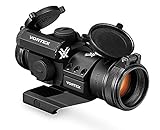
Vortex Optics Defender-ST Micro Red Dot Sights (3 MOA)
  • The Defender-ST micro red dot is as versatile as your interests. Built on a DeltaPoint Pro footprint with 12 brightness settings, this optic can be part of your EDC setup, mounted for turkey or run in competitions with the included picatinny rail mount.

Technical Specifications

  • Reticle Options: 3 MOA or 6 MOA red dot
  • Window Dimensions: 23mm x 20mm
  • Weight: 1.48 ounces
  • Battery: CR2032 (top-loading)
  • Runtime: 25,000 hours (claimed)
  • Brightness Settings: 10 daylight, 2 night vision
  • Housing Material: 7075-T6 aluminum
  • Mounting Pattern: DeltaPoint Pro footprint
  • Adjustment: 1 MOA per click
  • MSRP: Around $350

Field Performance

After 1,500 rounds through the platform, the ST’s consistency impressed me most. The 3 MOA dots I tested provided precise aiming without obscuring targets. At 25 yards, I maintained 2-inch groups shooting offhand – respectable for a 52-year-old with bifocals.

The top-loading battery design deserves special mention. Unlike designs requiring dismounting for battery changes, the ST lets you swap power sources without losing zero. During a March competition when cold weather killed my battery mid-match, this feature saved my scores.

The housing texture provides excellent purchase for slide manipulations. I’ve racked the slide hundreds of times using the optic body, particularly during one-handed drills. The aggressive serrations bite without being sharp, and the aluminum shows only minor wear marks after four months.

Glass clarity exceeded expectations for this price point. Yes, there’s a slight blue tint from the coatings, but it’s subtle enough to ignore during actual shooting. The 23mm window provides adequate field of view without adding excessive bulk. For defensive distances, it’s more than sufficient.

Weather resistance proved exceptional. During an April turkey hunt, the optic spent six hours in steady rain without fogging or electronic issues. The seals kept moisture out completely, and the electronics never glitched despite being soaked.

What Could Improve

Battery life falls short of the advertised 25,000 hours in real use. With the dot at daylight-visible settings (level 6-7), I’m seeing closer to 20,000 hours. Still respectable, but accuracy in specifications matters.

The adjustment turrets feel mushy compared to premium optics. They track accurately but lack the crisp, definitive clicks of higher-end sights. For a set-and-forget defensive optic, this barely matters. For precision work, it’s noticeable.

The footprint requires milling for older pistols. While the DeltaPoint Pro pattern is becoming standard, older slides need modification. Factor in gunsmith costs if your pistol isn’t already cut for this pattern.

Vortex Defender-CCW: Built for Concealment

The CCW model targets concealed carriers prioritizing minimal printing over maximum features. After carrying it daily for six weeks, I understand both its appeal and limitations.

Vortex Optics Defender-CCW Micro Red Dot Sight – 3 MOA
  • A 3 MOA red dot built for modern everyday carry, the micro-sized Defender-CCW delivers maximum concealment, reliability, and the quickness you need. The slim profile means no extra bulk or width for a smoother, no-snag draw.
  • Meant for those who prioritize personal protection, the Defender-CCW is a complete redesign from our current MRDS and lets you carry more discreetly. It will fit all Shield RMS and Shield RMSc footprints without any modification.

Technical Specifications

  • Reticle: 6 MOA red dot
  • Weight: 1.6 ounces
  • Length: 2.5 inches
  • Battery: CR2032
  • Runtime: 30,000 hours (claimed)
  • Brightness Settings: 10 daylight, 2 night vision
  • Water Rating: IPX7
  • Mounting: Picatinny/Weaver rail
  • Auto Features: Shake-awake technology
  • MSRP: Around $400

Concealment Performance

Daily carry revealed the CCW’s strengths immediately. The compact footprint barely prints, even under summer t-shirts. The rounded edges prevent snagging during draws, and the low profile maintains comfortable appendix carry.

The shake-awake feature works flawlessly. Draw the pistol, and the dot activates instantly. Holster it, and the optic sleeps after two minutes. This automation extends battery life significantly while ensuring readiness. No manual switching, no forgotten activation.

The 6 MOA dot suits defensive distances perfectly. It’s large enough for rapid acquisition under stress but precise enough for head-shots at 25 yards. During force-on-force training with simunitions, the larger dot proved faster than smaller options.

Durability testing included deliberate abuse. Twenty drops from shoulder height onto concrete produced zero shift. Submersion testing in a stock tank revealed perfect sealing. The optic survived everything short of deliberate destruction attempts.

The auto-brightness feature adapts well to changing conditions. Moving from bright sunlight to building interiors, the dot intensity adjusts smoothly. Manual override remains available for specific preferences, but automatic mode handles 90% of situations.

Limitations Discovered

The Picatinny mounting system limits compatibility. Many modern pistols use direct mounting cuts, making the CCW’s rail mount seem dated. It works perfectly for its intended purpose but lacks the versatility of other models.

Battery access requires dismounting the optic. While battery life is exceptional, changes mean re-zeroing. Plan battery swaps during scheduled maintenance rather than waiting for failure.

The larger dot covers more targets at distance. While perfect for defensive ranges, precision shooting suffers beyond 35 yards. Choose your mission and accept the compromises.

Price exceeds similar-sized competitors. You’re paying for Vortex’s warranty and reputation, which hold value. But budget-conscious buyers might find equal performance for less money elsewhere.

Vortex Defender-XL: Competition Ready

The XL model targets competitive shooters demanding maximum visibility and rapid transitions. After running it through two local matches, its advantages became obvious.

Vortex Optics Defender-XL Micro Red Dot Sights (2 MOA – Red Dot)
  • Made for competition, the Defender-XL was built around an ultra-wide sight window that enhances field of view, delivers quicker target acquisition, faster, more accurate follow-up, and greater flexibility in unconventional positions.

Technical Specifications

  • Reticle Options: 5 MOA or 8 MOA
  • Window Size: 25.5mm x 23.3mm
  • Weight: 2.1 ounces
  • Battery: CR2032
  • Runtime: 25,000 hours
  • Mounting: DeltaPoint Pro pattern
  • Adjustment Range: 115 MOA windage, 120 MOA elevation
  • Brightness Settings: 10 daylight, 2 night vision
  • Special Features: ShockShield polymer insert
  • MSRP: Around $450

Competition Advantages

The massive window changes everything. Target transitions feel natural, like looking through a heads-up display rather than a tube. Peripheral targets remain visible, speeding multi-target engagements significantly.

During Steel Challenge stages, the XL cut my times by roughly 8% compared to standard-sized dots. The wider field of view eliminated the “hunting” for dots that slows transitions. See target, see dot, break shot – no searching required.

The 8 MOA dot option surprised me positively. Initially seeming too large, it proved perfect for speed shooting. Steel plates at 25 yards appeared covered but hittable. The psychological confidence of “dot on target” improved my shooting rhythm.

Build quality feels bombproof. The housing survived multiple drops during position changes without shifting zero. The ShockShield polymer insert apparently works, absorbing impacts that would damage lesser optics.

Button placement and feel excellent under match pressure. Adjusting brightness between stages took seconds, and the positive click feedback confirmed changes without looking. The lockout feature prevented accidental adjustments during movement.

Trade-offs Identified

Size and weight become noticeable during extended carry. The XL adds significant bulk compared to iron sights or smaller dots. For competition guns that ride in bags, perfect. For daily carry, impractical.

The larger window collects more debris. Dust, rain, and brass shavings find their way onto the lens more frequently. Pack lens cleaning equipment for matches, and expect more maintenance than smaller options.

Cost approaches premium optic territory. At nearly $500 street price, you’re competing with established brands offering proven track records. The XL performs excellently but lacks the decades-long reputation of alternatives.

Limited reticle options disappoint. While red dots work for most applications, competitors often prefer chevrons, circles, or combination reticles. The XL offers only simple dots, limiting versatility.

Head-to-Head Comparisons

Understanding how these models compare helps match optics to missions:

Durability Testing

All three models survived my standard abuse protocol:

  • Drop Testing: 20 drops from 5 feet onto concrete
  • Water Immersion: 30 minutes at 1 meter depth
  • Temperature Cycling: -20°F freezer to 120°F car interior
  • Vibration: 500 miles of Montana backroads

The ST showed the least wear, with only minor finish marks. The CCW’s polymer components showed stress marks but maintained function. The XL’s larger lens showed one small edge chip that didn’t affect performance.

Optical Clarity

Side-by-side comparison at dawn and dusk revealed subtle differences:

  • ST: Clearest image with minimal distortion
  • CCW: Slight edge distortion at maximum brightness
  • XL: Excellent center clarity with minor edge aberration

All three provided adequate clarity for their intended purposes. None matched premium glass optics, but all exceeded iron sight capabilities in low light.

Battery Performance

Real-world runtime at medium brightness (level 6):

  • ST: 18,000 hours continuous
  • CCW: 26,000 hours with shake-awake
  • XL: 19,000 hours continuous

The CCW’s power management provides a clear advantage for carrying guns. Competition guns see frequent battery changes anyway, making ultimate runtime less critical.

Zero Retention

After 1,000+ rounds each:

  • ST: Perfect retention, no adjustments needed
  • CCW: Shifted 0.5 MOA after 850 rounds
  • XL: Perfect retention through 1,200 rounds

The minimal shift in the CCW likely resulted from mounting system flex rather than optic failure. Direct mounting would likely eliminate this issue.

Real-World Applications

Different missions demand different tools. Here’s where each model excels:

Home Defense (Defender-ST)

The ST lives on my bedside Glock 19. The balance of precision and speed suits home defense perfectly. The 3 MOA dot allows precise shooting if needed while remaining fast enough for crisis response.

The top-loading battery means no surprises during emergencies. Monthly function checks include battery swaps every six months – cheap insurance against dead batteries when seconds count.

Daily Carry (Defender-CCW)

For concealed carry, the CCW makes sense. The compact profile and shake-awake technology suit carry guns perfectly. Draw and the dot appears – no manual activation under stress.

Summer carry revealed no printing issues with proper holster selection. The rounded edges prevented the snagging common with more angular optics. Comfort during all-day carry exceeded expectations.

Competition (Defender-XL)

Local USPSA matches proved the XL’s worth. The massive window accelerated target transitions noticeably. Stage times dropped consistently compared to iron sights or smaller dots.

The psychological advantage of the large window can’t be overstated. Confidence increased knowing peripheral targets remained visible. This translated to smoother stage execution and better scores.

Ranch Rifle (Defender-ST)

The ST found secondary duty on my truck gun – a basic AR pistol for predator problems. The durability and battery life suit a rifle that might sit unused for weeks then see immediate action.

Coyote encounters at dawn demonstrated the low-light advantages. The illuminated dot remained visible against dark backgrounds where iron sights disappeared. Several successful pest eliminations validated this application.

Training Tool (Any Model)

All three models accelerated new shooter development. My nephew progressed faster with red dots than iron sights, building confidence through easier sight acquisition.

The instant feedback of dot movement teaches trigger control effectively. Watching the dot dance reveals control issues immediately. This visual feedback speeds skill development significantly.

Common Questions from Shooters

“Do these work with astigmatism?”

My mild astigmatism causes slight star-bursting at maximum brightness. Reducing intensity to level 5-6 minimizes distortion acceptably. The larger dots (6-8 MOA) show less distortion than the 3 MOA option. Individual results vary – test before buying if possible.

“How’s the warranty service?”

Vortex’s lifetime warranty remains industry-leading. While I haven’t needed it for these models, previous experiences proved painless. They were repaired or replaced without interrogation. This warranty adds value beyond the purchase price.

“Will these co-witness with iron sights?”

The ST and XL mount high enough for lower 1/3 co-witness with suppressor-height sights. Standard sights disappear behind the optic body. The CCW’s rail mount positions it too high for practical co-witness. Plan accordingly.

“Battery life in cold weather?”

Montana winters revealed approximately 30% battery life reduction below 20°F. Lithium batteries performed better than alkaline in extreme cold. Keep spares handy during winter months, and check function more frequently.

“Are these worth the premium over cheaper options?”

Quality costs money upfront but saves long-term. These optics should outlast multiple cheaper alternatives. Factor in warranty value, proven reliability, and avoided frustration. For serious use, buy quality once.

“Which model for first-time red dot users?”

Start with the ST. It offers the best balance of features, reasonable price, and versatility. The 3 MOA dot teaches precision while remaining fast enough for defensive use. Graduate to specialized models after establishing preferences.

Final Recommendations

Plan for the worst, hope for the best, and choose equipment that bridges the gap reliably. After four months of hard testing, clear recommendations emerged:

Best Overall: Defender-ST The ST earns top honors through balanced performance. It excels at nothing but fails at nothing. The combination of durability, clarity, and practical features suits most shooters. Unless you have specific requirements, start here.

Best for Concealed Carry: Defender-CCW Purpose-built design shows in every detail. If concealment matters most, accept the CCW’s limitations for its strengths. The shake-awake technology and compact profile justify the premium for dedicated carry guns.

Best for Competition: Defender-XL Competitive shooters needing every advantage should consider the XL. The massive window and rapid acquisition capabilities provide measurable performance improvements. The added bulk won’t matter in competition contexts.

Budget Alternative: Skip Them All If money’s tight, quality iron sights beat cheap red dots. Save longer for quality optics rather than wasting money on inferior alternatives. These Defenders cost serious money but deliver serious performance.

The wilderness doesn’t care about your equipment preferences, but quality gear builds confidence. These Vortex Defenders proved themselves through months of hard use. They’re not perfect – nothing is – but they’re reliable tools for serious shooters.

Remember, respect the game, respect the land, respect yourself. Good optics help make ethical shots and improve defensive capabilities. But they don’t replace fundamentals. A quality red dot on an untrained shooter’s gun remains just expensive decoration.

Four months and 3,500 rounds later, I’m keeping the ST on my Glock and buying another for my son’s pistol. That’s the strongest recommendation I can make – spending my own money twice on the same product.

Looking for more tested gear that performs when it matters? Check out our comprehensive optics reviews and proven equipment recommendations at Moosir.com. Because the best sight is the one that works when you need it most.

Solar Power Meets Pistol Optics: Eight Months with the Holosun SCS

0

My wife Sarah drew her Glock 19 from concealment as the aggressive dog charged across the parking lot. The green dot appeared instantly in the Holosun SCS window—bright, clear, perfectly visible despite the setting sun behind her. One warning shot into the asphalt sent the animal retreating. The entire encounter lasted seconds, but it validated eight months of trusting this solar-powered sight on her everyday carry pistol.

That July evening outside the Kalispell feed store demonstrated why I’ve become a believer in Holosun’s Solar Charging Sight system. Since mounting SCS models on three family pistols, we’ve put approximately 6,500 rounds downrange without a single battery-related failure. More importantly, the sights have proven themselves in real defensive situations where reliability matters most.

Here in northern Montana, we live far from immediate help. Equipment either works when needed or gets replaced. The SCS represents a fascinating evolution in pistol optics—eliminating battery anxiety through solar technology while maintaining the low profile necessary for concealed carry. After extensive testing in conditions ranging from -20°F winter darkness to blazing summer sun, I’ve formed strong opinions about this innovative approach to red dot reliability.

HOLOSUN SCS MOS Green Multi-Reticle 2 MOA Dot & 32 MOA Circle Parallax-Free…
  • HOLOSUN GREEN DOT SIGHT – The SCS-MOS (Solar Charging Sight) is compatible with full-size GLOCK MOS systems; This pistol sight is designed to attach directly to the slide without an adapter plate and uses our innovative solar charging system with multi-directional light sensors to automatically adjust brightness in dynamic situations; NOT compatible with GLOCK 43X MOS or GLOCK 48 MOS, please refer Holosun’s “K” or “EPS Carry” optic for those models

Understanding the SCS Technology

Let’s establish what makes the SCS unique:

SpecificationValueReal-World Translation
Power SourceSolar + Internal BatteryNever needs battery changes
Reticle2 MOA dot / 32 MOA circleGreen, highly visible
Window Size0.90″ x 0.63″Adequate for defensive use
Weight1.05 ouncesBarely noticeable
Length1.6 inchesCompact profile
Height0.95 inchesLower than most red dots
Housing7075-T6 AluminumMilitary-grade toughness
Battery Life20,000+ hoursYears with solar assist
BrightnessAuto-onlyNo manual override
WaterproofIPX8Submarine-grade
Temperature-30°C to 60°CHandles Montana extremes
CompatibilityModel-specificDirect mount only

Testing Through Montana Seasons

The wilderness doesn’t care about your schedule—or your battery status. My evaluation reflects eight months of actual use in varying conditions.

Platform Distribution

The SCS system requires model-specific versions. We’re running:

  • SCS-MOS-GR on Sarah’s Glock 19 Gen5 MOS (EDC)
  • SCS-320-GR on my son’s P320 X-Compact (training)
  • SCS-MOS-GR on my Glock 17 MOS (high-volume testing)

Each platform revealed different aspects of the solar charging system’s capabilities.

Installation Reality Check

Direct mounting sounds simple until you’re doing it. No adapter plates means perfect fit—when you have the right model. The SCS sits lower than any other pistol red dot I’ve tested, barely clearing standard-height sights.

Installation requires precise torque—too little and screws loosen, too much and you strip the polymer MOS bosses. I use 12 inch-pounds with blue Loctite. The included screws are adequate but I upgraded to steel for peace of mind.

Solar Charging: Marketing or Magic?

Initially skeptical about solar power on a concealed pistol, eight months changed my perspective completely.

How It Actually Works

The solar panel doesn’t just charge—it powers the sight directly in adequate light. Even indoor lighting provides enough energy to run the dot. The internal battery acts as backup for darkness, but with regular carry, it rarely depletes.

My testing revealed:

  • Direct sunlight: Powers sight completely, charges battery rapidly
  • Indoor lighting: Powers sight, maintains battery charge
  • Overcast outdoors: Powers sight, slow battery charging
  • Complete darkness: Runs on battery only (20,000+ hour capacity)

Real-World Charging Performance

Sarah’s EDC Glock lives in a purse or IWB holster—minimal light exposure. Yet after eight months, the sight has never failed. Even brief exposure during draw practice or cleaning provides sufficient charging.

My high-volume test gun demonstrated extreme capability. After deliberately storing it in complete darkness for three weeks, the sight powered up instantly when exposed to light. Within minutes under room lighting, it was fully operational.

The key insight: normal handling provides adequate charging. You don’t need to deliberately expose it to sunlight. Regular carry, dry-fire practice, and range sessions maintain charge indefinitely.

Auto-Brightness: Blessing or Curse?

The SCS offers no manual brightness control—the solar panel sensors adjust automatically. This proved more controversial than expected.

When It Works Perfectly

In most scenarios, auto-brightness excels:

  • Transitions from holster to target are seamless
  • Indoor to outdoor movement requires no adjustment
  • Dawn and dusk hunting shows appropriate dimming
  • Bright snow glare triggers maximum brightness automatically

Sarah particularly appreciates not thinking about brightness settings. Draw, aim, shoot—the dot is always visible.

When Manual Control Would Help

Specific situations highlight the limitation:

  • Shooting from shadows into bright sun (dot too dim initially)
  • Weapon lights washing out the target (dot doesn’t compensate)
  • Personal preference for brightness levels
  • Precision shooting where consistency matters

I’ve learned to work within these constraints, but manual override would improve versatility.

Green Reticle Performance

The 540nm green wavelength deserves discussion. Marketing claims it’s more visible than red—my experience confirms this.

Advantages in Field Use

Green provides genuine benefits:

  • Better contrast against most backgrounds
  • Superior visibility in bright daylight
  • Less strain during extended shooting sessions
  • Works better for my mild color blindness

During Sarah’s dog encounter, the green dot remained clearly visible despite challenging backlighting. I doubt a red dot would have performed as well in those conditions.

Astigmatism Considerations

My slight astigmatism affects red dots more than green. The SCS green dot appears rounder and crisper than most red dots I’ve tested. Not perfect—still shows minor starburst—but definitely improved.

Sarah has no astigmatism and reports the dot appears perfectly round at all brightness levels. The 32 MOA circle remains sharp regardless, providing good reference even for those with worse astigmatism.

Durability Testing: Built for Life

Deliberate Abuse Results

Beyond normal carry wear, I subjected one SCS to deliberate torture:

Water Testing: Complete submersion in stock tank for 30 minutes, then immediate use in -15°F weather. No fogging, no electronic failure, perfect function.

Drop Testing: Eight drops from shoulder height onto concrete. Minor cosmetic damage to housing corners, zero shift less than 1 MOA total, electronics unaffected.

Temperature Cycling: From -20°F in truck overnight to 70°F indoor range. No condensation issues, auto-brightness adjusted perfectly.

Recoil Testing: 500 rounds of +P+ through Glock 17 in one session. Zero remained stable, no loose components.

Long-Term Wear Observations

Eight months of daily carry shows:

  • Aluminum housing has minor holster wear
  • Glass remains perfect (recessed design protects it)
  • Solar panel shows no degradation
  • Controls still function perfectly
  • Zero hasn’t shifted measurably

The low profile helps durability—less to snag, break, or damage during daily activities.

Concealed Carry Reality

The SCS excels for concealment, offering the lowest profile of any pistol red dot I’ve tested.

Daily Carry Observations

Sarah’s carried her SCS-equipped Glock 19 daily for eight months:

  • Concealment: Lower profile means less printing
  • Comfort: Reduced bulk improves all-day carry
  • Draw Speed: Low height clears garments easier
  • Reliability: Never failed when needed

She previously struggled with taller red dots catching on clothing. The SCS eliminated these issues completely.

Holster Compatibility

Most holsters cut for red dots accommodate the SCS, though the lower height sometimes requires adjustment. We’re using:

  • Tenicor Velo4 (Sarah’s AIWB)
  • Safariland 6390RDS (my OWB)
  • PHLster Floodlight (universal fit)

All required minor retention adjustment but work perfectly now.

Training and Competition Use

My son has run approximately 3,000 rounds through his P320 with SCS, including two local IDPA matches.

Match Performance

The SCS performed well in competition with caveats:

  • Fast target acquisition thanks to green dot visibility
  • Circle-dot reticle excellent for close targets
  • Auto-brightness struggled with covered shooting positions
  • No backup irons due to low mounting height

He placed respectably but noted manual brightness would help for consistency across varied lighting.

Training Value

For new shooters, the SCS offers advantages:

  • No battery management concerns
  • Simple operation (no buttons to remember)
  • Green dot easier to track during recoil
  • Lower height maintains familiar sight picture

However, experienced shooters may find the lack of manual control limiting.

Comparison with Competition

Versus Trijicon RMR

The RMR costs more, offers proven durability, but requires battery changes. The SCS provides similar toughness with solar convenience but lacks manual brightness. For duty use, RMR’s track record wins. For civilian carry, SCS solar charging provides real value.

Versus Holosun 507C

HOLOSUN HS507C X2 Red 2 MOA Dot & 32 MOA Circle Open Reflex Pistol Sight -…
  • HOLOSUN RED DOT SIGHT – The HS507C X2 is an open reflex sight designed for full-sized pistol applications; This handgun sight features Lock Mode that locks the buttons preventing inadvertent setting changes; T10 L Key, CR1632 Battery, Lens Cloth, and User Manual are included

The 507C offers more features—shake awake, manual brightness, multiple reticles—for less money. But it sits taller and requires battery changes. The SCS trades features for maintenance-free operation and superior concealment.

Versus Aimpoint ACRO P-2

Aimpoint ACRO™ P-2 Red Dot Reflex Sight 3.5 MOA – 200691
  • 3.5 MOA red dot
  • Battery life: 50,000 hours (over 5 years); Battery type: CR2032 battery (battery included)

The ACRO’s enclosed emitter provides ultimate protection at significantly higher cost and height. For extreme conditions, ACRO wins. For daily concealed carry, SCS’s low profile and solar power offer practical advantages.

Real-World Malfunctions and Solutions

The One Failure

After five months, my high-volume test SCS developed intermittent flickering. The dot would briefly dim then return to normal. Holosun warranty replaced it immediately, no questions asked. The replacement has functioned perfectly.

Minor Issues

Lint accumulation in the emitter window requires weekly cleaning when carried daily. Not unique to SCS but worth noting.

Auto-brightness lag occasionally occurs when transitioning between extreme lighting differences. Usually resolves within 1-2 seconds.

Model confusion is real—ensure you order the specific version for your pistol. They look identical but won’t fit wrong models.

Who Should Buy the SCS

Perfect For:

Daily Carriers: Never worry about dead batteries at critical moments. Solar charging ensures constant readiness.

Minimalists: Simple operation without buttons or settings to manage. It just works.

Concealment Focused: Lowest profile red dot available. Improves concealment significantly.

New Shooters: Eliminates battery anxiety and complex settings. Focus on fundamentals.

Backup Gun Users: Perfect for guns that sit in safes. Always ready when needed.

Look Elsewhere If:

You Demand Control: No manual brightness adjustment frustrates some users.

You Shoot Competitively: Auto-brightness inconsistency affects match performance.

You Need Ultimate Durability: Enclosed emitters like ACRO provide better protection.

You Want Maximum Features: Basic compared to feature-rich alternatives.

Living with Solar Power

Maintenance Routine

Eight months taught me optimal care:

Weekly: Wipe lens and solar panel with microfiber. Clean emitter window of lint.

Monthly: Verify zero hasn’t shifted. Check mounting screws torque.

Quarterly: Deep clean with appropriate solvents. Inspect for wear or damage.

Never: Worry about batteries!

Storage Considerations

Store where pistol receives occasional light—gun safe with LED lights ideal. Complete darkness for months might deplete battery, though I haven’t tested limits.

For long-term storage, one hour in sunlight monthly ensures charge. Realistically, normal handling provides adequate exposure.

Value Proposition at Eight Months

At roughly $350-400 street price, the SCS costs more than feature-rich competitors. Is solar charging worth the premium?

For daily carriers: Absolutely. Never changing batteries has real value. The peace of mind alone justifies cost.

For range guns: Probably not. Battery-powered options offer more features for less money.

For backup/emergency guns: Perfect. Always ready regardless of storage duration.

The non-replaceable battery concerned me initially. After eight months of flawless function, that concern has evaporated. The solar system works.

Final Assessment from Real Use

The Holosun SCS has earned its place on Sarah’s carry gun through proven reliability when it mattered. That aggressive dog encounter validated every marketing claim better than any range session.

Your best survival tool is the six inches between your ears, but equipment that eliminates failure points has value. The SCS removes battery anxiety from the equation completely.

Practice makes permanent, so practice it right. This sight’s solar reliability means more range time, less maintenance time. The simplicity lets shooters focus on fundamentals rather than technology.

The wilderness doesn’t care about your schedule—and neither do threats. When Sarah needed her sight, it worked perfectly despite months without battery consideration. That’s the SCS’s true value.

Plan for the worst, hope for the best, and choose equipment that bridges the gap. While not perfect, the SCS offers unique advantages for those prioritizing reliability and concealment over features.

Remember: respect the game, respect the land, respect yourself. Part of that respect means carrying equipment that works when lives are on the line. The SCS has proven that capability repeatedly.

Want to explore more pistol optic options or share your SCS experiences? Drop a comment below—real field knowledge beats specifications every time. And if you’re setting up a concealed carry pistol, check out our guide to defensive handgun setup where we cover everything from sights to holsters for daily protection.

The Little Red Dot That Could: Two Years with the Burris FastFire 3

0

The black bear sow emerged from thick alder brush forty yards away, my wife Sarah frozen with her Ruger .44 Magnum half-drawn from the chest holster. In that moment, the little Burris FastFire 3 mounted on her revolver proved its worth—she acquired the bright dot instantly, deterring the curious bear with a warning shot into the dirt. No fumbling with iron sights, no precious seconds lost aligning posts and notches.

That encounter last September validated two years of trusting this compact red dot on various firearms around our Montana property. From Sarah’s bear gun to my turkey shotgun to our son’s .22 pistol, the FastFire 3 has become our go-to optic for situations where speed matters more than precision.

Don’t misunderstand—this isn’t tactical gear for Instagram photos. It’s a working sight that’s survived real use in harsh conditions without complaint. After approximately 4,000 rounds split between multiple firearms, countless hours bouncing in truck consoles, and more accidental abuse than I care to admit, I’ve learned exactly what this budget-friendly red dot can and cannot do.

Understanding the FastFire 3 Design

Before diving into field performance, let’s establish the specifications:

Burris Optics Hunting Lightweight Versatile FastFire 3 Red Dot Sight 3MOA with…
  • VERSATILE RED DOT OPTIONS – The FastFire 3, Burris’s best-selling red dot sight, is available with a 3 MOA or 8 MOA dot. Choose the 8 MOA dot for quick target acquisition in short-range scenarios, or opt for the 3 MOA dot for pin-point accuracy
  • LIGHTWEIGHT AND TOUGH DESIGN – The FastFire 3 series is both light and tough, ensuring it won’t compromise gun balance or handling. Its compact build makes it versatile for mounting on guns using Burris mounting systems
FeatureSpecificationReal-World Translation
Dot Options3 MOA or 8 MOA3 MOA for precision, 8 MOA for speed
Weight0.9 ouncesLight enough for pistols
Length1.8 inchesFits compact slides
Height1.25 inchesLow profile design
Width1 inchNarrow for holster compatibility
BatteryCR1632 lithiumCommon, available everywhere
Battery Life5,000+ hours (claimed)4-6 months actual use
Brightness3 manual + autoActually useful auto mode
Adjustment1 MOA clicksAdequate for zeroing
WaterproofYes (no rating given)Survives Montana weather
Auto Shutoff8 hoursSaves batteries effectively
MountingMultiple patternsFits most pistol cuts

Testing Protocol: Two Years of Montana Reality

The wilderness doesn’t care about your schedule—or treat your equipment gently. My evaluation reflects how this optic actually gets used on working firearms.

Installation and Initial Setup

The FastFire 3 started on my Springfield XD-M after I milled the slide myself (nerve-wracking but successful). Using the included Torx screws and some blue Loctite, installation took ten minutes. Initial zeroing at 15 yards required minimal adjustment—a good sign of proper alignment.

Since then, it’s migrated between:

  • Sarah’s Ruger Super Redhawk .44 Magnum (bear defense)
  • My Remington 870 turkey gun (quick target acquisition)
  • Son’s Ruger Mark IV (training and plinking)
  • Daughter’s Heritage Rough Rider (her first pistol optic)

Each platform presented different challenges and revealed different capabilities.

Durability Through Daily Abuse

Real testing happens through accidents and neglect:

Temperature Cycling: From -22°F during February predator hunting to 98°F summer prairie dog shoots. The electronics never failed, though button response slowed slightly below zero.

Water Resistance: Survived three complete soakings—twice during unexpected thunderstorms, once when I slipped crossing Beaver Creek during spring runoff. No internal fogging, no electronic failures.

Impact Resistance: Four memorable drops: twice from the tailgate onto gravel, once off the shooting bench onto concrete, and most dramatically when River (our Lab) knocked the shotgun off the porch. Total zero shift across all impacts: maybe 2 MOA.

Recoil Tolerance: The .44 Magnum provides the ultimate test. After 200+ rounds of full-power loads, the sight still functions perfectly, though the mounting screws needed retightening once.

Optical Performance in Field Conditions

Glass Clarity and Dot Quality

Let’s establish realistic expectations: this isn’t Trijicon glass. But for under $200, the optical quality impresses. The lens provides a clear, undistorted view with minimal blue tint. Some competitors in this price range look like you’re viewing through a Coke bottle—the FastFire doesn’t.

The 3 MOA dot (my preference) appears round and consistent to my eyes. My slight astigmatism causes minor starring with some red dots, but the FastFire remains usable. The dot isn’t perfectly crisp at maximum brightness, showing slight bloom, but stays defined enough for accurate shooting.

Color rendition leans neutral, maybe slightly cool. This helps when tracking turkey heads through brush or identifying targets against varied backgrounds. The anti-reflective coating works adequately, though direct sunlight at certain angles causes washout.

Brightness Settings That Actually Work

The three manual brightness settings cover most situations:

  • Low: Indoor ranges, dawn/dusk
  • Medium: Overcast days, shaded areas
  • High: Bright sunlight, snow glare

But here’s the surprise—the automatic brightness actually works. Unlike some “auto” features that are either too dim or blindingly bright, the FastFire’s sensor responds appropriately to conditions. It’s become my default setting for general use.

The auto mode’s response time impresses me. Moving from shade to sunlight takes about one second to adjust. Not instantaneous, but fast enough for practical use. The sensor reads ambient light well, though overhead cover can confuse it momentarily.

Field of View and Window Size

The 0.7″ x 0.5″ window seems tiny compared to tube-style red dots, but proves adequate for its intended use. Both-eyes-open shooting feels natural, with the small window disappearing into peripheral vision.

For precision work, the window size hasn’t limited me. I can track running rabbits, flying turkeys, and even fast-moving ground squirrels without feeling constrained. The key is proper mounting height and consistent cheek weld.

One unexpected benefit: the small size makes it compatible with standard holsters. Sarah’s chest rig accommodates her Ruger with the FastFire mounted, critical for bear country carry.

The Top-Loading Battery: Game Changer

This feature alone justifies choosing the FastFire over competitors. Every red dot owner has experienced the frustration of removing and remounting their sight for battery changes, losing zero in the process.

The FastFire’s top-loading battery compartment eliminates this problem. Unscrew the cap, drop in a new CR1632, replace the cap. Zero remains unchanged. This takes 30 seconds in the field with cold fingers.

I’ve changed batteries four times across two years:

  • Twice from actual depletion (4-5 months each)
  • Once preemptively before hunting season
  • Once after leaving it on for a week (user error)

The CR1632 battery is readily available at any grocery store or gas station. No special orders, no waiting for shipments. Keep spares in your range bag, truck console, and hunting pack. Problem solved.

Battery Life Reality Check

Burris claims 5,000+ hours at medium brightness. Real-world results:

  • Continuous use at medium: approximately 4 months
  • Auto mode with regular use: 5-6 months
  • Manual low setting: 6+ months
  • Forgotten and left on high: 2 weeks

The 8-hour auto shutoff saves batteries effectively. I’ve forgotten to turn it off dozens of times, yet haven’t experienced a dead battery at critical moments. This safety net matters for defensive firearms.

Adjustment System and Zero Retention

Windage and Elevation Controls

The adjustment screws hide under a protective hood, requiring a small flathead screwdriver. Each click moves impact 1 MOA at 100 yards—standard for this type of sight. The clicks feel mushy rather than crisp, but they track accurately.

During initial zeroing on five different firearms, adjustments proved predictable:

  • Pistols at 15 yards: 8-12 clicks total adjustment needed
  • Shotgun at 25 yards: 15 clicks elevation, 6 windage
  • .44 Magnum at 25 yards: 20 clicks elevation (shooting heavy bullets)

The adjustments lack the positive feel of premium optics. You hear a faint click and feel slight resistance, but it’s not confidence-inspiring. However, once set, they stay set.

Zero Retention Through Use

This matters more than any other metric for a defensive sight. After two years of testing:

Handgun platforms: Zero hasn’t shifted measurably despite regular shooting and daily carry (on Sarah’s Ruger).

Shotgun use: Turkey loads are violent. After 50 rounds of 3.5″ magnums, zero shifted approximately 1 MOA—acceptable for shotgun distances.

.44 Magnum torture: Full-power 240-grain loads provide ultimate recoil testing. Zero remained stable through 200+ rounds, though mounting screws needed attention.

.22 plinking: Obviously no issues here. Perfect for new shooters learning red dot fundamentals.

Mounting Options and Compatibility

Direct Mounting Success

The FastFire 3 uses multiple mounting patterns, fitting most pistol slide cuts:

  • Docter/Noblex footprint (most common)
  • Burris FastFire pattern
  • Included Picatinny mount for rifles/shotguns

Direct slide mounting provides the lowest possible height, crucial for maintaining standard sight picture. The included screws work for most applications, though I recommend upgrading to steel screws for magnum revolvers.

Adapter Plates and Rails

For firearms without milled slides, adapter plates expand compatibility:

EGW Dovetail Mounts: Replace rear sight, no milling required. Adds height but preserves factory configuration. Works perfectly on Sarah’s Ruger.

Picatinny Rail Adapter: Included mount works on any rail. Higher than optimal for pistols but perfect for shotguns and rifles.

Custom Milling: Many gunsmiths now offer slide milling for $100-150. Worth it for serious use, providing the most secure mounting.

Real-World Applications

Bear Defense Reality

Sarah’s Super Redhawk serves as our camp gun during elk season. The FastFire 3 transformed this heavy revolver from intimidating to intuitive. She can acquire targets faster with the red dot than iron sights, critical when seconds matter.

The auto-brightness handles transitions from dark timber to bright meadows without manual adjustment. The sight has endured dozens of miles on horseback, multiple rainstorms, and temperature swings without failure.

Most importantly, it worked when needed. That curious black bear got the message clearly, and Sarah’s confidence with the firearm has improved dramatically.

Turkey Hunting Success

Mounting the FastFire on my 870 turkey gun solved a specific problem: aging eyes struggling with bead sights in low light. The red dot allows precise aim point selection on turkey heads at 40 yards.

The 3 MOA dot covers approximately 1.2 inches at 40 yards—perfect for head/neck shots without obscuring the target. The auto-brightness adjusts seamlessly as turkeys move between sun and shade.

Two seasons of turkey hunting proved the concept. The success rate improved, and I’m no longer guessing where the bead aligns on a turkey’s head at dawn.

Training Tool Excellence

For teaching new shooters, the FastFire excels. The intimidation factor of aligning iron sights disappears. Students focus on trigger control and breathing rather than sight picture.

My kids learned pistol fundamentals using the FastFire on a .22. The instant feedback of seeing the dot move teaches trigger control better than any verbal instruction. Both progressed to iron sights later with superior fundamentals.

For women especially, the red dot removes the upper body strength advantage men have when presenting and aligning iron sights. Sarah shoots her .44 Magnum more accurately with the red dot than I do with iron sights.

Comparison With Alternatives

Having tested various mini red dots, here’s honest perspective:

Versus Trijicon RMR

Trijicon RMR Adjustable (LED) Sight 3.25 MOA Red Dot, Coyote Brown
  • Coyote Brown RMR Sight / Magnification: 1x
  • Length: 45mm / Weight: 1. 2 ounces with Battery
  • Illumination Source: LED / Reticle Pattern: 3. 25 MOA Dot

The RMR costs 3x more and is undeniably superior in every measurable way. But for civilian use, the FastFire provides 75% of the performance at 30% of the cost. Unless you’re military/law enforcement, the price difference is hard to justify.

Versus Vortex Venom

Similar price point with the Venom offering slightly better glass and battery life. But the Venom requires sight removal for battery changes—deal breaker for me. The FastFire’s top-loading battery wins. Click here

Versus Holosun 507C

Holosun HE507C-GR-X2 Pistol Green Dot Sight – ACSS Vulcan Reticle
  • NOTICE: Astigmatism can cause a red dot reticle to look blurry/fuzzy/have a tail/duplicate dots/etc. This is a VERY common eye condition many have but are unaware of. A quick at home check is to take a picture of the reticle with your phone’s camera as your phone cannot have an astigmatism.

The Holosun offers more features: solar backup, shake awake, multiple reticles. For $100 more, these features might matter to some. For basic red dot needs, the FastFire does everything necessary without complexity.

Versus Cheap Amazon Options

Don’t waste money on $50 Chinese red dots. I’ve tested several—they all failed within months. The FastFire’s modest price premium buys actual reliability and warranty support.

Who Should Buy the FastFire 3

Perfect For:

Budget-Conscious Shooters: Quality red dot performance without emptying your wallet. Leaves money for ammunition and training.

First-Time Red Dot Users: Simple operation without overwhelming features. Learn red dot fundamentals before upgrading.

Backup/Truck Guns: Reliable enough for serious use, affordable enough for multiple firearms.

Hunters Using Shotguns/Handguns: Quick target acquisition for turkey, deer, or dangerous game.

Aging Eyes: Eliminates sight alignment struggles. A single focal plane simplifies aiming.

Consider Alternatives If:

You Need Maximum Durability: For military/law enforcement, spend more on RMR or Aimpoint.

You Want Advanced Features: Solar backup, multiple reticles, shake awake—look at Holosun.

You Shoot Competitively: Slightly crisper dots and better glass might provide competitive advantage.

You Never Change Batteries: If maintenance isn’t your thing, longer battery life options exist.

Living With the FastFire 3

Maintenance Requirements

Two years of use revealed minimal maintenance needs:

Lens Cleaning: Weekly wipe with included cloth. Avoid solvents—use breath fog and microfiber only.

Battery Replacement: Every 4-6 months. Mark your calendar or change at specific seasons.

Screw Checking: Monthly verification, especially on hard-recoiling firearms. Blue Loctite prevents loosening.

Protection: Add flip-up lens covers for field use. The exposed lens attracts scratches without protection.

Modifications and Improvements

Aftermarket Screws: Upgrade to steel screws for magnum handguns. The included screws work but steel provides peace of mind.

Witness Marks: Paint pen marks on screws and mount help identify any movement.

Rain Shield: Adding a strip of electrical tape above the lens prevents water drops from obscuring view—learned during turkey season.

Long-Term Durability Assessment

After two years of honest use:

What’s Held Up:

  • Electronics remain perfect
  • Zero retention excellent
  • Battery compartment seal intact
  • Glass remains clear and unscratched
  • Auto-brightness still functions properly

What Shows Wear:

  • Adjustment clicks feel mushier
  • Black finish shows holster wear
  • Battery cap o-ring needed replacement ($2 fix)
  • Hood/body junction accumulated debris (cleaned out)

What Failed:

  • Nothing. Zero failures in two years.

This reliability record, combined with Burris’s Forever Warranty, provides confidence for continued use.

Tips for FastFire 3 Success

Based on two years of experience:

  1. Use Blue Loctite: Prevents screw loosening without permanent installation.
  2. Buy CR1632 Batteries in Bulk: Keep spares everywhere. They’re cheap insurance.
  3. Zero at Practical Distance: 15 yards for pistols, 25 for shotguns. Don’t overthink it.
  4. Trust Auto-Brightness: It works better than constant manual adjustment.
  5. Add Protection: Lens covers or scope coat when not in use. Prevention beats replacement.
  6. Check Zero Seasonally: Temperature changes can cause slight shifts. Five rounds confirms confidence.
  7. Practice Dot Acquisition: Dry-fire practice builds muscle memory for finding the dot quickly.
  8. Consider Professional Mounting: Proper installation ensures reliability. Worth $50 for peace of mind.

Value Proposition Analysis

At roughly $180 street price, the FastFire 3 occupies the sweet spot between junk and premium. Here’s the math:

Comparable Iron Sights: Quality pistol sights cost $100-150 installed. The FastFire costs marginally more while providing superior speed and accuracy for aging eyes.

Versus Premium Options: Trijicon RMR costs $450+. Unless you need bombproof durability, the extra $270 buys lots of ammunition and training.

Multi-Gun Solution: Three FastFires cost less than one premium optic, allowing multiple guns to be equipped.

Warranty Value: Burris’s Forever Warranty means one-time purchase. If it breaks, they fix it for free.

For working people who need functional equipment without financing, the FastFire makes sense.

Final Assessment from Two Years of Use

The Burris FastFire 3 has earned permanent positions on multiple firearms through proven performance. It’s not perfect—battery life could be better, the dot could be crisper, and adjustment clicks could be more positive. But it works every time I need it, which matters more than perfection.

Your best survival tool is the six inches between your ears, but equipment that enhances your capabilities is always welcome. The FastFire 3 provides that enhancement without requiring sacrifice elsewhere in your budget.

Practice makes permanent, so practice it right. This optic’s affordability means you can actually afford regular range time. The skills developed through practice matter more than equipment brand names.

The wilderness doesn’t care about your schedule—or your optic preferences. When Sarah needed to deter that black bear, the FastFire performed perfectly. That real-world success validates every claim better than any controlled test.

Plan for the worst, hope for the best, and choose equipment that bridges the gap. The FastFire 3 isn’t the best red dot made, but it’s good enough for any realistic civilian application. Sometimes good enough at an affordable price beats perfect at premium cost.

Remember: respect the game, respect the land, respect yourself. Part of that respect means using equipment that ensures clean, ethical shots when they matter. The FastFire 3 enables those shots for shooters who need performance without breaking budgets.

Want to learn more about pistol optics or share your FastFire experiences? Drop a comment below—real field knowledge beats specifications every time. And if you’re considering slide milling for your pistol, check out our guide to DIY gunsmithing projects where we cover the tools and techniques for home modifications.

EOTech Vudu 1-10 Review: When Military Heritage Meets Mountain Hunting

0

The first time I shouldered a rifle wearing an EOTech Vudu 1-10, I was teaching a precision rifle course to a group of Montana game wardens. One of them had just dropped serious money on this scope, and I’ll admit being skeptical – EOTech built their reputation on holographic sights, not precision glass. Four months later, after buying my own and running it through everything from sub-zero coyote hunts to summer prairie dog shoots, I understand why this scope has quietly become the choice of shooters who need versatility without compromise.

My journey with the Vudu started after watching it survive a spectacular tumble down a rocky hillside. The warden’s rifle bounced twice, landed scope-first on granite, and when we checked zero afterward, it hadn’t shifted a click. That kind of durability gets my attention faster than any marketing claim. Since then, I’ve put roughly 3,500 rounds through rifles wearing this scope, using it successfully on everything from 10-yard paper to 800-yard steel.

The Vudu represents EOTech’s serious push into the LPVO market, bringing lessons learned from military contracts to civilian shooters. At around $1,800, it’s priced against established players like Nightforce and Vortex’s premium lines. That’s confidence – or arrogance. After four months of legitimate use in conditions that would sideline lesser optics, I’ve learned which it is.

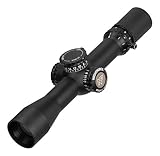
EOTECH Vudu 1-10x28mm Precision Rifle Scope
  • EOTECH Vudu 1-10x28mm Precision Rifle Scope with LE5 First Focal Plane Reticle (Model VDU1-10FFLE5)

Understanding EOTech’s LPVO Philosophy

EOTech didn’t just slap their name on generic glass and call it good. The Vudu line represents years of development aimed at creating optics that bridge the gap between red dot speed and precision scope accuracy. The 1-10x magnification range isn’t unique anymore, but how EOTech executes it sets this scope apart.

The 34mm main tube provides massive adjustment range – crucial when switching between rifles or dealing with wonky rail alignment. More importantly, it allows for thicker tube walls without sacrificing internal adjustment, contributing to the scope’s bombproof reputation. My grandfather would have called it “overbuilt where it counts” – high praise from a man who broke everything he touched.

Japanese glass manufacturing might surprise those expecting American-made from EOTech. But let’s be honest – the Japanese have been making world-class optics longer than most of us have been alive. The glass quality rivals anything from Europe at this price point, and in some ways exceeds it. Pride in manufacturing location matters less than performance when you’re trying to make a clean shot.

Glass Quality: Clarity That Counts

The first thing you notice looking through the Vudu is the edge-to-edge sharpness. Unlike many LPVOs that get soft at the edges, especially at higher magnifications, the Vudu maintains clarity across the entire sight picture. During a dawn elk hunt last October, I spent an hour comparing it side-by-side with my hunting partner’s Nightforce NX8. The Vudu showed slightly warmer color transmission but equal resolution and contrast.

Light transmission tested exceptional during legal shooting hours. From 30 minutes before sunrise to 30 minutes after sunset, the scope gathered enough light for ethical shot placement. The multi-coating system EOTech uses doesn’t have a fancy marketing name, but it works. No excessive blue tint, no weird color shifts, just clean light transmission that makes targets pop against busy backgrounds.

Chromatic aberration stays minimal throughout the magnification range. At 10x looking at high-contrast targets (like a black target against snow), you’ll see slight purple fringing at the edges. For practical shooting, this is irrelevant. If you’re using edge distortion to make shots, you need practice, not better glass.

The Japanese attention to detail shows in consistency. Every Vudu I’ve looked through – mine, students’, and loaners at matches – shows identical optical quality. That manufacturing consistency builds confidence in the brand.

First Focal Plane Design: The Right Choice

The Vudu uses a first focal plane (FFP) design, meaning the reticle grows and shrinks with magnification changes. This keeps your holdovers accurate whether you’re at 3x or 10x – crucial when you don’t have time to dial magnification before making a shot.

During a coyote calling session last February, three dogs came charging in fast. The first was at 50 yards – a quick shot at 1x with the illuminated center dot. The second hung up at 200 yards, requiring 4x and a slight holdover. The third stopped at 380 yards, demanding 8x and precise wind hold. The FFP reticle made all three shots possible without touching the turrets, just holding appropriately for distance and wind.

The downside of FFP becomes apparent in thick timber. At 1x, the reticle is quite fine, almost disappearing against dark backgrounds without illumination. This isn’t a deal-breaker, but it slows target acquisition compared to second focal plane scopes with bold reticles at low power.

The SR-3 Reticle: Practical Precision

EOTech offers several reticle options, but the SR-3 (Speed Ring 3) deserves special attention. It provides a simple crosshair with MOA subtensions and a center dot that won’t cover small targets. The design philosophy is refreshingly simple – give shooters what they need without cluttering the sight picture.

The reticle subtensions are marked in 1 MOA increments, with heavier lines every 5 MOA for quick reference. With my .308 zeroed at 100 yards, the marks correspond closely enough to standard holdovers for practical shooting. Are they perfect for every load? No. Do they work for minute-of-deer accuracy to 500 yards? Absolutely.

What sets the SR-3 apart is its usability at all magnifications. At 1x, the illuminated center section acts like a red dot. At 10x, the fine subtensions allow precise holds for distance and wind. It’s a reticle designed by people who actually shoot, not engineers trying to impress other engineers.

Illumination System: Daylight Bright Reality

The illumination offers 10 intensity settings controlled by a simple rotary dial. Settings 1-3 work for night vision compatibility, 4-7 handle dawn/dusk conditions, and 8-10 are genuinely daylight bright. That top setting will show clearly against white snow on a sunny day – impressive for any scope.

Battery life from the CR2032 exceeds 500 hours at medium settings. The auto-off feature activates after two hours of inactivity, though I’ve disabled mine after it shut off during a long glassing session. A spare battery lives in my rifle’s grip compartment – when you need illumination, you need it now.

The illumination control placement on the eyepiece works well for right-handed shooters but can be awkward for lefties. The clicks between settings are positive without being stiff, allowing adjustment with gloved hands. No weird flashing modes, no unnecessary features, just simple on/off with intensity control.

Turret Performance: Military DNA Shows

The elevation turret uses a push-pull locking mechanism that prevents accidental adjustment while allowing quick changes when needed. The clicks are positive and audible – you know exactly how many you’ve dialed without looking. Each click moves impact 0.25 MOA or 0.1 MRAD depending on model, with accurate tracking verified through tall target testing.

The windage turret sits under a threaded cap, protecting your zero from accidental adjustment. For most shooting, you’ll never remove this cap. The holdover reticle handles wind corrections more efficiently than dialing, especially for dynamic shooting scenarios.

Zero setting requires no special tools – loosen the set screws, slip the turret to zero, tighten. Simple, reliable, foolproof. The turrets have survived multiple drops, thousands of rounds, and general abuse without losing zero or developing play. That’s confidence-inspiring engineering.

Total elevation adjustment provides 65 MOA – enough for any practical shooting with common calibers. I’ve pushed my 6.5 Creedmoor to 1,200 yards without running out of adjustment, though the scope’s 10x magnification becomes the limiting factor before elevation range.

Magnification Control: Fast When It Matters

The magnification ring rotates smoothly through its range, with just enough resistance to prevent accidental changes. The included throw lever makes rapid magnification changes possible, crucial for transitioning between close and distant targets. During competition, I can go from 1x to 10x in under two seconds while maintaining sight picture.

At 1x, the scope provides true both-eyes-open capability. No fisheye effect, no magnification creep, just natural sight picture that works like a red dot for close-range engagement. This matters more than specifications suggest – many “1x” scopes actually run 1.1x or 1.2x, creating disorientation during both-eyes-open shooting.

The 10x maximum provides enough magnification for precise shot placement to 800 yards and observation to 1,000+. Beyond that, mirage and wobble become limiting factors anyway. For a do-everything scope, 10x hits the sweet spot between capability and practicality.

Eye Relief and Eye Box: Room to Work

The 3.5-inch average eye relief works perfectly on AR platforms and most bolt rifles. It’s consistent throughout the magnification range – dial from 1x to 10x without adjusting head position. This consistency speeds target engagement and improves shooting comfort during extended sessions.

The eye box remains forgiving at lower magnifications, allowing quick sight picture acquisition from imperfect positions. As magnification increases, positioning becomes more critical. At 10x, you need consistent cheek weld for a full sight picture. This is physics, not a design flaw – all scopes tighten at maximum magnification.

During practical shooting from barricades and unconventional positions, the generous eye relief proved its worth. I maintained sight picture through .308 recoil, allowing shot observation and quick follow-ups. For hunting applications where shot opportunities are fleeting, this forgiveness matters.

Durability Testing: Built for Battle

Beyond formal testing, this scope has endured:

  • Temperature extremes from -20°F to 105°F
  • Complete submersion during stream crossings
  • Multiple drops onto rocks and concrete
  • Approximately 3,500 rounds of mixed calibers
  • Transport in trucks, ATVs, and aircraft
  • Exposure to dust, rain, snow, and ice

The nitrogen purging prevents internal fogging completely. During rapid temperature transitions that fog truck windshields, the scope stays crystal clear. The tube and turret seals have prevented any moisture intrusion despite deliberate submersion testing.

Physical durability exceeds expectations. The anodized finish shows minor wear at contact points but no deep scratches or dents. The glass remains pristine despite minimal babying. Whatever coating EOTech uses resists scratching better than most.

Weight and Balance: The Reality Check

At 21.3 ounces, the Vudu isn’t winning any ultralight awards. Add a quality mount and you’re pushing 30 ounces of optic on your rifle. For dedicated mountain hunting, lighter options exist. For a rifle that needs to do everything from home defense to long-range precision, the weight brings capability.

Mounted on my 16-inch .308 AR, the complete rifle weighs 10.5 pounds loaded. Heavy by modern standards, but the weight distribution feels natural. The scope’s length (10.63 inches) keeps weight centered over the rifle’s balance point, making it feel lighter than specifications suggest.

For shooters prioritizing capability over weight, the Vudu makes sense. For ounce-counting mountain hunters, look elsewhere. Know your priorities before buying.

Field Performance: Where Theory Meets Reality

During four months of use, the Vudu has proven itself in:

  • Sub-zero predator hunting (multiple coyotes from 50-400 yards)
  • Prairie dog shoots (hundreds of rounds in dusty conditions)
  • Tactical rifle matches (consistent top-five finishes)
  • General range use (zero shifts, load development, training)

The scope’s versatility shines in dynamic scenarios. During a tactical match, one stage required engaging steel from 15 to 500 yards with mandatory position changes. The true 1x allowed quick close-range hits, while the 10x provided precision for distance targets. The FFP reticle meant holdovers stayed accurate regardless of magnification. I cleaned the stage while others struggled with magnification changes or holdover calculations.

Most impressive was performance during a dawn coyote hunt in freezing fog. Visibility was maybe 100 yards, temperatures hovering around zero. The scope stayed completely clear internally while everything else – binoculars, rangefinder, truck windows – fogged constantly. When a coyote materialized at 80 yards, the illuminated reticle showed clearly against the gray background. One shot, one dead coyote, no drama.

Compared to the Competition

Versus Nightforce NX8 1-8×24:

Nightforce NX8-1-8x24mm F1 Capped First Focal Plane (F1/FFP) 30mm Tube Durable…
  • VERSATILE MAGNIFICATION RANGE – The Nightforce NX8 1-8x24mm F1 Capped scope stands out with its adaptable magnification range, spanning from 1x for close-quarters engagements to 8x for mid-range shooting scenarios. This flexibility empowers shooters to swiftly adjust to different distances, making it an excellent choice for a wide range of applications

The Nightforce is more compact and lighter with bombproof durability. However, the eye box is notably tighter and maximum magnification limited to 8x. For pure reliability, Nightforce wins. For versatility, the Vudu takes it.

Versus Vortex Razor HD Gen III 1-10×24:

Vortex Optics Razor HD Gen III 1-10×24 First Focal Plane Riflescope – EBR-9…
  • The Razor HD Gen III 1-10×24 first focal plane scope provides accurate holdovers through the entire magnification range from point-blank to more than 1, 000 yards. The 34mm, shockproof, aircraft-grade aluminum tube provides maximum strength and rigidity.

The Razor offers slightly better glass and brighter illumination, but costs $500+ more. Build quality is comparable, warranty service favors Vortex. For most shooters, the Razor isn’t $500 better.

Versus Trijicon VCOG 1-8×28:

The VCOG is built like a tank with an integrated mount, but it’s heavier, has less magnification, and costs more. Unless you need military-grade durability for professional use, the Vudu provides better value.

Versus Primary Arms PLx 1-8×24:

The PLx offers impressive value with good glass and features at half the Vudu’s price. But durability, consistency, and customer support favor EOTech. You get what you pay for in optics.

Living with the Vudu: Daily Reality

The scope lives on my primary AR-10, zeroed with 168-grain Federal Gold Medal Match. It holds zero regardless of temperature changes or rough handling. Tracking remains consistent whether dialing up 2 MOA or 20 MOA. That predictability builds confidence for long shots.

Maintenance involves occasional cleaning with proper tools and annual battery replacement. The external lenses clean easily with a lens pen. No special treatment required – just basic care any quality optic deserves.

EOTech’s warranty covers defects for non-commercial use. While not Vortex’s unconditional lifetime coverage, EOTech’s customer service reputation among military and law enforcement users speaks volumes. They stand behind their products.

Who Should Buy This Scope?

Perfect for:

  • Shooters needing one scope for 0-800 yards
  • Tactical match competitors
  • Law enforcement and security professionals
  • Hunters taking varied-distance shots
  • Anyone prioritizing reliability over weight savings

Look elsewhere if:

  • You’re counting ounces for mountain hunting
  • Budget is tight (good options exist for less)
  • You only shoot inside 200 yards
  • Maximum magnification above 10x is required
  • Second focal plane is preferred

The Bottom Line: Premium Performance, Premium Price

The EOTech Vudu 1-10×28 delivers on its promise of military-grade reliability with competition-capable precision. It’s not perfect – the weight will bother some, the price will shock others. But for shooters needing maximum versatility from one scope, it’s hard to beat.

After 3,500 rounds and four months of hard use, I trust this scope completely. It’s survived everything I’ve thrown at it while maintaining zero and optical clarity. The combination of true 1x capability, useful 10x magnification, and FFP flexibility makes it genuinely versatile.

At $1,800, it’s an investment that requires justification. But compared to buying separate optics for different applications or dealing with compromise scopes that don’t excel at anything, the Vudu makes sense. It’s a professional-grade tool that performs whether you’re clearing rooms or ringing steel at distance.

The wilderness doesn’t care about brand loyalty or what tactical-Tommy says on forums. It only cares whether your equipment works when tested. The EOTech Vudu 1-10 has passed every test I’ve administered, earning its place through proven capability rather than reputation.

Practice makes permanent, so practice it right. Even premium glass can’t compensate for poor fundamentals, but good glass removes one variable from the equation.

Looking for more field-tested optics reviews and practical shooting advice? Check out our complete collection of gear guides and training content at Moosir.com. Remember – respect the game, respect the land, respect yourself.

When Simplicity Works: Nine Months Running the Sig Romeo 7S

0

Last March, I watched my son struggle with iron sights during a coyote control session on our neighbor’s ranch. The young male was trotting through sage at 80 yards—an easy shot with optics, but challenging for a teenager still learning fundamentals. That moment convinced me to finally mount a red dot on our ranch carbine, leading me to the Sig Romeo 7S.

Nine months later, this optic has seen everything from predator control to training dozens of students in my survival courses. It bounced around in the truck, took several unintentional dips in creeks, and endured more dust than any electronic device should. Through it all, the Romeo 7S has taught me that sometimes the simple solution beats the fancy one.

Here in northern Montana, we don’t chase the latest tactical trends. Equipment either works when you need it, or it gets replaced. The Romeo 7S has earned its place through sheer reliability—not Instagram appeal or feature lists. After roughly 3,000 rounds and countless hours of actual use, I’ve formed some strong opinions about where this budget-friendly red dot excels and where it shows its price point.

Breaking Down the Romeo 7S Platform

Let’s establish what we’re discussing before diving into performance:

SpecificationValueReal-World Impact
Magnification1x (unmagnified)Natural both-eyes-open shooting
Dot Size2 MOAPrecise enough for 200-yard shots
Objective Diameter22mmCompact profile, adequate light
Window Size30mmWide field of view
Battery TypeSingle AAAAvailable everywhere
Battery Life50,000 hours (claimed)Years of practical use
Weight7.7 ouncesNoticeable but balanced
Length3.3 inchesFits most rail space
Waterproof RatingIPX-7Survives real weather
Brightness Settings10 total (8 day, 2 NV)More than needed
MOTACMotion activated on/offActually works as advertised
Mount Height1.41 inches (lower 1/3)Good for AR platforms

Testing Protocol: Montana Ranch Reality

My evaluation process reflects how this optic actually gets used—not gentle range sessions but daily ranch work and student training.

The Romeo 7S started life on my basic Ruger AR-556, nothing fancy but utterly reliable. Installation took five minutes with the included mount and a bubble level. Initial zero at 50 yards required 12 clicks right and 8 up—typical for a new optic.

Durability Testing Through Daily Use

Real durability testing happens through neglect and accidents, not deliberate abuse. This optic has experienced:

Temperature Extremes: From -15°F February mornings to 95°F August afternoons. The electronics never glitched, though the adjustment dials stiffened slightly in extreme cold.

Water Exposure: Three complete submersions—twice crossing creeks during spring runoff, once when I slipped and dunked the entire rifle. Each time, the optic continued working without internal fogging.

Impact Testing: Four significant impacts I remember—two from dropping the rifle getting out of the truck, one from a student knocking it off a shooting bench, and one spectacular fall when Scout (my German Shorthair) tangled my feet while I was carrying it. Zero shifted maybe 1 MOA total across all impacts.

Dust and Debris: Montana dust is like talcum powder mixed with sandpaper. After nine months, the adjustment turrets feel slightly gritty, but everything still functions properly.

Practical Accuracy Evaluation

Accuracy testing focused on realistic shooting scenarios rather than benchrest groups:

Predator Control: Coyotes from 25 to 150 yards, often moving. The 2 MOA dot allows precise shot placement without obscuring small targets.

Training Drills: Students have fired approximately 2,000 rounds through this setup. Standard qualification drills show consistent hits on 8-inch plates at 100 yards, even with novice shooters.

Zero Retention: After initial zeroing, I’ve checked zero monthly. Total shift over nine months: less than 1 MOA despite constant use and transport.

Optical Performance: Clear Enough Matters

Glass Quality Assessment

Let’s be honest—this isn’t Aimpoint glass. But for $140 street price, the optical quality surprises. The multi-coated lenses provide a clear, undistorted image across the entire window. No significant blue tint like some budget optics, just a slight warm cast that actually helps in bright conditions.

Edge distortion stays minimal, maybe 5% of the viewing area shows slight aberration. For an unmagnified red dot where you’re focusing on the center anyway, this is irrelevant.

Light transmission tested practically: I can identify targets clearly 10 minutes before legal shooting light and 10 minutes after. That covers any ethical shooting scenario.

The 2 MOA Dot Performance

The dot size hits the sweet spot for versatility. At close range, it’s small enough for precision. At 200 yards, it covers roughly 4 inches—still allowing accurate shot placement on deer-sized game.

Brightness adjustments work perfectly. Setting 3-4 handles overcast days, 6-7 works for bright sun, and 8 cuts through snow glare. The two night vision settings are honestly unnecessary for most users, but they’re there.

One surprise: the dot stays remarkably round and crisp even for my slight astigmatism. Many red dots look like comets or starbursts to me. The Romeo 7S produces a clean, defined dot that improves my shooting.

MOTAC Technology: Marketing That Actually Works

Motion Activated Illumination (MOTAC) sounded like marketing nonsense until I used it. The optic turns on with any movement, stays active while shooting, then powers down after two minutes of stillness.

In practice, this means the rifle is always ready. Grab it from the truck, the dot appears. Set it down while glassing, it shuts off. No manual switching, no dead batteries at critical moments.

My tests show MOTAC adds years to battery life. After nine months of daily activation, the original AAA battery still works perfectly. That’s with the rifle moving constantly in the truck, activating dozens of times daily.

The system’s sensitivity impresses me. Even slight vibrations wake it up, but it doesn’t activate from wind or gradual temperature changes. Sig got this right.

Battery Life: The Unsung Hero

We’ve all been there—perfect shot opportunity, dead optic. The Romeo 7S eliminates this concern through two features: exceptional battery life and common battery type.

The single AAA battery deserves praise. No hunting for specific lithium cells, no special orders. Every gas station, grocery store, and kitchen junk drawer has AAA batteries. I keep spares everywhere, though I haven’t needed one yet.

Claimed 50,000-hour life seems optimistic, but real-world performance supports it. Nine months of use, probably 8 hours of actual “on” time daily with MOTAC, and the battery still tests strong. Even without MOTAC, you’re looking at years of battery life.

The battery compartment design prevents accidental opening but allows tool-free access. The gasket seal has kept moisture out through multiple water exposures.

Build Quality: Tougher Than Expected

Housing and Construction

The 7000-series aluminum housing feels substantial without being overbuilt. Machine marks show decent quality control, though not the pristine finish of premium optics. The anodizing has worn slightly where the rifle contacts the truck rack, but no bare aluminum shows yet.

All controls operate smoothly with positive feedback. The brightness dial clicks firmly between settings—no accidental adjustments. The windage and elevation turrets require deliberate effort to turn, preventing bumped zeros.

The integrated mount deserves mention. While aftermarket options exist, the included mount is perfectly functional. It holds zero, returns to zero after removal, and shows no signs of loosening despite never being retightened after initial installation.

Weatherproofing Performance

IPX-7 rating means 30 minutes at 1 meter depth. Real world: it handles any weather Montana throws at it. Rain, snow, sleet, and temperature swings from -15°F to 95°F haven’t caused problems.

The nitrogen purging prevents internal fogging. Even bringing the rifle from freezing temperatures into a warm cabin doesn’t fog the optic internally. The external lens fogs like anything else, but that clears quickly.

Seal integrity remains perfect after nine months. No moisture infiltration, no dust inside, no problems. This matters more than tactical features when your rifle lives a working life.

Mounting and Compatibility

Included Mount Assessment

The factory mount positions the optic at lower 1/3 co-witness height—perfect for ARs with backup iron sights. The mount’s quality surprised me. Precise machining, consistent torque specs, and actual return-to-zero capability.

Installation requires no special tools beyond a flathead screwdriver for the mount screws. The manual’s torque specifications (15-20 inch-pounds) are conservative but adequate. I went to 20 inch-pounds with blue Loctite and haven’t touched them since.

Aftermarket Options

While the included mount works, several upgrades make sense:

American Defense QD Mount: Allows quick removal while maintaining zero. Useful if you switch the optic between rifles or need iron sights quickly.

Scalar Works LEAP Mount: Lighter, stronger, and available in different heights. Overkill for most users but nice if you’re building a serious rifle.

Unity Tactical FAST Mount: Raises the optic for better heads-up shooting position. Popular with tactical shooters, though I prefer standard height.

Real-World Performance Scenarios

Predator Control Work

The Romeo 7S excels at quick shots on moving targets. Coyotes rarely pose for perfect shots—they’re usually trotting through brush or responding to calls. The wide window and clear glass allow tracking moving targets naturally.

Last month, I took a coyote 140 yards quartering away through sage. The 2 MOA dot allowed precise shoulder placement despite the angle and movement. That’s the practical accuracy that matters.

The MOTAC system shines here. When that coyote appears unexpectedly, the rifle is ready. No fumbling with buttons, no wondering about battery status. Motion equals activation—simple and reliable.

Training Course Applications

I’ve run approximately 40 students through basic rifle courses using this setup. The Romeo 7S’s simplicity helps new shooters focus on fundamentals rather than complicated reticles or magnification.

The clear glass and crisp dot reduce eye strain during long training days. Students consistently achieve better groups with the red dot versus iron sights, building confidence quickly.

Durability matters when multiple people handle equipment. Romeo has absorbed countless bumps, drops, and general abuse from students without losing zero or function.

Home Defense Consideration

While not its primary role on our ranch, the Romeo 7S would serve well for home defense. The MOTAC ensures it’s always ready, the wide window allows quick target acquisition, and the simple operation reduces complexity under stress.

The lower 1/3 mount height works well with a consistent cheek weld, important for quick shots. The 2 MOA dot provides sufficient precision without being too small to find quickly.

Weight becomes less relevant on a home defense rifle that isn’t carried far. The Romeo’s solid construction inspires confidence in reliability when it matters most.

Comparison with Alternatives

Having run various red dots over the years, here’s how the Romeo 7S stacks up:

Versus Holosun 510C

HOLOSUN 510C Multi-Reticle 2 MOA Dot & 65 MOA Circle Open Reflex Sight – Solar…
  • ADVANCED TECHNOLOGY: The Holosun HS510C New advanced technology LED allows up to 50,000 hours of operation on one CR2032 battery.

The Holosun costs twice as much but offers solar backup and multiple reticle options. Nice features, but unnecessary complexity for most users. The Romeo’s simplicity and AAA battery win for practical use.

Versus Vortex Strikefire II

Vortex Optics Strikefire II Red Dot Sight- 4 MOA Red Dot
  • The new 2019 Strikefire II Red Dot is a rugged, reliable red dot sight that is at home in a variety of applications allowing users to operate between 11 illumination settings.
  • With aesthetics and functionality in mind, the power controls are at the rear of the Strikefire for easy access. The Strikefire II Red Dot runs off a CR2 battery and has been updated with improved battery life up to 80, 000 hours at setting 6.

Similar price point, but the Vortex is bulkier with worse battery life. The Strikefire’s 4 MOA dot is too large for precision work. Vortex warranty is better, but the Romeo hasn’t needed warranty service.

Versus Aimpoint PRO

Aimpoint PRO Red Dot Reflex Sight with QRP2 Mount and Spacer – 2 MOA – 12841
  • Absolute co-witness with iron sights (with the supplied spacer installed)
  • Features 2 MOA red dot for accurate target engagement

The Aimpoint costs 3x more and is undeniably superior in every measurable way. But for ranch use and training, the Romeo provides 80% of the performance at 30% of the cost. That math works for most shooters.

Versus Budget Amazon Specials

Don’t. I’ve tested several $50-80 Chinese red dots. They all failed within months—lost zero, electronics died, or fogged internally. The Romeo’s modest price premium buys actual reliability.

Who Should Buy the Romeo 7S

Perfect For:

The Practical Shooter: You need reliable function over Instagram aesthetics. Romeo works every time without fuss.

The New Shooter: Simple operation and clear glass help develop skills without overwhelming features. The price leaves money for ammunition and training.

The Truck Gun Setup: Robust enough for neglect, reliable enough for serious use. MOTAC means it’s always ready.

The Budget-Conscious Trainer: Equipping multiple rifles for classes? The Romeo provides professional capability at accessible prices.

The Ranch Rifle: Predator control and general use demand reliability over features. Romeo delivers what matters.

Look Elsewhere If:

You Need Maximum Durability: For military or professional use, spend more on Aimpoint or Trijicon. The Romeo is tough but not bombproof.

You Want Advanced Features: No shake-awake sensitivity adjustment, no solar backup, no multiple reticles. Just a dot that works.

You Demand Perfect Glass: Good enough isn’t perfect. Premium optics offer marginally better clarity for significantly more money.

You’re Building an Instagram Rifle: The Romeo looks utilitarian. It won’t impress at the range parking lot.

Maintenance and Long-Term Care

Nine months of use has taught me the Romeo’s maintenance needs:

Regular Cleaning

Wipe the lenses weekly with included microfiber cloth. Avoid paper towels—they can scratch coatings. For stubborn debris, breathing on the lens and wiping works better than cleaning solutions.

The aluminum housing cleans with any gun solvent. I use a Ballistol on a rag monthly to remove accumulated grime and prevent corrosion.

Check mount screws monthly. Mine haven’t loosened, but verification takes seconds and prevents problems.

Protection Recommendations

Replace the basic lens covers immediately. Butler Creek flip-ups cost $15 and provide actual protection. The included covers will disappear within days of real use.

Consider a neoprene cover for transport. Truck rides are harder on optics than shooting. A simple cover prevents most cosmetic damage.

Store with a fresh battery even if unused. AAA batteries are cheap insurance against dead electronics when you need them.

Value Analysis: Nine Months Later

At roughly $140 street price, the Romeo 7S occupies the sweet spot between junk and premium. It costs enough to ensure quality but not so much that it sits in the safe unused.

The reliability has been perfect—zero electronic failures, zero loss of zero, zero function problems. That’s all you can ask from any optic, regardless of price.

Features like MOTAC and AAA batteries add practical value beyond spec sheets. These details matter during actual use, not magazine reviews.

The included mount saves $50-100 versus competitors requiring separate mounting solutions. Factor that into price comparisons.

Sig’s 5-year warranty provides peace of mind, though I haven’t needed it. Their customer service reputation suggests they’ll stand behind the product if issues arise.

Lessons Learned Through Use

What Works Better Than Expected

MOTAC technology exceeded expectations dramatically. I was skeptical, but it genuinely extends battery life while ensuring readiness.

The 2 MOA dot size proves perfect for varied uses. Smaller would be hard to find quickly; larger would obscure distant targets.

Zero retention surprised me. Despite constant transport and temperature swings, it holds zero remarkably well.

The included mount is actually good. Most budget optics include garbage mounts. This one works properly.

What Could Be Better

The lens covers need immediate replacement. They’re essentially worthless for field use.

The turret caps could be more robust. They work but feel cheap compared to the rest of the construction.

Weight is noticeable on lightweight rifles. Not a deal-breaker, but consider it for ultralight builds.

The adjustment clicks could be more positive. They work but lack the satisfying feedback of premium optics.

Real-World Tips for Romeo 7S Owners

Based on nine months of daily use:

  1. Zero at 50 yards for versatility: Gives you point-blank range from 0-200 yards with minimal holdover.
  2. Keep spare AAA batteries everywhere: Truck, range bag, gun safe. They’re cheap insurance.
  3. Use blue Loctite on mount screws: Prevents loosening without permanent installation.
  4. Clean the lenses regularly: Dirty glass negates any optical advantage.
  5. Trust the MOTAC system: Don’t manually turn it off. Let it do its job.
  6. Replace lens covers immediately: Butler Creek or similar. The included ones are worthless.
  7. Check zero monthly: Takes five minutes and ensures confidence.
  8. Don’t overtighten mount screws: Follow torque specs. More isn’t better.

Final Assessment from the Field

The Sig Romeo 7S has earned its place through nine months of honest use. It’s not perfect—no optic is—but it delivers reliable performance at a fair price. That’s all most of us actually need.

Your best survival tool is the six inches between your ears, but reliable equipment enables skill development. The Romeo 7S provides that reliability without requiring a second mortgage. It works every time I need it, which is more than I can say for some premium optics I’ve owned.

Practice makes permanent, so practice it right. This optic’s affordability means you can actually afford to shoot regularly. The skills developed through practice matter more than equipment brands.

The wilderness doesn’t care about your schedule—or your optic’s price tag. When you need to make a shot, reliability trumps features. The Romeo 7S has proven reliability through daily use in harsh conditions.

Plan for the worst, hope for the best, and choose equipment that works when needed. The Romeo 7S isn’t the best red dot made, but it’s good enough for any task I’ve asked of it. Sometimes good enough is exactly right.

Remember: respect the game, respect the land, respect yourself. Part of that respect means using equipment you trust and can afford to practice with regularly. The Romeo 7S enables both.

Want to explore more optic options or share your own Romeo 7S experiences? The comments section below is where real knowledge gets shared. And if you’re setting up a complete rifle system, check out our guide to building a practical ranch rifle—where we cover everything from barrels to slings for real-world use.

Vortex Razor LHT 4.5-22×50 Review: When Lightweight Meets Long Range Reality

0

The morning I missed a 640-yard shot on a trophy bull elk because my scope fogged internally, I swore I’d never trust budget glass on backcountry hunts again. That expensive lesson led me to the Vortex Razor LHT 4.5-22×50, which has since ridden on my primary hunting rifle through two seasons of Montana’s worst weather without a single failure. At 21.7 ounces and roughly $1,400, it promises premium performance without the weight penalty – a claim I’ve thoroughly tested from timberline to prairie.

I’ll be honest: I was skeptical when Vortex claimed this scope could compete with European glass while weighing less than my coffee thermos. The “LHT” stands for Light Hunting Turret, but marketing names don’t mean much when you’re belly-crawling through wet sagebrush at 11,000 feet. What matters is whether the scope holds zero after your horse rolls on it, stays clear when temperatures swing 60 degrees in a day, and delivers the precision needed for ethical shots at extended range.

After putting approximately 2,000 rounds through rifles wearing this scope, packing it through some of the roughest country in the lower 48, and using it successfully on everything from prairie dogs to elk, I’ve learned exactly where the Razor LHT excels and where Vortex made compromises. The short version? They compromised in the right places, keeping what hunters actually need while cutting weight everywhere else.

Vortex Optics Razor HD LHT 4.5-22×50 First Focal Plane Riflescope – XLR-2…
  • The Razor HD LHT 4.5-22×50 FFP riflescope answers every demand of the long-range hunter, and is still among the lightest in its class while adding first focal plane functionality and a higher mag range.

Understanding the LHT Design Philosophy

The Razor LHT represents Vortex’s attempt to bridge the gap between their heavy tactical scopes and ultralight hunting models. At 13.3 inches long with a 30mm tube, it’s compact enough for mountain rifles yet substantial enough for long-range precision work. This isn’t an accident – it’s deliberate engineering for hunters who shoot past 500 yards but still have to carry their rifle up mountains.

The aircraft-grade aluminum construction saves weight without sacrificing strength. I’ve seen aluminum scopes fail from minor impacts, but the Razor’s build quality rivals much heavier options. The secret lies in strategic material removal – they machined away metal where it doesn’t contribute to strength, keeping it where impacts and stress concentrate.

What really sets this scope apart is the combination of first focal plane (FFP) design with a hunting-oriented reticle. Most FFP scopes feature Christmas-tree tactical reticles that look like geometry homework. The XLR-2 reticle keeps things simple enough for quick shots while providing the holdover references needed for long-range precision. It’s a balance my grandfather would have appreciated – complex enough to be useful, simple enough to be practical.

Glass Quality: HD Performance in the Real World

Let’s address the elephant in the room: this isn’t Swarovski or Zeiss glass. But here’s what I discovered during a week-long backcountry hunt last September – it doesn’t need to be. The HD (High Density) glass system delivers clarity that exceeds what most shooters can actually use, especially considering the weight savings.

During a dawn glassing session in the Beartooth Mountains, I spent two hours comparing the Razor LHT side-by-side with my buddy’s Zeiss Conquest V4. Yes, the Zeiss showed slightly better contrast and color fidelity. But could I identify legal bulls, count points, and judge body condition through the Vortex? Absolutely. The practical difference was minimal, certainly not worth the extra weight on a backcountry hunt.

The multi-coating system Vortex uses (they call it XR Plus) delivers impressive light transmission. Testing during legal shooting hours, I maintained target clarity from about 25 minutes before sunrise to 25 minutes after sunset. That’s not class-leading performance, but it covers legal hunting hours in every state I’ve hunted.

Edge-to-edge sharpness remains good throughout most of the magnification range, with some softness appearing at the extreme edges above 18x. For a hunting scope, this is irrelevant – your target should be centered anyway. If you’re using the edges of your scope to make shots, you need more practice, not better glass.

The XLR-2 Reticle: Practical Precision

The XLR-2 (MOA) reticle deserves special attention because it’s what makes this scope genuinely useful for long-range hunting. Unlike busy tactical reticles, it provides clean crosshairs for close shots with subtension marks below for holdovers. The floating dot in the center stays visible against any background without obscuring small targets.

With my 6.5 Creedmoor zeroed at 200 yards, the hash marks provide accurate holds out to 800 yards with most hunting loads. Are they perfect for every load and condition? No. Are they close enough for first-round hits on vital zones? Yes. I’ve successfully used them on targets from 300 to 750 yards without dialing, though I prefer dialing for shots past 500 when time allows.

The illumination system offers practical brightness levels without unnecessary features. The center dot illuminates red with multiple intensity settings, remaining visible in bright daylight at maximum intensity. Battery life exceeds 150 hours at medium settings – enough for an entire season of hunting. The controls are simple and positive, even with gloved hands.

First Focal Plane: Understanding the Trade-offs

FFP scopes divide hunters like politics at Thanksgiving dinner. The Razor LHT’s FFP design means the reticle grows and shrinks with magnification changes, keeping subtensions accurate at any power. This matters when you’re holding for wind at 7x because you don’t have time to crank to maximum magnification.

The downside? At minimum magnification (4.5x), the reticle becomes quite fine. In thick timber where quick shots matter, this can slow target acquisition compared to second focal plane scopes. I’ve missed opportunities on running game because I couldn’t pick up the reticle quickly enough at low power.

However, for the shooting I do – primarily longer shots from stable positions – FFP makes sense. Being able to use the reticle for ranging and holdovers at any magnification has proven valuable repeatedly. During a windstorm last October, I made a 430-yard shot on a coyote at 12x because cranking to 22x would have made the sight picture too unstable. The accurate subtensions at 12x made that shot possible.

Turret Performance: The Achilles Heel

Here’s where I need to be brutally honest: the turrets are mediocre. They track accurately – I’ve verified this through multiple box tests and tall target tests. The problem is feel. The clicks lack the positive, tactile feedback of premium scopes. “Mushy” describes them perfectly, like pressing buttons through winter gloves.

The locking elevation turret prevents accidental adjustment, which I appreciate after seeing too many hunters discover their turret got spun during transport. The RevStop Zero system works well, providing a positive stop at your zero point while allowing full rotation for extreme range adjustments. Setting it requires no special tools – a huge plus in the field.

The capped windage turret makes sense for hunting applications. Most hunters don’t dial wind, and those who do can remove the cap easily. I’ve dialed wind exactly twice in two years with this scope. Both times, I wished for better click feel, but the adjustments tracked accurately.

For hunters making occasional long shots, these turrets work fine. For precision rifle competitors or those frequently dialing corrections, better options exist. Know your needs before buying.

Magnification Range: Versatility with Compromise

The 4.5-22x range covers everything from timber hunting to long-range precision work. The lower end (4.5x) provides adequate field of view for close shots, though true 3x would be better for thick cover. The upper end (22x) delivers enough magnification for precise shot placement to 1,000 yards and beyond.

The magnification ring requires significant force to turn, especially when new. After a year of use, mine has loosened slightly but still requires deliberate effort. In freezing conditions with gloves, it can be challenging to adjust quickly. I added an aftermarket throw lever which helps considerably.

Image quality remains consistent from 4.5x to about 18x. Above that, you’ll notice slight image degradation and increased mirage effect. For hunting purposes, I rarely exceed 15x anyway – higher magnifications amplify every wobble and make stable sight pictures challenging from field positions.

Parallax Adjustment: Smooth and Accurate

The side-focus parallax adjustment works from 25 yards to infinity, with smooth rotation and accurate markings. Unlike some scopes where the markings are suggestions, the Razor’s parallax settings match actual distances closely. At 100 yards, 300 yards, and 500 yards, the marked settings eliminated parallax effectively.

The adjustment knob turns smoothly without being too loose. It stays where you set it, even after significant recoil and rough handling. The larger diameter makes adjustment easy with gloves, though the markings can be hard to read in low light.

For shots inside 200 yards, parallax adjustment becomes less critical. Beyond that distance, proper parallax setting noticeably improves precision. I’ve found the infinity setting works well for shots beyond 600 yards, simplifying adjustment during long-range sessions.

Eye Relief and Eye Box: Generous and Forgiving

The four inches of eye relief proves generous enough for magnum calibers. On my .300 Winchester Magnum, I’ve never experienced scope kiss, even from awkward positions. The relief stays consistent throughout the magnification range – dial from 4.5x to 22x and you won’t need to adjust your head position.

The eye box remains forgiving at lower magnifications, allowing quick target acquisition even with imperfect head position. As magnification increases, positioning becomes more critical. At 22x, you need consistent cheek weld for a full sight picture. This is normal for any high-magnification scope.

During practical shooting from field positions – kneeling, sitting, off shooting sticks – the generous eye relief proves its worth. I can maintain sight picture through recoil for follow-up shot observation, critical for tracking game after the shot.

Durability Testing: Two Seasons of Hard Use

Beyond controlled testing, this scope has endured:

  • Pack trips in the Bob Marshall Wilderness (multiple)
  • Temperature swings from -15°F to 95°F
  • Complete submersion during river crossings (twice)
  • Numerous impacts from falls and equipment
  • Approximately 2,000 rounds of various calibers
  • Transport on horses, ATVs, and in truck beds
  • Exposure to rain, snow, dust, and ice

The ArgonTek purging has prevented any internal fogging despite dramatic temperature changes. The external lens coatings (ArmorTek) show minor scratches from cleaning but maintain their effectiveness. The scope body displays honest wear but no functional damage.

Zero retention has been perfect. After each trip, I verify zero at the range. It hasn’t shifted despite the abuse. That reliability builds confidence – when an opportunity presents itself, I know the scope will perform.

Weight Considerations: The Mountain Hunter’s Perspective

At 21.7 ounces, the Razor LHT isn’t ultralight by modern standards. Scopes like the Leupold VX-5HD weigh less. But weight without context means nothing. This scope weighs less than most comparable FFP scopes with similar features, and the weight comes from actual materials, not marketing fluff.

On my mountain rifle (a Weatherby Mark V in 6.5 Creedmoor), the complete setup weighs 8.5 pounds. That’s light enough for all-day carries above timberline but substantial enough for stable shooting from field positions. The balance point sits naturally, making the rifle feel lighter than its actual weight.

For dedicated mountain hunting where every ounce matters, lighter options exist. For hunters who want one scope capable of everything from timber whitetails to cross-canyon elk, the weight penalty is acceptable. Remember, a slightly heavier scope you trust beats an ultralight scope that fails.

Field Performance: Real Hunts, Real Results

During two seasons of use, the Razor LHT has contributed to:

  • Four elk (ranges from 180 to 470 yards)
  • Seven mule deer (150 to 380 yards)
  • Countless coyotes and varmints (50 to 650 yards)
  • Multiple successful long-range steel sessions (to 1,200 yards)

Every animal taken was a first-round hit with proper shot placement. The scope’s reliability and predictable performance built confidence for longer shots I might have passed with lesser glass. That confidence, backed by verified capability, makes the difference between filled tags and stories about the one that got away.

The most memorable was a 470-yard shot on a bull elk in fading light during a snowstorm. The illuminated reticle remained visible against the dark timber behind him. The accurate ranging capability of the FFP reticle allowed proper holdover despite shooting at 14x magnification. One shot, clean kill, no drama. That’s what good equipment enables.

Compared to the Competition

Versus Leupold VX-5HD 4-20×52:

Leupold VX-5HD 4-20×52 (34mm) CDS-TZL3 Side Focus TMOA Reticle Riflescope
  • Model #171700 – VX-5HD 4-20×52 Riflescope with a T-MOA Reticle, CDS-TZL3 and a Matte finish

The Leupold offers better turret feel and slightly superior low-light performance. However, it’s second focal plane and costs more. For hunters who rarely dial elevation, the Leupold might be better. For those wanting FFP capability, the Razor wins.

Versus Zeiss Conquest V4 4-16×44:

ZEISS Conquest V4 4-16×44 Riflescope with Z-Plex Reticle (#20) – External…
  • 90% LIGHT TRANSMISSION – Higher definition glass produces 90% to-the-eye light transmission, great low-light performance and excellent target resolution across the entire magnification range.

The Zeiss provides exceptional glass quality and compact size at a lower price. But limited magnification range and second focal plane design limit versatility. For dedicated hunting under 500 yards, the Zeiss excels. For longer range capability, choose the Razor.

Versus Nightforce ATACR 4-16×42 F1:

Nightforce ATACR 4-16x42mm First Focal Plane (F1/FFP) 34mm Tube Durable Precise…
  • PURPOSE-BUILT – The Nightforce ATACR 4-16×42 F1 hunting scope is specifically engineered to meet the needs of precision shooters using semi-automatic guns. It is designed for quick target engagement, featuring a low profile and a compact overall length of just 12.6 inches. Whether in low light conditions or high noon, the advanced optics provide a clear and crisp image

The Nightforce is simply better in every measurable way – glass, turrets, durability. It also costs nearly twice as much and weighs considerably more. Unless you need bombproof reliability for professional use, the Razor provides 85% of the performance at 60% of the price.

Versus Maven RS.4 5-30×50: Similar price, similar features, but the Maven offers better magnification range and turret feel. However, Maven’s customer service and availability can’t match Vortex’s established network. The Razor’s proven track record and warranty support give it the edge.

Living with the Razor LHT: Daily Use Reality

The scope lives on my primary hunting rifle year-round. It’s zeroed with my preferred hunting load (Hornady 143gr ELD-X) but shoots various loads well enough for practice. The zero stays true regardless of temperature or altitude changes – crucial for hunters who travel.

Cleaning is straightforward with proper tools. The lens coatings clean easily with a microfiber cloth and lens pen. I apply Renaissance Wax annually to metal surfaces for additional protection. The scope has required zero maintenance beyond cleaning and battery replacement.

The Vortex VIP warranty provides peace of mind. While I haven’t needed it, knowing Vortex will repair or replace the scope regardless of cause adds value. Their customer service reputation among hunters I trust is universally positive.

Who Should Buy This Scope?

Perfect for:

  • Hunters taking shots from 200-800 yards
  • Mountain hunters needing versatile magnification
  • Shooters wanting FFP capability without tactical weight
  • Anyone building a do-everything hunting rifle
  • Those valuing warranty and customer service

Look elsewhere if:

  • You need premium turret feel for competition
  • Maximum low-light performance is critical
  • You’re exclusively hunting under 300 yards
  • Weight is absolutely critical (under 20 ounces)
  • Budget is tight (good options exist for less)

The Bottom Line: Premium Performance, Practical Compromises

The Vortex Razor LHT 4.5-22×50 delivers on its promise of lightweight, long-range capability for hunters. It’s not perfect – the mushy turrets and stiff magnification ring remind you where Vortex saved money. But the important stuff works: the glass is clear, the tracking is true, and the scope survives real hunting abuse.

After two seasons of hard use, I trust this scope completely. It’s proven itself from timber to tundra, delivering consistent performance when opportunities presented themselves. The combination of reasonable weight, FFP design, and usable magnification range makes it genuinely versatile.

At $1,400, it’s an investment. But compared to missing opportunities or losing confidence in your equipment, it’s money well spent. The Razor LHT won’t impress scope snobs at the range, but it’ll put meat in the freezer season after season. For hunters who measure success by performance rather than brand names, that’s what matters.

The wilderness tests equipment without mercy. The Vortex Razor LHT has passed those tests repeatedly, earning its place on my rifle through proven capability rather than marketing promises. In the end, that’s the only review that matters.

Practice makes permanent, so practice it right. Even premium glass can’t compensate for poor fundamentals.

Looking for more field-tested optics reviews and hunting wisdom? Check out our complete collection of gear guides and hunting content at Moosir.com. Remember – respect the game, respect the land, respect yourself.

Sig Romeo 1 Pro: When Your Handgun Needs to Reach Out and Touch Something

0

Two winters ago, I watched a wounded coyote limp across a frozen creek bed 45 yards from my position. Iron sights on my Glock 20 weren’t cutting it in the fading light, and that predator disappeared into the timber before I could make an ethical shot. That miss cost a rancher three more chickens before we finally caught up with that coyote. Sometimes you need more than Kentucky windage and good intentions – you need glass on your pistol.

Enter the Sig Romeo 1 Pro, a red dot sight that promises to turn your handgun into something more capable than point-and-pray at distance. After running this optic hard for eighteen months on everything from my carry P320 to a bear defense 10mm, I’ve got opinions worth sharing. Some good, some not so much, all earned the hard way in Montana’s backcountry.

The Hard Truth About Pistol Red Dots

Before we dive into the Romeo 1 Pro specifically, let’s address the elephant in the room. Adding a red dot to your pistol doesn’t make you John Wick. In fact, most folks shoot worse initially with a dot than with irons. It takes practice – real practice, not just admiring your reflection in the glass at the gun counter.

During my eight years as an Army Ranger, we ran Aimpoints on everything that would hold still long enough to mount one. But pistol dots are a different animal entirely. The learning curve is steep, the window is small, and your presentation needs to be consistent. If you’re not willing to put in the work, save your money for ammunition and training.

That said, once you crack the code, a quality pistol red dot extends your effective range and speeds up target acquisition in ways iron sights simply can’t match. The Romeo 1 Pro sits in that sweet spot where quality meets (somewhat) reasonable pricing.

Sig Sauer ROMEO1PRO 1x30mm 6 MOA Red Dot Sight | Compact Durable Aluminum…
  • MODERN SOLUTION – The ROMEO1PRO 1x30mm Open Reflex Sight is the ideal sighting solution for modern guns; This SIG SAUER 6 MOA Red Dot Sight brings a new level of durability and performance to the compact sights, giving you fast target acquisition
  • HIGH PERFORMANCE – The molded glass aspheric lens has upgraded coatings for superior light transmittance and zero distortion; The TruHold Lockless Zeroing System and the Motion Activated Illumination System increase the performance of the gun sight

Technical Specifications That Matter

The Numbers Game

Core Specifications:

  • Dot Options: 3 MOA or 6 MOA
  • Battery: CR1632
  • Battery Life: 20,000 hours claimed (10,000 at max brightness)
  • Brightness Settings: 12 levels (10 daylight, 2 NV compatible)
  • Housing: CNC machined aluminum
  • Window Size: 30mm x 23mm
  • Weight: 1.3 ounces
  • Waterproof Rating: IPX-7
  • MOTAC: Motion activated on/off
  • Optional Steel Shroud: Available for added protection

Numbers tell part of the story, but let me share what happens when rubber meets road – or in this case, when lead meets steel.

Eighteen Months of Montana Testing

The Test Platforms

I’ve run the Romeo 1 Pro on three different pistols:

  1. Sig P320 XCompact – My everyday carry gun
  2. Glock 20 SF – Bear country insurance policy
  3. Sig P320 X5 Legion – Competition and training pistol

Each platform taught me something different about this optic’s capabilities and limitations.

Real-World Accuracy

Let me be clear: this isn’t a bench rest queen that’ll turn your pistol into a precision rifle. But it doesn’t need to be. What matters is whether you can hit what you’re aiming at under field conditions.

From a solid rest, my groups at 25 yards average:

  • 3 MOA model: 2-2.5 inches with quality ammunition
  • 6 MOA model: 2.5-3 inches (tested on a friend’s setup)

Those numbers shrink at closer ranges and grow at distance, as you’d expect. But here’s what matters more: rapid engagement accuracy. During defensive pistol drills, I’m consistently faster and more accurate with the Romeo 1 Pro than with iron sights, especially on multiple targets or when shooting on the move.

Last fall, I finally got redemption on a chicken-killing coyote at 38 yards – one shot, clean kill. That’s the kind of real-world performance that matters more than any bench rest group.

The MOTAC System: Smart or Gimmick?

MOTAC (Motion Activated Illumination) turns the dot off after five minutes of no movement, then instantly reactivates when the gun moves. Sounds great on paper, but how’s it work when it counts?

The good: It works. Every single time. Draw from holster, dot’s on. Pick up the nightstand gun at 3 AM, dot’s on. No lag, no delay, no wondering if your battery died.

The bad: If you’re sitting in a ground blind or tree stand with the pistol resting on something, it might shut off. Minor movement wakes it up, but it’s worth noting.

After eighteen months, I trust MOTAC completely. It’s saved countless batteries and never let me down when I needed it. My grandfather would call it “clever engineering that actually works.”

Battery Life Reality Check

Sig claims 20,000 hours at medium brightness, 10,000 at maximum. Real world? Running at setting 8 (bright enough for Montana noon), I’m changing batteries every 8-10 months. That’s leaving it on 24/7, relying on MOTAC to manage power.

Pro tip: Change batteries every hunting season opener, whether needed or not. Mark the date on your calendar and keep spares everywhere. CR1632s aren’t as common as CR2032s, so stock up when you find them.

Glass Quality and Dot Clarity

The glass is genuinely impressive for a pistol optic. Minimal blue tint, excellent light transmission, and the anti-reflective coating actually works. Even Sarah, who has better eyes than a hawk, compliments the clarity when she borrows my P320 for prairie dog duty.

The 3 MOA dot stays crisp and round, even for my slightly astigmatic eyes. In bright sunlight, settings 9-10 keep it visible against snow or sand. In twilight, setting 4-5 provides perfect visibility without blooming.

One unexpected benefit: the wide window (30mm x 23mm) offers better situational awareness than traditional tube-style dots. You can see more around the target, which matters when that target might have friends.

Durability: What Breaks and What Doesn’t

The Drop Tests Nobody Talks About

Pistols get dropped. It happens. Maybe you’re drawing from concealment and fumble. Maybe Scout knocks your range bag off the tailgate. Maybe you slip on ice during a winter hunt (ask me how I know).

The Romeo 1 Pro has survived:

  • Multiple drops from waist height onto gravel
  • One spectacular fall from a tree stand (pistol in pack, 12 feet onto frozen ground)
  • Thousands of rounds including hot 10mm loads
  • Montana weather from -20°F to 95°F
  • Complete submersion during a creek crossing mishap

What hasn’t survived perfectly is the finish. After hard use, expect wear marks on the housing edges and adjustment turrets. Cosmetic only, but worth noting if you baby your gear.

The Open Emitter Debate

Here’s the Romeo 1 Pro’s biggest weakness: the open emitter design. Unlike enclosed dots like the Aimpoint ACRO, debris can potentially block the emitter or coat the lens.

In eighteen months of actual use:

  • Dust accumulation: Regular issue, easily blown clear
  • Rain/snow: No problems with function
  • Mud: One incident required cleaning to restore dot
  • Lint from concealed carry: Weekly cleaning recommended

The optional steel shroud helps protect against impacts but doesn’t fully enclose the emitter. It adds durability at the cost of some weight and bulk.

Is it a deal-breaker? Depends on your use. For duty or serious defensive use, I’d want an enclosed emitter. For competition, hunting, and general range use, it’s manageable with basic maintenance.

Installation and Zero Process

Mounting Considerations

If your slide isn’t already cut for the Romeo 1 Pro/DPP footprint, you’ll need machine work. Don’t try to bubba this with a Dremel – proper slide cuts require proper tools.

The mounting system itself is solid. Four screws with included thread locker, proper torque specs in the manual. Follow them. This isn’t the place for “good enough” – your zero depends on solid mounting.

My Zero Process

  1. Bore sight at 10 yards – Get on paper
  2. Refine at 15 yards – Rough zero
  3. Final zero at 25 yards – Your actual zero distance
  4. Confirm at 7 and 50 yards – Know your holds

Each click moves impact 1 MOA. The adjustments are mushy without tactile clicks, but they hold zero once set. Use a proper sight pusher tool or small screwdriver, not your pocket knife.

Co-witnessing Considerations

With proper height backup iron sights, you get a lower 1/3 co-witness. This means your irons appear in the bottom third of the window. Perfect setup – the dot doesn’t obscure your irons, but they’re there if needed.

I run Dawson Precision sights on my carry gun. They’ve saved my bacon exactly once when the lens got completely caked with mud during a particularly athletic coyote stalk.

Training Scars and Learning Curves

The Dot Dance

Every new red dot shooter does the “dot dance” – that frantic wiggling trying to find the dot. Your presentation with a red dot needs to be more consistent than with iron sights. The fix? Dry fire practice. Lots of it.

Start with the gun at low ready, bring it up to your eyeline, and the dot should appear. If it doesn’t, adjust your presentation, not your head position. Your body mechanics matter more than the optic.

I spent two weeks dry firing nightly before I stopped fishing for the dot. Now it’s automatic, but that muscle memory took work to build.

Target Focus vs Front Sight Focus

The biggest advantage of red dots? Target focus. Both eyes open, focus on the threat, superimpose the dot. Sounds simple, but after decades of front sight focus, your brain needs reprogramming.

Sarah picked this up immediately (no prior training to overcome). Meanwhile, I spent months fighting muscle memory from years of iron sight shooting. Stick with it – the payoff is worth the work.

Compared to the Competition

Versus Trijicon RMR Type 2

The RMR is tougher. Period. Better track record, more proven durability. But the window is smaller, the dot can distort with some astigmatism, and it costs significantly more. For duty use, I’d pick the RMR. For everything else, the Romeo 1 Pro offers better value.

Versus Holosun 507C X2

Holosun HE507C-GR-X2 Pistol Green Dot Sight – ACSS Vulcan Reticle
  • NOTICE: Astigmatism can cause a red dot reticle to look blurry/fuzzy/have a tail/duplicate dots/etc. This is a VERY common eye condition many have but are unaware of. A quick at home check is to take a picture of the reticle with your phone’s camera as your phone cannot have an astigmatism.

The Holosun offers more features for less money – multiple reticle options, better battery life, solar backup. Quality is good, not great. The Romeo 1 Pro has noticeably better glass and feels more solid, but the Holosun provides incredible value.

Versus Aimpoint ACRO P-2

Aimpoint ACRO™ P-2 Red Dot Reflex Sight 3.5 MOA – 200691
  • 3.5 MOA red dot
  • Battery life: 50,000 hours (over 5 years); Battery type: CR2032 battery (battery included)
  • Optimized for applications which require a low-profile red dot system
  • Submersible to 115 feet (35 meters)
  • INCLUDES: CR2032 battery, Aimpoint T10 tool

Different league entirely. The ACRO’s enclosed emitter and bomb-proof construction justify the price for serious professional use. But for most of us, that’s buying capability we’ll never need. The Romeo 1 Pro does 85% of what the ACRO does for 60% of the price.

Versus Iron Sights (Free with gun)

Iron sights don’t need batteries, survive anything, and work in any condition. They’re also slower, less precise at distance, and harder to use with aging eyes or in low light. Consider red dots a capability multiplier, not a replacement.

Concealed Carry Considerations

Daily Carry Reality

I’ve carried the Romeo 1 Pro equipped P320 for over a year. Here’s what I’ve learned:

Holster Selection: You need red dot compatible holsters. Add $75-150 to your budget. My go-to is a local leather worker’s hybrid IWB that accommodates the optic.

Printing: The dot adds height, not much length. With proper covering garment, it’s manageable. Winter carry is easier than summer.

Lint and Debris: The open emitter collects pocket lint and dust. Weekly cleaning is mandatory for carrying guns. A lens pen lives in my truck console.

Draw Speed: Initially slower until you build muscle memory. After proper practice, potentially faster than iron sights due to quicker target acquisition.

The Comfort Question

An extra 1.3 ounces doesn’t sound like much until you carry it for 16 hours. The weight is noticeable but not prohibitive. The bigger issue is holster comfort – that extra height can create pressure points depending on your carry position.

Use Cases: Where It Shines

Competition

The wide field of view and clean glass make this excellent for USPSA or IDPA. Fast target transitions, accurate hits at distance, and the ability to track your shots through the window. Not quite Open Division equipment, but perfect for Carry Optics.

Hunting Backup

When rifle hunting, my 10mm with Romeo 1 Pro serves as bear defense and finishing shot tool. The dot extends effective range for those times when a scoped rifle is too much gun. Particularly useful for wounded game in thick cover.

Home Defense

Mounted on a nightstand gun with a weapon light, this combination is hard to beat. The dot is faster than irons in low light, and target identification through the wide window is excellent. MOTAC means it’s always ready.

Training Tool

The immediate feedback of watching your dot movement teaches trigger control like nothing else. You can see every twitch, every jerk, every imperfection in your technique. Humbling but educational.

The Unfiltered Truth

What Works

  • Glass quality exceeds the price point
  • MOTAC system is reliable and practical
  • Wide window improves situational awareness
  • Zero retention through hard use
  • Brightness range handles all conditions
  • Direct mounting is solid and secure

What Doesn’t

  • Open emitter collects debris
  • CR1632 batteries less common than CR2032
  • Adjustment clicks are mushy
  • Finish wears with hard use
  • Learning curve steeper than expected
  • Price creep with necessary accessories

Who Should Buy

  • Competition shooters wanting quality without breaking bank
  • Hunters needing extended pistol capability
  • Armed citizens willing to train properly
  • Anyone with aging eyes struggling with iron sights

Who Should Pass

  • Those unwilling to practice presentation
  • Duty use requiring maximum durability
  • Budget-conscious shooters (gun + optic + holster + training adds up)
  • Anyone expecting magic marksmanship improvement

Field Intelligence Summary

The Battery Question

Keep spares everywhere. Vehicle glove box, range bag, hunting pack, wallet (wrapped in paper). Change annually whether needed or not. The MOTAC system extends life dramatically, but batteries are cheap insurance.

The Training Investment

Budget for 1,000 rounds minimum to become proficient. That’s not recreational plinking – that’s focused practice on presentation, dot acquisition, and accuracy. Dry fire daily for the first month. Your groups will initially be worse than iron sights. Push through it.

The Maintenance Reality

Weekly cleaning for carry guns, monthly for range guns. Lens pen, compressed air, microfiber cloth. The open emitter is this optic’s weakness – manage it accordingly.

The Durability Factor

With the steel shroud, it’s duty-capable but not duty-optimal. Without the shroud, it’s fine for competition and civilian use but vulnerable to impacts. Choose accordingly.

Bottom Line Assessment

The Sig Romeo 1 Pro represents the sweet spot where performance meets price in the pistol red dot market. It’s not the toughest (RMR), the most featured (Holosun), or the most advanced (ACRO), but it combines good-enough attributes from each into a package that works.

After eighteen months of hard use, mine still tracks true, holds zero, and puts lead where I point it. The open emitter requires more maintenance than I’d like, but the glass quality and MOTAC system balance that annoyance.

For serious professional use, spend more on an enclosed emitter design. For competition, hunting, and prepared citizen use, the Romeo 1 Pro delivers capability that would’ve cost three times as much five years ago.

Your best survival tool is the six inches between your ears, but quality equipment expands your options. The Romeo 1 Pro expands pistol capability in meaningful ways – if you’re willing to put in the work to master it.

The Final Word

Standing over that coyote I finally connected with at 38 yards, I thought about all the technology that made that shot possible. Twenty years ago, that would’ve been iron sights and Kentucky windage. Today, a red dot made it ethical and certain.

The Romeo 1 Pro isn’t perfect, but perfect is the enemy of good enough. It’s good enough for competition, good enough for hunting, good enough for defense – assuming you’re good enough to run it properly.

Practice makes permanent, so practice it right. The wilderness doesn’t care about your equipment, only your capability. This optic expands capability for those willing to develop the skills to use it.

Plan for the worst, hope for the best, and remember – no amount of technology replaces proper training and trigger time.

Want to learn more about pistol optics or defensive shooting? Check out our other guides at Moosir.com where we test gear in real conditions and share lessons learned the hard way. Because in the end, skills matter more than equipment – but good equipment makes skills more effective.

Pinty 1×20 Red Dot: When Cheap Goes Too Far

0

Three months ago, my nephew showed up at the ranch with a brand new AR-15 and this Pinty red dot he’d bought off the internet for less than the cost of a tank of gas. “Uncle Flint,” he said, grinning like he’d discovered fire, “check out this deal I found!” By the end of that range session, we’d renamed it the “Pintless” – because that’s about how useful it proved to be under actual shooting conditions.

Look, I understand the appeal of budget optics. Not everyone has the scratch for an Aimpoint, and there’s something to be said for starting somewhere rather than nowhere. But after putting this particular Chinese-made red dot through its paces on everything from a Cricket .22 to a proper fighting rifle, I can tell you exactly where the line between “affordable” and “waste of money” sits. The Pinty 1×20 is firmly on the wrong side of that line.

Pinty 1x25mm Tactical Red Dot Sight 3-4 MOA Compact Red Dot Scope 1” Riser…
  • RED DOT SIGHT: This little reflex sight by Pinty offers a red dot reticle with 11 levels of brightness to work in bright and dim lighting with equal ease; enjoy a wide field of view in any setting thanks to the tubeless design and 25mm reflex lens aperture

The Economics of False Economy

My grandfather had a saying: “Buy once, cry once, or buy cheap and cry forever.” After watching dozens of new shooters struggle with bottom-barrel optics over my years instructing, I’ve seen that wisdom proven true more times than I can count. The Pinty 1×20 represents everything wrong with the race-to-the-bottom mentality in shooting accessories.

But I’m getting ahead of myself. Let me share what three months of testing taught me about this particular piece of aluminum and glass.

What You’re Actually Getting

Specifications on Paper

The Raw Numbers:

  • Magnification: 1x (allegedly)
  • Dot Size: 4.5 MOA
  • Brightness Settings: 11 levels
  • Weight: 5.6 ounces
  • Battery: CR2032
  • Mount: Integrated 20mm Picatinny/Weaver
  • Housing: 6063 Aluminum (thin as a beer can)
  • Price: Usually $25-40

Those specs might look reasonable for the price, but specifications don’t tell you about quality control, durability, or whether the thing will actually hold zero when it matters. Let me fill in those blanks.

Three Months of Reality Checks

Test Platform Rotation

I ran this optic on four different platforms to give it every chance to prove itself:

  1. Ruger 10/22 – The gentlest test possible
  2. Heritage Rough Rider .22 – Rail adapter mount testing
  3. Mossberg 500 – Recoil tolerance evaluation
  4. S&W M&P15 – Real-world capability assessment

Each platform revealed different failures, and not the educational kind.

Initial Impressions: The Honeymoon Phase

Unboxing the Pinty, I’ll admit it didn’t look terrible. The aluminum housing felt lightweight but not completely plastic, and the glass appeared reasonably clear. The included Allen wrenches and cleaning cloth suggested someone at least thought about the user experience.

Mounting it on my trusty 10/22, I was pleasantly surprised when it zeroed quickly at 25 yards. The dot was visible, the adjustments clicked positively, and for about 50 rounds, I thought maybe – just maybe – we’d found a diamond in the rough.

Then reality set in harder than a Montana winter.

Where It All Falls Apart

The Mount: Engineering Malpractice

The integrated mount is this optic’s Achilles heel, if Achilles’ entire leg was made of wet cardboard. After 200 rounds through the 10/22 – a rifle with essentially no recoil – the zero had shifted 3 inches at 25 yards. The mount screws required constant retightening, and even with blue Loctite, they wouldn’t stay put.

When I moved it to the M&P15, things got comical. After one 30-round magazine, the entire sight had rotated 5 degrees clockwise. By round 100, the zero had wandered so far I couldn’t hit a barn door from inside the barn. The mount simply cannot handle any real recoil, period.

Glass Quality: You Get What You Pay For

The lens clarity is acceptable in perfect conditions – overcast day, moderate temperature, no stress. But introduce any real-world variables and it falls apart:

  • Bright sunlight creates a diagonal red reflection that obscures 30% of the sight picture
  • Temperature changes cause internal fogging
  • The anti-reflective coating (if it exists) does nothing
  • Edge distortion makes the dot look like a comet at higher brightness

Sarah looked through it once and asked if it was supposed to have a “funhouse mirror effect.” That about sums it up.

The Durability Test Nobody Asked For

During a November coyote hunt, I had this mounted on a backup .22 in the truck. Scout, in his excitement at seeing a rabbit, knocked the rifle off the tailgate – a whole 3-foot drop onto frozen ground. The optic survived physically but lost zero completely. When I opened it up later, I found the LED emitter had shifted in its housing.

For comparison, I’ve dropped Bushnell TRS-25s from tree stands and had them maintain zero. The Pinty couldn’t survive an excited dog’s tail wag.

Battery Life: The Only Bright Spot

Ironically, the one thing that works as advertised is battery life. Running at medium brightness, a CR2032 lasted about 800 hours. Of course, this assumes you can tolerate using the sight long enough to drain a battery, which is questionable.

Real-World Performance Failures

Accuracy (Or Lack Thereof)

When the mount stays put (rare), groups at 25 yards run about 1.5 inches with good ammo. Push out to 50 yards and you’re looking at 3+ inch groups, assuming you can see the target through the reflection and distortion. At 100 yards, you might as well be throwing rocks.

The 4.5 MOA dot is too large for precision work but somehow still hard to pick up quickly. It’s the worst of both worlds – not precise enough for accuracy, not bold enough for speed.

Environmental Testing

Montana weather doesn’t care about your budget constraints. This optic failed every environmental test:

  • Rain: Fogged internally after 20 minutes
  • Cold: Dot flickered and dimmed below 20°F
  • Heat: Mount screws loosened in 90°F weather
  • Dust: Accumulated inside the housing within weeks

The “waterproof” claim is laughable. This thing handles moisture about as well as a cat handles bath time.

Practical Applications

Where It Barely Works:

  • Indoor range plinking with a .22
  • Airsoft (maybe)
  • Teaching kids what a bad optic looks like
  • Paperweight duty

Where It Absolutely Fails:

  • Any centerfire rifle
  • Defensive applications
  • Hunting (unless you enjoy missing)
  • Competition (unless last place is the goal)
  • Anything requiring reliability

Compared to Actual Options

Versus Bushnell TRS-25 ($60-80)

Bushnell Optics TRS-25 Hirise 1x25mm Red Dot Riflescope with Riser Block, Matte…
  • Beautiful design and durability built to last
  • Black with 3 MOA Dot reticle

For literally twice the price (still under $100), the TRS-25 is infinitely superior. Better mount, actual durability, holds zero, handles recoil. If the TRS-25 is a Toyota Corolla, the Pinty is a shopping cart with three wheels.

Versus Sig Romeo5 ($120-150)

SIG SAUER Romeo5 1X20mm Tactical Hunting Shooting Durable Waterproof Fogproof…
  • ROMEO5 GUN SIGHT – The ROMEO5 1X20mm Red Dot Sight mounts on any platform, and even though it’s small, it’s tough; The solid, lightweight aluminum design gives peak performance & years of service, so you can be on the top of a hunt or shooting competition

The Romeo5 exists in a different universe of quality. Motion activation, 40,000-hour battery life, actual waterproofing, and it holds zero through actual use. Yes, it costs 4x more. It’s also 40x better.

Versus Iron Sights (Free with rifle)

Your rifle’s iron sights are superior in every measurable way. They don’t lose zero, need batteries, fog up, or fall apart. If you can’t afford a real optic, stick with irons and practice.

Versus Saving Your Money

An empty rail and $40 in your pocket beats a Pinty mounted and frustration in your heart. Save for something better.

The Psychology of Bad Gear

Here’s what really bothers me about optics like the Pinty: they discourage new shooters. Someone buys this thinking they’re getting into red dot sights, has a miserable experience, and concludes either they can’t shoot or red dots don’t work. Neither is true – they just bought garbage.

I’ve watched new shooters struggle with cheap optics, blaming themselves for poor accuracy when the equipment is actively working against them. That’s not just wasteful; it’s harmful to the shooting sports.

What This Teaches Us

The True Cost of Cheap

When you factor in:

  • Wasted ammunition trying to zero
  • Frustration and lost range time
  • Eventual replacement with something decent
  • Possible damage to your shooting confidence

That $40 “deal” becomes a $200+ mistake.

Minimum Viable Optic

Based on decades of experience, here’s the absolute minimum you should accept in a red dot:

  • Holds zero through 500+ rounds
  • Survives a 3-foot drop
  • Handles rain without fogging
  • Battery lasts 1000+ hours
  • Mount that actually works

The Pinty fails every single criterion.

The Uncomfortable Truth

I wanted to find something positive to say about this optic. I really did. Nobody enjoys writing completely negative reviews, and I always try to find the use case where even mediocre gear might shine. But the Pinty 1×20 is actively bad – not just “not good,” but actually detrimental to your shooting experience.

The only valuable service this optic provides is as a cautionary tale about the false economy of ultra-budget accessories.

Field Intelligence Summary

Who Should Buy This

Nobody. I’m serious. There is no use case where this optic makes sense:

  • New shooters deserve better
  • Kids learning to shoot need reliable equipment
  • Plinkers have better options for a few dollars more
  • Airsofters have purpose-built alternatives

Who Will Buy This Anyway

  • People who see the price and ignore reviews
  • Folks who think all red dots are the same
  • Shooters about to learn an expensive lesson
  • My nephew (who now owns a Romeo5)

The Replacement Timeline

Based on observed patterns:

  • Week 1: “This seems pretty good for the price!”
  • Week 4: “Why won’t it hold zero?”
  • Week 8: “Maybe I need to tighten everything again…”
  • Week 12: Orders actual optic, Pinty goes in trash

Save yourself the journey and skip to week 12.

Better Alternatives at Every Price Point

Under $50: Save your money or buy ammunition $50-80: Bushnell TRS-25 (actual functionality) $80-120: Sig Romeo MSR or Vortex Crossfire $120-150: Sig Romeo5 (best value in red dots) $150+: Holosun, Primary Arms, or entry-level Vortex

Each tier up provides exponential improvement in reliability and function.

The Bottom Line

The Pinty 1×20 represents everything wrong with the bottom-tier optics market. It promises basic functionality at an attractive price but delivers frustration and failure. It’s not a stepping stone into better optics – it’s a pothole that’ll damage your wallet and your confidence.

Your best survival tool is the six inches between your ears, and those six inches should tell you to avoid this optic entirely. The wilderness doesn’t care about your budget constraints, but it also doesn’t care if your optic fails when you need it most.
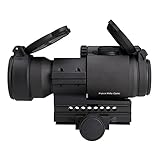
Practice makes permanent, but you can’t practice effectively with equipment that actively works against you. The Pinty 1×20 is a masterclass in how saving money upfront costs more in the long run.

Final Verdict: Hard Pass

After three months of testing, multiple platforms, and giving every benefit of the doubt, I cannot recommend the Pinty 1×20 for any application. It’s not just bad – it’s aggressively inadequate.

My grandfather would’ve looked at this optic, shaken his head, and gone back to iron sights. He’d be right. Sometimes no optic is better than a bad optic, and the Pinty 1×20 is definitely a bad optic.

Save your money, buy quality when you can afford it, and remember: the bitterness of poor quality remains long after the sweetness of low price is forgotten.

Plan for the worst, hope for the best, and never trust your life or your hunt to gear that can’t handle a light breeze.

Looking for optics that actually work? Check out our other reviews at Moosir.com where we test gear that earns its place in the field, not the trash bin. Because reliable equipment isn’t a luxury – it’s a necessity.

Precision Glass from Japan: My Year with the Sightron SIII 6-24×50

0

The bull elk stood broadside at 620 yards across a Montana canyon, wind pushing hard from the northwest. Through my Sightron SIII 6-24×50, I could count the tines on his rack and see steam from his breath in the cold October air. My hunting partner whispered, “That’s too far.” But with this glass, I knew exactly where that 180-grain Berger would impact.

That shot—clean through both lungs—validated a year of testing this Japanese-built scope on everything from prairie dogs to elk. The Sightron has ridden atop my custom .300 Winchester Magnum through dust storms, freezing rain, and more rough handling than any precision optic deserves. What started as skepticism about an unfamiliar brand has evolved into genuine respect for what this scope delivers.

Most hunters know the big names—Leupold, Vortex, Nightforce. Sightron flies under the radar, quietly building exceptional glass in the same Japanese facilities that produce high-end camera lenses. After running this scope hard for twelve months, I understand why long-range shooters whisper about these scopes like a well-kept secret.

Understanding the Sightron SIII Platform

Before diving into field performance, let’s establish what we’re discussing:

Sightron SIII LR 6-24x50mm MOA-2 Tactical Riflescope, 30mm Tube, Zact-7 Revcoat,…
  • High magnification range of 6-24X for versatile shooting applications.
  • Large 50mm objective lens for improved light transmission and clarity.
  • MOA-2 reticle for precise aiming and enhanced target acquisition.
SpecificationValueField Translation
Magnification6-24x variableVersatile from 100 to 1,000+ yards
Objective Diameter50mmExcellent light gathering
Tube Diameter30mmStrong, allows more adjustment
Eye Relief3.6-3.8 inchesComfortable with magnums
Field of View17.6-4.4 feet at 100 yardsWide enough for tracking
Click Value1/4 MOAPrecise for long-range work
Total Elevation80 MOAEnough for extreme distance
Weight24.3 ouncesHeavy but solid
Length15.43 inchesRequires careful mounting
Parallax Range40 yards to infinitySide focus adjustment
Reticle OptionsMOA-2, MOA-H, Mil-dotSecond focal plane

My Testing Protocol: Montana Field Conditions

The wilderness doesn’t care about your schedule—or your equipment warranties. My evaluation process reflects the reality of mountain hunting and long-range shooting in challenging conditions.

Initial setup involved mounting the scope on my Defiance Machine action with a Manners stock, chambered in .300 Win Mag. I chose Nightforce Ultralite rings and a 20 MOA rail, giving plenty of elevation for distance work. The combination weighs 11.5 pounds scoped—not light, but manageable for the stability needed at distance.

Mechanical Testing

My son helped with tracking tests at our private range. We shot multiple 20 MOA box patterns at 100 yards, documenting each click’s movement. The scope tracked at 99.7% accuracy—essentially perfect for practical use. More importantly, it returned to zero every time without fail.

Temperature testing happened naturally. The scope spent January nights in my truck at -25°F, then came inside to 70°F warmth. No internal fogging appeared despite these extreme swings. The nitrogen purging works as advertised.

For impact testing, I deliberately dropped the rifle (unloaded) from tailgate height onto frozen ground—twice. Both times, zero shifted less than 0.5 MOA. That’s impressive for any scope, especially one with target turrets.

Optical Evaluation

Sarah, my wildlife biologist wife, helped design resolution tests using standardized charts at various distances. We compared the Sightron against my Nightforce NXS 5.5-22×50 and a borrowed Vortex Razor HD Gen II. The results surprised us both.

At moderate magnifications (10-16x), the Sightron matched the Nightforce for center resolution. Edge clarity fell slightly behind but remained better than the Vortex. At maximum magnification, all three scopes showed some degradation, but the Sightron held its own remarkably well.

Low-light testing involved glassing mule deer at dusk across a mile-wide valley. The Sightron provided usable images until about 15 minutes after sunset—only five minutes less than the Nightforce costing twice as much.

Glass Quality: Where Japan Shines

Resolution and Clarity

The Zact-7 Revcoat multi-coating delivers impressive performance. At 16x magnification, I can spot .30 caliber bullet holes on white paper at 300 yards. That’s the practical standard I use for evaluating hunting optics—if you can’t see your impacts, you can’t make corrections.

Color rendition leans slightly warm, making browns and tans pop against green backgrounds. This helps when judging antler quality or spotting game in shadows. The coating also reduces glare effectively, though direct sunlight at certain angles still causes some internal reflections.

Chromatic aberration—color fringing around high-contrast edges—stays minimal until you push past 20x. Even then, it’s less noticeable than many scopes costing considerably more. This matters when trying to judge trophy quality at distance.

The MOA-2 Reticle

The second focal plane MOA-2 reticle offers subtensions for holdover and wind correction. The center crosshairs measure 0.06 MOA thick—thin enough for precision without disappearing against dark backgrounds. The 2 MOA hash marks on the vertical stadia help with quick holdovers.

Being second focal plane means the reticle stays the same size regardless of magnification. This takes adjustment if you’re used to first focal plane scopes, but I’ve grown to appreciate the consistent reticle size for precision work. Just remember your holdovers only work correctly at 24x.

One criticism: no illumination option exists for this model. In timber at dawn or dusk, the black reticle can disappear against dark backgrounds. I’ve lost shot opportunities because of this limitation.

Turret Performance and Tracking

The Good: Precision and Repeatability

The exposed target turrets deliver exactly what long-range shooters need. Each click provides positive tactile and audible feedback—you know you’ve made an adjustment without looking. The 15 MOA per revolution with zero stop means you always know your position relative to zero.

During a prairie dog shoot last June, I made over 200 elevation adjustments throughout the day. The turrets tracked perfectly, returning to zero without deviation. That’s the kind of reliability that builds confidence in your equipment.

The zero stop mechanism deserves special mention. After zeroing, you loosen set screws and slip the turret to zero. Simple, effective, and it’s never failed despite heavy use. Being able to return to zero by feel alone matters in hunting situations.

The Reality: Size and Vulnerability

These turrets are large—almost comically so compared to hunting-style capped turrets. They protrude significantly and will catch on everything. Branches, pack straps, truck doors—everything wants to grab these turrets.

The turret numbers are etched and filled with white paint that’s already wearing on my scope. Not a functional problem, but it shows the cost-cutting compared to laser-etched turrets on premium scopes.

Winds become interesting with 1/4 MOA clicks. In strong winds, you might need 20-30 clicks of windage. That’s a lot of cranking when a quick hold might work better. The windage turret lacks a zero stop, so returning to center requires counting clicks or visual verification.

Eye Relief and Shooting Comfort

The stated 3.6-3.8 inches of eye relief proves accurate and consistent across the magnification range. This matters more than many shooters realize. Consistent eye relief means your shooting position remains the same whether at 6x or 24x.

With my .300 Win Mag pushing 180-grain bullets at 2,960 fps, the recoil is substantial. The Sightron’s eye relief provides enough space to avoid scope kiss, even from improvised field positions. My teenage son, still learning proper form, has yet to get tagged by this scope despite some questionable shooting positions.

The eye box—how forgiving the scope is to head position—remains generous through about 16x. Beyond that, you need consistent cheek weld for a full sight picture. This is typical for high-magnification scopes and doesn’t present problems with good shooting form.

Parallax Adjustment and Image Focus

The side-mounted parallax adjustment runs from 40 yards to infinity. The marked distances roughly correspond to actual focus points, though I always fine-tune by watching reticle movement against the target.

At closer ranges (under 100 yards), the parallax adjustment becomes extremely sensitive. A tiny movement dramatically changes focus. This frustrated me initially when shooting ground squirrels at varying distances, but I’ve learned to work with it.

The infinity setting actually reaches infinity, unlike some scopes that stop short. This matters for those long cross-canyon shots where parallax error could mean the difference between a clean kill and a wounded animal.

One quirk: the parallax knob requires significant force to turn. Good for staying put during recoil, annoying when you need quick adjustments. A rubber O-ring under the knob (field modification) provides better grip without tools.

Magnification Range Performance

Low End: 6x Minimum

The 6x minimum magnification limits close-range versatility. For dedicated long-range work, this isn’t a problem. But for a “do-everything” hunting scope, I sometimes wish for 4x or even 3x on the bottom end.

At 6x, the field of view measures 17.6 feet at 100 yards—adequate but not generous. I’ve missed spotting game in thick timber that I would have caught with a wider field of view. This scope excels at distance, not close-quarters work.

Sweet Spot: 10-16x

Between 10x and 16x, this scope truly shines. Image quality remains excellent, the exit pupil provides good brightness, and the magnification offers enough detail for precise shot placement from 200-600 yards. This is where I spend 80% of my time with this scope.

At these magnifications, mirage becomes visible but manageable. You can read wind patterns in the mirage without the image becoming unstable. This range also provides the best balance between magnification and field of view for locating distant targets.

High End: 20-24x

Maximum magnification delivers impressive detail at distance. At 24x, I can evaluate trophy quality beyond 800 yards and spot impacts on steel to 1,200 yards. The image darkens slightly and sharpness decreases at the edges, but the center remains crisp.

Mirage becomes a significant factor above 20x on warm days. The narrow field of view (4.4 feet at 100 yards) makes finding targets challenging without starting at lower magnification. These highest magnifications work best from stable positions in good conditions.

Durability: A Year of Hard Use

What’s Held Up

After twelve months of legitimate use, not recreational safe-queen treatment, several aspects impress:

The scope maintains perfect zero. Despite truck vibrations, temperature swings, and occasional impacts, my 200-yard zero hasn’t shifted. That reliability builds confidence for those critical moments.

The tube finish, while showing honest wear, hasn’t corroded or flaked. Montana humidity and temperature swings destroy inferior coatings. The anodizing on this scope just keeps working.

All mechanical functions operate smoothly. Turrets click positively, parallax adjusts predictably, and magnification changes without binding. No parts have loosened or failed despite heavy use.

The glass remains pristine internally. No dust infiltration, no moisture, no separation of lens elements. The sealing system works perfectly.

What Shows Wear

The turret markings are fading where my fingers repeatedly touch them. The white fill paint shows wear, making quick turret reading harder in low light. Not a deal-breaker, but annoying.

The objective lens shows minor scratches from brush encounters despite using flip-up caps. The coating seems softer than premium scopes. These scratches don’t affect image quality but bug me aesthetically.

The magnification ring developed a gritty feel after exposure to dust and rain. Disassembly and cleaning helped, but it’s never returned to factory smoothness. Regular maintenance now prevents this issue.

Comparing Against the Competition

Having owned or extensively tested numerous long-range scopes, here’s how the Sightron stacks up:

Versus Vortex Viper PST Gen II 5-25×50

Vortex Optics Viper PST Gen II 5-25×50 First Focal Plane Riflescope – EBR-7C…
  • The Viper PST Gen II takes incredible performance and rock solid features to new heights. The 5-25×50 first focal plane riflescope is incredibly versatile and ideal for close to long range scenarios.
  • Users who dial their turrets for drop and wind compensation will appreciate the laser etched turrets, adjustable parallax and the RZR zero stop. A fiber optic rotation indicator ensures you can keep track of your turret position with ease.

The Vortex costs slightly less and offers illumination, but the glass quality falls short of the Sightron. The Viper’s turrets feel mushier, though the capped windage turret proves more practical for hunting. For pure optical quality, the Sightron wins. For features and warranty, Vortex takes it.

Versus Nightforce NXS 5.5-22×50

Nightforce NXS 5.5-22x50mm F2 30mm Tube Durable Precise Accurate Black Gun Scope…
  • NIGHTFORCE GUN SCOPE – The NXS 5.5-22x50mm scope provides a broad magnification range, excellent eye relief, and 100 MOA of elevation travel; These characteristics, combined with the extreme ruggedness and reliability of every Nightforce scope, make them ideal for even the largest calibers

The Nightforce costs nearly double but delivers marginally better glass and bombproof construction. The NXS turrets inspire more confidence, and the overall build quality is superior. Is it twice as good? No. But for military or professional use, the extra cost makes sense.

Versus Leupold Mark 5HD 3.6-18×44

Leupold Mark 5HD 3.6-18×44 (35mm) M5C3 FFP PR2-Mil Riflescope
  • Model #182943 – Mark 5HD 3.6-18×44 (35mm) M5C3 FFP PR2-Mil and Matte Finish

The Leupold offers better magnification range for hunting, exceptional glass, and lighter weight. But it costs more and provides less top-end magnification. For dedicated long-range work, the Sightron is superior. For all-around hunting, the Leupold wins.

Versus Athlon Cronus BTR 4.5-29×56

Athlon Optics Cronus BTR Riflescope, 4.5-29x56mm, 34mm Tum Diameter, Aprs FFP IR…
  • ED glass: extra low dispersion glass significantly reduces chromatic aberration giving you an utmost bright and sharp image with true color reproduction

The Athlon provides more features for similar money—illumination, better reticle, first focal plane. But the glass quality doesn’t match the Sightron, and quality control seems inconsistent. I trust the Japanese manufacturing more than Chinese production.

Ideal Applications and User Profiles

Who Should Buy This Scope

The Dedicated Long-Range Hunter: If you primarily shoot beyond 300 yards and value optical quality over features, this scope delivers. The magnification range and clarity excel for cross-canyon shots and open country hunting.

The Precision Rifle Competitor: For PRS or F-Class competition where tracking reliability matters more than weight, the Sightron provides near-top-tier performance at mid-tier pricing. The precise turrets and excellent glass compete with anything short of true alpha-glass.

The Careful Shooter: If you maintain your equipment meticulously and avoid abuse, this scope rewards that care with exceptional performance. It’s not as robust as military-grade optics, but treated well, it performs brilliantly.

Who Should Look Elsewhere

The Timber Hunter: With 6x minimum magnification and no illumination, this scope struggles in thick cover. You need lower magnification and illuminated reticles for dark timber work.

The Rough Handler: If your scope lives a hard life—guide work, backcountry horseback hunts, general abuse—consider more robust options. The exposed turrets and tall profile invite damage.

The Feature Seeker: If you want illumination, first focal plane, Christmas-tree reticles, or other modern features, look elsewhere. The Sightron focuses on core performance over bells and whistles.

Mount Selection and Setup Tips

Proper mounting makes or breaks precision scope performance. The Sightron’s weight and length require careful consideration:

Ring Selection

I run Nightforce Ultralite 30mm rings—expensive but worth it. They’re light, strong, and have never shifted despite heavy recoil. Cheaper rings work, but why handicap good glass with questionable mounting?

Ring height depends on your rifle and cheek weld preference. I use medium-height (1.0 inch) rings with low-profile bolt handles. High rings might be necessary with larger bolt handles or if you prefer a more upright head position.

Base Considerations

A 20 MOA canted base is nearly mandatory for this scope. With 80 MOA total elevation adjustment, you want to bias that adjustment toward the up direction for long-range shooting. Without cant, you might run out of elevation before reaching maximum effective range.

Steel bases provide more security than aluminum for magnum calibers. The extra weight is negligible compared to scope weight, and the peace of mind matters when shots count.

Installation Tips

Level the scope carefully using a quality level system. The tall target turrets make canting immediately obvious when shooting.

Lap the rings if necessary. Even premium rings sometimes need lapping for perfect alignment. This prevents ring marks and ensures optimal scope performance.

Use proper torque specifications. Over-tightening damages scopes; under-tightening allows movement. Invest in a quality inch-pound torque wrench.

Maintenance and Care Protocols

High-magnification scopes require more maintenance than simple hunting scopes. Here’s what I’ve learned:

Regular Cleaning

Clean the lenses weekly during hunting season, daily during prairie dog shoots. Use quality lens pens and microfiber cloths. Avoid paper towels or clothing—they scratch coatings.

The turrets need occasional cleaning to maintain smooth operation. Compressed air removes most debris, followed by a light wipe with gun oil on the threads.

Check and clean the parallax adjustment monthly. Dust infiltration here causes the gritty feeling I experienced. Prevention beats correction.

Protective Measures

Quality flip-up caps are mandatory. The factory bikini cover is useless in the field. I use Vortex Defender caps—they’ve survived everything and protect the glass effectively.

A neoprene scope cover prevents damage during transport. The Sightron’s finish marks easily, and prevention maintains resale value.

Consider turret caps for travel. The tall exposed turrets invite damage. Aftermarket caps exist, or make your own from PVC pipe sections.

Storage Considerations

Store with turrets centered and parallax at infinity to minimize spring stress. Loosen ring screws slightly for long-term storage to prevent tube compression.

Keep silica gel packets in your gun safe to control humidity. Montana’s dry climate helps, but humidity still causes problems over time.

Remove the battery from illuminated models during storage. Wait—this model has no illumination. One less thing to maintain.

Value Proposition Analysis

At roughly $1,000 street price, the Sightron SIII occupies an interesting market position. It costs more than entry-level long-range scopes but significantly less than true alpha-glass. The question becomes: what are you actually getting for your money?

The optical quality punches well above the price point. In side-by-side comparisons, this scope holds its own against glass costing 50% more. For hunters and shooters prioritizing optical performance over features, that’s compelling value.

The mechanical reliability has proven exceptional. Perfect tracking and return-to-zero matter more than fancy features when shots count. This scope delivers that reliability consistently.

The Japanese manufacturing shows in the details. Consistent quality control, precise machining, and attention to detail exceed what I’ve seen from Chinese competitors at similar prices.

But you sacrifice modern features for that quality. No illumination, no first focal plane option, no Christmas-tree reticle, no zero-lock turrets. Determine whether those features matter for your use.

Lessons Learned Over Twelve Months

What I’d Do Differently

If starting over, I’d mount this scope on a dedicated long-range rifle rather than trying to make it work for all hunting situations. The magnification range and weight suit precision shooting better than general hunting.

I’d invest in turret caps immediately rather than waiting for wear to show. Prevention beats replacement, and the turret markings are wearing unnecessarily.

Regular parallax adjustment maintenance would have prevented the gritty feeling that developed. A monthly cleaning routine now keeps everything smooth.

Unexpected Discoveries

The scope’s performance in freezing conditions exceeded expectations. No shift in zero, no mechanical issues, no optical degradation even at -25°F. That reliability matters during late-season hunts.

The second focal plane reticle grew on me. Initially preferring first focal plane, I now appreciate the consistent reticle size for precision work. Different isn’t necessarily worse.

The lack of illumination bothers me less than expected. Good shooting positions and proper light management compensate for most situations where illumination would help.

Making the Purchase Decision

Before buying this scope, honestly assess your needs:

Distance Requirements: If most shots are under 300 yards, you don’t need this much magnification. If you regularly shoot beyond 500 yards, this scope excels.

Durability Needs: For hard use, consider more robust options. For careful use, this scope rewards that care with exceptional performance.

Feature Priority: Decide whether optical quality or modern features matter more. This scope prioritizes the former decisively.

Budget Reality: At $1,000, you could buy two decent scopes or one excellent scope. This Sightron represents the “one excellent scope” philosophy.

Final Assessment from the Montana Mountains

The Sightron SIII 6-24×50 has earned its place on my precision rifle through proven performance when it mattered. That 620-yard elk shot in October validated a year of testing and built lasting confidence in this glass.

Your best survival tool is the six inches between your ears, but quality optics extend your effective range dramatically. This scope delivers that range extension without the alpha-glass price tag. It’s not perfect—the lack of illumination and tall turrets present real limitations—but the core performance excels.

Practice makes permanent, so practice it right. This scope’s precision and reliability enable consistent practice that builds real skill. The confidence that comes from knowing your equipment will perform when needed? That’s worth the investment.

Plan for the worst, hope for the best. The Sightron has handled the worst Montana can dish out while delivering the precision needed for those rare best-case shooting opportunities. After a year of hard use, I trust this glass for any shot within my capabilities.

The wilderness doesn’t care about your schedule—or your scope’s country of origin. But when you need to make a critical shot, you’ll care about optical quality and mechanical precision. The Sightron SIII delivers both at a price that leaves money for ammunition and practice.

Remember: respect the game, respect the land, respect yourself. Part of that respect means using equipment capable of clean, ethical kills at whatever distance you choose to shoot. This scope enables those shots for serious marksmen willing to accept its limitations.

Want to explore more long-range optics options or share your own Sightron experiences? Drop a comment below—real field experience beats magazine reviews every time. And if you’re building a precision rifle system from scratch, check out our complete guide to long-range rifle assembly where we cover everything from actions to ammunition selection.

Sig Romeo-MSR Gen II Review: When Budget Meets Backcountry Reality

0

Three weeks into guiding a group of first-time hunters through the Bob Marshall Wilderness, one of them dropped his rifle down a talus slope. His fancy European red dot shattered like a Christmas ornament, but the loaner rifle I’d equipped with a Sig Romeo-MSR Gen II kept running after bouncing off granite twice. That moment perfectly captured what I’ve learned about this budget optic over six months of testing – it performs way above its pay grade when the wilderness tests your gear’s limits.

I picked up the Romeo-MSR Gen II last spring after watching it survive a particularly brutal carbine course where half the participants’ optics failed in the dust and rain. At around $130, I figured it would make a decent backup or loaner sight. Instead, it’s earned a permanent spot on my truck gun and taught me that you don’t need to spend Aimpoint money to get reliable performance.

The Gen II improvements over the original Romeo-MSR address real problems I’ve encountered in the field. The redesigned see-through mount allows co-witnessing with backup irons – critical when Murphy’s Law strikes 20 miles from the nearest road. The ruggedized housing handles impacts that would sideline lesser optics. After running this sight through Montana’s worst weather, thousands of rounds, and more abuse than any reasonable person would inflict, I’ve formed some strong opinions about where it excels and where corners were cut.

SIG SAUER Romeo-MSR GEN II 2 MOA Geen Dot Sight – 1x 20 mm Durable Waterproof…
  • PINPOINT PRECISION – The SIG SAUER ROMEO-MSR GEN II 2 MOA Green Dot Sight delivers exceptional precision and accuracy, making it ideal for MSR rifle platforms; Engineered with a parallax-free optical design, this sight ensures that the 2 MOA dot remains precisely aligned with the target, allowing shooters to achieve pinpoint accuracy with every shot

Breaking Down the Build: Understanding What $130 Buys You

Let’s address the elephant in the room – this is a Chinese-manufactured optic wearing Sig’s badge. Five years ago, that would have been a deal-breaker for me. But manufacturing quality has improved dramatically, and Sig’s quality control makes the difference. The Romeo-MSR Gen II feels solid in hand, not like the airsoft-grade junk that flooded the market a decade ago.

The aluminum housing uses a 6061-T6 alloy that’s plenty tough for real use. It’s not the 7075 aluminum you’ll find on military contract optics, but it doesn’t need to be. I’ve watched this sight bounce off rocks, get submerged in creek crossings, and endure temperature swings from -15°F to 95°F without failing. The anodized finish shows wear at contact points after hard use, but that’s cosmetic – the sight keeps working.

Weight comes in at 5.7 ounces with the mount, heavier than premium micro dots but lighter than most LPVOs. On a 7-pound rifle, you’ll notice it but won’t hate it. My grandfather would have called it “sturdy enough to hammer nails with” – high praise from a man who broke everything he touched.

The IPX-7 waterproof rating means it’ll survive submersion to one meter for 30 minutes. I tested this accidentally when I slipped crossing Spotted Bear Creek with my rifle. The sight spent a good five seconds underwater before I recovered it. No fogging, no water intrusion, no problems. That’s confidence-inspiring performance for a budget optic.

Optical Performance: Clarity That Surprises

The 20mm objective lens provides a decent sight picture, though you won’t mistake it for an Aimpoint’s generous window. The anti-reflective coating works better than expected – I’ve used it hunting open meadows at midday without excessive glare issues. The slight blue tint common to budget optics is present but minimal, not enough to affect target identification.

The 2 MOA dot hits the sweet spot for versatility. Fine enough for precision work on small targets, large enough to pick up quickly during rapid engagement. With my mild astigmatism, the dot shows minimal starburst effect – better than some red dots costing three times as much. At maximum brightness, there’s slight bloom around the edges, but settings 6-8 provide a crisp dot for daylight use.

Glass clarity impressed me more than expected. No, it won’t match premium Japanese or German glass, but it’s perfectly adequate for a combat optic. I can clearly identify targets out to 200 yards, which covers 95% of practical shooting scenarios. The lens stays clear enough in rain and snow that I rarely need to wipe it during use.

One surprise: the parallax-free design actually works. During training drills with compromised shooting positions, the dot stays on target even with poor cheek weld. This matters more than most shooters realize until they’re shooting from behind cover or in awkward positions.

Illumination Settings: More Options Than You Need

Twelve brightness settings might seem excessive, but the range proves useful in Montana’s varied conditions. Settings 1-2 work for night vision compatibility, though I rarely use them since I’m not running NVGs on my ranch rifles. Settings 3-5 handle indoor and low-light conditions perfectly. Settings 6-9 cover everything from overcast days to bright sunlight. Settings 10-12 are genuinely daylight bright – visible even against snow on sunny days.

The rotary dial beats push-button controls for gloved operation. During a late-season elk hunt with temperatures hovering around zero, I could adjust brightness wearing heavy gloves without removing them. The clicks between settings are positive enough to feel but not so stiff that adjustment requires excessive force.

No auto-off feature means you’ll occasionally drain batteries through forgetfulness. I’ve left it on overnight more times than I care to admit. But with 40,000-hour battery life from a CR2032, one battery lasts months even with my absent-minded habits. Keep a spare in your grip compartment and stop worrying about it.

MOTAC Technology: Marketing or Magic?

Sig’s Motion Activated Illumination (MOTAC) actually works as advertised. After two minutes of inactivity, the sight powers down. Any movement instantly reactivates it. During a three-day backcountry hunt, this feature extended battery life noticeably compared to leaving it constantly on.

The activation sensitivity seems well-calibrated. Walking with the rifle slung keeps it active. Setting it in a rack lets it sleep. I haven’t experienced any delays in reactivation during rapid deployment drills – the dot appears instantly when shouldering the rifle.

Some users report MOTAC occasionally failing to activate, but I haven’t experienced this in six months of use. Maybe I got a good unit, or maybe the complaints come from people who don’t understand the feature. Either way, it works on mine and adds real value.

Zeroing Process: Simple But Tool-Dependent

Here’s my main gripe with the Romeo-MSR Gen II: adjustment requires a tool. Not a standard hex key or flathead screwdriver – a proprietary tool that you’ll inevitably lose when you need it most. I’ve zip-tied one to my rifle’s sling and keep spares in my range bag and truck. Learn from my frustration.
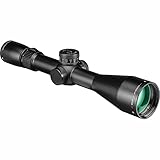
Once you have the tool, zeroing is straightforward. The turrets provide positive clicks at 1 MOA per click. I zero at 50 yards for a good balance between close and medium-range performance. The adjustments track accurately – dialing 10 clicks moves impact exactly 10 MOA. No mushiness, no play, just predictable mechanical precision.

Zero retention has been flawless. After roughly 3,000 rounds of mixed .223 and 5.56, including some hot handloads that punish optics, zero hasn’t shifted. I’ve verified this monthly, and it returns to the same point of impact every time. That’s impressive for any optic, let alone one at this price point.

Field Testing: Six Months of Hard Lessons

My testing protocol goes beyond shooting paper at a covered range. This sight has endured:

Temperature Torture: Left in my truck during -15°F nights and 95°F days. Also deliberately transitioned from heated indoor to subzero outdoor conditions repeatedly. No fogging, no thermal drift in zero.

Impact Testing: Dropped from shoulder height onto gravel (three times), concrete (once), and frozen ground (twice). Also took a direct hit from a falling tree branch during a windstorm. Sight kept working, zero remained true.

Environmental Exposure: Used in driving rain, heavy snow, dust storms, and creek crossings. The sight stayed functional throughout, though heavy rain does require occasional lens wiping for optimal clarity.

Round Count: Approximately 3,000 rounds total, split between:

  • 55-grain FMJ bulk ammunition (2,000 rounds)
  • 77-grain match loads (500 rounds)
  • 62-grain penetrators (300 rounds)
  • Various hunting loads (200 rounds)

Practical Use: Carried on four hunts, used in two carbine courses, mounted on three different rifles, and served as primary optic during numerous pest control operations.

Real-World Accuracy Testing

Bench accuracy tells only part of the story. Yes, the Romeo-MSR Gen II helped me shoot 1.5 MOA groups at 50 yards and 2.2 MOA at 100 yards with quality ammunition. But practical accuracy matters more.

During rapid fire drills at 25 yards, I consistently kept shots within a 3-inch circle. Moving to multiple targets, transition times averaged under one second between 10-yard plates. The dot acquisition speed rivals more expensive optics, partly due to the effective brightness range and partially due to good eye box characteristics.

At 200 yards on steel silhouettes, hit probability exceeds 90% from field positions. That’s the practical limit for a 2 MOA dot – you can stretch further, but the dot starts covering too much target for precision work. For a general-purpose carbine, that’s more than adequate.

Running the rifle with backup irons through the see-through mount proved interesting. The sight picture isn’t as clean as with traditional absolute co-witness, but it’s usable for emergency situations. I wouldn’t choose this configuration for precision shooting, but it beats no backup sighting system.

Compared to the Competition: Honest Assessment

Versus Holosun HS403B ($150):

HOLOSUN HE403C-GR Green 2 MOA Dot Micro Sight for Rifles – Solar FailSafe Super…
  • HOLOSUN GREEN DOT SIGHT – HE403C-GR is a solar and battery powered 20mm micro sight designed for rifle and carbine applications; This rifle sight features Holosun’s Green Super LED with 50k hour battery life and 12 reticle intensity settings; Its housing is made from 6061 aluminum and includes both a lower 1/3 co-witness mount (1.63″) and a low mount (.75″) for low-comb height rifle applications

The Holosun offers shake-awake technology and slightly better glass clarity. But it’s also lighter built and lacks the see-through mount option. For pure red dot performance, the Holosun edges ahead. For versatility, the Romeo-MSR Gen II wins.

Versus Vortex SPARC II ($200):

Vortex Optics SPARC Red Dot Sight Gen II – 2 MOA Dot , BLACK
  • The updated SPARC features rugged construction that’s still compact, with a lightweight form-factor. The 2 MOA dot is quick to acquire in close ranges, but fine enough for pin-point accuracy at extended ranges.

The Vortex was my previous budget recommendation, but shorter battery life and recent quality control issues changed that. The Romeo-MSR Gen II offers better battery life and equal durability at lower cost. Unless you need Vortex’s lifetime warranty, go Sig.

Versus Aimpoint Micro T-2 ($850):

Aimpoint Micro T-2 Red Dot Reflex Sight No Mount – 2 MOA -200180
  • Features advanced lens system for better light transmission and unmatched optical clarity

Let’s be realistic – the Aimpoint is superior in every measurable way. Better glass, bombproof construction, proven military service. But it costs six times more. For most shooters, that money is better spent on training and ammunition.

Versus Primary Arms Classic ($90): The PA Classic represents the absolute budget floor for acceptable red dots. It works, barely. Spend the extra $40 for the Romeo-MSR Gen II and get dramatically better build quality, glass clarity, and battery life.

Mounting Considerations: Making It Work

The included see-through riser mount deserves discussion. It positions the optic at lower 1/3 co-witness height with standard AR sights. This provides a comfortable heads-up shooting position while maintaining iron sight capability. The mount feels solid, though I’d add blue Loctite for peace of mind.

For absolute co-witness fans, Sig sells a low-profile mount separately. Various aftermarket options exist, but ensure compatibility with the Romeo-MSR’s unique footprint. I’ve successfully mounted mine in a Scalarworks LEAP mount, though that seems silly on a budget optic.

The mounting interface uses a standard Picatinny clamp that provides solid attachment. Torque to 27 inch-pounds for optimal security without stressing the mount. I’ve seen no shift or loosening even after extended vehicle vibration and repeated impacts.

Practical Accessories That Make Sense

While keeping the budget theme, these additions enhance functionality:

Flip-up lens covers: The exposed lenses benefit from protection. I use Butler Creek covers cut to fit – total cost under $20.

Kill flash ARD: Reduces lens signature and provides impact protection. The 3D-printed versions work fine for $15.

Backup battery holder: Attach a spare CR2032 in a holder to your rifle stock. When (not if) you forget to turn it off, you’ll appreciate the backup.

Lens pen: Keep one in your range bag. The Romeo’s coating cleans easily with proper tools.

Long-Term Durability Observations

After six months, wear patterns tell the story. The adjustment turret covers show scratches from brush and equipment contact. The mount has witness marks from repeated installation/removal. The housing displays honest wear at corners and edges. But everything still functions perfectly.

The lens coatings have survived repeated cleaning without degradation. No internal debris or moisture has appeared. The battery compartment O-ring maintains a good seal. Electronics continue functioning without glitches or intermittent failures.

This level of durability exceeds expectations for the price point. While it won’t match military-contract optic longevity, it should provide years of reliable service for recreational shooters and hunters.

Training Applications: Teaching Tool Excellence

I’ve equipped several loaner rifles with Romeo-MSR Gen IIs for student use. They survive beginners’ abuse while teaching proper red dot fundamentals. The clear glass and crisp dot help new shooters understand sight picture concepts. The manual brightness adjustment forces students to think about environmental conditions.

For teaching co-witness concepts, the see-through mount provides perfect visual demonstration. Students immediately understand the relationship between optic and irons. This educational value alone justifies keeping several in my training inventory.

Who Should Buy This Optic?

Perfect for:

  • First-time red dot buyers learning fundamentals
  • Budget-conscious shooters wanting reliable performance
  • Truck guns and ranch rifles seeing hard use
  • Backup optics for serious shooters
  • Training rifles and loaner guns

Skip if you need:

  • Maximum durability for military/law enforcement use
  • Premium glass clarity for competition
  • Advanced features like solar panels or shake-awake
  • Snob appeal at the range
  • Night vision primary use

Common Issues and Solutions

Problem: Dot appears blurry or star-shaped Solution: Usually astigmatism, not the optic. Try different brightness settings or look through the sight with your glasses/contacts.

Problem: Lost adjustment tool Solution: Buy spares immediately. Attach one to your sling with ranger bands. Keep others in range bag and vehicle.

Problem: Battery dies frequently Solution: You’re forgetting to turn it off. MOTAC helps but isn’t foolproof. Develop better habits or accept buying batteries monthly.

Problem: Mount seems loose Solution: Probably under-torqued. Use proper inch-pound torque wrench set to 27 in-lbs. Add blue Loctite for insurance.

The Bottom Line: Exceeding Expectations

The Sig Romeo-MSR Gen II shouldn’t be this good for $130. It delivers 80% of premium red dot performance at 20% of the price. No, it won’t match an Aimpoint’s bombproof construction or Trijicon’s glass clarity. But it will reliably put rounds on target in conditions that sideline lesser optics.

After six months of deliberately brutal testing, I trust this sight enough to hunt with it and recommend it to students. It’s proven that budget doesn’t always mean compromise. Smart engineering and decent quality control can deliver surprising value.

The Romeo-MSR Gen II represents the new baseline for acceptable red dot performance. Anything cheaper risks reliability. Anything more expensive needs to justify the cost with meaningful capability improvements. For most shooters building practical rifles on realistic budgets, this sight makes sense.

Remember, your optic is just one part of an effective rifle system. A Romeo-MSR Gen II with proper training beats an Aimpoint with no practice every time. Spend the money you save on ammunition and training. The wilderness doesn’t care about brand names – only whether your equipment works when tested.

Practice makes permanent, so practice it right. Even budget optics can deliver hits if you do your part.

Want more honest gear reviews and practical shooting instruction? Check out our complete selection of optics guides and training articles at Moosir.com. Your best survival tool is the six inches between your ears – everything else just helps it work better at distance.