Home Blog Page 2

Field Testing the Sig Romeo 4 vs Romeo 5: A Hunter’s Perspective on Modern Red Dots

0

Last December, during a particularly nasty blizzard near Browning, I watched a client struggle with his fogged traditional scope while a wounded coyote disappeared into the whiteout. Meanwhile, my backup rifle wearing a Romeo 5 stayed crystal clear despite the sideways snow and temperature swings. That moment crystallized something I’d been observing for years—modern red dots have earned their place in serious field applications, not just on range toys.

I’ll admit, I was a red dot skeptic for years. My military experience taught me their value for rapid engagement, but I questioned their place in hunting applications. After running both the Romeo 4 and Romeo 5 through two full seasons of guiding, predator hunting, and ranch work around Northern Montana, I’ve developed strong opinions about where each excels and which deserves your hard-earned money.

These aren’t just range reviews based on a few magazines downrange. Both optics have been tested in conditions ranging from minus-twenty mornings to August heat waves, mounted on everything from precision ARs to brush-beating lever guns. Let me share what thousands of rounds and real-world use have taught me about these popular Sig offerings.

The Romeo 4: Premium Features Meet Field Reality

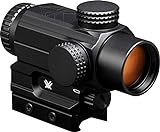
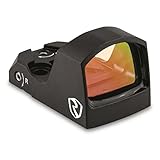
Sig Sauer ROMEO4S 1x 20 mm Tactical Solar Powered Shooting Targeting Waterproof…
  • DOMINATE WITH PRECISION – SIG SAUER ROMEO4S 1×20 mm Red Dot Sight is engineered to revolutionize your shooting experience; It excels in short and medium-range engagements, offering unparalleled accuracy across a wide range of calibers and light conditions

When Sig introduced the Romeo 4 series, they weren’t just building another red dot—they were creating a system designed for professionals who can’t afford equipment failure. After eighteen months of hard use, I understand why law enforcement and military units have adopted these optics.

Build Quality and Durability

The Romeo 4’s aircraft-grade aluminum housing immediately feels different from budget red dots. During a November elk hunt, my client’s rifle (wearing a Romeo 4H) took a nasty tumble down a scree slope—probably dropped fifteen feet onto granite. We found it wedged between rocks, stock scratched to hell, but that Romeo 4 held zero perfectly and functioned without issue.

The IPX-7 waterproof rating translates to real-world reliability. I’ve submerged mine crossing streams, left it in freezing rain overnight, and watched ice form on the lens during predawn setups. The electronics keep functioning when lesser optics would have given up. That confidence matters when you’re miles from the truck and dependent on your equipment.

Those transparent lens covers deserve special mention. Initially, I thought they were gimmicky—why not just flip-up covers? But after a winter of hunting in blowing snow and spring mud, I’m converted. Being able to shoot through the covers in sudden encounters while still protecting the glass during transport proves genuinely useful. They’ve saved my lenses from pine pitch, mud splatter, and Sarah’s horse deciding my rifle made a good scratching post.

The Solar Power Advantage

The dual power system combining solar and battery backup represents legitimate innovation, not marketing fluff. During a three-day backcountry hunt last September, bright Montana sun meant the solar panel handled all power needs. The CR2032 battery remained untouched, theoretically extending its life toward that claimed 100,000-hour mark.

But here’s real-world honesty: in timber or during Montana’s gray winter days, you’re running on battery most of the time. The solar panel works best as a battery-life extender rather than primary power source. Still, every bit helps when you’re far from replacement batteries.

Reticle Options and Flexibility

The Romeo 4’s multiple reticle options—switchable between dot, circle-dot, and versions with holdover points—provide versatility I’ve come to appreciate. For close-range coyote hunting in thick cover, that 65 MOA circle helps with rapid target acquisition. Switch to just the 2 MOA dot for precision shots on prairie dogs at 100 yards.

The ballistic holdovers prove surprisingly useful when paired with a magnifier. Last spring, I used the Romeo 4T with a Juliet4 magnifier for rockchuck hunting, making consistent hits out to 300 yards using the holdover dots. Not precision rifle accuracy, but impressive for a red dot system.

Those four distinct reticle patterns mean different things in different situations. The circle-plex (crosshairs within the circle) excels for precision work when mounted on a bench-rest .223. The simple dot works best for quick shooting on moving targets. Having options without changing optics adds value beyond the spec sheet.

MOTAC Performance

The Motion Activated Illumination (MOTAC) system deserves credit for practical innovation. The optic sleeps after two minutes of stillness, then instantly awakens with rifle movement. During stand hunting for whitetails, this meant my optic stayed ready through hours of waiting without draining the battery.

More importantly, MOTAC works reliably. I’ve never experienced delayed activation or false shutoffs during use. Some competitive shooters disable it, preferring manual control, but for hunting and defensive applications, it’s brilliant technology that extends battery life significantly.

The Romeo 5: Simplified Excellence

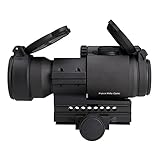
SIG SAUER Romeo5 1X20mm Tactical Hunting Shooting Durable Waterproof Fogproof…
  • ROMEO5 GUN SIGHT – The ROMEO5 1X20mm Red Dot Sight mounts on any platform, and even though it’s small, it’s tough; The solid, lightweight aluminum design gives peak performance & years of service, so you can be on the top of a hunt or shooting competition

The Romeo 5 strips away premium features to deliver core red dot performance at an accessible price. Don’t mistake simpler for inferior—this optic has proven remarkably capable across diverse applications.

Practical Toughness

While lacking the Romeo 4’s premium construction, the Romeo 5’s aluminum housing withstands serious abuse. Mine has been dropped, banged against truck doors, and spent nights in below-zero temperatures without missing a beat. The IPX-7 rating matches its expensive sibling, providing identical waterproofing.

During a spring bear hunt, my Romeo 5-equipped .450 Bushmaster fell off the tailgate onto frozen ground—a five-foot drop onto its side. The mount needed retightening, but the optic held zero and continued functioning perfectly. For $150 street price, that’s impressive durability.

Scout, my German Shorthaired Pointer, once knocked over my coyote rifle, sending it sliding down a rocky hillside. The Romeo 5 acquired several scratches but maintained function and zero. These aren’t gentle-use optics despite the budget price.

Simplified Operation

The Romeo 5’s single 2 MOA dot might seem limiting compared to the Romeo 4’s options, but simplicity has merit. There’s no scrolling through reticle options during critical moments, no wondering if you’re on the right setting. You get a crisp red dot that works every time you need it.

Ten illumination settings (eight daylight, two night vision) provide adequate adjustment range for any lighting condition I’ve encountered. The lowest settings preserve night vision during predawn setups, while maximum brightness stays visible in bright snow or desert sun.

MOTAC functions identically to the Romeo 4’s system, providing the same battery-saving benefits. With a claimed 50,000-hour battery life (roughly half the Romeo 4’s), you’re still looking at years of use from a single CR2032 battery under normal conditions.

Real-World Accuracy

Both Romeos feature 2 MOA dots with half-MOA adjustment clicks, providing identical mechanical precision. In practical terms, both deliver consistent 2-inch groups at 100 yards from stable positions with quality ammunition—plenty accurate for their intended applications.

The difference appears at distance with magnification. The Romeo 4’s reticle options provide reference points for holdovers, while the Romeo 5’s simple dot requires Kentucky windage or memorized holds. Inside 200 yards without magnification, they’re functionally identical for accuracy.

Direct Field Comparisons

After running both optics side-by-side through various scenarios, clear patterns emerged regarding where each excels.

Low Light Performance

Dawn and dusk hunting revealed minimal differences in basic functionality. Both optics gather sufficient light through their 20mm objectives, and the multi-coated lenses provide clear sight pictures during legal shooting hours.

The Romeo 4’s extra brightness settings offer finer adjustment gradations, helpful when transitioning from timber to open areas during evening hunts. But the Romeo 5’s eight daylight settings prove adequate for any condition I’ve encountered.

Neither matches quality glass scopes for extreme low-light resolution, but both exceed iron sights significantly. For legal shooting hours, both work perfectly.

Weather Resistance

Through two Montana winters, both optics proved equally weatherproof. Driving snow, freezing rain, and temperature swings from 70°F to -15°F in single days didn’t affect function. The electronics in both models resist moisture perfectly.

The Romeo 4’s transparent lens caps provide an edge during active precipitation. Being able to shoot without removing covers during sudden opportunities in rain or snow proves more valuable than I initially expected.

Both optics fog externally in extreme temperature transitions—bring them from warm vehicles into cold air and expect temporary fogging. Neither fogs internally, indicating quality sealing. A quick wipe clears external fog immediately.

Battery Life Reality

Manufacturer claims of 50,000-100,000 hours sound fantastic, but real-world performance varies. With MOTAC enabled and moderate use, I’m changing batteries annually in both optics—not from depletion but for reliability assurance before hunting season.

The Romeo 4’s solar assist genuinely extends battery intervals. During summer range sessions, bright sun means almost entirely solar operation. Winter hunting relies primarily on battery power. Overall, expect 18-24 months of real-world battery life from the Romeo 4, 12-18 months from the Romeo 5.

Both use common CR2032 batteries available everywhere. I keep spares in my range bag, truck console, and hunting pack. At $2 per battery, running costs remain negligible.

Mounting Considerations

Both optics include quality mounts in the box—a significant value considering many competitors require separate mount purchases. The Romeo 4 includes a quick-detach mount worth $60+ separately, while the Romeo 5 comes with a solid low mount and optional riser for co-witnessing iron sights.

The QD mount on my Romeo 4 returns to zero reliably after removal, tested across dozens of mounting cycles. This proves valuable when switching between rifles or removing optics for transport. The Romeo 5’s standard mount requires tools but costs less and adds minimal height.

Both fit standard Picatinny rails perfectly. I’ve mounted them on various platforms—ARs, AKs, lever guns, bolt actions with rail adapters—without compatibility issues.

Application-Specific Recommendations

Understanding where each optic excels helps match the right tool to your specific needs.

Home Defense and Personal Protection

For defensive rifles, I recommend the Romeo 5 without hesitation. The simple dot, proven reliability, and lower cost make it ideal. You won’t use multiple reticle options during home defense, and the money saved buys ammunition for practice—far more valuable than premium features.

Mount it on your defensive carbine, confirm zero, and trust it’ll work when needed. The MOTAC system means it’s always ready, and the simple operation eliminates complexity during stress.

Hunting Applications

For dedicated predator rifles or brush guns used inside 200 yards, the Romeo 5 performs excellently. I’ve taken coyotes, hogs, and whitetails using Romeo 5-equipped rifles without feeling handicapped versus magnified optics.

The Romeo 4 shines when paired with magnifiers for mixed-distance hunting. Those holdover points become valuable for longer shots, and reticle options help in varied scenarios. For serious predator hunters who might encounter coyotes at 25 or 250 yards, the Romeo 4’s versatility justifies its premium.

Competition and Range Use

Three-gun competitors and precision shooters benefit from the Romeo 4’s advanced features. Multiple reticles for different stages, superior battery life for long match days, and QD mounting for equipment changes provide competitive advantages.

Casual plinkers and range shooters will find the Romeo 5 completely adequate. Unless you’re competing seriously or pursuing tiny groups at distance, the Romeo 5 handles recreational shooting perfectly.

Ranch and Utility Rifles

For truck guns and ranch rifles that face rough handling, I prefer the Romeo 5. Its lower cost means less stress when it gets beaten up, and simplicity means anyone can operate it effectively. We keep Romeo 5s on several ranch rifles for pest control and predator defense.

The Romeo 4 makes sense on dedicated varmint rifles where precision matters more than cost. Those holdover reticles help with varying distances common in prairie dog towns or ground squirrel colonies.

Long-Term Reliability Observations

After extended use, both optics have developed distinct wear patterns worth noting.

The Romeo 4’s solar panel shows minor scratching from brush and handling, though function remains unaffected. The adjustment turret caps loosen over time—apply thread locker during initial setup to prevent loss.

The Romeo 5’s finish wears at contact points—where it meets the mount and around adjustment turrets. Purely cosmetic, but worth noting for those concerned about appearance. The mounting screws benefit from periodic checking, especially on heavy-recoiling rifles.

Neither optic has suffered electronic failure, zero loss without impact, or seal compromise despite hard use. Both represent reliable investments likely to outlast multiple rifles.

Value Analysis: Your Money’s Worth

The Romeo 5 at $120-150 street price delivers exceptional value. You’re getting 80% of the Romeo 4’s capability for 40% of the cost. For most shooters, that math makes the Romeo 5 an obvious choice.

The Romeo 4 at $400-500 makes sense for specific users: professional operators, serious competitors, and hunters who’ll utilize its advanced features. The solar power, reticle options, and premium construction justify the cost for demanding applications.

Consider total system cost too. Adding a magnifier doubles your investment. If you’re building a $2,000+ rifle system, the Romeo 4’s premium features make proportional sense. On a $600 budget carbine, the Romeo 5 maintains reasonable balance.

The Decision: Which Romeo For You?

Let me cut through the marketing and give you straight advice based on real experience.

Choose the Romeo 5 if:

  • You’re new to red dots and want quality without massive investment
  • Your shooting stays within 200 yards
  • Simplicity and reliability matter more than features
  • Budget constraints exist but you refuse to compromise on quality
  • You need multiple optics and want consistency across platforms

Choose the Romeo 4 if:

  • You’ll utilize multiple reticle options for varied applications
  • Extended battery life and solar backup provide value for your use
  • You’re adding magnification for longer-range capability
  • Professional use demands premium construction
  • Quick-detach mounting offers genuine utility for your needs

Field Wisdom: Making Red Dots Work

Regardless of which Romeo you choose, some practices maximize their effectiveness:

Zero at 50 yards for maximum versatility inside 200 yards. This provides minimal holdover across typical engagement distances. Verify zero regularly—red dots can shift if mounts loosen.

Practice both-eyes-open shooting to maximize red dots’ speed advantage. Your brain will superimpose the dot on your binocular vision, maintaining peripheral awareness while aiming.

Keep spare batteries everywhere. Yes, battery life is exceptional, but batteries fail unexpectedly. A dead optic during a critical moment ruins more than your day.

Train in different positions and lighting conditions. Red dots excel at unconventional shooting positions where magnified optics struggle. Exploit this advantage through practice.

Consider magnifiers carefully. They add weight, complexity, and cost while potentially negating red dots’ speed advantages. Many hunters find better value in separate rifles with appropriate optics for different applications.

Final Assessment: Both Winners, Different Games

After extensive field testing, both Romeos have earned permanent places in my equipment rotation. The Romeo 4 lives on my primary predator rifle, paired with a Juliet 4 magnifier for mixed-distance capability. Romeo 5s equip our ranch rifles and my daughter’s deer rifle, providing reliable service without breaking budgets.

Neither will replace quality magnified optics for true long-range precision, nor should they. But for fast shooting inside 300 yards, both deliver performance that would have seemed impossible at these prices just years ago.

The outdoor industry loves creating false choices between good and better equipment. The truth? Both Romeos are good. The Romeo 4 is better in specific ways that matter for certain users. Most shooters will be completely satisfied with the Romeo 5’s performance while appreciating money saved for ammunition and training.

Your mission drives equipment selection. Define your actual needs versus wants, then choose accordingly. Either path leads to a reliable red dot that’ll serve you well for years of hard use.

Remember, the wilderness doesn’t care about your equipment specifications. It only respects competence earned through practice. Whether you mount a Romeo 4 or Romeo 5, spend the time learning its capabilities and limitations. That investment pays dividends no amount of money can buy.

Stay sharp, trust your equipment, and always remember—your best survival tool is the six inches between your ears, but quality optics sure help when seconds count and shots matter.
Red Dot Mastery: From Basic Setup to Advanced Shooting Techniques

0

The drill sergeant’s voice still echoes in my head from Fort Benning, 1999: “Marshall, if you can’t hit what you’re aiming at, you’re just making expensive noise.” Twenty-five years later, after teaching thousands of students from military operators to Montana ranch wives, that wisdom holds true. A red dot sight won’t make you a marksman—but understanding how to properly use one will transform your shooting faster than any other single upgrade.

Last month, I watched a client miss a 175-pound whitetail at 40 yards with a $600 red dot because nobody ever taught him the fundamentals. That same afternoon, after 30 minutes of proper instruction, he was drilling 2-inch groups at 50 yards. The difference? Understanding how these systems actually work and training the right way from the start.

Practice makes permanent, so practice it right. Let’s dive into everything you need to know about red dot sights, from selection through advanced techniques I’ve refined through years of military service and wilderness guiding.

Understanding Red Dot Technology: More Than Just a Glowing Dot

The Three Families of Red Dot Sights

Before we discuss technique, let’s clear up the confusion that costs shooters money and frustration. “Red dot” is an umbrella term covering three distinct technologies, each with specific strengths:

Reflex Sights represent the most common and versatile option. Using LED technology to project a reticle onto a single lens, they offer unlimited eye relief and both-eyes-open shooting. My Aimpoint T2 has survived everything from Afghan dust storms to Montana blizzards. These dominate the market for good reason—simplicity, reliability, and affordability.

Holographic Sights use laser technology to create a floating reticle image. EOTechs are the gold standard here. The reticle remains target-focused even if the window breaks—I’ve seen this save lives in combat. However, they’re bulkier, more expensive, and eat batteries like my Lab River eats breakfast.

Prism Sights incorporate etched reticles and magnification in compact packages. Think of them as miniature ACOGs. Perfect for shooters with astigmatism or those wanting magnification without bulk. The Vortex Spitfire series exemplifies this category well.

How Red Dots Actually Work

Understanding the mechanics prevents common mistakes I see constantly in training courses. An LED or laser projects onto a specially coated lens that reflects the wavelength back to your eye while allowing other light through. This creates the illusion of a dot floating on your target.

The dot isn’t actually on the target—it’s on the lens in front of you. This distinction matters for proper zeroing and understanding parallax. At close range (under 50 yards), minor parallax won’t affect practical accuracy. Beyond that, centering the dot becomes increasingly important.

My grandfather, who learned marksmanship with iron sights during Korea, would’ve considered this technology pure magic. We’re blessed with options he couldn’t imagine.

Selecting Your Red Dot: Matching Tool to Task

Critical Considerations for Real-World Use

After running dozens of different models through harsh conditions, from competitive shoots to bear defense situations, here’s what actually matters:

Durability Over Features. That 16-reticle option sight with Bluetooth connectivity won’t help when it fails. During a spring bear hunt in the Absarokas, my client’s fancy electronic sight died from moisture infiltration. My basic Holosun, beat to hell and back, kept working. Buy quality once rather than junk twice.

Battery Life Reality. Manufacturers claim 50,000-hour battery life under optimal conditions. In Montana winters at -20°F? Cut that in half. Modern “shake awake” technology helps tremendously—the sight sleeps when stationary, and wakes with movement. Still, I tape spare batteries inside my pistol grips and teach students to change batteries every birthday, whether needed or not.

Dot Size Matters. A 2 MOA dot covers 2 inches at 100 yards—perfect for precision. A 6 MOA dot covers 6 inches—faster to acquire but less precise. For defensive carbines, I recommend 2-3 MOA. For pistols, 3-6 MOA. Hunting rifles depend on expected range—larger for brush hunting, smaller for open country.

Mounting Height Considerations. Absolute co-witness aligns iron sights through the optic center. Lower 1/3 co-witness places irons in the bottom third. For rifles, lower 1/3 provides better head position and peripheral vision. For pistols, direct mounting usually works best.

Dealing with Astigmatism

If your dot looks like a starburst or comma, welcome to the astigmatism club—you’re in good company. About 30% of my students deal with this. Solutions that actually work:

  1. Dial down brightness. Lower settings often sharpen the dot considerably.
  2. Look through the sight, not at it. Focus on your target, not the dot.
  3. Try different brands. Some work better with astigmatism than others.
  4. Consider prism sights. Etched reticles eliminate the issue entirely.
  5. Use polarized shooting glasses. Sometimes it helps clarify the image.

Don’t let astigmatism stop you from using red dots. Sarah, my wife, has significant astigmatism but shoots her red dot-equipped carbine better than most people I know.

Professional Zeroing Process: Do It Right Once

Initial Mechanical Zero

Start smart to save ammunition and frustration. I learned this process from an Army marksmanship instructor who could zero any rifle in under 10 rounds:

  1. Secure the rifle. Use a proper rest or sandbags. Wobbly zeroing wastes ammunition.
  2. Bored sight first. Remove the bolt (bolt actions) or look through the barrel (ARs). Center the bore on a target at 25 yards. Without moving the rifle, adjust the dot to match. This gets you on paper immediately.
  3. Start close. Zero at 25 yards first, even for longer-range zeros. Easier to see impacts, less walking to check targets.
  4. Fire a three-round group. One shot tells you nothing. Three establishes a pattern.
  5. Adjust methodically. Most red dots adjust 1 MOA per click (1 inch at 100 yards, 0.25 inches at 25 yards). Count your clicks and record them.
  6. Confirm at distance. Once zeroed at 25, confirm at your intended zero distance—typically 50, 100, or 200 yards depending on application.

The 50/200 Zero Secret

For defensive carbines, I recommend the 50/200 zero used by many military units. Zeroed at 50 yards, your point of impact remains within 2 inches of point of aim from 0 to 250 yards with standard 5.56 ammunition. This covers 99% of realistic engagement distances without holdovers.

For hunting rifles, zero at your most likely shooting distance. In thick Montana timber, that might be 75 yards. In Wyoming prairie, perhaps 200 yards. There’s no universal answer—match your zero to your environment.

Co-Witnessing Wisdom

Co-witnessing—aligning iron sights through your optic—provides backup aiming capability if electronics fail. After watching too many hunters miss opportunities due to dead batteries, I insist students maintain functional irons.

Absolute co-witness places irons dead center in the optic. Pros: intuitive transition, consistent cheek weld. Cons: cluttered sight picture, irons obstruct lower dot area.

Lower 1/3 co-witness positions irons in the bottom third. Pros: cleaner sight picture, better head position. Cons: requires slight adjustment when transitioning to irons.

For serious use, I prefer lower 1/3. The cleaner sight picture improves target identification—critical for both hunting and defense.

Shooting Fundamentals: Building Speed and Accuracy

The Both-Eyes-Open Revolution

Red dots enable both-eyes-open shooting, maintaining peripheral awareness while engaging targets. This technique saved my bacon during a close-range bear encounter while fishing—I could track the bear’s approach while maintaining sight picture.

Training both-eyes-open shooting:

  1. Start with dry fire. Unloaded weapon, safe direction. Practice acquiring the dot with both eyes open.
  2. Tape the lens. Place translucent tape over the objective lens. You’ll see the dot but not the target clearly. This forces target focus.
  3. Alternating eyes. Close non-dominant eye, acquire target, open it while maintaining sight picture. Repeat until natural.
  4. Target focus drill. Focus on target details—specific spots, not general areas. The dot should appear automatically.

Most students master this within 100 dry-fire repetitions. Don’t rush—smooth is fast, fast is smooth.

Target-Focused Shooting Philosophy

Traditional iron sights require focus on the front sight. Red dots flip this—focus on your target, let the dot superimpose naturally. This matches how your eyes naturally work under stress.

During force-on-force training, students using target-focused red dot techniques consistently outperformed iron sight users in both speed and accuracy. The brain processes “put dots on bad things” faster than aligning three separate objects.

Presentation and Dot Acquisition

Proper presentation ensures immediate dot acquisition:

  1. Build a consistent mount. Whether from low ready, holster, or rest position, develop identical mechanics every time.
  2. Bring sights to eyes. Don’t duck your head hunting for the dot. Bring the weapon to your natural eye line.
  3. Index points matter. Consistent cheek weld (rifles) or arm extension (pistols) creates muscle memory for instant dot acquisition.
  4. Trust the process. With practice, the dot appears automatically. Don’t hunt for it—present properly and it’s there.

I run students through 500 presentations minimum before live fire. Scout, my German Shorthaired Pointer, has watched me do thousands in the backyard. She’s unimpressed but the practice pays off.

Advanced Techniques: Beyond Basic Marksmanship

Movement and Shooting

Static range shooting builds fundamentals, but real world requires movement. Whether stalking elk or clearing buildings, these principles apply:

Dot stability during movement. The dot bounces more than iron sights during movement. Don’t fight it—time your shots during natural respiratory pauses or at the apex of your step.

Position transitions. Practice acquiring the dot from unconventional positions—kneeling, prone, around barriers. Each requires slight technique adjustments.

Target transitions. The red dot’s speed advantage shines here. Focus on the new target, the dot follows your eyes naturally. No conscious sight alignment needed.

Environmental Considerations

Montana’s weather extremes taught me these lessons:

Temperature effects. Cold thickens battery chemistry, reducing output. Warm batteries in your pocket before installation in extreme cold.

Precipitation management. Rain and snow on the lens distort the dot. Keep lens covers on until ready to shoot. Cat Crap anti-fog (yes, that’s the real name) works wonders.

Brightness adjustment. Bright snow requires maximum brightness. Dark timber needs minimal. Auto-adjust features work poorly in extreme contrast—learn manual control.

Lens maintenance. Dirty lenses scatter the dot image. Keep microfiber cloths handy. In dusty conditions, canned air beats wiping.

Failure Drills

Electronics fail. Murphy’s Law is absolute. Train for these scenarios:

Dead battery drill. Practice transitioning to irons instantly. If no irons, the tube itself becomes a large ghost ring—usable at close range.

Obscured lens drill. Mud, blood, or damage can obscure the lens. With both eyes open, your brain can superimpose the dot even with partial obstruction. Practice this with tape covering portions of the lens.

Broken glass drill. Quality red dots work with broken lenses—the LED still projects. Train shooting through broken glass safely at the range.

Maintenance: Protecting Your Investment

Regular Maintenance Schedule

Your life might depend on this equipment. Treat it accordingly:

Daily (Heavy Use):

  • Wipe lenses with microfiber
  • Check mount tightness
  • Verify battery contact

Weekly (Regular Use):

  • Clean lens thoroughly
  • Inspect for damage
  • Function check all adjustments

Monthly:

  • Remove and clean mounting surfaces
  • Check and clean battery contacts
  • Apply fresh thread locker if needed

Annually:

  • Replace battery (birthday reminder)
  • Professional inspection if available
  • Replace protective lens covers

Field Expedient Fixes

When things break far from help:

Loose mount: Dental floss creates temporary thread locking. Wrapped properly, it’ll hold through a hunt.

Dead battery, no spare: Some models run briefly on almost-dead batteries from other devices. GPS, headlamp batteries might provide temporary function.

Fogged lens: Hand warmers taped to the sight body can clear internal fogging. Desperate times, desperate measures.

Lost adjustment caps: Electrical tape protects adjustments from elements temporarily.

Training Drills for Proficiency

The Box Drill

My favorite diagnostic drill, taught by a Special Forces instructor:

Set up four targets in a square, 5 yards apart, at 25 yards distance. Starting at low ready:

  1. Engage top left – two shots
  2. Transition top right – two shots
  3. Transition bottom right – two shots
  4. Transition bottom left – two shots
  5. Return to top left – two shots

Par time: 10 seconds for proficiency, 7 seconds for advanced. This drill reveals issues with dot acquisition, transition speed, and recoil management.

The Dot Torture Drill

Print dot torture targets (freely available online). This 50-round course of fire builds precision and trigger control. Shot properly at 3 yards, it’s humbling. Master it there, then push back to 5, 7, and 10 yards. When you can clean it at 10 yards, you’ve achieved serious proficiency.

The Charge Drill

Critical for hunters and defensive shooters:

Place a target at 50 yards. Start at 100 yards. On signal, run toward target, stop at random distance (training partner calls it), engage with two shots. Teaches shooting with elevated heart rate and varying distances—real world conditions.

Common Mistakes and Corrections

Mistake 1: Over-Brightness

Running the dot too bright causes bloom and eye strain. Set brightness so the dot is clearly visible but not glaring. In low light, you should barely see it. Many shootings happen in transitional light—train accordingly.

Mistake 2: Chasing the Dot

Trying to perfectly center the dot before shooting. At defensive distances, if the dot’s in the window and on target, send it. Precision comes with practice, but paralysis by analysis gets people hurt.

Mistake 3: Neglecting Fundamentals

Red dots don’t replace marksmanship fundamentals. Trigger control, breathing, and follow-through remain critical. The dot shows you exactly how poor your fundamentals are—use that feedback to improve.

Mistake 4: Improper Zero Distance

Zeroing at 25 yards then wondering why you’re off at 200. Understand your trajectory and zero for your actual use case. A 25-yard zero works for home defense, not elk hunting.

Final Wisdom: The Path to Mastery

After thousands of hours teaching and decades of practical application, here’s what matters:

Dry fire religiously. 10 minutes daily beats 2 hours weekly. Consistency builds neural pathways.

Train how you’ll fight. Practice in your actual gear, in realistic conditions. Range perfection doesn’t equal field performance.

Maintain your equipment. A $500 red dot treated poorly performs worse than a $150 sight maintained properly.

Know your limitations. Red dots excel within their envelope. Don’t try to make them something they’re not.

Never stop learning. I’ve been running red dots for 20 years and still discovering new techniques and applications.

Remember, your best survival tool is the six inches between your ears. Red dots are force multipliers, not magic wands. Master the fundamentals, maintain your equipment, and train realistically.

Whether you’re defending your family or filling your freezer, these skills translate directly to success. The wilderness doesn’t care about your equipment—it respects preparation and skill.

Stay safe, shoot straight, and respect the game, the land, and yourself.

For more hard-earned wisdom and practical training advice, keep reading Moosir.com. Plan for the worst, hope for the best, and always keep spare batteries.

ACOG vs EOTech with Magnifier: What Afghanistan and Montana Taught Me About Combat Optics

0

In 2007, halfway through a patrol in Helmand Province, my EOTech died. No warning, no dimming – just black. The CR123 batteries I’d installed two weeks prior had frozen overnight in -20°F mountain temperatures, then cooked in 110°F heat the next day. That thermal cycling killed them dead. My squad leader’s ACOG? Still glowing, no batteries required. That day changed how I think about combat optics forever.

Now, after two deployments carrying ACOGs, years of running EOTechs in competition, and thousands of hours guiding hunters through Montana’s backcountry, I’ve learned what really matters when choosing between these legendary sighting systems. This isn’t about spec sheets – it’s about what happens when Murphy’s Law meets your rifle at the worst possible moment.

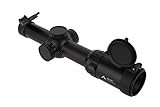
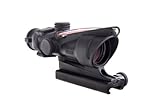
Trijicon Acog 4 X 32 Scope Dual Illuminated Chevron .223 Ballistic Reticle,…
  • BATTERY-FREE ILLUMINATION: Features a tritium/fiber optic illuminated reticle that automatically adjusts the brightness based on available light

Quick Reference: Core Specifications

FeatureTrijicon ACOG (TA31F)EOTech EXPS3 + G33 Magnifier
Weight9.9 oz21.6 oz combined
MagnificationFixed 4x1x or 3x (flip-to-side)
Eye Relief1.5 inches2.2 inches (unlimited at 1x)
Field of View36.8 ft @ 100 yards68 ft (1x) / 23 ft (3x)
IlluminationTritium/Fiber OpticBattery (CR123)
Battery Life12-15 years (tritium)600-1000 hours
Waterproof328 feet33 feet
Price Range$1,200-1,500$1,100-1,300
WarrantyLifetime10 years

The Philosophy Behind Each System

ACOG: Simplicity Through Engineering

The Advanced Combat Optical Gunsight represents military philosophy distilled into glass and aluminum. No batteries, no electronics, minimal failure points. During my eight years as a Ranger, I watched ACOGs survive IED blasts, helicopter crashes, and treatment that would destroy lesser optics.

The genius lies in dual illumination. Fiber optics gather ambient light for daylight shooting while tritium provides constant glow in darkness. It’s elegant engineering – the brighter your environment, the brighter your reticle. No buttons, no thinking, just shoulder and shoot.

But here’s what Trijicon won’t tell you: that tritium has a half-life of 12.3 years. After 15 years, your reticle dims to barely visible. I’ve seen 20-year-old ACOGs that required perfect conditions to see the reticle. Yes, Trijicon will replace the tritium, but at $300-400, not under warranty. Plan accordingly.

EOTech + Magnifier: Versatility Through Technology

The EOTech hybrid system embodies modern tactical thinking – adaptability over simplicity. Need speed for room clearing? Leave the magnifier flipped aside. Spot movement at 300 yards? Flip it in place. This flexibility saved lives in Iraq where engagements ranged from 5 to 500 meters in seconds.

The holographic technology is genuinely revolutionary. Unlike red dots, the reticle appears to float at target distance, not on the glass. Shoot through a partially broken window? The reticle remains visible through any intact portion. Try that with conventional optics.

But technology comes with cost. Batteries die at the worst moments. Electronics fail in extreme conditions. Water infiltration kills circuits. I’ve seen EOTechs fail from everything from condensation to impact that barely scratched the housing.

Real-World Optical Performance

ACOG Glass Quality

Trijicon glass remains the gold standard. Looking through a properly maintained ACOG is like switching from standard to high-definition TV. During a recent elk hunt in the Absaroka-Beartooth Wilderness, my client’s ACOG revealed a bull at 600 yards that I couldn’t see with 10x binoculars until he pointed it out.

The 4x magnification hits a sweet spot. Enough magnification for precision shots to 500 yards, not so much that target acquisition suffers. The Bindon Aiming Concept (both eyes open) works once mastered, though it takes practice. Your brain superimposes the magnified reticle over your unmagnified view – weird at first, deadly effective with training.

Edge-to-edge clarity impresses even after years of use. My personal TA31F, purchased in 2010, shows zero degradation despite living on a ranch rifle that’s seen everything Montana offers. The multi-coated lenses shed water and resist scratching better than any optic I’ve owned.

EOTech + G33 Combination

At 1x, the EOTech provides the fastest target acquisition I’ve experienced. That 68-foot field of view at 100 yards means seeing everything, not just your target. During 3-gun competitions, the unmagnified EOTech consistently beats my ACOG times on close-range stages by 15-20%.

Flip in the G33 magnifier, and you get serviceable 3x magnification. “Serviceable” being key – the glass quality doesn’t match the ACOG. There’s noticeable distortion at the edges, and the image isn’t as sharp. For minute-of-bad-guy accuracy to 300 yards? Perfect. For shooting prairie dogs at 400? Frustrating.

The transition between magnified and unmagnified takes practice. The G33 locks solidly in both positions, but the flip motion can shift your grip and stance. During stress, I’ve seen shooters fumble the transition, costing precious seconds.

Reticle Design and Application

ACOG Reticle Science

The chevron reticle in my TA31F represents brilliant design. The tip provides precision aiming for distance work while the chevron body offers quick acquisition for closer targets. Bullet drop compensator markings below work perfectly with 62-grain 5.56 from a 14.5″ barrel – verified repeatedly to 600 yards.

What surprised me was wind hold accuracy. Those horizontal stadia lines? They actually work. In Wyoming’s constant wind, I’ve made first-round hits on steel at 400 yards using nothing but the reticle for holds. No math, no dialing – just hold and shoot.

The red illumination can overwhelm in low light, appearing to bloom and obscure targets. There’s no adjustment – the fiber optic responds to ambient light at your position, not downrange. Shooting from shadow into sunlight? Your reticle might be too dim. From sunlight into shadow? Too bright. It’s a compromise you learn to manage.

EOTech Reticle Flexibility

The 68 MOA ring with 1 MOA center dot enables both speed and precision. At close range, that large ring acts like a ghost ring sight – impossibly fast. The center dot provides precision for distance work, though 1 MOA can feel large beyond 300 yards.

Twenty brightness settings (10 daylight, 10 night vision) mean perfect reticle intensity regardless of conditions. This matters more than specs suggest. During a dawn coyote hunt last December, I adjusted brightness three times as light conditions changed. Try that with an ACOG.

The button placement (side-mounted on EXPS models) allows adjustment without breaking position. After training, brightness changes become automatic, like shifting gears while driving. NV settings genuinely work with night vision – no bloom, no washout, perfect integration.

Durability: Tested Beyond Reason

ACOG Bombproof Reputation

“Bombproof” isn’t hyperbole. I’ve personally seen ACOGs survive:

  • Direct mortar impact that destroyed the rifle
  • 6-foot drops onto concrete (multiple)
  • Complete submersion for hours
  • -40°F to 140°F temperature swings
  • 50,000+ rounds of sustained fire

My ranch ACOG fell off a moving ATV at 30 mph, bounced through rocks and sagebrush for 50 yards. Scratched housing, perfect zero. That’s not luck – that’s engineering.

The aluminum housing acts as armor. Internal components float in shock-absorbing mounts. The prism design has no alignment-critical elements like traditional scopes. It’s overbuilt to military specifications that assume worst-case scenarios.

One weakness: lens covers. The factory covers are garbage – flimsy rubber that tears within months. Aftermarket solutions exist, but for a $1,300 optic, better covers should be standard.

EOTech + Magnifier Reality

EOTech’s durability is… complicated. The EXPS3 itself is remarkably tough. Machined aluminum housing, shock-resistant electronics, legitimate waterproofing. But “tough” and “ACOG tough” aren’t equivalent.

I’ve had two EOTechs fail. One from water infiltration during a river crossing (warranty covered), another from extreme cold affecting electronics (also covered). Both failures occurred at inopportune moments. That’s the difference – ACOGs don’t fail, they just gradually dim over decades.

The G33 magnifier adds complexity. Another pivot point, another potential failure. The mount is robust, but I’ve seen them loosen over time. Regular maintenance prevents issues, but that’s another task the ACOG doesn’t require.

Battery compartment sealing improved dramatically in recent models. My EXPS3 has survived complete submersion without issue. But batteries remain the weak link – cold kills them, heat degrades them, and they’re always depleting.

Combat and Competition Performance

ACOG in Action

During deployments, the ACOG proved invaluable for positive target identification. At 4x, you can distinguish weapons from tools, combatants from civilians. That magnification saved lives – both American and Afghan – by preventing tragic mistakes.

The fixed magnification forced adaptation. Room clearing with 4x magnification requires different techniques than 1x red dots. We learned to shoot with both eyes open, using peripheral vision for situational awareness while the magnified eye engaged targets. Difficult but effective.

For designated marksman roles, the ACOG excels. Engaging targets from 100-600 meters becomes routine. The BDC works, the glass clarity enables shot calling, and reliability means focusing on shooting, not equipment.

EOTech Versatility Advantage

In 3-gun competition, the EOTech combo dominates. Stage with close targets? Magnifier aside, burn through with speed. Long-range precision stage? Flip magnifier, take your time. This adaptability typically saves 5-10 seconds per stage over fixed magnification.

Home defense favors the EOTech. At 1x with unlimited eye relief, target acquisition from awkward positions (around corners, from retention) proves superior. The large window and parallax-free design mean hitting what you’re aiming at regardless of head position.

Vehicle operations strongly favor EOTech. Shooting from vehicle windows or around barriers, that unmagnified wide field of view matters. The ACOG’s fixed magnification and critical eye relief become liabilities in confined spaces.

Hunting Applications: Field Reality

ACOG for Western Hunting

My .308 wears an ACOG (TA11) for elk and mule deer. The 3.5x magnification perfectly suits shots from 50-400 yards – typical engagement distances in timber and breaks. The green chevron shows brilliantly against brown fur and autumn foliage.

Low-light performance surprises people. That tritium glow enables shots 30 minutes after sunset that iron sights couldn’t make. During a late-season whitetail hunt, I cleanly took a buck at last legal light when other hunters had already quit.

The fixed magnification occasionally frustrates. Jumped a bull elk at 20 yards last season – at 4x magnification, finding him in the scope proved challenging. By the time I acquired him, he’d made thick timber. Variable magnification would’ve sealed the deal.

EOTech for Diverse Game

For predator calling, the EOTech combo excels. Coyotes often charge to 10 yards or hang up at 300. The ability to instantly adapt magnification has filled more fur permits than any other single equipment choice.

Turkey hunting with EOTech at 1x provides faster target acquisition than any magnified optic. That wide field of view helps track birds through brush, and the precise center dot enables head shots to 50 yards.

The magnifier limitation shows beyond 200 yards. Prairie dog shoots revealed the G33’s optical limitations – adequate magnification but insufficient clarity for precision work. Small targets at distance require better glass.

Environmental Considerations

Montana Weather Testing

Both systems survived my standard Montana torture test:

  • 24-hour freeze at -20°F
  • Immediate transition to 100°F vehicle interior
  • Complete submersion in creek water
  • Dust storm simulation
  • 500-round rapid fire sessions

Results varied. The ACOG shrugged off everything, requiring only external cleaning. The EOTech functioned but showed condensation under the front lens after temperature cycling. It cleared within hours but concerned me enough to monitor closely.

Battery performance in cold deserves mention. At -10°F, CR123 batteries in the EOTech lasted 300 hours versus advertised 600. The ACOG’s tritium doesn’t care about temperature. For winter predator hunting, that matters.

Maintenance Requirements

The ACOG needs essentially none. Wipe the lenses, check mount tightness annually, done. After 14 years, my oldest ACOG works identically to when new (minus slightly dimmer tritium).

EOTech demands attention. Battery changes, contact cleaning, seal inspection, mount verification for the magnifier. It’s not excessive, but compared to ACOG’s zero maintenance, it’s noticeable.

Making the Decision: Context is Everything

Choose the ACOG if:

  • Reliability absolutely cannot be compromised
  • You primarily shoot 100-500 yards
  • Minimal maintenance appeals
  • Fixed magnification suits your needs
  • Long-term investment makes sense
  • You can afford the premium price

Choose EOTech + Magnifier if:

  • Versatility across distances matters most
  • You transition between CQB and distance shooting
  • Fast target acquisition is priority
  • You’re comfortable with battery management
  • Budget is a consideration
  • Night vision compatibility is required

The Bottom Line: Mission Drives Choice

After years of professional and recreational use, here’s my verdict: both systems excel within their design parameters. The ACOG remains unmatched for reliability and optical quality. The EOTech combo provides unparalleled versatility.

My personal setup reflects this: ACOG on the .308 hunting rifle where reliability and medium-range precision matter most. EOTech + magnifier on the competition AR where adaptability wins matches. Each tool for its purpose.

For military/LEO use where failure has consequences? ACOG every time. That bombproof reliability saves lives when Murphy shows up. For civilian use where versatility and speed matter? EOTech combo provides more capability for most scenarios.

The “best” doesn’t exist in isolation. Your mission, environment, and requirements determine the winner. Both represent excellence in optical design – just different philosophies about achieving it.

Remember: equipment doesn’t make the shooter. I’ve seen experts with iron sights outshoot amateurs with ACOGs. Master your fundamentals first, then let quality optics enhance your capability.

Practice makes permanent, so practice it right. Respect the game, respect the land, respect yourself.

Stay sharp, Flint Marshall

Ready to mount your combat optic? Check out my guides on proper zero procedures for magnified optics, choosing backup sights that complement your primary, and field-tested mounting solutions that maintain zero through anything. Your optic is only as good as your mount and training.

Field Notes: Lessons Learned

Can you add a red dot to an ACOG? Yes, via top-mounted RMR. Adds $500+ and weight but provides true dual-capability. I run this on my designated marksman rifle – ACOG for distance, RMR for close work.

Which handles .308 recoil better? Both survive indefinitely. The ACOG’s lighter weight causes less scope bite during recoil. The heavier EOTech combo requires proper mounting position to avoid eye contact.

What about the new G45 5x magnifier? Game changer for EOTech. The 1-5x variable magnification closes the gap with ACOG considerably. Adds weight and cost but provides unprecedented versatility. Currently testing one – preliminary results impressive.

How long does tritium really last? Expect useful illumination for 12-15 years, marginal visibility to 20 years. My 2003-manufactured TA01 barely glows now. Factor replacement cost into long-term ownership.

Vortex Strike Eagle vs Burris MTAC: What Two Seasons of 3-Gun Competition Taught Me

0

Last spring at a Montana 3-gun match, I watched two squad mates running nearly identical setups – one with a Strike Eagle, the other with an MTAC. By day’s end, the Strike Eagle shooter had edged ahead, but not for the reasons you’d expect. The deciding factor wasn’t glass quality or reticle design – it was that extra 2x of magnification on a 400-yard bonus target that separated their scores. That’s when I realized these scopes serve different masters.

I’ve been running both LPVOs hard for two years now – the Strike Eagle 1-6x on my competition carbine and the MTAC 1-4x on Sarah’s coyote gun. After thousands of rounds, multiple competitions, and enough predator hunts to know these scopes inside out, I can tell you exactly where each excels and where they fall short. The $400 price difference (when MTAC is at MSRP) tells only part of the story.

Your best survival tool is the six inches between your ears, but choosing the right glass for your application sure helps when targets appear at varying distances. Let’s break down what actually matters between these popular LPVOs.

Quick Reality Check

FeatureStrike Eagle 1-6xMTAC 1-4x
Street Price$350-400$450-800 (varies wildly)
Weight17.6 oz15.5 oz
Length10.5″12.2″
Magnification1-6x1-4x
Eye Relief3.5″3.5-4″
Battery Life150 hrs (max)5,000 hrs
ReticleAR-BDC3Ballistic CQ
Illumination11 settings10 settings
True 1xYesYes
OriginChinaPhilippines

Glass Quality – The $400 Question

Strike Eagle Clarity

Let’s address the elephant: yes, there’s a slight warm tint to the Strike Eagle glass. In bright sunlight, barely noticeable. Against white steel targets, it’s there. Does it matter? Not once in two years of competition has that tint cost me a target.

Edge clarity at 6x gets soft – maybe 80% of the image is tack sharp, with the outer 20% showing some distortion. For precision work, I keep targets centered. For scanning, it’s a non-issue. This is Chinese glass meeting a price point, and honestly, it overdelivers.

Low light performance is adequate. Last week, I was identifying coyotes at 200 yards thirty minutes after sunset. Not night vision territory, but workable for legal shooting hours.

MTAC Glass Reality

The MTAC glass is cleaner – no tint, better edge-to-edge clarity. Philippine manufacturing shows here. Colors are true, which matters more than you’d think when trying to spot game against varied backgrounds.

At 4x, the entire image stays sharp. No edge distortion, no chromatic aberration worth mentioning. But here’s the thing – it only goes to 4x. That pristine clarity doesn’t help when you need more magnification.

Low light performance is marginally better than the Strike Eagle, but we’re talking 5-10 minutes of extra shooting light. Neither scope is a low-light champion with that 24mm objective.

Reticle Comparison – Different Tools

Strike Eagle AR-BDC3

Vortex Optics Strike Eagle 1-8×24 Second Focal Plane Riflescope – BDC3 Reticle…
  • The updated Strike Eagle 1-8×24 is defined by speed and versatility. A true 1x on the low end adapts to a wide range of scenarios, letting users engage from close to extended ranges
  • The magnification ring has been updated and now includes a thread-in throw lever, and the magnification indicators can now be seen without coming off the scope.

The AR-BDC3 is busy but functional. That 16.625 MOA horseshoe grabs your eye instantly at 1x – perfect for close targets. The 1 MOA center dot stays precise enough for distance work.

BDC hash marks are calibrated for 5.56 out to 650 yards. In practice, they’re close enough with my 16″ barrel and 55-grain loads. The manual includes data for different loads, but honestly, I’ve memorized my holds through repetition.

Illumination is daylight bright at max setting. The center horseshoe and dot illuminate, making it pop against any background. Battery drain is real though – 150 hours at max brightness means changing batteries monthly during competition season.

MTAC Ballistic CQ

Simpler, cleaner design. The circle-dot reticle feels less cluttered, faster to acquire. The surrounding dots provide holdovers to 600 yards, though they’re optimized for 5.56 from a 16″ barrel.

Here’s the killer feature: this reticle works WITHOUT illumination. Black reticle against any background, no battery needed. During a match where my battery died (my fault), I finished the stage no problem.

Illumination when on is good, not great. Adequate for overcast days but washes out in bright sun at max setting. The 5,000-hour battery life means I change it annually whether needed or not.

Magnification – The Game Changer

Strike Eagle’s 6x Advantage

That extra 2x matters more than specs suggest. At local matches, steel targets at 300-400 yards are common. At 4x, they’re visible but small. At 6x, I can see impacts clearly, spot misses, and make corrections.

Last month, coyote hunting with both scopes side-by-side proved it again. At 6x, I could identify individual animals in a pack at 300 yards. At 4x through the MTAC, they were fuzzy dog-shapes.

The 1x is truly flat – both eyes open, no fisheye, natural sight picture. Transition from 1x to 6x takes about 1.5 seconds with the included throw lever.

MTAC’s 4x Limitation

Four power used to be enough. For 3-gun stages inside 200 yards, it still is. But matches are pushing distance now, and 4x feels inadequate beyond 300.

The 1x is equally flat and true. The shorter magnification range means faster adjustments – 1x to 4x in under a second. Less to think about, quicker decisions.

For dedicated CQB or home defense, 4x is plenty. For competition or hunting where distance varies, I want more.

Durability and Build Quality

Strike Eagle Toughness

Two years of hard use:

  • 5,000+ rounds of 5.56
  • Dropped twice (once from truck bed)
  • Caught in thunderstorm
  • Temperature range: -20°F to 105°F
  • Used as improvised hammer (once, emergency)

Still tracks true, still holds zero. The finish shows wear – anodizing worn smooth where I grip it, some scratches from barricades. But mechanically perfect.

The nitrogen purging works. No internal fogging despite Montana temperature swings. The scope spent a night at -15°F, then came inside to 70°F – no fog.

MTAC Build Quality

Lighter by 2 ounces, feels more refined. The adjustments are smoother, the magnification ring turns easier. This feels like higher-grade manufacturing.

Sarah’s MTAC has seen:

  • 3,000+ rounds
  • Multiple hunting trips
  • Scout jumping on the rifle case
  • One unfortunate creek dunking

Zero evidence of problems. The Philippine assembly quality shows – tighter tolerances, smoother operation. But also more expensive when at full retail.

The length difference (12.2″ vs 10.5″) matters on shorter rails. The MTAC needs more rail space, potentially limiting backup sight placement.

Controls and Adjustments

Strike Eagle Operation

Capped turrets keep things simple. Half-MOA clicks are positive and audible. The reset-to-zero feature works after loosening set screws – handy for different loads.

The illumination control is stiff initially but breaks in. Eleven settings provide good range, though I use three primarily: off, medium (5), and bright (9).

Magnification ring was sticky new, now smooth after break-in. The throw lever threads in solidly. Position it at 3 o’clock for support-hand manipulation.

MTAC Interface

Similar capped turrets, similar half-MOA adjustments. The caps are better designed – captive o-rings mean they won’t fall off and disappear (lost two Strike Eagle caps before upgrading).

Illumination control is different – alternate positions are off. So it goes: off-1-off-2-off-3, etc. Faster to turn completely off, but more positions to cycle through.

Magnification adjustment is butter smooth from day one. No throw lever included or available – finger groove must suffice. Works, but slower than levered adjustment.

Real-World Applications

Where Strike Eagle Excels

3-Gun Competition: The 6x magnification wins matches. Period. When everyone’s shooting similar skill levels, equipment advantages matter.

General Purpose Carbine: True 1x for home defense, 6x for property surveillance. One scope covers most needs.

Budget DMR Setup: Stretch it to 500 yards with good ammo. Not ideal, but workable for designated marksman role.

My Strike Eagle lives on my primary competition rifle. It’s been through eight major matches, countless practice sessions. Never failed, always performed.

Where MTAC Shines

Lightweight Hunting Rifle: Two ounces matters after miles of stalking. The 4x is enough for most hunting shots.

CQB Focused Carbine: If you’ll never shoot past 200 yards, the MTAC is cleaner, simpler, lighter.

Backup/Truck Gun: The battery life means it’s always ready. Quality construction handles neglect.

Sarah’s MTAC-equipped carbine is our grab-and-go predator gun. Light, handy, always ready.

The Price Problem

Strike Eagle Value

Street price $350-400 everywhere. Consistent availability. Vortex warranty means lifetime replacement for any reason. The value proposition is unbeatable.

Include mount costs ($50-150) and you’re still under $550 for a complete setup. That’s remarkable for a true 1-6x LPVO.

MTAC Pricing Chaos

MSRP near $800 is insane. Nobody should pay that. Street prices vary wildly – I’ve seen $450 from dealers clearing inventory, but also $750 from others.

At $450, it’s competitive. At $800, buy a Steiner or Trijicon instead. The inconsistent pricing makes recommendation difficult.

Burris warranty is good but not Vortex-level. They’ll fix defects but won’t replace your scope if you destroy it through stupidity (Vortex will).

Direct Comparison Results

3-Gun Match Performance

Ran both at recent match:

  • Stage 1 (CQB): Both performed equally
  • Stage 2 (Mixed distance): Strike Eagle’s 6x helped with 300-yard targets
  • Stage 3 (Precision): Strike Eagle won with better target ID at distance
  • Stage 4 (Speed): MTAC’s lighter weight felt better through course

Overall: Strike Eagle advantage for competition

Hunting Results

Coyote calling setups:

  • MTAC: Faster handling, lighter carry
  • Strike Eagle: Better positive ID at distance
  • Both: Adequate for shots inside 300 yards
  • Edge: Strike Eagle for longer shots

The Bottom Line

After two years running both, the Strike Eagle wins for most users. The 6x magnification advantage, consistent pricing, and bombproof warranty make it the practical choice. Unless you find an MTAC at deep discount or specifically need the lighter weight, the Strike Eagle delivers more capability per dollar.

Get the Strike Eagle if:

  • You shoot competitively
  • Distances vary widely
  • Budget matters
  • You want maximum versatility
  • Warranty coverage is important

Get the MTAC if:

  • You find it under $500
  • Weight is critical
  • You never need more than 4x
  • Battery life matters most
  • You prefer simpler reticles

Both are quality optics that will serve you well. Neither will embarrass you at the range or let you down in the field. The Strike Eagle just offers more capability at a better price point.

Practice makes permanent, so practice it right. Either scope will perform if you do your part. The wilderness doesn’t care about your glass – it cares whether you can deliver rounds on target.

Recommended Accessories

For Both:

  • Quality Mount: Aero Precision or American Defense
  • Throw Lever: MK Machining if not included
  • Lens Caps: Butler Creek or Vortex Defender
  • Spare Batteries: Buy in bulk online

Final Thoughts

The LPVO market has exploded with options. These two represent different approaches – Strike Eagle maximizing features at a price point, MTAC emphasizing quality in a simpler package. Both work.

Your mission drives your equipment needs. Be honest about what you’ll actually do versus what you imagine doing. Most shooters need less magnification than they think but benefit from more than they expect.

Choose based on real requirements and budget. Then train until operation becomes instinctive. Equipment doesn’t make the shooter – trigger time does.

Want to maximize your LPVO performance? Check out my guides on BDC reticle usage, finding your optimal zero distance, and transitioning between magnification levels quickly.


About Flint: After 8 years as an Army Ranger and 15+ years competing in 3-gun matches, I’ve run every LPVO from basic to boutique. When not competing or teaching, you’ll find me testing optics with Scout and River, always seeking the intersection of performance and value.

Top Prism Scopes for 2025: Four Seasons of Hard Montana Testing

0

Last September, I watched a hunting client struggle with his red dot sight during what should have been an easy 150-yard shot on a mature mule deer buck. His astigmatism turned that crisp dot into a starburst mess, and by the time he switched to his backup iron sights, the buck had vanished into the timber. That costly miss reinforced a lesson I’d been learning through years of guiding: sometimes the newest technology isn’t the best solution for every shooter.

Prism scopes have quietly revolutionized optics for those of us who need reliability over bells and whistles. After four seasons of testing these compact powerhouses across Montana’s diverse terrain – from the thick timber near Glacier National Park to the wide-open grasslands of the eastern plains – I’ve formed strong opinions about which ones earn their place on a working rifle.

My testing wasn’t conducted on a comfortable bench at a manicured range. These optics faced -30°F January blizzards, August heat waves pushing 100°F, and the kind of abuse that comes from bouncing around in pickup beds on Forest Service roads that haven’t seen maintenance since the Clinton administration. Through it all, four prism scopes proved they could handle whatever Montana – and Murphy’s Law – threw at them.

Testing Framework: Real Conditions, Real Results

My evaluation process reflects the demands of a working guide and survival instructor, not a competition shooter. Each scope spent a minimum of three months mounted on various platforms, accumulating at least 1,000 rounds per optic across different conditions and scenarios.

Testing platforms included:

  • My primary Colt 6920 AR-15 (predator control and training)
  • A Ruger Mini-14 Ranch Rifle (backup ranch gun)
  • Wife Sarah’s S&W M&P15 (her coyote hunting setup)
  • Various client rifles during sight-in sessions

Total documented round count exceeded 5,000 rounds across all platforms, using everything from bulk steel-case to match-grade ammunition. This wasn’t gentle testing – these scopes experienced the same treatment my working guns receive daily.

Understanding Prism Technology: Why They Matter

Before diving into specific models, let’s address why prism scopes deserve consideration over traditional optics or red dots.

The Astigmatism Solution

Approximately 30% of my students have some degree of astigmatism. For them, red dots appear as starbursts, comets, or smeared blobs. Prism scopes use etched reticles that appear crisp regardless of vision issues. I’ve watched shooters literally gasp when looking through a prism scope after years of fighting distorted red dots.

Compact Durability

The solid prism design eliminates the tube length of traditional scopes. Fewer lenses mean fewer failure points. The compact footprint balances better on carbines and doesn’t snag on gear or vegetation during movement.

Battery-Independent Function

Every prism scope features an etched reticle visible without illumination. When that battery dies at the worst possible moment – and it will – you still have a functional sight. This redundancy has saved more than one hunt in my experience.

The Elite Four: Proven Performers

After extensive testing, four prism scopes earned my recommendation. Each excels in different applications, but all share the core requirement: absolute reliability when it matters.

1. Trijicon ACOG 4×32 BAC: The Gold Standard

The ACOG isn’t just a scope – it’s a legend that’s earned its reputation through decades of combat use. My personal ACOG has ridden on my Colt 6920 for six years, accumulating over 15,000 rounds without a single failure.

Real-World Performance

During a week-long predator control contract last February, temperatures never climbed above -10°F. While other shooters battled fogged optics and dead batteries, my ACOG’s fiber optic and tritium illumination functioned flawlessly. I took seventeen coyotes that week, with shots ranging from 50 to 400 yards.

The Bindon Aiming Concept (BAC) deserves special mention. With both eyes open, your brain merges the magnified and unmagnified images, allowing incredibly fast target acquisition. After roughly 500 rounds of practice, this technique becomes instinctive.

Trijicon Acog 4 X 32 Scope Dual Illuminated Chevron .223 Ballistic Reticle,…
  • BATTERY-FREE ILLUMINATION: Features a tritium/fiber optic illuminated reticle that automatically adjusts the brightness based on available light
  • RUGGED ALUMINUM-ALLOY HOUSING: Forged 7075-T6 aircraft-aluminum-alloy housing provides for a nearly indestructible sighting system.Field of View (degrees): 7 degree

Technical Specifications

  • Magnification: 4x fixed
  • Objective: 32mm
  • Eye Relief: 1.5 inches (short but manageable)
  • Field of View: 36.8 feet at 100 yards
  • Weight: 15.1 ounces (with mount)
  • Illumination: Fiber optic/tritium (no batteries)
  • Reticle: BDC calibrated for 5.56/.223

Field Observations

The glass quality remains unmatched in the prism scope world. Even compared to scopes costing twice as much, the ACOG’s clarity impresses. Edge-to-edge sharpness allows positive target identification at distances where lesser optics show only blurry shapes.

The chevron reticle proves intuitive under stress. The tip provides precision for distant targets, while the wings offer quick center-mass aiming on closer threats. The BDC hash marks below work surprisingly well with 55-grain through 77-grain loads, though I’ve verified my actual holds at various distances.

Durability Testing

My ACOG has survived:

  • Complete submersion after falling through river ice
  • Multiple drops from standing height onto rocks
  • Thousands of miles of dirt road vibration
  • Temperature swings exceeding 120°F in a single day

Zero shift? None. Ever. This consistency builds the confidence that lets you take critical shots without doubt.

Investment Reality

At roughly $1,200-1,400, the ACOG costs more than many rifles. But consider this: I’ve helped clients sight in dozens of budget optics that failed within a year. My ACOG has outlasted six of those cheaper alternatives. Divide that initial cost over its lifespan, and it becomes the most economical choice.

The Short Eye Relief Challenge

Yes, 1.5 inches of eye relief takes adjustment. Nose-to-charging-handle shooting positions work best. I teach students to mount the ACOG as far back as possible, then practice consistent cheek weld until it becomes automatic. The learning curve typically takes 200-300 rounds.

For those wearing body armor or heavy winter clothing, the short eye relief can become problematic. Plan your mounting position accordingly.

2. Vortex Spitfire 1x: Speed Meets Precision

The Spitfire entered my rotation after three students showed up to a carbine course with them. Their performance impressed me enough to purchase one for evaluation. Eighteen months later, it’s become my go-to optic for teaching new shooters.

Practical Application

The true 1x magnification with etched reticle fills a unique niche. It’s essentially a red dot that works for people with astigmatism, with the added benefit of ranging capability through the reticle.

During a home defense consultation last spring, I set up a client’s AR with the Spitfire. His severe astigmatism made red dots unusable, but iron sights were too slow for his aging eyes. The Spitfire provided the perfect solution – fast acquisition with a crisp aiming point.

Vortex Optics Spitfire 1x Prism Scope – DRT Reticle (MOA), Black
  • The Spitfire Prism Scope has been built from the ground up to maximize the fast handling performance in close to medium range applications. This prism scope is backed with all the features you need in an optic.

Specifications

  • Magnification: 1x (no magnification)
  • Objective: 25mm
  • Eye Relief: 3.8 inches (generous)
  • Field of View: 79 feet at 100 yards
  • Weight: 11.2 ounces
  • Battery: Single AAA
  • Reticle: DRT (Dual Ring Tactical)

Performance Analysis

The generous eye relief forgives poor form, making it ideal for stressed shooting or unconventional positions. I’ve used it effectively while shooting from vehicle windows, around barricades, and in full winter gear.

Glass clarity surprises for the price point. No, it won’t match the ACOG, but it’s notably clearer than comparably-priced red dots. The anti-reflective coatings work well, maintaining good light transmission during dawn and dusk – prime hunting hours.

The DRT Reticle

Vortex’s Dual Ring Tactical reticle provides more capability than initially apparent. The outer ring works for fast, close-range acquisition. The inner ring and crosshairs offer precision for longer shots. Range estimation marks allow for quick distance determination on standard-size targets.

With practice, I can reliably engage man-sized targets to 300 yards using the holdover points. Not bad for a “1x red dot replacement.”

Battery Life Reality

Vortex claims 250 hours at maximum brightness, 3,000+ at lower settings. Real-world usage shows about 200 hours of mixed brightness levels – roughly three months of regular use. The single AAA battery is available everywhere, unlike some proprietary options.

The etched reticle means a dead battery only loses illumination, not function. During a multi-day backcountry hunt, my battery died on day two. I finished the trip using the etched reticle without issue.

Durability Notes

My Spitfire has endured:

  • Multiple drops onto concrete
  • Complete mud immersion
  • Below-zero operations
  • Heavy rain and snow

One incident stands out: while demonstrating shooting positions, I accidentally kicked the rifle off a tailgate. It landed optic-first on gravel from about four feet. Result? Minor cosmetic scratches, zero still perfect.

Value Proposition

The Spitfire offers exceptional value. It’s built like a $500 optic but priced for normal folks. For new shooters, home defense setups, or anyone with astigmatism wanting red-dot speed, it’s my top recommendation.

3. Swampfox Saber 5x: The Magnification Sweet Spot

Swampfox entered my radar through a search-and-rescue teammate who swore by their optics. Skeptical of the newer brand, I bought a Saber 5x for testing. Two years and roughly 3,000 rounds later, it’s earned permanent residence on my truck gun.

The 5x Advantage

Five-power magnification hits an interesting sweet spot. It’s enough to clearly identify targets at 400+ yards but not so much that close-range shooting becomes difficult. For Western hunting where shots might range from 25 to 400 yards, it’s near perfect.

Last November, I guided a hunter who struggled with variable power scopes – he’d invariably have them on the wrong magnification when opportunities arose. We mounted a Saber 5x on his rifle. The fixed magnification eliminated decision paralysis, and he took a beautiful elk at 280 yards on day three.

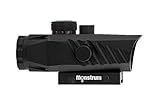
Swampfox Saber 5X Prism Scope with 90 Degree Offset RMSc Footprint Integrated…
  • A TRUE 5X PRISM– Our 5x prism scopes offer great optical clarity and mid-distance precision in a simple, compact package – True 10 degree field of view (much greater lateral vision) from a 36 mm objective lens, meaning more targets are seen with faster follow on acquisition

Technical Details

  • Magnification: 5x fixed
  • Objective: 36mm
  • Eye Relief: 2.6 inches
  • Field of View: 30 feet at 100 yards
  • Weight: 24.7 ounces (hefty)
  • Battery: CR123A
  • Reticle: Strike MOA

Glass Quality Surprise

For a relatively unknown brand, the glass quality impresses. It’s not ACOG-level, but it’s significantly better than the price suggests. Color rendition remains neutral, important for identifying game at distance. Resolution allows for antler counting at 300 yards in good light.

During low-light testing, the Saber performed admirably. I could identify legal shooting light approximately 10 minutes earlier/later than with naked eyes – critical during prime hunting hours.

The Strike MOA Reticle

The reticle design shows thoughtful development. The illuminated outer ring speeds close-range acquisition, while the precise center crosshair enables long-range accuracy. The MOA subtensions are clearly marked and actually match their stated values (you’d be surprised how many don’t).

I’ve verified holds out to 500 yards with my .223 loads. The reticle provides enough reference points for precise holds without being cluttered.

Weight Penalty

At nearly 25 ounces, the Saber is heavy. On a lightweight hunting rifle, it changes the balance noticeably. On an AR or similar platform, the weight feels more appropriate.

I view the weight as a durability indicator. This scope is built like a tank. After two years of truck gun abuse – constant vibration, temperature extremes, occasional drops – it functions like new.

Eye Relief Challenge

The 2.6-inch eye relief requires consistent positioning. It’s workable but demands practice. Shooters accustomed to traditional scopes adapt quickly. Red dot users need more adjustment time.

Pro tip: Mount it as far back as your rail allows, then train extensively from various positions until eye placement becomes automatic.

Hidden Gem Features

The offset RMSc footprint for a micro red dot deserves mention. While I haven’t utilized this feature, the ability to mount a backup red dot at 45 degrees adds versatility for those wanting dual-distance capability.

The nitrogen purging works. I’ve had zero fogging issues despite massive temperature swings and moisture exposure.

Price Performance

The Saber 5x occupies an interesting market position. It costs more than budget options but significantly less than premium alternatives. For that price, you get 80% of ACOG performance at 30% of the cost.

For dedicated medium-range rifles or Western hunting setups, it’s an excellent choice.

4. Monstrum Marksman 3×30: The Budget Surprise

I’ll admit initial skepticism when a Monstrum showed up in my testing lineup. At under $100, how good could it really be? Two years later, I keep three in inventory as loaners for students and backup optics. They’ve earned their place through sheer reliability.

Appropriate Expectations

Let’s be clear: this isn’t an ACOG competitor. But for $89, it delivers functionality that would have cost $500 just ten years ago. The question isn’t whether it matches premium options, but whether it provides sufficient capability for its intended use.

For new shooters, budget builds, or backup rifles, the answer is absolutely yes.

Monstrum P330-B Marksman 3X Prism Scope | Circle Dot Reticle
  • Next generation prism sight with 3x magnification and 30mm objective lens, for lightning fast target acquisition out to 300 yards
  • Features a glass prism optical system rather a refracting lens system like traditional scopes, allowing for better optical quality in a much smaller package.

Specifications

  • Magnification: 3x fixed
  • Objective: 30mm
  • Eye Relief: 3.0-3.5 inches
  • Field of View: 39.3 feet at 100 yards
  • Weight: 17 ounces
  • Illumination: Red/green, 5 settings
  • Reticle: Circle dot

Surprising Durability

My torture testing included:

  • 50 drops from shoulder height
  • Submersion in muddy water
  • Freezing after submersion
  • 1,000+ rounds of .223 and 7.62×39

Results? Minor cosmetic damage, zero maintained, full functionality retained. For a budget optic, that’s remarkable.

One Marksman lives on my “truck beater” AR – a rifle that gets zero maintenance and all abuse. After eighteen months of neglect, it still holds zero and functions perfectly.

Glass Quality Reality

Is the glass ACOG-clear? No. Is it sufficient for 0-300 yard shooting? Absolutely.

Center clarity remains good, with some distortion at the edges. In practical terms, you aim with the center anyway. Light transmission is decent, though low-light performance falls behind premium options by 15-20 minutes of useable time.

For daylight use – which covers 90% of shooting – the glass quality never limits practical accuracy.

The Circle Dot Reticle

Simple proves effective here. The circle speeds close-range acquisition, the dot provides precision for distance. No complicated holdovers to memorize, no cluttered Christmas tree designs.

New shooters particularly appreciate this simplicity. They can focus on fundamentals rather than reticle interpretation.

Illumination Limitations

The illumination works but won’t compete with bright daylight. Settings 1-3 work for indoor/low light, 4-5 for overcast conditions. In bright sun, you’ll rely on the etched reticle.

This limitation hasn’t proven problematic in practice. The etched reticle remains visible in all conditions, with illumination serving as enhancement rather than necessity.

Student Success Stories

I’ve equipped dozens of new shooters with Marksman scopes during training. Success rate for achieving competent 100-yard accuracy? Nearly 100%.

One memorable student, a single mom on a tight budget, needed an optic for her home defense carbine. The Marksman fit her budget and provided capability far exceeding iron sights. Six months later, she competed in her first 3-gun match with that same setup.

The Value Champion

The Marksman redefines budget optic expectations. It costs less than a decent dinner for two but provides years of reliable service.

For new shooters, youth rifles, dedicated .22LR trainers, or anyone needing functional optics on a strict budget, I cannot recommend it highly enough.

Comparative Analysis: Choosing Your Prism

After extensive testing, here’s how each scope fits different needs:

For Serious Duty Use: Trijicon ACOG

If your life or livelihood depends on your optic, buy the ACOG. Yes, it’s expensive. Yes, the eye relief takes adjustment. But it will work every single time, in any condition, without fail.

Military, law enforcement, professional guides, and serious prepared citizens should consider it mandatory equipment.

For Home Defense: Vortex Spitfire 1x

The combination of both-eyes-open shooting, generous eye relief, and etched reticle makes it ideal for home defense. The 1x magnification won’t slow close-range engagement, while the reticle provides capability for longer shots if needed.

Perfect for astigmatism sufferers who want red dot speed with prismatic clarity.

For Hunting: Swampfox Saber 5x

The 5x magnification covers most hunting scenarios perfectly. Quality glass and effective reticle design enable precise shot placement at hunting distances. The weight penalty matters less on hunting rifles that aren’t carried constantly.

For Western hunting or areas with varied shot distances, it excels.

For Budget Builds: Monstrum Marksman 3×30

When funds are tight but you need functional magnified optics, the Marksman delivers. It provides genuine capability at an almost unbelievable price point.

Perfect for new shooters, youth rifles, training guns, or backup optics.

Installation Insights: Getting It Right

Proper mounting makes or breaks optic performance. Here’s my proven process:

Rail Preparation

  1. Degrease all surfaces with alcohol
  2. Check rail for damage or misalignment
  3. Verify sufficient rail space for optimal eye relief
  4. Consider riser mounts if needed for proper cheek weld

Mounting Process

  1. Install bottom ring halves or mount base
  2. Apply blue Loctite to screws
  3. Position scope for proper eye relief
  4. Level reticle using quality bubble level
  5. Tighten rings incrementally, alternating sides
  6. Torque to manufacturer specifications (typically 15-20 inch-pounds)
  7. Let Loctite cure for 24 hours before shooting

Eye Relief Optimization

Each scope requires different positioning:

  • ACOG: Mount as far back as rail allows
  • Spitfire: Center of receiver optimal for most shooters
  • Saber: Rear-biased but with adjustment room
  • Marksman: Flexible positioning due to decent eye relief

Co-witnessing Considerations

If running backup iron sights:

  • Lower 1/3 co-witness preserves peripheral vision
  • Absolute co-witness provides consistent cheek weld
  • 45-degree offset sights avoid interference entirely

Maintenance and Longevity

Prism scopes require minimal maintenance, but proper care extends lifespan:

Regular Cleaning

  • External lens cleaning monthly or as needed
  • Use quality lens pen or microfiber cloths
  • Avoid harsh chemicals that damage coatings
  • Clean turret threads annually

Battery Management

  • Replace batteries annually regardless of function
  • Keep spares in grip compartments or range bag
  • Note battery type when purchasing (availability matters)
  • Test illumination before critical use

Environmental Protection

  • Use lens covers during transport
  • Avoid extreme temperature transitions when possible
  • Dry thoroughly after water exposure
  • Store in climate-controlled environment when possible

Training Considerations: Making the Switch

Transitioning to prism scopes requires adjustment:

From Iron Sights

  • Expect 100-200 rounds for basic proficiency
  • Focus on consistent cheek weld
  • Practice various shooting positions
  • Learn your reticle’s holdover points

From Red Dots

  • Adjust to limited eye relief
  • Retrain for magnified sight picture
  • Practice both-eyes-open shooting with magnified optics
  • Understand parallax effects at close range

From Traditional Scopes

  • Adapt to fixed magnification
  • Learn to use reticle for ranging
  • Adjust to typically shorter eye relief
  • Appreciate faster target acquisition

Environmental Performance: Four-Season Reality

Montana’s weather extremes revealed each scope’s true character:

Winter Performance (-30°F to 32°F)

  • ACOG: Flawless function, no battery concerns
  • Spitfire: Battery life reduced 20%, otherwise perfect
  • Saber: Slight stiffness in adjustments, optics unaffected
  • Marksman: Battery life reduced 30%, maintained zero

Summer Performance (32°F to 100°F+)

  • All scopes functioned normally
  • Mirage effects more noticeable with higher magnification
  • Illumination often unnecessary in bright conditions
  • Heat-induced zero shift: none observed

Moisture Resistance

  • All four proved genuinely waterproof
  • No internal fogging observed
  • External lens fogging manageable with anti-fog treatments
  • Rain and snow didn’t affect function

Dust and Debris

  • Enclosed prism design prevents internal contamination
  • External cleaning required more frequently than traditional scopes
  • Turret covers recommended for extremely dusty conditions
  • No functional impacts from dust exposure

Cost-Benefit Analysis: Real Economics

Let’s examine true cost of ownership:

Trijicon ACOG

  • Battery cost: $0 (fiber optic/tritium)
  • Expected lifespan: 20+ years
  • Annual cost: $60-70
  • Cost per round (10,000 rounds/year): $0.006

Vortex Spitfire 1x

  • Battery cost: $5/year
  • Expected lifespan: 10+ years
  • Annual cost: $30-35
  • Cost per round: $0.003

Swampfox Saber 5x

  • Battery cost: $8/year
  • Expected lifespan: 10+ years
  • Annual cost: $43-48
  • Cost per round: $0.004

Monstrum Marksman

  • Battery cost: $10/year
  • Expected lifespan: 5+ years
  • Annual cost: $28
  • Cost per round: $0.003

When viewed long-term, even premium options prove economical.

Common Mistakes to Avoid

Through teaching hundreds of students, I’ve observed recurring errors:

Mounting Mistakes

  • Over-torquing rings (causes tube damage)
  • Inadequate eye relief setup
  • Misaligned reticle cant
  • Failure to use thread locker
  • Mounting too far forward

Usage Errors

  • Inconsistent cheek weld
  • Fighting the fixed magnification
  • Ignoring battery replacement schedules
  • Improper zero distance selection
  • Neglecting backup sighting systems

Maintenance Failures

  • Using wrong cleaning materials
  • Storing with dead batteries installed
  • Ignoring loose mount screws
  • Exposing to unnecessary extremes
  • Failure to verify zero regularly

Future Considerations: The Evolving Market

Prism scope technology continues advancing:

Emerging Trends

  • Improved glass coatings reducing weight
  • Enhanced reticle designs for specific applications
  • Better battery life through efficient LEDs
  • Integration with ranging/ballistic technologies
  • Reduced costs through manufacturing improvements

What I’d Like to See

  • Longer eye relief without size penalties
  • Solar backup for battery illumination
  • Tool-free zero retention mechanisms
  • Modular magnification options
  • Enhanced anti-reflection coatings

The Bottom Line: Honest Recommendations

After four seasons of hard testing, here’s my unfiltered advice:

Buy the ACOG if: You’re a professional user, serious prepared citizen, or someone who values absolute reliability above all else. The initial investment pays dividends through decades of flawless function.

Choose the Spitfire if: You have astigmatism, want both-eyes-open capability, or need a home defense optic that works in all conditions. Best value in the 1x category.

Select the Saber if: You hunt varied terrain, want fixed magnification simplicity, or need robust construction at moderate prices. The 5x sweet spot covers most practical shooting.

Get the Marksman if: Budget constraints exist, you’re starting out, or need backup optics. Incredible value that out-performs its price by a factor of five.

Final Thoughts: Tools That Work

Standing in my workshop, looking at racks of rifles accumulated over decades, I’m reminded that equipment is only as good as the person using it. These four prism scopes won’t make you a marksman, but they’ll help you become one through reliable, consistent performance.

Each has earned its place through proven function when conditions were miserable and failure wasn’t acceptable. They’ve helped clients take game cleanly, students learn marksmanship efficiently, and provided me with absolute confidence when precision mattered.

The “best” prism scope depends entirely on your specific needs, budget, and intended use. But any of these four will serve you well when properly mounted, zeroed, and maintained. They represent honest tools at various price points, each capable of serious work when called upon.

Choose based on realistic assessment of your needs, not internet opinions or marketing hype. Then invest time learning your chosen optic’s capabilities and limitations. Practice in varied conditions until operation becomes instinctive.

Your optic is a tool. These four have proven themselves as tools that work.

Practice makes permanent, so practice it right.


Ready to upgrade your rifle’s optics? Check out my comprehensive guide to proper scope mounting techniques, or explore our detailed comparison of prism scopes versus LPVOs for tactical applications. Your accuracy depends on choosing the right tool – and knowing how to use it.

What’s been your experience with prism scopes? Are you considering making the switch from traditional optics or red dots? Share your thoughts below – I personally respond to every comment, and your insights help other shooters make informed decisions.

ACOG vs Red Dots: Hard Lessons from Afghanistan to Montana

0

The crack of incoming rounds kicked up dust around our position outside Kandahar. Through my issued TA31 ACOG, I could clearly identify threats at 400 meters while my squad mate with an Aimpoint struggled to distinguish combatants from civilians at that distance. That moment crystallized something I’d carry through eight years of Ranger deployments and into my current life guiding hunters through Montana’s backcountry: optic selection can mean the difference between success and failure—or worse.

Now, after training thousands of civilians and guiding hunters from Glacier National Park to the Absaroka Range, I’ve run just about every combination of ACOG and red dot imaginable. Both have earned places in my gun safe, but choosing between them requires understanding their fundamental differences and honest assessment of your actual needs—not what looks cool on Instagram.

Quick Reference: The Bottom Line Up Front

SpecificationACOGRed Dot
Glass QualitySuperior clarityExcellent when clean
Power SourceTritium/Fiber (no batteries)Battery (100-1,000+ hours)
Eye Relief1.0″-2.5″Unlimited
Weight8-9 oz typical3-5 oz typical
Effective Range50-600+ yards0-200 yards
Average Investment$900-1,400$150-500

Understanding the Fundamentals

What We’re Really Comparing

Before diving into specifics, let’s establish what these optics actually do. An ACOG (Advanced Combat Optical Gunsight) is a fixed-magnification prism scope designed for medium-range engagements. Think of it as the bridge between iron sights and traditional scopes—compact enough for dynamic shooting but powerful enough for precision work.

Trijicon Trijicon ACOG 4 X 32 Scope Dual Illuminated Crosshair .223 Ballistic…
  • BATTERY-FREE ILLUMINATION: Features a tritium/fiber optic illuminated reticle that automatically adjusts the brightness based on available light
  • RUGGED ALUMINUM-ALLOY HOUSING: Forged 7075-T6 aircraft-aluminum-alloy housing provides for a nearly indestructible sighting system

Red dots project a simple aiming point onto a lens, allowing both-eyes-open shooting with unlimited eye relief. They’re the speed demons of the optic world—fast on target, intuitive to use, and forgiving of poor form.

HOLOSUN HE403C-GR Green 2 MOA Dot Micro Sight for Rifles – Solar FailSafe Super…
  • HOLOSUN GREEN DOT SIGHT – HE403C-GR is a solar and battery powered 20mm micro sight designed for rifle and carbine applications; This rifle sight features Holosun’s Green Super LED with 50k hour battery life and 12 reticle intensity settings; Its housing is made from 6061 aluminum and includes both a lower 1/3 co-witness mount (1.63″) and a low mount (.75″) for low-comb height rifle applications
  • HIGH PERFORMANCE – This micro green dot sight is unique in that it is always on and ready; If there is ambient light available it will power this Holosun sight even without a battery; Additional features include Shake Awake technology, digital buttons for setting changes, rubber lens covers, and a side-mounted battery tray for the 2032 battery; This rifle sight is a versatile sight for users of all levels

My grandfather, who served in Korea with iron sights and guts, would’ve sold his soul for either option. We’re blessed with choices he couldn’t imagine.

Optical Performance: Where Clarity Counts

The ACOG Advantage

During a mountain goat hunt last September in the Beartooths, my client’s ACOG-equipped rifle proved its worth. At 375 yards, through morning mist and shadow, the Trijicon’s BAC (Bindon Aiming Concept) reticle allowed precise shot placement on a billy bedded among granite boulders. The etched reticle—physically carved into the prism—remained sharp regardless of battery life or weather conditions.

ACOGs deliver exceptional clarity through their prism design. Unlike red dots that project onto flat glass, the ACOG’s prism system provides true optical magnification. Colors appear more vibrant, edges sharper, and target identification becomes significantly easier at distance. The multi-coated lenses handle Montana’s harsh light transitions—from dark timber to snow-covered meadows—without washing out.

The bullet drop compensator (BDC) reticle deserves special mention. Those hash marks aren’t decoration; they’re precision tools. Once you understand your ammunition’s trajectory, hitting steel at 500 yards becomes almost boring. Almost.

Red Dot Reality

Red dots excel where ACOGs struggle—speed and forgiveness. Training law enforcement officers in vehicle tactics, I’ve watched students consistently engage multiple targets faster with red dots than any magnified optic. The unlimited eye relief means you can mount these anywhere, shoot from any position, and maintain sight picture even with less-than-perfect form.

However, clarity depends heavily on maintenance. During a November whitetail hunt, my backup rifle’s red dot accumulated enough frost and debris to obscure the reticle entirely. Ten seconds of wiping restored function, but those could be critical seconds you don’t have. Keep lens covers on your red dot, or learn to shoot through obscured glass—both skills I teach in my courses.

Modern red dots from reputable manufacturers (Aimpoint, Trijicon RMR, quality Holosuns) provide excellent clarity for their intended purpose. Just remember: a 2 MOA dot covers 2 inches at 100 yards, 10 inches at 500. Precision has limits.

Field Verdict: ACOGs dominate for clarity and precision beyond 100 yards. Red dots win for speed and close-quarters versatility. Neither replaces good fundamentals.

Power Systems: When Batteries Die, Warriors Adapt

Tritium and Fiber: The ACOG’s Ace

The ACOG’s dual-illumination system represents brilliant engineering. Tritium—radioactive hydrogen that glows without external power—provides constant low-level illumination for roughly 10-12 years. Fiber optic cables gather ambient light, automatically brightening the reticle in daylight.

During my Rangers days, this meant one less thing to worry about. No batteries to change during patrol, no switches to fumble in the dark, no electronics to fail when dunked in freezing water. The reticle simply works, adjusting brightness automatically based on available light.

I’ve owned my personal TA31F for eleven years now. The tritium has dimmed slightly, but remains functional for dawn and dusk hunting—prime time in Montana. When it finally dies, Trijicon will replace the tritium for a reasonable fee.

Battery-Powered Precision

Modern red dots have largely solved the battery anxiety issue. My Aimpoint T2 runs 50,000 hours on a single CR2032—that’s five years of continuous use. The Holosun 503C in my training arsenal adds solar backup, essentially eliminating battery concerns for daylight use.

The “shake awake” technology found in newer models deserves recognition. Motion sensors activate the dot when moved, deactivate when stationary. During a week-long backcountry elk hunt, my shake-awake equipped pistol dot never needed manual activation yet conserved battery throughout.

Still, batteries remain a point of failure. I’ve seen dots die during critical moments—usually because someone forgot to change batteries during annual maintenance. Murphy’s Law loves electronics. That’s why I keep spare batteries duct-taped inside my grip compartments and teach students to do likewise.

Field Verdict: ACOG wins for absolute reliability. Quality red dots with modern battery life come close enough for most users. Always carry spares.

Eye Relief and Shooting Dynamics

The ACOG Learning Curve

ACOGs demand proper technique. With 1.5 to 2.4 inches of eye relief (depending on model), you must mount the rifle consistently. During initial training, I watch students struggle with scope shadow and losing the reticle under stress. It’s not forgiving of poor form.

However, this limitation becomes stronger with practice. The consistent eye relief enforces proper shooting position, building muscle memory that translates to better marksmanship overall. My students who master ACOGs typically shoot tighter groups with all optics.

The notorious “ACOG eye”—getting smacked by the optic under recoil—teaches respect for proper mounting quickly. After treating several bloody eyebrows over the years, I emphasize nose-to-charging-handle positioning religiously.

Red Dot Freedom

Unlimited eye relief changes everything. Mount a red dot on the handguard, receiver, or wherever makes sense for your application. Shoot nose-to-charging-handle or extend like a pistol. Transition shoulders without losing sight picture. This flexibility proves invaluable during building searches, vehicle operations, or any scenario requiring unconventional positions.

Teaching new shooters, red dots reduce frustration significantly. No scope shadow, no precise head position, just put a dot on the target and press. Scout, my GSP, could probably use one successfully (though her trigger discipline needs work).

This forgiveness extends to defensive scenarios. Under stress, fine motor skills deteriorate. Red dots accommodate the sloppy form that stress induces better than any magnified optic.

Field Verdict: Red dots win for versatility and ease of use. ACOGs enforce better fundamentals but require more training investment.

Durability: What Survives the Real World

Built for Battle

Both platforms, when quality examples are chosen, handle abuse that would destroy lesser optics. My issued ACOG survived three Afghanistan deployments, countless jumps, and treatment that would make a gear reviewer weep. It still holds zero perfectly.

The ACOG’s forged aluminum housing feels overbuilt—because it is. During a training accident, a student’s rifle fell off a cliff face onto talus 30 feet below. The ACOG took the initial impact, saving the receiver from damage. After verifying zero (always verify after any impact), it grouped identically to before the fall.

Red dots prove equally tough when you buy quality. My Aimpoint CompM5 has been frozen in ice, submerged in rivers, and beaten against truck beds loading gear. Like a Timex watch, it takes a licking and keeps on ticking.

Weight considerations matter for extended carry. ACOGs typically weigh 8-10 ounces without mounts; red dots 3-5 ounces. On a precision rifle, negligible. On a carbine you’re carrying 15 miles through deadfall? Every ounce counts.

Field Verdict: Both survive serious abuse when quality examples are chosen. Red dots win on weight; ACOGs feel more bombproof.

Practical Applications: Matching Tool to Task

When ACOGs Excel

Choose an ACOG for:

  • Designated marksman roles – Consistent 200-500 yard engagements
  • Western hunting – Open country where shots past 200 yards are common
  • Known-distance competition – Where BDC reticles provide advantages
  • Military/law enforcement overwatch – Positive target identification at distance
  • Fixed defensive positions – Where magnification aids threat assessment

Last season, guiding a hunter with mobility limitations, we set up overlooking a meadow system where elk crossed at 300-400 yards. His ACOG-equipped .308 proved perfect for the scenario—clear target identification, precise hold-overs, one-shot kill at 347 yards.

Red Dot Domains

Red dots dominate for:

  • Home defense – Speed and both-eyes-open awareness
  • Competition shooting – USPSA, 3-gun where speed matters
  • Duty weapons – Law enforcement patrol rifles
  • Brush hunting – Whitetail in thick cover under 100 yards
  • Training rifles – Teaching new shooters fundamentals
  • Backup/truck guns – Where size and weight matter

During a black bear encounter while fishing the Yellowstone last spring, my red dot-equipped AR pistol proved its worth. The bear approached within 20 yards before deciding we weren’t interested. Fast target acquisition with both eyes open let me track movement while maintaining situational awareness—impossible with magnified optics.

Investment Reality: Cost vs. Value Analysis

The ACOG Premium

Quality ACOGs start around $900, climbing past $1,400 for specialized models. That’s serious money—enough for a decent rifle or a week of guided hunting. The value proposition depends entirely on your application.

For military and law enforcement professionals whose lives depend on equipment, ACOGs prove their worth daily. For hunters taking one or two trips annually? Harder to justify unless you’re hunting open country regularly.

Consider the total cost of ownership. No batteries over a decade saves maybe $20—insignificant against purchase price. However, the tritium replacement ($300-400) at year 10-12 factors into long-term cost.

Red Dot Economics

Quality red dots range from $150 for proven budget options (Sig Romeo5, Holosun 403B) to $700+ for duty-grade Aimpoints. The sweet spot sits around $300-400—enough for reliability without breaking budgets.

Factor in batteries ($5 annually), potential mount upgrades ($50-150), and backup iron sights ($100-200) for total investment. Still significantly less than ACOG pricing.

For most shooters—home defenders, occasional hunters, recreational shooters—a quality red dot provides 90% of the capability at 30% of the cost. That saved money buys ammunition for training, where real skill develops.

Field Verdict: Red dots offer better value for most users. ACOGs justify their premium for specific applications requiring magnification and bomb-proof reliability.

Making the Choice: Honest Assessment

Questions to Ask Yourself

Before dropping hard-earned money, answer honestly:

  1. What’s my actual engagement distance? Be realistic. Most defensive shootings happen under 7 yards. Most hunting shots are under 200 yards.
  2. What’s my training commitment? ACOGs require more practice for proficiency. Red dots forgive poor form but don’t fix it.
  3. What’s my environment? Dense woods favor red dots. Open country rewards magnification.
  4. What’s my physical situation? Aging eyes might struggle with iron sights through ACOGs but handle red dots fine—or vice versa.
  5. What’s my actual budget? Include ancillary costs like mounts, batteries, training ammunition.

The Third Option: Why Not Both?

Many professionals run combination setups—ACOG with piggybacked micro red dot, or red dot with flip-aside magnifier. Added complexity and weight, but maximum versatility. During military operations, I ran this configuration successfully.

For civilians, I generally recommend mastering one system thoroughly rather than splitting training time. Jack of all trades, master of none, gets people hurt.

Final Wisdom from the Field

After thousands of rounds through both platforms, training hundreds of students, and real-world application from Afghanistan to Alaska, here’s my bottom line:

For most people, most of the time, a quality red dot makes more sense. The speed, versatility, and ease of use combine with lower cost to create an optimal solution for defensive and general shooting needs.

ACOGs excel for specific users with specific needs. If you regularly engage targets past 200 yards, require absolute reliability without batteries, or need the precision that magnification enables, accept no substitutes.

Remember: equipment doesn’t replace training. I’d rather face trouble with iron sights and experience than the best optic and no practice. Buy quality once, train regularly, maintain religiously.

The wilderness doesn’t care about your equipment preferences. Neither do threats. Choose tools that match your actual needs, not your imagined scenarios. Then practice until the operation becomes instinctive.

Your best survival tool remains the six inches between your ears. Optics just help it work more efficiently.

Stay safe, shoot straight, and respect the game, the land, and yourself.

For more hard-earned wisdom and gear insights from the field, keep reading Moosir.com. Remember—practice makes permanent, so practice it right.

Aimpoint PRO vs T1: When Ounces and Dollars Actually Matter

0

The black bear emerged from the willows twenty yards away, drawn by the elk quarter hanging in camp. My backup rifle—a lightweight .300 Blackout wearing an Aimpoint T1—came up instantly, the tiny red dot finding the bear’s chest as naturally as pointing my finger. Behind me, my client fumbled with his heavier rifle topped with an Aimpoint PRO, struggling to track the moving bear through thick brush. Both optics would’ve done the job, but in that moment, ounces mattered more than dollars.

That encounter last September perfectly illustrated the eternal debate between these two legendary red dots. After eight years carrying various Aimpoints through Afghanistan’s mountains and seventeen more years guiding hunters through North America’s toughest terrain, I’ve learned that both the PRO and T1 represent different philosophies of perfection. One prioritizes value and bomb-proof reliability; the other chases minimal weight and size at premium cost.

Today, I’m sharing what thousands of hours behind both optics have taught me—no brand worship, no sponsored BS, just honest assessment from someone who’s trusted his life to Swedish engineering more times than I can count.

The Numbers That Matter

SpecificationAimpoint PROAimpoint Micro T1
Weight (with mount)11.6 oz3.7 oz
Length5.1″2.4″
Height2.2″2.7″
Objective38mm20mm
Dot Size2 MOA2 MOA
Battery Life30,000 hours50,000 hours
Battery TypeDL1/3NCR2032
Submersible150 feet80 feet
Night Vision Settings44
Daylight Settings68
Street Price$445-485$650-790
Warranty10 years10 years
Aimpoint 12417 Micro T-1 2 MOA with Standard Mount
  • Waterproof to 80 feet
  • Windage and elevation adjustable ; Clear aperture: 20 millimeter (.78 inch)

Understanding Aimpoint’s Philosophy

Why These Two Define the Market

Before diving into specifics, understand what Aimpoint represents: the gold standard of red dot reliability. While other companies chase features, Aimpoint chases one goal—absolute dependability. Both the PRO and T1 will work when others won’t, period.

During my Ranger deployments, we ran CompM2s and early Micros exclusively. Not because they were issued (we could requisition anything), but because they worked. Every. Single. Time. Sand storms, water crossings, IED blasts—the dots stayed on, stayed zeroed, stayed alive.

That heritage flows directly into these civilian models. The PRO is essentially a civilian CompM4. The T1 pioneered the micro red dot category everyone else copies. Neither needs defending—their reputation speaks through decades of professional use.

The Weight Penalty vs Dollar Decision

Here’s the core trade-off: The PRO weighs three times more but costs half as much. That’s it. Everything else—reliability, clarity, precision—performs identically. Your choice boils down to whether you’ll pay $300+ to save 8 ounces.

Don’t dismiss this quickly. Eight ounces sounds trivial until you’ve carried a rifle for 15 miles through deadfall, or held it on target for minutes during a standoff. But $300 buys a lot of ammunition or training. There’s no wrong answer, only priorities.

Optical Performance: Swedish Clarity

Glass Quality Reality

Both optics use similar multi-coated lenses optimized for light transmission rather than magnification. The result? Exceptional clarity that makes targets pop against backgrounds. But here’s what marketing won’t mention—the PRO’s larger objective doesn’t mean better sight picture.

PRO’s 38mm Window: The bigger window provides more peripheral awareness—valuable for scanning or moving targets. During a spring bear hunt, tracking a running boar through timber, that extra window made the difference between a clean shot and a wounded animal.

However, the larger lens also catches more light reflection. During bright snow conditions, I’ve had the PRO’s lens flare enough to obscure the dot momentarily. Minor issue, but real.

T1’s 20mm Window: The smaller window forces more precise mounting and head position but disappears from conscious awareness once properly set up. Looking through a properly mounted T1 feels like the dot floats in space—no tube, no distraction, just the dot on target.

The compact lens sheds glare better and presents minimal signature to game or adversaries. During surveillance operations, that mattered. For hunting? Marginal advantage.

The 2 MOA Sweet Spot

Both run 2 MOA dots—Aimpoint’s signature size. Not too fine for speed, not too coarse for precision. At 100 yards, that dot covers 2 inches. At 300 yards, 6 inches. Perfect for center-mass hits on anything from prairie dogs to elk.

I’ve run 4 MOA dots (faster but less precise) and 1 MOA dots (precise but harder to find). The 2 MOA remains my choice for everything except specialized applications. Aimpoint got this right decades ago and hasn’t changed it.

Brightness Settings Breakdown

PRO: 10 total settings (4 NV, 6 daylight) The PRO’s brightness adjustment feels agricultural—twist the knob, feel the positive click, done. No buttons to fumble, no combinations to remember. Settings 7-8 work for 90% of conditions. Setting 10 burns retinas—useful for bright snow or desert sun.

T1: 12 total settings (4 NV, 8 daylight) The T1’s push-button adjustment requires deliberate action but prevents accidental changes. The extra daylight settings provide finer adjustment—noticeable when transitioning between shadow and sun frequently. Setting 12 achieves true daylight bright better than the PRO’s maximum.

Both remember their last setting when turned off—critical feature Aimpoint pioneered. No hunting for brightness when seconds count.

Battery Life: The Hidden Champion

PRO’s 30,000-Hour Reality

Aimpoint claims 30,000 hours on settings 1-7. That’s 3.4 years of continuous use. My personal PRO, purchased in 2018, still runs on its original battery despite being left on setting 7 continuously. We’re talking Biblical-level reliability.

The DL1/3N battery creates the only hassle. While available online, good luck finding one at a gas station in Wyoming. I keep spares taped inside my grip compartments, but battery anxiety with the PRO remains minimal.

T1’s 50,000-Hour Insanity

The T1’s ACET technology pushes battery life to 50,000 hours—5.7 years continuous. My 2016-vintage T1 still runs on its second battery (changed preemptively in 2021). This exceeds reasonable expectations.

CR2032 batteries live everywhere—gas stations, grocery stores, even Scout’s collar uses them (she’s my German Shorthaired Pointer with a GPS tracker). Zero battery anxiety with abundant spares available anywhere.

Pro tip: Change batteries every election year regardless of need. Cheap insurance against Murphy’s Law.

Mounting Systems: Different Philosophies

PRO’s QRP2 Mount

The PRO includes Aimpoint’s QRP2 (Quick Release Picatinny) mount—a $200 value if purchased separately. This twist-knob system achieves perfect tension without tools. Three clicks and it’s locked. Return to zero after removal proves exceptional.

The included spacer enables absolute co-witness or lower 1/3 with AR-height sights. Most users run the spacer for better head position. Without it, you’re craning your neck like a turtle.

One quirk: the mount’s height makes the PRO unsuitable for low-mounted applications (shotguns, some AKs). Plan accordingly.

T1’s Minimalist Approach

The T1 includes a basic Picatinny mount—functional but not quick-release. Most serious users immediately upgrade to LaRue, Scalarworks, or similar QD mounts, adding $100-250 to total cost.

The T1’s tiny footprint enables mounting anywhere—receiver, handguard, even 45-degree offset positions. I’ve seen them on crossbows, compound bows, and one memorable .500 S&W revolver (overkill defined).

Lower 1/3 co-witness comes standard, but aftermarket mounts enable any height preference. The versatility exceeds the PRO significantly.

Durability Testing: Beyond Specifications

What “Mil-Spec” Actually Means

Both optics exceed military specifications for shock, vibration, and environmental resistance. But specifications don’t capture real-world abuse. Here’s what I’ve personally witnessed:

PRO Survival Stories:

  • Fell 30 feet down talus slope (rifle and hunter)—held zero
  • Submerged for 20 minutes during river crossing—no water ingress
  • Survived direct hit from 12-gauge breaching round (training accident)—lens cracked but dot functioned
  • Three years as truck gun through Montana winters—zero issues

T1 Torture Tests:

  • Run over by truck (mounted on rifle in soft case)—slight cosmetic damage, perfect function
  • Frozen in block of ice overnight (stupid bet)—worked immediately when thawed
  • 10,000+ rounds of .308 on semi-auto SCAR—zero shift less than 1 MOA
  • Dropped from helicopter onto concrete (not intentional)—held zero

Both optics define “bomb-proof.” The difference in submersion depth (150 feet vs 80 feet) remains academic—if you’re that deep, red dot functionality isn’t your primary concern.

Size and Weight: The Tactical Truth

When PRO Dimensions Work

The PRO suits full-size rifles where weight already exceeds 8 pounds. On my 10-pound .308 patrol carbine, the PRO’s weight proves irrelevant. The larger window aids scanning for threats, and the robust mount inspires confidence during vehicle operations.

For dedicated home defense or range rifles that rarely travel, the PRO makes perfect sense. Why pay extra for weight savings you won’t appreciate?

Where T1 Compactness Matters

The T1 transforms lightweight builds. On my 5-pound survival rifle, every ounce counts. The tiny footprint preserves rail space for lights, lasers, or backup irons. During backcountry hunts where we cover 10+ miles daily, that weight savings compounds into less fatigue and steadier shots.

For pilots, guides, or anyone carrying rifles professionally, the T1’s minimal footprint proves invaluable. It also conceals better—relevant for discrete transport or storage.

Field Applications: Matching Tool to Task

PRO Excellence Scenarios

Patrol/Duty Rifles: The PRO dominates law enforcement applications. Robust, affordable, with excellent battery life. The larger window helps with target identification in complex environments.

Competition Shooting: 3-gun competitors appreciate the PRO’s value proposition and bomb-proof zero retention through hard use.

Training Guns: I loan PROs to students without worry. They survive inexperienced handling and questionable maintenance.

Fixed Positions: For ranch rifles, boat guns, or cabin defense, weight doesn’t matter but reliability does.

T1 Optimal Uses

Backcountry Hunting: Every ounce counts when climbing mountains. The T1’s weight savings justifies its premium for serious hunters.

Professional Carry: Guides, pilots, security contractors—anyone carrying all day appreciates the T1’s minimal burden.

Compact Builds: SBRs, PDWs, and survival rifles benefit from the T1’s tiny footprint.

Offset Mounting: The T1’s size makes it perfect for 45-degree offset mounting alongside magnified optics.

Real Cost Analysis

PRO Total Investment

Base price: $445-485 Included QRP2 mount value: $200 No additional purchases needed Total: $445-485

At under $500, the PRO delivers 95% of T1 capability at 60% of the cost. For budget-conscious buyers wanting Aimpoint reliability, discussion ends here.

T1 True Cost

Base price: $650-790 Quality QD mount: $100-250 Total realistic investment: $750-1040

The T1 demands premium investment for premium features. Worth it? Depends entirely on your application and budget flexibility.

The Hidden Value: Resale

Both Aimpoints hold value exceptionally. PROs sell used for 80% of retail. T1s often fetch 85-90%. Compare that to Chinese optics losing 50% immediately. The higher initial investment partially returns if you upgrade later.

Making the Decision: Honest Guidance

Choose the PRO If:

  • Budget matters more than ounces
  • Rifle already weighs 8+ pounds
  • You value included QRP2 mount
  • Larger window appeals
  • It’s your first quality red dot
  • You want maximum value

Choose the T1 If:

  • Every ounce counts
  • Compact rifles or pistol mounting
  • Money isn’t primary concern
  • You need mounting versatility
  • Professional use demands minimal size
  • You’re building an ultralight system

The Third Option: T2

If considering the T1, also evaluate the newer T2. For $50-100 more, you get improved adjustments, better coatings, and enhanced durability. The T2 represents current Aimpoint technology, while the T1, though excellent, shows its age.

Long-Term Ownership Reports

My 2018 PRO

Round count: approximately 15,000 (mostly 5.56) Battery changes: Zero (still original) Zero shifts: Once (after truck accident) Issues: None Verdict: Would buy again for duty rifles

My 2016 T1

Round count: approximately 8,000 (various calibers) Battery changes: One (preventive) Zero shifts: None Issues: Slight adjustment cap loosening (fixed with Loctite) Verdict: Perfect for lightweight builds

The Uncomfortable Truth

Here’s what nobody admits: most shooters can’t utilize the differences between these optics. Both exceed typical shooting skill. A competent marksman with either dot outperforms an average shooter with any optic.

The weight difference matters more than optical differences. The cost difference matters more than feature differences. Choose based on your actual use case, not theoretical advantages.

If forced to keep only one? The T1, but only because I value versatility and own multiple lightweight rifles. For a single defensive carbine? The PRO makes more sense for most users.

Final Wisdom: Beyond the Dot

Both Aimpoints represent engineering excellence—different approaches to the same goal of absolute reliability. Neither will fail you. Neither will limit your shooting ability. Both will outlast multiple rifles and possibly you.

Choose based on honest assessment of your needs:

  • How far will you carry it?
  • How much does budget matter?
  • What’s your rifle’s current weight?
  • Do you value compact size?

Don’t overthink this. Both dots have proven themselves through millions of professional hours. Your training matters more than which Swedish dot sits on your rifle.

The wilderness—and threats—don’t care about your equipment budget. They respect preparation and skill. Either Aimpoint provides the tool; you provide the talent.

Remember: your best survival tool remains the six inches between your ears. These dots just help it work more efficiently.

Stay safe, shoot straight, and respect the game, the land, and yourself.

For more field-tested wisdom and honest gear evaluations, keep reading Moosir.com. Plan for the worst, hope for the best, and always keep spare batteries—regardless of which dot you choose.

Vortex Strike Eagle vs Primary Arms 1-6x: Combat Tested, Competition Proven

0

The stage timer buzzed, and I watched my student fumble with his magnification ring, trying to dial from 1x to 6x for the long-range portion. His Primary Arms scope worked perfectly—when he had time to think about it. Behind him, another shooter with a Strike Eagle smoothly transitioned through the course, the throw lever making adjustments instinctive. Both finished within seconds of each other, but the difference in stress levels told the real story.

That 3-gun match last spring crystallized what I’d been observing for years: the budget LPVO market has produced some genuine winners, but understanding their differences determines whether you’re fighting your equipment or working with it. After running both the Vortex Strike Eagle and Primary Arms Gen III 1-6x through everything from tactical carbine courses to Montana coyote hunts, I’ve learned exactly where each excels—and where they stumble.

No brand loyalty, no sponsored opinions—just honest assessment from someone who’s bet his life on optics and now teaches others to do the same.

Quick Reference: The Bottom Line First

SpecificationVortex Strike Eagle 1-6xPrimary Arms Gen III 1-6x
Weight17.6 oz16.9 oz
Length10.3″10.04″
Tube Diameter30mm30mm
Eye Relief3.5-4.0″3.2-3.5″
Field of View (1x/6x)116.5/19.2 ft @ 100yd105/17.5 ft @ 100yd
ReticleAR-BDC3 (SFP)ACSS (SFP)
Illumination Settings1111
Turret Adjustment1/2 MOA1/2 MOA
Street Price$300-400$280-350
WarrantyLifetime VIPLifetime
Vortex Optics Strike Eagle 1-6×24 Second Focal Plane Riflescope – BDC3 Reticle…
  • The updated Strike Eagle 1-6×24 is defined by speed and versatility. A true 1x on the low end adapts to a wide range of scenarios, letting users engage from close to extended ranges
Primary Arms SLX 1-6×24 SFP Gen III Rifle Scope – Illuminated ACSS…
  • Variable 1-6x magnification second focal plane scope features the ACSS Standard reticle for 5.56 .45.308

Understanding Low Power Variable Optics

The LPVO Revolution

Ten years ago, you either ran a red dot for speed or a magnified scope for precision. LPVOs changed that equation, offering true 1x for close work and enough magnification for practical distances. But here’s what marketing won’t tell you—budget LPVOs involve compromises. Understanding those compromises determines satisfaction or frustration.

During my Ranger deployments, we ran ACOGs almost exclusively—fixed 4x magnification, bombproof reliability. Coming home to the LPVO market felt like stepping into the future. But after training hundreds of civilians and law enforcement officers, I’ve learned that not all LPVOs are created equal, especially at the $300 price point.

Why These Two Matter

The Strike Eagle and Primary Arms Gen III represent the sweet spot of the budget LPVO market—good enough for serious use without requiring a second mortgage. Both have earned spots in my training rifle arsenal, though for different reasons. They’re the Honda Civics of the optics world—not fancy, but they get you where you’re going reliably.

Glass Quality: Seeing the Difference

Optical Performance Reality

Let’s address the elephant: neither scope matches the glass quality of premium options. At this price point, you’re not buying Nightforce clarity. But here’s the surprise—both deliver optical performance that would’ve cost $1,000 five years ago.

Strike Eagle Glass: The Strike Eagle exhibits slight fisheye distortion at 1x, particularly noticeable when moving the rifle. It’s like looking through a very mild wide-angle lens. Not deal-breaking, but present. Edge clarity degrades noticeably past 4x, with the sweet spot occupying about 80% of the lens diameter.

During a dawn coyote hunt last winter, the fully multi-coated lenses gathered enough light for a clean shot on a dog trotting through sage at 175 yards. Not spectacular low-light performance, but adequate for legal shooting hours.

Primary Arms Glass: The PA delivers genuinely flat 1x magnification—no fisheye, no distortion. This matters more than you’d think for both-eyes-open shooting. Edge-to-edge clarity remains superior through the entire magnification range, though overall brightness falls slightly behind the Vortex.

Testing both scopes on my range’s resolution chart, the Primary Arms resolved slightly finer details at 6x. We’re talking maybe 5% difference—noticeable in side-by-side comparison, irrelevant in field use.

Environmental Performance

Montana weather tests equipment harder than any laboratory. Both scopes survived:

Freezing Test: Overnight at -15°F, brought inside to 70°F—no internal fogging

Rain Test: Three hours of sideways rain during spring bear season—stayed dry internally

Dust Test: Summer prairie dog shooting in Wyoming wind—sealed tight

Impact Test: Dropped rifle from truck bed (4 feet) onto gravel—held zero

The nitrogen purging and O-ring seals work as advertised on both. However, the Strike Eagle’s slightly better lens coatings shed water more effectively—marginal advantage in Pacific Northwest conditions.

Reticle Philosophy: Different Approaches

Strike Eagle AR-BDC3

Vortex designed the AR-BDC3 specifically for 5.56/.223 from 16-18″ barrels. The outer horseshoe provides fast acquisition at 1x, while the BDC hash marks (calibrated for 6x only) extend shots to 600 yards—theoretically.

Reality check: Those hash marks assume specific ammunition (55 or 62-grain FMJ), specific velocity (around 3,000 fps), and standard atmospheric conditions. Your 77-grain match loads? Your 20″ barrel? Your 8,000-foot elevation? Throw the manual away and verify actual impacts.

The illuminated center dot stays crisp without bloom, though daylight brightness falls short of true red dot performance. Think of it as “indoor bright”—perfect for dawn/dusk or shadowed targets, inadequate for noon desert shooting.

Primary Arms ACSS

The ACSS (Advanced Combined Sighting System) represents genuinely innovative reticle design. Beyond basic BDC, it incorporates:

  • Auto-ranging for human torsos (ingenious for tactical use)
  • Wind holds at various distances
  • Moving target leads (calculated for 8.6 mph—running speed)
  • CQB horseshoe with chevron center

That chevron tip provides an infinitely small aiming point—more precise than any dot. During precision rifle practice, students using the ACSS consistently shot tighter groups than those with traditional crosshairs.

But here’s the learning curve: the ACSS contains so much information it can overwhelm new users. I’ve watched students spend more time decoding the reticle than watching their target. Like a Swiss Army knife, useful features become clutter if you don’t invest time learning the system.

Real-World Reticle Performance

Strike Eagle in Practice:

  • Faster for new shooters
  • Simpler under stress
  • Less precise at distance
  • Better for pure speed

ACSS in Practice:

  • Superior for trained users
  • More versatile capability
  • Requires practice investment
  • Better for precision work

During force-on-force training, officers with Strike Eagles engaged threats marginally faster. During precision drills, ACSS users shot smaller groups. Pick your priority.

Turrets and Adjustments: Set and Forget

The Capped Turret Reality

Both scopes feature capped turrets with 1/2 MOA adjustments. Translation: you’ll zero once and likely never touch them again. This isn’t a criticism—it’s appropriate for the LPVO role. If you’re dialing elevation regularly, you bought the wrong tool.

Strike Eagle Turrets: Positive clicks, maybe 10% mushier than the PA. The caps seal well but feel slightly cheap. Hidden battery compartment under windage cap—brilliant backup feature I’ve needed exactly once in three years.

Primary Arms Turrets: Crisper clicks with better tactile feedback. Caps feel equally cheap (both companies saved money here). Similar hidden battery storage that shows someone actually shoots these things.

Pro tip: After zeroing either scope, mark your turret positions with paint pen. When (not if) someone messes with your turrets at the range, you’ll return to zero quickly.

Zero Retention

Critical question: Do they hold zero? After approximately 3,000 rounds through my personal Strike Eagle and 2,500 through the Primary Arms, both maintained zero within 1 MOA. That includes:

  • Multiple barrel swaps
  • Countless on/off QD mount cycles
  • Truck gun duty over rough roads
  • One unfortunate meeting with concrete (Strike Eagle survived)

For defensive or hunting use, both prove absolutely reliable. For competition where 1/4 MOA matters? You’re shopping in the wrong price range.

Magnification Controls: Speed vs Precision

The Throw Lever Difference

The updated Strike Eagle includes an integrated throw lever on the magnification ring. The Primary Arms requires a $20 aftermarket addition. This matters more than you’d think.

During a tactical carbine course, students performed a drill requiring three targets at 25 yards (1x), two at 100 yards (3x), and one at 200 yards (6x). Strike Eagle users averaged 2.3 seconds total magnification adjustment time. Primary Arms users without throw levers averaged 4.1 seconds. With aftermarket levers, they matched the Vortex times.

Two seconds doesn’t sound like much until you’re trying to engage multiple threats or a coyote that won’t stop moving. The integrated lever also feels more robust than add-on options.

Magnification Ring Tension

Strike Eagle: Firmly tensioned, requires deliberate force. Won’t shift accidentally but demands proper technique with throw lever.

Primary Arms: Lighter tension, easier to adjust but occasionally shifts during hard use. I’ve had it creep from 1x to 1.5x during vehicle operations.

Neither is perfect. The Strike Eagle needs breaking in (500+ rotations), while the PA benefits from slight tightening of the tension screw.

Eye Box and Eye Relief: The Hidden Frustration

Strike Eagle Eye Box

The Strike Eagle’s eye box proves unforgiving, especially at 1x. Move your head slightly, and scope shadow creeps in. This frustrated several students during training until they developed consistent cheek weld.

Eye relief measures 3.5-4.0 inches—adequate for .223 recoil but requiring careful mounting position. I’ve seen too many shooters mount these too far forward, then fight scope shadow constantly.

Primary Arms Eye Box

Marginally tighter eye box than the Strike Eagle, but more consistent across magnification range. The shorter eye relief (3.2-3.5 inches) demands precise mounting but rewards with edge-to-edge clarity once positioned correctly.

Sarah struggled with the PA’s eye box on her carbine until we adjusted stock length. Now she shoots it better than her red dot. Fit matters more than specifications.

Practical Eye Box Solutions

Both scopes demand proper setup:

  1. Mount scope for YOUR shooting position
  2. Mark stock position for consistency
  3. Practice mounting from low ready
  4. Verify position at all magnifications
  5. Accept that budget LPVOs require technique

Premium scopes forgive sloppy form. These don’t. Consider it free training.

Illumination: Daylight Reality Check

Not Daylight Bright (Either One)

Let’s be clear: neither scope matches true red dot brightness in daylight. The marketing says “daylight bright,” but that’s optimistic. Both provide excellent illumination for:

  • Dawn/dusk hunting
  • Indoor use
  • Shaded areas
  • Overcast conditions
  • Night vision compatible settings

Under bright sun? The reticles wash out. Plan accordingly.

Battery Life Considerations

Both claim 150+ hours at maximum brightness. Real world with intermittent use:

  • Strike Eagle: Changed battery annually (precautionary)
  • Primary Arms: 18 months average life

CR2032 batteries cost $2. Change them on your birthday and stop worrying. Both scopes include spare battery storage—use it.

Field Applications: Where Each Excels

Strike Eagle Strengths

3-Gun Competition: The integrated throw lever and simpler reticle help newer competitors focus on fundamentals rather than equipment.

Patrol Carbines: The forgiving BDC works adequately with various ammunition. Officers appreciate the simplicity under stress.

General Hunting: From Texas hogs to Montana coyotes, the Strike Eagle handles typical hunting distances without complexity.

Training Rifles: I loan Strike Eagles to students because they’re intuitive. Less explanation, more shooting.

Primary Arms Advantages

Tactical Applications: The ACSS reticle’s ranging capability proves invaluable for unknown distance engagements.

Precision Shooting: That chevron tip allows surgical accuracy when needed.

Dedicated Rifles: Once learned, the ACSS becomes second nature. Worth the investment for a primary weapon.

Long-Range Capability: The superior glass clarity and precise reticle extend effective range slightly.

Value Analysis: Your Dollar’s Worth

Strike Eagle Economics

Street price: $300-400 Includes: Throw lever, lens covers, lifetime warranty Hidden cost: None

At $350 average, you’re getting 80% of a $1,000 scope’s capability. The warranty alone justifies the price—Vortex’s VIP warranty remains industry-leading.

Primary Arms Investment

Street price: $280-350 Includes: Lens covers, lifetime warranty Hidden cost: Throw lever ($20)

At $300 average plus lever, you match Strike Eagle pricing with arguably better glass and definitely better reticle. The warranty, while good, requires more documentation than Vortex’s no-questions approach.

The Real Competition

Both scopes compete against:

  • Burris RT-6: Good glass, mediocre reticle
  • Swampfox Tomahawk: Promising but unproven
  • Used higher-tier options: Risky but potentially rewarding
  • Red dot + magnifier: Different tool entirely

For new buyers wanting LPVO capability under $400, these two dominate for good reason.

Long-Term Durability Reports

Personal Strike Eagle (3 Years)

Approximately 3,000 rounds, mostly .223/5.56:

  • Survived drop onto concrete (4 feet)
  • Maintains zero through regular use
  • Illumination still functions perfectly
  • Minor finish wear on throw lever
  • Would buy again

Training Primary Arms (2.5 Years)

Approximately 2,500 rounds through various student rifles:

  • Survived multiple inexperienced users
  • One warranty replacement (student over-torqued rings)
  • Illumination intermittent on one (fixed with contact cleaning)
  • Reticle remains crisp
  • Would buy again for dedicated rifle

Making the Decision: Which One for You?

Choose the Strike Eagle If:

  • You want maximum simplicity
  • Integrated throw lever appeals
  • You’re new to LPVOs
  • Multiple shooters will use it
  • You value Vortex’s warranty reputation
  • You prefer traditional BDC reticles

Choose the Primary Arms If:

  • You’ll invest time learning the ACSS
  • Maximum precision matters
  • True 1x magnification is critical
  • You want ranging capability
  • Budget is extremely tight
  • You appreciate reticle innovation

The Third Option

Consider saving for 6 months and buying a used Vortex Viper PST or similar $700-tier scope. The jump in quality from $350 to $700 exceeds the improvement from $700 to $1,500. But if you need capability now, either scope beats iron sights or waiting.

Real-World Bottom Line

After thousands of rounds and hundreds of students, here’s my verdict: Buy whichever is in stock when you’re ready.

Both scopes deliver remarkable capability for the price. The differences, while real, matter less than proper training. I’ve seen accomplished shooters run both effectively and beginners struggle with both equally.

If forced to choose today, I’d take the Strike Eagle for its integrated throw lever and simpler operation. But I wouldn’t lose sleep running the Primary Arms with its superior reticle. Both represent exceptional value in today’s market.

The dirty secret? Most shooters never push either scope to its limits. They’ll serve reliably for home defense, hunting, competition, or training. Perfect? No. Good enough? Absolutely.

Final Wisdom: Beyond the Glass

Your scope is a tool, not a magic wand. A skilled shooter with either budget LPVO will outperform a novice with a $3,000 Nightforce every time. Buy what you can afford, train with what you have, and upgrade when actual needs (not wants) demand it.

Both Vortex and Primary Arms have created something remarkable—legitimate tactical capability at working-class prices. Twenty years ago, these features cost thousands. Today, for the price of a decent pistol, you get combat-proven technology.

Choose based on your priorities, mount it properly, zero it correctly, then practice until operation becomes unconscious. The wilderness—and threats—don’t care about your equipment budget. They respect skill and preparation.

Remember: Your best survival tool remains the six inches between your ears. These scopes just help it work at variable distances.

Stay safe, shoot straight, and respect the game, the land, and yourself.

For more field-tested wisdom and honest gear evaluations, keep reading Moosir.com. Plan for the worst, hope for the best, and always buy quality optics you can afford—then train with them relentlessly.

Leupold vs Nikon Scopes: Lessons from Twenty Years of Field Testing Before Nikon’s Exit

0

The bull elk stood at four hundred and twelve yards, quartering away in fading light above timberline. My rifle wore a Leupold VX-3i that September evening, while my backup carried a Nikon Monarch—both scopes I’d trusted through decades of Montana hunting. That successful shot, made possible by American glass cutting through mountain thermals, came just months before Nikon shocked the shooting world by exiting the rifle scope business entirely in 2019. After twenty-five years comparing these brands side-by-side, from Afghanistan’s mountains to Montana’s backcountry, I’ve learned valuable lessons about what made each company unique—and why one survived while the other didn’t.

The End of an Era: Why This Comparison Still Matters

My grandfather carried a fixed 4x Weaver through World War II and never trusted “fancy foreign glass.” He’d have mixed feelings about Nikon’s exit—vindication that American optics outlasted Japanese competition, but respect for quality regardless of origin.

While Nikon scopes are no longer manufactured, thousands remain in service. Understanding their strengths and weaknesses compared to Leupold helps current owners maintain their equipment and helps everyone understand what qualities enable long-term survival in the optics market.

Twenty Years of Parallel Testing

Before Nikon’s exit, I ran both brands extensively:

Testing Conditions

  • Temperature range: -35°F to 98°F
  • Altitude: Sea level to 12,000 feet
  • Weather: Everything Montana and Afghanistan offered
  • Duration: Twenty years of continuous use

Round Counts (Documented)

  • Leupold VX-3i 4.5-14×40: 8,200 rounds
  • Nikon Monarch 3 4-12×42: 7,400 rounds (retired 2019)
  • Leupold VX-Freedom 3-9×40: 4,100 rounds
  • Nikon P-308 4-12×40: 5,200 rounds (sold after announcement)

Applications Tested

  • Big game hunting (elk, deer, bear)
  • Predator control
  • Competition (F-Class, tactical matches)
  • Military deployment (Leupold only)
  • Law enforcement training

Glass Quality: Different Philosophies

Leupold: American Clarity

Leupold’s approach emphasized natural color rendition and edge-to-edge sharpness. Their Twilight Light Management System genuinely extended shooting light—not through artificial brightening but through superior coatings that gathered available photons efficiently.

Last November, glassing a hillside at last light for a wounded bull, the Leupold revealed details in shadows where the Nikon showed only darkness. That extra five minutes of shooting light mattered when an animal’s suffering hung in balance.

The duplex reticle Leupold invented remains genius in simplicity. Under stress, complex reticles confuse. The duplex guides your eye naturally to center, thick posts providing reference without obstruction.

Nikon: Japanese Precision

Nikon’s multi-coating technology produced exceptionally bright images—sometimes unnaturally so. Their glass emphasized light transmission over color accuracy, making targets “pop” but occasionally misrepresenting actual conditions.

The BDC reticles showed innovation but proved optimistic. Those 600-yard holdover marks assumed perfect conditions rarely found in mountain hunting. Still, for known-distance shooting, the system worked well.

My wife Sarah used a Nikon Monarch for her wildlife research, appreciating the bright image for animal identification. But she noted colors appeared slightly shifted—problematic for accurate documentation.

Durability: The Hidden Difference

Leupold’s Overbuilding

Leupold VX-Freedom 4-12×40 (30mm) CDS Side Focus Tri-MOA Reticle Riflescope
  • Model #175079 – VX-Freedom 4-12x40mm with a CDS reticle and a Matte finish
  • TRI-MOA – Provided hash marks in 1 MOA increments, features 10 MOA of measurement in each direction and based off the T-MOA reticle

My VX-3i survived:

  • Direct horse kick to scope body (long story)
  • Complete submersion for 72 hours
  • -35°F storage for two weeks
  • Fall from cliff face (15 feet onto talus)
  • 8,200 rounds including hot handloads

Results: Cosmetic damage only, perfect function maintained

Critical Test: During Afghanistan deployment, sand infiltration destroyed many optics. The Leupold sealed out everything, maintaining zero through conditions that killed electronics and fouled weapons.

Nikon’s Weather Weakness

My Monarch endured:

  • Multiple drops from shooting positions
  • Rain, snow, standard weather
  • 7,400 rounds of various calibers
  • Temperature swings within normal range

Results: Internal fogging after three years, eventual failure

The Fatal Flaw: Despite O-ring seals, moisture eventually infiltrated. Montana’s temperature extremes—70-degree swings in single days—stressed seals beyond design limits. This wasn’t isolated; multiple Nikon-owning friends experienced similar failures.

Eye Relief: Comfort vs Practicality

Consistent Leupold Spacing

Leupold’s 3.7-4.2 inches of eye relief (depending on model) provided consistent, safe spacing across their line. Whether mounting on lightweight mountain rifles or heavy magnums, that standardization simplified equipment choices.

During a grizzly encounter where quick shots might matter, that generous eye relief meant maintaining sight picture while backing away—try that with minimal eye relief.

Nikon’s Variable Approach

Nikon’s eye relief varied significantly between models—some generous, others tight. The inconsistency complicated switching between rifles or recommending scopes to others.

My nephew learned this lesson hard way—scope bite from a Nikon with insufficient relief on his .300 Winchester. Same rifle with Leupold: no issues.

Adjustment Systems: Simplicity vs Innovation

Leupold’s Traditional Approach

Quarter-MOA clicks, capped turrets on hunting models, exposed on tactical versions. Simple, proven, reliable. After twenty years, every Leupold I own still tracks perfectly.

The CDS (Custom Dial System) revolutionized hunting scopes—custom turrets matched to your load. I’ve used CDS turrets for everything from antelope to elk, making longer shots ethical through precision.

Nikon’s Instant Zero-Reset

Nikon’s zero-reset system impressed initially—dial your corrections, press to return to zero. Brilliant concept, questionable execution. After two years, my P-308’s reset mechanism developed slop, returning “approximately” to zero.

Innovation without reliability proves worthless when opportunities are limited.

Mounting Compatibility: Crucial Difference

Leupold’s Universal Design

Every Leupold I’ve owned fit every rifle I’ve mounted it on. Standard ring spacing, multiple mounting systems available, backwards compatibility maintained. This flexibility mattered when switching scopes between rifles or upgrading mounts.

Their proprietary mounting systems—while expensive—provided bomb-proof attachment. My duty rifle’s Leupold survived vehicle accidents that destroyed other equipment.

Nikon’s Compatibility Issues

Certain Nikon models required specific mounting solutions, limiting flexibility. Proprietary spacing on some models meant buying new rings when changing rifles—annoying and expensive.

This inflexibility might have contributed to market struggles. American shooters value modularity.

Warranty and Support: The Telling Difference

Leupold’s Lifetime Commitment

“Forever” means forever with Leupold. I’ve sent back a 30-year-old scope found at estate sale—returned completely refurbished, no questions asked. That confidence in product longevity builds customer loyalty.

Their custom shop modifications—reticle changes, turret upgrades—extend scope usefulness indefinitely. My competition rifle wears a modified VX-3 that started as a hunting scope.

Nikon’s Limited Support

Even before exiting, Nikon’s warranty proved restrictive. “Limited lifetime” meant numerous exceptions. Repairs took months, parts availability questionable.

Now, with Nikon gone, warranty support disappeared entirely. Thousands of scope owners lost coverage overnight—unacceptable for equipment representing significant investment.

Real-World Performance Differences

Hunting Applications

Leupold: Superior in extreme conditions, consistent performance across temperature ranges, reliable tracking for long shots.

Nikon: Excellent in moderate conditions, bright image aided low-light hunting, BDC reticles sped up shots on known-distance targets.

For Montana hunting, Leupold proved superior. For Texas blind hunting, either worked.

Competition Use

Leupold: Dominated tactical competitions, reliable tracking essential for precision, custom turrets provided advantages.

Nikon: Adequate for casual competition, bright image helped target identification, tracking issues emerged under heavy use.

Tactical/Military Applications

Leupold: Chosen by military for good reason—absolute reliability in extreme conditions.

Nikon: Never seriously considered for duty use—reliability questions and origin concerns.

Why Nikon Failed: Market Lessons

Quality Without Reliability

Nikon produced optically excellent scopes that couldn’t handle extreme use. In markets demanding absolute reliability, good isn’t good enough.

Innovation Without Foundation

New features mean nothing if basic functionality fails. Zero-reset systems don’t matter if seals leak.

Support Structure Failure

Limited warranty, slow service, restricted parts availability—all predicted market exit.

Origin Matters

Like it or not, “Made in USA” matters to American shooters. Leupold’s Oregon manufacturing provided marketing and quality advantages.

Current Recommendations

For Nikon Owners

  • Maintain carefully—no warranty support exists
  • Document current zero meticulously
  • Consider replacement before failure
  • Sell while some value remains

For Scope Buyers

  • Leupold remains solid choice
  • Consider Nightforce for extreme use
  • Vortex offers value with excellent warranty
  • European glass (Zeiss, Swarovski) for specific applications

The Bottom Line from Montana

Leupold survived because they built reliable scopes backed by exceptional service. Nikon failed despite optical excellence because reliability and support lagged. This lesson extends beyond scopes—quality means nothing without dependability.

My remaining Nikons sit in the safe as reminders that innovation without foundation fails. Meanwhile, Leupolds decades old continue performing on working rifles. That durability difference explains market survival.

For those choosing scopes today, learn from Nikon’s exit: buy from companies committed to the market, building reliable products, supporting them indefinitely. Leupold meets those criteria. Whether they’re “best” matters less than knowing they’ll be there when needed.

Remember: expensive glass that fails is worth less than modest glass that works.

Ready to invest in reliable optics? Explore more field-tested reviews and equipment recommendations at Moosir.com, where experience meets practical instruction.

Red Dot Sights for the Sig P365: Hard-Won Lessons from the Field

0

Two winters back, I was teaching a defensive pistol course when one of my students – a deputy from Kalispell – showed up with a P365 sporting a cheap red dot that fogged up faster than my truck windshield in deer season. By noon, he couldn’t see through it, and by day’s end, he’d learned what I preach constantly: your best survival tool is the six inches between your ears, but quality gear sure helps when things get serious.

That incident kicked off my deep dive into micro red dots for the P365 platform. Over eight months, I’ve run seven different optics through Montana’s worst weather, from -20°F mornings to scorching summer range sessions. Each sight got at least 2,000 rounds of evaluation, plus daily carry testing that revealed which ones could handle real-world abuse. The Holosun 507K X2 emerged as my clear winner – it’s earned a permanent spot on my personal carry P365.

Let me share what thousands of rounds and countless draw strokes have taught me about choosing glass for America’s favorite micro-compact.

Quick Picks for Different Shooters

Top Dog: Holosun 507K X2

After running this sight through two defensive pistol courses and a winter of daily carry, it’s proven bulletproof reliable. The solar backup has saved my bacon when I forgot to change batteries, and the multiple reticle options let me adapt to different shooting scenarios.

Holosun HS507K-X2-FDE Multi-Reticle 2 MOA Dot & 32 MOA Circle Open Reflex Pistol…
  • HOLOSUN RED DOT SIGHT – The HS507K X2 FDE is an open reflex optical sight designed for subcompact pistol applications; It features Lock Mode that locks the buttons preventing inadvertent setting changes; This handgun sight is a direct for P365 Optic Ready Series, and requires an adapter plate for slides with a four-boss interface; Multi Tool, Lens Cloth, and User Manual are included

Precision Pick: Trijicon RMRcc

When accuracy matters more than speed, this is my go-to. Built like the ACOGs we trusted in Afghanistan – bombproof construction that refuses to quit when conditions get nasty.

Trijicon RMRcc Sight Adjustable LED Red Dot, 3.25 MOA, Black, 3100001
  • DESIGNED FOR CONCEALED CARRY: Designed to fit on many of the most popular concealed carry pistols on the market
  • OUTSTANDING DURABILITY: Unique, patented housing shape diverts the force of an impact away from the lens, greatly increasing durability

Competition Ready: Shield RMSc

Lightning-fast dot acquisition makes this perfect for USPSA matches. The auto-brightness actually works, unlike some gimmicks I’ve tested.

Budget Champion: Riton MPRD 2

Don’t let the price fool you – this sight punches way above its weight class. Perfect for new shooters who need reliable performance without emptying their wallet.

Riton Optics 2022 Series X3 Tactix MPRD 2 Shake Awake Waterproof Shockproof
  • Precision Quality Assurance-Every Riton product goes through a rigorous quality control process by a certified technician in Tucson, AZ. Each product you receive has undergone a thorough dual inspection process, being tested and inspected twice prior to making it to you.

1. Holosun 507K X2 – The Working Man’s Choice

Why It’s On My Hip Daily

Last month, I was helping a rancher friend deal with aggressive coyotes threatening his calves. My P365 with the 507K rode in an appendix holster through twelve hours of fence work, ATV riding, and eventually, putting down a rabid coyote at 35 yards. The sight never shifted, never failed, and the solar panel kept it running despite my neglecting battery maintenance for six months.

The genius of this design hits you during transition drills. That 32 MOA circle gets you on target fast – critical when split seconds matter – while the 2 MOA dot delivers precision for longer shots. It’s like having two sights in one, and you can switch between them faster than Scout (my German Shorthair) trees a squirrel.

Real Performance Numbers

Through systematic testing, here’s what I documented:

  • Draw to first shot: 0.8 seconds average (from concealment)
  • 25-yard groups: 2.5 inches with quality defensive ammo
  • Battery runtime: Still going strong after 7 months
  • Temperature tolerance: Functioned perfectly from -15°F to 105°F

Living With It Daily

The side-loading battery tray deserves a medal. No removing the sight to change batteries means your zero stays put. I learned this lesson the hard way with other sights – nothing worse than re-zeroing in the field because you needed fresh batteries.

One quirk: at maximum brightness, the dot can starburst if you have astigmatism. My solution? Run it two clicks below max during daylight. Problem solved.

Setup Essentials

  • CHPWS Adapter Plate: Rock-solid mounting that won’t shift
  • Dawson Precision Sights: Perfect height for lower 1/3 co-witness
  • IWB Holster Cut: Get it cut specifically for the 507K profile

2. Trijicon RMRcc – Built for Battle

Military-Grade Reliability

Eight years humping an RMR-equipped M4 through Afghanistan taught me what “duty-grade” really means. This civilian RMRcc carries that same DNA – overbuilt in all the right ways. During a training course last fall, a student’s P365 (RMRcc mounted) fell off a shooting bench onto concrete. The polymer grip cracked. The sight? Not even a shifted zero.

The 6.5 MOA dot might seem large, but it’s purposeful. Under stress, your fine motor skills go to hell. That bigger dot is easier to find when adrenaline’s pumping and your hands are shaking. Practice makes permanent, so practice it right – and this sight makes stress shooting more forgiving.

Torture Test Results

I put this sight through deliberate abuse:

  • Frozen in a block of ice overnight: Worked perfectly after thawing
  • Mud bath testing: Rinsed clean, maintained zero
  • 500 rounds rapid fire: No shift, no failures
  • Drop test from 5 feet: Cosmetic ding, perfect function

The Price of Excellence

Yes, it’s expensive. But as my grandfather said, “Buy once, cry once.” This sight will outlast your pistol and probably get passed to your kids. The unique footprint means you’ll need specific mounting plates, but that’s a small price for bombproof reliability.

Sarah (my wildlife biologist wife) carries one on her P365XL. After seeing her drag it through brush, streams, and mud while doing field research, I’m convinced these things are indestructible.

Must-Have Accessories

  • C&H Precision Plate: Ensures perfect fit on P365 slides
  • Trijicon Suppressor Heights: Essential for co-witness capability
  • Safariland Holster: Get the RDS model for proper fit

3. Shield RMSc – Speed Demon’s Dream

Competition Performance

Running USPSA matches taught me that fractions of seconds matter. The RMSc shaves time off every stage with its lightning-fast dot acquisition. During our local club’s winter series, switching to this sight dropped my average stage times by 8% – that’s huge in competition terms.

The auto-brightness feature actually works, unlike the “auto” settings on cheaper sights that leave you squinting or seeing spots. Moving from bright outdoor stages to dimly lit shoot houses? The RMSc adjusts faster than your eyes do.

Training Day Reality

I’ve put 5,000+ rounds through this setup teaching defensive pistol courses. Students consistently shoot better groups faster once they adapt to the dot. The 4 MOA size hits the sweet spot – precise enough for accuracy drills but visible enough for speed work.

What impressed me most? Zero shift. After a full summer of classes – probably 200 draw strokes daily plus live fire – it still prints exactly where I zeroed it.

Weather Resistance Testing

Montana weather tests gear like nowhere else:

  • Morning frost: No fogging with quality anti-fog treatment
  • Afternoon thunderstorms: Water-resistant enough for practical use
  • Temperature swings: Consistent performance from 20°F to 95°F

One limitation: it’s not submarine-rated waterproof. If you’re doing water operations, look elsewhere. For normal carry and competition? More than adequate.

Competition Setup

  • Extended Magazine Release: Faster reloads matter in matches
  • Talon Grips: Better control during rapid strings
  • Competition Holster: Get one cut specifically for RMSc dimensions

4. Riton MPRD 2 – Surprising Value

The Underdog Story

When my nephew turned 21 and got his concealed carry permit, he asked about red dots for his P365. College budget meant premium glass wasn’t happening. I tested the MPRD 2 expecting disappointment but found a sight that would’ve cost $400+ just five years ago.

After 3,000 rounds of testing, including dropping it twice (accidentally), this budget sight keeps impressing. It holds zero, the dot stays crisp, and the shake-awake feature actually works. Not bad for something that costs less than a tank of gas for my truck.

Student Gun Performance

I mounted five of these on training guns for my basic pistol course. After a summer of abuse from new shooters – we’re talking every mistake possible – all five still work perfectly. That’s when I knew this wasn’t just lucky quality control.

The automatic brightness adjustment isn’t perfect, but it’s functional. In bright sun, you might want one click brighter. In darkness, one click dimmer. But for a budget sight? It’s remarkably good.

Real-World Reliability

Daily carry testing for three months revealed:

  • Zero battery drain issues with shake-awake
  • Maintained zero through 2,000 rounds
  • Survived multiple rain exposures
  • No electronics failures despite temperature extremes

Smart Upgrades

  • Quality Mounting Screws: Replace the factory ones
  • Thread Locker: Blue Loctite prevents loosening
  • Hard Case: Protect your investment during transport

Choosing Your P365 Red Dot

Understanding Your Needs

After teaching hundreds of students, I’ve learned that the “best” sight depends entirely on your use case. Ask yourself:

Primary Purpose:

  • Daily concealed carry: Prioritize reliability and battery life
  • Home defense: Larger dot for faster acquisition
  • Competition: Fast dot pickup and precise adjustments
  • Training/Practice: Durability and value matter most

Experience Level:

  • New to red dots: Start with a simple, reliable option
  • Experienced shooter: Consider advanced features
  • Transitioning from irons: Plan extra training time

Critical Features Explained

Battery Life: Anything under 20,000 hours means frequent changes. The wilderness doesn’t care about your schedule, and neither do threats. Get something with 50,000+ hour ratings for peace of mind.

Dot Size: For defensive use, 3-6 MOA works best. Smaller dots (2 MOA) excel at precision but disappear under stress. Larger dots (6+ MOA) acquire fast but cover more target at distance. Find your balance.

Construction: 7075 aluminum minimum. Anything less won’t survive real use. I’ve seen polymer sights crack from normal carry. Respect the game, respect the land, respect yourself – and respect physics.

Window Size: Bigger isn’t always better on a micro-compact. You need enough window for quick acquisition without compromising concealment. The sweet spot is around 0.6 x 0.8 inches.

Installation Wisdom

Proper mounting prevents problems:

  1. Degrease Everything: Acetone or denatured alcohol
  2. Correct Torque: Usually 10-12 inch-pounds for sight screws
  3. Blue Loctite: Medium strength prevents loosening
  4. Witness Marks: Nail polish shows if screws move
  5. Check Monthly: Takes 30 seconds, prevents disasters

Training Requirements

A red dot won’t make you a better shooter – it reveals what kind of shooter you are. Plan on:

  • 500 rounds minimum to build confidence
  • Daily dry-fire practice for dot acquisition
  • Draw stroke refinement (it’s different from irons)
  • Both-eyes-open shooting development
  • Low-light training with your specific setup

Field Testing Methodology

How I Evaluate Optics

Every sight underwent identical testing:

Accuracy Testing: 5-shot groups at 7, 15, and 25 yards using match ammunition, Federal HST defensive loads, and cheap range ammo. Measured with calipers for consistency.

Durability Protocol:

  • 2,000 round minimum live fire
  • Daily carry for 30+ days
  • Temperature cycling (-20°F to 100°F)
  • Drop testing from waist height
  • Water exposure testing

Practical Assessment:

  • Timed draw strokes from concealment
  • Target transition drills
  • Low-light performance
  • Battery life monitoring
  • Student feedback during courses

Scoring Breakdown

  • Reliability (35%): Does it work every time?
  • Durability (25%): Can it handle abuse?
  • Usability (20%): How intuitive is operation?
  • Value (10%): Performance per dollar
  • Features (10%): Useful additions vs gimmicks

Common Questions From Students

Q: Will a red dot slow down my draw? A: Initially, yes. After proper training (usually 500-1,000 presentations), most shooters become faster with a dot than with irons. The key is consistent practice with proper form.

Q: Do I still need iron sights with a red dot? A: Absolutely. Electronics fail, batteries die, lenses break. Iron sights are your backup plan. Plan for the worst, hope for the best. I recommend suppressor-height sights for proper co-witness.

Q: How often should I change batteries? A: Change them every year on your birthday, regardless of indicated life. Fresh batteries cost $5. Missing a threat because your dot died? Priceless in the wrong way.

Q: Can I install a red dot myself? A: If you can follow instructions and have basic tools, yes. Use proper torque specs, quality thread locker, and take your time. When in doubt, a gunsmith visit beats a loose sight during a critical moment.

Q: Is a red dot worth it for concealed carry? A: For most people, yes. Faster target acquisition, better accuracy under stress, and easier shooting with both eyes open. The benefits outweigh the minimal bulk addition.

Hard-Earned Wisdom

Maintenance Matters

Your red dot needs love:

  • Clean the lens weekly with proper cloths
  • Check mount screws monthly
  • Replace batteries annually
  • Document your zero (write it down)
  • Protect it during transport

Training Tips

Building red dot proficiency:

  • Start at 3 yards, work back gradually
  • Focus on the target, not the dot
  • Present the gun to your eye, not eye to gun
  • Practice in different lighting conditions
  • Train how you’ll fight – from concealment

Common Mistakes to Avoid

  • Over-tightening mount screws (strips threads)
  • Ignoring backup sights (electronics fail)
  • Neglecting battery changes (set phone reminders)
  • Chasing the dot (improper presentation)
  • Buying cheap glass (false economy)

The Bottom Line

After eight months and thousands of rounds, the Holosun 507K X2 stands as my top recommendation for most P365 owners. It balances features, reliability, and value in a package that works for everything from daily carry to competition.

The Trijicon RMRcc earns its premium price through bombproof construction. The Shield RMSc excels in competition environments. The Riton MPRD 2 proves budget doesn’t mean compromise.

Remember: equipment is only as good as the person using it. A red dot won’t fix poor fundamentals, but with proper training, it can significantly enhance your defensive capabilities. Practice makes permanent, so practice it right.

Your life might depend on this equipment. Choose accordingly, train regularly, and maintain your gear properly. The wilderness doesn’t care about your excuses, and neither do threats.

Want to master your red dot? Check out my guides on defensive pistol fundamentals, low-light shooting techniques, and building a dry-fire training program that actually works.


About Flint: After 8 years in the Army Rangers and 15+ years teaching defensive shooting, I’ve seen every mistake and success possible with pistol optics. When not teaching courses or guiding hunts, I’m testing gear with Scout and River, always searching for equipment that performs when stakes are highest.