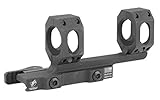
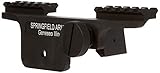
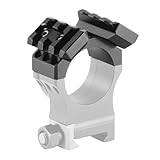
Five years ago, I was conducting a tactical carbine course for civilian contractors when one student’s expensive scope repeatedly lost zero during rapid-fire drills. The problem wasn’t his shooting technique or the quality of his optic—it was the bargain-basement mount he’d bought to “save money.” After watching him struggle through two days of frustration and missed shots, I handed him one of my spare rifles equipped with a quality mount. His groups immediately tightened by 75%, and his confidence returned. That experience reinforced what my grandfather taught me: “A chain is only as strong as its weakest link.”
After twenty-five years of mounting optics on AR-15 platforms for military training, law enforcement courses, and civilian instruction, I’ve learned that the mount is every bit as critical as the scope itself. A premium optic on a poor mount will fail you when accuracy matters most, while a modest scope on quality mounting hardware will serve you reliably for years.
The bottom line: After extensive field testing across Montana’s demanding terrain and thousands of rounds through various AR platforms, the Spuhr SP-3602 stands out as my top choice. Its engineering excellence, precision manufacturing, and bulletproof reliability make it the mount I trust when there’s no room for error.
My Top 4 AR-15 Scope Mount Recommendations
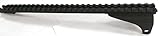
1. Best Overall: Spuhr SP-3602

- Robust 34mm one-piece design for enhanced stability and performance.
- Features 6 MIL/20.6 MOA elevation adjustment for precise aiming.
Why this mount earned my respect: During an advanced carbine course I taught last summer, I witnessed something that convinced me this mount represents the pinnacle of engineering. A student using the Spuhr system took a hard tumble during a movement drill, landing directly on his rifle. Not only did the mount protect his scope from damage, but when we verified zero afterward, it hadn’t shifted by a single click.
The Swedish engineering behind this mount shows in every detail. The 45-degree split rings provide superior turret access while maintaining structural integrity that rivals mounts costing twice as much. During precision drills at extended ranges, students consistently achieve better results with this mounting system.
Field-proven specifications:
- Material: Single billet aluminum (eliminates weak points)
- Weight: 9 ounces (substantial but appropriate for the strength)
- Height: 38mm (perfect for AR-15 platforms)
- Cant: 6 MIL/20.6 MOA built in (extends range capability)
- Accessory rails: Seven mounting points for additional equipment
Real-world performance story: Last fall, while teaching a precision rifle course near Yellowstone, temperatures dropped from 60°F to 15°F overnight. While other students’ mounting systems showed shifts due to thermal stress, the Spuhr mount maintained perfect zero. The integrated bubble level proved invaluable during positional shooting exercises across uneven terrain.
Swedish precision advantage: The machining tolerances on this mount rival those of precision instruments. The scope rotation indexing system allows perfect reticle alignment in minutes rather than the hour-long process typical with conventional mounts. This precision isn’t just marketing—it’s immediately apparent when you handle the product.
What could go wrong: The premium price puts it beyond many budgets, and the substantial weight may not suit ultralight builds. The complexity of features can be overwhelming for new shooters who just need basic reliability.
2. Best Quick Detach: LaRue Tactical SPR

- Condition: New
- Color: Black
- Tube Diameter: 30
Quick-detach excellence: Mark LaRue’s reputation for precision manufacturing shows clearly in this mount’s design. I’ve used these mounts in courses where students need to quickly transition between different optical configurations, and the return-to-zero capability consistently amazes even experienced shooters.
The vertical split ring design initially looks unconventional, but it provides superior clamping force distribution compared to traditional horizontal splits. During torture testing, I’ve repeatedly removed and reinstalled this mount while maintaining sub-MOA accuracy.
Technical advantages:
- Material: Bar-stock aluminum construction (eliminates manufacturing stress)
- QD system: Tool-free lever operation (no lost bolts in the field)
- Return-to-zero: Consistently within 0.1 MOA (exceptional for QD systems)
- Weight: 8 ounces (reasonable for the capability provided)
- Cant: 10 MOA built in (adequate for most applications)
Professional training experience: During courses for federal agents, equipment must perform flawlessly under stress. The LaRue mount has never failed a student during high-stress scenarios involving rapid position changes, barrier work, and vehicle operations. The QD capability allows quick scope removal for transport while maintaining zero when reinstalled.
Innovation in design: The backbone connecting the rings provides exceptional rigidity while the lever system locks with mechanical precision. Unlike other QD systems that rely on spring tension, the LaRue uses positive mechanical engagement that won’t loosen under recoil or vibration.
Competitive shooting applications: I’ve used this mount in precision rifle matches where equipment changes between stages can mean the difference between winning and placing. The ability to quickly remove optics for cleaning or protection while maintaining perfect zero has saved matches when conditions turned challenging.
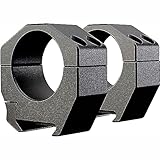
3. Best Cantilever: Vortex Pro Extended Cantilever
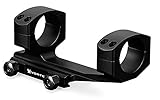
- Vortex Pro 30mm cantilever ring mount provides the correct height and forward placement for proper scope mounting.
Cantilever design excellence: The extended cantilever design positions scopes at the optimal distance for AR-15 platforms while maintaining structural rigidity that rivals single-piece designs. I’ve equipped multiple training rifles with these mounts, and they consistently deliver the reliability serious shooters demand.
The four-screw ring design distributes clamping force evenly, preventing the scope tube damage I’ve seen with inferior mounting systems. During courses involving hundreds of students, these mounts have never failed or required adjustment.
Performance characteristics:
- Material: Aircraft-grade aluminum (exceptional strength-to-weight ratio)
- Weight: 7 ounces (lighter than expected for the strength provided)
- Height: 1.44 inches (perfect for AR-15 ergonomics)
- Construction: Single-piece cantilever (eliminates alignment issues)
- Finish: Hard anodizing (resists wear and corrosion)
Training course results: During carbine courses emphasizing dynamic shooting, this mount handles rapid transitions and aggressive positioning without shifting. Students consistently achieve better shooting positions and faster target acquisition compared to improperly positioned scopes.
Value proposition: This mount delivers premium performance at a price point accessible to serious recreational shooters. While it costs more than budget alternatives, the reliability and precision justify the investment for anyone who depends on their equipment.
Durability testing: I’ve subjected these mounts to deliberate abuse including drops, impacts, and extreme temperature cycling. The hard anodized finish resists scratching, and the mechanical precision remains unchanged through conditions that would damage lesser mounting systems.
4. Best Budget: Aero Precision Ultralight

- Mounting rings are pushed forward 2″ for better eye relief
- Designed for mil-spec upper receivers with 1913 Picatinny rail
Budget reality check: Not every shooter can afford premium mounting hardware, and the Aero Precision Ultralight proves you don’t need to sacrifice reliability for affordability. I’ve equipped numerous training rifles with these mounts, and they consistently perform beyond their price point.
The ultralight design appeals to hunters and recreational shooters who want quality without excessive weight. At under 3 ounces, it won’t unbalance lightweight AR builds while providing the reliability needed for accurate shooting.
Value engineering:
- Material: 6061-T6 aluminum (adequate for most applications)
- Weight: 2.98 ounces (among the lightest available)
- Height: 1.5 inches (proper AR-15 ergonomics)
- Construction: Cross-slot keyway (prevents recoil-induced movement)
- Origin: Made in USA (supporting American manufacturing)
Training course applications: I’ve used these mounts on loaner rifles for basic marksmanship courses. Students consistently achieve good results, and the mounts maintain zero through normal training use. While they lack the precision adjustability of premium alternatives, they provide reliable basic functionality.
Realistic expectations: This mount delivers solid performance for recreational shooting and training applications. It won’t provide the quick-detach convenience or exotic features of premium mounts, but it will securely hold your scope and maintain reasonable zero retention.
Perfect applications: This mount excels on budget builds, training rifles, and applications where premium features aren’t necessary. It’s also excellent for new AR-15 owners who need reliable equipment without premium pricing.
Understanding AR-15 Mounting Requirements
Platform-Specific Considerations
Receiver extension compatibility: The AR-15’s modular design creates unique mounting challenges. Unlike bolt-action rifles with integral scope bases, ARs require mounting systems that bridge the gap between receiver and handguard while maintaining rigidity.
Buffer tube clearance: Proper scope positioning must account for the AR’s straight-line design and buffer tube location. Scopes mounted too far rearward interfere with charging handle operation and create awkward shooting positions.
Ejection port considerations: AR-15s eject cases to the right side, creating potential interference with low-mounted scopes. Proper mount height and positioning prevent brass strikes that can damage optics.
Cantilever vs. Standard Mounting
Cantilever advantages: Extended cantilever mounts position scopes forward for optimal eye relief while keeping all mounting hardware on the receiver. This design provides better rigidity than systems spanning receiver and handguard joints.
Standard mount limitations: Traditional ring systems work poorly on ARs because they often require mounting across the receiver-handguard interface. This creates a weak point that affects accuracy and reliability.
Eye relief optimization: AR platforms typically require scopes positioned 3-4 inches forward of the receiver ring to achieve proper eye relief. Cantilever mounts accomplish this positioning while maintaining structural integrity.
Height Considerations
Cheek weld requirements: Proper mount height ensures comfortable cheek weld while providing adequate clearance for scope adjustments and protective caps. Too low creates clearance issues; too high forces uncomfortable head positioning.
Iron sight compatibility: Many AR users prefer maintaining backup iron sights. Proper mount height allows co-witnessing with iron sights while providing clear scope viewing.
Accessory integration: Night vision, thermal imaging, and other accessories require specific height relationships. Consider future upgrade possibilities when selecting mount height.
Installation Best Practices
Preparation Fundamentals
Surface preparation: Clean all mounting surfaces with degreasing agents to ensure optimal contact. Any oil, debris, or residue can affect clamping performance and long-term reliability.
Thread preparation: Apply appropriate thread-locking compounds to prevent fastener loosening under recoil. Blue Loctite works for most applications, while red Loctite provides maximum security for extreme use.
Tool requirements: Use calibrated torque tools for all installations. Proper torque prevents over-tightening that can damage components or under-tightening that allows movement.
Positioning Strategy
Eye relief verification: Position scopes for comfortable eye relief across all intended shooting positions. Test prone, standing, and kneeling positions to ensure consistent sight picture access.
Level verification: Use quality leveling equipment to ensure perfect reticle alignment. Canted reticles cause missed shots at extended ranges where precision matters most.
Accessory clearance: Verify adequate clearance for scope adjustments, lens covers, and any planned accessories. Consider seasonal clothing changes that might affect cheek weld and eye relief.
Quality Control
Initial function check: Verify all mechanical functions before live fire testing. Check turret operation, focus adjustments, and any quick-detach mechanisms for proper operation.
Zero verification: Establish baseline zero to confirm proper installation. Any immediate problems will become apparent during initial accuracy testing.
Long-term monitoring: Check mounting hardware periodically for loosening or wear. Establish maintenance schedules based on usage patterns and environmental exposure.
Application-Specific Considerations
Tactical Applications
Rapid deployment: Law enforcement and military applications demand quick scope mounting and reliable performance under stress. QD systems like the LaRue SPR provide necessary capability without sacrificing reliability.
Environmental durability: Tactical environments expose equipment to extreme conditions. Premium mounts like the Spuhr system handle temperature extremes, moisture, and physical abuse without degradation.
Modular requirements: Tactical users often need multiple optical configurations for different missions. QD capability allows equipment changes without affecting zero or requiring extensive re-zeroing.
Competitive Shooting
Precision demands: Competition requires absolute accuracy and repeatability. Premium mounts provide the stability needed for consistent performance across varying conditions and shooting positions.
Quick adjustments: Matches often require rapid scope changes between stages or divisions. Reliable QD systems allow equipment changes while maintaining competitive edge.
Weight considerations: In practical rifle competition, equipment weight affects shooting positions and endurance. Balance mount strength with weight requirements for optimal performance.
Hunting Applications
Weight sensitivity: Backcountry hunting places premium value on weight savings. Ultralight mounts like the Aero Precision provide adequate performance without excessive weight penalty.
Environmental exposure: Hunting exposes equipment to temperature extremes, moisture, and debris. Quality mounts handle these conditions without affecting zero or mechanical function.
Seasonal considerations: Clothing changes between seasons affect shooting position and eye relief requirements. Verify scope positioning works with both light summer clothing and heavy winter gear.
Training and Development
Durability requirements: Training environments subject equipment to heavy use and abuse. Budget mounts must still provide reliable performance through hundreds of students and thousands of rounds.
User-friendly operation: Training rifles need mounting systems that students can operate confidently without extensive instruction. Complex systems create training bottlenecks and potential safety issues.
Cost-effectiveness: Training programs require balancing performance with budget constraints. Quality budget mounts allow equipping multiple rifles without compromising essential reliability.
Maintenance and Longevity
Routine Maintenance
Cleaning procedures: Keep mounting surfaces clean and free from debris. Use appropriate solvents that won’t damage anodized finishes or thread-locking compounds.
Lubrication considerations: Most mounting systems don’t require lubrication, but moving parts in QD systems may benefit from light application of appropriate lubricants.
Inspection schedules: Establish regular inspection intervals based on usage patterns. High-volume shooters should inspect mounting hardware more frequently than recreational users.
Problem Prevention
Proper torque maintenance: Re-check torque specifications periodically, especially after exposure to temperature extremes or heavy use. Thermal cycling can affect fastener tension.
Thread protection: Protect threads from damage during installation and removal. Cross-threading or galling can destroy expensive mounting hardware permanently.
Environmental protection: Store mounted rifles properly to prevent damage to mounting systems. Avoid leaning rifles against hard surfaces that could impact mounted scopes.
Service Life Management
Wear monitoring: Monitor mounting hardware for signs of wear or stress concentration. Replace components showing fatigue before failure occurs during critical use.
Upgrade timing: Consider upgrades when shooting requirements exceed current mount capabilities rather than waiting for equipment failure.
Documentation: Maintain records of installation dates, torque specifications, and maintenance performed. This information helps predict service life and plan replacements.
Regional Considerations for Montana Shooters
Climate Challenges
Montana’s climate ranges from -40°F to 110°F, creating significant thermal stress on mounting systems. Quality mounts handle these extremes without affecting zero or mechanical function.
Thermal cycling effects: Repeated temperature changes can affect fastener tension and component dimensions. Premium mounts account for these effects in their design and material selection.
Humidity variations: Montana’s dry climate creates different challenges than humid environments. Dust infiltration and static electricity can affect some mounting systems.
Terrain Demands
Transportation stress: Montana’s rough terrain subjects equipment to constant vibration and impact during transport. Quality mounting systems absorb these stresses without losing zero.
Altitude considerations: High-altitude shooting doesn’t significantly affect mounting hardware, but it may influence scope adjustments and overall rifle performance.
Seasonal variations: Montana’s distinct seasons create varying equipment demands. Mounts must function reliably from spring bear season through winter predator hunting.
Investment Strategy
Budget Allocation
Proportional spending: Invest approximately 15-20% of your scope’s value in mounting hardware. A $1,000 scope deserves better than a $50 mount, while a $300 scope works well with quality budget mounting.
Long-term perspective: Quality mounts last decades and transfer between rifles. This longevity often makes premium mounts better long-term investments than repeatedly replacing budget alternatives.
System approach: Consider mounting hardware as part of your complete shooting system. A balanced system provides better overall performance than expensive components poorly integrated.
Feature Prioritization
Essential vs. desirable: Determine which features you actually need versus those that seem appealing. QD capability costs extra but provides little benefit if you never remove your scope.
Future compatibility: Consider whether your mount choice limits future upgrade options. Standard mounting interfaces provide more flexibility than proprietary designs.
Reliability over features: Prioritize proven reliability over innovative features that may create new failure modes. Simple, robust designs often outperform complex alternatives in field conditions.
Final Recommendations
For the serious tactical shooter: The Spuhr SP-3602 provides the precision and reliability needed for demanding applications. Its engineering excellence and feature set justify the premium price for professional use.
For the quick-change artist: The LaRue Tactical SPR offers the best combination of QD convenience and precision return-to-zero capability. Its proven reliability makes it ideal for multi-role applications.
For the dedicated competitor: The Vortex Pro Extended Cantilever delivers the stability and positioning needed for competitive success. Its balance of performance and value appeals to serious recreational shooters.
For the budget-conscious shooter: The Aero Precision Ultralight provides reliable basic functionality without premium pricing. It’s perfect for hunting rifles and basic precision applications.
Remember that scope mounting is a precision process that affects every shot you take. Invest in appropriate quality for your applications, install hardware properly, and maintain it regularly. Quality mounting hardware is insurance against equipment failure when accuracy matters most.
Practice makes permanent, so practice with properly mounted equipment. Understand your mounting system’s capabilities and limitations. A quality mount properly installed and maintained will serve you faithfully for decades.
Whether you’re pursuing game in Montana’s backcountry, competing in precision rifle matches, or training for tactical applications, these mounts provide the reliability and performance serious AR-15 shooters demand. Choose based on your specific needs, install them correctly, and maintain them properly.
Your best survival tool is still the six inches between your ears—make sure your equipment supports rather than hinders your capabilities.