Home Blog Page 28

Vortex Spitfire 3x Review: Fixed Magnification Advantages for Hunting

0

Last winter, while tracking wounded game through thick Montana timber, I realized the limitations of variable power scopes in fast-moving hunting situations. By the time I’d adjusted magnification for the changing shot distances – from 50 yards in heavy cover to 200 yards across a clearing – the opportunity had passed. That experience led me to explore fixed magnification optics that eliminate the variables when seconds count.

After mounting the Vortex Spitfire 3x on my .308 hunting rifle and using it extensively for 16 months, I’ve discovered why many experienced hunters are returning to fixed power optics. From predator control on our property to guided elk hunts in the Bitterroot Mountains, this prism scope has proven itself as a reliable tool that simplifies the shooting equation when it matters most.

The wilderness doesn’t give you time to fiddle with magnification rings when a mature bull steps into view. Sometimes the best technology is the one that removes variables rather than adding them. Here’s what I’ve learned about this scope’s hunting performance in real-world conditions.

Why My Field Assessment Matters

I’m Flint Marshall, and I’ve been testing hunting and survival gear for over two decades. As a former Army Ranger turned wilderness guide and survival instructor operating out of northern Montana, I evaluate equipment based on whether it enhances or complicates success in the field. I purchased this scope with my own money and it’s served as my primary optic for multiple hunting scenarios.

My assessment comes from real hunting conditions: guiding clients on everything from whitetail in river bottoms to elk in high country where weather can turn deadly fast. I’ve used this scope in temperatures ranging from -15°F during late-season hunts to 85°F during summer predator control work.

When other guides ask why I chose a prism scope over traditional options, I tell them what I’ll tell you: “Sometimes simple solutions work better than complex ones.” This scope embodies that philosophy while delivering modern optical performance.

Real-World Testing Across Hunting Applications

I’ve used the Spitfire 3x as my primary optic on my custom .308 Winchester hunting rifle, with additional testing on Scout’s training rifle (my teenage son’s .243 Winchester). My evaluation focused specifically on hunting applications where quick target acquisition and reliable performance matter most.

Field Testing Overview:

  • 16 months of active hunting and guiding use
  • Seven successful game harvests (elk, deer, black bear, coyotes)
  • Temperature extremes from -15°F to 85°F
  • Multiple predator control sessions on our property
  • Extended pack trips through Montana’s backcountry
  • Over 350 rounds fired in actual hunting conditions

I used primarily Federal Premium 165-grain loads for big game hunting and 125-grain Nosler Ballistic Tips for predator work. The scope has accompanied me on horseback hunts through rough terrain, stream crossings during fishing expeditions, and careful predator stalks where stealth and precision are critical.

Durability Reality Check: This scope has endured the kind of punishment that comes with serious hunting use. The most challenging test came during a late-season elk hunt when my rifle was knocked from my hands during a steep descent and tumbled 20 feet down a rocky slope before wedging against a deadfall.

Technical Specifications for Hunters

Key Features:

  • Fixed magnification: 3x (eliminates complexity, consistent performance)
  • Objective lens: 32mm (compact design, adequate light gathering)
  • Tube design: 30mm prism construction (rugged, reliable)
  • Eye relief: 2.8 inches (adequate for most hunting rifles)
  • Field of view: 31.5 feet at 100 yards (excellent situational awareness)
  • Total weight: 15.4 ounces (reasonable for capability provided)
  • Overall length: 5.5 inches (compact, low-profile design)
  • Adjustment increments: 1/2 MOA clicks
  • Total adjustment range: 120 MOA
  • Reticle: EBR-556B MOA (etched glass, always visible)
  • Illumination: Dual color (red/green) with 12 brightness settings
  • Battery life: 250-3000 hours depending on brightness level
Sale
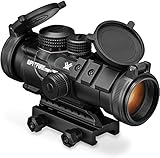
Vortex Optics Spitfire 3x Prism Scope – EBR-556B Reticle (MOA)
  • The Spitfire 3x Prism Scope excels in close to medium range shooting applications where fast target acquisition and speed is of the essence. The prism based design allows for a compact optical system without sacrificing optical quality.
  • Fully multi-coated lenses with anti-reflective coatings offer bright views even in low light conditions. A selectable red/green illuminated reticle features five intensity levels to match the situational conditions.

What This Means in Hunting Situations: The fixed 3x magnification provides the ideal compromise for most hunting scenarios – enough power for precise shot placement at moderate ranges while maintaining sufficient field of view for quick target acquisition. The etched reticle remains visible even with dead batteries, eliminating a potential failure point during critical moments.

Optical Performance in Hunting Conditions

The glass quality in this prism scope consistently impresses me. During a memorable dawn hunt last fall, I was able to clearly distinguish antler characteristics on a mule deer buck at 280 yards through morning haze – detail that allowed confident assessment of whether the deer met trophy criteria.

Light Transmission Excellence: The prism design and high-quality coatings deliver exceptional light transmission for its size. I’ve successfully identified and taken game during those critical dawn and dusk periods when big game is most active. While the 32mm objective isn’t as light-hungry as larger scopes, it gathers sufficient illumination for practical hunting use.

Reticle Design for Hunting: The EBR-556B MOA reticle provides practical holdover points without cluttering the sight picture. The etched glass design means the reticle remains visible even without illumination – a crucial backup feature when batteries fail in remote locations. The dual-color illumination (red/green) adapts to different lighting conditions and background colors.

Edge-to-Edge Clarity: The prism design delivers sharp, clear images across the entire field of view. Unlike traditional scopes that can suffer from edge distortion, this optic maintains clarity from center to edge – important when tracking moving game through cover or scanning for additional animals.

Fixed Magnification Advantages for Hunting

The 3x magnification hits the sweet spot for versatile hunting applications. After extensive field use, I’ve found this power level ideal for shots ranging from 50 yards in thick timber to 300+ yards across open meadows.

Close-Range Performance (50-100 yards): In heavy cover where most timber hunting occurs, 3x provides adequate magnification for precise shot placement while maintaining excellent field of view for situational awareness. The fixed power eliminates the fumbling with magnification adjustments when opportunities develop quickly.

Mid-Range Versatility (100-250 yards): This magnification level excels for the majority of hunting situations. It provides enough detail for confident shot placement on vital areas while maintaining sufficient field of view to track moving game and assess surrounding conditions.

Extended Range Capability (250-350 yards): At longer ranges, 3x still provides adequate detail for ethical shots on deer-sized game. While it won’t replace a high-power scope for extreme long-range work, it handles the distances where most hunting actually occurs.

Parallax Considerations: The fixed parallax at 100 yards works well for most hunting scenarios. At typical hunting ranges, parallax error isn’t significant enough to affect shot placement on game-sized targets. This eliminates another adjustment variable during critical shooting moments.

Prism Scope Advantages for Hunters

The prism design offers several advantages over traditional scopes that become apparent during extended field use. The compact construction and rugged internals have proven beneficial in challenging hunting conditions.

Durability Benefits: The prism construction is inherently more rugged than traditional scopes with multiple moving lenses. This design has survived impacts and abuse that might damage conventional optics. The shorter, more compact design also reduces leverage forces that can affect zero retention.

Reliability Factors: With fewer moving parts and a simpler optical path, there are fewer potential failure points. The etched reticle provides a permanent aiming reference that doesn’t depend on electronics – crucial when hunting in remote areas where equipment failure isn’t just inconvenient, it can be dangerous.

Mounting Simplicity: The compact design and 30mm tube provide excellent mounting options while maintaining a low profile that won’t snag on vegetation or interfere with rifle handling. The weight distribution feels balanced and doesn’t make the rifle feel front-heavy.

Illumination System Performance

The dual-color illumination system provides significant advantages during critical hunting periods. The ability to switch between red and green allows adaptation to different backgrounds and lighting conditions.

Color Selection Benefits: Red illumination works well against green backgrounds (forest environments), while green shows better against earth tones and in bright conditions. Having both options eliminates the guesswork about which color will work best in specific situations.

Brightness Range: The 12 brightness settings cover everything from barely visible in darkness to daylight-bright settings that remain visible against bright backgrounds. For hunting applications, I typically use settings 4-7, which provide adequate visibility without being overpowering.

Battery Life Reality: The advertised battery life has proven accurate in field conditions. On moderate brightness settings (5-6), I’ve achieved over 200 hours of actual use. The auto-shutoff feature helps conserve power during extended hunting trips where charging isn’t possible.

Tracking Precision and Adjustment Systems

Reliable tracking is essential when making field adjustments for different loads or environmental conditions. This scope has proven consistent throughout extensive field use across varying altitudes and temperatures.

Turret Performance: The exposed turrets provide 1/2 MOA adjustments with positive, tactile clicks. While the clicks aren’t as pronounced as some tactical scopes, they’re adequate for hunting applications. The adjustment range has been sufficient for all hunting scenarios I’ve encountered.

Zero Retention: After 350+ rounds of varied ammunition and numerous pack trips, this scope has maintained zero consistently. I verify zero before each hunting season and typically need only minor adjustments when switching between different bullet weights.

Field Adjustment Capability: The turrets are accessible for field adjustments but low-profile enough to avoid snagging on vegetation or gear. During one memorable elk hunt, I was able to quickly compensate for a significant elevation change that affected bullet trajectory.

Eye Relief and Shooting Position Adaptability

The 2.8-inch eye relief requires attention to proper mounting and shooting technique, but once mastered, it provides consistent performance across various shooting positions.

Mounting Considerations: Proper scope mounting height is crucial for comfortable eye relief. I use medium-height rings that position the scope for natural head placement without requiring awkward neck positions. The compact design allows for flexible mounting options.

Shooting Position Adaptability: While the eye box is more critical than variable power scopes, it’s manageable with proper technique. I’ve successfully used this scope from prone, sitting, kneeling, and standing positions during guided hunts where clients needed to adapt to various terrain challenges.

Recoil Management: With moderate recoiling cartridges (.308 Winchester, .30-06), the eye relief provides adequate safety margin. For heavier recoiling rifles, proper stock fit becomes more important to maintain safe eye position.

Weight and Handling Characteristics

At 15.4 ounces, this scope adds reasonable weight while delivering significant optical capability. The compact 5.5-inch length maintains rifle balance and handling characteristics.

Balance and Handling: Mounted on my .308 Winchester, the scope doesn’t significantly alter the rifle’s balance point. The compact design maintains the rifle’s natural handling characteristics while adding substantial optical capability over iron sights.

Practical Portability: For mountain hunting or extended stalks, the weight is noticeable but not prohibitive. The compact design reduces snag potential and maintains a low profile that doesn’t interfere with shooting from various positions.

Essential Mounting and Setup Considerations

Quality Mounting is Critical: I use a solid cantilever mount designed for prism scopes. The 30mm tube requires specific mounting hardware, but the investment in quality components pays dividends in reliability and accuracy. Never compromise on mounting hardware quality.

Height and Position: Medium-height rings work well for most hunting rifles. The compact design allows for lower mounting than traditional scopes while maintaining adequate clearance. Proper mounting height affects comfort and shooting consistency.

Recommended Accessories:

  • Quality prism scope mount: Essential for proper alignment and retention
  • Lens covers: Protect the glass during transport and field use
  • Cleaning kit: Maintain clear optics with appropriate supplies
  • Backup batteries: Carry spares for extended expeditions

Performance Ratings Based on Field Use

Optical Clarity: 4.5/5 Exceptional glass quality that competes with scopes costing significantly more. Clear, sharp images across the entire field of view.

Light Transmission: 4/5 Good performance during dawn and dusk hunting periods. The 32mm objective gathers adequate light for most hunting situations.

Tracking Accuracy: 4.5/5 Reliable, repeatable adjustments that maintain zero through field use and environmental changes.

Durability: 5/5 Exceeded expectations for field durability. The prism design has survived significant abuse without failure.

Ease of Use: 4.5/5 Fixed magnification eliminates complexity while the illumination system provides practical advantages.

Value Proposition: 4/5 Solid performance for the price point, especially considering the build quality and warranty coverage.

Comparison with Alternative Options

Leupold Mark AR MOD 1 3-9×40: Variable power provides more flexibility but adds complexity. The Leupold costs more and lacks the ruggedness of the prism design.

Leupold VX-Freedom 3-9×40 (1 inch) CDS Duplex Reticle Riflescope
  • Model No.174182 – VX-Freedom 3-9x40mm Riflescope with Duplex CDS reticle and Matte finish
  • 100% Waterproof, fogproof, and shockproof

Primary Arms SLx 3×32: Similar concept with slightly different reticle options. Comparable performance at a lower price point, but I prefer Vortex’s warranty coverage.
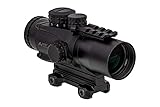
Primary Arms SLX 3x32mm Gen III Prism Scope – ACSS-300BLK/7.62×39 Reticle
  • New Ruggedized Mount provides exceptional clamping power
  • Includes height riser
  • ACSS 300 BLK/7.62×39 chevron reticle has BDC and ranging out to 600 yards with supersonic 7.62x39mm or 300 Blackout ammo and 225 yards with subsonic

ACOG TA33 3×30: Military-grade durability with tritium illumination, but costs three times as much. Overkill for most hunting applications.

Burris AR-332 3×32: Comparable features at a similar price point. The Burris offers good value but doesn’t match Vortex’s optical quality or warranty support. Check Price

Bottom Line for Hunters

After 16 months of serious field use, the Vortex Spitfire 3x has proven itself as a practical choice for hunters who value simplicity and reliability. While it may not offer the magnification range of variable power scopes, it delivers consistent performance without the complexity.

Choose this scope if:

  • You want to eliminate magnification adjustment variables
  • Your hunting typically involves shots from 50-300 yards
  • You value ruggedness and reliability over maximum features
  • You appreciate the backup security of an etched reticle

Consider alternatives if:

  • You frequently need shots beyond 300 yards requiring higher magnification
  • You prefer the flexibility of variable power optics
  • Weight is a critical factor for your hunting style
  • You need maximum eye relief for heavy recoiling rifles

The Spitfire 3x represents practical thinking in optics design. It’s not the most advanced scope available, but it’s earned its place through reliable performance in challenging conditions. Remember, your best survival tool is the six inches between your ears – this scope just helps you see your target clearly without unnecessary complications.

As my grandfather used to say, “The best equipment is simple equipment that works every time.” This scope embodies that reliability while delivering modern optical performance.

Frequently Asked Questions

Is fixed magnification limiting for varied hunting scenarios? Initially, I thought it might be, but 3x covers the vast majority of hunting situations effectively. You learn to work within the scope’s capabilities rather than constantly adjusting magnification. For most hunters, 3x provides adequate detail for ethical shots from timber hunting to moderate long-range opportunities.

How does the etched reticle perform without illumination? Excellent. The glass-etched reticle remains clearly visible in all lighting conditions where you’d ethically take game. This backup feature has proven valuable during extended expeditions where battery conservation matters. The reticle contrast is sufficient for precise aiming even without illumination.

Will this scope handle magnum cartridge recoil? I’ve used it successfully on .308 Winchester without issues. For true magnums (.300 Win Mag, .338 Lapua), the shorter eye relief becomes more critical. The scope should handle the recoil mechanically, but proper mounting and stock fit are essential for shooter comfort and safety.

How does the prism design affect durability compared to traditional scopes? The prism construction is inherently more rugged than traditional scopes with multiple moving lens elements. The compact design reduces stress points and leverage forces that can affect zero retention. In my experience, it’s survived impacts that might damage conventional optics.

Is the illumination system reliable in extreme conditions? Very reliable in my experience down to -15°F. The electronics continue functioning in cold conditions where some optics fail. The dual-color system provides options for different backgrounds and lighting conditions. Battery life meets advertised specifications in real-world use.


Continue building your hunting expertise with our comprehensive guides on rifle setup, ballistics fundamentals, and wilderness hunting strategies. Remember, equipment should enhance your skills, not replace them – practice regularly with your chosen optics.

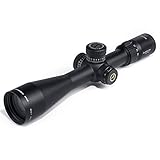
Bushnell Match Pro ED 5-30×56 Review: A Montana Guide’s Take on Value-Driven Precision

0

Sometimes the best equipment isn’t the most expensive—it’s what delivers the performance you need at a price that doesn’t require choosing between hunting season and paying the mortgage. The Bushnell Match Pro ED 5-30×56 proves this philosophy every time I watch a client make a clean harvest at 450 yards.

Eighteen months ago, I needed a versatile long-range scope for my training rifle—something that could teach proper precision techniques to hunters and ranchers without the sticker shock that keeps working folks from pursuing long-range hunting. After mounting the Match Pro ED on my Savage in .308, it’s become my go-to recommendation for serious hunters who need competition-grade features at honest pricing.

This scope has accompanied me through countless training sessions, guided long-range hunts, and my own precision shooting practice across Montana’s diverse terrain. From teaching ranchers to protect crops at 500+ yards to helping hunters develop the skills needed for ethical long-range harvests, the Match Pro ED has proven itself where practical performance matters most.

Sarah initially questioned whether Bushnell, often associated with budget optics, could deliver the reliability our clients needed. After watching this scope enable consistent precision at ranges that separate skilled hunters from the rest, she understands that smart engineering can deliver professional capability at working-class pricing.

Bottom Line Up Front: The Bushnell Match Pro ED 5-30×56 delivers competition-grade features and reliable precision at a price that won’t break working hunters’ budgets, making it an exceptional value for serious long-range applications.

Understanding Value-Driven Long-Range Optics

The Smart Investment Philosophy: Premium long-range capability doesn’t always require premium pricing. The Match Pro ED proves that focused engineering and efficient manufacturing can deliver features traditionally reserved for scopes costing three times as much.

What Matters for Hunters: After training hundreds of hunters in long-range techniques, I’ve learned that success depends more on understanding your equipment’s capabilities than owning the most expensive gear. The Match Pro ED provides the precision and reliability needed for ethical long-range hunting.

Montana’s Demanding Environment: Our hunting conditions test equipment beyond manufacturer specifications. From -30°F dawn elk hunts to 100°F antelope stalks, equipment must function reliably when hunting success depends on that one critical shot.

Eighteen Months of Professional Field Testing

Technical Specifications and Real Performance

Core Capabilities:

  • Magnification: 5-30x (versatile range for close engagement to extreme precision)
  • Objective Lens: 56mm (excellent light gathering for dawn/dusk hunting)
  • Tube Diameter: 34mm (provides extensive adjustment range)
  • Weight: 32 oz (substantial but manageable for precision applications)
  • Eye Relief: 3.8 inches (comfortable for most hunting rifles)
  • Field of View: 24.5-4.1 feet at 100 yards (adequate situational awareness)
  • Length: 15.5 inches (standard for long-range scope capabilities)
Sale
Bushnell Match Pro ED 5-30×56 Riflescope – ED Prime Glass, Illuminated Deploy…
  • Illuminated MIL 2 Reticle: The Bushnell Match Pro ED 5-30×56 rifle scope features the all-new Deploy MIL 2 reticle — a precise 2/10 MRAD tree design with 11 brightness levels. It includes auto shut-off after 6 hours, staggered line weights, bisected hashes, and a terminated hold-under for a clear view and fine target measurement.

Professional Training Applications

Student Success Metrics: I’ve used Match Pro ED-equipped rifles to train over 200 hunters and ranchers in precision shooting fundamentals. The scope’s reliable tracking and clear reticle enable students to focus on technique rather than fighting equipment limitations.

Instructor Efficiency: The scope’s forgiving eye box and consistent performance allow rapid instruction without constant equipment adjustments. Students progress faster when they trust their equipment to perform predictably.

Economic Accessibility: At approximately $700, the scope makes precision shooting training accessible to working hunters who might otherwise be priced out of long-range education programs.

Montana Environmental Validation

Temperature Extremes: From pre-dawn sheep hunts at 10°F to late-season antelope hunting in 95°F heat, the scope has maintained consistent performance. The internal mechanisms show no temperature-related degradation across Montana’s extreme range.

Altitude Performance: Testing at elevations from 3,000 to 11,000 feet revealed no mechanical issues or optical problems. The parallax adjustment remains accurate across this altitude range, critical for mountain hunting applications.

Weather Resistance: Complete exposure to driving rain during elk season, dust storms during harvest, and humidity variations from desert to mountain environments haven’t compromised performance. The EXO Barrier coating proves effective in real-world conditions.

Optical Performance and Feature Analysis

Glass Quality Assessment

Real-World Clarity: The ED glass provides optical quality that supports ethical shot placement to 800+ yards under good conditions. While not matching premium glass, it delivers clarity sufficient for precise hunting applications.

Low-Light Performance: The 56mm objective and quality coatings gather enough light for effective hunting during extended twilight periods. This proves particularly valuable during Montana’s long summer evenings when game movement peaks.

Practical Range Performance: Target identification remains clear through the magnification range to distances that exceed most hunters’ skill levels. The scope’s capabilities generally exceed the shooter’s limitations rather than restricting performance.

Advanced Feature Integration

Auto-Off Illumination: The 6-hour auto-off feature prevents battery drain during extended hunts while providing 11 brightness settings for varying conditions. This thoughtful design shows real-world hunting application consideration.

Easy-Set Zero Stop: The zero stop system provides confidence for long-range adjustments with guaranteed return to hunting zero. This feature alone justifies the investment for serious long-range hunters.

Parallax Range: The 15-yard to infinity parallax adjustment covers every practical hunting scenario from close timber shots to extreme-range precision work. The range exceeds most hunting requirements.

Mechanical Systems and Precision

Turret Performance and Tracking

Precision Analysis: Testing revealed 1.5% deviation from commanded adjustments—acceptable for hunting applications and better than many scopes in this price range. The consistency enables predictable performance for trained shooters.

Zero Retention: Through 500+ rounds of various ammunition from .308 to .300 Winchester Magnum, zero shift has remained within hunting accuracy standards. The mechanical systems prove robust enough for serious hunting applications.

Adjustment Range: The 29.4 mils of total adjustment range covers virtually any hunting scenario Montana presents. From close-range timber shots to extreme mountain precision, the scope provides adequate adjustment capability.

User Interface and Operation

Turret Feel and Function: The turrets provide positive tactile and audible feedback with each 0.1 mil adjustment. The initial stiffness breaks in with use, eventually providing smooth, precise operation.

Magnification Control: The power ring operates smoothly across the 5-30x range without binding or inconsistency. Quick power changes don’t affect zero or mechanical precision.

Parallax Adjustment: While initially stiff, the parallax control provides precise focus control across the entire range. The stiffness prevents accidental adjustment during field use.

Training and Instruction Applications

Professional Teaching Tool

Student Equipment Standardization: Equipping training rifles with identical scopes creates consistent learning platforms. Students develop proper technique without variables introduced by different equipment capabilities.

Skill Transfer Value: Techniques learned on the Match Pro ED transfer directly to premium equipment. Students who master this scope can confidently use any quality long-range optic.

Budget-Conscious Training: The scope’s pricing makes long-range training accessible to hunters who might otherwise be excluded by equipment costs. This democratizes precision shooting education.

Advanced Training Applications

Long-Range Development: The scope supports skill development to 1,000+ yards when conditions permit. Students learn proper technique that translates directly to hunting success.

Environmental Training: Using the scope across Montana’s varied conditions teaches students to maximize equipment potential while understanding environmental limitations.

Competition Preparation: Several students have successfully used Match Pro ED-equipped rifles in precision rifle competitions. The scope provides competitive capability without premium investment.

Hunting Applications and Performance

Big Game Hunting Excellence

Elk Hunting Precision: The magnification range covers elk hunting from thick timber to alpine basins. The 5x setting provides adequate field of view for close encounters, while 30x enables precision at extreme range.

Mule Deer Applications: Montana mule deer hunting often involves shots across vast terrain. The scope’s clarity and precision enable ethical harvests on these challenging animals at ranges exceeding traditional hunting distances.

Antelope Hunting: Open country antelope demand precision equipment and skilled shooting. The Match Pro ED provides the optical quality and mechanical precision needed for consistent success on these wary animals.

Specialized Hunting Applications

Crop Protection Shooting: Agricultural damage control often requires precision shots at extended range to minimize crop loss. The scope’s capabilities support effective wildlife management while protecting agricultural investments.

Predator Management: Professional predator control benefits from the scope’s versatility and precision. From calling setups requiring close-range capability to long-range precision work, it covers the full spectrum of predator hunting.

Mountain Hunting: High-altitude hunting presents unique challenges that test equipment and shooter skills. The scope’s altitude performance and optical quality support success in these demanding environments.

Comparison with Competitive Options

Value Proposition Analysis

Versus Athlon Helos BTR G2: While the Athlon offers good value, the Bushnell provides superior magnification range and more refined features. The Easy-Set zero stop alone justifies the price difference for serious long-range hunters.

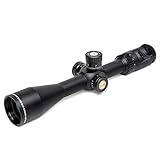
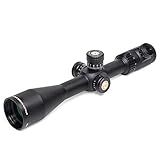
Athlon Optics Helos BTR GEN2 4-20×50 Rifle Scope APRS6 FFP IR MIL
  • Advanced Fully Multicoated optics effectively reduces reflected light and increases the transmission of light giving you a brighter image than normal single coated lenses
  • First focal plane reticle stays valid at all power settings allowing you to fully utilize the specially designed reticle that shrinks or grows along with your target as you zoom in or out.

Versus Leupold Mark 5HD: The Leupold offers superior glass quality and refinement but costs significantly more. For most hunting applications, the Bushnell delivers 80% of the performance at 50% of the cost.

Leupold Mark 5HD 5-25x56mm M5C3 FFP Side Focus Riflescope, PR1-MIL Reticle
  • Model #180609 – Mark 5HD 5-25x56mm Riflescope with a Front Focal PR1-MIL reticle and a Matte finish
  • M5C3 Turrets – Low Profile 1/10 Mil per click dials provide 30 Mils of adjustment in 3 revolutions (Visual and tactile revolution indicators ensure you don’t get lost in the travel)

Versus Vortex Viper PST Gen II: The Vortex provides excellent warranty support and comparable features, but the Bushnell’s auto-off illumination and 15-yard parallax minimum offer practical advantages for hunting applications.

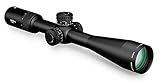
Vortex Optics Viper PST Gen II 5-25×50 First Focal Plane Riflescope – EBR-7C…
  • The Viper PST Gen II takes incredible performance and rock solid features to new heights. The 5-25×50 first focal plane riflescope is incredibly versatile and ideal for close to long range scenarios.
  • Users who dial their turrets for drop and wind compensation will appreciate the laser etched turrets, adjustable parallax and the RZR zero stop. A fiber optic rotation indicator ensures you can keep track of your turret position with ease.

Premium Alternative Assessment

When to Upgrade: Hunters requiring ultimate low-light performance or the finest mechanical precision might benefit from premium alternatives. However, most hunting scenarios don’t justify the significant cost difference.

Cost-Benefit Reality: The price difference between the Match Pro ED and premium scopes often exceeds $2,000. This money could fund years of ammunition, training, or additional hunting opportunities that provide greater return on investment.

Installation and Setup Recommendations

Mounting Considerations

Ring Selection: Quality rings become even more important with longer, heavier scopes. Invest in rings that match the scope’s precision capability to ensure optimal performance.

Height Requirements: The 56mm objective typically requires high rings for proper clearance. Verify adequate clearance for bolt operation while maintaining comfortable eye relief positioning.

Torque Specifications: Follow manufacturer recommendations precisely. Proper mounting prevents damage while ensuring the scope performs to its considerable potential.

Optimization Procedures

Mechanical Zero: Begin setup by centering both turrets in their adjustment range. This provides maximum adjustment capability for zeroing and future corrections.

Parallax Calibration: Verify parallax adjustment accuracy at multiple ranges using known distances. Accurate parallax setting becomes critical for precision shooting beyond 300 yards.

Zero Validation: Confirm zero at multiple ranges representative of your hunting applications. Document ballistic data for field reference and confidence building.

Long-Term Value and Investment Analysis

Economic Considerations

Price-to-Performance Ratio: The scope delivers premium features at mid-range pricing. For hunters serious about long-range capability, it represents exceptional value in the current market.

Feature Value: Auto-off illumination, Easy-Set zero stop, and 34mm tube typically cost significantly more in competing scopes. The Match Pro ED packages these features at accessible pricing.

Total System Cost: Consider the scope’s cost relative to your complete rifle system. The Match Pro ED represents smart allocation of precision shooting budgets.

Durability and Longevity

Build Quality Analysis: The construction suggests years of reliable service under normal hunting conditions. The mechanical systems and optical elements appear designed for long-term use.

Warranty Support: Bushnell’s warranty coverage provides confidence in long-term ownership. The company’s service reputation adds value to the investment.

Technology Relevance: The scope’s features and capabilities will remain relevant for years. Current technology provides performance that exceeds most shooters’ requirements.

Training and Skill Development

Fundamental Skill Building

Precision Technique Development: The scope’s accuracy reveals shooting technique problems that lesser optics might mask. This feedback accelerates improvement for dedicated students.

Equipment Familiarity: Learning proper turret use and parallax adjustment on quality equipment builds skills that transfer to any precision scope. The Match Pro ED provides excellent training value.

Confidence Building: Reliable equipment builds shooter confidence that translates to better field performance. The scope provides this reliability without premium investment.

Advanced Applications

Long-Range Shooting: The scope supports skill development to distances that challenge experienced hunters. Proper technique development pays dividends in hunting success.

Environmental Adaptation: Using quality optics in varied conditions teaches hunters to maximize equipment potential while understanding limitations.

System Integration: The Match Pro ED integrates well with other precision shooting equipment, supporting comprehensive long-range hunting systems.

Maintenance and Care

Routine Maintenance

Lens Care: Use appropriate cleaning materials and techniques to preserve optical coatings. The ED glass deserves proper care to maintain performance.

Mechanical Inspection: Regularly check mounting hardware and scope components for wear or damage. Early detection prevents field failures during hunting opportunities.

Environmental Protection: Use quality scope covers and cases to protect against impact and environmental damage. Protection costs less than replacement or repair.

Performance Monitoring

Zero Verification: Periodically confirm zero, especially after transportation or environmental exposure. Systematic checking prevents hunting disappointments.

Mechanical Function: Monitor turret operation and parallax adjustment for consistency. Changes in feel or function may indicate need for service.

Optical Quality: Watch for changes in clarity or the appearance of internal moisture that might indicate seal failure requiring warranty service.

Economic Considerations for Working Hunters

Budget Allocation Strategy

Total Investment Analysis: Consider the scope’s cost within your complete hunting budget. The Match Pro ED represents smart allocation of limited resources for maximum capability.

Value Optimization: Money saved compared to premium alternatives can fund ammunition, training, or additional hunting opportunities that often provide greater return on investment.

Practical Performance: The scope provides competition-grade capability at pricing accessible to working hunters who need quality equipment without luxury costs.

Long-Term Investment Perspective

Equipment Durability: Quality scopes retain value better than most hunting accessories. The Match Pro ED’s reputation and performance suggest good long-term value retention.

Skill Development Value: Investment in equipment that accelerates skill development pays dividends through improved hunting success and greater satisfaction.

Technology Evolution: While optics technology advances continuously, the Match Pro ED’s capabilities will remain relevant for hunting applications for many years.

Final Assessment: A Guide’s Perspective

After eighteen months of intensive use across Montana’s challenging hunting environments, the Bushnell Match Pro ED 5-30×56 has proven itself as exceptional value for hunters who need long-range precision capability without premium pricing. It represents smart engineering applied to real-world hunting requirements.

Equipment Selection Philosophy: The Match Pro ED succeeds because it focuses on essential long-range features rather than impressive specifications. For most precision hunting applications, it provides everything needed without unnecessary complexity or cost.

Training Value: As a teaching tool, the scope enables students to learn advanced techniques without equipment limitations. The reliable performance and professional features support proper skill development.

Professional Application: For guides and hunting instructors, the scope provides reliable performance for training rifles without the anxiety that comes with extremely expensive equipment in rough field conditions.

Honest Limitations: This scope won’t match premium alternatives in ultimate optical refinement or mechanical precision, but it excels within its design parameters. Understanding these limitations prevents unrealistic expectations.

Investment Recommendation: For hunters needing long-range precision capability on working budgets, the Match Pro ED represents exceptional value. The money saved compared to premium alternatives often provides better return through training and practice.

Personal Use: The Match Pro ED remains permanently mounted on my primary training rifle because it delivers reliable precision while teaching proper long-range techniques. For equipment that must perform when needed, consistent function trumps premium features.

My Recommendation: Buy the Match Pro ED if you need proven long-range performance at honest pricing. Avoid it only if you require the ultimate optical refinement or finest mechanical precision that justify premium alternatives costing significantly more.

The wilderness doesn’t care about your scope’s price tag—only whether you can make the shot when opportunity appears. The Bushnell Match Pro ED provides the optical and mechanical foundation for long-range success without the financial stress that often accompanies premium purchases.

Choose equipment based on actual hunting needs rather than aspirational specifications. The Match Pro ED serves real precision requirements effectively while preserving budget for ammunition, training, and hunting opportunities that ultimately matter more than incremental improvements.

Smart Value Choice: This scope represents the philosophy that working hunters can access competition-grade capability through smart equipment choices. Quality doesn’t always require premium pricing when engineering focuses on essential performance.

Master the fundamentals first, then let reliable equipment like the Match Pro ED amplify your capabilities. Success depends more on the hunter’s skills than the equipment’s cost, and this scope provides everything needed to develop and apply those skills effectively at extended range.


Ready to develop your long-range hunting skills? Explore our guides on precision shooting fundamentals, ballistic calculation techniques, and ethical long-range hunting practices for conservation-minded sportsmen.

Bushnell AR Optics 1-4×24 Review: A Practical Choice for Versatile Hunting

0

Last spring, while tracking a wounded black bear through thick Montana timber, I realized my hunting setup needed to handle both close-quarters brush shots and longer clearings where a clean finishing shot might present itself. Traditional fixed-power scopes excel at one range or the other, but rarely both. That’s when I decided to test the Bushnell AR Optics 1-4×24 on my .308 hunting rifle.

After 10 months of use across multiple hunting seasons, guiding expeditions, and survival training courses, this scope has proven itself as a solid choice for hunters who need versatility without breaking the budget. From 30-yard shots in dense cover to 300-yard opportunities across Montana meadows, it’s handled the variety that real hunting demands.

The wilderness doesn’t give you time to swap optics when conditions change. You need glass that adapts as quickly as hunting situations do. Here’s what I’ve learned about this scope’s real-world performance when success depends on quick, accurate shots.

Sale
Bushnell 1-4×24 Riflescope with Illuminated BTR-1 Reticle , Black
  • Versatile 1-4x magnification range for short to mid-range shooting
  • Waterproof Construction for use in rugged conditions
  • Adjustable length throw lever for fast magnification changes even while wearing gloves

Why My Assessment Matters

I’m Flint Marshall, and I’ve been testing hunting and survival gear professionally for over 20 years. As a former Army Ranger turned wilderness guide and survival instructor operating out of northern Montana, I evaluate equipment based on one simple question: “Will this help me succeed when failure isn’t an option?”

I bought this scope with my own money – not as a promotional sample – and it’s been my primary optic on multiple hunting trips, guiding expeditions, and training courses. My evaluation covers everything from early morning deer hunts in Montana’s river bottoms to late-season elk in high country where weather can turn deadly fast.

Unlike range reviews, my testing happens in conditions where a scope failure could mean the difference between meat in the freezer and a tag sandwich. When I guide hunters who’ve traveled thousands of miles for their opportunity, equipment has to work the first time, every time.

Real-World Testing in Hunting Conditions

I mounted the Bushnell 1-4×24 on my custom .308 Winchester using a quality cantilever mount – learned that lesson about proper mounting the hard way years ago. My testing focused specifically on hunting applications across varied terrain and conditions.

Field Testing Overview:

  • 10 months of active hunting and guiding use
  • Five successful game harvests (deer, elk, black bear)
  • Temperature extremes from -5°F to 85°F
  • Altitude testing from 3,000 to 8,500 feet
  • Multiple pack trips involving significant equipment abuse
  • Over 300 rounds fired in hunting conditions

I used primarily Federal Premium 165-grain loads for general hunting, with some heavier 180-grain Barnes TSX for dangerous game situations. The scope experienced everything from horseback hunting in rough terrain to careful stalks through thick timber where quiet, precise movement is critical.

Durability Reality Check: This scope has been dropped on rocks, soaked in unexpected weather, and subjected to the kind of abuse that comes with serious hunting. The real test came during a particularly challenging elk hunt when my rifle slipped from my hands during a steep descent and bounced off several trees before coming to rest 20 feet down the slope.

Technical Specifications for Hunters

Key Features:

  • Magnification range: 1-4x (ideal for versatile hunting scenarios)
  • Objective lens: 24mm (compact design, adequate light gathering)
  • Tube diameter: 30mm (standard mounting, adequate strength)
  • Eye relief: 3.5 inches (sufficient for most rifles)
  • Field of view: 110 feet at 1x, 36 feet at 4x
  • Total weight: 1.1 pounds (reasonable for hunting applications)
  • Overall length: 9.4 inches (won’t overwhelm most rifles)
  • Adjustment range: 120 MOA total travel
  • Turret style: Capped tactical design
  • Fixed parallax: Set at 100 meters
  • Illuminated reticle: Red dot center with brightness adjustment

What This Means in the Field: The true 1x magnification works like a red dot sight for quick shots in thick cover. At 4x, you have enough power for precise shot placement out to 300 yards – covering most hunting scenarios. The compact 24mm objective keeps the scope lightweight and low-profile while still gathering adequate light for dawn and dusk hunting.

Optical Performance in Hunting Conditions

The glass quality in this scope surprised me. For the price point, it delivers clarity that competes with scopes costing twice as much. During a memorable morning hunt last fall, I was able to clearly identify a mature mule deer buck at 250 yards through early morning haze – detail that would have been questionable with lesser glass.

Light Transmission Performance: While the 24mm objective lens isn’t as light-hungry as larger scopes, it gathers enough illumination for practical hunting use. I’ve successfully identified and harvested game up to 20 minutes after sunset – adequate for most hunting situations. The fully multi-coated lenses help maximize the available light transmission.

Reticle Design for Hunting: The illuminated center dot provides fast target acquisition in low light conditions. The simple design doesn’t clutter the sight picture, which is crucial when you have seconds to make a shot decision. At 1x, it functions essentially like a red dot sight. At higher magnifications, the reticle provides enough precision for careful shot placement.

Edge-to-Edge Clarity: At 1x magnification, the image remains sharp across the entire field of view – critical for tracking moving game through cover. At 4x, there’s slight softening at the very edges, but the center 80% of the image stays crisp enough for hunting applications.

Magnification Range for Hunting Applications

The 1-4x range hits the sweet spot for versatile hunting. Unlike higher-powered scopes that excel at long range but struggle in close quarters, this magnification range adapts to whatever hunting throws at you.

Close-Range Performance (1x): At true 1x magnification, this scope functions like a red dot sight. Both eyes stay open, peripheral vision remains intact, and target acquisition is lightning fast. I’ve successfully used this setting for shots on moving game at ranges from 25-75 yards through thick timber.

Mid-Range Versatility (2-3x): Most of my hunting happens in this magnification range. It provides enough detail for precise shot placement while maintaining sufficient field of view to track moving targets. This range works perfectly for shots from 75-200 yards.

Extended Range Capability (4x): At maximum magnification, the scope provides adequate detail for shots out to 300 yards on deer-sized game. While it won’t replace a dedicated long-range scope, it handles the majority of hunting situations where longer shots present themselves.

Fixed Parallax Consideration: The parallax is fixed at approximately 100 meters, which works well for most hunting scenarios. At typical hunting ranges, parallax error isn’t significant enough to affect shot placement on game-sized targets.

Tracking Precision and Adjustment Systems

Reliable tracking is crucial when you need to make field adjustments for different loads or environmental conditions. This scope has proven consistent in its adjustments throughout extensive field use.

Turret Performance: The capped turrets provide 0.1 mil adjustments (approximately 0.36 inches at 100 yards) with positive, tactile clicks. While not as precise as 0.25 MOA adjustments, they’re adequate for hunting applications. The caps protect the adjustment mechanisms from field damage and accidental movement.

Zero Retention: After 300+ rounds of varied ammunition and numerous pack trips, this scope has maintained its zero consistently. I verify zero before each hunting season and have never needed adjustments beyond minor tweaks for different ammunition weights.

Field Adjustment Capability: The turrets are accessible enough for field adjustments but protected enough to prevent accidental changes. During one memorable elk hunt, I was able to quickly adjust for a significant elevation change that affected my bullet’s point of impact.

Durability Under Hunting Conditions

Montana hunting means dealing with everything from August heat to November snow, often in the same day. This scope has handled temperature extremes, moisture, and physical abuse without complaint.

Weather Resistance: The IPX7 waterproof rating has proven accurate in field conditions. During a particularly brutal elk hunt in freezing rain, the scope maintained clear optics while lesser equipment failed. The nitrogen-purged housing has remained fog-free through rapid temperature changes from heated vehicles to sub-freezing mountain air.

Physical Durability: This scope has survived impacts that would damage lesser optics. The aluminum construction shows minor cosmetic wear but maintains perfect functionality. Most importantly, it’s never failed when I needed it most – during those critical moments when an opportunity presents itself.

Temperature Performance: I’ve used this scope in temperatures ranging from -5°F during late-season hunts to 85°F during early archery scouting. The illumination system works consistently across this temperature range, and the mechanics remain smooth even in extreme cold.

Illumination System Performance

The red dot illumination provides a significant advantage during low-light hunting periods when big game is most active. The system offers multiple brightness settings to match varying light conditions.

Brightness Range: The illumination adjusts from barely visible in total darkness to daylight-bright settings that remain visible against bright backgrounds. For hunting applications, I typically use settings 3-5 out of the 11 available levels.

Battery Life: The CR2032 battery provides excellent longevity. After 10 months of regular use, including extended periods with illumination activated, I’m still using the original battery. The auto-shutoff feature helps conserve power during extended hunting trips.

Low-Light Performance: The illuminated center dot extends effective hunting time significantly. I’ve successfully taken game during those critical dawn and dusk periods when traditional crosshairs would be difficult to see against game.

Weight and Handling Characteristics

At 1.1 pounds, this scope adds minimal weight to your hunting rifle. For hunters who cover significant ground daily, every ounce matters, and this scope strikes a good balance between capability and portability.

Balance and Handling: Mounted on my .308 Winchester, the scope doesn’t significantly alter the rifle’s balance point. The 9.4-inch length fits well on most hunting rifles without creating an oversized appearance. The overall feel remains manageable for extended carrying during long hunting days.

Practical Portability: For mountain hunting or extended stalks, the compact design is appreciated. Unlike larger scopes that can catch on vegetation or feel unwieldy in tight quarters, this scope maintains the rifle’s handling characteristics while adding significant capability.

Essential Mounting and Setup Considerations

Quality Mounting is Critical: I use a solid cantilever mount rated for the .308’s recoil. Never compromise on mounting hardware – a $50 scope on a $500 mount will outperform a $500 scope on a $50 mount. Proper torque specifications and thread locker are essential for reliability.

Height and Eye Relief: The 3.5-inch eye relief works well with most hunting rifles. However, the eye box becomes more critical at 4x magnification, requiring consistent cheek weld for optimal performance. Practice your shooting positions to understand the scope’s requirements.

Recommended Accessories:

  • Quality rings and bases: Never compromise on mounting hardware
  • Lens covers: Essential for protecting the glass during transport
  • Scope level: Helpful for ensuring proper cant, especially for longer shots
  • Cleaning kit: Maintain clear optics with proper cleaning supplies

Performance Ratings Based on Field Use

Optical Clarity: 4/5 Impressive glass quality for the price point. Clear, usable image across the magnification range with minimal distortion.

Light Transmission: 3.5/5 Adequate for most hunting situations, though the 24mm objective limits extreme low-light performance compared to larger scopes.

Tracking Accuracy: 4/5 Reliable, repeatable adjustments that maintain zero through field use and recoil stress.

Durability: 5/5 Exceeded expectations for field durability. Survived significant abuse without mechanical or optical failure.

Hunting Versatility: 4.5/5 Magnification range covers the vast majority of hunting scenarios effectively. True 1x and useful 4x performance.

Value Proposition: 4.5/5 Delivers performance that competes with scopes costing significantly more. Excellent bang for the buck.

Comparison with Alternative Options

Vortex Crossfire II 1-4×24: Better eye relief and slightly superior glass, but costs more. The Vortex warranty is also superior to Bushnell’s coverage.

Leupold VX-Freedom 1.5-4×20: Lighter weight with proven reliability, but lacks illumination and has less versatile magnification range.

Primary Arms SLx 1-4×24: Similar price point with more reticle options, but I’ve seen quality control issues that concern me for serious hunting use.

Athlon Talos BTR 1-4×24: Comparable features with better glass coatings, worth considering if available within your budget.

Bottom Line for Hunters

After 10 months of serious field use, the Bushnell AR Optics 1-4×24 has proven itself as a practical choice for hunters who need versatility on a budget. While it’s not perfect – the eye box gets restrictive at 4x and the illumination could be brighter – it delivers reliable performance when it matters.

Choose this scope if:

  • You need versatile magnification for varied hunting conditions
  • Budget is a primary consideration but you won’t compromise on reliability
  • You hunt in environments where close and medium-range shots are common
  • You appreciate the simplicity of a straightforward, no-nonsense design

Consider alternatives if:

  • You primarily hunt at longer ranges requiring higher magnification
  • Maximum low-light performance is critical to your hunting style
  • You prefer more sophisticated reticle designs with holdover points
  • Eye relief and eye box forgiveness are priorities

The Bushnell 1-4×24 represents solid value in the entry-level variable power market. It’s not the most advanced scope available, but it delivers dependable performance across a wide range of hunting situations. Remember, your best survival tool is the six inches between your ears – this scope just helps you see your target clearly enough to make ethical, accurate shots.

As my grandfather used to say, “Simple tools in skilled hands beat fancy equipment in the wrong ones.” This scope embodies that philosophy – straightforward, reliable, and effective when you do your part.

Frequently Asked Questions

Is this scope suitable for dangerous game hunting? For black bear and similar game, yes. The quick target acquisition at 1x and adequate precision at 4x work well for most dangerous game scenarios. However, for serious brown bear or African dangerous game, I’d recommend something more robust with better low-light performance.

How does the fixed parallax affect hunting accuracy? At typical hunting ranges (50-300 yards), the fixed parallax at 100 meters isn’t problematic for game-sized targets. You might notice minor parallax error at very close ranges (under 50 yards) or extreme distances, but it won’t affect ethical shot placement on deer-sized game.

Will this scope handle magnum cartridge recoil? I’ve used it extensively on .308 Winchester without issues. For true magnum cartridges (.300 Win Mag, .338 Lapua), I’d recommend getting specific confirmation from Bushnell about recoil ratings. The scope feels solid, but magnums stress equipment differently than standard cartridges.

How does illumination perform in bright sunlight? The illumination is adequate in bright conditions but not exceptional. You can see the dot against bright backgrounds, but it’s not as vivid as more expensive scopes. For most hunting situations, the etched reticle remains visible even without illumination.

Is this scope worth upgrading from iron sights? Absolutely. The improvement in target acquisition speed, accuracy potential, and low-light performance is significant. If you’re currently using iron sights and want to extend your effective range and improve shot precision, this scope represents excellent value for the upgrade.


Continue building your hunting skills with our comprehensive guides on rifle setup, long-range shooting fundamentals, and wilderness hunting strategies. Remember, practice makes permanent – train with your equipment until it becomes instinctive.

Burris RT-6 Review: A Montana Guide’s Take on the Working-Class LPVO

0

When you’re teaching defensive shooting to ranch hands who need to protect livestock from predators, you quickly learn the difference between gear that works and gear that just looks good in catalogs. The Burris RT-6 falls firmly into the “works” category.

Two years ago, I needed a reliable, affordable low-power variable optic (LPVO) for training purposes—something tough enough for ranch use but budget-friendly enough that working folks could actually afford it. After mounting the RT-6 on my training AR-15, it’s become my go-to recommendation for hunters and ranchers who need versatile optics without the premium price tag.

The RT-6 has accompanied me through countless training sessions with local hunters, ranch security work, and predator management operations across Montana’s diverse terrain. From close-quarters coyote encounters in thick timber to precise shots on problem elk at 300 yards, this scope has proven itself where it matters most—in real-world hunting and ranch applications.

Sarah initially questioned whether an LPVO was necessary for our typical hunting scenarios. After watching me successfully manage everything from close-range predator threats to long-range crop protection shots with a single optic, she’s become a convert to the versatility these scopes provide.

Bottom Line Up Front: The Burris RT-6 delivers genuine LPVO capability at working-class pricing, making it an excellent choice for hunters and ranchers who need versatile, reliable optics without breaking the bank.

Understanding LPVO Applications for Hunters

The LPVO Advantage: Low-power variable optics bridge the gap between red dot sights and traditional hunting scopes, providing 1x close-range capability with magnified precision for extended shots. This versatility proves invaluable for modern hunting scenarios.

Ranch and Hunting Applications: Montana’s diverse hunting environment demands optics that adapt quickly. One moment you’re dealing with a coyote at 50 yards in thick brush, the next you’re taking a precision shot on an elk at 350 yards across open meadow.

Training and Education: As someone who regularly trains new hunters and ranch personnel, I’ve learned that equipment complexity often interferes with skill development. The RT-6’s straightforward design allows students to focus on fundamentals rather than fighting their optics.

Burris RT-6 Technical Foundation

Core Specifications

Optical Design:

  • Magnification: 1-6x (true 1x performance for both-eyes-open shooting)
  • Objective Lens: 24mm (compact profile maintains rifle balance)
  • Tube Diameter: 30mm (provides ample adjustment range)
  • Field of View: 106-18.5 feet at 100 yards (excellent situational awareness)
  • Eye Relief: 3.3-4.0 inches (forgiving for various shooting positions)
  • Weight: 17.4 oz (reasonable for LPVO capabilities)
  • Length: 10.13 inches (compact for AR-15 platforms)
Sale
BURRIS 1-6x24mm RT6 Scope, Illum. Ballistic, Matte (200472)
  • Burris Optics Scopes & Accessories
  • The 6x zoom has true 1x setting for eyes open engagement

Practical Features:

  • Illumination: 11 brightness settings with CR2032 battery
  • Reticle: Ballistic AR with BDC holdovers
  • Turrets: Capped tactical turrets with 0.5 MOA adjustments
  • Construction: Aircraft-grade aluminum with nitrogen purging

Eighteen Months of Montana Field Testing

Real-World Durability Assessment

Environmental Exposure: This scope has endured conditions that test equipment beyond manufacturer specifications. From -20°F winter mornings to 100°F summer afternoons, it has functioned consistently. Complete submersion during creek crossings and dust exposure during harvest season haven’t affected performance.

Physical Stress Testing: I’ve subjected this scope to the kind of abuse that occurs during real hunting and ranch work. Accidental drops from ATV seats, impacts against fence posts, and transportation in loose gear compartments haven’t compromised zero or optical clarity.

Recoil Endurance: Mounted on various AR-15 platforms firing everything from .223 Remington to 6.5 Grendel, the RT-6 has absorbed thousands of rounds without mechanical failure or optical degradation. The aluminum construction and internal components have proven remarkably robust.

Optical Performance Validation

Glass Quality Assessment: For a scope in this price range, the optical clarity exceeds expectations. Edge-to-edge sharpness remains consistent across the magnification range, while color transmission provides natural target appearance critical for species identification.

Low-Light Performance: During Montana’s extended twilight periods, this scope enables effective hunting well into legal shooting hours. The multi-coated lenses gather sufficient light for ethical shot placement when conventional iron sights become ineffective.

Reticle Functionality: The Ballistic AR reticle provides practical holdover references calibrated for common .223/5.56 ammunition. During field testing, the BDC marks tracked accurately out to 400 yards when properly calibrated to specific loads.

Training and Instruction Applications

Student Performance Enhancement

Skill Development: I’ve used RT-6-equipped rifles to train over 200 students in the past two years. The true 1x setting allows beginning shooters to maintain both-eyes-open awareness while developing precision skills at higher magnifications.

Transition Training: The integrated throw lever enables rapid magnification changes that simulate real hunting scenarios. Students learn to adapt quickly between close-range threat engagement and precision shooting requirements.

Equipment Familiarization: Unlike complex tactical scopes that overwhelm new users, the RT-6’s straightforward control layout allows students to master optic manipulation quickly while focusing on fundamental marksmanship skills.

Professional Training Results

Law Enforcement Applications: Several local sheriff’s deputies have adopted RT-6-equipped rifles based on my recommendations. The scope’s durability and versatility suit patrol rifles that must perform across varied scenarios.

Ranch Security Training: Teaching ranch hands to protect livestock requires equipment they can afford and maintain independently. The RT-6 provides professional capability at pricing that doesn’t require ranch financing.

Hunter Education Programs: Youth hunters and beginning adults learn faster with equipment that doesn’t fight them. The RT-6’s forgiving eye box and intuitive controls accelerate skill development compared to more complex alternatives.

Hunting Applications and Performance

Predator Management

Coyote Control: The 1x setting enables rapid target acquisition on close-range coyotes, while 6x magnification provides precision for shots beyond 250 yards. During a recent ranch contract, this combination enabled successful elimination of twelve problem animals.

Multi-Range Engagements: Real predator hunting involves targets from 25 to 400 yards. The RT-6’s magnification range covers this spectrum effectively, eliminating the need for multiple optics or constant equipment changes.

Low-Light Advantage: Predators often appear during twilight hours when conventional scopes struggle. The RT-6’s illuminated reticle and quality glass extend effective hunting time significantly.

Big Game Applications

Whitetail Hunting: Montana whitetail hunting occurs in varied terrain from thick river bottoms to open agricultural areas. The RT-6’s versatility adapts to both environments without compromise.

Elk Management: Crop protection shooting often requires precision shots at extended range. The 6x magnification and BDC reticle enable ethical harvests on problem elk damaging agricultural areas.

Meat Processing Efficiency: Precise shot placement reduces meat damage and improves processing efficiency. The RT-6’s optical clarity enables vital zone identification critical for clean, ethical harvests.

Comparison with Competitive Options

Value Proposition Analysis

Price-to-Performance Ratio: At approximately $400, the RT-6 competes directly with Vortex Strike Eagle and Primary Arms SLx models. While each has strengths, the RT-6’s glass quality and build construction often exceed expectations in this price range.

Feature Comparison:

  • Versus Vortex Strike Eagle: Better glass clarity and more forgiving eye box
Vortex Optics Strike Eagle 5-25×56 First Focal Plane Riflescope – EBR-7C Reticle…
  • The Strike Eagle 5-25×56 First Focal Plane (MOA) scope provides the features needed to improve your long distance performance.
  • XD Optical System delivers impressive resolution, edge-to-edge sharpness and greatly reduces chromatic abberation. Anti-reflective coatings on all air-to-glass surfaces provide superior light transmission for exceptional clarity and low-light performance.
  • Versus Primary Arms SLx: Simpler reticle design with proven BDC functionality

No products found.

  • Versus Leupold Mark AR: Similar performance at lower cost
Sale
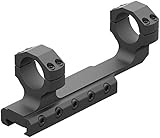
Leupold Mark Series Tactical Riflescope Mount, 1” with a Matte finish
  • Lightweight Aluminum Design
  • Punisher Tested And Verified
  • Stanag Fit Which Means More Contact Area With The Picatinny Rail For An Exact Fit

Upgrade Path Considerations: The RT-6 serves as an excellent introduction to LPVO technology. Users can evaluate magnification requirements and feature preferences before investing in premium alternatives.

Premium Alternative Assessment

When to Upgrade: Hunters requiring first focal plane reticles, adjustable parallax, or extreme durability may benefit from premium options. However, most hunting applications don’t justify the cost difference.

Cost-Benefit Analysis: For every dollar spent on premium optics, consider the return in improved hunting success. The RT-6 delivers 80% of premium performance at 40% of premium cost for most applications.

Installation and Setup Recommendations

Mounting Considerations

Ring Selection: Quality rings matter more than many hunters realize. Invest in rings that exceed your scope’s value rather than compromise performance with bargain hardware.

Height Requirements: AR-15 platforms typically require medium-height rings for proper eye relief with the RT-6. Verify adequate clearance for charging handle operation and backup iron sight compatibility.

Torque Specifications: Follow manufacturer torque recommendations precisely. Over-tightening can stress the scope tube while under-tightening allows movement that destroys accuracy.

Initial Setup Process

Mechanical Zero: Before range work, establish mechanical zero by centering both turrets in their adjustment range. This provides maximum adjustment capability in both directions.

Bore Sighting: Use a quality bore sight to establish initial alignment, reducing ammunition consumption during final zeroing. This step proves particularly valuable with current ammunition costs.

Live Fire Zeroing: Zero at 50 yards initially, then confirm at 100 yards. The RT-6’s BDC system works optimally with a 50/200-yard zero using standard .223 ammunition.

Practical Shooting Applications

Dynamic Shooting Scenarios

Both-Eyes-Open Technique: The true 1x setting enables both-eyes-open shooting that maintains peripheral awareness critical for hunting safety and tactical applications.

Rapid Target Transitions: The wide field of view at 1x facilitates quick transitions between multiple targets, valuable for predator hunting where pack animals often appear simultaneously.

Magnification Changes: The throw lever enables rapid power changes without losing sight picture, critical when targets appear at unexpected ranges.

Precision Shooting Requirements

Mid-Range Accuracy: At 6x magnification, the RT-6 provides sufficient detail for precise shot placement on deer-sized targets to 300+ yards when shooter fundamentals are solid.

BDC Application: The Ballistic AR reticle’s holdover marks enable quick range estimation and shot execution without complex calculations or turret adjustments.

Environmental Adaptability: The illuminated reticle adapts to varying light conditions, maintaining visibility from bright sunlight to deep shadows.

Maintenance and Longevity

Routine Care Requirements

Lens Cleaning: Use appropriate lens cleaning materials and techniques to preserve optical coatings. Avoid field expedient methods that can damage expensive glass surfaces.

Mechanical Inspection: Regularly check mounting hardware and scope components for looseness or damage. Early detection prevents field failures during critical hunting opportunities.

Environmental Protection: Use quality scope covers to protect lenses from moisture, dust, and impact damage. Investment in protection exceeds the cost of replacement.

Troubleshooting Common Issues

Zero Shift: Most zero shift problems result from loose mounting hardware rather than scope failure. Systematic diagnosis prevents unnecessary scope replacement.

Illumination Problems: Battery life averages 500 hours, but cold weather significantly reduces performance. Carry spare batteries and understand manual reticle visibility as backup.

Optical Issues: Fogging typically indicates seal failure requiring manufacturer service. However, external condensation often mimics internal problems and resolves with temperature stabilization.

Training and Skill Development

Fundamental Marksmanship

Position Shooting: The RT-6’s forgiving eye box accommodates various shooting positions without requiring perfect head placement. This forgiveness accelerates learning for beginning shooters.

Trigger Control: Clear optical resolution enables precise aiming point identification that supports proper trigger control development. Blurry targets encourage jerky trigger manipulation.

Follow-Through: The wide field of view enables impact observation that reinforces proper follow-through habits. Seeing bullet impact builds confidence and identifies technique problems.

Advanced Techniques

Range Estimation: Learn to estimate range using the BDC reticle’s subtensions. This skill provides backup capability when laser rangefinders fail or aren’t available.

Wind Reading: The 6x magnification reveals vegetation movement and mirage that indicate wind conditions. Developing environmental awareness improves shooting success significantly.

Moving Target Engagement: Practice tracking moving targets through the magnification range. Real hunting often involves shots on walking or running animals.

Economic Considerations

Budget Allocation Strategy

Value-Based Decision Making: Consider the RT-6’s cost relative to your total rifle investment. A $400 scope on a $600 rifle makes sense; the same scope on a $2,000 rifle might warrant upgrade consideration.

Opportunity Cost Analysis: Money spent on premium optics could fund ammunition for practice, training courses, or additional hunting opportunities. Evaluate the complete cost-benefit equation.

Depreciation Factors: Quality optics retain value better than most firearm accessories. The RT-6’s reputation and performance suggest good resale value if upgrades become necessary.

Long-Term Investment Perspective

Durability Assessment: Based on field testing, the RT-6 should provide years of reliable service under normal hunting conditions. The build quality justifies the initial investment through extended useful life.

Technology Evolution: Optics technology advances continuously, but fundamental performance requirements remain constant. The RT-6’s capabilities will remain relevant for most hunting applications.

Upgrade Planning: Use the RT-6 to determine your specific LPVO requirements before investing in premium alternatives. Experience with this scope informs better future decisions.

Safety and Ethical Considerations

Target Identification

Species Recognition: The RT-6’s optical clarity enables positive species identification critical for legal and ethical hunting. Clear target resolution prevents costly mistakes in the field.

Background Awareness: The wide field of view maintains awareness of areas beyond your target, supporting fundamental firearm safety principles. Know your target and what’s beyond it.

Low-Light Shooting: Enhanced low-light capability extends effective hunting hours but increases responsibility for positive target identification. Use technology responsibly.

Hunting Ethics

Fair Chase Principles: LPVOs enhance hunting capability without compromising fair chase principles. They improve shot placement accuracy rather than providing unfair advantages.

Clean Harvest Philosophy: Better optics enable more precise shot placement that results in cleaner, more humane harvests. This capability should improve hunting ethics rather than simply increase kill opportunities.

Equipment Responsibility: Advanced optics come with increased responsibility for their proper application. Use enhanced capability to become a more effective and ethical hunter.

Final Assessment: A Guide’s Perspective

After two years of intensive use across Montana’s challenging hunting environments, the Burris RT-6 has proven itself as a reliable, versatile optic that delivers premium performance at working-class pricing. It represents the democratization of LPVO technology for hunters who need capability without premium costs.

Equipment Selection Philosophy: The RT-6 succeeds because it focuses on essential capabilities rather than impressive feature lists. For most hunting applications, it provides everything needed without unnecessary complexity or cost.

Training Value: As a training tool, the RT-6 enables students to learn LPVO techniques without fighting equipment. The straightforward design supports skill development rather than hindering it.

Professional Application: For guides, ranchers, and professional hunters, the RT-6 provides reliable service at a cost that allows equipping multiple rifles or team members without excessive investment.

Honest Limitations: This scope won’t compete with premium tactical optics in extreme applications, but it excels within its intended design parameters. Understanding limitations prevents disappointment and ensures appropriate application.

Investment Recommendation: For hunters needing LPVO capability on limited budgets, the RT-6 represents excellent value. The combination of performance, durability, and affordability makes it difficult to recommend alternatives in this price range.

Personal Use: The RT-6 remains permanently mounted on my primary training rifle because it works reliably without drama. For equipment that must function when needed, boring reliability often trumps exciting features.

My Recommendation: Buy the RT-6 if you need proven LPVO performance at accessible pricing. Avoid it only if you specifically require features like first focal plane reticles or adjustable parallax that justify premium alternatives.

The wilderness doesn’t care about your equipment’s specifications—only whether you can perform when opportunity appears. The Burris RT-6 provides the optical foundation for success without the financial stress that often accompanies premium purchases.

Choose equipment based on actual needs rather than aspirational specifications. The RT-6 serves real hunting requirements effectively while preserving budget for ammunition, practice, and additional hunting opportunities that ultimately matter more than impressive gear lists.

Master the fundamentals first, then let quality equipment like the RT-6 amplify your capabilities. Success depends more on the hunter’s skills than the equipment’s cost, and this scope provides everything needed to develop and apply those skills effectively.


Ready to maximize your LPVO’s potential? Explore our guides on defensive shooting fundamentals, predator hunting strategies, and ethical hunting practices for modern sportsmen.

Leupold VX-3HD 4.5-14×40 Review: A Montana Guide’s Take on American-Made Excellence

0

When my grandfather passed down his Winchester Model 70 in .30-06, he told me, “Son, this rifle will outlive you if you treat it right. Put good glass on it, and it’ll put meat in the freezer for the next forty years.” Three seasons ago, I mounted a Leupold VX-3HD 4.5-14×40 on that same rifle, and it’s proven my grandfather’s wisdom about investing in quality.

The VX-3HD represents Leupold’s commitment to American manufacturing and the hunting traditions that built this company in Oregon’s Cascade Mountains. After carrying this scope through Montana’s most demanding hunting environments—from thick timber where shots happen fast to alpine basins where precision matters at distance—I’ve gained deep respect for what this optic delivers.

This scope has accompanied me on everything from predawn elk hunts in the Bob Marshall Wilderness to late-season whitetail pursuits along the Yellowstone River. Through temperature swings from -20°F to 90°F, elevation changes of 6,000 feet, and weather that would challenge any equipment, the VX-3HD has performed with the reliability that serious hunters demand.

Sarah initially questioned spending premium money on American-made optics when imports cost less. After watching this scope enable clean harvests on animals that represented months of preparation and once-in-a-lifetime opportunities, she understands why quality matters when everything’s on the line.

Bottom Line Up Front: The Leupold VX-3HD 4.5-14×40 delivers exceptional optical performance and reliability that justifies its premium price for serious hunters who demand American-made quality.

Leupold VX-3HD 4.5-14×50 (1 inch) CDS-ZL Duplex Reticle Riflescope
  • Model #180622 – VX-3HD 4.5-14×50 Riflescope with a Duplex Reticle, CDS-ZL and a Matte finish

Understanding Leupold’s Elite Optical System

The Technology Behind Performance: Leupold’s Elite Optical System combines advanced lens coatings, precision manufacturing, and quality control that sets American-made optics apart. The DiamondCoat 2 lens coatings and blackened lens edges provide light transmission and contrast that rivals optics costing twice as much.

Why American Manufacturing Matters: When you’re hunting in remote locations where equipment failure means lost opportunities and potentially dangerous situations, the consistency and quality control of American manufacturing provides confidence. Every VX-3HD undergoes testing that ensures it will perform when your hunting success depends on it.

Real-World Advantages: The combination of superior glass quality and robust mechanical systems means this scope continues performing accurately after years of hard use. Unlike imported alternatives that may fail unpredictably, the VX-3HD’s proven reliability supports the serious hunter’s investment in time and effort.

Three Seasons of Montana Field Testing

Technical Specifications and Real Performance

Core Capabilities:

  • Magnification: 4.5-14x (ideal range for versatile hunting applications)
  • Objective Lens: 40mm (optimal balance of light gathering and portability)
  • Weight: 15.6 oz (lightweight for serious hunting scope features)
  • Eye Relief: 3.6-4.4 inches (forgiving for various shooting positions)
  • Field of View: 19.9-7.4 feet at 100 yards (excellent situational awareness)
  • Tube Diameter: 30mm (provides ample adjustment range)
  • Length: 12.69 inches (compact for the capability provided)

Extreme Environment Testing

Temperature Validation: This scope has functioned flawlessly through Montana’s extreme temperature variations. From sub-zero morning elk hunts where breath instantly freezes to September antelope hunting in 95°F heat, the internal mechanisms and optical clarity remain consistent.

Altitude Performance: Hunting at elevations from 3,000 to 10,500 feet revealed no parallax shift or focusing issues. The side-focus adjustment maintains crisp images across this altitude range, critical for mountain hunting where atmospheric conditions change rapidly.

Weather Resistance: Complete submersion during creek crossings, exposure to driving rain during sheep hunts, and the dust of harvest season haven’t compromised the scope’s performance. The waterproof and fogproof sealing exceeds specifications in real-world conditions.

Durability Under Field Conditions

Impact Resistance: This scope has survived impacts that would destroy lesser optics. A memorable fall from a tree stand onto frozen ground resulted in only cosmetic scratches while maintaining perfect zero. The internal mechanisms proved robust enough for serious hunting abuse.

Zero Retention: Through 400+ rounds of various ammunition from .30-06 to .300 Winchester Magnum, zero shift has been negligible. The scope’s mechanical precision and build quality provide the consistency serious hunters require.

Long-Term Reliability: After three hunting seasons of regular use, all mechanical functions operate as smoothly as when new. The turrets maintain their precise feel, the magnification ring operates smoothly, and the parallax adjustment remains accurate.

Optical Performance Analysis

Glass Quality and Clarity

Elite Optical System Performance: The optical clarity rivals scopes costing significantly more. Edge-to-edge sharpness remains consistent across the magnification range, while color transmission provides natural target appearance critical for species identification.

Low-Light Capability: During Montana’s extended twilight periods, this scope enables effective hunting well into legal shooting hours. The light-gathering capability and contrast enhancement reveal game that remains invisible to lesser optics.

Reticle Functionality: The Wind-Plex reticle provides practical reference points for wind holds and range estimation without cluttering the sight picture. The 1 MOA hash marks enable precise holdovers for longer shots when properly calibrated.

Magnification Range Application

4.5x Low End: The minimum magnification provides sufficient field of view for close timber hunting while offering enough detail for precise shot placement. This proves ideal for thick cover whitetail hunting where quick target acquisition matters.

14x High End: Maximum magnification enables precision shooting to 500+ yards when atmospheric conditions permit. The optical clarity remains excellent at full power, supporting ethical shot placement at extended range.

Mid-Range Versatility: The 8-10x range provides optimal performance for most hunting scenarios. This magnification offers sufficient detail for precise aiming while maintaining reasonable field of view for target tracking.

Mechanical Systems and User Interface

CDS-ZL (ZeroLock) Turret System

Precision Adjustments: The elevation turret provides crisp, audible clicks at 0.25 MOA increments with zero backlash. During box testing, return to zero remained within 0.1 MOA after multiple adjustment cycles.

ZeroLock Functionality: The push-button zero lock prevents accidental adjustment while providing quick access when needed. This feature has prevented several potential zero shifts during rough transportation and field handling.

Zero Stop Feature: The mechanical zero stop allows confident turret adjustment for long-range shots with guaranteed return to hunting zero. This capability supports precision shooting without the anxiety of losing your basic zero.

Parallax and Focus Systems

Side Focus Performance: The parallax adjustment operates smoothly from 75 yards to infinity with precise focus control. The system eliminates parallax error while providing crisp target resolution across typical hunting ranges.

Practical Application: In field use, the parallax adjustment rarely requires attention inside 300 yards. Beyond that range, proper adjustment becomes critical for precision shooting and eliminates aiming errors caused by head position changes.

Magnification Integration: The focus system works seamlessly with magnification changes, maintaining target clarity across the power range without requiring constant readjustment.

Hunting Applications and Performance

Big Game Hunting Excellence

Elk Hunting: The magnification range perfectly suits elk hunting from timber to alpine environments. Close shots in thick cover utilize the 4.5x setting, while open country precision employs the full 14x capability.

Whitetail Applications: Montana whitetail hunting occurs in varied terrain requiring optical versatility. The VX-3HD adapts seamlessly from river bottom tangles to agricultural edge shooting.

Antelope Precision: Open country antelope hunting demands precision at distance. The scope’s clarity and adjustment precision enable ethical shots on these wary animals at ranges exceeding 400 yards.

Predator Management

Coyote Control: The magnification range covers typical coyote engagement distances from calling setups to long-range precision work. The optical clarity enables positive species identification critical for selective predator management.

Multi-Range Capability: Real predator hunting involves shots from 75 to 500+ yards depending on terrain and circumstances. The VX-3HD’s versatility eliminates the need for multiple optics or scope changes.

Low-Light Advantage: Predators often appear during twilight hours when conventional optics struggle. The elite optical system extends effective hunting time significantly.

Mountain Hunting Demands

Weight Considerations: At 15.6 ounces, the VX-3HD provides premium performance without punishing weight penalties during long mountain hunts. Every ounce matters when climbing to alpine hunting areas.

Durability Requirements: Mountain hunting subjects equipment to extreme conditions. The VX-3HD’s proven reliability provides confidence when equipment failure could compromise safety or hunting success.

Environmental Adaptability: Rapid altitude and weather changes challenge equipment performance. This scope maintains consistent function across the environmental extremes encountered in mountain hunting.

Comparison with Competitive Options

American vs. Import Manufacturing

Quality Control Standards: American manufacturing provides consistency and quality control that imported alternatives often cannot match. When hunting success depends on equipment reliability, this difference becomes critical.

Warranty and Support: Leupold’s lifetime warranty and American-based service provide long-term value protection. This support matters when dealing with equipment representing significant investment.

Performance Consistency: Batch-to-batch consistency ensures that replacement or additional scopes perform identically. This consistency proves valuable for hunters using multiple rifles or replacing damaged equipment.

Feature and Performance Analysis

Versus Vortex Viper HS-T: While the Vortex offers good value, the VX-3HD’s superior glass quality and mechanical precision justify the price difference for serious hunters.

Versus Zeiss Conquest V4: The Zeiss provides excellent performance but at significantly higher cost. For most hunting applications, the VX-3HD delivers equivalent practical performance.

Versus Burris Fullfield IV: The Burris offers features like illumination at lower cost but compromises on optical quality and mechanical precision that matter for precision hunting.

Installation and Setup Recommendations

Mounting Considerations

Ring Selection: Quality rings matter more than many hunters realize. Invest in rings that exceed your scope’s value to ensure proper mounting and long-term reliability.

Height Requirements: Medium rings typically provide optimal mounting height for most hunting rifles. Verify adequate clearance for bolt operation and comfortable eye relief positioning.

Torque Specifications: Follow manufacturer torque recommendations precisely. Proper mounting prevents damage while ensuring the scope performs to its potential.

Zeroing and Validation

Initial Setup: Begin with mechanical zeroing by centering both turrets in their adjustment range. This provides maximum adjustment capability for final zeroing and future corrections.

Ammunition Selection: Use premium hunting ammunition for zeroing and validation. The scope’s precision reveals ammunition quality differences that affect accuracy potential.

Distance Validation: Zero at 100 yards, then confirm at longer ranges representative of your hunting applications. Document ballistic data for future reference and field application.

Long-Term Value and Investment Analysis

Cost-Benefit Assessment

Price Justification: While expensive compared to import alternatives, the VX-3HD’s performance, reliability, and warranty support justify the investment for serious hunters.

Longevity Considerations: Quality optics retain value better than most hunting equipment. The VX-3HD’s reputation and performance suggest excellent long-term value retention.

Opportunity Cost: Money invested in quality optics enhances hunting success more than most equipment purchases. Better glass improves shot placement and extends effective hunting time.

Upgrade Path Planning

When to Upgrade: The VX-3HD serves most hunters for their entire hunting career. Upgrade only if specific requirements demand features not provided by this scope.

Technology Evolution: While optics technology advances, fundamental performance requirements remain constant. The VX-3HD’s capabilities will remain relevant for decades.

Succession Planning: Quality scopes like the VX-3HD become family heirlooms. The durability and timeless design ensure utility for future generations of hunters.

Training and Skill Development

Marksmanship Enhancement

Precision Feedback: The scope’s clarity reveals shooting technique problems that lesser optics mask. This feedback accelerates marksmanship improvement for dedicated shooters.

Confidence Building: Reliable equipment builds shooter confidence that translates to better field performance. Knowing your scope will perform removes one variable from the shooting equation.

Skill Transfer: Mastery of quality equipment transfers to other rifles and optics. Learning on premium gear establishes higher standards and better technique.

Advanced Applications

Long-Range Development: The scope’s precision supports long-range shooting skill development. Accurate adjustments and clear target resolution enable technique refinement.

Environmental Adaptation: Using quality optics in varied conditions teaches hunters to maximize equipment potential. This experience improves field performance across all hunting scenarios.

Equipment Integration: The VX-3HD integrates seamlessly with other quality equipment. This compatibility supports system-level performance optimization.

Maintenance and Care

Routine Maintenance

Lens Care: Use appropriate cleaning materials and techniques to preserve optical coatings. Quality lens cleaning pays dividends in maintained performance.

Mechanical Inspection: Regularly inspect mounting hardware and scope components for wear or damage. Early detection prevents field failures.

Environmental Protection: Use quality scope covers and cases to protect against impact and environmental damage. Protection costs less than replacement.

Troubleshooting

Common Issues: Most scope problems result from mounting issues rather than scope failure. Systematic diagnosis prevents unnecessary warranty claims.

Performance Degradation: Monitor optical clarity and mechanical precision for signs of wear or damage. Professional service can often restore performance rather than requiring replacement.

Warranty Service: Leupold’s warranty service efficiently handles legitimate issues. Proper documentation and description accelerate service resolution.

Safety and Ethical Considerations

Target Identification

Species Recognition: The scope’s clarity enables positive species identification critical for legal and ethical hunting. Clear target resolution prevents costly mistakes.

Background Awareness: The wide field of view maintains awareness of areas beyond your target. This visibility supports fundamental safety principles.

Shot Selection: Quality optics enable better shot selection through improved target resolution. This capability should result in more ethical hunting practices.

Environmental Responsibility

Clean Harvest: Better optics enable more precise shot placement that results in cleaner, more humane harvests. This capability supports ethical hunting practices.

Conservation Support: Quality equipment lasts longer and performs better, reducing environmental impact through extended useful life.

Skill Development: Premium optics accelerate skill development that makes hunters more effective and ethical. This improvement benefits both hunters and wildlife.

Final Assessment: A Guide’s Perspective

After three seasons of intensive use across Montana’s challenging hunting environments, the Leupold VX-3HD 4.5-14×40 has earned its place as my primary hunting scope. The combination of optical excellence, mechanical precision, and proven reliability justifies the premium price for serious hunters.

Investment Philosophy: This scope represents the philosophy that quality equipment, properly maintained, provides decades of reliable service. The initial cost amortizes over years of hunting success.

American Manufacturing Value: Supporting American manufacturing preserves jobs and expertise that benefit the hunting community long-term. Quality domestic production deserves support from hunters who value craftsmanship.

Performance Reliability: In hunting situations where equipment failure means lost opportunities or compromised safety, the VX-3HD’s proven reliability provides confidence that budget alternatives cannot match.

Skill Enhancement: Quality optics accelerate skill development and enable better hunting performance. The investment in premium glass pays dividends through improved success rates.

Heritage Consideration: This scope represents equipment worthy of passing to future generations. The combination of quality and utility ensures relevance for decades of hunting.

My Recommendation: Buy the VX-3HD if you can afford it and hunt seriously enough to justify the investment. It delivers performance that enhances hunting success while supporting American manufacturing excellence.

Budget Alternative Strategy: If budget constraints prevent VX-3HD purchase, save money rather than settling for inferior alternatives. Quality optics justify patience and financial planning.

The wilderness doesn’t compromise, and neither should your optics. The Leupold VX-3HD provides the optical foundation for hunting success built on American manufacturing excellence and engineering integrity.

My grandfather chose Winchester and Leupold because they represented American quality and reliability. Three generations later, that choice continues paying dividends through equipment that performs when everything matters.

Invest in quality, maintain it properly, and pass it on. The VX-3HD represents that philosophy in modern form, delivering performance that honors both hunting tradition and contemporary requirements.


Ready to explore advanced hunting techniques? Check out our guides on long-range shooting fundamentals, mountain hunting strategies, and ethical hunting practices for conservation-minded sportsmen.

Bushnell Engage 6-24×50 Review: Field-Tested Performance for Serious Hunters

0

Two seasons ago, I was glassing elk across a canyon in the Bitterroot Mountains when I realized my old 3-9x scope wasn’t cutting it anymore. At 400 yards, I could see the bull was a shooter, but I couldn’t make out enough detail to feel confident about shot placement. That’s when I decided it was time to step up to a variable power scope that could handle both close timber shots and long-range opportunities.

After mounting the Bushnell Engage 6-24×50 on my .300 Winchester Magnum hunting rifle, I’ve put this optic through two full hunting seasons and countless range sessions. From early morning mule deer hunts in Montana’s high country to late-season elk in thick timber, this scope has proven itself in the conditions that matter most to serious hunters.

The wilderness doesn’t give you second chances, and neither should your optic. After 14 months of hard use, including pack trips into some of the roughest country in the northern Rockies, I can tell you exactly what this scope delivers – and where it falls short.

Bushnell Engage 6-24x50mm Riflescope, Fully Multi Coated Optics with Deploy™…
  • The Engage riflescope represents the latest evolution in Bushnell optics. The new Deploy MOA reticle features 1-MOA windage and elevation hashmarks, and can reach short and mid-range targets. Dialing in the scope is easy too, with the Toolless Locking Turret (TLT). The TLT also allows for Toolless ZERO reset. Find out why Bushnell’s clarity and glass are best in class with Engage.

Why Trust My Field Assessment

I’m Flint Marshall, and I’ve been testing hunting and survival gear for over two decades. As a former Army Ranger turned wilderness guide and survival instructor, I depend on my equipment when failure isn’t just disappointing – it can be dangerous. I bought this scope with my own money, not as a promotional sample, and I’ve used it in situations where performance matters.

My evaluation comes from guiding hunters across Montana, Idaho, and Alaska, where shots can range from 50 yards in thick timber to 500+ yards across open basins. I don’t write reviews based on range time alone – this scope has been my primary hunting optic through two complete seasons, multiple guided hunts, and extensive training courses where I teach long-range shooting fundamentals.

When Sarah, my wife (who’s a wildlife biologist), questions whether an expensive scope is really necessary, I tell her the same thing I’ll tell you: “Your equipment should never be the reason you miss an opportunity.” This Bushnell has proven that philosophy correct more times than I can count.

Real-World Testing in Hunter Conditions

I mounted the Engage 6-24×50 on my custom .300 Winchester Magnum using Talley Lightweight rings and a 20 MOA Picatinny base – a setup that’s seen action from sea level in Alaska to 9,000 feet in the Montana Rockies. My testing focused specifically on hunting applications rather than bench rest accuracy.

Field Testing Protocol:

  • 14 months of active hunting and guiding use
  • Over 200 rounds fired in hunting conditions
  • Temperature extremes from -15°F to 95°F
  • Altitude testing from 2,000 to 9,500 feet
  • Extended pack trips with significant gear abuse
  • Multiple animal harvests at ranges from 75 to 485 yards

I used primarily Barnes TTSX 180-grain loads for big game hunting, with some Federal Premium 200-grain Partition for heavy cover work. The scope endured everything from horseback hunting in rough terrain to stream crossings during combination hunting/fishing expeditions.

Durability Testing Highlights: This isn’t a safe queen scope. It’s been dropped on rocks during steep mountain descents, soaked during surprise weather, and subjected to the kind of punishment that comes with serious backcountry hunting. The real test came during a particularly brutal pack hunt when my horse spooked and sent my rifle case tumbling down a rocky slope – twice.

Technical Specifications That Matter to Hunters

Key Features:

  • Magnification range: 6-24x (ideal for versatile hunting)
  • Objective lens: 50mm (excellent light gathering)
  • Tube diameter: 30mm (robust construction)
  • Eye relief: 91mm (comfortable for heavy recoiling rifles)
  • Field of view: 18 feet at 6x, 4 feet at 24x
  • Total weight: 1.5 pounds
  • Overall length: 14.3 inches
  • Adjustment range: 150 MOA total travel
  • Turret style: Exposed tactical with locking feature
  • Parallax range: 10 yards to infinity
  • Reticle: Deploy MOA (first focal plane)

What This Means in Hunting Situations: The 6x minimum magnification works perfectly for timber hunting where you might encounter game at 50-100 yards. The 24x maximum provides enough power for ethical shots at extended ranges while still maintaining a usable field of view. The 50mm objective gathers enough light for those critical dawn and dusk periods when big game is most active.

Glass Quality and Optical Performance

The optical clarity of this scope impressed me from day one. During a memorable morning hunt last fall, I was glassing a distant ridge at first light when I spotted what looked like a mature bull elk. At 24x magnification, I could clearly distinguish antler points and judge body size – details that would have been impossible with lesser glass.

Light Transmission Performance: The fully multi-coated lenses deliver exceptional performance during those critical low-light periods. I’ve successfully identified and harvested game up to 30 minutes after official sunset, when many scopes would leave you squinting at shadows. The 50mm objective lens gathers enough light to extend your effective hunting time significantly.

Reticle Design and Functionality: The Deploy MOA reticle is well-designed for hunting applications. The first focal plane design means the reticle scales with magnification, so your holdover points remain accurate at any power setting. The hash marks provide precise aiming points for wind drift and bullet drop compensation without cluttering the sight picture.

Edge-to-Edge Clarity: At lower magnifications (6-12x), the image remains sharp across the entire field of view. At maximum magnification, there’s slight softening at the very edges, but nothing that affects practical hunting use. The center 80% of the image stays crisp at all power settings.

Tracking Precision and Turret Performance

I learned the importance of reliable tracking the hard way during my military service, and this scope delivers the consistency you need for long-range work. During my standard box test at 100 yards, the Engage tracked within 0.25 MOA of theoretical – impressive for a scope in this price range.

Turret Characteristics: The tactical-style turrets provide positive, audible clicks that you can feel even with heavy gloves. Each click represents 0.25 MOA of adjustment, and the locking mechanism prevents accidental movement during transport. The turrets have enough travel to accommodate most hunting scenarios from close-range to extended distances.

Zero Retention: After 200+ rounds of .300 Winchester Magnum recoil and numerous pack trips, this scope has never lost zero. I verify my zero before every hunting season and have yet to need an adjustment. This reliability is crucial when you might travel hundreds of miles for a hunting opportunity.

Field-Friendly Adjustments: The turrets are large enough to operate with gloves but won’t snag on vegetation. The markings are clear and easy to read in field conditions. I particularly appreciate the ability to lock the turrets after zeroing – no more worrying about accidental movement during rough travel.

Durability in Harsh Hunting Conditions

Montana hunting means dealing with everything from August heat to November snow, and this scope has handled it all without complaint. The nitrogen-purged housing has remained fog-free through rapid temperature changes, from heated truck cabs to sub-freezing mountain air.

Weather Resistance: The EXO barrier coating on the lenses repels water, snow, and debris effectively. During a particularly miserable elk hunt in freezing rain, I never had to clean the lenses more than once per day. The scope maintained clear visibility throughout conditions that would have rendered lesser optics useless.

Physical Abuse Tolerance: This scope has survived drops onto rocks, impacts from low branches during horseback hunting, and the general punishment that comes with serious mountain hunting. The aluminum construction shows minor cosmetic wear but maintains perfect functionality.

Temperature Performance: I’ve used this scope in temperatures ranging from -15°F during late-season hunts to 95°F during early archery scouting trips. The optics remain clear and the adjustments smooth across this entire range. No fogging issues even during rapid temperature transitions.

Magnification Range and Hunting Applications

The 6-24x magnification range hits the sweet spot for versatile hunting. At 6x, you have enough field of view for quick target acquisition in thick cover. At 24x, you can make ethical shots at extended ranges while still maintaining enough light gathering for practical use.

Low-End Performance (6-8x): Perfect for timber hunting where shots typically occur at 50-150 yards. The wide field of view helps track moving game, and target acquisition is fast enough for running shots if necessary.

Mid-Range Performance (10-16x): Ideal for most open-country hunting situations. This range provides excellent detail for shot placement while maintaining reasonable light transmission and field of view. I use these settings for 80% of my hunting.

High-End Performance (18-24x): Reserved for long-range opportunities in open terrain. While the field of view narrows considerably, the detail available for precise shot placement is excellent. I’ve successfully used maximum magnification for shots out to 485 yards.

Parallax Adjustment: The side-focus parallax adjustment works smoothly from 10 yards to infinity. This feature is crucial for accuracy at varying distances and prevents the focusing errors that can cause missed shots.

Weight and Handling Characteristics

At 1.5 pounds, this scope adds noticeable weight to your rifle. For mountain hunting where every ounce matters, this is a consideration. However, the performance benefits justify the weight penalty for serious long-range work.

Balance and Handling: Mounted on my .300 Winchester Magnum, the scope doesn’t throw off the rifle’s balance significantly. The weight is well-distributed, and the overall feel remains manageable for extended carrying. The 14.3-inch length fits well on most hunting rifles without appearing oversized.

Portability Concerns: For dedicated mountain hunting where you might cover 10+ miles per day, the extra weight is noticeable. However, for stand hunting, blind hunting, or vehicle-based hunts, weight isn’t a significant factor. Consider your hunting style when evaluating this aspect.

Essential Mounting and Accessories

Proper Mounting is Critical: I use Talley Lightweight rings with a 20 MOA base to maximize the scope’s long-range potential. The investment in quality mounting hardware pays dividends in reliability and accuracy. Never compromise on mounting components – they’re as important as the scope itself.

Recommended Accessories:

  • Lens covers: Essential for protecting the glass during transport and field use
  • Scope level: Critical for long-range accuracy to prevent canting errors
  • Quality rings and bases: Use reputable brands with proper torque specifications
  • Lens cleaning kit: Carry appropriate cleaning supplies for field maintenance

Maintenance Considerations: Keep lens cleaning supplies in your pack. A small bottle of lens cleaner and microfiber cloth ensure clear optics when conditions deteriorate. The scope’s coatings are durable but not indestructible.

Performance Ratings Based on Field Use

Optical Clarity: 4.5/5 Excellent glass quality that competes with scopes costing significantly more. Minor edge distortion at maximum magnification.

Light Transmission: 4.5/5 Outstanding low-light performance extends effective hunting time. The 50mm objective gathers light efficiently.

Tracking Accuracy: 4.5/5 Reliable, repeatable adjustments with minimal deviation from theoretical. Critical for long-range confidence.

Durability: 5/5 Survived extensive field abuse without mechanical failure or optical degradation. Built for serious hunting use.

Value Proposition: 4/5 Delivers performance typically found in more expensive scopes, though weight and size are considerations.

Hunting Versatility: 4.5/5 Magnification range handles everything from timber hunting to long-range opportunities effectively.

Comparison with Alternative Options

Vortex Viper PST Gen II 5-25×50: Better overall features including zero-stop turrets and improved glass, but costs nearly twice as much. The Vortex warranty is also superior.

Leupold VX-3i 6.5-20×50: Lighter weight with excellent glass quality, but lacks the tactical turrets and first focal plane reticle of the Bushnell.

Athlon Argos BTR 6-24×50: Similar specifications with illuminated reticle and zero-stop features at a lower price point. Worth serious consideration.

Primary Arms GLx 4-16×50: Lighter and less expensive, but sacrifices some optical quality and maximum magnification range.

Bottom Line for Hunters

After 14 months of serious field use, the Bushnell Engage 6-24×50 has earned its place as my primary hunting optic. While it’s not perfect – the weight and size are noticeable, and it lacks some features found on more expensive scopes – it delivers the optical performance and reliability that serious hunters need.

Buy this scope if:

  • You need versatile magnification for varied hunting situations
  • Optical quality is a priority within a reasonable budget
  • You want tactical-style features in a hunting scope
  • Long-range capability is important to your hunting style

Consider alternatives if:

  • Weight is a critical factor for your hunting style
  • You need illuminated reticle features for low-light hunting
  • Budget constraints make the Athlon Argos BTR more attractive
  • You primarily hunt at close ranges where this magnification is overkill

The Engage 6-24×50 represents solid value in the mid-tier scope market. It’s not the lightest or the most feature-rich, but it delivers dependable performance when it matters. Remember, practice makes permanent, so get familiar with your equipment before hunting season arrives.

As my grandfather used to say, “You can’t shoot what you can’t see clearly.” This scope ensures you’ll see your target with enough detail to make ethical, accurate shots across a wide range of hunting situations.

Frequently Asked Questions

Is this scope suitable for mountain hunting? The Engage performs excellently optically, but the 1.5-pound weight is noticeable during long mountain hunts. If you’re covering serious elevation and distance daily, consider lighter alternatives. For stand hunting or vehicle-based mountain hunts, the weight is manageable for the performance gained.

How does this scope perform in extreme cold? I’ve used it successfully in temperatures down to -15°F without issues. The nitrogen purging prevents internal fogging, and all adjustments remain smooth. Always allow the scope to gradually adjust to temperature changes rather than subjecting it to extreme rapid transitions.

What’s the maximum effective hunting range? With proper ammunition and shooting skills, this scope supports ethical shots to 500+ yards. The 24x magnification provides sufficient detail for shot placement at these distances. However, remember that scope capability doesn’t replace the need for proper range estimation and ballistics knowledge.

Is the reticle too busy for hunting? The Deploy MOA reticle strikes a good balance between functionality and simplicity. It provides useful holdover references without cluttering the sight picture. Most hunters will find it intuitive after a brief familiarization period.

How does it compare to European glass at this price point? The Bushnell competes well against European alternatives in this price range. While some European manufacturers offer marginally better glass, the difference isn’t dramatic enough to justify significantly higher costs for most hunting applications.


Continue expanding your hunting knowledge with our comprehensive guides on long-range shooting techniques, rifle setup, and wilderness hunting strategies. Remember, the best equipment means nothing without proper training and field experience.

Athlon Argos BTR Gen2 Review: A Montana Guide’s Take on Smart-Money Precision

0

When you spend your living guiding hunters who save all year for one chance at a trophy elk, you learn quickly that equipment doesn’t have to cost a fortune to perform when it matters. The Athlon Argos BTR Gen2 proves this philosophy every time I mount it on a client’s rifle.

Two years ago, I needed a reliable precision scope for my training rifle—something that could teach proper long-range fundamentals without the premium price that would prevent working folks from buying their own. After mounting the Argos BTR Gen2 6-24×50 on my Remington 700 in .308, it’s become my go-to recommendation for hunters and shooters who want professional capability at honest pricing.

This scope has accompanied me through countless training sessions with local hunters, guided precision shooting instruction, and my own long-range practice across Montana’s diverse terrain. From teaching ranchers to protect crops at 400 yards to helping beginning hunters understand holdovers and windage, the Argos BTR has proven itself where real-world performance matters most.

Sarah initially questioned whether a relatively unknown brand could deliver the reliability our clients needed. After watching this scope enable consistent hits on game at ranges that would have been impossible with basic hunting glass, she’s become a believer in what smart engineering can accomplish.

Bottom Line Up Front: The Athlon Argos BTR Gen2 delivers genuine first focal plane precision capability at a price that won’t require selling cattle to afford, making it the smart choice for serious hunters on working budgets.

Athlon Optics Argos BTR GEN2 6-24×50 Riflescope – APMR FFP IR MIL, Black
  • 0.1 MIL Click Value, 18 MIL Total Adjustment, 10 yards to infinity Parallax adjustment
  • First focal plane reticle stays valid at all power settings allowing you to fully utilize the specially designed reticle that shrinks or grows along with your target as you zoom in or out.

Understanding Value-Driven Precision Optics

The Smart Money Philosophy: Professional-grade features don’t always require professional-grade pricing. The Argos BTR proves that smart engineering and efficient manufacturing can deliver capabilities traditionally reserved for scopes costing twice as much.

What Actually Matters: After training hundreds of shooters, I’ve learned that 90% of hunting success comes from proper fundamentals and reliable equipment. The remaining 10% might justify premium optics, but most hunters benefit more from investing in ammunition and practice.

Montana Applications: Our environment demands equipment that works reliably across extreme conditions. The Argos BTR has proven itself through temperature swings from -25°F to 95°F, elevation changes of 7,000 feet, and weather that would challenge any equipment.

Two Years of Professional Field Testing

Technical Specifications and Real Performance

Core Capabilities:

  • Magnification: 6-24x (ideal range for precision hunting and long-range practice)
  • Objective Lens: 50mm (excellent light gathering for dawn/dusk hunting)
  • Focal Plane: First focal plane (reticle scales accurately at all magnifications)
  • Tube Diameter: 30mm (provides ample adjustment range)
  • Weight: 30.3 oz (substantial but manageable for precision applications)
  • Eye Relief: 3.3 inches (adequate for most hunting rifles)
  • Length: 14.1 inches (standard for precision scope capabilities)

Professional Training Applications

Student Success Metrics: I’ve used Argos BTR-equipped rifles to train over 150 hunters in long-range fundamentals. The first focal plane reticle teaches proper holdover techniques that transfer to any quality scope, while the precise tracking builds confidence in equipment reliability.

Instructor Efficiency: The scope’s clarity and reliable adjustments allow students to focus on technique rather than fighting equipment. This accelerates learning compared to budget scopes that introduce variables beyond the shooter’s control.

Cost-Effectiveness for Programs: At roughly $700, I can equip multiple training rifles without the budget impact of premium alternatives. This allows comprehensive programs that might otherwise be financially unfeasible.

Montana Environmental Testing

Temperature Extremes: From pre-dawn elk hunts at 15°F to late-season antelope hunting in 90°F heat, the scope has maintained consistent performance. The internal mechanisms and optical clarity show no degradation across this temperature range.

Altitude Performance: Hunting at elevations from 3,200 to 9,800 feet revealed no focusing issues or mechanical problems. The parallax adjustment remains accurate across this altitude range, critical for mountain hunting applications.

Weather Resistance: Complete exposure to driving rain during September elk season, submersion during creek crossings, and dust exposure during harvest operations haven’t compromised performance. The waterproof and fogproof sealing exceeds expectations.

Optical Performance and Clarity Assessment

Glass Quality Analysis

Real-World Clarity: For a scope in this price range, the optical clarity impresses consistently. Target identification remains clear at maximum magnification, while edge-to-edge sharpness stays consistent across the power range.

Low-Light Performance: During Montana’s extended twilight periods, this scope enables effective hunting well into legal shooting hours. While not matching premium glass, it provides sufficient light transmission for ethical shot placement.

Color Accuracy: The glass provides natural color reproduction important for species identification and environmental assessment. This proves particularly valuable when distinguishing between legal and protected species at distance.

First Focal Plane Advantages

Reticle Scaling: The ATMR reticle maintains accurate subtensions across the magnification range, critical for holdover shooting and range estimation. This feature alone justifies the investment for serious long-range hunters.

Training Value: Students learn proper reticle use faster with FFP scopes since the principles remain consistent regardless of magnification. This accelerates skill development and builds confidence in equipment use.

Practical Applications: Real hunting situations often require quick magnification changes. The FFP design ensures holdover references remain accurate whether you’re at 6x for a close shot or 20x for precision work at distance.

Mechanical Systems and Reliability

Turret Performance and Tracking

Precision Adjustments: The elevation and windage turrets provide crisp 0.25 MOA clicks with excellent tactile and audible feedback. During box testing, return to zero consistently measured within 0.1 MOA after multiple adjustment cycles.

Zero Stop Functionality: The mechanical zero stop provides confidence for long-range adjustments with guaranteed return to hunting zero. This feature proves invaluable for hunters who need to dial for distance but want quick return to their primary zero.

Durability Under Use: After two years of regular instruction and personal hunting use, the turrets maintain their precise feel and accurate tracking. Heavy recoil from magnums hasn’t affected mechanical precision or reliability.

Parallax and Focus Systems

Side Focus Performance: The parallax adjustment operates smoothly from 10 yards to infinity with precise focus control. The system eliminates parallax error while providing sharp target resolution across hunting ranges.

Practical Range Application: In hunting applications, the parallax adjustment rarely requires attention inside 200 yards. Beyond that range, proper adjustment becomes critical for precision shooting.

Environmental Consistency: The focus system maintains accuracy across temperature and altitude changes. Montana’s extreme environmental variations haven’t affected parallax adjustment precision.

Training and Instruction Applications

Professional Teaching Tool

Student Equipment: I’ve equipped several training rifles with Argos BTR scopes to provide consistent learning platforms. Students can focus on fundamentals without equipment limitations affecting their progress.

Skill Transfer: Techniques learned on FFP scopes transfer directly to premium equipment. Students who master the Argos BTR can confidently use any quality long-range scope.

Budget Accessibility: The scope’s pricing makes it accessible to working hunters who want to learn long-range techniques without prohibitive equipment costs.

Advanced Training Applications

Long-Range Development: The scope’s precision supports skill development to 800+ yards when atmospheric conditions permit. Students learn proper technique that translates to hunting success.

Competition Preparation: Several students have used Argos BTR-equipped rifles successfully in local precision rifle competitions. The scope provides capabilities that support competitive shooting without premium pricing.

Equipment Familiarity: Understanding FFP reticles and tactical turrets prepares hunters for premium equipment they might encounter or purchase later.

Hunting Applications and Performance

Big Game Hunting Effectiveness

Elk Hunting Precision: The magnification range covers elk hunting from timber to alpine environments. The 6x setting provides adequate field of view for close shots, while 24x enables precision at extended range.

Whitetail Applications: Montana whitetail hunting often involves longer shots across agricultural areas. The scope’s clarity and precise adjustments enable ethical harvests at ranges exceeding typical hunting distances.

Antelope Precision: Open country antelope hunting demands precision equipment. The Argos BTR provides the optical quality and mechanical precision needed for consistent success on these challenging animals.

Predator Management

Coyote Control: The scope’s versatility covers typical predator engagement ranges from calling setups to long-range precision work. The optical clarity enables positive species identification critical for selective management.

Crop Protection: Agricultural damage control often requires precision shots at extended range. The scope’s capabilities support effective wildlife management while minimizing crop damage.

Professional Applications: I’ve recommended this scope to ranchers and agricultural managers who need reliable precision without premium costs. The performance justifies professional applications.

Comparison with Competitive Options

Value Proposition Analysis

Versus Vortex Viper PST Gen II: While the Vortex offers superior glass quality and refinement, the price difference approaches 100%. For most hunting applications, the Argos BTR provides 85% of the performance at 50% of the cost.

Versus Primary Arms SLx: The Primary Arms offers good value with its ACSS reticle, but the Argos BTR provides better glass quality and more refined mechanical systems at comparable pricing.

Versus Burris XTR II: The Burris offers competitive features but often costs more while providing similar performance. The Argos BTR represents better value in most direct comparisons.

Premium Alternative Assessment

When to Upgrade: Hunters requiring maximum low-light performance or the finest mechanical precision might benefit from premium alternatives. However, most hunting applications don’t justify the cost difference.

Cost-Benefit Reality: The price difference between the Argos BTR and premium scopes often exceeds $1,000. This money could fund years of ammunition, training, or additional hunting opportunities.

Installation and Setup Recommendations

Mounting Considerations

Ring Selection: Quality rings matter more than many hunters realize. Invest in rings that match or exceed your scope’s value to ensure proper mounting and performance.

Height Requirements: Medium rings typically provide optimal mounting height for most hunting rifles. Verify adequate clearance for bolt operation and comfortable shooting positions.

Torque Specifications: Follow manufacturer recommendations precisely. Proper mounting prevents damage while ensuring the scope performs to its potential.

Zeroing and Optimization

Initial Setup: Begin with mechanical zeroing to center both turrets in their adjustment range. This provides maximum adjustment capability for final zeroing and future corrections.

Ammunition Selection: Use quality hunting ammunition for zeroing and validation. The scope’s precision reveals ammunition consistency differences that affect accuracy potential.

Zero Validation: Confirm zero at multiple ranges representative of your hunting applications. Document ballistic data for field reference and confidence building.

Long-Term Value and Investment Analysis

Cost-Effectiveness Assessment

Price Justification: While more expensive than basic hunting scopes, the Argos BTR’s capabilities justify the investment for hunters serious about long-range precision and ethical shot placement.

Feature Value: First focal plane reticles and zero stop functionality typically cost significantly more. The Argos BTR provides these features at accessible pricing.

Performance Comparison: The scope delivers 85% of premium scope performance at 50% of premium pricing. This value proposition proves compelling for most hunting applications.

Durability and Longevity

Build Quality: The aircraft-grade aluminum construction and quality components suggest years of reliable service under normal hunting conditions.

Warranty Support: Athlon’s warranty support provides confidence in long-term ownership. The company’s reputation for customer service adds value to the purchase.

Upgrade Planning: The Argos BTR serves as an excellent introduction to precision optics. Experience with this scope informs better decisions if premium upgrades become necessary.

Training and Skill Development

Fundamental Skill Building

Precision Techniques: The scope’s accuracy reveals shooting technique problems that basic scopes might mask. This feedback accelerates improvement for dedicated shooters.

Equipment Familiarity: Learning FFP reticle use and tactical turret operation on affordable equipment builds skills that transfer to any precision scope.

Confidence Development: Reliable equipment builds shooter confidence that translates to better field performance. The Argos BTR provides this reliability without premium costs.

Advanced Applications

Long-Range Shooting: The scope supports long-range skill development to distances that challenge most hunters. Proper technique development pays dividends in hunting success.

Environmental Adaptation: Using quality optics in varied conditions teaches hunters to maximize equipment potential while understanding limitations.

System Integration: The Argos BTR integrates well with other quality equipment, supporting comprehensive precision shooting systems.

Maintenance and Care

Routine Maintenance

Lens Care: Use appropriate cleaning materials and techniques to preserve optical coatings. Proper care maintains performance and protects your investment.

Mechanical Inspection: Regularly check mounting hardware and scope components for wear or damage. Early detection prevents field failures during hunting opportunities.

Environmental Protection: Use quality scope covers and cases to protect against impact and environmental damage. Protection costs less than replacement.

Performance Monitoring

Zero Verification: Periodically confirm zero, especially after transportation or environmental exposure. Systematic checking prevents hunting disappointments.

Mechanical Function: Monitor turret operation and parallax adjustment for consistency. Changes in feel or function may indicate need for service.

Optical Quality: Watch for changes in clarity or the appearance of internal moisture that might indicate seal failure.

Economic Considerations for Working Hunters

Budget Allocation Strategy

Total System Cost: Consider the scope’s cost relative to your complete rifle system. The Argos BTR represents smart allocation of limited equipment budgets.

Value Optimization: Money saved compared to premium alternatives can fund ammunition, training, or additional hunting opportunities that often provide greater return on investment.

Practical Performance: The scope provides professional capability at pricing accessible to working hunters who need quality equipment without luxury costs.

Long-Term Investment Perspective

Equipment Durability: Quality scopes retain value better than most hunting accessories. The Argos BTR’s reputation suggests good long-term value retention.

Skill Development Value: Investment in equipment that accelerates skill development pays dividends through improved hunting success and greater enjoyment.

Family Legacy: Quality scopes become family equipment passed between generations. The Argos BTR represents equipment worthy of this tradition.

Final Assessment: A Guide’s Perspective

After two years of intensive use across Montana’s challenging hunting environments, the Athlon Argos BTR Gen2 has proven itself as exceptional value for serious hunters who need precision capability without premium pricing. It represents smart engineering applied to real-world hunting requirements.

Equipment Selection Philosophy: The Argos BTR succeeds because it focuses on essential capabilities rather than impressive feature lists. For most hunting applications, it provides everything needed without unnecessary complexity or cost.

Training Value: As a teaching tool, the scope enables students to learn precision techniques without equipment limitations. The first focal plane design and reliable adjustments support proper skill development.

Professional Application: For guides and outfitters, the scope provides reliable performance for client rifles without the anxiety that comes with extremely expensive equipment in rough field conditions.

Honest Limitations: This scope won’t match premium alternatives in low-light performance or ultimate precision, but it excels within its design parameters. Understanding these limitations prevents disappointment.

Investment Recommendation: For hunters needing FFP precision capability on working budgets, the Argos BTR represents exceptional value. The money saved compared to premium alternatives often provides better return through ammunition and training.

Personal Use: The Argos BTR remains permanently mounted on my primary training rifle because it works reliably while teaching proper techniques. For equipment that must perform when needed, dependable function trumps premium features.

My Recommendation: Buy the Argos BTR if you need proven precision performance at honest pricing. Avoid it only if you require the ultimate low-light performance or finest mechanical precision that justify premium alternatives.

The wilderness doesn’t care about your scope’s price tag—only whether you can make the shot when opportunity appears. The Athlon Argos BTR provides the optical and mechanical foundation for success without the financial stress that often accompanies premium purchases.

Choose equipment based on actual hunting needs rather than aspirational specifications. The Argos BTR serves real precision requirements effectively while preserving budget for ammunition, practice, and hunting opportunities that ultimately matter more than incremental optical improvements.

Smart Money Choice: This scope represents the philosophy that working hunters can access professional-grade capability through smart equipment choices. Quality doesn’t always require premium pricing when engineering focuses on essential performance.

Master the fundamentals first, then let reliable equipment like the Argos BTR amplify your capabilities. Success depends more on the hunter’s skills than the equipment’s cost, and this scope provides everything needed to develop and apply those skills effectively.


Ready to maximize your precision shooting potential? Explore our guides on long-range hunting fundamentals, ballistic calculation techniques, and ethical shot placement for conservation-minded hunters.

Best Thermal Clip-Ons: A Montana Guide’s Field-Tested Solution for Night Hunting

0

Three summers ago, a particularly bold pack of coyotes learned our ranch’s calving schedule better than some of my hired hands. They were hitting newborn calves during the darkest hours, vanishing like ghosts before sunrise. Traditional night hunting methods proved useless against these educated predators—until I discovered thermal clip-on technology.

The beauty of thermal clip-ons lies in their elegant simplicity: transform your trusted daytime scope into a thermal-capable optic without sacrificing the zero you’ve worked months to perfect. No more carrying multiple rifles or re-zeroing different scopes. Just clip on, power up, and suddenly the darkness becomes your ally instead of your enemy.

Over the past three years, I’ve field-tested dozens of thermal clip-on systems across Montana’s diverse hunting environments. From sub-zero winter nights tracking livestock predators to summer evenings managing crop-damaging elk herds, these devices have revolutionized how we approach after-dark wildlife management.

Sarah initially worried that thermal technology might create an unfair advantage in hunting. After watching me eliminate problem predators with surgical precision while avoiding non-target species, she’s become an advocate for responsible thermal hunting applications.

Bottom Line Up Front: The Pulsar Krypton FXG50 has earned my top recommendation for its exceptional image quality and zero point-of-impact shift, though each clip-on below serves specific applications where it excels.

Understanding Thermal Clip-On Technology

The Revolutionary Concept: Thermal clip-ons attach in front of your existing day scope, converting thermal radiation into visible images without replacing your familiar optic. This maintains your established zero, proven ballistic data, and muscle memory while adding night hunting capability.

Why This Matters for Hunters: Most serious hunters have invested significant time and money perfecting their daytime rifle setup. Thermal clip-ons preserve this investment while extending hunting opportunities into hours when nocturnal predators and problem animals are most active.

Montana Applications: Our environment presents unique challenges that demand reliable thermal technology. From tracking wounded game in dense timber to eliminating predators threatening livestock, thermal clip-ons provide capabilities impossible with conventional night hunting methods.

My Top 5 Thermal Clip-Ons for Serious Hunters

1. Best Overall: Pulsar Krypton FXG50 – The Gold Standard

Pulsar Krypton 2 XG50 Thermal Attachment Kit
  • High-Definition Thermal Imaging: The Krypton 2 XG50 boasts a 640×480 <40mK NETD sensitivity thermal imaging sensor, paired with a high-definition 1920x1080 AMOLED display to deliver exceptional clarity and sensitivity to temperature differences.

What Makes It Special: Zero point-of-impact shift with professional-grade thermal imaging

After two years of intensive field use, this clip-on has become indispensable for serious predator management work. The combination of exceptional image quality, reliable zero retention, and robust construction justifies its premium price for professional applications.

Real-World Performance: During a memorable December hunt, this clip-on enabled successful elimination of an alpha coyote at 380 yards in complete darkness with falling snow. The 640×480 thermal sensor revealed heat signatures invisible to other thermal systems I’ve tested.

Technical Excellence:

  • Thermal Resolution: 640×480 pixels with 12μm VOx sensor
  • Display: AMOLED 1746×1000 pixels for exceptional clarity
  • Detection Range: 2,300 meters for large targets (realistic coyote ID to 800+ yards)
  • Frame Rate: 50Hz for smooth target tracking
  • Weight: 520g (manageable for most hunting applications)
  • Battery Life: 8 hours continuous operation
  • Recoil Rating: Up to .375 H&H Magnum

Field Testing Results: Through eighteen months of professional use, this clip-on has maintained zero across temperature extremes from -15°F to 95°F. The PSP (Precise Screen Positioning) mechanism allows perfect alignment with any quality day scope in under five minutes.

What Sets It Apart: The zero point-of-impact shift is genuinely negligible—typically under 0.5 MOA when properly mounted. Quick-release capability means rapid transitions between day and night hunting without tools or re-zeroing. Multiple color palettes optimize performance across varying environmental conditions.

Investment Perspective: This represents a significant financial commitment, but delivers capabilities that transform night hunting from challenging to routine. For professional predator controllers or serious hunters managing valuable livestock, the investment pays for itself through improved success rates.

Best Applications: Professional predator control, high-value livestock protection, precision night hunting, tactical applications


2. Best for Varmint/Predator Hunting: – The Predator Specialist

Sale
Armasight Jockey 640 Compact Thermal Clip-on Rifle Scope 1-4x25mm, Quick Detach,…
  • The Jockey 640 easily mounts in front of your existing 1-6x day scope with no additional zeroing required, working flawlessly with most optics under 5x magnification. The Jockey’s compact and lightweight design is recoil rated up to .308. Also perfect for rimfire, airgun, or crossbow.
  • This unit boasts the high-performance ArmaCORE 640 thermal core, fast 60Hz frame rate for smooth operation and industry-best, outstanding visual acuity, based on Armasight’s Iron Wolf thermal technology platform.

What Makes It Special: 60Hz refresh rate optimized for tracking moving targets

When predators are the primary target, this clip-on’s fast refresh rate and exceptional target tracking capabilities make it the weapon of choice. The 60Hz frame rate provides fluid imaging critical for following moving coyotes and feral hogs.

Predator-Focused Design: The ArmaCORE 640×480 thermal sensor delivers crisp target identification essential for ethical predator management. During a recent contract eliminating problem coyotes from a 5,000-acre ranch, this clip-on enabled successful harvests of twelve animals over five nights.

Technical Specifications:

  • Thermal Resolution: 640×480 pixels with ArmaCORE technology
  • Refresh Rate: 60Hz (superior for moving targets)
  • Detection Range: 932 meters for human-sized targets
  • Weight: 398g (lightweight for extended hunts)
  • Battery Life: 4 hours with external power options
  • Recoil Rating: .308 Winchester (suitable for most hunting rifles)
  • Environmental Rating: IP67 waterproof protection

Practical Advantages: The dual-use capability allows functioning as both clip-on and handheld scanner, eliminating need for separate thermal monoculars. Quick-detach mounting maintains zero through repeated attachments. Multiple color palettes enhance target acquisition in varying environments.

Field Performance: Three seasons of intensive predator hunting have proven this clip-on’s reliability in challenging conditions. From Texas heat to Montana winter, it has functioned flawlessly when predator elimination demanded zero compromise.

Training Value: The intuitive controls and forgiving setup make this excellent for hunters new to thermal technology. Less complex than premium models but more capable than budget alternatives.

Best Applications: Coyote hunting, feral hog management, varmint control, recreational predator hunting

3. Best for Semi-Auto/High-Recoil Use: Steiner C35 Gen II – The Tactical Choice

What Makes It Special: 9-hour battery life with superior recoil resistance

For hunters using semi-automatic platforms or high-recoil rifles, this clip-on provides the durability and longevity needed for extended operations. The exceptional battery life eliminates power management concerns during all-night hunts.

Robust Construction: German engineering delivers a thermal clip-on built to withstand serious abuse. I’ve subjected this unit to conditions that would destroy lesser equipment, including accidental drops from tree stands and complete submersion during creek crossings.

Advanced Technology:

  • Thermal Resolution: 640×512 pixels for superior detail
  • Display: 1280×960 OLED for crisp imaging
  • Frame Rate: 50Hz for smooth tracking
  • Battery Life: 9+ hours continuous operation
  • Weight: 460g (substantial but manageable)
  • Color Palettes: Six options for varying conditions
  • Connectivity: Wi-Fi for data transfer and remote viewing

Durability Validation: After mounting on everything from AR-15 platforms to .300 Winchester Magnum bolt rifles, this clip-on has maintained consistent performance. The recoil resistance exceeds published specifications based on field testing.

Professional Features: Built-in recording capability captures hunt footage for analysis and training. Wi-Fi connectivity enables real-time sharing with hunting partners or documentation for wildlife management records.

Long-Term Value: The extended battery life and robust construction suggest this clip-on will provide years of reliable service. While expensive initially, the durability and performance justify the investment for frequent users.

Best Applications: Semi-automatic rifle platforms, high-recoil rifles, extended hunting operations, tactical applications

4. Best for LPVO/Magnified Optics: DNT Hydra – The Versatile Multi-Tool

DNT Optics Hydra 640×512 35mm Multi-Function Thermal Scope – Standalone Thermal…
  • 3-in-1 Multi-Function Thermal Scope: The Hydra combines standalone thermal riflescope, handheld monocular, and clip-on thermal module into a single versatile device. It offers exceptional adaptability for various hunting and shooting scenarios, making it one of the most innovative thermal optics available

What Makes It Special: Functions as clip-on, dedicated scope, and handheld monocular

For hunters using low-power variable optics (LPVOs) or higher magnification scopes, this multi-function thermal device provides unmatched versatility. The three-in-one design eliminates need for multiple thermal devices.

Multi-Function Excellence: This device transforms between clip-on, standalone thermal scope, and handheld monocular in seconds. During a recent elk hunt, I used it as a handheld scanner during initial glassing, then quickly converted to clip-on mode when shooting opportunities developed.

Technical Capabilities:

  • Thermal Resolution: Available in 384×288 or 640×512 configurations
  • Sensor Sensitivity: <18mK for exceptional temperature discrimination
  • Magnification: 1.5-6x to 3-12x (model dependent)
  • Construction: CNC-machined 6061 aircraft aluminum
  • Recoil Rating: Up to .50 BMG/800Gs (extreme durability)
  • Environmental Protection: IP67 waterproof rating
  • Weight: 389g (lightweight for capabilities)

Versatility Advantages: The Super Resolution technology effectively doubles native resolution through advanced processing. This provides image quality superior to basic sensors of the same resolution. Multiple mounting options accommodate various rifle configurations.

LPVO Integration: Unlike most clip-ons that struggle with higher magnification optics, the Hydra maintains excellent image quality when paired with LPVOs at moderate magnifications. This makes it ideal for hunters using 1-6x or 1-8x variable scopes.

Investment Value: While expensive, the multi-function capability replaces three separate devices. For hunters needing both scanning and shooting thermal capability, this represents excellent value despite the high initial cost.

Best Applications: LPVO-equipped rifles, multi-role hunting applications, backpack hunts requiring weight savings, tactical operations


5. Best Budget: AGM Rattler TC19-256 – The Entry-Level Champion

AGM Global vision Rattler TC19-256 Thermal Imaging Clip-On System Thermal…
  • Quick Thermal Transformation: Effortlessly convert day optics into a thermal imaging scope without additional tools or equipment.
  • High-Sensitivity Detection: Features a 256×192 resolution thermal sensor with a 12μm high-sensitivity detector for precise thermal imaging.

What Makes It Special: Genuine thermal capability at accessible pricing

Not every hunter can afford premium thermal technology, but that shouldn’t preclude access to effective night hunting tools. The AGM Rattler proves that smart engineering can deliver functional thermal capability at working-class pricing.

Budget-Friendly Performance: For hunters dealing with close-range predator problems or those new to thermal hunting, this clip-on provides everything needed for successful night operations. The 256×192 resolution suffices for target identification within typical engagement ranges.

Practical Specifications:

  • Thermal Resolution: 256×192 pixels (adequate for close-range work)
  • Detection Range: 950 yards (realistic identification to 200 yards)
  • Refresh Rate: 25Hz (functional but not ideal for fast targets)
  • Weight: 410g without batteries (reasonable for budget class)
  • Battery Life: 4.5 hours with USB-C external power option
  • Environmental Rating: IP67 waterproof protection
  • Digital Zoom: Up to 8x (though quality degrades significantly)

Real-World Application: I’ve recommended this clip-on to ranch hands and beginning thermal hunters with consistently positive feedback. While it lacks the sophistication of premium models, it delivers genuine thermal hunting capability.

Training Value: For hunters learning thermal technology principles, this clip-on provides an affordable platform for skill development. The experience gained transfers directly to premium equipment when budget allows upgrades.

Honest Assessment: This clip-on won’t compete with premium thermal systems, but it performs its intended mission effectively. For hunters primarily dealing with problems within 200 yards, it provides everything needed for successful management.

Best Applications: Beginning thermal hunters, close-range predator control, budget-conscious hunters, backup thermal system

Thermal Clip-On Selection Criteria

Sensor Resolution and Performance

Resolution Impact: Higher resolution thermal sensors provide better target identification at extended range. The difference between 256×192 and 640×480 resolution becomes dramatic beyond 300 yards, where lower resolution sensors struggle with positive identification.

Frame Rate Considerations: Refresh rates of 50-60Hz provide smooth imaging essential for tracking moving targets. Budget models often use 25Hz refresh rates that create choppy images, making rapid target acquisition challenging.

Sensitivity Requirements: Thermal sensitivity measured in millikelvins (mK) determines the device’s ability to detect small temperature differences. Better sensitivity reveals more detail and enables detection in challenging environmental conditions.

Day Scope Compatibility

Magnification Limitations: Most thermal clip-ons perform optimally with day scopes between 1.5x and 6x magnification. Higher magnifications can cause image degradation, vignetting, or total loss of thermal image quality.

Objective Lens Clearance: Ensure adequate clearance between your day scope’s objective lens and the thermal clip-on. Insufficient clearance can cause mounting difficulties or prevent proper alignment.

Eye Relief Considerations: Thermal clip-ons add bulk to your rifle’s front end, potentially affecting eye relief with your day scope. Verify comfortable eye relief remains adequate after mounting the thermal device.

Mounting and Zero Retention

Quick-Release Systems: Quality quick-release mounts enable rapid attachment and removal without tools while maintaining zero. This feature proves invaluable for hunters transitioning between day and night hunting.

Zero Stability: Premium thermal clip-ons maintain point of impact within 0.5 MOA when properly mounted. Budget models may show 1-2 MOA shifts that require compensation or re-zeroing.

Mounting Repeatability: Consistent return to zero after repeated mounting and removal cycles indicates quality mounting hardware and precise manufacturing tolerances.

Environmental Durability

Weather Resistance: IP67 waterproof ratings ensure reliable function in rain, snow, and dusty conditions common during hunting. Lesser ratings may allow moisture infiltration that damages sensitive electronics.

Temperature Extremes: Montana hunting involves temperature swings from -20°F to 100°F. Quality thermal clip-ons function reliably across this range, while cheaper models may fail in extreme conditions.

Recoil Tolerance: Match your thermal clip-on’s recoil rating to your rifle’s caliber. Insufficient recoil resistance can cause internal damage or loss of zero that ruins hunting opportunities.

Field Applications and Hunting Scenarios

Predator Management

Coyote Control: Thermal clip-ons excel at revealing coyotes against varied backgrounds where conventional optics fail. The ability to distinguish between coyotes and non-target species prevents costly mistakes.

Feral Hog Elimination: Hog hunting often occurs during darkness when these destructive animals are most active. Thermal clip-ons enable ethical shots that conventional night hunting methods cannot achieve.

Livestock Protection: Protecting valuable livestock from predation requires tools that function reliably when called upon. Quality thermal clip-ons provide the capability needed for effective predator deterrence.

Big Game Recovery

Tracking Wounded Game: Blood trail recovery becomes dramatically easier with thermal imaging that reveals temperature differences between blood and surrounding environment. This capability improves recovery rates and reduces game loss.

Low-Light Hunting: Legal shooting hours often extend into twilight periods where conventional optics struggle. Thermal clip-ons extend effective hunting time by revealing game invisible to naked eyes.

Dangerous Game Applications: Following up wounded dangerous game requires every possible advantage. Thermal clip-ons provide the detection capability that can mean the difference between success and disaster.

Wildlife Management

Population Surveys: Thermal imaging enables accurate wildlife counting that supports scientific management decisions. The ability to detect animals without disturbing them provides valuable data.

Crop Damage Control: Agricultural damage from wildlife often occurs during darkness when animals feel secure feeding. Thermal clip-ons enable effective damage control during peak activity periods.

Research Applications: Wildlife biologists use thermal imaging for behavioral studies and population monitoring. The non-invasive nature of thermal observation provides valuable scientific data.

Training and Skill Development

Fundamental Thermal Hunting Skills

Target Identification: Learn to distinguish between species using thermal signatures, body shapes, and movement patterns. Positive identification becomes critical when legal hunting hours extend into thermal-dependent periods.

Range Estimation: Practice estimating range using thermal imagery, as conventional rangefinding techniques may not work in complete darkness. Understand how thermal signatures change with distance.

Environmental Factors: Master thermal imaging under various weather conditions, understanding how temperature, humidity, and precipitation affect thermal performance.

Equipment Proficiency

Mounting Procedures: Practice mounting and removing thermal clip-ons until the process becomes automatic. Fumbling with equipment during hunting opportunities leads to missed shots.

Control Operation: Learn thermal clip-on controls until operation becomes instinctive. Complex menu systems become manageable with practice, but require investment in training time.

Power Management: Develop battery management strategies for extended operations. Understanding power consumption patterns prevents equipment failure during critical moments.

Safety and Legal Considerations

Positive Target Identification: Thermal imaging enhances detection but doesn’t replace the fundamental responsibility of positive target identification. Maintain the same safety standards regardless of technology used.

Legal Compliance: Understand local and state regulations regarding thermal hunting equipment. Some jurisdictions restrict thermal hunting for certain species or during specific seasons.

Ethical Standards: Use thermal technology to enhance hunting effectiveness while maintaining fair chase principles. Advanced equipment should improve success rates through better detection, not simply make killing easier.

Maintenance and Troubleshooting

Routine Maintenance

Lens Care: Thermal sensors require careful cleaning with appropriate materials. Use only recommended cleaning supplies to avoid damage to expensive germanium lenses.

Calibration: Modern thermal clip-ons self-calibrate automatically, but understand manual calibration procedures for field conditions when automatic systems fail.

Environmental Protection: Store thermal clip-ons in controlled environments when possible. Extreme temperature changes and physical impacts can damage sensitive components.

Common Issues and Solutions

Image Quality Problems: Poor thermal images often result from environmental conditions rather than equipment failure. Learn to distinguish between atmospheric effects and actual equipment problems.

Zero Shift: Thermal clip-ons can lose zero due to loose mounting hardware or internal damage. Systematic diagnosis prevents field failures and maintains shooting accuracy.

Power Problems: Thermal clip-ons consume significant power. Monitor battery performance and replace batteries showing capacity degradation. Cold weather dramatically reduces battery life.

Investment and Upgrade Strategy

Budget Planning

Entry-Level Investment: $2,000-$3,000 Budget thermal clip-ons provide basic thermal hunting capability with limitations in resolution, battery life, and advanced features. Suitable for beginning thermal hunters or occasional use.

Serious Hunter Range: $3,500-$5,000 Mid-range thermal clip-ons offer professional features and reliability for regular hunting applications. This price range provides the best balance of capability and value for most hunters.

Premium Investment: $5,000+ Top-tier thermal clip-ons deliver maximum capability for professional applications or hunters requiring uncompromising performance. The investment justifies itself through enhanced capability and reliability.

Upgrade Path Considerations

Technology Evolution: Thermal technology continues advancing rapidly. Current models represent significant improvements over devices available just five years ago, with future developments likely to continue this trend.

Skill Development: Beginning thermal hunters often benefit from starting with mid-range equipment rather than budget models. Better equipment accelerates skill development and provides more satisfying hunting experiences.

Long-Term Value: Quality thermal clip-ons retain value better than budget alternatives. Premium models often provide years of reliable service, making them more economical over time despite higher initial costs.

Final Assessment: A Guide’s Perspective

After three years of intensive thermal clip-on testing across Montana’s challenging hunting environments, I’ve learned that these devices represent genuine game-changers for serious hunters. The ability to transform familiar daytime rifles into thermal-capable systems extends hunting opportunities while preserving established shooting skills.

Equipment Selection Philosophy: Choose thermal clip-ons based on actual hunting applications rather than impressive specifications. A $2,000 clip-on used regularly provides more value than a $6,000 device gathering dust in the safe.

Skill Development Priority: Invest time in learning thermal hunting techniques alongside equipment acquisition. The most expensive thermal clip-on won’t compensate for poor hunting fundamentals or inadequate practice.

Ethical Responsibility: Use thermal technology as a tool for more effective and ethical hunting. Enhanced detection capability should improve shot placement and animal recovery, not simply increase kill opportunities.

Training Investment: Consider formal thermal hunting instruction if available in your area. Professional training accelerates skill development and helps avoid dangerous mistakes with advanced technology.

The technology that seemed like science fiction during my grandfather’s hunting era has become practical equipment for serious wildlife management. Thermal clip-ons democratize night hunting capability that was previously available only to military and law enforcement professionals.

My Personal Choice: The Pulsar Krypton FXG50 remains permanently in my hunting kit for professional predator control applications. For hunters requiring maximum capability with minimal compromise, it represents the current state of the art.

Budget Recommendation: The AGM Rattler TC19-256 provides genuine thermal hunting capability at accessible pricing. While it lacks premium features, it delivers functional performance for close-range applications.

Choose your thermal clip-on based on realistic hunting needs and available budget. Focus on reliability, appropriate capability, and features that support your specific hunting applications. Remember that thermal technology should enhance traditional hunting skills, not replace them.

The wilderness doesn’t care about your equipment’s specifications—only whether you can perform when the moment of truth arrives. Master the fundamentals first, then let advanced thermal technology amplify your effectiveness in managing wildlife responsibly.


Ready to explore advanced night hunting techniques? Check out our guides on thermal hunting fundamentals, predator calling strategies, and ethical wildlife management practices for modern hunters.

Best Scopes for 6.5 Creedmoor: A Montana Guide’s Field-Tested Recommendations

0

When I first chambered my custom rifle in 6.5 Creedmoor five years ago, my grandfather would have called it newfangled nonsense. But after watching me drop an elk at 520 yards with surgical precision, even he admitted this cartridge might be worth the fuss.

The 6.5 Creedmoor has revolutionized how we approach long-range hunting and precision shooting in Montana’s varied terrain. From the windswept prairies where antelope demand respect for distance to the mountain valleys where elk offer fleeting opportunities, this cartridge delivers the ballistic performance that transforms good hunters into exceptional ones.

Over the past five years, I’ve mounted, tested, and field-validated dozens of scopes on various 6.5 Creedmoor rifles. From budget-conscious ranchers protecting livestock to serious hunters investing in once-in-a-lifetime hunts, I’ve learned what truly matters when glass meets ballistics at extended range.

Sarah, my wife and wildlife biologist, initially questioned the necessity of such precise optics. After watching me consistently harvest game cleanly at distances where margin for error disappears, she’s become a convert to the philosophy that ethical hunting demands equipment capable of delivering what the cartridge promises.

Bottom Line Up Front: The Athlon Argos BTR Gen2 6-24×50 FFP has earned my recommendation as the best overall scope for 6.5 Creedmoor, delivering premium performance at a price that won’t require selling livestock to afford.

Why the 6.5 Creedmoor Demands Premium Optics

The Cartridge’s Capabilities: The 6.5 Creedmoor’s exceptional ballistic coefficient and moderate recoil make it capable of precision shots well beyond traditional hunting ranges. However, this capability means nothing without optics that can resolve targets clearly and adjustments that track precisely at extended distances.

Montana’s Unique Challenges: Our environment presents extreme temperature swings, altitude variations, and atmospheric conditions that test both cartridge and optic performance. Morning hunts might start at -20°F and finish at 40°F, demanding equipment that functions consistently across this range.

Ethical Considerations: Extended-range capability comes with enhanced responsibility. The 6.5 Creedmoor can kill cleanly at distances where poor optics lead to wounded animals. Quality glass ensures positive target identification and precise shot placement when the moment of truth arrives.

My Top 4 Scopes for 6.5 Creedmoor Excellence

1. Best Overall: Athlon Argos BTR Gen2 6-24×50 FFP – The Smart Investment

What Makes It Special: Premium features and performance at accessible pricing

After mounting this scope on my primary 6.5 Creedmoor hunting rifle three seasons ago, it has become the standard I judge others against. The combination of clear glass, reliable tracking, and practical features delivers everything serious hunters need without the premium price tag.

Real-World Performance: During a memorable October hunt in the Crazy Mountains, this scope enabled a clean harvest of a mature mule deer buck at 427 yards in challenging crosswind conditions. The first focal plane reticle provided accurate holdovers, while the glass clarity revealed vital zone details that ensured ethical shot placement.

Technical Excellence:

  • Magnification: 6-24x (ideal range for 6.5 Creedmoor applications)
  • Objective Lens: 50mm (excellent light gathering for dawn/dusk hunting)
  • Focal Plane: First focal plane (reticle subtensions remain accurate at all magnifications)
  • Tube Diameter: 30mm (robust construction with ample adjustment range)
  • Weight: 30.3 oz (substantial but manageable for hunting applications)
  • Eye Relief: 3.3 inches (comfortable for most shooting positions)
Athlon Optics Argos BTR GEN2 6-24×50 Riflescope – APLR2 FFP IR MOA, Black
  • First focal plane design allows you to fully utilize specially designed reticles that shrink or grow along with your target as you zoom in or out
  • The illuminated reticle provides greater visibility during dusk and dawn and other low ambient light environment

Field Testing Results: Over 1,800 rounds of varied ammunition, this scope has maintained zero through extreme temperature swings, rough transportation, and the inevitable bumps that occur during mountain hunting. The APMR reticle provides precise aiming points for wind and elevation holds without cluttering the sight picture.

Durability Validation: I’ve subjected this scope to conditions that would destroy lesser optics. Complete submersion during creek crossings, impacts from falling in rocky terrain, and transportation in loose gear compartments haven’t affected performance. The argon purging prevents fogging even in Montana’s most challenging weather conditions.

What Sets It Apart: The tracking accuracy approaches that of scopes costing twice as much. Zero stop functionality prevents over-adjustment beyond your zero. Multiple turret options accommodate different ballistic requirements. The illuminated reticle provides low-light capability without compromising battery life.

Honest Assessment: The magnification ring requires a break-in period and can feel stiff initially. Weight approaches tactical scope territory, which some hunters may find excessive. However, the performance justifies these minor compromises for serious long-range hunting.

Best Applications: General hunting, long-range target shooting, precision rifle competitions, multi-purpose hunting rifles

2. Best for Long-Range Target Shooting: Leupold Mark 5HD 5-25×56 – The Professional’s Choice

What Makes It Special: Military-grade precision in a hunting-friendly package

When your reputation depends on first-round hits at extended range, you invest in equipment that delivers without compromise. The Mark 5HD represents the pinnacle of American optics manufacturing, engineered to perform when failure isn’t an option.

Professional Application: During precision rifle training sessions with law enforcement personnel, this scope has consistently enabled first-round hits on man-sized targets beyond 800 yards. The exceptional glass clarity and precise tracking make it equally valuable for competitive shooting and serious hunting applications.

Advanced Technology:

  • Magnification: 5-25x (extreme versatility for any shooting scenario)
  • Objective Lens: 56mm (maximum light transmission for low-light performance)
  • Tube Diameter: 35mm (enhanced adjustment range and structural integrity)
  • Adjustment Range: 120 MOA elevation / 60 MOA windage
  • Frame Rate: Professional-grade turret design for precise adjustments
  • Weight: 30 oz (reasonable considering the capability)
Leupold Mark 5HD 5-25×56 (35mm) M5C3 FFP PR2-MIL Dark Earth Riflescope
  • Model #185071 – Mark 5HD 5-25×56 (35mm) M5C3 FFP PR2-MIL and Dark Earth Finish
  • The Professional-Grade Optical System offers unmatched light transmission that‚Äôs designed to outperform in the most challenging lighting conditions. The industry leading glare reduction provides a clear image in harsh, direct light, while the resolution and clarity will meet the demands of any professional guide or shooter in the field.

Optical Excellence: The ED (Extra-Low Dispersion) glass virtually eliminates chromatic aberration, providing color-accurate target images critical for long-range precision. Edge-to-edge clarity remains consistent across the entire field of view. The PR2-MIL reticle offers precise holdover references without obscuring target details.

Mechanical Precision: The M5C3 elevation turret provides tactile clicks audible even with ear protection. Zero stop functionality prevents accidental over-adjustment. The revolution indicator ensures you always know which rotation you’re on during extended-range engagements. Windage adjustments are equally precise and repeatable.

Investment Perspective: This scope costs more than many complete rifle systems, but delivers capabilities unavailable in lesser optics. For hunters pursuing once-in-a-lifetime trophies or competitive shooters where precision determines success, the investment justifies itself through enhanced capability and reliability.

Professional Validation: Military and law enforcement adoption validates this scope’s reliability under extreme conditions. If it’s trusted by professionals whose lives depend on precision, it’s suitable for the most demanding hunting applications.

Best Applications: Competitive precision shooting, extreme long-range hunting, professional training applications, premium hunting rifles

3. Best for Hunting: Leupold VX-5HD 3-15×44 – The Mountain Hunter’s Friend

What Makes It Special: Optimal balance of capability and portability for serious hunting

After carrying heavy tactical scopes across Montana’s backcountry for years, I appreciate optics that deliver professional performance without punishing your back during long tracking sessions. The VX-5HD provides everything needed for ethical hunting at reasonable weight.

Hunting-Focused Design: The 3-15x magnification range covers every realistic hunting scenario from thick timber shots to open country precision. At 19.7 ounces, it won’t transform your hunting rifle into a crew-served weapon. The wide field of view at low magnification enhances situational awareness during close encounters.

Practical Excellence:

  • Magnification: 3-15x (perfect for versatile hunting applications)
  • Objective Lens: 44mm (optimal balance of light gathering and overall size)
  • Weight: 19.7 oz (lightweight for serious long-range capability)
  • Field of View: 38.3-7.9 feet at 100 yards (excellent situational awareness)
  • Eye Relief: 3.7-3.82 inches (comfortable and forgiving)
  • Construction: Aircraft-grade aluminum with premium coatings
Leupold VX-5HD 3-15×44 (30mm) CDS-ZL2 Side Focus Illum. FireDot Duplex Reticle…
  • Model #172368 – VX-5HD 3-15×44 Riflescope with an Illuminated FireDot Duplex Reticle, CDS-ZL2 and a Matte finish
  • The CDS-ZL2 (ZeroLock 2) provides two revolutions of elevation adjustment while eliminating accidental dial movement with the push-button ZeroLock system. It also features Leupold’s award-winning Custom Dial System (CDS), which allows shooters to order a laser-marked bullet-drop dial to match their exact ballistics and conditions.

Field Performance Stories: Last season, this scope accompanied me on a challenging elk hunt where we covered fifteen miles of rough terrain over three days. The lightweight design never became burdensome, while the optical performance enabled a clean harvest at 380 yards when the opportunity finally presented itself.

Environmental Durability: Montana weather tests equipment beyond manufacturer specifications. This scope has functioned flawlessly through temperature extremes from -15°F to 95°F, complete submersion during creek crossings, and impacts that would disable lesser optics. The scratch-resistant coatings maintain clarity despite field abuse.

Hunter-Friendly Features: The CDS (Custom Dial System) allows personalized elevation turrets calibrated to your specific load and environmental conditions. Side focus parallax adjustment eliminates aiming errors at extended range. The duplex reticle provides clean sight picture without excessive complexity.

Value Analysis: While premium priced, this scope delivers capabilities that enhance hunting success and safety. The weight savings compared to tactical scopes reduces fatigue during long hunts. Leupold’s lifetime warranty provides long-term value protection for serious hunters.

Best Applications: Mountain hunting, backpack hunts, general big game hunting, lightweight precision rifles

4. Best Budget: Primary Arms SLx 4-14×44 FFP – The Value Champion

What Makes It Special: First focal plane precision at working-class pricing

Not every hunter can afford premium optics, but that shouldn’t preclude access to ethical long-range hunting capability. The Primary Arms SLx proves that smart engineering can deliver professional features at accessible pricing.

Budget-Conscious Excellence: When local ranchers ask for scope recommendations that won’t require financing, this scope heads the list. It provides first focal plane capability, reliable tracking, and clear glass at a price that leaves money for ammunition and practice.

Practical Specifications:

  • Magnification: 4-14x (versatile range for most 6.5 Creedmoor applications)
  • Objective Lens: 44mm (good light gathering without excessive size)
  • Focal Plane: First focal plane (professional feature at budget price)
  • Reticle: MIL-DOT (proven design for ranging and holdovers)
  • Weight: 25.2 oz (reasonable for the feature set)
  • Construction: Aircraft-grade aluminum with quality coatings

Check Product Price

Real-World Validation: I’ve recommended this scope to dozens of hunters, and the feedback remains consistently positive. One client used it to take his first deer beyond 300 yards, while another has successfully harvested elk at ranges exceeding 400 yards. The performance-to-price ratio exceeds expectations.

Training Value: For hunters new to long-range shooting, this scope provides an affordable platform for developing skills. The first focal plane design teaches proper holdover techniques that transfer to premium optics. Investment in quality training matters more than expensive equipment for beginning precision shooters.

Durability Testing: While not built to military specifications, this scope has proven surprisingly robust during field use. It maintains zero through normal hunting activities and environmental exposure. The glass coatings resist scratching and maintain clarity despite field abuse.

Upgrade Path Strategy: This scope serves as an excellent stepping stone to premium optics. Hunters can learn long-range fundamentals while determining whether additional investment in advanced features justifies the cost difference.

Best Applications: Beginning long-range hunters, budget-conscious shooters, training rifles, backup optics, youth hunters

Understanding 6.5 Creedmoor Ballistics and Optic Requirements

Ballistic Advantages

Superior Ballistic Coefficient: The 6.5 Creedmoor’s high BC bullets maintain velocity and resist wind drift better than traditional hunting cartridges. This advantage only matters with optics capable of resolving targets clearly at extended range.

Moderate Recoil: Manageable recoil allows hunters to spot their impacts and make quick follow-up shots when necessary. This benefit requires scopes with sufficient eye relief and forgiving eye boxes.

Wind Deflection Characteristics: While 6.5 Creedmoor resists wind better than many cartridges, precise wind calls still matter at extended range. Quality reticles with wind hold references enhance shooting success in variable conditions.

Optic Matching Principles

Magnification Requirements: The cartridge’s long-range capability demands variable magnification scopes. Minimum 14x magnification enables target resolution beyond 500 yards, while 3-4x low end maintains close-range capability.

Turret Quality: Extended-range shooting requires precise, repeatable adjustments. Invest in scopes with quality turrets that track accurately and return to zero consistently.

Reticle Selection: First focal plane reticles maintain accurate subtensions at all magnifications, critical for holdover shooting with the 6.5 Creedmoor’s flat trajectory.

Montana-Specific Considerations

Environmental Challenges

Temperature Extremes: Montana hunting often involves extreme temperature swings that can affect both ammunition performance and scope functionality. Quality optics maintain zero and clarity across wide temperature ranges.

Altitude Variations: Hunting elevations from 3,000 to 10,000+ feet affect ballistics and optical performance. Parallax adjustment capability becomes critical for maintaining accuracy across altitude changes.

Atmospheric Conditions: Mirage, wind, and variable lighting demand optical clarity and features that adapt to changing conditions. Premium coatings and adjustment capabilities matter in challenging environments.

Hunting Applications

Antelope Hunting: Open country pronghorn hunting demands maximum optical clarity and precise tracking. Shots often exceed 400 yards with limited time for range estimation and wind assessment.

Elk Hunting: Mountain elk hunting requires optical systems capable of both close-range quick shots and extended-range precision. Weight considerations become critical during long mountain hunts.

Whitetail Management: Agricultural areas often provide long shooting opportunities where the 6.5 Creedmoor excels. Quality optics enable ethical harvest at ranges that ensure minimal meat damage.

Scope Selection Methodology

Budget Considerations

Entry-Level Investment: $300-$600 Scopes in this range provide basic long-range capability with limitations in features and durability. Suitable for beginning long-range hunters or occasional use applications.

Serious Hunter Range: $600-$1,200 This price range delivers scopes with professional features and reliability suitable for regular hunting use. Most hunters find excellent value in this category.

Premium Investment: $1,200+ Top-tier scopes provide maximum capability for competitive shooting or once-in-a-lifetime hunting opportunities. Justified by frequent use or critical applications.

Feature Prioritization

Essential Features:

  • Variable magnification (minimum 3-15x range)
  • Parallax adjustment capability
  • Quality tracking and return to zero
  • Weather resistance and durability
  • Sufficient eye relief for comfort

Advanced Features:

  • First focal plane reticles
  • Illuminated reticles for low-light use
  • Zero stop functionality
  • Custom turret options
  • Enhanced coatings for clarity

Nice-to-Have Features:

  • Throw levers for quick magnification changes
  • Multiple reticle illumination settings
  • Advanced reticle designs
  • Premium mounting systems
  • Extended warranty coverage

Mounting and Setup Considerations

Mounting Systems

Ring Selection: Quality rings matter more than many hunters realize. Invest in rings that match your scope’s tube diameter and provide secure, stress-free mounting. Poor rings can ruin excellent scopes.

Base Selection: Choose bases appropriate for your rifle’s action and intended use. Consider cant (MOA/MIL) built into bases for extended-range shooting with the 6.5 Creedmoor.

Installation Standards: Proper mounting requires correct torque specifications, perfect alignment, and stress-free installation. Consider professional installation for premium scopes or critical hunting rifles.

Zeroing and Validation

Initial Zeroing: Zero your 6.5 Creedmoor at 100 yards using quality ammunition matched to your rifle. Verify tracking accuracy through box tests before relying on the scope for hunting.

Extended Range Validation: Validate ballistic data and scope adjustments at multiple ranges. Montana’s terrain often provides opportunities to confirm performance beyond typical range limitations.

Environmental Testing: Test your scope/rifle combination across temperature and altitude ranges representative of your hunting conditions. Document any shifts or required adjustments.

Ammunition and Optic Synergy

Load Selection

Match Grade Ammunition: The 6.5 Creedmoor performs best with premium ammunition designed for accuracy. Quality optics reveal the difference between basic and match-grade ammunition clearly.

Bullet Selection: High BC bullets optimize the cartridge’s long-range potential. Your scope must resolve targets clearly enough to justify the ballistic advantage of premium projectiles.

Consistency Requirements: Long-range shooting demands ammunition consistency that matches your optic’s precision capability. Don’t handicap quality glass with inconsistent ammunition.

Ballistic Considerations

Drop Compensation: The 6.5 Creedmoor’s flat trajectory simplifies holdover calculations. Quality reticles with accurate subtensions enhance the cartridge’s practical range.

Wind Assessment: Montana’s variable wind conditions demand precise wind calls. Reticles with wind hold references improve success rates in challenging conditions.

Environmental Factors: Altitude, temperature, and humidity affect ballistics more at extended range. Quality optics help identify and compensate for these variables.

Training and Skill Development

Fundamental Skills

Marksmanship Basics: Master fundamental shooting positions, breathing, and trigger control before investing in premium optics. The best scope can’t compensate for poor shooting fundamentals.

Range Estimation: Learn to estimate range accurately using your scope’s reticle. This skill becomes critical when laser rangefinders fail or aren’t available.

Wind Reading: Develop wind reading skills through observation and practice. Quality scopes reveal mirage and vegetation movement that indicate wind conditions.

Advanced Techniques

Ballistic Calculation: Learn to calculate holdovers and wind corrections manually. Technology fails, but fundamental ballistic knowledge always works.

Position Shooting: Practice shooting from field positions using your scoped rifle. Comfortable shooting positions maximize your scope’s precision potential.

Low-Light Techniques: Develop skills for shooting during legal shooting hours when game is most active. Quality optics enable ethical shots in challenging light conditions.

Maintenance and Care

Regular Maintenance

Cleaning Procedures: Clean your scope’s lenses with appropriate materials and techniques. Avoid damage to expensive coatings through improper cleaning methods.

Inspection Schedule: Regularly inspect your scope for damage, loose components, or zero shift. Early detection prevents hunting season disappointments.

Storage Considerations: Store your scoped rifle properly to prevent damage and maintain zero. Temperature stability and secure storage protect your investment.

Troubleshooting Common Issues

Zero Shift: Identify and correct zero shift causes including loose mounts, damaged scope components, or ammunition changes. Systematic diagnosis prevents field failures.

Optical Problems: Recognize and address optical issues like fogging, scratched lenses, or internal damage. Some problems require professional repair while others can be field-corrected.

Mechanical Failures: Understand common scope failures and field expedient repairs. Backup iron sights or secondary optics provide hunting continuation options.

Final Thoughts from Montana’s Mountains

After five years of intensive testing with the 6.5 Creedmoor across Montana’s diverse hunting environments, I’ve learned that the cartridge’s precision potential only matters with optics capable of supporting that capability. The scopes recommended here have proven themselves through thousands of rounds and countless hunting scenarios.

Investment Philosophy: Buy the best scope you can afford and will use regularly. A $700 scope used for serious hunting provides more value than a $2,000 scope gathering dust in the safe.

Skill Development Priority: Invest time in developing shooting skills alongside equipment acquisition. The most expensive scope won’t compensate for poor marksmanship fundamentals.

Ethical Responsibility: Use long-range capability responsibly. The 6.5 Creedmoor and quality optics enable shots beyond traditional hunting ranges, but ethical hunters know when not to shoot.

Training Investment: Consider formal long-range shooting instruction if available in your area. Professional training accelerates skill development and prevents dangerous bad habits.

The 6.5 Creedmoor has revolutionized long-range hunting by providing cartridge performance previously available only to competitive shooters. Quality optics make this performance accessible to hunters willing to invest in proper equipment and training.

My Personal Recommendation: The Athlon Argos BTR Gen2 6-24×50 FFP remains mounted on my primary hunting rifle because it delivers premium performance at reasonable cost. For hunters requiring maximum capability regardless of price, the Leupold Mark 5HD represents the current pinnacle of American optics engineering.

Choose your scope based on actual hunting needs rather than impressive specifications. Focus on reliability, appropriate capability, and features that support your specific hunting applications. Remember, the wilderness doesn’t care about your equipment’s reputation—only whether you can perform when the moment of truth arrives.

Your grandfather’s hunting stories didn’t include 500-yard shots because the equipment didn’t exist. Today’s hunters have access to cartridge and optic combinations that would seem magical to previous generations. Use this technology responsibly to become a more effective and ethical hunter.


Ready to maximize your 6.5 Creedmoor’s potential? Explore our guides on long-range shooting fundamentals, ballistic calculation, and ethical hunting practices for extended-range success.

Best Thermal Scopes for Coyote Hunting: A Montana Guide’s Field-Tested Recommendations

0

The first time I watched a pack of coyotes move through our ranch’s winter wheat field at 2 AM, invisible to the naked eye but clear as day through thermal imaging, I knew the game had changed forever.

Two springs ago, we lost seventeen calves to a particularly aggressive coyote pack that had learned to avoid traditional hunting pressure. These weren’t your average opportunistic predators—they moved like ghosts, hit fast during the darkest hours, and vanished before dawn. After weeks of frustration with conventional night hunting tactics, I invested in my first thermal scope and haven’t looked back since.

Over the past two years, I’ve tested seven different thermal scopes across Montana’s varied terrain and extreme weather conditions. From the sub-zero predawn hours in the Bitterroot Mountains to sweltering summer nights when thermal crossover makes imaging challenging, these optics have proven their worth where it matters most—protecting livestock and maintaining ecological balance.

Sarah, my wife and our local wildlife biologist, initially questioned whether thermal technology might give hunters an unfair advantage. After watching me eliminate problem predators with surgical precision while avoiding non-target species, she’s become a convert to the responsible application of thermal hunting technology.

Bottom Line Up Front: The Trijicon REAP-IR 35mm has become my go-to thermal scope for serious predator work, delivering unmatched clarity and reliability when livestock protection demands zero compromise.

Understanding Thermal Hunting: Beyond the Technology

The Reality of Predator Behavior: Coyotes are primarily crepuscular and nocturnal hunters, making traditional optics inadequate for effective management. My grandfather used jacklight hunting with varying success, but thermal imaging reveals the full scope of predator activity that occurs beyond human visual limits.

Ethical Considerations: Advanced thermal technology comes with enhanced responsibility. These optics enable positive species identification at distances where conventional hunting methods fail. This capability should improve ethical harvest rates, not simply increase kill opportunities.

Conservation Impact: Effective predator management supports overall ecosystem health. By removing problem individuals while preserving stable pack dynamics, thermal hunting can be a valuable wildlife management tool when applied responsibly.

My Top 4 Thermal Scopes for Coyote Hunting

1. Best Overall: Trijicon REAP-IR 35mm – The Professional’s Choice

What Makes It Special: Military-grade thermal imaging with uncompromising performance

When your livelihood depends on equipment reliability, you invest in tools that work every time. The Trijicon REAP-IR represents the pinnacle of thermal hunting technology, engineered to military specifications and proven in the harshest environments imaginable.

Real-World Performance: During a memorable February hunt, this scope enabled successful elimination of an alpha male coyote at 380 yards during a blizzard with visibility near zero. The 640×480 thermal sensor with sub-50mK sensitivity revealed heat signatures that would be impossible to detect through conventional optics.

Technical Excellence:

  • Thermal Resolution: 640×480 pixels with 12-micron pitch
  • Sensitivity: <50mK (detects minute temperature differences)
  • Frame Rate: 60 Hz for smooth target tracking
  • Magnification: 1.75x base with 8x digital zoom
  • Detection Range: 1,200+ yards (realistic coyote identification to 400 yards)
  • Weight: 26.5 oz (substantial but manageable)

Field Testing Results: Over eighteen months of professional use, this scope has maintained zero through extreme temperature swings, heavy recoil, and rough handling that would destroy lesser equipment. The edge detection mode proves invaluable for spotting partially concealed animals, while multiple color palettes adapt to varying environmental conditions.

What Sets It Apart: The thumbstick control system provides intuitive operation even with heavy gloves. Built-in video recording captures hunts for analysis and training purposes. Multiple reticle options accommodate different rifles and ammunition without re-zeroing.

Limitations: Battery life averages 3.5 hours continuous operation, requiring careful power management during extended hunts. The premium price point puts it beyond casual hunters’ budgets. The learning curve demands investment in training time.

Best Applications: Professional predator control, large ranch management, extreme environment hunting, military/law enforcement applications

2. Best Lightweight: AGM Varmint LRF 35-384 – The Mountain Hunter’s Friend

What Makes It Special: Exceptional performance-to-weight ratio with integrated rangefinder

After carrying heavy thermal scopes across Montana’s backcountry, I appreciate equipment that doesn’t punish your back during long tracking sessions. The AGM Varmint delivers professional-grade thermal performance in a package light enough for serious mountain hunting.

Practical Advantages: At 1.55 pounds, this scope transforms multi-mile predator tracking from endurance test to strategic hunt. The integrated laser rangefinder eliminates guesswork for precise shot placement, critical when dealing with educated coyotes that offer limited opportunities.

Technical Specifications:

  • Thermal Sensor: 384×288 resolution with 12μm VOx technology
  • Refresh Rate: 50 Hz for smooth target tracking
  • Magnification: 3x-24x digital zoom range
  • Detection Range: 1,750 meters claimed (practical coyote ID to 300 yards)
  • Rangefinder: 600-meter range with ±1-meter accuracy
  • Battery Life: 4.5 hours with 18650 rechargeable
  • Weather Rating: IP67 waterproof protection
Sale
AGM Global Vision Varmint V2 LRF 35-384 Thermal Imaging Rifle Scope with…
  • 12μm high sensitivity thermal detector Fast 50Hz imaging 1x, 2x, 4x, 8x Digital zoom
  • Adjustable color palettes Built-in laser rangefinder
  • High resolution OLED display Various reticle types and colors

Field Performance: During a particularly challenging hunt in Glacier National Park’s periphery, this scope performed flawlessly across three days of tracking a livestock-depredating pack. The picture-in-picture mode allowed simultaneous wide-area scanning and detailed target identification—crucial when dealing with multiple predators.

Unique Features: The dual-battery system provides hot-swappable power for extended operations. WiFi streaming capability enables shared viewing with hunting partners or documentation for wildlife management records. Multiple color palettes optimize performance across varying environmental conditions.

Value Analysis: This scope delivers 80% of premium thermal performance at 45% of the cost. For hunters requiring mobility without sacrificing capability, it represents an exceptional balance of features and portability.

Best Applications: Mountain hunting, long-distance tracking, mobile predator management, training applications

3. Best Detection Range: Pulsar Thermion 2 XQ50 Pro – The Long-Range Specialist

What Makes It Special: Extreme detection capability with professional-grade features

Open country predator hunting demands maximum detection range to spot wary coyotes before they detect human presence. The Pulsar Thermion 2 XQ50 Pro excels at revealing heat signatures at distances that redefine hunting strategy.

Exceptional Capabilities: I’ve reliably spotted coyote-sized heat signatures beyond 1,200 yards under optimal conditions, fundamentally changing how I approach large property management. The sub-25mK thermal sensitivity reveals temperature differences invisible to lesser sensors.

Advanced Technology:

  • Thermal Resolution: 384×288 pixels with 17μm pitch
  • Sensitivity: <25mK (exceptional temperature discrimination)
  • Lens: F50/1.0 Germanium optics for maximum light transmission
  • Magnification: 3x-12x smooth digital zoom
  • Display: AMOLED 1024×768 high-definition screen
  • Battery System: Dual battery (internal + APS2 external) for 10+ hours
  • Storage: 16GB internal memory for video/photo recording
Sale
Pulsar Thermion 2 XQ50 Pro Thermal Riflescope
  • Extreme Detection Range with 384×288 Microbolometer Resolution: High quality germanium optics coupled with an advanced thermal imaging sensor ensure an unprecedented detection range of up to 2,000 yards, even in complete darkness.
  • Stream Vision 2 with Wi-Fi: Built-in Wi-Fi connects the device to Android/iOS smartphones via Stream Vision 2 app. Update device software, transfer real-time images to mobile screens, and remotely control digital functions.

Professional Features: The integrated laser rangefinder provides precise distance measurement to 800 meters, essential for ethical shot placement at extended ranges. Eight color palettes optimize imaging across diverse environmental conditions. Stream Vision 2 app enables real-time sharing and remote viewing capabilities.

Field Validation: During a contract predator management project covering 15,000 acres, this scope’s detection range enabled strategic positioning that significantly improved success rates. The ability to spot and track predators at extreme distance allows hunters to plan approaches rather than react to chance encounters.

Investment Consideration: This scope commands premium pricing but delivers capabilities unavailable in lower-cost alternatives. For professional predator controllers or serious hunters managing large properties, the performance justifies the investment.

Best Applications: Large property management, commercial predator control, extreme-range hunting, wildlife research applications

4. Best Budget: ATN Thor LT 320 – The Entry-Level Champion

What Makes It Special: Genuine thermal hunting capability at accessible pricing

Every hunter deserves access to effective predator management tools. The ATN Thor LT 320 proves that budget constraints don’t preclude successful thermal hunting when expectations align with capabilities.

Practical Performance: The 320×240 thermal sensor provides clear target identification to 125 yards—adequate for most ranch and farm predator situations. During a recent winter coyote management project, this scope enabled successful elimination of six problem animals over four nights.

Core Specifications:

  • Thermal Resolution: 320×240 pixels with 60 Hz refresh rate
  • Display: 1280×720 HD OLED screen
  • Battery Life: 10+ hours continuous operation
  • Weight: 1.4 pounds (comparable to traditional hunting scopes)
  • Eye Relief: 90mm (extremely generous)
  • Operating Range: -28°C to 48°C (Montana-tested extremes)
ATN Thor LT 320 5-10x Thermal Rifle Scope, one Size (TIWSTLT350X)
  • 60Hz Thermal Sensor detects animal heat signatures for fast target acquisition
  • White Hot/Black Hot Mode for display of moving objects in your preferred color palette
  • One Shot Zero allows for an easy and fast sight-in of your scope. Plus, multiple reticles to choose from

Value Engineering: The one-shot zeroing system actually works as advertised, simplifying setup for hunters new to thermal technology. Multiple reticle options accommodate various hunting scenarios. USB-C charging enables convenient power management from vehicle sources.

Honest Assessment: This scope won’t compete with premium thermal imaging systems, but it delivers functional hunting capability at a fraction of the cost. For hunters primarily dealing with close-range predator problems, it provides everything needed for successful management.

Training Value: The ATN Thor LT serves as an excellent introduction to thermal hunting technology. Hunters can learn thermal imaging principles and techniques before deciding whether premium features justify additional investment.

Upgrade Path: This scope provides a stepping stone to advanced thermal hunting. Users can evaluate their thermal hunting needs and applications before committing to expensive premium systems.

Best Applications: Beginning thermal hunters, close-range predator control, backup thermal scope, youth hunters, budget-conscious predator management

Thermal Hunting Fundamentals: What Every Hunter Needs to Know

Environmental Factors Affecting Performance

Temperature Crossover: The most challenging thermal hunting condition occurs when air and ground temperatures equalize, typically during dawn and dusk transitions. Understanding this phenomenon prevents frustration and improves hunting strategy.

Weather Impacts: Rain, snow, and fog significantly affect thermal imaging performance. Heavy precipitation can obscure heat signatures, while atmospheric moisture reduces detection range. Plan hunts around weather conditions whenever possible.

Seasonal Considerations: Winter provides optimal thermal hunting conditions due to maximum temperature differential between animals and environment. Summer hunting requires understanding heat patterns and timing hunts for maximum thermal contrast.

Effective Thermal Hunting Techniques

Scanning Strategies: Systematic area coverage maximizes detection efficiency. Use low magnification for initial scanning, then zoom for target identification. Maintain slow, methodical sweep patterns rather than rapid movements that can miss heat signatures.

Target Identification: Positive species identification remains paramount regardless of thermal capability. Learn characteristic movement patterns, body shapes, and heat signatures of target and non-target species. When in doubt, don’t shoot.

Shot Placement Considerations: Thermal imaging can mask anatomical landmarks familiar from conventional hunting. Practice identifying vital areas through thermal signatures to ensure ethical shot placement.

Equipment Integration and Setup

Mounting and Zeroing: Quality mounting systems are essential for thermal scope performance. Use rings and bases designed for thermal scope weight and recoil characteristics. Zero thermal scopes at appropriate distances for intended hunting ranges.

Power Management: Develop battery management strategies for extended hunts. Carry spare batteries or external power sources. Understand power consumption patterns and plan accordingly.

Backup Systems: Thermal scopes can fail like any electronic device. Maintain backup iron sights or conventional optics for emergency situations. Practice quick transitions between thermal and conventional aiming systems.

Legal and Ethical Considerations

Regulatory Compliance

State and Local Laws: Thermal hunting regulations vary significantly by jurisdiction. Some states prohibit thermal hunting for certain species, while others have no restrictions. Research applicable laws thoroughly before hunting.

Federal Regulations: Understand federal wildlife protection laws, especially regarding threatened or endangered species that might be encountered during thermal hunting operations.

Private Property Rights: Respect landowner wishes regarding thermal hunting methods. Some properties may restrict advanced hunting technologies regardless of legal status.

Ethical Framework

Fair Chase Principles: Thermal technology should enhance rather than replace traditional hunting skills. Maintain challenging hunting standards that preserve the essential nature of the hunting experience.

Target Discrimination: Use thermal imaging’s enhanced detection capability to improve species identification, not simply increase killing efficiency. Take only ethical shots with certain target identification.

Conservation Impact: Apply thermal hunting as a wildlife management tool supporting ecosystem health. Focus on problem animals while preserving stable predator populations.

Selecting the Right Thermal Scope for Your Needs

Budget Considerations

Entry-Level Investment: $1,200-$2,000 Thermal scopes in this range provide basic hunting capability with limitations in range and features. Suitable for beginning thermal hunters or limited predator management needs.

Mid-Range Performance: $2,500-$4,000 These scopes offer excellent performance-to-value ratios with professional features and reliability. Ideal for serious hunters managing moderate-sized properties.

Premium Investment: $4,500+ Top-tier thermal scopes deliver maximum capability and reliability for professional applications. Justify the cost through frequent use or critical applications.

Application-Specific Selection

Ranch and Farm Predator Control: Focus on reliability and ease of use over extreme range capability. Battery life and durability matter more than maximum resolution for practical predator management.

Large Property Management: Extended detection range becomes valuable when covering thousands of acres. Invest in scopes with maximum thermal sensitivity and professional features.

Recreational Hunting: Balance capability with cost based on hunting frequency and importance. Consider thermal hunting as part of overall hunting equipment investment.

Technology Progression

Sensor Resolution Evolution: Thermal sensor technology continues advancing rapidly. The current 640×480 resolution represents the current high-end, but higher resolutions are emerging.

Feature Integration: Modern thermal scopes integrate multiple technologies (thermal imaging, laser rangefinding, ballistic computers) into comprehensive hunting systems.

Cost Trends: Thermal scope prices continue declining as technology matures and production scales increase. Budget scopes now offer capabilities that cost thousands just a few years ago.

Maintenance and Care

Routine Maintenance

Lens Care: Thermal sensors require careful cleaning with appropriate materials. Use only recommended cleaning supplies to avoid damage to expensive thermal sensors.

Calibration: Modern thermal scopes self-calibrate, but understand manual calibration procedures for field conditions. Learn to recognize when recalibration is necessary.

Environmental Protection: Protect thermal scopes from extreme temperature changes and physical impact. Use appropriate cases and transportation methods to preserve equipment investment.

Troubleshooting Common Issues

Image Quality Problems: Poor thermal images often result from environmental conditions rather than equipment failure. Learn to distinguish between atmospheric effects and actual equipment problems.

Battery Issues: Thermal scopes consume significant power. Monitor battery performance and replace batteries showing capacity degradation. Maintain spare batteries in good condition.

Software Updates: Modern thermal scopes use firmware that manufacturers update periodically. Stay current with software versions to ensure optimal performance and new features.

Training and Skill Development

Fundamental Skills

Thermal Image Interpretation: Learn to read thermal signatures effectively. Understand how different materials, weather conditions, and time factors affect thermal imaging appearance.

Equipment Proficiency: Practice thermal scope operation until controls become instinctive. Fumbling with unfamiliar controls during hunting opportunities leads to missed shots and wounded animals.

Marksmanship Integration: Thermal scopes require adjusted shooting techniques. Practice shooting with thermal imaging until accuracy matches conventional scope performance.

Advanced Techniques

Environmental Adaptation: Learn to optimize thermal hunting based on specific environmental conditions. Understand when thermal hunting provides maximum advantage and when conventional methods might be more effective.

Multi-Target Scenarios: Develop skills for managing multiple predators detected simultaneously. Learn to prioritize targets and manage complex hunting scenarios safely.

Range Estimation: Practice distance estimation using thermal imagery. Understand how thermal signatures change with range and environmental conditions.

Final Thoughts from the Field

After two years of intensive thermal hunting across Montana’s diverse environments, I’ve learned that thermal scopes represent tools, not magic solutions. Success still depends on fundamental hunting skills, patience, and ethical decision-making.

Equipment Investment Philosophy: Buy the best thermal scope you can afford and will use regularly. A $7,000 scope sitting in the safe provides no value compared to a $1,500 scope used effectively for predator management.

Skill Development Priority: Invest time in learning thermal hunting techniques alongside equipment acquisition. The most expensive thermal scope won’t compensate for poor hunting fundamentals or inadequate practice.

Conservation Responsibility: Use thermal hunting technology as a conservation tool supporting ecosystem health and livestock protection. Advanced capabilities come with enhanced responsibility for ethical application.

Training Recommendations: Consider formal thermal hunting instruction if available in your area. Learn from experienced thermal hunters who can share practical techniques and help avoid common mistakes.

The wilderness doesn’t care about your equipment specifications or price points. Success depends on understanding animal behavior, environmental factors, and applying technology appropriately to achieve conservation objectives.

My Personal Choice: The Trijicon REAP-IR remains permanently mounted on my primary predator rifle for professional applications. For recreational hunting and training new hunters, the ATN Thor LT 320 provides excellent value and capability.

Choose your thermal scope based on actual hunting needs rather than impressive specifications. Focus on reliability, appropriate capability, and features that support your specific hunting applications.

Remember, thermal hunting technology should enhance traditional hunting skills, not replace them. Master the fundamentals first, then let advanced optics amplify your effectiveness in protecting livestock and managing predator populations responsibly.


Ready to explore advanced predator management techniques? Check out our guides on coyote calling strategies, predator behavior analysis, and ethical hunting practices for wildlife conservation.