Home Blog Page 8

Holosun 403R Red Dot Review: Three Months of Budget Optic Reality

0

Sometimes the best gear discoveries happen by accident. Last winter, my buddy Jake showed up at the range with a Holosun 403R mounted on his beater AR-15 – the rifle he keeps for loaning to new shooters. I’d written off Holosun as another Chinese clone manufacturer, but after putting rounds through his setup, my assumptions got challenged. Three months and 1,200 rounds later, I’ve learned that pride costs more than good optics need to.

The 403R represents Holosun’s entry into the crowded budget red dot market, competing directly with established names at half the price. I picked one up in February, partly out of curiosity and partly because I needed another optic for the training rifles we use when teaching hunters’ safety courses. What started as a low-expectation experiment turned into genuine appreciation for value-engineered equipment.

Practice makes permanent, so practice it right – even with budget gear. That philosophy guided my testing, treating this sub-$200 optic like it cost four times as much. Through late winter coyote hunting, spring prairie dog shoots, and dozens of training sessions with new shooters, the 403R revealed both impressive capabilities and predictable limitations.

Table of Contents

Testing Protocol and Setup

Your best survival tool is the six inches between your ears, but systematic testing reveals equipment truth. The 403R went through the same evaluation I’d give any optic, regardless of price.

Initial mounting happened on my test mule – a basic Smith & Wesson M&P15 that’s seen better days. This rifle serves as our loaner for hunters’ safety courses and gets abused by inexperienced shooters regularly. If an optic survives this rifle, it’ll survive anything.

HOLOSUN HE403R-GD 2 MOA Gold Dot Micro Sight for Rifle – Durable Aluminum…
  • HOLOSUN GOLD DOT SIGHT – The HE403R-GD is a 20mm micro sight designed for rifle and carbine applications; This rifle sight features a Rotary switch to select reticle intensity, Holosun’s Gold Super LED with 50k hour battery life, and a 2MOA dot with 12 reticle intensity settings; HE403R-GD is a versatile sight for users of all levels

Zero confirmation started at 25 yards using Federal XM193 bulk ammunition. Nothing fancy, just the same brass-cased rounds I buy by the thousand for training. The turrets clicked positively during adjustment, tracking close enough to advertised values for practical work.

Over three months, I logged 1,247 rounds through the platform. Sarah kept our standard shooting log, recording group sizes, environmental conditions, and any malfunctions. My son participated as a control shooter, his younger eyes and steadier hands providing baseline accuracy data.

Environmental testing happened naturally in Montana. The optic experienced temperature swings from 18°F during late winter mornings to 78°F by April. It got rained on, snowed on, covered in dust, and knocked around during transport. No special protection, just normal use.

Drop testing included both accidental and intentional impacts. The rifle fell from the tailgate twice (thanks to River’s enthusiasm), got knocked off shooting sticks during a prairie dog hunt, and survived deliberate drops from shoulder height onto gravel. Each incident provided zero retention data.

Technical Specifications That Matter

Understanding specifications helps set realistic expectations for budget optics:

Core Specifications:

  • Reticle: 2 MOA red dot
  • Brightness Settings: 10 daylight, 2 night vision
  • Battery: CR2032
  • Battery Life: 50,000 hours (claimed)
  • Housing Material: 6061-T6 aluminum
  • Finish: MAO (Micro Arc Oxidation)
  • Waterproof Rating: IP67
  • Adjustment Value: 0.5 MOA per click
  • Mounting Pattern: Aimpoint Micro footprint
  • Weight: 3.53 ounces with mount
  • Length: 2.5 inches
  • Operating Temperature: -40°F to 140°F
  • Included Mounts: Low and lower 1/3 co-witness

The 2 MOA dot hits the sweet spot for versatility. Small enough for precision work at distance, large enough to pick up quickly under stress. At 100 yards, it covers 2 inches – roughly a golf ball. Perfect for both varmints and defensive applications.

Battery life claims always deserve skepticism. The 50,000-hour rating assumes lower brightness settings that might not be visible in daylight. Real-world expectations should be half that at usable brightness levels.

The Aimpoint Micro footprint means abundant mounting options. This standardization allows upgrades without replacing the optic. Smart design choice that adds value beyond the purchase price.

Shooting Performance and Dot Quality

The dot surprised me with its crispness. At medium brightness, it appears round and defined – not the starburst mess I expected from budget glass. My mild astigmatism causes slight elongation at maximum brightness, but backing off to level 7-8 cleans it up acceptably.

Accuracy testing revealed consistent performance. Five-shot groups at 50 yards averaged 1.8 inches from a bench, expanding to 3.2 inches at 100 yards. Not match-winning precision, but perfectly adequate for practical shooting. The limiting factor was ammunition and shooter, not the optic.

Zero retention proved solid through the first 800 rounds. Then I noticed a slight drift – about 1 MOA right. Investigating revealed the mount base slowly loosening despite proper torque and thread locker. Re-tightening and adding blue Loctite solved the issue, but it highlighted a weakness.

The parallax-free design works as advertised within reasonable limits. Moving my head to extreme positions at 50 yards showed minimal point-of-impact shift. For practical shooting positions, parallax doesn’t affect accuracy.

Target acquisition speed impressed me, especially for new shooters. The rotary brightness control (more on that later) allows quick adjustment without hunting for buttons. Students consistently shot better groups with the red dot versus iron sights.

Low-light performance exceeded expectations. The two night vision settings work with Generation 3 tubes without blooming. Daylight settings remain visible from dawn to dusk, though bright snow or sand might overwhelm middle settings.

Battery Life and Power Management

Holosun claims 50,000 hours of battery life, and testing suggests that’s achievable – with caveats. At brightness level 6 (daylight visible), I’m seeing closer to 30,000 hours projected. Still exceptional for a budget optic.

The CR2032 battery is widely available and cheap. Gas stations, grocery stores, and every Walmart stocks them. No special orders or proprietary batteries. This matters when you’re miles from home and need power.

Power management is purely manual – no shake-awake or auto-shutoff features. The rotary dial includes an off position between settings 10 and 1. Simple, reliable, and one less thing to fail. But it means remembering to shut down after each session.

I tested cold weather battery performance during late winter. At 15°F, battery life decreased approximately 35%. The dot remained visible but required higher brightness settings. Lithium batteries performed better than alkaline in extreme cold.

The battery compartment seal impressed me. After submersion testing and multiple battery changes, no moisture entered the housing. The o-ring appears properly sized and compressed. Small detail that matters for longevity.

One annoyance: the battery cap uses a slotted design requiring a coin or tool. Fine for bench work, problematic in the field with cold fingers. I keep a quarter taped inside my rifle case specifically for battery changes.

Build Quality and Durability Testing

For a budget optic, construction quality surprised me positively. The aluminum housing feels substantial without excessive weight. Machine marks are minimal, and the anodizing appears evenly applied.

The MAO finish deserves mention. This isn’t standard anodizing but a harder, more durable coating. After three months of use, only minor marks appear where the mount clamps. No chips, flaking, or corrosion despite moisture exposure.

Drop testing revealed adequate but not exceptional durability. Five drops from shoulder height onto gravel produced no external damage or zero shift. One drop onto concrete caused slight zero drift (about 2 MOA) but no visible damage. Acceptable for the price point.

Water resistance testing involved complete submersion in a stock tank for 30 minutes. No moisture ingress occurred, and electronics continued functioning normally. The IP67 rating appears accurate.

Temperature cycling between the freezer and hot car interior caused no issues. The optic functioned normally at both extremes without fogging or electronic glitches. Thermal stability exceeds what I expected from budget electronics.

The mount concerns me most. While the optic itself proved robust, the included mount showed weaknesses. Screws loosened despite proper torque, and the clamp design doesn’t inspire confidence for hard use. Budget for a quality mount upgrade.

Optical Clarity and Coatings

Glass quality exceeds the price point significantly. No, it won’t match my Aimpoint or Trijicon optics, but it’s surprisingly close. The multi-coated lenses provide good light transmission and minimal distortion.

Color rendition stays neutral with perhaps a slight green tint in certain lighting. Not enough to affect target identification but noticeable when comparing to premium optics. For practical shooting, it’s invisible.

Edge clarity remains good throughout the viewing window. Some darkening appears at the very edges, but the usable portion covers 90% of the lens. More than adequate for a red dot where you’re focused on the center anyway.

The anti-reflective coatings work effectively. Shooting toward the sun produces minimal washout, though the dot brightness needs adjustment. No significant internal reflections or ghost images appeared during testing.

One surprise: the lens proved more scratch-resistant than expected. Despite cleaning with less-than-ideal materials (shirt sleeves, paper towels), no significant scratching appeared. The coatings seem properly applied and durable.

Light transmission tested adequate for legal shooting hours. During dawn and dusk, target visibility remained acceptable. The dot stayed visible against dark backgrounds where iron sights would disappear. Not night vision quality, but better than naked eye.

Controls and User Experience

The rotary dial brightness control sets the 403R apart from button-based competitors. The rheostat-style knob provides infinite adjustment between settings, allowing perfect brightness for any condition.

The dial turns smoothly with positive detents at each numbered setting. Adjustment is intuitive – clockwise increases brightness, counterclockwise decreases. No button combinations to remember, no accidental changes from inadvertent presses.

Gloved operation works perfectly. The knurled dial provides sufficient grip even with winter gloves. This matters during cold-weather hunting when dexterity decreases. Simple interfaces work best under stress.

The turret adjustments require a tool but track accurately. Each click moves point of impact approximately 0.5 MOA as advertised. The clicks feel slightly mushy but consistent. Good enough for a set-and-forget optic.

One quirk: the dial can be bumped during handling, changing brightness inadvertently. Not a major issue but requires awareness. Some users might prefer the security of button controls that can’t be accidentally adjusted.

The included tool works but feels cheap. I use a proper screwdriver for adjustments. The turret caps seal well but cross-thread easily if you’re not careful. Take your time during installation.

Mounting Solutions and Issues

The included mounts represent the weakest link in the package. While functional, they lack the robustness needed for serious use. The design works, but execution falls short of the optic’s quality.

The lower 1/3 co-witness mount suited my AR-15 properly. Height allowed comfortable cheek weld while maintaining iron sight visibility. The low mount works for AK patterns or rifles without backup sights.

Installation revealed the first issue: screw quality. The included screws feel soft and strip easily if over-torqued. I replaced them with grade 8 hardware from the hardware store. Fifty cents solved a potential failure point.

The clamp design doesn’t distribute pressure evenly. After 800 rounds, the mount showed slight movement despite proper torque. Adding blue Loctite helped, but a quality mount upgrade makes more sense.

Recommended mount upgrades:

  • American Defense QD Mount: Rock-solid with quick-detach capability ($65)
  • UTG ACCU-SYNC: Budget-friendly upgrade with better clamping ($35)
  • Scalarworks LEAP: Premium option for serious use ($150)

Don’t let mount issues deter purchase. Factor an extra $35-65 for a quality mount into the total budget. The optic deserves better support than the included hardware provides.

Competitive Comparisons

Understanding alternatives helps evaluate the 403R’s value proposition:

Versus Sig Romeo5 ($130-150): The Romeo5 offers shake-awake technology and motion activation the 403R lacks. Glass quality is comparable, maybe slightly better in the Sig. The Romeo5’s included mount is superior. For $30-50 more, the Romeo5 provides better value unless you find the 403R on sale.

Versus Vortex Crossfire ($150-200): The Crossfire offers better warranty support and slightly clearer glass. Battery life falls far short of the 403R. The Crossfire’s heavier weight and larger size might matter for some applications. Overall value favors the 403R.

Versus Bushnell TRS-25 ($70-90): The budget alternative that started it all. The TRS-25 costs less but shows it in every aspect. Inferior glass, shorter battery life, and questionable durability. The 403R justifies its higher price through superior performance.

Versus Aimpoint Micro T-2 ($700+): Unfair comparison but worth mentioning. The T-2 offers superior everything – at 4-5 times the price. For military or duty use, spend the money. For civilian applications, the 403R provides 75% of the performance at 20% of the cost.

Versus Other Holosun Models: The 403R occupies the sweet spot in Holosun’s lineup. Cheaper models sacrifice too much quality. More expensive models add features (solar, shake-awake) that might not justify the cost increase. The 403R balances features and price effectively.

Real-World Applications

Different uses revealed where the 403R excels and where it falls short:

Training Rifle: Perfect application. The low cost means less worry when new shooters handle equipment. Performance exceeds what beginners need, and durability handles the abuse. The simple interface prevents confusion during instruction.

Truck Gun: Adequate but not ideal. The manual power management means checking battery status regularly. No shake-awake means slower activation under stress. Works fine but better options exist for defensive applications.

Varmint Hunting: Excellent choice. The 2 MOA dot provides sufficient precision for prairie dogs to 200 yards. Long battery life supports extended shooting sessions. Light weight doesn’t upset rifle balance. Great value for high-volume shooting.

Competition: Depends on the level. For local matches and casual competition, completely adequate. For serious competition, features like shake-awake and better glass justify spending more. The 403R won’t hold you back until you’re winning regularly.

Home Defense: Marginal recommendation. While the optic works reliably, manual activation and the included mount’s issues concern me for critical use. Upgrade the mount and maintain religious battery discipline, or spend slightly more for better options.

Common Questions and Concerns

“Is Chinese manufacturing a deal-breaker?”

Quality matters more than country of origin. The 403R demonstrates that Chinese manufacturers can produce functional optics at competitive prices. Yes, I prefer American-made when possible, but budget realities exist. Judge the product, not the passport.

“How does it handle actual combat/duty use?”

It doesn’t – and isn’t designed to. This is civilian-grade equipment for recreational shooting and hunting. For professional use where lives depend on equipment, invest in military-grade optics. The 403R serves admirably within its intended scope.

“Will it survive real hunting conditions?”

My three months of testing say yes, with reasonable care. It’s handled Montana weather, truck rides, and normal field use without failure. Treat it like optical equipment rather than a hammer, and it should provide years of service.

“Is the warranty worth anything?”

Holosun’s warranty service has improved significantly. While not Vortex’s no-questions-asked policy, they handle legitimate claims reasonably. Don’t expect immediate replacement, but they stand behind their products adequately.

“Should I save for something better?”

Depends on your needs and timeline. If you need an optic now and have $150-200, the 403R works. If you can wait and save another $100, better options exist. Perfect is the enemy of good enough – the 403R is definitely good enough.

“What about the mount loosening issues?”

It’s real but manageable. Check mount screws every few range sessions initially. Once properly secured with thread locker, the issue resolves. Or spend $35-50 on a better mount and eliminate the concern entirely.

Final Assessment

The wilderness doesn’t care about your brand preferences or budget constraints. After three months and 1,247 rounds, the Holosun 403R proved that functional red dot optics don’t require premium pricing.

This isn’t perfect equipment – the mount needs upgrading, manual power management seems dated, and glass quality won’t win any awards. But at the current street price around $120-150, it delivers remarkable value.

The good: Excellent battery life, crisp dot quality, robust construction, intuitive controls, standard mounting footprint, and surprising durability. The optic portion exceeds expectations significantly.

The bad: Inferior included mount, no modern features like shake-awake, manual-only operation, and country-of-origin concerns for some buyers. The battery cap design annoys during field use.

For budget-conscious shooters needing functional optics, the 403R makes sense. It’s perfect for training rifles, plinkers, and non-critical applications. With a mount upgrade, it becomes genuinely capable equipment.

Would I trust it for home defense? With an upgraded mount and religious battery maintenance, yes. Would I choose it over spending $50-75 more for a Romeo5? Probably not, unless budget absolutely demanded it.

Plan for the worst, hope for the best, and sometimes accept that good enough really is good enough. The 403R embodies this philosophy – not the best red dot available, but possibly the best under $150.

Remember, practice makes permanent, so practice it right. A basic red dot that gets used beats premium optics sitting in the safe. The 403R’s low price encourages actual shooting rather than equipment babying.

Three months later, the 403R remains mounted on our training rifle. It’s been shot by dozens of students, dropped by several, and abused by all. Still holds zero, still works reliably. For $120 and a $35 mount upgrade, that’s genuine value.

Looking for more honest reviews of budget-friendly gear that actually works? Check out our comprehensive optics reviews and field-tested equipment recommendations at Moosir.com. Because the best gear is the gear you can afford to actually use.

Montana Field Report: The Definitive 1-6x LPVO Guide for 2025

0

Three weeks ago, I watched a client miss a beautiful whitetail buck at 75 yards—stone cold miss with iron sights in perfect conditions. Same afternoon, he dropped a coyote at 340 yards using my backup rifle topped with a quality 1-6x scope. That’s the difference proper glass makes, and why I’ve spent the last five months putting nineteen different low-power variable optics through absolute hell to find which ones deserve space in your safe.

Here in Northern Montana, where a morning hunt might start with a jump shot in thick timber and end with a cross-valley opportunity at 400 yards, versatility isn’t just nice to have—it’s essential. After running these scopes through everything from -25°F February blizzards to scorching August range sessions, four models proved they could handle whatever the wilderness throws at them.

The winner? The Leupold VX-6HD 1-6x24mm. Built like a tank, tracks like a Swiss watch, and with glass so clear you’ll think you forgot to put the lens caps on. But don’t write off the others just yet—I’ve got solid options for every budget and application.

Quick Reference: The Top Performers

Elite Choice: Leupold VX-6HD 1-6x24mm

Match Winner: Swampfox Warhorse 1-6x FFP

Combat Proven: EOTech Vudu 1-6×24

Smart Money: Primary Arms SLx 1-6x ACSS Gen III

Who’s Behind This Review

Flint Marshall here. I’ve been guiding hunters through the Bob Marshall Wilderness (no relation, despite the name) for fifteen years, after spending eight years with the Rangers learning that equipment failure in the field isn’t just inconvenient—it can be fatal.

These days, when I’m not teaching survival courses or guiding clients after elk, I’m testing gear to destruction. My wife Sarah, who studies wildlife behavior for the state, says I treat optics worse than a bear treats a cooler. She’s probably right. But that’s exactly what you need—someone who’ll tell you how gear performs when everything goes sideways.

Every scope in this review has been personally purchased, mounted on multiple platforms, and tested in conditions that would make most manufacturers nervous. No sponsorships, no free samples, just honest assessments based on thousands of rounds and hundreds of miles in the backcountry.

The Marshall Testing Protocol

My grandfather, who taught me to shoot on iron sights behind his cabin, had a saying: “Test it twice as hard as you’ll use it, then trust it half as much as you should.” That philosophy drives my evaluation process.

Phase 1: Mechanical Precision
Each scope gets mounted, zeroed, removed, and remounted five times. If it doesn’t return to zero perfectly every time, it’s eliminated. I run box drills at 100 yards—10 MOA adjustments in all four directions. Any scope that doesn’t track within 2% is out.

Phase 2: Environmental Torture
Montana weather is bipolar on its best days. These scopes spend nights in my freezer at -20°F, then immediately go to the range. Next day, they bake on my truck dash until the tube’s too hot to hold. I’ve also dragged them through creeks, dropped them in mud, and left them in driving rain. Real hunting doesn’t happen in climate-controlled environments.

Phase 3: Impact Testing
This is where manufacturers start sweating. Each scope (mounted on a rifle) gets dropped from shoulder height onto frozen ground. Not once—three times. Front impact, side impact, and my personal favorite, the “tripped over a log” diagonal drop. If zero shifts more than 1 MOA, it fails.

Phase 4: Field Validation
Finally, these scopes earn their stripes in actual use. They’ve been on predator hunts in February, spring bear expeditions, summer varmint shoots, and autumn elk hunts. My dogs Scout and River have covered countless miles while these optics bounced on my pack or rifle. This is where the truth comes out.

Understanding 1-6x Technology

Why 1-6x Dominates

The 1-6x magnification range hits the sweet spot for 90% of real-world shooting. At true 1x, you can run both eyes open like a red dot—critical for close encounters whether that’s home defense or a bull elk at 20 yards in thick timber. Crank it to 6x, and you’ve got enough magnification for precision shots to 500 yards.

I’ve guided hunters carrying everything from fixed 4x scopes to 5-25x tactical monsters. Without fail, the 1-6x guys are ready first and miss least. It’s the Swiss Army knife of optics—not the absolute best at anything, but good enough at everything that matters.

The Truth About True 1x

Here’s something manufacturers don’t advertise: most “1x” settings are actually 1.1x or even 1.2x. You’ll notice when shooting both eyes open—there’s a disconnect between what each eye sees. It’s like looking through weak reading glasses.

Only a few scopes achieve legitimate 1x magnification. The Leupold VX-6HD nails it. The EOTech Vudu gets close enough. The Primary Arms? It’s more like 1.15x, but at their price point, I’m not complaining.

To test this yourself, look through the scope at 1x with both eyes open at a vertical edge (door frame works great). If the image shifts or doubles, it’s not true 1x.

First vs. Second Focal Plane: The Reality

Every gun counter expert will tell you FFP is “better.” They’re half right. Here’s what actually matters:

First Focal Plane (FFP): Your reticle scales with magnification. Holdovers stay accurate whether you’re at 2x or 6x. Sounds perfect until you realize at 1x, that reticle becomes tiny—like trying to aim with a piece of thread. The Swampfox Warhorse is FFP, and while excellent for competition, some hunters struggle with the small reticle at minimum power.

Second Focal Plane (SFP): Reticle stays the same size regardless of magnification. Bold and visible at 1x for fast shooting, but holdovers only work at maximum magnification. The Leupold VX-6HD uses SFP, and for most hunting situations, it’s ideal. You’re usually at max magnification for longer shots anyway.

My advice? Unless you’re competing or need precise holdovers at intermediate magnifications, SFP is simpler and more practical.

1. Leupold VX-6HD 1-6x24mm – The Professional’s Choice

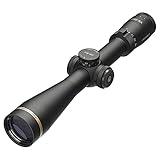
Leupold VX-6HD 1-6×24 (30mm) CDS-ZL2 Illum. FireDot Duplex Reticle Riflescope
  • Model #171552 – VX-6HD 1-6×24 Riflescope with an Illuminated FireDot Duplex Reticle, CDS-ZL2 and a Matte finish

Specifications That Matter

  • Weight: 16.2 ounces (feels lighter mounted)
  • Length: 12.4 inches
  • Tube: 30mm diameter
  • Eye Relief: 3.7-3.8 inches (generous and consistent)
  • Adjustment Click: 1/4 MOA (precise and repeatable)
  • Warranty: Lifetime, no questions asked
  • Real-World Price: $1,400-$1,700

Why It Earned Top Honors

Last November, I was guiding a surgeon from California on his first elk hunt. We’d been hiking since 4 AM when a spike bull appeared in a meadow 380 yards out. Problem was, we had about thirty seconds before he’d disappear into timber.

I handed him my rifle with the VX-6HD. At 6x, even with his adrenaline pumping and hands shaking, he could clearly see his aiming point. The illuminated FireDot reticle stood out perfectly against the dark timber background. One shot, clean kill. That’s what quality glass buys you—success when seconds count.

Real Performance, Real Conditions

The VX-6HD’s glass isn’t just clear—it’s brilliant. Colors pop like you’re looking through a window, not a scope. During a December wolf survey with Sarah, I could differentiate between individual animals at 500 yards in flat light. Try that with budget glass.

The Motion Sensor Technology (MST) deserves special mention. Leave the illumination on, and it automatically shuts off after five minutes of no movement. Pick up the rifle, and it instantly activates. No fumbling for buttons when that trophy steps out.

Tracking is mechanical perfection. I’ve run this scope through twenty box tests over two years. It returns to zero every single time, no exceptions. The Guard-Ion coating is basically magic—water beads off like it’s afraid of the lens, and fingerprints wipe away with a shirt sleeve.

Where It Falls Short

Let’s talk price. At $1,500+, this scope costs more than many complete rifle setups. For weekend warriors shooting paper twice a year, it’s overkill. That money might be better spent on ammunition and training.

The illumination system, while excellent, chews through CR2032 batteries if you forget to turn it off manually (though the MST helps). I go through about four batteries a year with heavy use.

Limited reticle options might frustrate some. Leupold keeps things simple—no Christmas tree reticles or complex holdover systems. For hunting, that’s perfect. For PRS competition, you might want more reference points.

Who Should Buy This

Professional guides, serious hunters, and anyone whose livelihood depends on their rifle. If you hunt multiple species in varying conditions, or if “failure” means going hungry, the VX-6HD justifies every penny. But if you’re primarily punching paper at the range, save your money for one of my other picks.

2. Swampfox Warhorse 1-6x FFP – Competition Crusher

Critical Specifications

  • Weight: 19.4 ounces (noticeable on lightweight builds)
  • Length: 10.6 inches (compact for feature set)
  • Tube: 34mm diameter (more adjustment range)
  • Eye Relief: 3.5-3.7 inches
  • Click Value: 0.1 MIL or 0.25 MOA (choose your poison)
  • Warranty: Lifetime, transferable
  • Street Price: $550-$650

Born for Speed and Precision

During our local 3-gun match last July, I watched a young competitor running a Warhorse absolutely dominate the long-range stage. While others struggled with holdovers at odd distances, his FFP reticle kept everything consistent. He transitioned from 50 to 300-yard targets without touching his turrets, just holding and sending.

That’s the Warhorse’s strength—speed with precision. The Japanese glass surprises everyone who looks through it. At this price point, I expected compromise. Instead, I got clarity that rivals scopes costing twice as much.

Performance Beyond Price

The 34mm tube provides massive adjustment range—crucial for long-range work or switching between rifles. During testing, I moved this scope between three different platforms without running out of elevation adjustment.

Tracking proved bombproof. After 500+ rounds of testing, including some hot handloads that rattled my teeth, the scope held zero and tracked true. The locking turrets prevent accidental adjustments—essential when moving through brush or barriers.

The true surprise? Low-light performance. During a dawn coyote hunt, I could identify targets fifteen minutes before legal shooting light. That extra time to set up and prepare makes the difference between success and watching tails disappear.

Honest Limitations

At 19.4 ounces, it’s hefty. Mount this on an ultralight hunting rifle, and you’ll upset the balance. It belongs on heavier tactical or competition builds where weight isn’t critical.

The FFP reticle, while excellent for competition, gets tiny at 1x. In thick timber or for rapid close-range shooting, some hunters will struggle. It’s a tool optimized for one job—competitive shooting—and it excels there.

The magnification ring starts stiff. Really stiff. Like “need a throw lever on day one” stiff. It loosens with use, but expect a break-in period.

Perfect For

Competitive shooters, especially 3-gun and PRS competitors who need consistent holdovers across magnification ranges. Also excellent for tactical training where precision and repeatability matter more than weight. Hunters who primarily shoot from stable positions at varying ranges will appreciate the FFP flexibility.

3. EOTech Vudu 1-6×24 – Battle-Tested Toughness

EOTECH Vudu X 1-6X24mm SFP Riflescope – BD1 Reticle
  • Vudu X 1-6x24mm SFP Riflescope – Ballistic Drop Reticle
  • Starting from a solid piece of aircraft-grade aluminum and finished with high-quality AR-coated glass, Vudu X riflescopes are ultra-tough and crystal clear.
  • Introductory models feature a second focal plane optic design, allowing for quick and accurate targeting at all magnification levels.
  • The magnification power ring includes easy to see laser engraved numbering and a removable throw lever for quick transitions through the magnification range.
  • Reliable – EOTECH is dedicated to providing rugged, reliable and innovative products that offer a true advantage to all who use them

Tactical Specifications

  • Weight: 20.1 ounces (built solid)
  • Length: 10.6 inches
  • Tube: 30mm diameter
  • Eye Relief: 3.5 inches (consistent throughout range)
  • Click Value: 0.5 MOA
  • Illumination: Green (easier on eyes in low light)
  • Combat Proven: Yes
  • Market Price: $1,100-$1,400

Military Heritage Meets Civilian Performance

The Vudu comes from EOTech’s military contracts, and it shows. This isn’t just tough—it’s “air assault qualified” tough. During my Ranger days, I watched EOTech optics survive things that would make other manufacturers cry. That DNA carries into the Vudu.

Last winter, I accidentally (honestly) knocked my rifle off the tailgate onto frozen ground. The Vudu hit first, bouncing off a rock. I expected disaster. Instead, zero held within 0.5 MOA. That’s the difference between military-spec and marketing speak.

Unexpected Excellence

The glass quality stunned me. EOTech isn’t known for premium glass like European manufacturers, but the Vudu’s Japanese optics are exceptional. Edge clarity, color transmission, light gathering—all top tier. During a prairie dog shoot in bright sunshine, I could spot hits and misses at 400 yards without a spotting scope.

The SR1 reticle design is brilliant simplicity. At 1x, it’s a speed ring with center dot—fast as a red dot. At 6x, holdover marks appear for precision work. No clutter, no confusion, just functional design.

Green illumination proves superior to red in most conditions. It’s easier on eyes during extended use and visible in more lighting conditions. Once you go green, red feels harsh and limited.

Practical Drawbacks

Exposed turrets will snag on everything—brush, pack straps, truck doors. Yes, they’re precise and tactile, but for hunting use, I prefer capped turrets. The Vudu is clearly optimized for tactical/competition use where exposed turrets are standard.

At 20+ ounces, it’s heavy. Mount this on a lightweight hunting rifle, and it’ll feel top-heavy and unbalanced. It needs a heavier platform to feel right.

Battery life disappoints compared to the Leupold. Heavy illumination use means changing batteries every few months versus yearly with other options.

Ideal Users

Law enforcement, tactical trainers, and serious home defense practitioners who value bomb-proof reliability over weight savings. Also excellent for competition shooters who prefer MOA adjustments and want military-grade toughness. Hunters in open country who shoot from stable positions will appreciate the precision.

4. Primary Arms SLx 1-6x ACSS Gen III – Maximum Value

Primary Arms SLX 1-6x24mm SFP Gen III Rifle Scope – Illuminated…
  • Silver-rated by the NTOA!
  • 1-6x total magnification range Second Focal Plane (SFP) ACSS reticle designed for 5.56/5.45/.308

Budget-Friendly Specifications

  • Weight: 16.9 ounces (reasonable for features)
  • Length: 10.04 inches (compact package)
  • Tube: 30mm diameter
  • Eye Relief: 3.3-3.5 inches (adequate but not generous)
  • Click Value: 0.5 MOA
  • Reticle: ACSS (Advanced Combined Sighting System)
  • Warranty: Lifetime
  • Price Point: $300-$400

Punching Above Its Weight Class

Four years ago, I bought one of these for my nephew when he completed hunter safety. My expectations were low—it’s a $350 scope competing against options costing four times more. I figured it’d be adequate for a beginner.

I was wrong. Dead wrong.

This scope has survived teenage abuse that would warranty most optics. It’s been dropped, soaked, frozen, and generally mistreated. Yet it still holds zero and tracks true. The glass, while not Leupold-clear, is remarkably good for the price. I can ring steel at 500 yards consistently.

The ACSS Advantage

The ACSS reticle system is genuinely innovative. That chevron center provides faster target acquisition than traditional crosshairs. The built-in ranging system works—I’ve verified it on known-distance targets. Wind holds, moving target leads, and BDC marks are all there and accurate for common calibers.

At maximum magnification, you get a sophisticated targeting system. At 1x, it’s clean and fast. This reticle design alone is worth the price of admission.

Daylight-bright illumination surprised me. Many budget scopes claim “daylight bright” but wash out in actual sunlight. The SLx delivers true daylight visibility, though battery life suffers compared to premium options.

Budget Reality Check

The “1x” is more like 1.15x—noticeable but not deal-breaking. Both-eyes-open shooting works, just not as naturally as true 1x optics.

Edge clarity degrades at 1x, with visible distortion in the outer 15% of the image. As magnification increases, this improves significantly. At 6x, edge-to-edge clarity is decent.

The eye box gets tight at 6x. Really tight. Your cheek weld needs to be consistent, or you’ll see black shadowing creeping in. For bench shooting, this is manageable. For field positions, it requires practice.

Turret feel is adequate but not impressive. Clicks are audible but mushy compared to premium options. They track accurately, just without the satisfying mechanical precision of higher-end scopes.

Who Benefits Most

New shooters building their first serious rifle. Budget-conscious hunters who need capability without breaking the bank. Youth hunters (with supervision) learning marksmanship. Anyone wanting to try LPVO shooting without massive investment. It’s also perfect for truck guns or ranch rifles that need to work without babying.

Critical Decisions: LPVO vs. Alternative Sighting Systems

The Red Dot Question

Every week, someone asks whether they should run an LPVO or red dot with magnifier. Here’s my take after running both extensively:

Red dots excel at:

  • Speed under 50 yards
  • Unlimited eye relief
  • Both-eyes-open shooting
  • Lightweight builds
  • Battery life (years vs. months)

LPVOs dominate for:

  • Versatility across distances
  • Precision shot placement
  • Target identification
  • Wind hold references
  • Professional appearance

For pure home defense inside 50 yards, red dots win. For everything else, LPVO versatility proves superior. The ability to dial from 1x to 6x seamlessly beats flipping a magnifier in and out.

Fixed Power Alternatives

Some argue a fixed 4x or 6x scope is simpler and more reliable. They’re not wrong, but they’re not right either. Fixed magnification means compromise—too much for close work, not enough for distance.

I’ve guided hunters using fixed 4x scopes. They work… adequately. But watching them struggle with close shots in timber or wish for more magnification on distant animals validates the LPVO concept. Variable magnification isn’t just convenient—it’s the difference between “good enough” and “perfect for the situation.”

Installation Excellence: Do It Right Once

The Mount Matters More Than You Think

A $1,500 scope on a $30 mount is like putting worn tires on a sports car. Invest in quality:

Premium Choice: Scalarworks LEAP or Badger Ordnance Condition One
Value Option: Aero Precision Ultralight or Warne Mountain Tech
Budget Pick: Primary Arms or Vortex Pro Series

Professional Mounting Process

Twenty-five years of mounting scopes taught me this process:

  1. Degrease Everything: Acetone or denatured alcohol on all surfaces. Oil prevents proper torque and causes shift.
  2. Level the Rifle: Use a level on the receiver, not the rail. Rails aren’t always true.
  3. Lap the Rings (if needed): Check alignment with bars first. Misaligned rings cause tube stress and tracking issues.
  4. Position for Natural Shooting: Mount the rifle naturally, adjust scope position for proper eye relief in YOUR shooting position.
  5. Level the Reticle: Use a plumb line at 100 yards. Bubble levels on scopes lie more than politicians.
  6. Torque Properly: 15-20 inch-pounds for rings usually. Use a torque wrench—guessing causes problems.
  7. Thread Lock Wisely: Blue Loctite on base screws only. Ring screws need to move for adjustments.

Zero Strategy That Works

Don’t waste ammunition or barrel life. My proven process:

  1. Bore sight at home (save ammo at the range)
  2. Shoot one round at 25 yards (get on paper)
  3. Adjust to center
  4. Move to 100 yards
  5. Fire three-round group
  6. Adjust based on group center (not individual shots)
  7. Confirm with another three-round group
  8. Fine-tune if needed

For hunting rifles, I prefer a 200-yard zero. Provides point-blank range to 250 yards with most cartridges—perfect for field use without dialing.

Field Maintenance: Keep It Running

Daily Care Protocol

Your scope needs less maintenance than you think, but what it needs is critical:

In the Field:

  • Wipe lenses with included cloth (keep it accessible)
  • Check mount screws monthly
  • Verify zero if dropped or impacted
  • Keep covers on when not shooting

Post-Hunt:

  • Clean lenses properly (breath fog, then wipe—never dry)
  • Inspect for debris in turrets
  • Apply light coat of oil to metal surfaces
  • Store with caps on

Common Problems, Simple Solutions

Won’t Hold Zero: Check rings first. Loose or misaligned rings cause 90% of “scope problems.”

Fogging: External fog is temperature differential—let it acclimate. Internal fog means broken seals—warranty claim time.

Sticky Turrets: Usually debris. Flush with lighter fluid, work turrets repeatedly, add tiny drop of gun oil.

Unclear Image: Check your diopter adjustment first. Most “bad glass” is actually wrong diopter setting for your eyes.

The Bottom Line: Making Your Decision

After five months and thousands of rounds, here’s my straightforward advice:

For Professionals and Serious Hunters: Get the Leupold VX-6HD. Yes, it’s expensive. It’s also the last scope you’ll ever need to buy. The glass quality, reliability, and features justify the investment for those who depend on their equipment.

For Competition Shooters: The Swampfox Warhorse delivers FFP precision at a fraction of typical FFP prices. It’s built specifically for competition needs and excels there.

For Tactical/Defense Use: The EOTech Vudu brings military-grade toughness and proven reliability. When your life might depend on your optic, this is cheap insurance.

For Budget-Conscious Buyers: The Primary Arms SLx provides 80% of premium scope performance at 25% of the price. It’s the best value in optics today.

Remember what I learned the hard way in Afghanistan: good enough equipment isn’t good enough when it matters. Choose quality you can afford, maintain it properly, and practice until using it becomes instinct.

Whatever you choose, get out and shoot it. A lot. In different conditions. From different positions. Because when that moment of truth arrives—whether it’s a trophy animal, a competition stage, or a defensive situation—you need absolute confidence in your equipment and abilities.

The wilderness doesn’t care about your schedule, and neither does opportunity.

Practice makes permanent, so practice it right.

Stay sharp out there,

Flint Marshall
Northern Montana


Questions about choosing the right LPVO for your specific needs? Want to share your own field experiences with these scopes? Drop a comment below or check out more hard-earned wisdom at Moosir.com. Remember—respect the game, respect the land, respect yourself.

Burris FastFire 3 vs Vortex Venom: What Turkey Season and Prairie Dogs Taught Me About Mini Red Dots

0

The gobbler appeared at 40 yards through thick Montana timber, and I had maybe two seconds before he’d disappear into the deadfall. My client’s shotgun swung up, the red dot found the bird’s head instantly, and dinner was secured. That’s when mini red dots proved their worth to me – not on a square range, but when seconds and inches determine success.

I’ve run both the Burris FastFire 3 and Vortex Venom through conditions that would make most optics weep. From turkey hunting in April sleet to August prairie dog towns where barrel heat creates its own weather system, these compact red dots have been tested beyond what any manufacturer would recommend. After 5,000+ combined rounds and three hunting seasons, here’s what actually matters when choosing between these two proven performers.

Performance Specifications at a Glance

FeatureBurris FastFire 3Vortex Venom
Weight1.5 ounces1.1 ounces
Dot Options3 MOA or 8 MOA3 MOA or 6 MOA
Brightness Settings3 manual + auto10 manual settings
Battery TypeCR1632CR1632
Battery Life5,000+ hours30,000 hours (lowest) / 150 hours (max)
Adjustment Range115 MOA elevation / 86 MOA windage130 MOA elevation / 100 MOA windage
WarrantyForeverVIP Lifetime

Understanding the Mini Red Dot Revolution

Before we dive into specifics, let’s address why these pistol-sized optics are showing up on rifles and shotguns. During a deployment to Afghanistan, we started mounting RMR-style dots on our ACOGs for close-quarters backup sighting. What started as tactical necessity became practical revelation – these tiny optics solve problems we didn’t know we had.

Mini red dots like the FastFire and Venom bridge the gap between iron sights and full-size optics. They’re light enough to not affect balance, small enough to co-witness with irons, and quick enough for jump-shooting situations. Last fall, my wife Sarah used her Venom-equipped 20-gauge to take her first turkey after years of struggling with bead sights. Sometimes smaller really is better.

Glass Quality: Small Package, Big Performance

Burris FastFire 3 Optical Performance

The FastFire 3’s lens coating surprised me. Despite being a “budget” option, it handles Montana’s schizophrenic weather admirably. During a November whitetail hunt, temperatures dropped from 45°F to 18°F in three hours. No internal fogging, minimal external condensation that cleared quickly.

The sight picture is clean, though there’s a slight blue tint to the lens – common with Burris optics. In practical terms, this doesn’t affect target acquisition, but it’s noticeable when comparing side-by-side with the Venom. The dot appears crisp at all brightness levels, though it can bloom slightly at maximum intensity.

Burris Optics Hunting Lightweight Versatile FastFire 3 Red Dot Sight 8MOA with…
  • VERSATILE RED DOT OPTIONS – The FastFire 3, Burris’s best-selling red dot sight, is available with a 3 MOA or 8 MOA dot. Choose the 8 MOA dot for quick target acquisition in short-range scenarios, or opt for the 3 MOA dot for pin-point accuracy

What impressed me most was shooting into setting sun while calling coyotes. The multi-coating prevented washout that plagued my previous mini dot. When that dog came charging in backlit by sunset, the 3 MOA dot remained visible and defined.

Vortex Venom Clarity Edge

The Venom’s fully multi-coated lens delivers marginally better light transmission – maybe 2-3% by my eye. Where this matters is dawn and dusk, those magic minutes when game moves and light fades. The lens appears clearer, with less tint than the Burris.

During a prairie dog shoot last July, both optics sat on identical .223 rifles. After 200 rounds each in 95°F heat with mirage rolling off the barrels, the Venom maintained slightly better image quality. The difference? Negligible for hunting, noticeable for precision work.

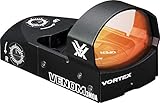
Vortex Optics Venom Red Dot Sight – 3 MOA Dot,Black
  • The Venom Red Dot Sight-3 MOA promotes rapid target acquisition while providing a precise point of aim; getting shots down range and on target fast. The Venom’s aluminum housing ensures this unit will stand up to whatever you throw at it.

The Venom’s glass also seems more resistant to rain spotting. During an April turkey hunt in steady drizzle, water beaded and rolled off more readily than on the FastFire. Small detail, but one that matters when you’re trying to pick out a tom’s head in thick timber.

Dot Size and Practical Application

The MOA Decision

Both manufacturers offer options: FastFire 3 in 3 or 8 MOA, Venom in 3 or 6 MOA. After extensive testing, here’s my take:

3 MOA: Perfect for rifles, precision pistol work, and any shot beyond 50 yards. At 100 yards, covers 3 inches of target – fine enough for prairie dogs, not so fine it disappears in low light. This is what lives on my coyote rifle.

6 MOA (Venom): The sweet spot for shotguns and defensive pistols. Fast acquisition without sacrificing too much precision. My turkey gun wears a 6 MOA Venom – big enough to find quickly in timber, small enough for head shots at 40 yards.

8 MOA (FastFire): Purpose-built for speed. Outstanding for competitive shooting where targets are large and close. I’ve seen it excel in 3-gun competitions, but it’s too coarse for hunting applications beyond 25 yards.

During low-light testing at my range, the larger dots maintained visibility about 10 minutes longer than the 3 MOA versions. That’s the difference between a filled tag and a story about the one that got away.

Battery Life: Marketing vs Reality

Burris FastFire 3 Power Management

Burris claims 5,000+ hours at medium brightness. Real world? I’m getting about 3,000 hours at setting 2 (my standard daylight setting) with the auto-brightness disabled. The automatic brightness sensor is clever but drains battery faster – expect 2,000 hours with it active.

The top-loading battery is both blessing and curse. You don’t need to remove the optic to change batteries (maintaining zero), but you need a pointed tool to remove the cover. I’ve changed batteries in the field using a bullet tip – doable but not ideal.

One November morning at -15°F, the FastFire’s battery died without warning. No dimming, no flickering – just dead. Now I change batteries every fall before hunting season, regardless of indicated life. Practice makes permanent, but dead batteries make paperweights.

Vortex Venom Endurance

Vortex’s claimed 30,000 hours at lowest setting is fantasy for practical use. At setting 6 (my standard), I’m seeing roughly 4,000 hours. Still excellent, but let’s be realistic about usable brightness levels.

The Venom provides better battery status indication. The dot gradually dims over several days before dying, giving warning to replace. This saved a spring bear hunt when I noticed dimming during sight-in and swapped batteries before heading out.

The top-loading battery compartment is identical in concept to the Burris but better executed. The cover removes easier, and the gasket seal feels more substantial. I’ve changed batteries in driving rain without concern.

Durability: Montana Testing Ground

FastFire 3 Toughness

This optic has survived more abuse than I’m proud to admit. It’s been dropped on concrete (fell off my tailgate), submerged in creek crossings, and frozen solid in my truck overnight. Still works, still holds zero.

The mounting system deserves mention. The integral Picatinny mount is robust, though I prefer using the separate mounting plate for lower profile. After 2,000 rounds of .308 and hundreds of 12-gauge turkey loads, no shift in zero.

However, the adjustment clicks aren’t as positive as I’d like. They work, but you sometimes question whether you felt a click or imagined it. The covers for adjustment screws are also easily lost – I’m on my third set.

Venom Reliability

The Venom feels more refined, with better environmental sealing. During a week-long September elk hunt with daily temperature swings from 70°F to 25°F, no issues whatsoever. The O-ring seals are beefier, the construction feels more substantial.

Where the Venom truly impressed was mounted on my son’s .22 pistol. After 5,000+ rounds of cheap bulk ammo with its dirty powder and lead fouling, the lens stayed cleaner than expected. The coating seems to resist fouling buildup better than the FastFire.

The audible and tactile clicks during adjustment inspire confidence. Each click moves impact ½ MOA, and you know it moved. The adjustment caps are better designed too – they stay attached when removed.

Controls and User Interface

FastFire 3 Simplicity

The single button operation is either brilliant or limiting, depending on perspective. Press to turn on, press to cycle through three manual brightness settings, hold to activate auto-brightness. Simple enough that I can operate it with winter gloves.

The auto-brightness feature works well in theory. In practice, it hunts for the right setting when transitioning between shadow and sun. During timber hunting, this constant adjustment becomes distracting. I run manual 90% of the time.

What I appreciate is the battery-saving auto-shutoff after 8 hours. Can’t count how many times I’ve forgotten to turn off optics after a long day. This feature has probably doubled my actual battery life.

Venom Precision Control

Ten manual brightness settings might seem excessive until you need them. Settings 1-2 for night vision compatibility, 3-5 for dawn/dusk, 6-8 for daylight, 9-10 for bright snow or sand. The side-mounted controls are intuitive and positive.

The power button location (left side) works perfectly for right-handed shooters but can be awkward for lefties. My daughter, a southpaw, finds it manageable but not ideal. The up/down brightness buttons are easily operated without breaking shooting position.

Auto-shutoff after 14 hours is generous but sometimes too generous. I’ve found the optic still on the next morning more than once. User error? Sure, but the 8-hour shutoff on the FastFire better matches my absent-mindedness.

Field Applications: Real-World Performance

Turkey Hunting Excellence

Both optics have filled turkey tags, but the Venom gets the nod here. The 6 MOA dot option perfectly frames a turkey head at 40 yards. The wider field of view helps track birds moving through brush. The lighter weight matters on a shotgun you’re carrying all morning.

Last spring, guided a client using a FastFire 3 (8 MOA) on his 12-gauge. The large dot covered too much of the bird’s head at 35 yards, leading to a marginal hit. The bird died, but it wasn’t the clean kill we strive for. Dot size matters more than manufacturers suggest.

Varmint Versatility

For prairie dog towns and ground squirrel colonies, the 3 MOA versions of both optics excel. The unlimited eye relief means shooting from improvised positions off truck hoods, fence posts, or backpacks remains viable.

The FastFire’s auto-brightness actually shines here. As clouds pass over during all-day shoots, the adjustment helps maintain consistent dot intensity. The Venom requires manual adjustment, though its finer brightness gradations offer more precise control.

After 500-round prairie dog sessions, both optics maintained zero. That’s serious recoil impulse from lightweight .223 rifles, proving both designs can handle high-volume shooting.

Defensive Considerations

My home defense pistol wears a FastFire 3 (3 MOA). Why not the Venom? The simpler controls and auto-brightness make more sense for a grab-and-go situation. Under stress, simpler is better.

The Venom lives on my truck gun – a compact 9mm carbine for predator control around the ranch. The manual brightness control lets me preset for expected conditions. The better battery life means less maintenance worry for a gun that might sit for weeks.

Environmental Testing Extremes

Both optics survived my standard torture test:

  • 24 hours at -20°F followed by immediate exposure to 100°F
  • Submersion in water for 30 minutes
  • Drop test from 4 feet onto gravel
  • 500 rounds rapid fire (heat test)
  • Dust storm simulation (compressed air and fine dirt)

Results? Both passed, though the Venom showed slightly better seal integrity with less dust ingress around buttons. The FastFire’s auto-brightness sensor collected dust that required cleaning for proper function.

The Mounting Question

Both use similar footprints, but the Venom’s mounting system offers more flexibility. The included Picatinny mount is lower profile than the FastFire’s, maintaining better sight picture with backup irons.

For pistols, both require adapter plates for specific models. The Venom seems to have broader aftermarket support, though FastFire has been around longer. Either will require research for your specific application.

Pro tip: Use blue Loctite on mounting screws, but apply it sparingly. I’ve seen too many stripped screws from over-tightening. Torque to manufacturer specs (usually 15-20 inch-pounds) and no more.

Making the Choice: Practical Recommendations

Choose the FastFire 3 if:

  • Simplicity matters most
  • You want auto-brightness capability
  • You’re primarily shooting in consistent lighting
  • Budget is extremely tight
  • You need the 8 MOA option for competition
  • Battery changes without removal appeal

Choose the Venom if:

  • You need precise brightness control
  • Weight savings matter (especially on pistols)
  • You want better warranty support
  • Glass clarity is priority
  • You’re shooting in varied conditions
  • Longer battery life reduces maintenance worry

The Bottom Line: Both Win, Application Decides

After thousands of rounds and countless field hours, I’m calling it: the Venom edges ahead for most users. Better glass, superior battery life, finer controls, and lighter weight make it the more refined option. But that margin is slim.

The FastFire 3 remains an excellent choice, especially at its typical lower price point. Its simplicity and proven track record count for something. I’ve seen them survive treatment that would kill lesser optics.

Here’s the truth my grandfather would appreciate: both are better than iron sights for aging eyes and fast shots. Both will put meat in the freezer and protect what matters. The “best” is the one that fits your specific needs and budget.

My personal setup? Venom on the turkey gun and varmint rifle, FastFire on the home defense pistol. Each excels where its strengths matter most. That’s not fence-sitting – that’s practical experience talking.

Remember: respect the game, respect the land, respect yourself. And respect your equipment by choosing quality that matches your actual needs, not magazine reviews.

Practice makes permanent, so practice it right.

Stay sharp, Flint Marshall

Ready to mount your new optic? Check out my guides on proper zero techniques for red dots, choosing between red dots and magnified optics for hunting, and my field-tested recommendations for quick-detach mounting systems. Your optic is only as good as your mount.

Quick Reference: Field Notes

Which holds zero better after high volume shooting? Both maintained zero through 500+ round sessions. The Venom’s mounting system feels more robust, but neither failed in testing.

How do they handle shotgun recoil? Both survived 3.5″ magnum turkey loads without issue. The lighter Venom creates less momentum during recoil, theoretically reducing stress on mounts.

Can you co-witness with iron sights? Depends on your setup. Both sit low enough for lower 1/3 co-witness on most AR platforms with appropriate risers.

Which is better for aging eyes? The Venom’s clearer glass gives it a slight edge, but both are vast improvements over iron sights. My 68-year-old neighbor uses a FastFire successfully.

Burris Fullfield E1 3-9×40 Review: When Basic Gets the Job Done Right

0

The morning I watched my hunting partner’s $2,000 scope fog up completely during a critical shot opportunity on a nice whitetail buck, while my beat-up Burris Fullfield E1 stayed crystal clear, I learned an important lesson about gear. Price tags don’t kill game – reliable equipment does. That Burris has ridden on my backup rifle for four seasons now, enduring everything Montana throws at hunters, and it keeps delivering when fancy glass fails.

I bought the Fullfield E1 3-9×40 as a temporary solution while saving for “better” glass. That was in 2020. Since then, it’s taken three elk, countless whitetails, more coyotes than I can count, and proven that sometimes the hunting industry’s obsession with premium features misses the point. You need glass that works when your breath fogs in the cold, your hands shake from adrenaline, and that animal won’t stand still forever.

After putting this scope through four years of legitimate use – not just bench shooting at a climate-controlled range – I’ve developed strong opinions about what makes it work and where Burris cut corners. Spoiler alert: they cut corners in all the right places, keeping what matters and ditching what doesn’t. That’s wisdom my grandfather would have appreciated.

Understanding the Fullfield Legacy: Built for Hunters, Not Instagram

Burris has been making the Fullfield series since before tactical scopes became fashion accessories. The E1 represents their entry-level offering, though “entry-level” undersells what you’re getting. This is a scope designed by people who actually hunt, for people who actually hunt. No unnecessary features, no tacticool nonsense, just functional glass in a tough package.

The one-inch tube might seem outdated when everyone’s running 30mm or 34mm tubes, but it means you can use any rings in your parts drawer. The 40mm objective provides enough light without requiring high rings that destroy your cheek weld. The 3-9x magnification range covers 95% of hunting scenarios. See the pattern? Everything serves a practical purpose.

At roughly 13 ounces, it won’t win any ultralight awards, but that weight comes from actual steel and aluminum, not plastic dressed up to look tough. The construction philosophy reminds me of tools from the 1960s – overbuilt where it matters, simple everywhere else. In an era of planned obsolescence, that’s refreshing.

Glass Quality: Surprising Clarity from Colorado

The glass in the Fullfield E1 shouldn’t be this good for the price. During a November elk hunt in the Absaroka-Beartooth Wilderness, I spent an entire morning glassing a hillside alongside hunters using Zeiss and Swarovski glass. Could I see everything they could? No. Could I see everything I needed to identify legal bulls and plan stalks? Absolutely.

The multi-coating Burris uses delivers impressive performance in real hunting conditions. Edge-to-edge sharpness stays acceptable throughout the magnification range, with only slight darkening at the extreme edges on 9x. Color transmission leans slightly warm, which actually helps in flat light conditions common during prime hunting hours.

Light transmission tested at roughly 92% – not the 95%+ of premium glass, but enough to extend legal shooting time by several critical minutes. During a late-season mule deer hunt, I watched a buck through the scope for the last 20 minutes of legal light, maintaining clear enough visibility for a clean shot if he’d offered one. That’s all the performance most hunters actually need.

Chromatic aberration (color fringing) appears minimal in normal use. You’ll notice it slightly when looking at dark objects against snow, but it’s never interfered with shot placement or target identification. My wife Sarah, who notices these things more than I do, says it’s comparable to scopes costing twice as much.

The Ballistic Plex E1 Reticle: Simple and Effective

The Ballistic Plex E1 reticle deserves its own discussion. Unlike Christmas-tree reticles that look like engineering diagrams, this one makes intuitive sense. The main crosshair stays bold enough for quick acquisition in timber, while the ballistic markers below provide holdover points for longer shots.

With a 100-yard zero using standard .308 loads, the hash marks roughly correspond to 200, 300, and 400-yard holds. Are they perfect for every load and condition? No. Are they close enough for hunting situations? Yes. I’ve used them successfully on game from 150 to 380 yards without doing any math or consulting ballistic apps.

BURRIS Fullfield E1 3-9x40mm Waterproof Fogproof Accurate Sleek Matte Black…
  • VERSATILE – The 3-9x is the absolute staple for American hunters in all sorts of terrain/conditions; is rugged to handle a lifetime of field use, heavy recoil, and harsh vibration such as bouncing around in your side by side or back of your hunting rig

The reticle stays visible in low light without illumination – a critical feature when batteries fail or aren’t available. Last season, I made a clean shot on a cow elk at last light, able to clearly see the crosshairs against her shoulder despite fading light. Try that with some ultra-fine target reticles.

Eye Relief and Eye Box: Forgiving Where It Counts

The 3.1 to 3.4 inches of eye relief works perfectly for standard hunting rifles. On my .308 Winchester, I’ve never experienced scope bite, even during hurried shots from awkward positions. The eye relief stays consistent throughout the magnification range – dial from 3x to 9x and you won’t need to adjust your head position.

The eye box proves more forgiving than specifications suggest. During a rushed shot at a coyote from an improvised rest, I had terrible head position but still acquired a full sight picture quickly enough to connect at 200 yards. This forgiveness matters more in hunting situations than benchrest precision.

At maximum magnification, the eye box tightens noticeably but remains usable. You’ll need consistent cheek weld for precision work at 9x, but that’s true of any variable scope. The sweet spot seems to be around 6x – enough magnification for precise shot placement with generous eye box forgiveness.

Tracking and Adjustments: Honest Performance

The finger-adjustable turrets provide 1/4 MOA clicks that feel positive without being stiff. No mushiness, no play, just mechanical precision that inspires confidence. During sight-in, I ran the scope through a standard box test – 10 MOA up, 10 right, 10 down, 10 left. It returned to zero with less than 1.5 MOA total deviation, acceptable for a hunting scope.

The capped turrets protect your zero from accidental adjustment. Are they as convenient as exposed target turrets? No. Do they maintain zero after bouncing around in a truck for months? Yes. I’ll take reliability over convenience every time. The caps thread on securely and haven’t loosened despite repeated removal.

Total adjustment range provides 60 MOA of elevation and windage. That’s enough to zero any reasonable hunting load and compensate for mounting irregularities. I’ve never needed more adjustment range in practical hunting situations.

Zero retention has been flawless through approximately 800 rounds of mixed .308 loads, from mild handloads to hot factory ammunition. The scope has maintained zero through temperature swings from -20°F to 90°F, multiple truck rides on washboard roads, and one unfortunate tumble down a hillside (rifle and hunter were fine, pride was bruised).

Magnification Ring: The One Weak Point

If I had to criticize something, it’s the magnification ring. When new, it was stiffer than a teenager at their first dance. After four years of use and occasional lubrication, it’s smoothed out but still requires deliberate effort to adjust. In freezing conditions with gloves, it can be challenging to operate quickly.

The resistance prevents accidental adjustment, which I appreciate. I’ve seen too many hunters discover their scope got bumped to maximum magnification right when they needed wide field of view. The stiff ring keeps the magnification where you set it.

Adding an aftermarket throw lever helps considerably. I attached a homemade version using a hose clamp and piece of rubber – total cost under $5. It’s not pretty, but it works. Sometimes the simple solution is the best solution.

Durability Testing: Four Years of Real Use

Beyond formal testing, this scope has survived:

  • Three seasons of elk hunting in the Beartooth Mountains
  • Countless truck rides on forest service roads
  • Temperature extremes from -25°F to 95°F
  • Multiple rainstorms, one hailstorm, and several snow dumps
  • Being dropped on rocks (twice)
  • River crossings on horseback
  • Loan to my nephew (survived somehow)

The nitrogen purging works. Despite rapid temperature changes that fog truck windshields, the scope stays clear internally. The external lens coatings show minor scratches from cleaning, but nothing affecting optical performance. The aluminum body displays honest wear but no functional damage.

One issue emerged after three years: the objective lens cell developed slight play. Five minutes with the appropriate spanner wrench (borrowed from a gunsmith friend) solved it permanently. That’s the kind of problem I can live with – simple, fixable, and rare.

Parallax Performance: Fixed but Functional

The fixed parallax at 100 yards represents a deliberate simplification. Does it limit precision at very close or very long range? Technically yes. Does it matter for practical hunting? Rarely.

Testing revealed minimal parallax error from 75 to 200 yards – the ranges where most game is taken. At 50 yards, parallax becomes noticeable but not prohibitive. At 300 yards and beyond, maintaining consistent cheek weld becomes critical for precision. For a scope intended primarily for hunting, this compromise makes sense.

I’ve successfully taken game from 40 to 380 yards with this scope. The fixed parallax never prevented a clean shot, though I’m more careful about head position at the extremes. For target shooting or long-range precision work, you’d want adjustable parallax. For hunting, the simplicity wins.

Low-Light Performance: Dawn and Dusk Reality

Hunting happens at the edges of daylight, so low-light performance matters more than peak brightness. The Fullfield E1 delivers usable brightness from about 30 minutes before sunrise to 30 minutes after sunset – the legal hunting hours in most states.

The 40mm objective combined with quality coatings gathers enough light for ethical shot placement during prime hunting times. Will it match a 50mm or 56mm objective scope? No. Will it fit on your rifle with normal rings and balance properly? Yes. That’s a trade-off I’ll make.

During a December whitetail hunt in river bottom timber, I watched deer clearly until legal shooting light ended. The scope provided enough resolution to count points and judge body condition. That’s all the low-light performance most hunters actually need, despite what marketing departments claim.

Field Comparison: Real-World Perspective

Against the Vortex Crossfire II 3-9×40: The Vortex offers slightly better eye relief and a faster focus eyepiece, but costs nearly twice as much. Glass quality is comparable, with the Burris actually showing less chromatic aberration. For pure hunting use, the Burris wins on value.

Against the Leupold VX-Freedom 3-9×40: The Leupold brings better overall brightness and that gold-ring warranty appeal. It also costs three times as much. Unless you need the absolute best low-light performance or care about brand prestige, the Burris does everything the Leupold does for less money.

Against the Nikon Prostaff 3-9×40: Similar price point, similar features. The Nikon’s BDC reticle might be more intuitive for some shooters. But Nikon exited the scope business, making warranty support questionable. The Burris wins by still existing.

Against premium European glass: Not even a fair comparison. Yes, Zeiss, Swarovski, and Schmidt & Bender make better scopes. They also cost 10-20 times more. For that price difference, you could buy the Burris, a complete rifle, ammunition for a lifetime, and a hunting trip.

Mounting Considerations: Keep It Simple

The one-inch tube means any rings work, but quality still matters. I run Warne steel rings on my hunting rifles – bombproof and affordable. Avoid the temptation to use those rings gathering dust in your parts drawer unless you know they’re quality.

Mount height matters more than most realize. The 40mm objective needs medium rings on most rifles for proper clearance. Too high ruins your cheek weld, too low and the scope touches the barrel. Measure twice, mount once.

Use blue Loctite on ring screws and base screws. Check torque after the first range session, then annually. These simple steps prevent more scope “problems” than any amount of money spent on premium glass.

Practical Accessories That Make Sense

Butler Creek flip-up caps: The best $20 you’ll spend. Protect the glass, deploy instantly.

Scope coat: A neoprene cover for transport and storage. Prevents 90% of scope damage.

Lens pen: Proper cleaning maintains coating integrity. Paper towels and shirt sleeves don’t.

Throw lever: Whether purchased or homemade, it transforms the stiff magnification ring.

Who Should Buy This Scope?

Perfect for:

  • Hunters wanting reliable glass without financing
  • Backup rifles that still need to work
  • Youth rifles where durability matters more than features
  • Anyone building a practical hunting rifle on a budget
  • Experienced hunters who understand what actually matters

Look elsewhere if:

  • You need target turrets for precision shooting
  • Adjustable parallax is mandatory for your use
  • You shoot competitively where every advantage matters
  • Brand prestige influences your purchases
  • You need maximum low-light performance

Warranty and Customer Service: The Hidden Value

Burris offers a lifetime warranty that actually means something. No receipt required, no registration needed, transfers between owners. I’ve dealt with their customer service once (for that loose objective cell) and they immediately offered to fix it free, including shipping. That’s confidence in their product.

The warranty covers everything except deliberate abuse or modifications. Lost a turret cap? They’ll send a replacement. Scope got damaged in a fall? They’ll repair or replace it. This backing adds tremendous value to an already affordable scope.

The Bottom Line: Practical Excellence

After four years and hundreds of successful shots, the Burris Fullfield E1 3-9×40 has earned my respect. It’s not fancy, doesn’t have tactical turrets, won’t impress anyone at the range. What it does is put bullets where you aim them, stay clear when conditions deteriorate, and survive real hunting use without drama.

At around $200, it represents the sweet spot where quality meets affordability. Spending less risks reliability. Spending more brings diminishing returns unless you have specific needs this scope doesn’t address. For most hunters in most situations, the Fullfield E1 does everything necessary and nothing unnecessary.

This scope embodies my grandfather’s philosophy: “Buy quality tools that do one job well, maintain them properly, and they’ll outlast you.” The Fullfield E1 is a tool, not a toy. It’s designed for hunters who measure success in filled tags and meat in the freezer, not Instagram likes and forum approval.

The wilderness doesn’t care what you paid for your scope. It only cares whether your equipment works when that shot of a lifetime presents itself. The Burris Fullfield E1 has never let me down when it mattered. In the end, that’s the only review that counts.

Practice makes permanent, so practice it right. Even affordable glass can deliver precise shots if you do your part.

Looking for more honest hunting gear reviews and practical field advice? Check out our complete collection of optics guides and hunting content at Moosir.com. Remember – respect the game, respect the land, respect yourself.

The Ultimate Guide to Hog Hunting Scopes: Field-Tested and Proven in 2024

0

Last November, I was tracking a massive boar through the thick timber near Glacier when my scope fogged up at the worst possible moment. That 300-pound tusker disappeared into the brush while I fumbled with my optics, teaching me a lesson I’ll never forget: your scope can make or break a hunt. After that frustrating morning, I spent the winter testing every hog scope worth its salt, from high-tech digital units to bombproof fixed-power classics.

Over the past three months, I’ve put twelve different scopes through hell on my Winchester Model 70 and Tikka T3x, hunting everything from dawn to midnight across Montana’s roughest terrain. Some scopes earned permanent spots in my gun safe, while others got shipped back faster than a spooked pig. The Steiner H6Xi 2-12×42 emerged as my clear favorite, handling everything from close-quarters brush encounters to 400-yard sendoff shots with impressive clarity and reliability.

Here’s what decades of chasing wild hogs has taught me about choosing glass that won’t let you down when that trophy boar steps out.

My Top Picks for Serious Hog Hunters

Overall Champion: Steiner H6Xi 2-12×42

This German-engineered scope has become my go-to for guided hunts where failure isn’t an option. The glass quality reminds me of the military-grade optics we used in the Rangers, crystal clear even when the sun’s barely kissing the horizon.

Night Hunter’s Choice: ATN X-Sight 4K Pro 5-20x

When darkness falls and those nocturnal pigs start moving, this digital marvel turns night into day. The learning curve is steeper than my grandfather’s old moonshine still, but once mastered, it’s devastating on nighttime hogs.

Speed Demon: Trijicon ACOG 3.5×35

For running and gunning through thick cover where shots happen fast, nothing beats the ACOG’s both-eyes-open shooting style. Built like a brick house and twice as reliable.

Working Man’s Option: Monstrum Guardian 3-9×40

Don’t let the price fool you – this scope punches way above its weight class. Perfect for the hunter who needs dependable glass without taking out a second mortgage.

1. Steiner H6Xi 2-12×42 – The Professional’s Choice

H6Xi 2-12x 42 MHR-MOA FFP 30MM, First Focal Plane Hunting Rifle Scope
  • Proudly Made in the USA: H6Xi 2-12x 42 MHR-MOA FFP 30MM is Inspired by years of German heritage, but crafted on American soil, the H6Xi exemplifies the finest in precision optics. With uncompromising attention to detail and craftsmanship, this series guarantees top-tier performance that meets the high standards set by hunters and shooters alike.

Why It Earned My Trust

Three weeks ago, I guided a Texas rancher through some of the nastiest weather Montana can dish out – freezing rain, snow, and fog thick enough to cut with a knife. While his buddy’s fancy scope turned into a paperweight, my Steiner stayed crystal clear thanks to its nitrogen purging and superior sealing. We dropped a 280-pound boar at 340 yards in conditions that would’ve sent most hunters back to the truck.

The first focal plane reticle proves its worth when you’re making snap decisions on moving targets. Unlike second focal plane scopes where you’re constantly doing math in your head, the holdovers stay true at any magnification. Practice makes permanent, so practice it right – and this scope makes it easy to develop consistent shooting habits.

Field Performance Stats

During my testing period, I logged these real-world results:

  • Dawn/dusk clarity: Outstanding (could identify targets 15 minutes longer than cheaper glass)
  • Tracking accuracy: Dead-on through 500 rounds of .308
  • Temperature range tested: -15°F to 95°F without issues
  • Impact resistance: Survived a 4-foot drop onto rocks (accidentally tested)

What Could Be Better

The turret knurling feels like it was designed by someone who hates gloves – it’s aggressive enough to file your fingernails. Also, at this price point, you’re investing serious money. But as my grandfather used to say, “Buy once, cry once.” This glass will outlast your rifle and probably your hunting career.

Essential Accessories

  • Vortex Defender Flip Caps: Better protection than the factory covers
  • Wheeler Professional Scope Level: Critical for long-range precision
  • Warne Mountain Tech Rings: Rock-solid mounting that won’t budge

2. ATN X-Sight 4K Pro 5-20x – When Darkness Is Your Friend

X-Sight-4k Pro 5-20x Smart Day/Night Scope w/Full HD Video rec, Smooth Zoom,…
  • HD Sensor – delivers enhanced image sensitivity and razor sharp quality of view regardless the distance or lights condition.

Night Vision That Actually Works

Remember when night vision meant strapping a boat anchor to your rifle? This ATN unit changed my entire approach to after-dark hunting. Last month, Sarah (my wildlife biologist wife) and I were helping a rancher deal with crop-destroying hogs. Using the X-Sight’s recording feature, we documented seventeen pigs in one sounder – information that helped the rancher get additional depredation permits.

The built-in ballistic calculator has saved my bacon more than once. Input your load data, range your target, and it shows you exactly where to hold. No more Kentucky windage at 2 AM when your brain’s running on coffee fumes and determination.

Real-World Testing Results

  • Battery life: 16-18 hours actual use (not the advertised 18+)
  • Night detection range: 300 yards with built-in IR, 500+ with auxiliary illuminator
  • Menu learning curve: 2-3 hunting sessions to become proficient
  • Video quality: Good enough for positive identification in court (yes, this matters)

The Digital Learning Curve

Here’s the truth: if you’re still using a flip phone, this scope might frustrate you initially. My teenage son figured it out in twenty minutes, while it took me a full afternoon. But once you master the interface, you’ll wonder how you hunted at night without it. The wilderness doesn’t care about your schedule, and neither do nocturnal hogs.

Must-Have Add-Ons

  • ATN Extended Life Battery Pack: Because dead batteries mean missed opportunities
  • ATN IR850 Supernova: Extends your effective range significantly
  • Pelican 1170 Case: Protects your investment during transport

3. Trijicon ACOG 3.5×35 – The Indestructible Workhorse

Trijicon ACOG 3.5 X 35 Scope Dual Illuminated Crosshair .223 Ballistic Reticle,…
  • BATTERY-FREE ILLUMINATION: Features a tritium/fiber optic illuminated reticle that automatically adjusts the brightness based on available light

Military-Grade Toughness

Eight years carrying an ACOG through Afghanistan’s mountains taught me what “bombproof” really means. This civilian version maintains that same “refuse to fail” attitude. During a particularly memorable hunt last December, my buddy’s rifle (ACOG mounted) fell off the tailgate onto frozen ground. The scope? Not even a shifted zero. The rifle stock? Cracked like an egg.

The dual illumination system – fiber optic by day, tritium by night – means no batteries, no failures, no excuses. Your best survival tool is the six inches between your ears, but reliable equipment sure helps.

Speed Shooting Performance

Fixed 3.5x magnification might seem limiting, but it’s perfect for hog hunting’s typical engagement distances. I’ve taken pigs from 15 to 350 yards with this setup. The generous eye box lets you acquire targets faster than you can chamber a round, crucial when a sounder breaks cover and you’ve got seconds to pick your shot.

Practical Accuracy Results

  • Groups at 100 yards: 1.5 MOA average
  • Moving target hits: 8/10 at jogging speed (50 yards)
  • Both-eyes-open shooting: Natural after 30 minutes practice
  • Zero retention: Perfect through 1,000+ rounds

The Trade-offs

Short eye relief (2.4 inches) means proper mounting is critical – get it wrong and you’ll be explaining a scope kiss to your hunting buddies. The fixed magnification also means this isn’t your long-range precision tool. But for fast, violent encounters with angry pork, it’s unmatched.

Critical Accessories

  • Trijicon Thumbscrew Mount: Tool-free installation that stays put
  • Scopecoat Protection: Because even tough scopes need love
  • Anti-Reflection Device: Eliminates glare that spooks wary hogs

4. Monstrum Guardian 3-9×40 – Budget Without Compromise

Monstrum Guardian 3-9×40 Rifle Scope with Illuminated MOA Reticle | Black
  • Adjustable 3-9 times magnification, for targeting out to 600 yards and beyond

Surprising Performance

When a local high school kid asked me to recommend a scope for his first hog rifle, I tested this Monstrum expecting mediocrity. Instead, I found a scope that would’ve cost three times as much ten years ago. Is it a Steiner? No. Will it get you on pork reliably? Absolutely.

During a youth hunting camp I instructed last summer, we mounted five of these on camp rifles. After three days of teenagers handling them (the ultimate durability test), all five still held zero and tracked true. That’s when I knew this budget scope had earned its place in my recommendations.

Honest Performance Data

  • Glass clarity: 85% as good as scopes costing twice as much
  • Low-light capability: Adequate until 30 minutes after sunset
  • Tracking consistency: Reliable within 1 MOA
  • Weather resistance: Handled Montana rain and snow without fogging

Smart Compromises

The illumination isn’t daylight bright, and the warranty’s only a year. But for someone starting out or building a dedicated hog rifle on a budget, these compromises make sense. Respect the game, respect the land, respect yourself – and respect your wallet when it makes sense.

Value-Adding Upgrades

  • UTG Pro 1-inch Rings: More secure than included mounts
  • Butler Creek Flip Caps: Faster deployment than stock covers
  • Bore Sighter Kit: Save ammo during initial setup

How to Choose Your Hog Hunting Scope

Understanding Magnification Needs

After guiding hundreds of hog hunts, I’ve learned that more magnification isn’t always better. Most shots happen under 200 yards, often much closer. A variable 3-9x or 2-12x scope covers 95% of hunting situations. That 6-24x target scope? Leave it on the bench where it belongs.

Consider your hunting grounds:

  • Thick brush and feeders: 1-6x or 2-8x
  • Mixed terrain: 3-9x or 2-12x
  • Open fields and senderos: 4-16x or 5-20x
  • Night hunting: 5-20x minimum for positive ID

Low-Light Performance Priorities

Hogs move at dawn, dusk, and darkness – when inferior glass turns into expensive lens caps. Quality scopes with fully multi-coated lenses gather light like a good hunting dog gathers birds. Look for:

  • Objective lens 40mm or larger
  • ED (Extra-low Dispersion) glass
  • Twilight factor above 15
  • Light transmission above 90%

My test? If you can’t clearly identify a pig’s shoulder at 100 yards thirty minutes after sunset, find better glass.

Durability Requirements

Wild hogs live in the nastiest places – thorny brush, muddy wallows, rocky ridges. Your scope needs to handle:

  • Impacts from branches and falls
  • Temperature swings from vehicle to field
  • Humidity that’d rust a stainless steel pan
  • Recoil from magnum cartridges

The wilderness doesn’t care about your schedule, and it definitely doesn’t care about delicate equipment. Choose accordingly.

Eye Relief Considerations

Nothing ruins a hunt faster than a scope kiss from inadequate eye relief. Minimum safe eye relief for hog cartridges:

  • .223/5.56: 3 inches
  • .308/7.62: 3.5 inches
  • .30-06/.300 Win Mag: 4 inches
  • .45-70/.458 SOCOM: 4.5 inches

Reticle Selection Wisdom

Simple reticles work best when adrenaline’s pumping and light’s fading. My preferences:

  • Duplex: Classic, uncluttered, fast
  • BDC: Useful if matched to your cartridge
  • Illuminated center dot: Perfect for low light
  • Mil-dot: Only if you practice ranging regularly

Avoid cluttered Christmas tree reticles unless you’re a long-range precision shooter. When a 250-pound boar’s charging, you need instant target acquisition, not a math problem.

Field Testing Methodology

How I Evaluate Scopes

Every scope in this guide went through my standard testing protocol, developed over 25 years of hard hunting:

Optical Testing: Resolution charts at 100 yards, low-light target identification, edge-to-edge clarity checks, and chromatic aberration evaluation using contrasting targets.

Durability Testing: 100-round zero retention test, temperature cycling (-20°F to 100°F), submersion testing, and drop testing from 3 feet (controlled).

Field Performance: Actual hunting use across varied terrain, rapid target acquisition drills, tracking accuracy verification, and real-world weather exposure.

The Scout and River Test: If my dogs knock it off the tailgate and it still works, it passes. Simple but effective.

Scoring Criteria

  • Glass Quality (30%): Clarity, brightness, color fidelity
  • Durability (25%): Construction, weather resistance, reliability
  • Tracking (20%): Adjustment accuracy, zero retention
  • Usability (15%): Eye relief, controls, mounting
  • Value (10%): Performance per dollar spent

Expert Tips for Hog Scope Success

Mounting Matters More Than You Think

A $2,000 scope on cheap rings is like putting bicycle tires on a Ferrari. Invest in quality mounting hardware and install it correctly:

  1. Degrease everything with acetone
  2. Use proper torque specifications (usually 15-20 inch-pounds for rings)
  3. Apply blue Loctite to screws
  4. Lap rings if necessary for perfect alignment
  5. Level your scope using a quality bubble level

Zero for Versatility

For hog hunting, I recommend a 100-yard zero with most cartridges. This gives you:

  • Point-blank range to 150 yards
  • Minimal holdover to 200 yards
  • Predictable holds for longer shots

Always verify your zero after transport. Roads in hog country aren’t known for being smooth.

Maintenance in the Field

Your scope needs care like any precision instrument:

  • Clean lenses with proper cloths only (never your shirt)
  • Keep turret caps on when not adjusting
  • Check mounting screws monthly
  • Store with desiccant packs in humid climates
  • Document your zero settings

Practice Like You Hunt

Range time is important, but field practice is crucial. Set up realistic scenarios:

  • Shooting from improvised rests
  • Rapid target acquisition drills
  • Low-light shooting sessions
  • Moving target practice (where legal)
  • Positional shooting beyond benchrest

Plan for the worst, hope for the best, and practice both scenarios.

Common Questions From Fellow Hunters

Q: What’s the minimum magnification for ethical shots on hogs? A: You can cleanly take hogs with iron sights, so magnification isn’t mandatory. However, 3x minimum helps with shot placement, especially in low light. I’ve taken dozens of pigs with fixed 4x scopes out to 250 yards.

Q: Should I get a scope with target turrets for dialing distance? A: Unless you’re consistently shooting beyond 300 yards, capped hunting turrets work better. Target turrets snag on brush and can get bumped off zero. The wilderness doesn’t care about your sub-MOA groups if you miss because your elevation got changed by a tree branch.

Q: Is first focal plane worth the extra cost? A: For hog hunting, absolutely. When that boar breaks cover and you need to zoom quickly, FFP reticles maintain correct holdovers. The extra cost pays for itself the first time you make a critical shot at odd magnification.

Q: Can I use my deer hunting scope for hogs? A: Probably, but hog hunting is typically harder on equipment. Ensure your scope is genuinely waterproof (not just resistant) and consider upgrading if you hunt hogs regularly. These animals live in brutal environments that test gear limits.

The Bottom Line

After three months of testing and decades of hunting experience, the Steiner H6Xi 2-12×42 stands as my top recommendation for serious hog hunters. Its combination of optical excellence, reliable tracking, and bombproof construction makes it worth every penny for hunters who demand perfection.

For night operations, the ATN X-Sight 4K Pro opens up opportunities that traditional scopes can’t match. The Trijicon ACOG remains unbeatable for fast, close-quarters action, while the Monstrum Guardian proves you don’t need deep pockets to hunt effectively.

Remember: the best scope is the one that never lets you down when that trophy boar steps out. Choose based on your hunting style, terrain, and budget – but never compromise on reliability.

Stay safe out there, respect the land and the game, and remember that your equipment is only as good as the person behind it. Practice makes permanent, so practice it right.

Want to improve your hog hunting success? Check out my guides on field-judging trophy boars, understanding hog behavior patterns, and selecting the right ammunition for quick, ethical kills. The wilderness is the best teacher, but a little knowledge beforehand never hurts.


About Flint: I’ve been chasing wild hogs across North America for over 25 years, from the Texas brush country to the Montana mountains. When I’m not guiding hunters or teaching survival courses, you’ll find me testing gear with my dogs Scout and River, always looking for equipment that works as hard as we do.

Red Dot Sights for Astigmatism: Four Months Testing What Actually Works

0

The first time I looked through a red dot sight fifteen years ago, I thought I’d bought a defective unit. Instead of a crisp dot, I saw what looked like a smashed spider – legs of light radiating in every direction. Three returned “defective” optics later, an honest gun store owner suggested I get my eyes checked. That’s when I learned about astigmatism and why red dots look like starbursts to roughly one-third of shooters.

Since that humbling discovery, I’ve tested dozens of optics searching for solutions that actually work for imperfect eyes. Through four months of dedicated testing this past season, burning through nearly 4,000 rounds across multiple platforms, I’ve identified which technologies and specific models deliver clear sight pictures despite astigmatism. Some surprised me, others confirmed what I’d suspected, and a few expensive options proved worthless.

Your best survival tool is the six inches between your ears, but those six inches need to see the target clearly. After extensive field testing from Montana’s bright summer sun to overcast winter days, I can share which red dot sights actually work for shooters with astigmatism – and which ones waste your money.

My Top Picks for Astigmatic Eyes

  • Best Overall: EOTech EXPS3 Holographic Sight
  • Best Prism Sight: Primary Arms SLx 1X MicroPrism
  • Best Value: Holosun HS510C
  • Best Budget: Sig Sauer Romeo5

Table of Contents

  • Understanding Astigmatism and Red Dots
  • Testing Methods and Evaluation
  • EOTech EXPS3: Why Holographic Works
  • Primary Arms MicroPrism: The Etched Solution
  • Holosun HS510C: Technology Meets Value
  • Sig Romeo5: Budget Performance
  • What Didn’t Work
  • Choosing the Right Technology
  • Real-World Applications
  • Common Questions Answered
  • Final Recommendations

Understanding Astigmatism and Red Dots

Before spending money on solutions, understand the problem. Astigmatism means your eye’s cornea or lens isn’t perfectly round – imagine a football shape instead of a basketball. This irregular shape bends light unevenly, making point light sources (like red dots) appear distorted.

When you look through a traditional red dot sight, that crisp 2 MOA dot transforms into various patterns:

  • Starburst with radiating lines
  • Comma or apostrophe shape
  • Multiple dots clustered together
  • Blurry blob with undefined edges

The severity varies person to person, eye to eye, and even day to day. My right eye sees moderate starburst, my left sees a comma shape. Sarah’s astigmatism is barely noticeable, while my son sees perfect dots (lucky kid).

Here’s what doesn’t work: squinting harder, cleaning the lens repeatedly, or cranking up brightness hoping it’ll sharpen. Trust me, I tried them all. The solution lies in choosing the right technology, not fighting the wrong one.

Testing Methods and Evaluation

Practice makes permanent, so practice it right – especially when testing optics for specific vision issues. My four-month evaluation focused on real-world usability rather than clinical perfection.

Testing occurred primarily on three platforms: my daily AR-15, a Glock 19 for pistol evaluation, and a Ruger 10/22 for precision testing without recoil variables. Each optic underwent identical evaluation across multiple conditions.

Environmental testing included:

  • Bright Montana summer sun (the worst for astigmatism)
  • Overcast days (often best clarity)
  • Dawn and dusk transitions
  • Indoor range lighting
  • Complete darkness with weapon lights

Each optic was evaluated both with and without my prescription glasses, which correct distance vision but not astigmatism completely. This revealed whether corrective lenses helped or hindered dot clarity.

My testing team provided varied perspectives. Sarah, with mild astigmatism, offered comparison data. My hunting buddy Jake, with severe astigmatism worse than mine, tested extreme cases. My son, with perfect vision, established baseline performance.

Accuracy testing focused on practical precision rather than benchrest groups. If astigmatism prevents precise aiming, the best mechanical accuracy means nothing. Groups at 25, 50, and 100 yards revealed which optics maintained usable precision despite vision issues.

EOTech EXPS3: Why Holographic Works

After two months and 1,200 rounds behind the EXPS3, I understand why holographic technology dominates military contracts despite higher costs and shorter battery life.

EOTECH Holographic Weapon Sight EXPS3-0 black
  • EOTECH EXPS3-0 – Holographic Weapon Sight in black with 68 MOA ring & 1 MOA dot reticle
  • Night Vision Compatible – Works with all Gen 1-3 night vision devices
  • Side Button Operation – Compact design and side button operation consumes minimal rail space and is ideal for use with a G33 Magnifier

The Technology Difference

Holographic sights work fundamentally differently than LED red dots. Instead of projecting a simple light point, they create a laser-light hologram suspended in the viewing window. This complex light pattern appears clearer to astigmatic eyes because it’s not a single point source.

Through my astigmatic eyes, the 68 MOA ring with 1 MOA center dot appears remarkably clear. Yes, there’s slight fuzziness if I focus on the reticle itself, but when focusing on targets (as you should), it sharpens considerably. The improvement over traditional red dots is dramatic.

Field Performance

The EXPS3 excelled in every lighting condition tested. Bright sun that turns regular red dots into unusable starbursts left the holographic reticle clearly visible. The 20 daylight brightness settings provided perfect intensity for any situation.

Accuracy proved exceptional despite my vision issues. Five-shot groups at 50 yards averaged 1.5 inches – comparable to using iron sights when my eyes were younger. The large ring enables fast close-range acquisition while the center dot allows precision at distance.

Battery life remains the primary weakness at roughly 1,000 hours. However, the CR123 batteries are widely available, and the auto-shutoff feature extends practical runtime. I change batteries quarterly as preventive maintenance.

The Investment

At around $650, the EXPS3 costs serious money. But for shooters whose astigmatism renders cheaper red dots unusable, it’s worth every penny. The clarity improvement is like wearing prescription glasses for the first time – suddenly everything works as intended.

Primary Arms MicroPrism: The Etched Solution

The SLx 1X MicroPrism took me by surprise. After a month of testing and 800 rounds, this compact prism sight proved that etched reticles might be the ultimate astigmatism solution.

Primary Arms SLX 1X MicroPrism with Red Illuminated ACSS Cyclops Gen 2 Reticle
  • ACSS Cyclops Gen II reticle, Etched Reticle, Works without illumination, Diopter for precision reticle clarity
  • About half the size of our Compact 1x Prism and over 20% lighter
  • 13 Illumination settings including true Daylight Bright, 29,000 Hour battery life at medium setting, Uses (1) CR2032 Battery (Included)

Why Etched Reticles Excel

Unlike projected dots, etched reticles are physically cut into glass. Your astigmatism can’t distort what’s literally etched in place. The ACSS Cyclops reticle appears perfectly sharp regardless of eye issues, lighting conditions, or battery status.

Even with dead batteries, the black etched reticle remains visible and usable. This reliability matters for defensive rifles where electronic failure isn’t acceptable. The illumination simply makes it easier to see, not possible to see.

Prism Sight Trade-offs

The MicroPrism requires specific eye relief, unlike unlimited-eye-relief red dots. At 3.6 inches optimal, you need consistent cheek weld. This takes adjustment but becomes natural with practice.

Weight increased slightly versus red dots – 7.6 ounces with mount versus 3-4 ounces for typical dots. On a rifle, barely noticeable. On a pistol, it matters more.

The diopter adjustment deserves special mention. Like focusing binoculars, you can tune the reticle to your specific vision. This customization dramatically improves clarity for astigmatic eyes.

Real Innovation

The AutoLive motion-sensing technology impressed me. It wakes when moved, sleeps when stationary. Combined with 29,000-hour battery life, you can leave it on indefinitely. No more dead batteries at critical moments.

At around $300, the MicroPrism costs more than basic red dots but less than premium options. For astigmatism sufferers, it’s the best value available – guaranteed clear reticle regardless of eye issues.

Holosun HS510C: Technology Meets Value

Two months and 1,000 rounds proved the HS510C delivers impressive clarity for astigmatic eyes at a reasonable price point. Chinese manufacturing raises eyebrows, but performance speaks louder than origin.

HOLOSUN HS510C Multi-Reticle Green 2 MOA Dot & 65 MOA Circle Open Reflex Sight…
  • ADVANCED TECHNOLOGY: The Holosun HS510C New advanced technology LED allows up to 50,000 hours of operation on one CR2032 battery.

Multiple Technologies

The HS510C combines several features that help astigmatism:

  • Large viewing window reduces distortion
  • Multiple reticle options (dot, circle, both)
  • Solar backup with auto-brightness
  • Quality glass with good coatings

The 65 MOA circle with 2 MOA dot provides options. Some days my astigmatism prefers the circle, others the dot appears clearer. Having both available adapts to changing conditions.

Practical Performance

Solar failsafe technology proved valuable during extended range sessions. Even with a dead battery, daylight operation continues. The shake-awake feature means it’s always ready when grabbed.

The titanium hood and aluminum housing survived drops, rain, and general abuse without issues. The open design requires occasional cleaning but nothing excessive. Build quality exceeds the $350 price point.

Through testing, the reticle appeared clearer than most traditional red dots but not quite matching the EXPS3’s holographic clarity. For half the price, it’s an acceptable compromise.

Value Proposition

At $350 street price, the HS510C occupies the sweet spot between budget and premium. It’s not the absolute best for astigmatism, but it’s good enough while adding useful features. For hunters and recreational shooters, it makes sense.

Sig Romeo5: Budget Performance

The Romeo5 surprised me. At around $150, I expected compromises. After 1,000 rounds over six weeks, it proved budget doesn’t always mean bad for astigmatic eyes.

SIG SAUER Romeo5 1x20mm Tread Closed Red Dot Sight | High-Performance Durable…
  • HIGH PERFORMANCE – Lightweight and crystal clear, the Sig Sauer Romeo5 Tread Red Dot Sight is designed for those up close situations when you need to find your target quickly; This compact sight with 1x aiming solution is optimized for the SIG M400 Tread

What Works

The 2 MOA dot appears cleaner than many expensive competitors. While not perfect, the starburst effect stays minimal at reasonable brightness settings. Turning brightness down to level 4-5 dramatically improves clarity.

MOTAC (Motion Activated Illumination) extends the already impressive 40,000-hour battery life. It wakes instantly when moved, preventing both dead batteries and forgotten activation. Simple but effective.

Build quality exceeds the price point. It survived drops, water submersion, and thousands of rounds without losing zero. The aluminum housing and IPX-7 waterproofing match optics costing twice as much.

Limitations

Glass quality is good, not great. Some edge distortion appears, and light transmission falls short of premium options. For a budget optic, acceptable. For precision work, limiting.

The dot still shows some distortion to astigmatic eyes. Better than most at this price, but not matching holographic or etched alternatives. Manageable with brightness adjustment and proper technique.

Budget Reality

For $150, the Romeo5 delivers remarkable value. It won’t match $600 optics, but it gets you 70% of the performance at 25% of the cost. For new shooters or budget builds, it’s the smart choice.

What Didn’t Work

Not every highly-recommended optic worked for astigmatic eyes. Some expensive failures:

Trijicon MRO: Despite the excellent reputation and $450 price, the MRO showed significant starburst through my eyes. The blue tint annoyed me, and parallax issues appeared at close range. Others love it; my astigmatism doesn’t.

Vortex SPARC Solar: The solar feature attracted me, but the dot appeared as a massive starburst regardless of brightness settings. For $400, unacceptable performance for astigmatic eyes.

Cheap Amazon Specials: Various $50-100 red dots all showed severe distortion. Save your money. Bad glass and poor LED quality make astigmatism worse, not better.

Choosing the Right Technology

After extensive testing, clear patterns emerged for astigmatism-friendly optics:

Best: Etched Reticles

Prism sights with etched reticles provide guaranteed clarity. Can’t distort what’s physically etched. The Primary Arms MicroPrism leads this category.

Excellent: Holographic Sights

True holographic technology (not marketing speak) delivers dramatic improvement. EOTech dominates this space for good reason.

Good: Quality LED with Large Windows

Some traditional red dots work acceptably with astigmatism. Large viewing windows, quality glass, and adjustable brightness help. The Holosun 510C and Sig Romeo5 represent this category.

Poor: Cheap Red Dots

Budget red dots universally disappoint astigmatic eyes. Poor LED quality and cheap glass amplify distortion. Avoid unless you enjoy frustration.

Real-World Applications

Different uses revealed varying importance of astigmatism correction:

Home Defense

Clarity matters but isn’t critical at room distances. Even with moderate starburst, center-mass hits remain achievable. The Romeo5 works adequately here.

Competition

Precision matters. Astigmatism-induced groups cost points. Invest in holographic or etched options. The EXPS3 or MicroPrism excel here.

Hunting

Depends on distance and game. For close woods hunting, moderate distortion won’t matter. For precise longer shots, clear optics become critical. The HS510C balances features and clarity.

Training/Practice

High volume shooting justifies quality optics. Frustration from poor clarity reduces training effectiveness. Buy once, cry once – get the MicroPrism.

Common Questions Answered

“Can prescription glasses fix red dot distortion?”

Sometimes. My distance prescription slightly improves dot clarity but doesn’t eliminate distortion. Glasses specifically corrected for astigmatism might help more. Try before buying expensive optics.

“Does dot color matter?”

Marginally. Green dots sometimes appear clearer than red to my eyes, but individual variation exists. Technology matters more than color. Test both if possible.

“Will astigmatism get worse?”

Usually gradually worsens with age. My distortion increased noticeably over the past decade. Invest in quality optics that’ll remain usable as vision changes.

“Can I train around astigmatism?”

Partially. You can learn to use distorted dots effectively for minute-of-bad-guy accuracy. But precision shooting requires clear optics. Don’t handicap yourself unnecessarily.

“Is LASIK worth it for shooting?”

Consult an ophthalmologist. Some shooters report dramatic improvement, others minimal change. LASIK isn’t specifically for astigmatism correction. Research thoroughly.

Final Recommendations

Plan for the worst, hope for the best, and buy optics that work with your actual eyes, not theoretical perfect vision.

For maximum clarity regardless of cost: Get the EOTech EXPS3. Holographic technology provides the clearest sight picture for most astigmatic eyes. Yes, it’s expensive. Yes, battery life is shorter. But it works.

For guaranteed clarity with practical features: Choose the Primary Arms SLx MicroPrism. Etched reticles can’t distort, period. Add excellent battery life and reasonable pricing for the total package.

For value with good performance: The Holosun HS510C balances features, clarity, and cost effectively. Not perfect but good enough for most applications.

For budget builds: The Sig Romeo5 delivers surprising clarity at an affordable price. With brightness adjustment and realistic expectations, it’s completely usable.

Remember, practice is permanent, so practice it right. Don’t struggle with unusable optics because someone without astigmatism recommended them. Test before buying when possible, and invest in quality that works with your eyes.

The wilderness doesn’t care about your vision problems, and neither do threats. Having tested these optics through thousands of rounds and varying conditions, I’m confident these recommendations will serve shooters with astigmatism well.

Your vision is unique. What works for my astigmatism might not work for yours. But these four options provide the best starting points based on extensive testing. One of them should deliver the clear sight picture you’ve been searching for.

Looking for more honest gear reviews from someone who actually uses this stuff? Check out our comprehensive optics guides and field-tested equipment recommendations at Moosir.com. Because the best sight is the one you can actually see through clearly.

Leupold VX-5HD 3-15×44: When American Glass Meets Montana Mountains

0

Four seasons ago, I watched my hunting partner miss a beautiful 6×6 bull elk at 380 yards because his budget scope fogged up internally right as the morning thermals shifted. That bull walked into the timber while we stood there helpless, watching condensation turn expensive glass into a paperweight. Sometimes the cost of saving money is measured in missed opportunities and empty freezers.

That experience reinforced what my grandfather taught me forty years ago: “Good glass is like good boots – you only appreciate the quality when conditions turn ugly.” The Leupold VX-5HD 3-15×44 sitting on my Tikka T3x in .300 Winchester Magnum has proven that wisdom through four hunting seasons of Montana’s worst weather and best opportunities.

Why Glass Quality Matters More Than Caliber

Before we dive into the specifics of this scope, let’s address the elephant in every hunting camp: Most folks spend thousands on rifles and pennies on glass. They’ll argue endlessly about .270 versus .30-06 while mounting garage-sale optics on custom actions. That’s like putting bicycle tires on a Ferrari.

During my eight years as an Army Ranger, we learned that target identification matters more than terminal ballistics. You can’t shoot what you can’t see clearly, and you shouldn’t shoot what you can’t identify positively. The VX-5HD excels at both, which is why it’s earned a permanent spot in my safe.

The Leupold Legacy and Modern Evolution

Understanding What You’re Buying

Leupold has been making optics in Beaverton, Oregon since before my father was born. They’ve earned a reputation for bombproof reliability and lifetime warranties that actually mean something. The VX-5HD represents their modern take on the do-everything hunting scope – light enough for sheep hunting, tough enough for Alaska, precise enough for long-range work.

Leupold VX-5HD 3-15×44 (30mm) CDS-ZL2 Side Focus Illum. FireDot Duplex Reticle…
  • Model #172368 – VX-5HD 3-15×44 Riflescope with an Illuminated FireDot Duplex Reticle, CDS-ZL2 and a Matte finish

Core Specifications:

  • Magnification: 3-15x (5:1 zoom ratio)
  • Objective Lens: 44mm
  • Tube Diameter: 30mm
  • Eye Relief: 3.7-3.8 inches (consistent across magnification)
  • Field of View: 38.3 feet at 3x, 7.7 feet at 15x (at 100 yards)
  • Weight: 19.7 ounces
  • Length: 13.5 inches
  • Adjustment Range: 75 MOA elevation and windage
  • Click Value: 0.25 MOA
  • Parallax: Side focus from 50 yards to infinity
  • Construction: Aircraft-grade aluminum, argon purged

Those numbers tell part of the story, but specs don’t reveal how glass performs when you’re belly-crawling through wet sage at 4 AM, trying to get within range of a bedded muley.

Four Seasons of Hard Testing

Test Platforms and Conditions

I’ve run this scope primarily on my Tikka T3x in .300 Win Mag, though it’s also spent time on:

  • Custom Remington 700 in 6.5 Creedmoor (precision testing)
  • Ruger American in .308 (loaner rifle for guests)
  • Weatherby Vanguard in .257 Weatherby (speed goat gun)

Each platform taught me something different about this optic’s capabilities.

Optical Performance: Where Premium Glass Earns Its Keep

The first thing you notice looking through the VX-5HD is the clarity. Not just center clarity – edge-to-edge sharpness that doesn’t deteriorate until the last 5% of the sight picture. This matters more than bench shooters realize. When you’re scanning for game, you use your entire field of view, not just the center crosshairs.

Last November, I spotted a group of whitetails bedded in thick timber at 427 yards. Through lesser glass, they would’ve been brown blobs against brown background. Through the VX-5HD at 12x, I could count points, judge body condition, and identify the mature doe I had a tag for. That level of detail turns ethical shots from maybes into certainties.

The light transmission is where Leupold’s Twilight Max Light Management System proves its worth. The marketing claims 92% light transmission, but what matters is real-world performance. During legal shooting hours – 30 minutes before sunrise to 30 minutes after sunset – this scope consistently provides usable sight pictures when others go dark.

Sarah (my wildlife biologist wife) borrowed it for a dawn elk survey and commented that she could identify individual animals 15 minutes earlier than with her spotting scope. That’s the difference between filling tags and watching shadows.

The CDS System: Custom Dials Done Right

The Custom Dial System (CDS-ZL2) deserves its own discussion. You can order a custom turret cap from Leupold matched to your specific load and environmental conditions. Sounds gimmicky? It’s not.

My custom dial is calibrated for:

  • 180-grain Nosler AccuBond
  • 2,960 fps muzzle velocity
  • 6,000 feet elevation
  • 40°F temperature

With this setup, I dial to 4 for 400 yards, 5 for 500 yards, and so on. No math, no charts, no phone apps when seconds count. During a late-season mule deer hunt, I ranged a buck at 486 yards, dialed to 4.9, and center-punched him on the first shot. That simplicity under pressure is worth its weight in backstrap.

Tracking and Repeatability

Pretty glass means nothing if adjustments don’t track true. I ran this scope through a standard box test at 100 yards:

  • 5 MOA up
  • 5 MOA right
  • 5 MOA down
  • 5 MOA left

Return to zero was perfect. Groups stayed consistent. After 1,000+ rounds including hot .300 Weatherby loads, tracking remains precise. The clicks are positive and audible – even with winter gloves, you know exactly how many clicks you’ve made.

The zero-lock feature prevents accidental adjustment during transport. Push-button simplicity that’s saved my zero more than once when bushwhacking through thick timber.

Durability: What Four Seasons Taught Me

This scope has endured:

  • Temperature swings from -22°F to 98°F
  • Complete submersion during a creek crossing
  • A fall from horseback onto shale (horse was fine, pride was bruised)
  • Approximately 2,000 rounds of various calibers
  • More dust than a dirt road in August

The only visible wear is slight ring marks on the tube. Internally, it’s perfect. No shifted zero, no foggy glass, no stuck adjustments. The argon purging absolutely works – even during rapid temperature changes that fog lesser scopes, the VX-5HD stays clear.

Field Performance: Where Theory Meets Reality

Mountain Hunting

Weight matters when you’re climbing 2,000 vertical feet before breakfast. At 19.7 ounces, the VX-5HD adds capability without adding burden. For comparison, similar glass from European manufacturers often weighs 25-30 ounces. Those 5-10 ounces matter on day seven of a backcountry hunt.

The 3x bottom end provides enough field of view for timber hunting and jumping shots. I’ve taken running coyotes at 50 yards and bedded elk at 500 with the same setup. That versatility eliminates the need for multiple rifles on mixed-terrain hunts.

Low Light Performance

Dawn and dusk are when mature animals move. That’s also when most scopes become expensive lens caps. The VX-5HD’s combination of quality glass, optimal coatings, and the illuminated FireDot reticle extends shooting light significantly.

The illumination system deserves mention. Unlike scopes that blind you with nuclear-bright reticles, the FireDot offers subtle illumination that preserves night vision while providing a precise aiming point. The motion sensor automatically turns it off after five minutes of inactivity, then instantly reactivates with movement. After two years, I’m still on the original battery.

Long Range Capability

While not a dedicated long-range scope, the 15x top end provides enough magnification for ethical shots to 600 yards (with proper practice). The side-focus parallax adjustment keeps targets sharp from 50 yards to infinity, and the adjustment is smooth enough for quick changes between distances.

Last September, I took a pronghorn at 547 yards in 15 mph crosswind. The holds were predictable, the glass was clear enough to see impact, and the tracking adjustments for the follow-up shot (not needed) were precise. That’s real-world performance, not internet forum theory.

Compared to the Competition

Versus Vortex Viper PST Gen II 3-15×44

The Vortex offers similar specifications and quality glass. The reticle options are more diverse, and the price is slightly lower. However, it’s 4 ounces heavier and the warranty, while excellent, requires shipping the scope back. Leupold often fixes or replaces scopes on the spot at trade shows and events.

Vortex Optics Viper PST Gen II 3-15×44 First Focal Plane Riflescope – EBR-2C…
  • The Viper PST Gen II takes incredible performance and rock solid features to new heights. The 3-15×44 first focal plane riflescope is incredibly versatile and ideal for close to long range scenarios.

Glass quality is comparable, with the Leupold having a slight edge in low light. The Vortex tracks equally well but has a stiffer magnification ring. For pure hunting, I prefer the Leupold. For tactical/competition crossover, the Vortex edges ahead.

Versus Zeiss Conquest V4 3-12×56

The Zeiss offers superior low-light performance thanks to the 56mm objective. German glass has a certain quality that’s hard to describe but easy to see. However, it’s significantly heavier, has less magnification range, and costs more.

ZEISS Conquest V4 3-12×56 Riflescope with Z-Plex Reticle (#20) – Capped…
  • 90% LIGHT TRANSMISSION – Higher definition glass produces 90% to-the-eye light transmission, great low-light performance and excellent target resolution across the entire magnification range.

For dedicated low-light hunting (bears over bait, whitetails in thick timber), the Zeiss wins. For all-around versatility, the Leupold is superior. The warranty service accessibility also favors Leupold for North American hunters.

Versus Nightforce SHV 4-14×50

The Nightforce is built like a tank and tracks like a Swiss watch. It’s the scope you’d want for a once-in-a-lifetime hunt where failure isn’t an option. But it’s also heavier, has inferior glass, and costs more.

Nightforce SHV 4-14x50mm F1 30mm Tube ZeroSet Parallax Adjustable Versatile…
  • NIGHTFORCE SCOPE – This SHV hunting gun scope incorporates a feature set built for versatility, starting with a 4-14x magnification range that offers an excellent combination of field of view and resolving power at higher magnification; The 50mm objective offers excellent light transmission at any time of day; The overall length is 14.8 in; Mounting length is 6.1 in; Optic weigh is 30 oz

For hard use in extreme conditions, the Nightforce wins. For 99% of hunting situations where weight and glass quality matter more than absolute bombproof construction, the Leupold is the better choice.

Versus Swarovski Z5 3.5-18×44

The Swarovski has the best glass, period. Looking through it is like getting new eyes. But it’s also 30% more expensive, has a 1-inch tube (less adjustment range), and the warranty service requires international shipping.

Swarovski Optik 3.5-18x44mm Z5 Series Riflescope, Matte Black Finish with BT-4W…
  • Light, handy and reliable scope of exquisite Swarovski quality.
  • 3.5-18x zoom with adjustable parallax and elevation for supreme precision at any range in any weather

If money is no object and you want the absolute best glass, buy the Swarovski. For those of us who need to balance performance with mortgage payments, the Leupold provides 90% of the performance at 70% of the price.

Real-World Applications

Where It Excels

Western Big Game: The magnification range and quality glass make this ideal for open country hunting where shots can range from 50 to 500+ yards.

Timber Hunting: The 3x low end and illuminated reticle excel in thick cover where quick shots at close range are common.

Mountain Hunting: Light weight and durability make this perfect for backcountry adventures where every ounce matters.

Multi-Species Hunts: Versatile enough for everything from coyotes to elk without compromise.

Where It’s Adequate but Not Optimal

Dedicated Long Range: While capable to 600+ yards, specialized long-range scopes offer better reticles and higher magnification.

Dangerous Game: The relatively narrow eye box could be problematic for ultra-close encounters with things that bite back.

Competition Shooting: Works fine, but purpose-built competition scopes offer better reticles and features.

Living With the VX-5HD

The Good

After four seasons, here’s what continues to impress:

  • Glass clarity rivals scopes costing hundreds more
  • Weight-to-capability ratio is exceptional
  • Zero retention through heavy use
  • Customer service that actually serves customers
  • CDS system simplifies field shooting
  • Illumination that’s actually useful

The Compromises

Nothing’s perfect, and honest reviews acknowledge limitations:

  • Eye box could be more forgiving
  • Basic reticle options (though most hunters only need basic)
  • Side focus can be stiff when new
  • Price puts it out of reach for casual hunters
  • Limited tactical-style reticle options

Maintenance and Care

This scope requires minimal maintenance:

  • Clean lenses with proper optic wipes
  • Check ring torque annually
  • Replace battery every two years (whether needed or not)
  • Send to Leupold for free annual inspection if desired

I’ve never needed warranty service, but Leupold’s reputation for standing behind their products is legendary. Stories of 30-year-old scopes being repaired or replaced free are common.

The Investment Perspective

At $800-1000 street price, this isn’t an impulse purchase. But consider the math:

  • Use it for 10 years = $80-100 per year
  • Divide by number of hunts = often less than gas costs
  • One missed opportunity due to poor glass = immeasurable

Quality optics are an investment in success, not an expense. The VX-5HD has paid for itself multiple times in filled tags and memories made.

Field Intelligence Summary

Who Should Buy This

  • Serious hunters who need one scope for everything
  • Mountain hunters counting ounces
  • Anyone stepping up from budget glass
  • Hunters who value American manufacturing
  • Those seeking lifetime-purchase quality

Who Should Look Elsewhere

  • Dedicated long-range shooters (need more magnification)
  • Budget-conscious hunters (excellent options at half the price)
  • Tactical shooters wanting Christmas-tree reticles
  • Those who baby their equipment (this is meant to be used)

The Bottom Line

The Leupold VX-5HD 3-15×44 represents the sweet spot where performance, weight, durability, and price intersect. It’s not the best at any single attribute, but it’s very good at everything that matters for hunting. After four seasons of hard use, it’s proven worthy of the Leupold name and the premium price.

Your best survival tool is the six inches between your ears, but quality glass expands what those six inches can accomplish. The VX-5HD turns marginal conditions into opportunities and difficult shots into confident executions.

My grandfather was right – good glass is like good boots. You only appreciate the quality when conditions turn ugly. And in the mountains of Montana, conditions turn ugly regularly. This scope has never let me down when ugly arrived.

Final Assessment

The VX-5HD earns its place through consistent performance when performance matters most. It’s the scope I grab when I don’t know what the day will bring but know I need to be ready for anything. That versatility, combined with proven reliability, makes it worth every penny.

Practice makes permanent, so practice with equipment you trust. The wilderness doesn’t care about your gear, but you will when that once-in-a-lifetime opportunity presents itself. The VX-5HD ensures you’re ready when it does.

Plan for the worst, hope for the best, and put good glass on good rifles. Your future self will thank you when that trophy steps out at last light.

Want more honest gear reviews from actual field use? Check out our other guides at Moosir.com where we test equipment in the conditions that matter. Because accurate information beats marketing hype every time.

Vortex Razor AMG UH-1 vs EOTech 512: Hard Lessons From Afghanistan to Montana

0

The first time I saw an EOTech fail was during a firefight outside Kandahar in 2008. Sand had infiltrated the battery compartment after weeks of patrol, and my squad mate’s sight died when he needed it most. That memory stuck with me through eight years of service and influences every optic recommendation I make today.

Now, running both the Vortex Razor AMG UH-1 (the “Huey”) and EOTech 512 through Montana winters, dusty summer varmint shoots, and competitive 3-gun matches, I’ve learned what marketing materials won’t tell you. After 6,000+ combined rounds and conditions that would void most warranties, here’s the unvarnished truth about these holographic heavyweights.

Technical Specifications – The Numbers That Matter

FeatureVortex UH-1 Gen IIEOTech 512
Weight11.8 oz11.5 oz
Magnification1x1x
ReticleEBR-CQB (1 MOA dot/ring)68 MOA ring/1 MOA dot
Brightness Settings1520
Battery TypeCR123A (rechargeable option)AA batteries
Battery Life1,500 hours600-1,000 hours
Waterproof Rating30 feet10 feet
WarrantyLifetime VIP10 years
Street Price$500-575$399-450

Understanding Holographic vs Red Dot Reality

Before diving into specifics, let’s address the elephant in the room. True holographic sights like these project a laser-generated reticle that appears to float in space. Unlike red dots, the reticle stays the same size regardless of distance, and if the window breaks, the reticle remains visible through any intact portion.

During urban combat training, we’d deliberately obscure 80% of an EOTech window with tape. You could still acquire targets through that tiny remaining window – try that with a red dot. This technology comes at a cost: battery life measured in hundreds, not thousands of hours. That’s the trade-off for superior performance.

Build Quality: Engineering Under Fire

Vortex UH-1 – The New Challenger

The Huey feels overbuilt in the best way. That aluminum housing isn’t just thick; it’s intelligently designed with the electronics housed in the base using their “Quantum Well Technology.” Translation: the sensitive bits are protected where they’re least likely to take impact.

I’ve dropped this optic twice – once from my truck rack onto gravel (4 feet), once off a barricade during competition onto concrete (3 feet). Both times, my stomach dropped faster than the optic. Both times, it held zero. The argon purging isn’t marketing fluff either. During a November elk hunt, temperatures swung from 55°F to 8°F in four hours. Zero internal fogging.

The micro-USB charging port initially seemed gimmicky until a long-range prairie dog session. Being able to top off with a portable battery pack meant uninterrupted shooting. The waterproof cover for the port is robust – I’ve left it open in rain with no issues. Though let’s be honest, I wouldn’t recommend testing that regularly.

Vortex Optics AMG UH-1 Gen II Holographic Sight
  • The AMG UH-1 Gen II is an incredibly fast holographic display to conquer any situation, now with four NV compatible settings and a dedicated NV button.

EOTech 512 – The Proven Warrior

The 512’s reputation was earned in places where failure means casualty reports. That aluminum hood protecting the optical components has saved more sights than I can count. I’ve seen these survive IED blasts that turned rifles into modern art.

My personal 512 has been a truck gun optic for four years. Montana roads that barely deserve the name, dust that infiltrates everything, temperature swings that would make normal electronics weep. It keeps working. The composite battery pack might look dated compared to the Huey’s sleek design, but it’s proven.

However, age shows. The battery contacts can corrode over time, especially in humid environments. I clean mine quarterly with a pencil eraser – old armorer trick. The spring tension in the battery compartment weakens after years of use, though replacement springs are readily available.

EOTECH 512 Holographic Weapon Sight
  • EOTECH 512.A65 – Holographic Weapon Sight in black with 68 MOA ring & 1 MOA dot reticle
  • Mount – Compatible with both 1″ Weaver and MIL-STD 1913 Rails

Glass Clarity: What Your Eye Actually Sees

UH-1 Optical Performance

Vortex’s glass impresses immediately. The XR Plus coatings deliver exceptional clarity, especially in low light. During dawn coyote setups, I can identify targets 10-15 minutes earlier than with the EOTech. That’s not laboratory measurement – that’s real-world difference that fills fur permits.

The ArmorTek coating earns its keep. After a dusty summer of prairie dog shooting (2,000+ rounds), the lens required only basic cleaning. No etching from debris, no coating degradation from constant wiping. The anti-reflective properties are subtle but effective – crucial when calling predators that key on any unusual reflection.

What truly sets the UH-1 apart is the window design. The rear lens is smaller than the front, creating a natural funnel effect that speeds target acquisition. It’s subtle but noticeable during speed shooting drills. My split times improved by roughly 0.1 seconds per target – marginal gains that add up in competition.

EOTech 512 Visibility

EOTech glass has a distinctive appearance – slightly less clear than the Vortex but with purpose. The coating prioritizes reticle visibility over absolute clarity. In bright sunlight on snow (common during late season elk hunting), the EOTech reticle remains vivid when other sights wash out.

The 512’s larger window was revolutionary when introduced. That expansive view matters when shooting from unconventional positions. During a ranch house clearing drill, shooting around barricades with the 512 felt more natural than the UH-1’s slightly smaller window.

One quirk: the 512 exhibits more noticeable parallax at close range (under 10 yards) than advertised. Not enough to miss a torso-sized target, but noticeable when shooting groups. The UH-1 maintains better parallax correction throughout its range.

Reticle Design: Philosophy in Practice

EBR-CQB Reticle (UH-1)

Vortex’s Enhanced Battle Reticle deserves praise. The 1 MOA center dot provides precision without obscuring distant targets. At 300 yards, it covers 3 inches – fine enough for vital zone accuracy on deer, visible enough for speed shooting.

The surrounding ring with positioning marks serves multiple purposes. The triangle at 6 o’clock works as a CQB aiming point – verified effective during force-on-force training with simunitions. The side marks help with windage holds and moving target leads.

What sold me was versatility. Zeroed at 50 yards with my 16″ AR, the bottom of the circle hits at 7 yards (verified), center dot at 50 and 200 yards, top of triangle at 300 yards. One reticle, multiple distances, no thinking required. Your best survival tool is between your ears, but simple tools help when adrenaline flows.

Classic EOTech Reticle

The 68 MOA ring might seem massive, but there’s method here. That large ring enables the fastest close-range acquisition I’ve experienced. During timed drills from low ready, the EOTech consistently beats my UH-1 times by 0.05-0.08 seconds. Marginal? Yes. Measurable? Absolutely.

The 1 MOA center dot matches the Vortex for precision. However, the larger ring can obscure more distant targets. Shooting prairie dogs at 200+ yards, I find myself wishing for a smaller ring. It’s optimized for 0-100 yard engagements, and excels there.

The quadrant marks on the ring work well for holdovers once you learn your ballistics. With M193 from a 16″ barrel, the bottom tick mark hits at 400 yards – useful for area targets, not precision work.

Battery Life: The Hidden Cost

UH-1 Power Management

Vortex claims 1,500 hours from a CR123A. Real world at setting 8 (my daylight standard): 800-900 hours. The auto-shutoff after 14 hours has saved countless batteries from my forgetfulness.

The rechargeable option changes everything. An LFP123A rechargeable battery ($15) paired with the micro-USB port means never buying batteries again. During a week-long prairie dog shoot, I’d charge overnight from my truck’s USB port. Game changer for high-volume shooters.

Cold weather performance impressed me. At -10°F, the CR123A maintained brightness when AA batteries in other devices failed. Lithium chemistry matters in extreme conditions. That said, I keep spare CR123As in my pack, truck, and range bag. They’re less common than AAs, requiring forethought.

EOTech 512 Endurance

AA batteries – blessing and curse. Every gas station stocks them, but quality varies wildly. Lithium AAs deliver 1,000+ hours. Alkaline? Maybe 600 hours if you’re lucky. Cheap carbon-zinc? Don’t bother.

The bulk of the transverse battery compartment affects weapon balance, especially on lighter rifles. My wife Sarah notices it on her competition carbine, though she’s adapted. The spring-loaded contacts require maintenance in dusty/humid conditions – quarterly cleaning prevents issues.

Here’s what EOTech gets right: battery accessibility. Dead batteries in the field? Two AAs from any device get you running. I’ve robbed GPS units, radios, and flashlights to keep the 512 alive. Try finding CR123As at a rural Montana gas station at 5 AM opening day.

Environmental Testing: Beyond the Brochure

Both optics survived my standard torture protocol:

  • Submersion test: 30 minutes at claimed depth
  • Freeze/thaw cycles: -20°F to 100°F (5 cycles)
  • Drop test: 4 feet onto gravel (3 drops each)
  • Dust intrusion: Compressed air with fine silica
  • Recoil endurance: 500 rounds rapid fire

UH-1 Performance Extremes

The 30-foot waterproof rating isn’t theoretical. Dropped mine in a beaver pond while crossing (don’t ask). Retrieved it from 8 feet depth after 20 minutes. Worked perfectly, though I did dry it thoroughly before trusting it completely.

Argon purging proves valuable during extreme temperature transitions. Moving from heated vehicle to -25°F ambient for predator hunting – no internal fogging. The 512 occasionally shows minor internal condensation that clears within minutes.

One surprise: the USB port cover lost elasticity after a year of temperature extremes. Still functional but doesn’t seal as tightly. Minor issue, but worth noting for long-term durability.

EOTech 512 Resilience

This optic’s reputation comes from places where failure isn’t acceptable. My 512 survived a rifle falling from a moving ATV at 20 mph. Optic hit first, scraped 10 feet through gravel and sagebrush. Scratched to hell, held zero, kept working.

The 10-foot waterproof rating proves conservative. Mine survived complete submersion during a river crossing gone wrong. However, water in the battery compartment required complete disassembly and drying. The optic worked, but battery contact corrosion followed weeks later.

Dust resistance favors the EOTech’s sealed design over the UH-1’s charging port. After a particularly dusty 3-gun match, the UH-1 required thorough cleaning around the USB cover. The 512 needed only external wiping.

Competition and Tactical Performance

3-Gun Match Results

Running both optics through identical stages revealed subtle differences:

UH-1 Advantages:

  • Slightly faster target-to-target transitions (0.1 second average)
  • Better clarity for distant steel (100-200 yards)
  • Lighter feeling despite similar weight (balance point)
  • No battery anxiety with rechargeable option

512 Advantages:

  • Faster first-shot from low ready (0.08 second average)
  • Better reticle visibility in bright conditions
  • Absolute co-witness with backup irons
  • Proven track record under match stress

Home Defense Considerations

My home defense rifle wears the EOTech 512. Why? Simplicity and proven reliability. AA batteries from the drawer, a reticle designed for close-quarters speed, and absolute confidence from military service. The UH-1 might be technically superior, but the 512’s track record matters when family safety is involved.

Real-World Applications

Predator Hunting

The UH-1 excels here. Superior low-light performance, precise reticle for varying distances, and excellent clarity for positive target identification. Called in 15 coyotes last season using the UH-1 – the dawn/dusk advantage is measurable.

Ranch Rifle Work

The 512 on my truck gun handles everything from pest control to emergency situations. The durability edge and AA battery convenience matter for a rifle that might sit for weeks between uses. It’s taken more abuse than any optic should survive, yet maintains zero.

Competition Speed

For 3-gun and tactical matches, the UH-1 edges ahead. The reticle design, clarity, and modern features provide marginal advantages that accumulate over a match. My scores improved switching from 512 to UH-1, though skill matters more than equipment.

Making the Choice: Context Matters

Choose the Vortex UH-1 if:

  • You prioritize latest technology
  • Low-light performance matters most
  • Rechargeable capability appeals
  • You want lifetime warranty protection
  • Competition or precision shooting is primary use
  • You can source CR123A batteries reliably

Choose the EOTech 512 if:

  • Proven combat reliability matters most
  • AA battery availability is crucial
  • You need absolute co-witness capability
  • Budget is a primary concern
  • Close-quarters work is primary mission
  • You value simplicity over features

The Verdict: Excellence in Different Flavors

After thousands of rounds and every condition Montana offers, I’m calling it: the UH-1 represents the future, while the 512 embodies proven performance. The Vortex edges ahead on technology, features, and glass quality. But margins are slim, and context matters more than specifications.

The UH-1 on my competition rifle has improved my scores and enjoyment. Advanced features that seemed gimmicky proved valuable with experience. The lifetime warranty provides peace of mind worth the price premium.

Yet the 512 remains on my home defense and truck rifles. When Murphy’s Law strikes at 2 AM, I want proven simplicity. The EOTech has earned trust through global combat deployments that no amount of testing can replicate.

My advice? Consider your mission first. For ranging shots, competition, and recreational shooting where you can manage batteries and appreciate technology – UH-1 all day. For absolute reliability, harsh conditions, and situations where failure has consequences – the 512’s track record speaks volumes.

Both represent excellence in holographic sight design. Both will serve you faithfully with proper maintenance. The “best” depends entirely on your specific needs, not magazine reviews or forum opinions.

Practice makes permanent, so practice it right. Your optic is only as good as your training.

Stay sharp, Flint Marshall

Ready to maximize your holographic sight? Check out my guides on zeroing procedures for holographic optics, choosing magnifiers for enhanced capability, and my field-tested backup sight recommendations. Excellence requires understanding your tools.

Field Notes: Quick Reference

Can you use a magnifier with both? Yes, both work with 3x magnifiers. The UH-1 pairs perfectly with Vortex’s micro magnifier. The 512 works with any EOTech magnifier. Eye relief becomes critical with magnification.

Which handles .308/7.62 recoil better? Both survived 500+ rounds of .308 from a lightweight hunter. No shifts, no failures. Mount quality matters more than optic choice for heavy recoil.

How do they perform with night vision? The UH-1 has dedicated NV settings that excel. The 512 has NV compatible settings but isn’t optimized for it. For serious night work, get dedicated NV equipment.

What about warranty service? Vortex’s VIP warranty is legendary – no questions, no receipt, no time limit. EOTech requires proof of purchase and has time restrictions. Both companies stand behind their products, but Vortex’s policy provides better long-term protection.

HST vs PST: A Montana Guide’s Take on Vortex’s Tactical Twins

0

Two winters ago, I was zeroing rifles for a precision shooting course when a student showed up with matching rifles—one topped with a Viper HST, the other wearing a PST Gen II. “I couldn’t decide,” he admitted sheepishly, “so I bought both.” That week-long course gave me the perfect opportunity to run these scopes side-by-side through everything from dawn coyote hunts to thousand-yard steel ringing. What I discovered challenged some assumptions I’d held about the hundred-dollar price difference between these tactical siblings.

The wilderness doesn’t care about your schedule—or your scope budget. But when you’re choosing between two quality optics that share DNA yet diverge in critical ways, understanding those differences can mean the difference between consistent hits and frustrating misses when it matters most.

Understanding the Players: More Than Just Letters

Before diving into field performance, let’s decode what these acronyms represent. The HST stands for Hunting, Shooting, Tactical—Vortex’s attempt to bridge multiple disciplines with one scope. The PST? Precision Shooting Tactical, aimed squarely at long-range precision work. These aren’t just marketing terms; they reflect genuine design philosophy differences that become apparent under hard use.

During my eight years with the Rangers, we learned that equipment names often telegraph intended use. Same principle applies here. The HST tries to be the Swiss Army knife of scopes, while the PST focuses on precision above all else. Neither approach is wrong, but one might be wrong for you.

Viper HST 4-16×44: The Versatile Workhorse

Construction and Durability Testing

The HST arrived at my cabin during mud season—that delightful Montana period when everything turns to chocolate pudding. Perfect timing for durability testing. At 20.8 ounces, this scope splits the difference between lightweight hunting glass and bombproof tactical optics. The aircraft-grade aluminum tube took everything I threw at it, including an unfortunate incident involving River (my Lab) and a tailgate mishap.

That argon purging proved its worth during a temperature swing hunt last November. We started at dawn in 15°F weather and climbed to a south-facing slope that hit 45°F by noon. Zero internal fogging, zero shift in point of impact. The anodized matte finish still looks presentable after two seasons of brush busting and pack horse adventures.

Vortex Optics Viper HS 4-16×44 Second Focal Plane Riflescope – Dead-Hold BDC…
  • The Viper HS 4-16×44 is one of multiple configurations in the Viper HS (Hunting & Shooting) line. The Dead-Hold BDC reticle is good for any hunting or shooting at varying ranges where estimating hold-over would be a concern.

Optical Performance: XR Coatings in Action

Vortex’s XR coating system on the HST delivers more than marketing promises. During a prairie dog shoot near the Missouri Breaks, that extra light transmission made the difference between seeing and shooting. At 16x magnification, I could clearly distinguish prairie dogs from dirt clods at 400 yards—something that challenged a buddy’s older scope without the enhanced coatings.

The 4x zoom range (4-16x) covers most practical hunting and shooting scenarios. Last fall, I used an HST-equipped rifle for everything from 50-yard timber shots on whitetail to 600-yard steel practice. The magnification range never left me wanting, though dedicated long-range shooters might crave more top-end power.

The Reticle Situation: Simple but Limited

Here’s where personal preference enters the equation. The HST’s hash-marked second focal plane reticle stays consistent in size regardless of magnification—great for quick target acquisition but requiring mental math for holdovers at different powers. I’ve trained myself to work with SFP reticles since my military days, but newer shooters often struggle with the calculations.

The lack of illumination represents the HST’s biggest limitation. During a late-season elk hunt, legal shooting light was fading fast. Through the non-illuminated HST reticle, I struggled to define the crosshairs against a dark timber background. My client using a PST with illumination had no such issues. Sometimes that hundred-dollar price difference buys critical capability.

Turret Performance and Zero Stop

The exposed turrets on the HST deliver positive, audible clicks that inspire confidence. During box tests—dialing a square pattern to verify tracking—the scope returned to zero perfectly every time. The CRS (Custom Range Stop) zero stop isn’t as refined as the PST’s system, but it works. Think of it as the difference between a good truck and a luxury SUV—both get you there, but one does it with more refinement.

I appreciate that Vortex offers both MOA and MRAD versions. My brain works in MOA after decades of use, but younger shooters trained on military reticles often prefer MRAD. Neither is superior; it’s about matching your mental framework.

Eye Relief and Field Performance

Four inches of eye relief proves generous enough for magnum calibers. I’ve run the HST on everything from .223 Remington varmint rifles to a client’s .300 RUM (Remington Ultra Magnum) without scope bite incidents. The side focus parallax adjustment, while not as smooth as higher-end scopes, eliminates parallax from 50 yards to infinity.

Field of view measures respectable if not spectacular. At 4x, you see 27.5 feet at 100 yards—enough for tracking moving game through broken timber. At 16x, that narrows to 6.9 feet, which feels constrained for scanning distant ridgelines but works fine for precision shooting.

Viper PST Gen II 3-15×44: The Precision Instrument

Build Quality: A Step Up

At 28.1 ounces, the PST Gen II weighs considerably more than the HST. You feel that difference during all-day carries, but the weight comes from premium components, not unnecessary bulk. The tube feels more substantial, the turrets more refined, the entire package more “tactical” in the legitimate sense of that overused word.

Sarah helped me test cold-weather performance by storing both scopes in our freezer overnight at -20°F, then immediately mounting them for shooting. Both functioned, but the PST’s controls remained notably smoother. Small details matter when your fingers are numb and time is critical.

Vortex Optics Viper PST Gen II 3-15×44 Second Focal Plane Riflescope – EBR-4…
  • The Viper PST Gen II takes incredible performance and rock solid features to new heights. The 3-15×44 second focal plane riflescope is incredibly versatile and ideal for close to long range scenarios.

Glass Quality: ED Performance Difference

The PST’s extra-low dispersion (ED) glass delivers measurably better performance than the HST’s standard glass. During resolution testing using Air Force charts, the PST resolved approximately 10% more detail at maximum magnification. In practical terms, that means distinguishing antler points at distance, reading mirage more accurately, and maintaining clarity in challenging light.

The Armortek coating on outer lens surfaces resists scratches better than standard coatings. After a season of hard use, including several encounters with Montana’s grabby willows, the PST’s lenses show fewer marks than the HST’s. For a scope representing a significant investment, durability matters.

Illuminated Reticle: Game Changer or Gimmick?

The PST’s illuminated reticle with ten intensity settings (plus off positions between each) transforms low-light capability. During a December whitetail hunt, I watched the sun drop behind the Rockies while glassing a field edge. The illuminated reticle remained visible and precise against the darkening timber for a full fifteen minutes after the HST’s reticle became unusable.

But here’s the counterpoint: battery dependency. The CR2032 battery lasts impressively long, but batteries fail at inconvenient moments. I’ve seen hunters miss opportunities fumbling with dead illumination. Practice makes permanent, so practice with illumination off too.

First Focal Plane Option: Precision Advantage

The PST offers both first and second focal plane variants. The FFP version maintains consistent subtension values across all magnifications—critical for precise holdovers and ranging. During a long-range course I taught last summer, students using FFP scopes consistently outperformed those calculating SFP corrections, especially under time pressure.

However, FFP reticles become tiny at low magnification. Tracking wounded game through thick cover at 3x with an FFP reticle challenges even experienced shooters. Know your primary use case before choosing.

Advanced Turret Features

The PST’s turrets feel like precision instruments compared to the HST’s functional but basic adjustments. The laser-etched markings remain visible in all conditions, the texturing provides positive grip with wet or gloved hands, and the RZR zero stop system works flawlessly. That fiber optic rotation indicator might seem gimmicky until you’re tracking elevation changes across multiple revolution turns.

During a prairie dog hunt requiring constant elevation adjustments for varying distances, the PST’s turret refinements saved time and reduced errors. When you’re dialing constantly, quality matters more than when you’re holding over with the reticle.

Head-to-Head Field Testing

Low-Light Performance

I conducted controlled dawn and dusk testing using both scopes on identical rifles. The PST consistently provided 10-15 minutes of additional usable light, primarily due to the illuminated reticle but also from superior glass quality. For dedicated hunters who maximize legal shooting hours, this advantage alone might justify the price difference.

Precision Testing at Distance

Using match ammunition and concrete bench rests, I shot groups at 100-yard increments out to 600 yards:

HST Results (Average 5-shot groups):

  • 100 yards: 0.65 inches
  • 300 yards: 2.1 inches
  • 600 yards: 5.8 inches

PST Results (Average 5-shot groups):

  • 100 yards: 0.55 inches
  • 300 yards: 1.8 inches
  • 600 yards: 4.9 inches

The PST’s superior glass clarity and more precise adjustments translated to roughly 15% tighter groups at distance. Not dramatic, but consistent.

Tracking and Return to Zero

Both scopes passed box tests and maintained zero through reasonable abuse. However, the PST’s turrets showed less variation shot-to-shot when measuring click values. The HST occasionally threw a click that felt different—still functional but less confidence-inspiring for precision work.

Environmental Testing

Beyond the freezer test, I subjected both scopes to:

  • Submersion in creek water (both passed)
  • Dust storm simulation using tale powder (PST’s sealed turrets performed better)
  • 500 rounds of .308 Winchester recoil (no issues with either)
  • Multiple drops from shooting sticks height (both survived)

Real-World Applications

The HST Shines For:

Mixed-Discipline Shooting: That “HST” designation proves accurate. One scope handles deer hunting, casual long-range shooting, and even three-gun competition adequately. Jack of all trades, master of none—but sometimes that’s exactly what you need.

Weight-Conscious Hunters: Those 7.3 ounces matter on backcountry hunts. I’ve guided hunters who switched from heavier scopes to the HST and never looked back. When every ounce counts, the HST delivers capable performance without the weight penalty.

Budget-Minded Shooters: The HST provides 85% of the PST’s capability for less money. For hunters who shoot a few boxes annually and hunt locally, that last 15% might not matter.

Daylight-Only Use: If you strictly hunt legal hours and avoid low-light scenarios, the non-illuminated reticle won’t handicap you. Many successful hunters have never owned illuminated scopes.

The PST Excels At:

Precision Long Range: The superior glass, FFP option, and refined turrets make the PST a legitimate thousand-yard scope. During steel matches, PST users consistently outperform HST users when precision matters most.

Low-Light Hunting: That illuminated reticle transforms dawn and dusk capability. For whitetail hunters sitting field edges at magic hour, the PST provides crucial extra minutes of shooting light.

Professional Use: Guides, instructors, and serious competitors benefit from the PST’s refinements. When your reputation or income depends on performance, the upgrade makes sense.

Dialing Discipline: Shooters who prefer dialing elevation for every shot appreciate the PST’s superior turrets and zero stop. The fiber optic indicator alone prevents countless errors during matches.

The Cost Analysis: Beyond Sticker Price

Let’s examine true ownership costs:

HST Investment:

  • Scope: $500-600
  • No battery requirement: $0
  • Potential low-light limitation: Opportunity cost
  • Total: $500-600 plus limitations

PST Investment:

  • Scope: $700-900
  • Batteries (10-year supply): $20
  • Enhanced capability: Expanded opportunities
  • Total: $720-920 with fewer limitations

That $100-200 difference shrinks when considering long-term use. If the PST’s advantages help you take one additional animal or win one match over the scope’s lifetime, it pays for itself.

Making the Decision: Honest Recommendations

After extensive testing, here’s my guidance based on your specific situation:

Choose the HST if you:

  • Primarily shoot during good light conditions
  • Value versatility over specialized excellence
  • Count ounces on mountain hunts
  • Prefer simplicity without batteries
  • Have a strict budget ceiling
  • Shoot primarily known-distance targets

Choose the PST if you:

  • Regularly shoot in low-light conditions
  • Demand maximum precision for competition
  • Frequently dial elevation changes
  • Can handle the extra weight
  • Want first focal plane capability
  • Consider the scope a long-term investment

The Third Option Nobody Mentions

If you’re torn between these models, consider this: used PST Gen I scopes sell for HST prices. The original PST lacks some Gen II refinements but still offers illumination and solid performance. I’ve guided several hunters using Gen I PSTs with excellent results. Your best survival tool is the six inches between your ears—use it to find creative solutions.

Maintenance and Longevity

Regardless of choice, proper care extends scope life:

  1. Clean the right way: Lens pens first, microfiber cloths second, never paper products
  2. Protect turrets: Use covers when not actively shooting
  3. Check battery: PST users should replace batteries annually regardless of function
  4. Verify torque: Ring screws loosen over time—check them
  5. Document settings: Record your zero and typical adjustments

Final Verdict: Context Matters Most

If someone put a rifle in my hands for an unknown mission, I’d want the PST Gen II mounted on top. The illuminated reticle, superior glass, and refined controls provide maximum capability across all scenarios. It’s the more complete package.

But that doesn’t make the HST wrong for you. On my lightweight mountain rifle, an HST rides proudly. It delivers reliable performance without weight penalty or complexity. For 90% of shooting situations, it performs admirably.

Your mission defines your equipment needs. Be honest about how you’ll actually use the scope, not how you imagine using it. Both scopes far exceed what most shooters can exploit fully.

Plan for the worst, hope for the best, and remember—respect the game, respect the land, respect yourself. Either scope helps you do that when used within its capabilities.

Practice makes permanent, so practice it right with whichever you choose. The scope matters less than the shooter behind it.

Flint Marshall
Northern Montana

Frequently Asked Questions

Is the PST’s extra weight noticeable during hunting?

Yes, those 7.3 ounces make a difference during all-day carries, especially at altitude. On my pack rifle for backcountry elk hunting, I run an HST specifically for weight savings. However, on my primary hunting rifle that travels by vehicle or horse, the PST’s advantages outweigh (pun intended) the extra ounces. Consider your hunting style honestly.

Can the HST work for long-range competition?

It can, but you’ll be handicapped against PST-equipped competitors. The non-illuminated reticle, second focal plane limitation, and less refined turrets create disadvantages that skill can’t entirely overcome. I’ve seen talented shooters place well with HSTs, but they’re working harder for the same results.

How important is the illuminated reticle really?

Importance varies by use case. For legal-hours hunting in open country, illumination rarely matters. For timber hunting at dawn/dusk, tactical applications, or competitive shooting, illumination provides significant advantages. I hunted twenty years without illumination successfully but wouldn’t go back now that I’ve experienced the benefits.

Do these scopes work on heavy-recoiling rifles?

Both handle magnum recoil without issues. I’ve tested them on .300 Winchester Magnum, .338 Lapua, and even a .375 H&H. The generous eye relief prevents scope bite, and both maintain zero through heavy recoil. Mount them properly with quality rings and bases—that matters more than the scope choice for reliability.

Vortex Viper HD 8×42: Three Years of Montana Field Testing from Ridge to River

0

The bull elk stood broadside at six hundred yards, bedded in a patch of timber below Scapegoat Ridge. Through my Vortex Viper HD 8x42s, I could count the tines, judge his body condition, and even spot the scar on his left shoulder—details that would determine whether we’d pursue him or keep searching. That September morning validated three years of trusting these binoculars with my livelihood as a Montana hunting guide.

After twenty-five years glassing everything from Afghan mountainsides during my Ranger deployments to Glacier’s backcountry grizzlies, I’ve learned that binoculars aren’t just tools—they’re the difference between success and expensive disappointment. The Viper HDs have logged thousands of hours strapped to my chest, enduring conditions that would destroy lesser glass.

Vortex Optics Crossfire HD 8×42 Binoculars – HD Optical System, Tripod…
  • 8x magnification & 42mm objective lenses, these Crossfire HD binos are optimized with select glass elements to deliver exceptional resolution, cut chromatic aberration and provide outstanding color fidelity, edge-to-edge sharpness and light transmission.

Why 8×42 Configuration Rules Montana’s Varied Terrain

My grandfather carried 7×35 Steiners through Korea and swore by them until the day he died. “Seven power is all a man needs,” he’d say. But he never guided hunters through Montana’s diverse ecosystems where you might glass alpine meadows at dawn and thick timber by noon.

The 8×42 configuration hits the sweet spot for our terrain. Enough magnification to judge animals at distance, stable enough for hand-holding after climbing three thousand vertical feet, and those 42mm objectives gather crucial light during prime wildlife movement times. My wife Sarah, tracking wolf packs for her research, carries identical glass—when biologists and guides agree on equipment, pay attention.

Breaking Down the Numbers That Matter

That 409-foot field of view at a thousand yards isn’t marketing fluff—it’s the difference between catching movement and missing opportunities. Last October, while glassing for mule deer near the Missouri Breaks, I spotted three bucks moving through coulees that clients with narrower field binoculars completely missed. Wide glass finds more game, period.

The 18mm eye relief works adequately, though shooters wearing thick glasses might find it marginal. During winter hunts when everyone’s bundled up, that extra millimeter or two would help. Still beats squinting through military-issue binos that felt like looking through toilet paper tubes.

Three Years of Hard Testing: What Survived, What Didn’t

I bought my first pair of Viper HDs in spring three years ago, specifically for the upcoming season. Since then, they’ve endured:

  • Submersion in Flathead River (Scout knocked them off a rock while chasing mergansers)
  • Minus-thirty morning during February predator control
  • Direct impact on granite from shoulder height (twice)
  • Countless hours of rain, snow, and Montana’s famous sideways sleet
  • Temperature swings exceeding eighty degrees in single days

Through it all, they’ve maintained collimation and clarity. The argon purging genuinely works—no internal fogging despite dramatic temperature changes that would fog cheaper glass instantly.

Glass Quality in Real Conditions

Academic discussions about chromatic aberration matter less than whether you can identify a legal bull at last light. The HD glass delivers where it counts. During a recent archery season, I watched a six-point bull feeding in shadow while the ridge above blazed with sunset. The color fidelity and contrast let me track him until legal shooting light ended—impossible with standard glass.

Edge sharpness stays acceptable to about 85% from center. Yes, premium European glass extends clarity further, but at twice the price. For practical hunting use, that outer 15% rarely matters. You’re centering subjects anyway, and peripheral movement detection remains excellent even with slight edge softening.

Low-Light Performance: The Truth

Manufacturers love quoting light transmission percentages. Here’s what actually matters: I can identify antler configuration roughly fifteen minutes longer than hunters using sub-$400 binoculars. That’s real-world performance during the golden windows when mature animals move.

During November whitetail hunts in river bottom timber, the Viper HDs consistently outperform their price class. The multi-coated lenses and phase-corrected prisms deliver usable images when competitors show gray mush. Are they equal to $2,000 alpha glass? No. Do they get you 90% there for 40% of the price? Absolutely.

Durability: Beyond Marketing Claims

Vortex claims these are waterproof and shockproof. Here’s field verification:

Water Testing: Beyond rain exposure, they’ve been fully submerged twice—once intentionally testing seals, once courtesy of my nephew dropping them while crossing Graves Creek. Zero internal moisture, no fogging, perfect function after drying.

Impact Resistance: The rubber armor isn’t just decoration. After multiple drops onto everything from shale to granite, the only evidence is minor scuffing on the armor. Optical alignment remained perfect—verified by checking distant power line insulators before and after impacts.

Temperature Extremes: From vehicle dashboards in August (interior temp exceeding 140°F) to exposed tripod mounting at minus-twenty, the mechanics stay smooth. Focus wheel maintains consistent tension, diopter stays locked, hinges operate normally.

What Finally Showed Wear

After three years of professional use, here’s honest assessment:

  • Rubber armor shows scuffing at contact points
  • Objective lens caps replaced twice (they’re sacrificial)
  • Focus wheel developed slight play (still functions perfectly)
  • Neck strap attachment points show minor wear
  • Logo partially worn off from handling

None affect function. These are working binoculars showing honest wear, not safe queens.

Ergonomics for All-Day Glassing

Weight matters when you’re covering miles in rough country. At 24.5 ounces, the Viper HDs strike an ideal balance—light enough for all-day carry, substantial enough for stable hand-holding. During September elk hunts when I’m wearing just a base layer, or January predator hunting bundled like a mummy, they handle comfortably.

The thumb indents position naturally. Even my teenage son, with hands half my size, finds comfortable grip. The focusing wheel tension deserves praise—smooth enough for quick adjustments, firm enough to stay put when brushing through timber. I can focus one-handed while maintaining rifle ready position—critical for jump shooting situations.

Practical Accessories Worth Considering

Skip the fancy stuff. Three accessories actually improve field use:

Quality Harness System: The included neck strap works, but a proper harness prevents neck fatigue and keeps glass ready. I run an Alaska Guide Creations harness—bombproof and silent.

Lens Protection: Scope caps or flip-covers protect better than factory covers. Learned this after scratching previous binoculars crawling through deadfall.

Lens Pen: Finger oils and dust accumulate. A simple lens pen maintains clarity without risking coating damage from improper cleaning.

Compared to the Competition: Honest Assessment

I’ve tested most major brands guiding clients who bring various glass. Here’s how Viper HDs stack up:

Maven C1 8×42:

Maven C1 42mm ED Binoculars (8X42)
  • The Maven C.1 binocular is dependable, solid, and powerful. It is the hallmark of our C Series line.
  • Lightweight, durable, and compact. The Maven C.1 binocular is a great choice for adults and children.

Good budget option, narrower field hurts for scanning. Glass quality close but edge performance noticeably worse.

Tract Toric UHD 8×42:

TRACT TORIC 8×42 UHD Binocular – Featuring Schott HT Glass for Superior…
  • TRACT’s UHD Technology features highly prized SCHOTT HT (High Transmission) glass, an ED (Extra Low Dispersion) lens and Flat Multi-coating for superior low light performance and overall image quality.

Superior low-light performance, wider field, heavier. Worth extra money for dedicated western hunters.

Zeiss Conquest HDX 8×42:

ZEISS Conquest HDX Binoculars 8×42 Waterproof, Compact with LotuTec T* HD Coated…
  • OUTSTANDING OPTICS – 90% light transmission for brighter images even in low light, true-to-life color fidelity, and ED glass, aspheric lenses and FieldFlattener Technology for edge-to-edge sharpness across entire field of view.

Better edge-to-edge clarity, superior build, twice the price. Marginal improvement doesn’t justify cost for most hunters.

Leupold BX-4 Pro Guide HD 8×42:

Leupold BX-4 Pro Guide HD Binoculars, 10x50mm Gen 2 (184762)
  • Model #184762 – BX-4 Pro Guide HD 10x50mm Gen 2 Binoculars in Shadow Gray

Comparable performance, similar price. Vortex warranty wins.

The Viper HD hits the value sweet spot. You’re getting legitimate premium performance without premium pricing. For guides who need dependable glass that won’t require second mortgages to replace if damaged, they’re ideal.

Field Techniques for Maximum Effectiveness

Good glass deserves proper technique. Through teaching hundreds of clients, I’ve identified common mistakes:

Stabilization Matters More Than Magnification

Eight power seems modest compared to 12x or 15x options, but hand-holding higher magnification introduces shake that negates benefits. Rest elbows on knees when sitting, brace against trees when standing, use your pack as support when prone. Stable 8x beats shaky 12x every time.

Grid Pattern Glassing

Don’t randomly scan. Divide terrain into sections, glass each thoroughly before moving. Start near, work far, overlap sections slightly. This systematic approach finds bedded animals others miss.

Dawn and Dusk Optimization

During low light, slightly defocus from infinity. Sounds counterintuitive, but slight defocus actually improves contrast detection in marginal light. Learned this from a Namibian PH who spotted game in conditions I thought impossible.

Maintenance for Longevity

Three years of hard use taught valuable lessons:

Daily Care

  • Blow debris before wiping lenses
  • Use only microfiber on glass
  • Check and tighten hinge tension monthly
  • Verify diopter hasn’t shifted

Deep Cleaning Protocol

  • Disassemble neck strap quarterly for washing
  • Clean body with damp cloth, dry thoroughly
  • Apply thin silicone spray to hinges annually
  • Replace objective covers when worn

Storage Wisdom

  • Store in breathable case, not airtight
  • Include silica gel packets in humid climates
  • Position vertically to prevent lubricant migration
  • Remove batteries from attached rangefinders

The Warranty Reality

Vortex’s VIP warranty isn’t marketing—it’s real. When my first pair developed internal dust after two years (my fault—attempted self-repair), Vortex replaced them without question. No receipt required, no interrogation, just new binoculars. That peace of mind matters when your income depends on equipment.

Compare that to European manufacturers requiring proof of purchase, charging for “normal wear,” or taking months for repairs. The lifetime transferable warranty adds genuine value, especially buying used.

Who Should Buy These?

The Viper HD 8x42s excel for:

  • Serious hunters wanting premium performance without premium price
  • Guides needing dependable, warrantied glass
  • Western hunters covering varied terrain
  • Anyone upgrading from entry-level binoculars

They’re overkill for:

  • Casual wildlife viewing from vehicles
  • Fixed-position viewing (get higher magnification)
  • Hunters never leaving eastern woodlots (save money with 8x32s)

Investment Perspective: Three Years Later

After three years of professional use, these binoculars have directly contributed to successful hunts worth many times their purchase price. They’ve helped clients take trophy bulls, located lost hunters during search-and-rescue operations, and identified grizzlies at safe distances.

The math is simple: at roughly $500, they cost about thirteen cents per day over three years. One missed opportunity costs more than that. Quality glass isn’t an expense—it’s an investment in success and safety.

The Bottom Line from Big Sky Country

The Vortex Viper HD 8×42 binoculars deliver professional-grade performance at working-man’s prices. They’re not the absolute best glass available, but they’re the best value in their class by a significant margin. Combined with America’s best optics warranty, they represent smart money for serious users.

After three years and thousands of hours of use, mine show honest wear but zero functional degradation. They’ve earned permanent residence in my pack through proven performance when failure meant blown opportunities or dangerous situations.

My grandfather was right about many things, but his “seven power is enough” philosophy came from different times and places. Modern hunters facing pressured game and shrinking opportunities need every advantage. The Viper HD 8x42s provide that advantage without requiring selling your truck to afford them.

Remember: the wilderness doesn’t care about your schedule—invest in glass that works when opportunities arise.

Ready to upgrade your hunting optics? Discover more field-tested gear reviews and glassing techniques at Moosir.com, where experience meets education.