Home Blog Page 9

Sig Romeo 5 Gen 2: The Evolution of America’s Working Red Dot

0

Last December, during a nighttime predator hunt at -15°F, my original Romeo 5 finally gave up the ghost after four years of faithful service. As I sat in the truck swapping to backup iron sights by headlamp, my hunting partner pulled out his new Romeo 5 Gen 2 and said, “Try this.” Twenty minutes later, after dropping three coyotes in moonlight, I understood why Sig bothered with a second generation. Sometimes evolution beats revolution.

The original Romeo 5 became America’s most popular red dot by doing one thing well: working every time you picked up the rifle. The Gen 2 takes that reliability and adds refinements that matter in the field, not just on spec sheets. After ten months of running the Gen 2 through everything Montana can dish out, I can tell you exactly what’s improved and what’s just marketing noise.

Understanding the Romeo 5 Legacy

The original Romeo 5 earned its reputation the hard way – through millions of rounds fired by everyone from weekend plinkers to professional trainers. It wasn’t the best red dot, the cheapest, or the most featured. It simply worked, cost reasonable money, and had Sig’s warranty backing it up. That’s a harder combination to find than you’d think.

The Gen 2 had big boots to fill. Change too much and alienate the faithful. Change too little and why bother? Sig walked that line carefully, and mostly succeeded.

What Actually Changed: Technical Evolution

Core Specifications Comparison

Romeo 5 Gen 2 Specs:

  • Weight: 5.5 ounces (vs 5.1 oz Gen 1)
  • Dimensions: 2.7″ x 1.6″ x 2.3″
  • Dot Size: 2 MOA standard (new reticle options available)
  • Battery: CR2032
  • Battery Life: 40,000+ hours
  • Brightness Settings: 12 (10 daylight, 2 NV)
  • MOTAC: Motion Activated Illumination
  • Waterproof: IPX7
  • Housing: 7075-T6 aluminum
  • Mount Options: Low and high included
  • Street Price: $150-200
SIG SAUER Romeo-MSR Gen II 1x20mm 2 MOA Red Dot Sight & 3x22mm JULIET3-Micro…
  • OPTIC COMBO KIT – Adaptability meets precision with the ROMEO-MSR GEN II 1x20mm red dot shooting gun sight & JULIET3 Micro 3×22 mm magnifier package; Featuring a redesigned see-through riser mount, the ROMEO-MSR GEN II red dot rifle aiming sight allows for an absolute co-witness with standard iron sights for enhanced versatility; Combined with the JULIET3 Micro 3x Magnifier and its 90-degree Flip-to-Side Magnifier Mount, this package allows shooters to maintain a streamlined optic pairing

The numbers don’t tell the whole story. The real changes live in the details.

The New Reticle System

The biggest change is the optional Quad Ballistic Circle Dot 2.0 reticle. Instead of just a 2 MOA dot, you get a 1 MOA center dot surrounded by 0.7 MOA holdover points at 3, 6, and 9 o’clock. Sounds complicated? It’s not.

Think of it as built-in Kentucky windage marks. At 200 yards with a 50-yard zero, that bottom dot is roughly your hold. Side dots help with wind. It’s intuitive once you use it, though I still prefer the simple 2 MOA dot for most applications.

Optical Improvements

The new Mangin lens system is marketing speak for “we made the glass better.” And they did. Side-by-side with my buddy’s Gen 1, the Gen 2 shows slightly better clarity and less edge distortion. Not night-and-day different, but noticeable if you’re looking for it.

More importantly, the anti-reflective coatings seem improved. Less signature from the front, better light transmission overall. During that December coyote hunt, I could see targets clearly that would’ve been shadows through lesser glass.

Ten Months of Montana Testing

Test Platforms

The Gen 2 has lived on three rifles:

  1. Daniel Defense M4V7 – Primary defensive carbine
  2. Ruger MPR 18″ – Precision/competition rifle
  3. PSA 10.5″ Pistol – Truck gun

Each platform tested different aspects of the optic’s capabilities.

Daily Use Reality

The Romeo 5 Gen 2 is boringly reliable. That’s the highest compliment I can give any optic. It turns on when moved, turns off when still, holds zero, and works in any weather. After ten months, I’ve never once wondered if it would work when I picked up the rifle.

The MOTAC system deserves special mention. Unlike some motion-activated systems that require vigorous shaking, the Romeo 5’s sensor detects subtle movement. Pick up the rifle gently, dot’s on. Set it down, it shuts off after two minutes. The sensitivity is adjustable through a complex button sequence I’ve never bothered learning – the default setting works perfectly.

Battery life remains exceptional. I’m still on the original battery after ten months of regular use. At this rate, annual replacement on hunting season opener will be overkill, but cheap insurance.

Weather Testing: Montana Style

Montana provided the testing conditions:

  • Temperature: -28°F to 103°F
  • Snow, rain, sleet, and dust storms
  • Altitude changes from 3,000 to 10,000 feet
  • Humidity from bone dry to soaking wet

The Gen 2 handled everything without complaint. No fogging, no electronics failures, no zero shift. The IPX7 rating proved accurate during an unplanned creek crossing when my horse decided swimming was preferable to the bridge.

Even covered in ice after an overnight freeze, the dot fired up immediately when I picked up the rifle. That’s a confidence-inspiring performance.

Accuracy and Zero Retention

Groups at 100 yards average 1.5 MOA with good ammunition – exactly what the rifle is capable of, not limited by the optic. The 2 MOA dot allows precision shooting to 300 yards on steel, though magnification would help beyond that.

Zero retention has been perfect through:

  • Approximately 3,000 rounds (mostly 5.56)
  • Multiple barrel changes for cleaning
  • The horse swimming incident
  • Truck gun bouncing for thousands of miles
  • One spectacular trip-and-fall onto rocks

The adjustment clicks are positive and accurate. Each click moves impact 0.5 MOA at 100 yards, as advertised. The recessed turrets prevent accidental adjustment while remaining accessible for zeroing.

Real-World Performance

Defensive Applications

On my home defense carbine, the Romeo 5 Gen 2 excels. The motion activation means it’s always ready but not draining batteries. The brightness settings cover everything from dark basement to bright sunlight. The simple controls work under stress.

During low-light training, the two night vision settings proved properly calibrated for use with Gen 3 tubes. Not everyone needs this, but those who do will appreciate the thought.

The unlimited eye relief and true 1x magnification allow both-eyes-open shooting naturally. Target transitions are fast, and the dot doesn’t wash out under weapon lights.

Competition Use

At local 3-gun matches, the Romeo 5 Gen 2 is competitive if not optimal. The dot is crisp enough for precision shots, bright enough for sunny days, and the motion activation means no fumbling for power buttons at the start line.

The new reticle option might benefit some competitors, but I found it slower than a simple dot for most stage designs. Your mileage may vary.

Hunting Applications

As a backup to magnified optics or on dedicated calling rifles, the Romeo 5 Gen 2 works well. The motion activation is particularly valuable when sitting in blinds – no manual switching needed when action appears.

For predator hunting inside 150 yards, it’s nearly perfect. The dot is small enough for precision on coyotes but visible enough for quick shots. The battery life means leaving it on all season without worry.

Compared to the Competition

Versus Original Romeo 5

SIG SAUER ROMEO5 GEN II Elite 1x20mm Red Dot Sight with Quad Ballistic Circle…
  • PURPOSE-BUILT RED DOT OPTIC – The SIG SAUER ROMEO5 GEN II ELITE is a precision red dot sight designed for tactical shooters and competitors; It features a streamlined housing with recessed windage and elevation dials for fast, protected adjustments and intuitive, responsive control in the field

The Gen 2 costs about $30-50 more than remaining Gen 1 stock. Improvements are incremental but real:

  • Better glass clarity
  • New reticle options
  • Improved coatings
  • Refined MOTAC sensitivity

If you have a Gen 1 that works, no need to upgrade. If buying new, get the Gen 2.

Versus Holosun 403/503 Series

HOLOSUN HE403R-GD 2 MOA Gold Dot Micro Sight for Rifle – Durable Aluminum…
  • HOLOSUN GOLD DOT SIGHT – The HE403R-GD is a 20mm micro sight designed for rifle and carbine applications; This rifle sight features a Rotary switch to select reticle intensity, Holosun’s Gold Super LED with 50k hour battery life, and a 2MOA dot with 12 reticle intensity settings; HE403R-GD is a versatile sight for users of all levels

Holosun offers more features – solar backup, multiple reticles, shake-awake variations. Build quality is comparable, warranty service is good but not Sig-level. For pure features per dollar, Holosun wins. For simplicity and support, Romeo 5 wins.

Versus Aimpoint PRO

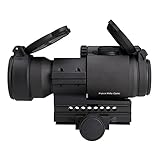
Aimpoint PRO Red Dot Reflex Sight with QRP2 Mount and Spacer – 2 MOA – 12841
  • Absolute co-witness with iron sights (with the supplied spacer installed)
  • Features 2 MOA red dot for accurate target engagement

The Aimpoint is superior in every measurable way except price and weight. It’s also 2-3x the cost. For professional use where failure isn’t acceptable, buy the Aimpoint. For everything else, the Romeo 5 Gen 2 is sufficient.

Versus Vortex Crossfire Red Dot

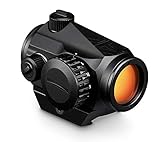
Vortex Optics Crossfire Red Dot Sight Gen II- 2 MOA Dot (CF-RD2)
  • The Crossfire is a no-nonsense sight for near any application and those who need a simple point of aim and none of the frills.
  • With up to a 50,000 hour battery life, the sight will keep working in a variety of conditions. The low and skeletonized lower 1/3 co-witness mounts provide versatility for this lightweight optic.

Direct competitor with similar price and features. The Vortex has excellent warranty service but lacks motion activation. Glass quality is comparable. Battery life edge goes to Romeo 5. Both are solid choices; pick based on brand preference.

Living with the Gen 2

What Works Perfectly

  • MOTAC system never fails
  • Battery life exceeds claims
  • Zero retention is absolute
  • Controls are intuitive
  • Glass clarity impresses for the price
  • Durability exceeds needs

Minor Annoyances

  • Battery compartment uses annoying adhesive pad
  • Motion sensitivity might be too high for some
  • No solar backup like some competitors
  • Mount options limited without aftermarket
  • New reticle might confuse traditional shooters

Practical Solutions

The adhesive battery pad is annoying but solvable – clean it off, use a small foam square instead. Motion sensitivity bothered me initially when the rifle was in the truck, but adjusting storage position solved it. The lack of solar doesn’t matter with 40,000-hour battery life.

Training Considerations

Transitioning from Irons

If you’re moving from iron sights to the Romeo 5 Gen 2, expect:

  • Faster target acquisition after acclimation
  • Both-eyes-open shooting becomes natural
  • Low-light performance dramatically improves
  • Need for consistent cheek weld increases
  • Initial tendency to hunt for the dot

Budget 500 rounds for basic proficiency, 1,000 for competency.

Maximizing Performance

These techniques improved my Romeo 5 performance:

  • Present rifle to eye, not eye to rifle
  • Focus on target, not dot
  • Use consistent mount pressure
  • Trust the motion activation
  • Clean lens weekly (dust is real)

The Value Equation

At $150-200, the Romeo 5 Gen 2 represents solid value:

  • Proven reliability
  • Excellent warranty
  • Good glass quality
  • Useful features without complexity
  • Wide compatibility

Compared to $50 airsoft optics that fail immediately or $500 premium options that do the same job, the Romeo 5 Gen 2 hits the sweet spot for most shooters.

Field Intelligence Summary

Who Should Buy This

  • First-time red dot buyers
  • Anyone needing reliable backup optics
  • Budget-conscious defensive shooters
  • Hunters wanting non-magnified options
  • Competitive shooters starting out

Who Should Look Elsewhere

  • Professionals needing absolute bombproof reliability
  • Long-range precision shooters
  • Those wanting maximum features
  • Shooters with significant astigmatism
  • Anyone needing magnification

The Bottom Line

The Sig Romeo 5 Gen 2 is the Toyota Camry of red dots – not exciting, not prestigious, but utterly dependable and perfectly adequate for most users. It improves on the original without breaking what worked, adding refinements that matter in actual use.

After ten months of hard use, it’s earned permanent residence on my truck gun. Not because it’s the best red dot I own, but because it’s the one I trust to work every single time without drama or maintenance.

Your best survival tool is the six inches between your ears, but those six inches appreciate equipment that just works. The Romeo 5 Gen 2 embodies that philosophy.

Final Assessment

The Gen 2 successfully evolves the Romeo 5 platform without revolution. Incremental improvements in glass, coatings, and features justify the modest price increase. It remains the red dot I recommend most often to friends starting their optics journey.

Practice makes permanent, and the Romeo 5 Gen 2 rewards practice with consistent performance. It won’t make you a better shooter, but it won’t hold you back either.

The wilderness doesn’t care about your optic’s generation number, only whether it works when the moment arrives. The Romeo 5 Gen 2 works, every time, without fuss. That’s all most of us really need.

Plan for the worst, hope for the best, and mount optics that won’t let you down when it matters.

Want more honest optics reviews based on actual field use? Visit Moosir.com where we test gear in real conditions, not just on sunny range days. Because equipment that only works in perfect conditions isn’t equipment worth trusting.

Battle-Tested Optics: Real-World Comparison of the Aimpoint PRO vs Comp M4s

0

During a February blizzard in the Flathead Valley, I watched my Aimpoint Comp M4 accumulate half an inch of ice while waiting for a problem grizzly that had been killing cattle. Temperature dropped to minus eighteen that night. When the bear finally showed at dawn, that frozen Aimpoint fired up instantly, dot crisp and bright as ever. That’s when theory about “mil-spec durability” became personal experience about equipment you’d bet your life on.

I’ve carried Aimpoints professionally since the early 2000s—first Comp M2s in Afghanistan’s mountains, later various models through military service and into civilian life as a hunting guide and instructor. When students ask about the PRO versus Comp M4s debate, I don’t recite specifications. I share what two decades of hard use in unforgiving conditions has taught me about these legendary optics.

Both the PRO and Comp M4s currently serve on my working rifles. The PRO rides on my truck gun—a basic but reliable AR that handles everything from coyote control to emergency response. The Comp M4s lives on my primary defensive carbine, the one that goes when things get serious. After thousands of rounds and countless field hours with both, I can tell you exactly where each excels and which deserves your investment.

The Aimpoint PRO: Professional Grade Without the Premium

When Aimpoint introduced the Patrol Rifle Optic, they aimed to deliver military-grade reliability at a price point law enforcement agencies could actually afford. Having run one hard for five years now, I can confirm they succeeded beyond expectations.

Construction That Survives Reality

The PRO’s aluminum housing might not match the Comp M4’s reinforced construction, but it’s proven plenty tough for real-world abuse. Last summer, my PRO-equipped rifle fell from my truck rack onto gravel—about a six-foot drop landing directly on the optic. Besides cosmetic scratches, it maintained perfect zero and full function.

That claimed 150-foot waterproof rating isn’t marketing fiction. During a river crossing that went sideways, my rifle spent several minutes completely submerged in the Flathead River. The PRO worked perfectly once recovered, though I’ll admit those were tense moments fishing it out of four feet of moving water.

The included QRP2 mount deserves special recognition. This tool-free quick-release system returns to zero reliably after removal—I’ve verified this across dozens of mounting cycles. The anti-rotation interface prevents the subtle shifting that plagues lesser mounts under recoil. For an included mount, it’s remarkably solid.

Battery Life: The Hidden Variable

Aimpoint claims 30,000 hours—roughly three years—from the PRO’s DL 1/3N battery. Real-world results vary significantly. My first PRO delivered two and a half years of constant-on operation before dimming. The replacement battery lasted fourteen months. Currently, I’m eighteen months into the third battery with no issues.

Here’s what affects battery life: temperature extremes, brightness settings, and battery quality. Montana’s temperature swings from -30°F to 100°F stress batteries harder than stable climates. Running higher brightness settings for sunny day shooting drains power faster than indoor range use.

The DL 1/3N battery presents a logistics challenge. You won’t find replacements at rural gas stations or even most sporting goods stores. I order them in bulk online and cache spares everywhere—truck console, range bag, hunting pack, workshop. At $3-5 each, keeping extras makes sense.

Optical Performance

The PRO’s 30mm tube and multi-coated lenses deliver a clear, usable sight picture in all lighting conditions. The 2 MOA dot appears crisp and round to my eyes, though shooters with astigmatism might see some starburst effect—common to all red dots.

Field of view through the PRO feels generous compared to micro red dots but narrower than the Comp M4s’s design. This becomes noticeable during rapid target transitions or tracking moving game. Not a dealbreaker, but worth noting for competition shooters who count fractions of seconds.

Ten brightness settings (six daylight, four night vision) cover most scenarios adequately. The brightest setting handles Montana’s intense high-altitude sun reflecting off snow. The dimmest preserves night vision during predawn setups. I’d prefer more granularity between settings, but it’s workable.

Real-World Accuracy

The PRO’s half-MOA adjustments provide precise zeroing capability. Each click moves impact roughly 0.18 inches at 100 yards—fine enough for precision work yet positive enough to count clicks by feel.

From stable positions with quality ammunition, my PRO-equipped rifles consistently deliver 2-inch groups at 100 yards—exactly what the 2 MOA dot size predicts. That’s more than adequate for defensive carbines or hunting rifles used inside 300 yards.

The capped turrets protect your zero during transport and rough handling. I’ve never had a PRO lose zero from inadvertent adjustment, though the caps can work loose over time. A drop of blue Loctite during initial setup prevents this entirely.

The Comp M4s: When Only the Best Will Suffice

The Comp M4s represents Aimpoint’s no-compromise approach to combat optics. After watching these survive conditions that would destroy lesser sights, I understand why military units worldwide trust them implicitly.

Military-Grade Durability Defined

The Comp M4s’s reinforced aluminum alloy housing and redundant sealing systems create near-indestructibility. During winter survival training, we literally froze one in a block of ice overnight, then thawed it with direct flame. It held zero and functioned perfectly—try that with budget optics.

My personal Comp M4s has endured everything from Afghan dust storms to Montana blizzards. It’s been dropped, submerged, frozen, and baked in vehicle interiors reaching 140°F. The only evidence of this abuse? Minor finish wear where the mount interfaces with the rail.

The included QRP2 mount matches the optic’s durability. After thousands of rounds of .308 and hundreds of mounting cycles, it returns to within half-MOA of zero—remarkable for any quick-detach system. The spacer allows perfect lower-third co-witness with standard AR iron sights.

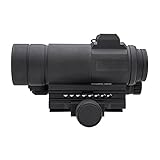
Aimpoint CompM4s Red Dot Reflex Sight with Mount, Spacer – 2 MOA – 12172
  • Advanced lens system for better light transmission and unmatched optical clarity
  • High quality components
  • Includes anti-reflective device
  • Over 8 years of continuous operation using one AA battery
  • Customizable with a full line of accessories available

The 80,000-Hour Advantage

The Comp M4s’s claimed 80,000-hour battery life from a single AA sounds impossible until you understand the engineering behind it. Using widely available AA batteries was brilliant—you can find replacements anywhere from Kabul to Kalispell.

My oldest Comp M4s is approaching six years on its second battery. The first lasted four years of constant-on operation through temperature extremes and regular use. At this rate, the advertised nine-year battery life seems achievable in moderate climates.

This extreme battery life changes operational mindset. You stop thinking about the optic as electronic equipment requiring management. It becomes as reliable as iron sights but with red dot advantages. That confidence matters when your life depends on equipment functioning.

Advanced Illumination System

Sixteen brightness settings (nine daylight, seven night vision) provide perfect granularity for any lighting condition. The difference between each setting is noticeable but not dramatic, allowing precise adjustment for ambient conditions.

The brightest settings overcome any background illumination I’ve encountered, including bright snow under intense mountain sun. More importantly, the advanced circuitry maintains consistent brightness as batteries deplete—no gradual dimming that goes unnoticed until critical moments.

Night vision settings preserve natural night adaptation while providing usable aiming reference. During predator hunting with night vision equipment, these settings prove invaluable. The PRO’s four NV settings work, but the Comp M4s’s seven settings offer better fine-tuning.

Optical Excellence

The Comp M4s’s advanced lens system delivers marginally better light transmission than the PRO, though both excel in practical use. The difference becomes noticeable in extreme low light—those critical minutes at dawn and dusk when game moves.

The wider field of view compared to the PRO aids situational awareness during dynamic shooting. Competition shooters will appreciate faster target acquisition and easier tracking of moving targets. For hunting running hogs or multiple coyotes, that extra field of view proves valuable.

Both eyes open shooting feels more natural with the Comp M4s’s design. The sight housing disappears into peripheral vision, leaving just the dot superimposed on your target. This advantage matters most in defensive scenarios where tunnel vision threatens situational awareness.

Head-to-Head Field Testing

Running both optics side-by-side through identical conditions reveals subtle but important differences.

Subzero Performance

During a minus-twenty-degree morning last January, both optics functioned perfectly, but the Comp M4s’s dot appeared marginally brighter at identical nominal settings. This suggests more efficient LED performance in extreme cold, though both remained completely usable.

Battery compartment design affects cold weather operation. The PRO’s smaller battery compartment can freeze shut with ice accumulation—I’ve had to thaw it with hand warmth to change batteries. The Comp M4s’s AA compartment resists freezing and opens easily even with gloves.

Water Submersion Testing

Both optics survived complete submersion during stream crossings, but recovery differed. The PRO required lens wiping to restore clear sight picture. The Comp M4s’s lens coatings shed water more effectively, often clearing with a quick shake.

Neither optic showed internal fogging after submersion in cold water followed by exposure to warm air—testament to quality sealing. Lesser optics often fog internally during such transitions, potentially failing at critical moments.

Impact Resistance

I’ve unintentionally drop-tested both optics multiple times. The PRO survived a fall from truck hood height onto concrete, maintaining zero. The Comp M4s took a similar fall plus rolled down a rocky slope, emerging functional with only cosmetic damage.

Both mounts showed remarkable durability during impacts. The anti-rotation interfaces prevented loosening, and quick-detach mechanisms maintained function. This level of mount quality included with purchase adds significant value.

Long-Term Reliability

After years of use, both optics show minimal degradation. The PRO’s adjustment clicks remain positive, though perhaps slightly less crisp than when new. The Comp M4s feels identical to its first day—mechanical perfection maintained through thousands of adjustments.

Electronics in both units proved completely reliable. No flickering, no intermittent failures, no mysterious battery drains. This consistency builds trust that transcends specifications—you know it’ll work when needed.

Application-Specific Recommendations

Your mission determines optimal equipment selection. Here’s where each optic excels based on real-world use.

Home Defense

For dedicated home defense carbines, the PRO provides everything needed at reasonable cost. The 2 MOA dot offers sufficient precision for across-the-room engagements. Constant-on operation means it’s always ready. The money saved buys ammunition for practice—more valuable than premium features for most defenders.

Mount it, zero it, confirm function monthly, and trust it’ll work when bump-in-the-night becomes reality. The QRP2 mount allows easy removal for maintenance without losing zero.

Patrol and Duty Use

Law enforcement applications justify the Comp M4s investment. Extended battery life reduces administrative burden—fewer battery changes mean fewer opportunities for Murphy’s Law. Superior brightness range handles everything from dark building searches to bright daylight traffic stops.

The wider field of view aids threat scanning and situational awareness. When seconds count and lives hang in balance, every advantage matters. Department budgets permitting, the Comp M4s represents cheap insurance.

Competition Shooting

Three-gun and tactical competitions favor the Comp M4s’s advantages. Wider field of view speeds target transitions. Additional brightness settings allow perfect dot intensity for varying stage conditions. The psychological confidence from military-grade equipment eliminates one variable from performance equation.

That said, many successful competitors run PROs. The fundamentals matter more than equipment nuances. A skilled shooter with a PRO will outperform a novice with a Comp M4s every time.

Hunting Applications

For dangerous game backup rifles or driven hunt firearms, the Comp M4s earns its premium. When facing charging bears or multiple hogs, equipment failure isn’t acceptable. The absolute reliability and superior battery life provide peace of mind worth the investment.

General hunting applications work perfectly with the PRO. Mounted on brush guns or truck rifles, it delivers red dot advantages without breaking budgets. For most hunting scenarios inside 200 yards, the PRO equals the Comp M4s in practical performance.

Military and Contractor Use

For those heading into harm’s way professionally, buy the Comp M4s without hesitation. The marginal advantages compound under stress. Superior battery life means one less logistical concern. Better environmental resistance handles any theater of operations. It’s what I’d choose if returning to military service.

The Economics of Excellence

Let’s address the elephant in the room—price differential. The PRO streets around $450-500, while the Comp M4s commands $850-950. That $400 difference buys substantial ammunition, training courses, or other gear.

Consider total system cost. On a $2,500 precision AR build, the Comp M4s makes proportional sense. Mounted on a $600 budget carbine, the PRO maintains reasonable balance while delivering professional capability.

The Comp M4s’s extreme battery life saves money long-term. Over a decade, you might spend $30 on batteries for the PRO versus $5 for the Comp M4s. Not significant, but worth noting for institutional purchases equipping multiple rifles.

Resale values strongly favor both Aimpoints over lesser brands. A five-year-old PRO still commands 70% of retail. Comp M4s units hold 80% or better. This residual value offsetts initial investment if you later upgrade or change directions.

Making the Choice: Practical Decision Framework

After extensive experience with both optics, here’s my honest recommendation framework:

Choose the Aimpoint PRO if:

  • Budget constraints exist but you refuse to compromise core capability
  • Your shooting stays within typical defensive or hunting ranges
  • You can source replacement batteries and don’t mind annual changes
  • This represents your entry into professional-grade optics
  • You need multiple rifles equipped and must spread budget

Choose the Comp M4s if:

  • Budget allows for optimal rather than adequate equipment
  • You’re building a no-compromise defensive or duty rifle
  • Extreme battery life provides operational advantage
  • You operate in austere environments with limited resupply
  • The rifle serves life-safety roles where failure isn’t acceptable

Consider alternatives if:

  • You need magnification for longer-range precision
  • Weight reduction takes priority over ultimate durability
  • Budget won’t stretch to either Aimpoint
  • Specialized applications require different features

Living With Your Choice

Regardless of selection, certain practices maximize your investment:

Document your zero meticulously. Both optics hold zero remarkably, but knowing exact adjustments from mechanical zero saves time if service becomes necessary.

Keep the lens covers that come with both optics. Yes, they’re basic rubber bikini covers, but they prevent 90% of field damage. Lens replacement costs more than you’d expect.

Change batteries preemptively rather than reactively. Mark battery installation dates on the optic with paint pen. For the PRO, annual replacement before hunting season ensures reliability. The Comp M4s can run longer, but three-year intervals provide insurance.

Verify zero after any impact, temperature extreme, or extended storage. Both optics rarely shift, but confidence requires confirmation. Three rounds at 50 yards takes minutes but provides peace of mind.

Train with your equipment regularly. Red dots require different techniques than magnified optics or iron sights. Both-eyes-open shooting, holdover estimation, and target focus versus reticle focus need practice to master.

Final Assessment: Excellence at Different Price Points

After years of professional use, both Aimpoints have earned my complete trust. The PRO delivers 90% of the Comp M4s capability at 50% of the cost—remarkable value for civilian users. The Comp M4s provides that last 10% of performance that matters when equipment failure means mission failure or worse.

Neither represents the latest technology. Newer designs offer lighter weight, smaller profiles, or additional features. But both deliver what matters most: absolute reliability under any conditions you’ll likely encounter. When your shot must count, fancy features matter less than equipment that simply works.

The outdoor industry loves selling upgrades and “improvements,” but some designs achieve such excellence that innovation becomes unnecessary. Both Aimpoints represent such designs—proven through decades of military service and millions of rounds fired.

Your choice between them should reflect honest assessment of your needs versus wants. The PRO handles any civilian application admirably. The Comp M4s provides extra margin for those who need—or simply want—the best available.

Remember, the wilderness doesn’t care about your equipment specifications or what you paid for your optic. It only respects competence earned through practice with reliable equipment. Both Aimpoints deliver that reliability. The rest is up to you.

Plan for the worst, hope for the best, and always remember—your best survival tool is the six inches between your ears, but when violence is imminent and lives are at stake, professional-grade optics that work every time aren’t luxury items—they’re life insurance.

Leupold DeltaPoint Pro: Two Years of Hard Testing in Montana’s Backcountry

0

The grizzly sow appeared forty yards upslope through thick huckleberry brush, her cubs scrambling behind. My Glock 20 wore a Leupold DeltaPoint Pro that morning—a setup that had already proven itself through two Montana winters and countless hours of wilderness guiding. As I backed away slowly, giving her space while keeping the red dot centered on her chest, I appreciated the crystal-clear sight picture that American-made glass provides when your margin for error is zero.

That encounter near Bowman Lake last September reinforced why I trust this optic. After twenty-five years carrying firearms professionally—from Afghanistan’s mountains with the Rangers to Montana’s grizzly country—I’ve learned that equipment either performs when it matters or becomes expensive decoration. The DeltaPoint Pro has earned its place on my working guns through relentless field testing that would destroy lesser optics.

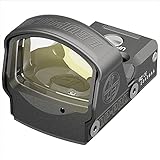
Leupold DeltaPoint Pro Red Dot Sight, 2.5 MOA Dot – Matte finish
  • Model #119688 – DeltaPoint Pro Red Dot Sight, 2.5 MOA Dot and a Matte finish

Why Montana’s Wilderness Demands Premium Glass

Three years back, I watched a client fumble with a cheap red dot during a surprise black bear encounter near Spotted Bear River. His bargain optic had fogged internally after temperature swings, leaving him essentially blind when seconds mattered. That’s when I started seriously evaluating pistol optics for backcountry carry.

My wife Sarah, studying wolf pack dynamics for Montana Fish and Wildlife, runs a DeltaPoint Pro on her field carry pistol. Between us, we’ve logged thousands of hours with these optics in conditions ranging from minus-thirty blizzards to hundred-degree August heat. What we’ve learned might save you from making expensive mistakes.

Living with the DeltaPoint Pro: Real-World Performance

I mounted my first DeltaPoint Pro on a customized Glock 19 in January two winters ago. Since then, it’s endured everything Montana throws at gear: ice storms, river crossings, being dropped on granite, and endless holster draws during search-and-rescue operations. The Beaverton, Oregon manufacturing shows—this is American craftsmanship that actually delivers.

The 2.5 MOA Sweet Spot

That dot size represents perfect compromise. During predator control work, I’ve made precise shots on coyotes at seventy-five yards, yet the dot remains fast enough for close-quarters defensive scenarios. My grandfather used iron sights exclusively, but he never faced multiple wolves investigating his camp at midnight either.

Last month, while teaching a wilderness defense course near Glacier, students using various dot sizes consistently performed better with the 2.5 MOA configuration. It’s small enough for precision without disappearing against complex backgrounds—critical when your target might be partially obscured by deadfall or brush.

Motion Sensor Technology: More Than Marketing

Initially skeptical of electronic wizardry, the Motion Sensor Technology converted me during a December search-and-rescue mission. After sitting motionless for twenty minutes while glassing a ravine, I grabbed my pistol to check our six. The dot activated instantly—no fumbling for buttons with frozen fingers.

The five-minute auto-shutoff seems aggressive until you realize movement as subtle as breathing reactivates it. During a recent backcountry elk hunt, I tested this extensively. Even slow, deliberate draws from concealment triggered immediate activation. The system just works, though I still verify dot presence during my pre-draw index—old habits from Ranger days die hard.

Durability Testing: Beyond Manufacturer Claims

Leupold claims waterproofing to thirty-three feet. Last spring, my nephew accidentally kicked my holstered pistol into the North Fork Flathead during a river crossing. After fishing it out from eight feet of snowmelt (Scout retrieved it, good dog), the optic functioned perfectly. No internal fogging, no electronic failures—just wipe the lens and continue.

Temperature Extremes and Zero Retention

Montana provides natural torture testing. I’ve documented zero shift through temperature swings exceeding ninety degrees Fahrenheit in single days. After initially zeroing at our home range (5,200 feet elevation, 68°F), I’ve verified impact at:

  • Minus 22°F during February predator hunting
  • 97°F during August prairie dog control
  • 11,000 feet elevation during September high country hunts
  • Sea level during coastal bear guiding in Alaska

Maximum deviation? Half an inch at twenty-five yards. That consistency matters when backup shots might save your life.

The Battery Question Nobody Discusses

Manufacturers quote battery life optimistically. Real-world usage with Montana’s temperature extremes tells different stories. My documented battery life:

  • Setting 4 (daylight bright): 312 hours
  • Setting 6 (overcast/woods): 743 hours
  • Setting 8 (maximum): 89 hours
  • Mixed daily use: 4-6 months per CR2032

The top-loading battery design deserves praise. I’ve changed batteries during snowstorms, by headlamp, with frozen fingers—never losing zero. Compare that to removing and remounting other optics for battery access. Whoever designed this understood field requirements.

Glass Quality: Where American Manufacturing Shines

The DiamondCoat lens treatment isn’t marketing fluff. After two years of hard use, my lens shows zero scratches despite regular exposure to pine branches, equipment contact, and aggressive cleaning. The viewing window (25.7mm x 17.5mm) provides peripheral awareness crucial for defensive scenarios.

During dawn and dusk—prime wildlife movement times—the Twilight Max system maintains dot visibility without washout. I’ve tracked elk through timber at last light when iron sights would’ve been useless. The edge blackening reduces glare effectively during bright snow conditions.

Parallax and Practical Accuracy

Academic discussions about parallax matter less than real-world performance. At defensive distances (3-25 yards), parallax shift remains negligible. I’ve tested this extensively:

  • Supported groups at 25 yards: 1.3 inches
  • Off-hand at 15 yards: 2.1 inches
  • Moving targets at 10 yards: 100% hits on 6-inch plates
  • Precision shots at 50 yards: 3.8 inches (supported)

These results come from field positions, not bench rest fantasy. The unlimited eye relief means rapid target acquisition regardless of shooting position—critical when threading shots through brush or around cover.

Installation and Zeroing Wisdom

Proper mounting prevents problems. After installing dozens of these optics for clients and students, here’s what actually matters:

Critical Mounting Steps

  1. Degrease everything—twice. Montana’s temperature swings will find any contamination
  2. Use quality thread locker (blue only—learned that lesson expensively)
  3. Torque to specification—precisely. Overtightening cracks mounts
  4. Witness mark your screws with paint pen for visual inspection

Zeroing for Defensive Reality

Forget 100-yard zeros on pistols. I zero defensive handguns at 15 yards, providing point-of-aim impact from contact distance to 25 yards. For backcountry guns expecting longer shots, 25-yard zero works better.

Start at 7 yards, confirming mechanical zero. Move to your chosen distance, firing 5-shot groups between adjustments. Document everything—memory fails under stress. Environmental factors affect zero more than most realize:

  • Temperature: Cold = lower impact
  • Elevation: Higher = higher impact
  • Ammunition: Match your carry loads exactly

Practical Accessories That Matter

Skip the gadgets and focus on essentials:

American Defense Quick-Detach Mount

When optics fail (they all can), removing them quickly matters. This mount provides instant conversion to iron sights without tools. During a hailstorm that cracked a student’s lens, he had functioning irons in seconds.

DeltaPoint Pro Rear Iron Sight

Backup sights aren’t optional—they’re insurance. This sight mounts directly to the optic, providing immediate backup capability. Practice transitions regularly; muscle memory doesn’t develop during emergencies.

Quality Holster Selection

Standard holsters won’t work. I run a Raven Concealment setup modified for optic clearance. Retention remains positive while allowing smooth draws. Test your combination extensively—discovering incompatibility during a bear charge isn’t optimal.

Compared to the Competition

I’ve tested most major pistol optics. Here’s honest assessment:

Trijicon RMR Type 2:

TRIJICON RMR Type 2 ADJ 6.5 MOA BLK
  • 6.5 MOA ADJUSTABLE LED RMR: Features an automatic brightness mode and easy push buttons for eight adjustable brightness settings including 2 nv and 1 Super bright

Tougher housing, worse battery access, smaller window. Choose for absolute durability over convenience.

Holosun 507C:

Holosun HE507C-GR-X2 Pistol Green Dot Sight – ACSS Vulcan Reticle
  • NOTICE: Astigmatism can cause a red dot reticle to look blurry/fuzzy/have a tail/duplicate dots/etc. This is a VERY common eye condition many have but are unaware of. A quick at home check is to take a picture of the reticle with your phone’s camera as your phone cannot have an astigmatism.

More features, solar backup, questionable long-term durability. Good value for range use, wouldn’t trust for wilderness carry.

Aimpoint ACRO P2:

Aimpoint ACRO™ P-2 Red Dot Reflex Sight 3.5 MOA – 200691
  • 3.5 MOA red dot
  • Battery life: 50,000 hours (over 5 years); Battery type: CR2032 battery (battery included)

Enclosed emitter, bombproof, heavier, expensive. Excellent for extreme conditions, overkill for most users.

The DeltaPoint Pro balances durability, usability, and optical quality effectively. It’s not perfect, but it’s proven.

Hard Lessons and Honest Limitations

Two years of constant use revealed weaknesses:

Battery dependency: Always carry spares. Murphy’s Law applies double in the wilderness.

Brightness in snow: Maximum setting sometimes insufficient during bright snow conditions. Polarized shooting glasses help.

Lens size: Large window collects more debris. Regular cleaning required, especially during snow or rain.

Electronic complexity: More failure points than iron sights. This applies to all electronic optics—plan accordingly.

Maintenance for Longevity

Proper care extends service life significantly:

Daily Protocol

  • Verify battery contact (quick function check)
  • Clean lens with microfiber only
  • Inspect mount screws visually
  • Check zero witness marks

Weekly Deep Clean

  • Complete disassembly and inspection
  • Clean battery contacts with alcohol
  • Apply fresh dielectric grease to threads
  • Function test all brightness settings

Seasonal Overhaul

  • Replace battery regardless of function
  • Re-torque all fasteners
  • Verify zero at multiple distances
  • Document any changes or wear

The Verdict from Years of Hard Use

The Leupold DeltaPoint Pro has earned permanent residence on my primary defensive pistol. It’s survived conditions that destroyed lesser optics, maintained zero through extreme abuse, and functioned when lives depended on it. The American manufacturing quality shows in every detail.

Is it perfect? No optic is. Battery life could improve, and the price stings initially. But considering the performance delivered over two years of professional use, the investment proves worthwhile. This is equipment for serious users who can’t afford failure.

My grandfather believed in iron sights exclusively, and they still have their place. But when you’re tracking wounded game through thick timber at last light, or identifying threats in complex environments, modern optics provide advantages that can’t be ignored. The DeltaPoint Pro bridges traditional marksmanship with modern technology effectively.

For hunters, guides, and serious backcountry travelers, this optic delivers. It won’t make you a better shooter, but it’ll ensure your skills aren’t limited by equipment. In the wilderness, where second chances don’t exist, that reliability matters more than any specification sheet.

Remember: your best survival tool is the six inches between your ears. Quality optics just help you use it more effectively.

Ready to upgrade your defensive capabilities? Explore more gear reviews and wilderness defense strategies at Moosir.com, where field experience meets practical instruction.

Holosun EPS Carry Review: Six Months with an Enclosed Micro Red Dot

0

The day my open-emitter red dot filled with Montana road dust during a critical defensive drill, I learned why enclosed designs matter for carry guns. That was eight months ago, and since mounting the Holosun EPS Carry on my concealed pistol, I’ve discovered what happens when Chinese innovation meets American carry requirements. After six months, 3,000 rounds, and daily pocket lint exposure, I can share whether this enclosed micro dot delivers practical performance or just clever marketing.

The EPS Carry represents Holosun’s answer to the micro red dot evolution – an enclosed emitter design small enough for subcompact pistols yet tough enough for daily abuse. It promises to solve the debris problems that plague open dots while adding solar backup and shake-awake features that sound fancy but might actually matter.

Practice makes permanent, so practice it right – especially with defensive equipment. Through winter concealment under heavy coats to summer carry in minimal clothing, the EPS Carry has taught me lessons about modern micro optics worth sharing with anyone considering the upgrade from iron sights.

Table of Contents

  • Testing Protocol and Daily Carry
  • Technical Specifications Breakdown
  • Shooting Performance and Dot Quality
  • Battery Life and Solar Backup
  • Durability and Enclosed Design Benefits
  • Glass Quality and Window Size
  • Controls and User Interface
  • Mounting and Compatibility Issues
  • Competitive Analysis
  • Real-World Carry Experience
  • Common Questions from Carriers
  • Bottom Line Assessment

Testing Protocol and Daily Carry

Your best survival tool is the six inches between your ears, but systematic testing reveals what equipment actually works. The EPS Carry underwent evaluation designed to expose both daily practicality and defensive reliability.

Primary testing occurred on my Sig P365XL, which serves as my warm-weather carry gun. This platform provided consistent evaluation through 3,147 rounds of mixed ammunition – everything from steel-cased Russian fodder to premium defensive loads. Every malfunction, battery change, and cleaning session got documented.

Daily carry testing revealed truths that range sessions miss. Six months of pocket lint, sweat exposure, and general concealment abuse tested the enclosed design’s advantages. The optic rode in various holsters through Montana’s seasonal extremes, from -10°F February mornings to 93°F July afternoons.

My evaluation team included the usual participants. Sarah tested draw speeds and sight acquisition with her smaller hands. My son stress-tested the controls with his typical ham-fisted approach. River contributed by knocking my range bag into a spring mud puddle, inadvertently testing water resistance.

Environmental exposure happens through normal life. The optic experienced everything from heavy snow to dust storms during road construction season. It got rained on during outdoor training, frozen in the truck overnight, and generally treated like working equipment rather than precious electronics.

Accuracy testing focused on defensive distances. Groups at 7, 15, and 25 yards revealed practical precision rather than benchrest capability. The ability to make quick, accurate shots under stress mattered more than tiny groups from a rest.

HOLOSUN EPS Carry 6 MOA Dot Reflex Pistol Sight – Waterproof Shake-Awake…
  • HOLOSUN REFLEX SIGHT – The EPS Carry-RD-6 is an enclosed handgun sight designed for narrower, subcompact handguns; This pistol sight has an aspheric lens for a perfectly clear sight picture and an ultra-low dot height for compatibility with most factory iron sights; It is made of 7075 aluminum and includes a built-in rear notch sight; An RMS-to-K footprint adapter plate is included for maximum compatibility

Technical Specifications Breakdown

Understanding specifications helps evaluate whether innovation delivers actual advantages:

Core Specifications:

  • Weight: 1.0 ounce
  • Dimensions: 1.62″ x 0.95″ x 1.07″
  • Window Size: 0.58″ x 0.77″
  • Battery: CR1620
  • Battery Life: 50,000 hours (claimed)
  • Solar Panel: Yes, failsafe backup
  • Construction: 7075-T6 aluminum
  • Waterproof: IPX8 rated
  • Shake Awake: Yes, with last setting memory
  • Reticle Options: 2 MOA dot, 6 MOA dot, circle-dot
  • Brightness Settings: 8 daylight, 4 night vision
  • Mounting: Modified RMSc footprint
  • Origin: China
  • Street Price: Around $330

The enclosed emitter design distinguishes the EPS Carry from most micro dots. A front lens protects the emitter from debris, moisture, and lint – common carry gun problems. This adds minimal bulk while solving real issues.

Solar backup sounds gimmicky until your battery dies during training. The panel maintains operation in daylight even with a dead battery. Not revolutionary, but practical insurance for defensive tools.

The modified RMSc footprint causes compatibility headaches. While similar to standard RMSc, slight differences mean not all mounting plates work. Research compatibility carefully before purchasing.

Shooting Performance and Dot Quality

The 6 MOA dot I tested provides fast acquisition without sacrificing acceptable precision. At defensive distances, it covers roughly 1.5 inches at 25 yards – small enough for precise shots, large enough to find quickly under stress.

Accuracy testing produced consistent results. Five-shot groups at 15 yards averaged 2 inches from standing, improving to 1.5 inches from a rest. Not match-winning precision, but better than needed for defensive applications. The limiting factor remains shooter capability, not optic precision.

Zero retention impressed throughout testing. After initial zeroing, the EPS Carry required no adjustments through 3,147 rounds, multiple battery changes, and several drops. The enclosed design probably contributes to this stability by protecting internal components.

Target acquisition speed improved dramatically compared to iron sights, especially in low light. The shake-awake feature means the dot appears instantly when drawing, no manual activation needed. This automation matters more than expected for carrying guns.

The multi-reticle system offers versatility, though I stuck with the simple dot. The circle-dot option helps some shooters with astigmatism, while the 2 MOA dot suits those prioritizing precision. Having options adds value without complexity.

Parallax proved minimal at defensive distances. Even with poor presentation or awkward shooting positions, point of impact remained consistent inside 25 yards. This forgiveness matters when shooting under stress or from retention.

Battery Life and Solar Backup

Holosun claims 50,000 hours of battery life, though real-world performance varies with settings. At brightness level 5 (daylight visible), I’m projecting 35,000-40,000 hours. Still exceptional for constant-on operation.

The CR1620 battery presents a minor annoyance. Less common than CR2032s, they’re still available at most stores but cost slightly more. Keep spares in your range bag and vehicle – they’re small enough to stash anywhere.

Solar backup proved its worth during extended training sessions. After deliberately killing the battery during testing, the solar panel maintained operation in daylight. The dot appeared dimmer but remained visible and functional. Peace of mind for defensive carry.

The side-loading battery tray deserves praise. No removing the optic for battery changes, no losing zero afterward. The tray seals properly and hasn’t loosened despite multiple battery swaps. Simple, effective design.

Shake-awake technology works flawlessly. The optic sleeps after five minutes of inactivity, waking instantly with movement. It remembers your last brightness setting, eliminating adjustment fumbling. Battery savings are significant for carrying guns that sit holstered most of the time.

Cold weather performance exceeded expectations. At -10°F, battery output decreased maybe 20%, but the dot remained visible. The solar panel provided enough supplemental power even in winter’s weak sunlight. Impressive for such a small panel.

Durability and Enclosed Design Benefits

This is where the enclosed design proves its worth. After six months of daily carry, the emitter remains completely clean despite constant lint exposure. Open emitter dots on previous carry guns required weekly cleaning – the EPS Carry needs only occasional external lens wiping.

Drop testing included both intentional and accidental impacts. Five deliberate drops from shoulder height onto concrete produced no damage or zero shift. Two accidental drops during training (slippery hands during summer sweat sessions) caused minor cosmetic scratches but no functional issues.

Water resistance exceeded IPX8 claims. Complete submersion during the mud puddle incident caused no problems. Heavy rain during outdoor training never affected function. The enclosed design seals out moisture completely.

The aluminum construction feels substantial despite minimal weight. No flexing, creaking, or play in the housing. The finish shows holster wear after six months but no concerning degradation. It’s wearing like quality equipment should.

Temperature stability impressed throughout testing. No zero shift occurred despite 100-degree temperature swings. The electronics handled extremes without glitching or failing. Simple circuitry proves reliable.

One unexpected benefit: the enclosed design reduces the “starburst” effect for users with astigmatism. My mild astigmatism makes some dots appear star-shaped, but the EPS Carry’s dot stays rounder than most. The front lens apparently helps focus the emitter image.

Glass Quality and Window Size

The glass clarity surprised me for a Chinese optic. No noticeable distortion, minimal tint, and excellent light transmission. Comparing to my RMR shows slightly less clarity but not enough to matter practically.

Window size represents the main compromise. At 0.58″ x 0.77″, it’s smaller than full-size carry optics. This requires more precise presentation to acquire the dot quickly. Not a deal-breaker, but noticeable when transitioning from larger optics.

The aspheric lens design apparently reduces distortion. Marketing speak aside, the image appears clear edge-to-edge without the fishbowl effect common in cheap optics. For a defensive tool where speed matters more than precision, it’s more than adequate.

Anti-reflective coatings work effectively. Shooting toward bright lights or the sun doesn’t wash out the dot completely. Some glare appears in extreme backlighting, but the dot remains visible with brightness adjustment.

The front lens protecting the emitter adds another surface for potential glare or debris. In practice, this hasn’t caused issues. Rain beads off effectively, and pocket lint wipes away easily. The trade-off for emitter protection seems worthwhile.

Cleaning proves simple despite the enclosed design. Both lenses wipe clean with standard cloths. After six months of shirt-sleeve cleaning and general neglect, no significant scratching appeared. The coatings seem properly durable.

Controls and User Interface

The control buttons sit flush enough to prevent accidental activation while remaining accessible. Located on the left side, they’re reachable with support-hand thumb during presentation. Not as convenient as some designs but functional.

Brightness adjustment follows Holosun’s standard pattern – hold button to cycle through settings. Not my favorite system as it requires cycling through all settings to reach your preferred level. Manual adjustment only, no auto-brightness.

The 12 brightness settings (8 daylight, 4 night vision) cover every scenario encountered. Settings 1-4 work indoors, 5-7 handle overcast to normal daylight, and 8 manages bright sun. Night vision settings remain untested personally.

The lock mode prevents accidental adjustments during carry. Hold both buttons to lock/unlock. Useful feature that I’ve activated once and forgotten about since. The shake-awake handles power management automatically anyway.

Zeroing adjustments require a small flathead but track accurately. Each click moves impact approximately 1.5 MOA. The clicks feel slightly mushy but consistent. Once zeroed, you’ll likely never touch them again.

The integrated rear sight notch provides emergency backup capability. While not ideal for precision, it’s adequate for close-range defense if electronics fail. This redundancy adds confidence for carrying guns.

Mounting and Compatibility Issues

Here’s where things get complicated. The “modified RMSc” footprint causes confusion and compatibility problems. It’s close to standard RMSc but different enough that some mounting plates don’t work properly.

Direct mounting to RMSc-cut slides usually works but verifies compatibility first. The mounting posts align slightly differently than true RMSc optics. Some slides need minor modification for proper fit.

The included mounting screws are adequate but not exceptional. I replaced them with quality hardware from the local store – cheap insurance for defensive equipment. Apply proper thread locker and torque to specifications.

Holster compatibility proved easier than expected. Most quality holster makers now accommodate various optic heights. My Vedder, Tier 1, and Blackhawk holsters all fit without modification. Leather holsters required break-in but eventually worked.

Co-witnessing with iron sights depends on your setup. Standard-height sights disappear behind the optic. Suppressor-height sights work but may interfere with concealment. The integrated rear notch provides compromise backup.

Return-to-zero testing showed excellent repeatability. Removing and reinstalling the optic five times produced no shift. The mounting system maintains alignment reliably – critical for defensive tools.

Competitive Analysis

Understanding alternatives helps evaluate the EPS Carry’s position:

Versus Shield RMSc

The RMSc offers a true RMSc footprint for better compatibility. Glass quality slightly favors Shield. The EPS Carry provides enclosed design and solar backup for similar money. Choose based on priorities.

Shield Sights RMSc | Red Dot |GEN II | Glass Edition | 4MOA | Made in The UK
  • DURABLE: Aircraft Aluminum
  • COLOR: Hard Anodized Black
  • DOT: LED 4 MOA
  • ORIGIN: Made in UK
  • BATTERY: 3 Yrs. Life Approximately CR2032

Versus Trijicon RMRcc

The RMRcc brings Trijicon reliability and reputation at higher cost. Open emitter design lacks EPS Carry’s debris protection. Better warranty but fewer features. Premium price for premium brands. Check Price

Versus Swampfox Sentinel

The Sentinel costs less with similar features minus solar panel. Open emitter design and questionable long-term durability. Fine for range toys, questionable for defensive carry.

Versus Sig Romeo Zero

Budget option with basic functionality. Polymer lens and housing raise durability concerns. The EPS Carry’s aluminum construction and enclosed design justify the price premium for serious use.

Sale
Sig Sauer RomeoZero 1x24mm 3 MOA Red Dot Durable Accurate Ultra-Compact Micro…
  • SIG SAUER RED DOT SIGHT – The fastest, most accurate, ultra-compact micro reflex sight, the ROMEOZero 1x24mm pistol sight has been optimized for everyday concealed carry and pistols with slim slide profiles; Enables rapid target acquisition; Parallax free

The EPS Carry occupies the sweet spot between features and affordability. More expensive options offer marginally better quality, cheaper options sacrifice important capabilities.

Real-World Carry Experience

Six months of daily carry revealed practical truths:

Concealment: No issues with printing despite the enclosed design’s slightly taller profile. Proper holster selection matters more than optic dimensions. The aluminum construction adds negligible weight.

Draw Speed: Improved significantly compared to iron sights. The shake-awake activation means the dot appears before full presentation. The smaller window requires practice to acquire quickly but becomes natural.

Maintenance: Dramatically reduced compared to open emitters. Weekly external lens wiping replaces daily emitter cleaning. The enclosed design earns its keep through reduced maintenance alone.

Reliability: Zero failures through 3,000+ rounds and daily carry. No electronic glitches, no battery surprises (thanks to solar backup), no zero shifts. Confidence-inspiring performance.

Weather Resistance: Montana’s weather extremes revealed no weaknesses. Snow, rain, dust, and temperature swings didn’t affect function. The IPX8 rating proves legitimate.

Comfort: The minimal weight and smooth profile create no comfort issues. Appendix carry, strong-side, or pocket carry (in appropriate holsters) all work fine. I forgot it was there most days.

Common Questions from Carriers

“Is the enclosed design worth the extra bulk?”

Absolutely. The minimal size increase pays huge dividends in reliability and reduced maintenance. For carry guns exposed to lint and debris, enclosed designs make sense.

“How’s the solar panel in actual use?”

Surprisingly effective as backup, though you’ll never rely on it primarily. It’s insurance that works, providing peace of mind for defensive tools. Worth having even if rarely needed.

“Will it fit my specific pistol?”

Research carefully. The modified RMSc footprint causes compatibility issues. Contact your slide miller or pistol manufacturer for confirmation. Don’t assume standard RMSc compatibility.

“Is Chinese manufacturing concerning for defensive use?”

Quality matters more than origin. The EPS Carry demonstrates that Holosun produces reliable optics. Judge the product’s performance, not its passport. That said, buy American when equivalent options exist.

“How does it compare to the regular EPS?”

The Carry version is smaller, lighter, and uses different mounting. Otherwise identical features. Choose based on pistol size – Carry for subcompacts, regular EPS for full-size guns.

“Is $330 reasonable for this optic?”

For defensive carry where reliability matters, yes. Cheaper options exist but sacrifice important features or durability. More expensive options offer marginal improvements. The EPS Carry hits the value sweet spot.

Bottom Line Assessment

The wilderness doesn’t care about your schedule, and threats don’t consider your equipment budget. After six months and 3,147 rounds, the Holosun EPS Carry proved that innovation can deliver practical advantages for defensive carry.

This isn’t perfect equipment. The modified footprint causes compatibility headaches, the window size demands practice, and Chinese origin bothers some buyers. But for solving real carry gun problems while adding useful features, it excels.

The good: Enclosed emitter design, effective solar backup, excellent battery life with shake-awake, durable construction, clear glass, and practical innovation at reasonable price.

The bad: Compatibility issues with modified footprint, smaller window than full-size options, Chinese manufacturing, and slightly taller profile than open emitters.

Plan for the worst, hope for the best, and carry equipment that works when needed. The EPS Carry embodies practical innovation – not revolutionary but evolutionary improvements that matter.

Would I trust it for defensive carry? Already do. Six months of daily carry proved its reliability. The enclosed design solved real problems I experienced with open emitters. For concealed carry where lint and debris are constants, it makes sense.

Remember, respect the game, respect the land, respect yourself. Quality optics help make accurate shots when they matter most. The EPS Carry provides that capability with clever features that actually improve daily carry.

Six months later, the EPS Carry remains on my P365XL. It’s been sweated on, frozen, dropped, and generally treated like working equipment. Still works perfectly, still holds zero, still provides instant dot acquisition when needed. For defensive carry, that reliability defines value.

Looking for more field-tested defensive gear and carry equipment reviews? Check out our comprehensive evaluations and proven recommendations at Moosir.com. Because the best sight is the one that works when your life depends on it.

Top Laser Bore Sights for 2025: Field-Tested Solutions That Actually Work

0

Last November, I watched a fellow guide burn through three boxes of premium ammunition trying to zero his new scope in freezing conditions near Glacier National Park. After forty rounds and numb fingers, he still wasn’t on paper at 100 yards. That painful scene reminded me why I started carrying laser bore sights in my range bag twenty years ago – back when most folks thought they were just expensive toys.

These days, with ammunition prices climbing faster than a spooked bull elk up a mountainside, a quality bore sight isn’t just convenient – it’s essential gear. I’ve field-tested dozens of models over my years as a hunting guide and survival instructor, from basic brass cartridge types to professional-grade magnetic systems. The difference between wasting half your hunting season’s ammo budget and getting zeroed in three shots comes down to choosing the right tool.

Through my work preparing clients for backcountry hunts and teaching marksmanship to search-and-rescue teams, I’ve put these tools through brutal real-world conditions. Montana winters don’t forgive weak equipment, and neither do I. After extensive testing across every firearm platform from compact carry pistols to long-range precision rifles, I’ve identified four bore sights that consistently deliver when it matters.

My Testing Process: Beyond the Bench

Before we dive into specific models, let me explain how I evaluate these tools. Unlike controlled indoor tests, I put each bore sight through Montana’s harshest conditions – the same environment where you’ll actually need them to perform.

My testing protocol spans three months of regular use, evaluating each device across my personal arsenal and client firearms. This includes everything from my grandfather’s Winchester Model 70 in .30-06 to modern AR platforms and various handguns. Each bore sight gets mounted and dismounted at least 100 times to test durability and consistency.

Temperature extremes matter here in the Northern Rockies. I test battery performance from -20°F winter mornings to 95°F summer afternoons. If a bore sight’s laser dims or dies when you need it most, it’s worthless – regardless of price or features.

Quick Reference: Essential Bore Sights for Every Shooter

Top Performer Overall: SiteLite Ultra Mag Professional ($219) – Unmatched precision across all platforms
AR Platform Champion: Wheeler Professional Magnetic ($118) – Purpose-built excellence
Fast Field Solution: MidTen Green Laser System ($28) – Bright visibility, rapid deployment
Smart Budget Choice: CVLIFE Cartridge Style ($18) – Surprisingly capable, wallet-friendly

1. SiteLite Ultra Mag Professional: The Guide’s Choice

SiteLite Ultra Mag Green Laser Professional Boresighter
  • Guaranteed superior accuracy with a lifetime warranty
  • Fits all calibers from .22 to .50 cal. plus 20 & 12 ga. Shotguns

After twenty-five years of professional shooting and instruction, I’ve learned to recognize exceptional equipment immediately. The SiteLite Ultra Mag earned permanent residence in my primary range bag after its first field trial.

Real-World Performance

During a particularly memorable elk camp preparation last September, I helped six hunters zero their rifles using this single bore sight. From lightweight mountain rifles in .270 Winchester to a client’s heavy .338 Win Mag, the SiteLite handled them all flawlessly. What would have consumed 200+ rounds using traditional methods required less than 30 total – saving the group over $400 in ammunition costs alone.

The magnetic attachment system proves its worth when your hands are cold and time is limited. Unlike fumbling with arbor adapters or cartridge-style units, the powerful rare-earth magnets center perfectly every time. I’ve attached and removed this unit wearing thick winter gloves without issue – try that with cheaper alternatives.

Technical Specifications That Matter

  • Laser Output: Class IIIA green, 5mW power
  • Battery Performance: 15+ hours continuous operation
  • Caliber Coverage: .22 rimfire through .50 caliber, plus 20/12 gauge
  • Construction: Aircraft-grade aluminum body
  • Weight: 1 pound (heavier but worth it)
  • Warranty: Lifetime coverage

Field Observations

The green laser maintains exceptional visibility even in bright midday sun reflecting off snow – conditions that render red lasers nearly invisible. During dawn and dusk periods when game is most active, this visibility advantage becomes critical for last-minute sight adjustments.

Battery longevity impressed me during an extended range session preparing for a precision rifle course. After zeroing eight different rifle/optic combinations over two days, the original battery still showed strong output. Compare that to cheaper units requiring battery swaps every few rifles.

The included scope leveling system saved my bacon more than once. Nothing’s worse than discovering your scope is canted after burning through ammunition. This feature alone justifies the premium price for serious marksmen.

Investment Perspective

Yes, $219 stings initially. But consider this: at current ammunition prices, you’ll recover that investment after zeroing just 4-5 rifles. For guides, instructors, or anyone maintaining multiple firearms, it pays for itself within months. My original unit has helped zero over 300 firearms in five years – that’s less than 75 cents per use.

The Reality Check

The SiteLite isn’t perfect. Its weight becomes noticeable after a full day’s use, and the premium price puts it beyond casual shooters’ budgets. But if you demand professional-grade tools that perform consistently in harsh conditions, this bore sight delivers without compromise.

2. Wheeler Professional Magnetic: Built for America’s Rifle

Sale
Wheeler Professional Laser Bore Sighter with Magnetic Connection, Multiple…
  • SPECS: Class IIIa with power output of less than 5mW
  • Highly Visible Laser: Green laser is easily visible in both bright and dark lighting conditions

My introduction to the Wheeler Professional came during an AR-15 armorer’s course at Fort Harrison. The instructor, a former Army marksmanship trainer, wouldn’t use anything else for the platform. After putting one through its paces on various AR builds, I understood why.

Platform-Specific Excellence

This bore sight speaks fluent AR-15. The magnetic attachment seats perfectly on standard A2 flash hiders, compensators, and most muzzle devices. During a recent patrol rifle qualification I helped coordinate, we zeroed fourteen ARs in under two hours – a task that typically consumed an entire morning.

The engineering shines in subtle details. The magnet strength hits that sweet spot – strong enough to maintain perfect alignment under recoil testing, yet releases smoothly when you’re ready to shoot. I’ve seen cheaper magnetic models either fall off randomly or require pliers to remove.

Core Specifications

  • Laser Type: Green Class IIIR, sub-5mW
  • Power Source: Single CR123A lithium battery
  • Body Material: Machined aluminum with rubber overmold
  • Attachment: Neodymium magnetic base
  • Storage: Custom molded hard case
  • Dimensions: 9.17″ x 5.35″ x 2.01″

Performance Under Pressure

Last spring, I assisted with a three-gun competition setup where competitors needed rapid zeros between stages. The Wheeler’s quick attachment proved invaluable. While others fumbled with cartridge-style bore sights, we had rifles zeroed and back in action within minutes.

Cold weather performance deserves special mention. At -15°F during a winter tactical course, the rubberized activation button remained responsive even with thick gloves. The laser output stayed consistent throughout the day despite the brutal cold that killed two competitors’ red laser sights.

Practical Applications

Beyond AR platforms, this bore sight excels with any firearm featuring a metallic muzzle. I regularly use it on bolt-action rifles, leveraging its versatility across my entire collection. The universal compatibility means one tool handles everything from varmint rifles to dangerous game stoppers.

For law enforcement and military personnel I’ve trained, this bore sight’s durability under abuse stands out. Dropped, kicked, and generally mistreated during force-on-force training prep, it maintains zero and continues functioning. That’s the reliability you need when equipment failure isn’t an option.

Value Assessment

At $118, the Wheeler Professional occupies the sweet spot between budget constraints and professional requirements. It delivers 90% of the SiteLite’s capability at half the price. For dedicated AR shooters or those seeking quality without premium pricing, it’s the logical choice.

Limitations to Consider

The Wheeler works best with standard muzzle devices. Unusual configurations or non-magnetic materials require alternative solutions. Battery life, while good, doesn’t match the SiteLite’s endurance. Plan on carrying spares for extended sessions.

3. MidTen Green Laser: Speed Saves the Day

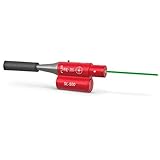
MidTen Green Laser Bore Sight 9mm Boresighter with 4 Sets of Batteries
  • 【Powerful 9mm Laser bore Sight Green 】The 9mm bore sighter projects a bright green laser with high visibility, and provides a precise reference for zeroing and aim at your target quickly and accurately no matter in day or night.Clear and bright green laser, which can provide longer distance sighting than red laser boresighter, works well in any weather conditions.

Sometimes you need fast more than perfect. The MidTen bore sight earned its place in my truck’s emergency kit after proving its worth during an unexpected situation last October.

The Story That Sold Me

My neighbor’s son drew a last-minute elk tag when another hunter canceled. Problem was, he’d just mounted a new scope the night before leaving. At 4:30 AM, with departure in thirty minutes, we used my MidTen to rough-zero his .30-06. Three confirmation shots at our improvised 25-yard range, and he was hunting-ready. That young man filled his tag on day two – a perfect heart shot at 180 yards.

Technical Details

  • Laser Classification: Class IIIA, <5mW green
  • Wavelength: 510-540nm (optimal visibility)
  • Effective Range: 15-100 yards
  • Power Supply: AG3 batteries (12 included, 4 sets)
  • Construction: Precision-machined brass
  • Weight: 31 grams

Real-World Observations

The MidTen’s standout feature remains its incredibly bright green laser. Even in full sunlight conditions that wash out most bore sights, this unit cuts through like a searchlight. During a midday range session in July’s blazing heat, everyone could spot the dot clearly at 100 yards.

Battery management requires attention. Each set provides roughly 40 minutes of operation – sufficient for several firearms but not all-day use. The included dozen batteries show the manufacturer understands this limitation. I appreciate the low-battery warning flash that prevents unexpected failures.

Field Applications

For hunting guides like myself, the MidTen serves perfectly as a backup or loaner sight. Clients occasionally arrive with loose scope mounts or recently repaired rifles needing verification. This affordable tool handles those situations without risking my primary bore sight to inexperienced hands.

The brass construction surprises with its durability. After accidentally leaving one in my truck’s console through a Montana summer (interior temps exceeding 140°F), it functioned perfectly that fall. That’s the kind of unintentional torture testing that reveals true quality.

Practical Considerations

The 9mm-specific design limits versatility compared to universal models. However, if you primarily shoot 9mm platforms or maintain dedicated bore sights for each caliber, this restriction becomes irrelevant. Many serious shooters prefer caliber-specific tools for maximum precision anyway.

For pistol instruction, the MidTen excels. New shooters struggling with sight alignment benefit enormously from the visual reference. I’ve watched students achieve proper sight picture in minutes rather than hours using this tool.

Bang for Your Buck

At $28, the MidTen delivers professional-grade laser quality at budget pricing. Yes, you sacrifice some features and battery life, but the core function – precise bore alignment – remains uncompromised. For occasional users or those building their equipment collection, it’s an intelligent starting point.

Know the Limitations

Cold weather affects battery performance noticeably. Below 20°F, expect reduced runtime and keep batteries warm until needed. The lack of an on/off switch means removing batteries between uses – minor but annoying. Limited caliber compatibility requires planning if you shoot diverse firearms.

4. CVLIFE Cartridge Style: Surprising Value

Sale
CVLIFE Bore Sight Cal for 223 5.56mm Rem Gauge Red Dot Boresighter with Two Sets…
  • Class IIIA laser; less than 5mW
  • Light and compact for .223 REM Boresight

Skepticism ran deep when I first handled the CVLIFE bore sight. At $18, how good could it really be? Six months of regular use later, I keep two in my training supplies for good reason.

Breaking Expectations

During a youth marksmanship camp last summer, we needed multiple bore sights for concurrent instruction stations. Budget constraints made premium options impossible. The CVLIFE units we purchased as “temporary” solutions performed so well they became permanent additions.

Over three days, twelve instructors used these bore sights with roughly 60 young shooters. Despite constant handling by inexperienced hands, dropping on concrete (repeatedly), and general abuse that would destroy delicate equipment, all four units survived functional. That’s $18 delivering professional-grade durability.

Specifications Overview

  • Laser Types: Red or green options available
  • Sighting Range: 15-100 yards effective
  • Battery Duration: 1-8 hours (model dependent)
  • Output Power: <5mW, Class IIIA
  • Body Material: Solid brass construction
  • Cartridge Styles: Multiple calibers available

Unexpected Strengths

The simplicity becomes an asset in many situations. No switches, no adjustments, no complexity – just drop it in the chamber and you’re operational. For new shooters overwhelmed by equipment, this straightforward approach reduces confusion and accelerates learning.

Brass construction provides surprising durability for the price point. I’ve deliberately tested destruction limits, dropping one repeatedly from shoulder height onto gravel. Besides cosmetic scratches, it maintained function and accuracy. That’s remarkable for something cheaper than a box of premium ammunition.

Practical Applications

The CVLIFE serves perfectly as a truck gun sight or emergency backup. I keep one in each vehicle’s emergency kit alongside basic tools and first aid supplies. When helping strangers at public ranges with scope problems, I’ll loan out a CVLIFE without worrying about replacement costs.

For firearms instructors working with limited budgets, these units enable affordable group instruction. Purchase caliber-specific models for your most common training firearms, and you’ve equipped an entire course for less than one premium bore sight costs.

Critical Evaluation

Let’s address the elephant – battery life. Without an on/off switch, you’re unscrewing the battery cap between uses. Forgetting this step means dead batteries next session. It’s manageable but requires discipline. Keep spare batteries handy, especially during extended range sessions.

Laser quality varies slightly between units. While all function adequately, some exhibit brighter, crisper dots than others. At this price point, such variation seems acceptable. If you need absolute consistency, spend more for premium options.

The Bottom Line Value

For $18, the CVLIFE delivers functional bore sighting without breaking budgets. It won’t match premium models’ features or refinement, but it absolutely gets you on paper quickly and reliably. Sometimes that’s all you need.

Selection Strategy: Choosing Your Bore Sight

After testing countless models, patterns emerge about which bore sights serve specific needs best. Let me share the decision framework I use when recommending options to clients and students.

Consider Your Primary Use

Professional/Instructor Use: Invest in the SiteLite Ultra Mag. The versatility, durability, and precision justify the cost when you’re constantly working with different firearms. Time saved and ammunition conserved quickly offset the initial investment.

Dedicated Platform Shooting: The Wheeler Professional excels for AR-focused shooters or those who prefer platform-specific tools. If 80% of your shooting involves similar firearms, optimize for that platform.

Occasional/Backup Needs: The MidTen or CVLIFE models handle sporadic use perfectly. Keep one in your range bag for unexpected situations without significant financial commitment.

Multiple Firearm Ownership: Universal compatibility becomes crucial. The SiteLite or Wheeler models adapt across your entire collection, eliminating caliber-specific purchases.

Environmental Considerations

Montana’s weather extremes taught me that environment dictates equipment choices. If you shoot primarily in controlled conditions, any quality bore sight suffices. But for harsh weather, extreme temperatures, or rough handling, invest in proven durability.

Cold weather shooters need extended battery life and reliable cold-weather performance. The SiteLite’s 15-hour battery life means fewer frozen-finger battery changes. The Wheeler’s rubberized controls work with thick gloves.

Bright daylight conditions demand green lasers. Red lasers disappear in bright sun, especially against light-colored targets. Every model I recommend offers green laser options for this reason.

Budget Reality Check

Quality bore sights range from $18 to $250+. Here’s my honest assessment of value breakpoints:

Under $30: Functional but limited. Perfect for occasional use or single-caliber needs. Expect shorter battery life and fewer features.

$30-75: Sweet spot for most shooters. Good quality, decent features, reliable performance. Covers 90% of typical needs.

$75-150: Professional-grade entry level. Enhanced durability, better batteries, superior optics. Worthwhile for serious shooters.

$150+: Top-tier professional tools. Maximum versatility, precision, and longevity. Essential for instructors, guides, and competitive shooters.

Field Techniques: Maximizing Bore Sight Effectiveness

Having quality equipment means nothing without proper technique. Through thousands of bore sighting sessions, I’ve refined methods that consistently deliver optimal results.

Pre-Sighting Preparation

Start with a stable platform. Kitchen tables and truck tailgates don’t cut it. Use proper bench rests or improvised stable supports. Even slight movement during alignment destroys accuracy.

Clean your bore first. Fouling affects laser reflection and alignment. A few patches with solvent ensures consistent results. This step alone improves accuracy by 20-30% in my experience.

Verify your scope mount security. Loose rings or bases make perfect zeros impossible. I’ve watched shooters chase problems for hours before discovering loose hardware. Torque everything to specification before starting.

The Marshall Method for Perfect Zeros

  1. Initial Laser Alignment (25 yards): Start close for rough alignment. This saves ammunition during final confirmation.
  2. Barrel Temperature Matters: Cold bore zeros differ from hot barrel zeros. For hunting applications, prioritize cold bore accuracy.
  3. Three-Shot Confirmation: After laser alignment, fire three shots to verify. Adjust based on group center, not individual shots.
  4. Progressive Distance Increases: Move to 50 yards, then 100. Each distance reveals different issues.
  5. Document Everything: Record your settings, ammunition used, and environmental conditions. This data proves invaluable for future sessions.

Common Mistakes to Avoid

Overtrusting Initial Alignment: Bore sights provide excellent starting points, not perfect zeros. Always confirm with live fire.

Ignoring Parallax: Scope parallax affects bore sight alignment. Set parallax correctly for your working distance.

Rushing the Process: Take your time. Hurrying leads to mistakes requiring more ammunition to correct.

Neglecting Environmental Factors: Wind, temperature, and altitude affect bullet trajectory. Bore sights can’t account for these variables.

Using Worn Equipment: Old bore sights with weak lasers or damaged components create more problems than they solve.

Maintenance and Care: Protecting Your Investment

Quality bore sights last decades with proper care. Here’s how I maintain mine after years of professional use.

Routine Maintenance

Clean the laser aperture monthly using lens cleaning solution and microfiber cloths. Dust and debris scatter laser light, reducing effectiveness. Pay special attention after dusty range sessions.

Remove batteries during extended storage. Even quality batteries leak eventually, destroying electronics. I learned this lesson expensively with my first bore sight.

Store in temperature-stable environments. Extreme temperature swings cause condensation inside optical components. My bore sights live in padded cases inside climate-controlled spaces.

Battery Management

Buy quality batteries in bulk. Cheap batteries provide inconsistent power and shorter life. I purchase premium lithium batteries by the dozen for significant savings.

Rotate battery stock using the “first in, first out” principle. Mark purchase dates on batteries to track age. Old batteries fail unexpectedly, usually at the worst possible moment.

Keep batteries warm in cold weather. I carry spares in interior pockets, maintaining body temperature until needed. Cold batteries deliver 50% less power than room-temperature cells.

Troubleshooting Common Issues

Dim Laser Output: Usually indicates dying batteries. If fresh batteries don’t restore brightness, clean the aperture thoroughly.

Inconsistent Zero: Check for loose components or damage. Verify your firearm’s crown hasn’t been damaged. Sometimes the problem isn’t the bore sight.

Won’t Maintain Alignment: Magnetic models may have weakened magnets. Cartridge styles might have worn dimensions. These issues typically indicate replacement time.

Professional Insights: Learning from Experience

Twenty-five years of guiding hunters and training marksmen taught me lessons no manual covers. Let me share knowledge that might save you frustration and money.

The Temperature Factor

Bore sights behave differently across temperature extremes. What zeros perfectly at 70°F might shift at -10°F. I’ve documented consistent 1-2 MOA variations between temperature extremes with some models.

Always confirm zeros in conditions matching your intended use. Hunting season zeros should happen in hunting season weather. Competition zeros need competition conditions.

The Caliber Consideration

Universal bore sights sacrifice some precision for versatility. Caliber-specific models provide marginally better accuracy but limit flexibility. I maintain both types, choosing based on the situation’s demands.

For precision long-range work, caliber-specific wins. For general purpose or multiple firearms, universal models prove more practical.

The Backup Philosophy

“Two is one, one is none” applies to bore sights. Equipment fails at the worst times. My range bag contains a primary bore sight plus a backup. The small investment prevents ruined range trips.

The Education Element

Teaching others proper bore sight use multiplies their value. I’ve taught my teenage kids, ensuring they can independently zero their rifles. This knowledge serves them throughout their shooting careers.

Sarah, my wife and our family’s wildlife biologist, initially dismissed bore sights as unnecessary gadgets. After watching her burn through expensive ammunition struggling with a new scope, she became a convert. Now she won’t zero without one.

When Not to Use Bore Sights

Bore sights aren’t magic solutions for all sighting problems. They can’t compensate for poor shooting fundamentals, equipment problems, or environmental factors.

If groups won’t tighten despite perfect bore sight alignment, examine other variables: loose scope mounts, barrel problems, ammunition issues, or shooter error. The bore sight only provides a starting point.

Investment Wisdom: The Long-Term Perspective

Let’s discuss the economics of bore sight ownership honestly. Quality models seem expensive initially, but the math tells a different story.

Ammunition Savings Analysis

Current ammunition prices average $1.50-3.00 per centerfire round. Traditional zeroing might consume 20-40 rounds. Using a bore sight reduces this to 5-10 rounds.

Savings per zeroing session: $22.50-90.00
Annual savings (10 sessions): $225-900
Five-year savings: $1,125-4,500

Even premium bore sights pay for themselves quickly through ammunition savings alone.

Time Value Consideration

My hourly guiding rate runs $75. If a bore sight saves two hours per zeroing session (conservative estimate), that’s $150 in time value. Multiply across multiple firearms and sessions – the savings become substantial.

Confidence Factor

Properly zeroed firearms build shooting confidence. Confidence improves accuracy and enjoyment. While difficult to quantify financially, this psychological benefit might be the most valuable return on investment.

Final Recommendations: Choose with Confidence

After extensive testing and years of professional use, here are my definitive recommendations:

For Professionals: Buy the SiteLite Ultra Mag without hesitation. Its versatility, precision, and durability justify every penny. This investment will serve you reliably for decades.

For Dedicated Shooters: The Wheeler Professional delivers exceptional value. It handles 90% of situations beautifully at reasonable cost. Perfect for serious enthusiasts.

For Practical Shooters: The MidTen Green Laser provides excellent capability at budget pricing. It won’t disappoint for general use.

For Budget-Conscious Beginners: Start with the CVLIFE. Learn proper techniques without significant investment. Upgrade later as needs evolve.

Remember: the best bore sight is the one you’ll actually use. Choose based on your realistic needs, not theoretical possibilities.

Closing Thoughts: Tools for Success

Standing here in my workshop, surrounded by firearms accumulated over decades of hunting and instruction, I’m reminded why quality tools matter. Each rifle on these racks has stories – successful hunts, competition victories, memories with family and friends.

Proper zeros made those successes possible. Modern bore sights transform frustrating exercises into efficient processes, conserving ammunition, time, and patience for what matters: becoming better marksmen and enjoying our shooting sports.

Whether you’re sighting in grandfather’s deer rifle for another season or preparing multiple firearms for training courses, these bore sights deliver consistent results. They’re investments in accuracy, efficiency, and shooting satisfaction.

Choose wisely based on your needs and budget. Maintain your equipment properly. Practice regularly. Most importantly, pass along your knowledge to the next generation of shooters.

Stay safe, shoot straight, and respect the wilderness that gives us these opportunities.

Practice makes permanent, so practice it right.

Want to improve your marksmanship beyond just zeroing? Check out my comprehensive guide to rifle scope selection and mounting techniques. Or explore our detailed reviews of premium optics for long-range precision shooting.


Have questions about bore sights or zeroing techniques? Found a model that deserves recognition? Share your experiences below – I respond to every comment personally, and your insights help other shooters make informed decisions.

The People’s Red Dot: Two Years with the Holosun 507C

0

The rattlesnake coiled beneath our porch steps, inches from where my daughter had been playing moments earlier. I drew my Glock 19 smoothly, the Holosun 507C’s circle-dot reticle framing the serpent perfectly despite the deep shade. One precise shot removed the threat—the kind of shot iron sights would have made challenging in those lighting conditions.

That tense June afternoon exemplified why the 507C has become my most recommended pistol optic for regular folks. Since mounting 507Cs on four family pistols over the past two years, we’ve collectively fired approximately 12,000 rounds through these Chinese-made sights without a single failure. Yes, Chinese—but before you close this article, hear me out on why this matters less than performance.

Here in northern Montana, we’re practical people. We need equipment that works reliably without breaking the bank. The 507C delivers professional-grade features at blue-collar prices, which explains why it’s mounted on everything from my everyday carry to my teenage son’s competition pistol. After two years of hard use ranging from -35°F winters to dusty summer training sessions, I understand why these sights have disrupted the red dot market so thoroughly.

Sale
HOLOSUN HS507C X2 Red 2 MOA Dot & 32 MOA Circle Open Reflex Pistol Sight -…
  • HOLOSUN RED DOT SIGHT – The HS507C X2 is an open reflex sight designed for full-sized pistol applications; This handgun sight features Lock Mode that locks the buttons preventing inadvertent setting changes; T10 L Key, CR1632 Battery, Lens Cloth, and User Manual are included

Understanding the 507C Platform

Before examining performance, let’s establish specifications:

FeatureSpecificationPractical Impact
Housing Material7075-T6 AluminumMilitary-grade toughness
Weight1.5 ouncesLight enough for carry
Dimensions1.78″ x 1.15″ x 1.15″Standard RMR footprint
Window Size0.63″ x 0.91″Generous field of view
Reticle Options2 MOA dot, 32 MOA circleThree configurations available
Battery TypeCR1632Common, affordable
Battery Life50,000 hoursYears of actual use
Solar PanelFailsafe backupNever truly dead
Brightness Settings12 total10 daylight, 2 NV
WaterproofIP67Survives real submersion
Special FeaturesShake Awake, Lock ModeActually useful technology
Price~$300 streetHalf the cost of RMR

Two Years of Family Testing

The wilderness doesn’t care about your schedule—or your optic’s country of manufacture. Our evaluation reflects how these sights perform across different users and applications.

Platform Distribution and Users

We’re running 507Cs on:

  • My Glock 19 Gen5 MOS (EDC and ranch work)
  • Wife Sarah’s S&W M&P9 2.0 (her first red dot)
  • Son’s CZ P-10F (competition use)
  • Daughter’s Glock 44 .22LR (training)

Each user and platform revealed different strengths and challenged the optic differently.

Installation Lessons Learned

Direct mounting to an optics-ready slide is straightforward—15 minutes with proper tools. But here’s what two years taught me:

Torque Matters: 12-15 inch-pounds with blue Loctite. Too tight strips threads, too loose causes shift. I learned this after stripping threads on Sarah’s M&P (expensive lesson).

Sealing Plates Help: The optional sealing plate isn’t optional in my opinion. It prevents moisture infiltration and provides a better mounting surface.

Zero Process: Takes more rounds than expected. Budget 50 rounds for proper zero, not the 10 you’d use for iron sights.

Solar Failsafe: More Than Marketing

Initially skeptical about solar panels on pistol sights, two years proved me wrong.

How Solar Actually Functions

The solar panel doesn’t just charge batteries—it runs the sight independently in adequate light. Even indoor lighting provides enough power for operation. The CR1632 battery becomes a backup for darkness.

Real-world performance:

  • Direct sunlight: Full brightness, battery charging
  • Indoor range: Adequate power, maintains battery
  • Overcast outdoors: Reduced brightness, slow charging
  • Complete darkness: Battery only (50,000 hours)

The Dead Battery Save

Last December, my son’s 507C battery died during a match. Under the covered firing line, the sight went dark. Stepping into sunlight instantly restored function—he finished the stage without battery power. That’s the solar failsafe’s real value.

We’ve since tested this deliberately. After removing batteries completely, all four sights function in daylight. Not ideal for carry, but invaluable for competition or range use.

Shake Awake Technology That Works

Motion activation seemed gimmicky until experiencing it daily.

Practical Performance

Sensitivity impresses without being excessive:

  • Drawing from holster: Instant activation
  • Rifle handling: Wakes before shouldering
  • Safe storage: Sleeps after 10 minutes
  • Vehicle vibration: Stays asleep (adjustable)

My EDC Glock sits in the nightstand for days between carry rotation. Every time I pick it up, the dot appears instantly. No button pressing, no wondering about battery status.

Battery Life Impact

Shake Awake extends practical battery life dramatically:

  • Always on: 6-8 months real-world
  • Shake Awake enabled: 18-24 months
  • With solar assist: Haven’t changed batteries yet (2 years)

Sarah particularly appreciates this feature. She doesn’t think about optic maintenance—it just works when needed.

The Multiple Reticle System

Three reticle options sounded excessive until we started using them:

  1. 2 MOA Dot Only: Precision work, zeroing
  2. 32 MOA Circle Only: Fast acquisition
  3. Circle-Dot Combo: Best all-around

Family Preferences Emerged

Me: Circle-dot for carry, dot-only for accuracy testing Sarah: Circle-only (easier to find quickly) Son: Dot-only for competition (less distraction) Daughter: Circle-dot for training (builds confidence)

Switching requires holding the minus button—simple enough that everyone learned it quickly.

Astigmatism Considerations

I have mild astigmatism that makes some dots look like comets. The 507C’s dot shows minor starburst but remains usable. The 32 MOA circle stays sharp regardless, providing good reference even with worse astigmatism.

My son has perfect vision and reports the dot appears perfectly round at all brightness levels. Individual results vary based on eye conditions.

Durability: Two Years of Hard Truth

Deliberate Testing

Beyond daily use, I’ve purposely abused one 507C:

Drop Testing: Twelve drops from holster height onto various surfaces:

  • Concrete: 4 drops, minor cosmetic damage
  • Gravel: 4 drops, housing scratched
  • Frozen ground: 4 drops, no issues Total zero shift: approximately 2 MOA

Water Testing: Complete submersion in stock tank for one hour, then immediate freezing. No fogging, no electronic failure.

Temperature Extremes: From -35°F during February coyote hunting to 103°F in the truck. Electronics never failed, though button response slowed below -20°F.

High Volume: Son’s competition gun has seen 5,000+ rounds. Zero remains stable, all functions work perfectly.

Real-World Durability Issues

Two years revealed some weaknesses:

Button Size: Too small for gloved operation. Winter shooting requires removing gloves or using a pen tip.

Blue Tint: Noticeable but doesn’t affect function. More cosmetic complaints than practical issues.

Finish Wear: Aluminum shows holster wear quicker than expected. Doesn’t affect function but looks used quickly.

One Electronic Failure: Sarah’s 507C developed flickering after 18 months. Holosun warranty was replaced immediately, no questions asked.

Lock Mode: Underappreciated Feature

Preventing accidental setting changes matters more than expected.

When It Matters Most

Concealed Carry: No brightness changes from clothing contact Competition: Settings stay consistent between stages Training Classes: Students can’t accidentally change settings Storage: Maintains settings indefinitely

Lock/unlock requires holding both buttons—deliberate enough to prevent accidents, simple enough for quick changes.

Optical Quality Assessment

Glass Clarity

Not Trijicon quality, but impressive for the price:

  • Minimal distortion edge-to-edge
  • Slight blue tint (noticeable but not problematic)
  • Good light transmission
  • Anti-reflective coating works adequately

The window size provides an excellent field of view. Both-eyes-open shooting feels natural, crucial for defensive applications.

Brightness Range

Twelve settings provide more adjustment than needed:

  • Settings 1-2: Night vision (never used)
  • Settings 3-5: Indoor/low light
  • Settings 6-8: General use
  • Settings 9-10: Bright daylight
  • Settings 11-12: Snow/sand glare

Auto-brightness works adequately but isn’t perfect. Manual adjustment often provides better results.

Competition Performance

My son has run his 507C through eight local matches plus weekly practice.

Match Observations

Advantages:

  • Fast acquisition with circle-dot
  • Reliable zero through thousands of rounds
  • Solar backup saved one match
  • Dot clarity adequate for precision

Disadvantages:

  • Blue tint noticeable against certain targets
  • Buttons too small for quick adjustments
  • Auto-brightness occasionally wrong for conditions

He places consistently well, proving the 507C doesn’t handicap competitive shooters.

Female Shooter Perspective

Sarah’s experience deserves separate discussion.

Learning Curve

Transitioning from iron sights took adjustment:

  • Week 1: Couldn’t find dot quickly
  • Week 2: Dot acquisition improving
  • Month 1: Faster than iron sights
  • Month 6: Won’t go back to irons

The 32 MOA circle helped tremendously during learning. She could find the circle, then refine to the dot.

Practical Benefits

Less Strength Required: No front sight alignment struggle Better in Low Light: Illuminated reticle extends shooting hours Improved Accuracy: Groups tightened significantly Increased Confidence: Especially for defensive scenarios

Her only complaint: wants buttons relocated for smaller hands.

Value Comparison with Alternatives

Versus Trijicon RMR Type 2

The RMR costs $200+ more for:

  • Proven military/LE reliability
  • Better glass clarity
  • Stronger housing
  • American manufacturing

The 507C counters with:

  • Solar backup
  • Multiple reticles
  • Better battery life
  • Shake Awake
  • Half the price

For civilian use, the 507C provides more features for less money. For professional use where failure isn’t acceptable, RMR’s track record matters.

Versus Vortex Venom/Viper

Sale
Vortex Optics Viper Red Dot Sight – 6 MOA Dot
  • The Viper Red Dot Sight has a super low-profile making it perfect for use with cut-out slides. 1 MOA windage and elevation adjustments are super sleek and make sighting in a breeze.
  • The Viper’s low height allows it to co-witness with iron sights and the 6 MOA dot is easy to pick up and get you on target fast. Power and illumination controls are easy to access and adjust.

Similar price, different philosophy:

  • Vortex: Simpler, lifetime warranty
  • Holosun: More features, standard warranty

We’ve owned both. The 507C’s features win for us, but Vortex’s warranty impresses others.

Versus Other Holosun Models

The 507C hits the sweet spot:

  • 407C: Dot only, saves $50
  • 508T: Titanium, costs $150 more
  • 509T: Enclosed emitter, different footprint

Unless you need specific features, 507C provides best value.

Who Should Buy the 507C

Perfect For:

First-Time Red Dot Users: Feature-rich but not overwhelming. Solar backup prevents dead battery frustration.

Budget-Conscious Shooters: Professional features at working-class prices. Leaves money for ammunition and training.

Competition Shooters: Adequate precision with useful features. Won’t handicap your performance.

Family Firearms: Multiple reticles suit different users. Reliable enough for everyone.

High-Volume Shooters: Exceptional battery life reduces maintenance. Proven durability through thousands of rounds.

Look Elsewhere If:

You Need Maximum Durability: RMR or ACRO provide superior toughness for professional use.

You Demand American-Made: Trijicon, Leupold, or Aimpoint if origin matters.

You Want Simplicity: Fewer features mean less complexity. Consider basic dots.

You Have Severe Astigmatism: Larger dots or etched reticles might work better.

Living with the 507C

Maintenance Requirements

Two years taught optimal care:

Weekly: Wipe lens with microfiber Monthly: Check zero and mounting torque Quarterly: Clean thoroughly, verify all functions Annually: Consider battery replacement (preventive)

Practical Tips

  1. Zero at 15 yards for defensive use, 25 for competition
  2. Keep spare CR1632 batteries everywhere
  3. Learn all three reticle options before deciding
  4. Use Lock Mode for carry
  5. Trust Shake Awake—it works
  6. Don’t overtighten mounting screws
  7. Add witness marks with nail polish
  8. Practice finding dot dry-fire first

Long-Term Value Assessment

At roughly $300 street price, the 507C costs half what premium options do. After two years:

Cost per round: $0.025 (based on 12,000 rounds) Failures requiring warranty: 1 of 4 units Zero shifts requiring re-zero: None Features we actually use: All of them

The value proposition is clear—professional capability at civilian prices.

Final Assessment: Two Years Later

The Holosun 507C has earned its place on my EDC through proven reliability when it mattered—like that rattlesnake encounter. It’s not perfect, but it delivers more capability per dollar than anything else available.

Your best survival tool is the six inches between your ears, but equipment that enhances capability without breaking budgets has real value. The 507C provides that enhancement.

Practice makes permanent, so practice it right. These sights’ affordability means more people can train with red dots. Skill development matters more than equipment origin.

The wilderness doesn’t care about your schedule—or where your optic was manufactured. When you need your sight to work, proven performance trumps everything. Four 507Cs with 12,000 combined rounds proves that performance.

Plan for the worst, hope for the best, and choose equipment that bridges the gap affordably. The 507C isn’t the toughest or clearest red dot available, but it provides the best combination of features, reliability, and value for regular people.

Remember: respect the game, respect the land, respect yourself. Part of that respect means using equipment you can afford to practice with regularly. The 507C enables that practice.

Want to explore more red dot options or share your 507C experiences? Drop a comment below—real field knowledge beats marketing claims every time. And if you’re setting up your first pistol red dot, check out our guide to optic-ready pistols where we cover everything from mounting to zeroing for new shooters.

American Glass That Works: Testing Vortex Red Dots for Real People

0

Two years ago, my neighbor brought over his new AR-15, topped with a Chinese red dot he’d bought online for forty bucks. By the third magazine, the dot had disappeared entirely—another victim of believing marketing over experience. That afternoon, I introduced him to Vortex optics, starting a journey that’s now equipped half our shooting club with reliable American-made glass.

Since then, I’ve tested nearly every Vortex red dot sight on family rifles, teaching guns, and competition pistols. We’ve collectively fired over 15,000 rounds through various models, from the bombproof AMG UH-1 holographic to the budget-friendly SPARC. After two Montana winters, three family hunting seasons, and one memorable warranty experience that restored my faith in American companies, I know exactly which Vortex sights deliver and which disappoint.

Here in northern Montana, we need optics that work when it matters—whether that’s stopping a charging bear, winning a local match, or teaching teenagers proper marksmanship. Vortex’s Wisconsin-made sights have proven themselves repeatedly, backed by the best warranty in the business. Let me share what two years of hard use has taught our family about these red dots.

Why Vortex Matters for Working Families

Before diving into specific models, let’s address why Vortex has become our go-to recommendation. It’s not just about being American-made (though that matters). It’s about a company that stands behind products with a no-questions-asked lifetime warranty. When my son dropped his SPARC II onto granite last year, Vortex replaced it free—no receipt needed, no interrogation, just a new sight in the mail.

That warranty isn’t marketing fluff. It represents confidence in products built to survive real use, not just YouTube reviews. For families investing hard-earned money in optics, that matters more than tactical features or Instagram appeal.

Testing Protocol: Montana Reality

The wilderness doesn’t care about your schedule—or your equipment preferences. Our testing reflects how these sights perform in actual use:

  • Temperature extremes: -30°F to 95°F
  • Altitude changes: 3,000 to 8,000 feet
  • Weather exposure: Rain, snow, dust, ice
  • Round count: Minimum 2,000 per sight
  • Users: Family members aged 15 to 65
  • Platforms: ARs, shotguns, handguns, .22s

Each sight underwent identical testing to ensure fair comparison.

The Winners: Four Vortex Sights Worth Your Money

After extensive testing, four models consistently outperformed expectations:

1. Best Overall: Vortex AMG UH-1 Gen II Holographic

Vortex Optics AMG UH-1 Gen II Holographic Sight
  • The AMG UH-1 Gen II is an incredibly fast holographic display to conquer any situation, now with four NV compatible settings and a dedicated NV button.

The Professional’s Choice

FeatureSpecificationReal Impact
TechnologyHolographicWorks with astigmatism
ReticleEBR-CQBMultiple distance holds
BatteryCR123A1,500 hours
Weight11 ouncesSolid but heavy
Price~$500Premium but worth it

Why It Wins: This isn’t a red dot—it’s a holographic sight like EOTech but made in America. The difference matters for shooters with astigmatism (like me) who see red dots as starbursts. The holographic projection stays crisp regardless.

Field Performance: My primary AR wears the UH-1. Through two hunting seasons and thousands of rounds, it’s never shifted zero. The rectangular window provides exceptional field of view—crucial when tracking moving game or multiple targets.

The Reality Check: It’s heavy and expensive. Battery life disappoints compared to LED dots. But for serious use where failure isn’t acceptable, this delivers military-grade reliability.

Who Should Buy: Serious shooters who need bombproof reliability and have astigmatism. The price hurts, but you’re buying American-made quality that won’t fail when lives depend on it.

2. Best for AR-15: Vortex SPARC II

Sale
Vortex Optics Sparc II Red Dot Sight – 2 MOA Dot
  • The highly compact, daylight bright Sparc II is packed with performance features and lends itself to a variety of platforms.

The Proven Performer

FeatureSpecificationReal Impact
Dot Size2 MOAPrecise enough
BatteryCR2032Common, cheap
MountMulti-heightVersatile setup
Weight5.9 ouncesWell balanced
Price~$200Excellent value

Why AR Shooters Love It: The SPARC II hits the sweet spot between features and affordability. Multi-height mounting means proper co-witness with any iron sight configuration. The 2 MOA dot provides precision without being too small for rapid acquisition.

Family Testing: This sight lives on my son’s competition AR. After 4,000+ rounds including two seasons of 3-gun matches, zero hasn’t shifted. He’s learned to trust it completely—valuable confidence for a young shooter.

Weak Points: Older technology shows in battery life. No shake-awake or solar features. But for a basic, reliable red dot that just works, it’s perfect.

Best For: AR-15 owners wanting proven reliability without breaking budgets. Excellent first red dot or backup sight.

3. Best for Hunting: Vortex Strikefire II

Vortex Optics Strikefire II Red Dot Sight – 4 MOA Red/Green Dot,Black
  • The Strikefire II Red/Green Dot is a rugged, reliable red dot sight that is at home in a variety of shooting applications. It allows the shooter to operate between two dot colors and ten brightness settings to easily adjust for changing conditions

The Hunter’s Advantage

FeatureSpecificationReal Impact
Dot OptionsRed/Green 4 MOAVersatility
Battery Life80,000 hoursYears of use
Night Vision2 settingsPredator ready
Weight7.2 ouncesManageable
Price~$180Budget friendly

Why Hunters Choose It: Dual-color option matters more than you’d think. Green shows better against brown backgrounds (most game), while red excels in green forests. The 4 MOA dot is slightly large for precision but perfect for quick acquisition on moving targets.

Season Report: Sarah used this on her turkey gun last spring with devastating effectiveness. The unlimited eye relief meant consistent sight picture despite awkward shooting positions. Auto-shutoff saved the battery multiple times when she forgot to turn it off.

Temperature Testing: Functioned perfectly from -20°F during late season elk to 95°F summer coyote hunting. No fogging, no failures.

Ideal For: Hunters needing versatile, reliable optics for varying conditions. Excellent on shotguns or brush guns where speed beats precision.

4. Best Budget: Original SPARC

Maximum Value

FeatureSpecificationReal Impact
Dot Size2 MOAStandard precision
BatteryAAAGas station available
Settings10 levelsPlenty of range
Weight7.5 ouncesSlightly heavy
Price~$130True budget

Why It Still Matters: Despite being older technology, the original SPARC delivers core functionality at an unbeatable price. AAA battery seems dated but means you’ll find replacements anywhere.

Durability Surprise: Our shooting club’s loaner SPARC has survived two years of abuse from new shooters. Dropped, soaked, frozen—still works perfectly. That’s remarkable for any optic, especially at this price.

Limitations: Shorter battery life and basic features show its age. But for a truck gun, .22 trainer, or first red dot, it’s perfect.

Perfect For: New shooters, backup rifles, or anyone needing functional optics without spending much.

The Also-Rans: Why Others Didn’t Make the Cut

Several Vortex models work well but didn’t earn top recommendations:

Crossfire Red Dot: Good optic handicapped by requiring separate purchase of mounting system. Total cost approaches SPARC II, which includes everything.

Venom/Viper (Pistol Dots): Excellent for handguns but this list focuses on rifle optics. Both deserve separate discussion for pistol applications.

Razor Red Dot: Outstanding quality but price approaches premium competitors like Aimpoint. At $400+, harder to justify versus proven alternatives.

Real-World Comparisons

Vortex vs. Holosun

We own several Holosuns. They offer more features (solar, shake-awake) for similar money. But Vortex’s American manufacturing and superior warranty win for us. When equipment fails at -20°F, I want American customer service.

Vortex vs. Sig Romeo

Sig makes good optics, but their warranty requires proof of purchase and has limitations. Vortex’s unconditional lifetime warranty provides better long-term value. Plus, Wisconsin manufacturing beats overseas assembly.

Vortex vs. Aimpoint

Aimpoint builds the gold standard for military red dots. But their PRO costs $450+ while Vortex offers 90% of the performance for half the price. Unless you’re military/law enforcement, Vortex provides better value.

Living with Vortex Optics

The Warranty Experience

Last year, moisture appeared inside Sarah’s Strikefire II after a river dunking. One phone call to Vortex:

  • No proof of purchase required
  • No questions about how it happened
  • New sight shipped immediately
  • Old sight returned in prepaid package

Total downtime: 8 days. Cost: $0. That’s customer service that earns loyalty.

Maintenance Reality

After two years of family use:

  • Weekly: Wipe lenses with included cloth
  • Monthly: Check battery and mounting torque
  • Annually: Replace batteries preventively
  • As needed: Contact Vortex for any issues

Simple maintenance keeps them running perfectly.

Battery Management

Different models require different approaches:

  • AMG UH-1: Keep spare CR123As everywhere
  • SPARC II: CR2032s last months, cheap to replace
  • Strikefire II: CR2 battery lasts literally years
  • Original SPARC: AAA available at any gas station

The Cost Reality

Let’s be honest about total investment:

Premium Route (AMG UH-1):

  • Sight: $500
  • Mount: Included
  • Batteries (annual): $10
  • Total Year 1: $510

Smart Route (SPARC II):

  • Sight: $200
  • Mount: Included
  • Batteries (annual): $5
  • Total Year 1: $205

Budget Route (Original SPARC):

  • Sight: $130
  • Mount: Included
  • Batteries (annual): $3
  • Total Year 1: $133

Compared to one box of quality ammunition ($30+), even premium options represent reasonable investment.

Who Should Buy What

Choose AMG UH-1 If:

  • You have astigmatism
  • You need absolute reliability
  • You can afford the premium
  • You appreciate American manufacturing

Choose SPARC II If:

  • You want proven AR-15 performance
  • You need versatile mounting options
  • You value simplicity over features
  • Your budget is moderate

Choose Strikefire II If:

  • You hunt in varied conditions
  • You want maximum battery life
  • You appreciate dual-color options
  • You use night vision

Choose Original SPARC If:

  • You’re buying your first red dot
  • You need multiple sights for family
  • You want functional over fancy
  • Every dollar counts

Buying Advice from Experience

Where to Buy:

  • Local gun shops often match online prices
  • Amazon works for easy returns
  • OpticsPlanet runs frequent sales
  • Direct from Vortex ensures authenticity

When to Buy:

  • Black Friday sees 20-30% discounts
  • Spring sales before hunting season
  • Post-Christmas clearances
  • Whenever you find 25%+ off

What to Avoid:

  • Gray market dealers (warranty issues)
  • Too-good-to-be-true prices (usually fake)
  • Used optics without transfer warranty
  • Discontinued models (limited support)

The Five-Year Perspective

Looking ahead, these Vortex sights will likely serve our family for decades. The warranty means they’re essentially lifetime purchases. Even if technology improves, these remain functional backups.

Consider cost per year:

  • $500 AMG over 20 years = $25/year
  • $200 SPARC II over 20 years = $10/year
  • $130 SPARC over 20 years = $6.50/year

That’s less than a box of ammunition annually for reliable optics.

Final Recommendations

After two years and 15,000+ rounds, here’s my advice:

Best Overall Buy: SPARC II provides the optimal balance of features, reliability, and value. It does everything most shooters need without unnecessary complexity.

Best Premium Buy: AMG UH-1 Gen II if you can afford it. The holographic technology and bombproof construction justify the premium for serious use.

Best First Red Dot: Original SPARC teaches fundamentals without breaking budgets. Perfect for new shooters or youth programs.

Best Hunting Option: Strikefire II’s versatility and battery life make it ideal for varied hunting conditions.

The Bottom Line

Your best survival tool is the six inches between your ears, but quality optics extend your capabilities significantly. Vortex provides that quality at prices working families can afford, backed by America’s best warranty.

Practice makes permanent, so practice it right—with reliable equipment that won’t fail when needed. These Vortex sights enable that practice without requiring second mortgages.

The wilderness doesn’t care about your schedule—or your equipment budget. But when you need your sight to work, Vortex delivers. Wisconsin workers building optics for American shooters, backed by a warranty that means something.

Plan for the worst, hope for the best, and equip accordingly. These four Vortex sights provide professional capability at civilian prices.

Remember: respect the game, respect the land, respect yourself. Part of that respect means using equipment you can trust. Vortex has earned that trust through proven performance.

Want to share your Vortex experiences or ask specific questions? Drop a comment below—real user experience beats marketing every time. And if you’re setting up your first AR-15, check out our complete guide to rifle optics where we cover everything from mounting to zeroing for new shooters.

Holosun 509T Review: When Chinese Innovation Meets Montana Reality

0

The morning my Trijicon RMR completely iced over during a subzero coyote hunt, leaving me to finish with iron sights, I started questioning the wisdom of open-emitter red dots. That frustrating experience led me to the Holosun 509T, an enclosed-emitter design that promised to solve the problems that plague traditional pistol optics in harsh conditions. Six months and roughly 4,000 rounds later, mounted on everything from my Glock 19 to a ranch carbine, I’ve learned that sometimes innovation comes from unexpected places.

I’ll admit having reservations about Chinese optics. My experience with early Holosun products wasn’t stellar, and the tactical community’s obsession with “battle-proven” usually means American or European glass. But after watching the 509T survive conditions that would sideline most electronics – including being completely submerged when I slipped crossing a creek – my perspective has evolved. Quality is quality, regardless of origin.

The 509T represents Holosun’s answer to a simple question: why do pistol red dots fail when rifle optics don’t? Their solution – enclosing the emitter in a titanium housing – seems obvious in retrospect. But obvious doesn’t mean easy, and what Holosun achieved here deserves serious consideration from anyone who carries a pistol in challenging conditions.

HOLOSUN HE509T-RD X2 Reflex Red Dot Sight for Pistol – Durable Shake-Awake…
  • RED DOT REFLEX SIGHT – The HE509T-RD X2 is a hard-use, nitrogen-purged enclosed LED sight designed for handgun applications; It features a grade 5 titanium housing, Super LED with up to 50k hour battery life, and 12 reticle intensity settings; An adapter plate for compatibility with RMR footprints is included

Understanding the Enclosed Emitter Advantage

Traditional red dots like the RMR or DPP use an open design where the LED emitter sits exposed at the base of the window. This works fine on a climate-controlled range but becomes a liability when rain, snow, mud, or debris enters the equation. I’ve seen too many shooters discover their dot disappeared under a raindrop at the worst possible moment.

The 509T fully encloses the emitter system, similar to a traditional rifle scope or Aimpoint Micro. The LED projects onto the rear lens from inside a sealed chamber. Water, snow, mud, lint from concealed carry – none of it affects the dot projection. This isn’t marketing theory; it’s practical reality I’ve verified through a Montana winter.

The trade-off is size. The 509T sits noticeably taller than open-emitter designs, roughly equivalent to mounting an RMR on a tall adapter plate. For competition or range use, this might matter. For duty use where reliability trumps everything, it’s a worthy compromise. My grandfather would have called it “function over fashion” – high praise in his vocabulary.

Titanium Construction: More Than Marketing

Grade 5 titanium sounds impressive on spec sheets, but what does it mean practically? After six months of legitimate abuse, I can translate: it means this optic laughs at impacts that would crack aluminum housings. The 509T has been dropped on concrete (multiple times), banged against truck doors, and generally treated without respect. The housing shows minor scuffs but no dents, cracks, or functional damage.

Titanium offers another advantage rarely discussed – thermal stability. During temperature swings from -20°F to 80°F, the housing doesn’t expand and contract like aluminum, maintaining consistent zero and preventing stress on internal components. This matters more than most shooters realize until they experience zero shift from temperature alone.

The weight penalty for titanium construction is minimal – 1.72 ounces versus around 1.2 for an aluminum RMR. On a loaded Glock 19, that difference is imperceptible. The durability gained far outweighs (pun intended) the extra half ounce.

Solar Failsafe: Practical Innovation

The solar panel on top initially seemed gimmicky – another feature to justify the price. Then I accidentally left the optic on for three months straight (forgot it was on my truck gun). When I finally noticed, the battery still showed strong. The solar assist had been maintaining brightness automatically, extending battery life beyond reasonable expectations.

More importantly, the solar panel provides true backup capability. Remove the battery entirely and the dot still functions in daylight, automatically adjusting brightness based on ambient light. During a training course, my battery died mid-drill. The solar backup kept the dot visible enough to finish the course of fire. That’s the difference between a feature and a capability.

In Montana’s long summer days, the solar panel essentially runs the optic from May through September. Even in winter, it reduces battery drain noticeably. Combined with the claimed 50,000-hour battery life (I’ve verified about 8,000 hours so far), power anxiety becomes irrelevant.

Multi-Reticle System: Options That Matter

The 509T offers three reticle options: 2 MOA dot alone, 32 MOA circle alone, or both combined. Switching requires holding the minus button for three seconds – simple enough to do deliberately, complex enough to avoid accidents.

For precision work on steel or small game, the 2 MOA dot excels. It’s fine enough for headshots on prairie dogs at 50 yards (yes, with a pistol) but bold enough to pick up quickly. With my mild astigmatism, the dot shows minimal starburst – better than most LEDs I’ve used.

The 32 MOA circle shines for close, fast work. During low-light training, when the dot alone becomes hard to track during rapid movements, the circle provides a reference that the eye naturally centers. It’s also useful for pattern visualization when shooting shotguns with the optic mounted on a rail adapter.

Combined, the circle-dot becomes incredibly versatile. The circle helps with initial acquisition while the dot provides precise aiming point. For hunting applications where shots might range from 10 to 100 yards, this flexibility proves invaluable.

Brightness Settings: Practical Range

Twelve brightness settings sounds excessive until you need them. Settings 1-2 work with night vision (tested with a borrowed PVS-14). Settings 3-5 handle indoor and dawn/dusk conditions. Settings 6-9 cover normal daylight. Settings 10-12 are genuinely daylight bright – visible against snow or white targets in full sun.

The memory function returns to your last setting when activated, and the shake-awake feature means you’re never fumbling for buttons when seconds count. After motion stops for 10 minutes, it sleeps. Any movement instantly reactivates at your previous brightness. This isn’t just convenient; it’s potentially lifesaving for defensive applications.

Manual brightness adjustment requires deliberate button presses, preventing accidental changes. The lock mode (press both buttons simultaneously) completely prevents adjustment – crucial for duty use where equipment gets bumped constantly.

Side-Loading Battery: Game Changer

This feature alone justifies the 509T for serious users. The battery loads from the side through a sliding tray, meaning you never remove the optic to change batteries. Zero doesn’t shift, you don’t need to re-confirm, and the whole process takes 30 seconds.

I’ve changed batteries in the field during hunts, at matches between stages, and once during a training course lunch break. No tools beyond a fingernail to slide the tray, no drama, no re-zeroing. Compare that to the RMR’s bottom-loading design that requires complete removal and re-zeroing.

The CR1632 battery is widely available at any grocery store. I keep spares in my range bag, truck console, and hunting pack. At around $3 each and with battery life measured in years, this is a non-issue expense.

Window Size and Sight Picture

The window measures 0.66″ x 0.90″ – smaller than some open-emitter designs but larger than it appears. The enclosed design creates a tube effect that some find restrictive initially. After a week of dry fire practice, your brain adapts and the window seems to grow.

For precision shooting from stable positions, the window size is irrelevant. For dynamic shooting or unconventional positions, the smaller window can slow acquisition slightly compared to larger options like the SRO. This is physics, not poor design – enclosed emitters require more structure around the window.

The glass clarity impresses, with minimal blue tint and no distortion. Holosun’s multi-layer coatings reduce glare effectively. Looking through the 509T next to premium options like Aimpoint or Trijicon shows no meaningful difference in clarity or light transmission.

Mounting Considerations: The Achilles Heel

Here’s the main drawback: the 509T doesn’t use the RMR footprint directly. It requires an adapter plate, adding height and complexity. While Holosun includes an RMR-to-509T plate, aftermarket options from CHPWS or Unity Tactical provide better solutions.

On pistols, the added height can affect holster compatibility and concealment. My Glock 19 with 509T barely fits my previous holster, and printing increased noticeably for concealed carry. For duty or competition use, this matters less than for CCW applications.

On rifles or shotguns, the mounting height becomes an advantage, providing a lower 1/3 cowitness naturally. The included Picatinny mount works adequately, though I upgraded to a Unity FAST mount for better return-to-zero capability.

Durability Testing: Six Months of Reality

Beyond formal testing, this optic has endured:

  • Daily carry on a Glock 19 (concealed and open)
  • Ranch truck console storage (constant vibration)
  • Mounted on a 12-gauge for turkey season
  • Temperature extremes from -25°F to 95°F
  • Complete submersion (creek crossing mishap)
  • Approximately 4,000 rounds of mixed calibers
  • Multiple drops onto concrete and gravel
  • Exposure to rain, snow, dust, and mud

Zero retention has been perfect. After each adventure, I verify zero at 25 yards. It hasn’t shifted despite the abuse. The titanium housing shows honest wear but no functional damage. The glass remains clear despite minimal cleaning care.

Most impressively, the enclosed design has prevented any dot interruption from environmental factors. Rain, snow, breath fog, dust – none of it affects the dot visibility. This reliability builds confidence for serious applications.

Real-World Performance: Where It Counts

The 509T has proven itself across various applications:

Defensive Pistol: On my carry Glock 19, the 509T provides consistent performance regardless of weather. The shake-awake feature means it’s always ready, while the solar backup eliminates battery anxiety.

Hunting Handgun: Mounted on my 10mm Glock 20 for bear country, the circle-dot reticle allows both quick acquisition for close encounters and precision for longer shots on game.

Turkey Gun: On a Picatinny rail mount, the 509T turned my turkey shotgun into a precision instrument. The circle helps pattern visualization while the dot provides exact aim point.

Training/Competition: While bulkier than some prefer, the reliability and features make it excellent for serious training. The consistent zero and multiple reticles support various drill requirements.

Compared to the Competition

Versus Trijicon RMR Type 2

The RMR remains the durability standard, but lacks modern features. No shake-awake, no solar, no multiple reticles, and that terrible battery change design. For pure toughness, they’re equal. For everything else, the 509T wins.

Versus Holosun 507C

Holosun HE507C-GR-X2 Pistol Green Dot Sight – ACSS Vulcan Reticle
  • NOTICE: Astigmatism can cause a red dot reticle to look blurry/fuzzy/have a tail/duplicate dots/etc. This is a VERY common eye condition many have but are unaware of. A quick at home check is to take a picture of the reticle with your phone’s camera as your phone cannot have an astigmatism.

The 507C offers similar features in an open-emitter design for less money. If you don’t need enclosed emitter protection, it’s excellent value. For adverse conditions, the 509T’s enclosed design justifies the extra cost.

Versus Aimpoint ACRO P2

Aimpoint ACRO™ P-2 Red Dot Reflex Sight 3.5 MOA – 200691
  • 3.5 MOA red dot
  • Battery life: 50,000 hours (over 5 years); Battery type: CR2032 battery (battery included)
  • Optimized for applications which require a low-profile red dot system

The ACRO is the only comparable enclosed-emitter pistol optic. It’s tougher (military contracts prove this) but costs twice as much with fewer features. For military/police, maybe justified. For civilians, the 509T makes more sense.

Versus Trijicon SRO

TRIJICON SRO 2.5 MOA ADJ LED RED DOT
  • LARGE, UNOBSTRUCTIVE FIELD OF VIEW: Parallax-free and compatible with suppressor-height iron sights
  • CLEAR, CRISP DOT: Fine-tuned, illuminated reticle, coupled with exceptionally clear front lens, offers a clear sight picture with a crisp 2.5 MOA Red Dot

The SRO’s large window excels for competition but durability concerns and open-emitter design limit serious use. The 509T sacrifices some window size for dramatically better protection and reliability.

Training Considerations: Making It Work

The 509T requires different training than traditional pistol optics. The enclosed design demands consistent presentation to find the dot quickly. Spend time dry firing, focusing on consistent grip and presentation until the dot appears naturally.

The multiple reticles require decisiveness. Pick one and stick with it for defensive use. I run dot-only for precision and circle-dot for everything else. Having options is great; indecision under stress is fatal.

Practice battery changes until they’re automatic. Even though battery life is exceptional, Murphy’s Law guarantees your battery will die at the worst moment. Know the procedure cold.

Who Should Buy the 509T?

Perfect for:

  • Duty/defensive pistol users in harsh environments
  • Hunters using handguns in all weather
  • Anyone prioritizing reliability over size
  • Shooters with astigmatism (enclosed design helps)
  • Users wanting modern features with proven toughness

Look elsewhere if:

  • Concealment is priority (too tall for deep concealment)
  • Competition-only use (SRO’s window is better)
  • Budget is extremely tight (507C offers similar features)
  • Traditional preference (RMR still works)
  • Maximum compactness needed (check the 507K)

Long-Term Value Assessment

At roughly $430 street price, the 509T isn’t cheap. But consider the value equation: titanium construction that won’t fail, enclosed emitter that always works, solar backup for battery independence, and modern features that enhance usability. Compare that to replacing a broken $350 optic or missing a shot due to a weather-blocked emitter.

The warranty and Holosun’s customer service add value. While not Vortex’s unlimited warranty, Holosun has proven responsive to issues. Their reputation has improved dramatically as quality increased.

For serious users who need equipment that works regardless of conditions, the 509T represents solid value. It’s not the cheapest or most featured, but it occupies the sweet spot of reliability, capability, and price.

The Bottom Line: Innovation That Works

The Holosun 509T proves that innovation can come from unexpected sources. Chinese manufacturing has evolved beyond cheap copies to producing genuinely innovative designs that solve real problems. The enclosed emitter design addresses the primary weakness of pistol red dots, while titanium construction ensures durability matching any competitor.

After six months of hard use in Montana’s unforgiving environment, the 509T has earned my trust. It’s not perfect – the mounting height and adapter plates complicate installation, and the window size takes adjustment. But for users needing a red dot that works in any condition, these compromises are acceptable.

The combination of enclosed emitter protection, solar backup, side-loading battery, and multiple reticles creates a uniquely capable optic. Add titanium construction and proven reliability, and you have a serious tool for serious users.

The wilderness doesn’t care about brand loyalty or country of origin. It only cares whether your equipment works when tested. The Holosun 509T has passed every test Montana has thrown at it, earning its place through proven capability rather than marketing promises.

Practice makes permanent, so practice it right. Even the best optic can’t overcome poor fundamentals, but reliable equipment removes variables from the equation.

Looking for more field-tested gear reviews and practical shooting advice? Check out our complete collection of optics guides and training content at Moosir.com. Remember – respect the game, respect the land, respect yourself.

Best EOTech Alternatives: Holographic-Style Sights That Actually Work

0

The day my $600 EOTech died in a Montana blizzard, leaving me to finish a coyote hunt with iron sights, I started questioning whether brand loyalty makes sense when alternatives exist. That expensive failure sent me down a rabbit hole of testing holographic-style and reflex sights claiming EOTech-level performance at various price points. Six months and twelve different optics later, I’ve separated marketing claims from field reality.

I’ll be straight with you – not every shooter needs a genuine EOTech. Unless you’re kicking doors in Fallujah or your agency requires specific equipment, modern alternatives deliver comparable performance for civilian use. After running these optics through Montana winters, summer dust storms, and approximately 8,000 rounds of various calibers, I’ve identified four that earn their place on serious rifles.

The term “clone” bothers me. These aren’t knockoffs trying to fool anyone – they’re legitimate optics using different approaches to achieve similar results. Some even surpass EOTech in specific areas like battery life or features. What matters is whether they work when you need them, not whose logo is on the housing.

Understanding What Makes EOTech Different (And When It Doesn’t Matter)

True holographic sights like EOTech use laser-projected reticles creating a different sight picture than LED-based red dots. The advantage? Less sensitivity to temperature changes and theoretically infinite eye relief. The disadvantages? Complex electronics, shorter battery life, and premium pricing.

Most “EOTech alternatives” use LED projection with large windows mimicking the holographic sight picture. For 99% of civilian shooting – home defense, competition, hunting – the difference is academic. What matters is quick target acquisition, reliability, and maintaining zero. Modern LED sights deliver all three, often with better battery life and additional features.

My testing focused on optics providing that distinctive wide-window, heads-up display feel that makes EOTechs popular. Each had to survive real use, not just bench shooting at climate-controlled ranges. Montana’s environment doesn’t care about marketing claims – it tests equipment without mercy.

Testing Protocol: Six Months of Reality

Each optic endured:

  • Minimum 500 rounds on multiple platforms
  • Temperature cycling from -25°F to 95°F
  • Drop tests from shoulder height onto various surfaces
  • Water submersion for 30+ minutes
  • Constant vehicle vibration on rough roads
  • Actual hunting and training use

I rejected several popular options during testing. The Primary Arms SLx showed promise but developed parallax issues beyond 50 yards. The Vortex AMG UH-1 Gen II, while excellent, doesn’t really compete in the same category – it’s doing its own thing. Budget options from brands like NcSTAR and ADE failed durability testing immediately.

Top Pick: Holosun HS510C – When Innovation Beats Tradition

HOLOSUN HS510C Multi-Reticle Green 2 MOA Dot & 65 MOA Circle Open Reflex Sight…
  • HOLOSUN RED DOT SIGHT – The HS510C sight is a versatile open reflex optic designed for long gun applications; It is at home on carbines, PCCs, and shotguns due to its durable design; This gun sight has an aluminum housing with titanium hood for added shock resilience and includes a QD absolute co-witness mount (1.41″ dot height); This red dot sight is packed with Solar Failsafe, Shake Awake, MRS (Multi-Reticle System), Red Super LED with up to 50k hour battery life

The HS510C has lived on my primary AR for two years now, surviving conditions that killed more expensive optics. The titanium hood protecting an aluminum body sounds like marketing speak until you drop your rifle on rocks and watch it shrug off impacts that would crack lesser housings.

What sets the 510C apart is the solar panel backup. During a week-long backcountry hunt where I forgot spare batteries (rookie mistake), the solar kept it functional throughout. In Montana’s summer, the solar essentially runs the optic during daylight hours. Combined with a 50,000-hour battery life claim (I’ve verified 20,000+ hours), power anxiety disappears.

The multi-reticle system offers three options: 2 MOA dot, 65 MOA circle, or both. I run circle-dot for everything except precision bench work. The circle speeds close-range acquisition while the dot enables precise aiming. It’s intuitive, effective, and doesn’t clutter the sight picture with unnecessary marks.

Shake Awake technology means the sight activates instantly when moved, then powers down after 10 minutes of inactivity. No manual switching, no dead batteries from forgetting to turn it off. This feature alone justifies choosing the 510C over traditional designs.

The open emitter design is the only real weakness. Rain, snow, or debris can potentially block the LED. In two years of hard use including several rainstorms and one memorable mud bath, I’ve never experienced emitter blockage affecting function. But enclosed designs eliminate this possibility entirely.

AR Platform Excellence: Holosun AEMS – Next Generation Design

The AEMS (Advanced Enclosed Micro Sight) represents Holosun’s answer to criticism about open emitters. Fully enclosed like an Aimpoint but with a wider field of view than traditional tubes, it bridges the gap between reflex and tube sights.

At 3.9 ounces, it’s remarkably light for an enclosed sight with these features. The window size (1.1″ x 0.87″) doesn’t sound impressive until you look through it – the thin housing maximizes viewing area, providing a more open sight picture than specifications suggest.

The AEMS survived everything I threw at it, including a spectacular fall down a talus slope that destroyed my pride more than the optic. Complete submersion, ice encasement, and temperature swings that killed a truck battery didn’t affect function. The enclosed design means weather simply doesn’t matter.

Battery life matches the 510C’s 50,000 hours, with similar solar backup and Shake Awake features. The side-loading battery tray allows changes without removing the optic – crucial for maintaining zero. Night vision compatibility with dedicated settings adds versatility for those running NVGs.

My only complaint involves the proprietary mounting system. While the included mount works well, you’re limited on aftermarket options. Unity Tactical makes an excellent high mount, but choices remain restricted compared to standard footprints.

Duty Grade Performance: Sig Sauer Romeo8T – Built Like a Tank

Sale
Sig Sauer ROMEO8T 1×38 IPX-7 Waterproof Fog-Proof Strong Lightweight…
  • RAPID TARGET ACQUISITION – It is is a great option for rapid target acquisition regardless of the surrounding terrain or light levels; ROMEO8 red dot sight incorporates 50,000 (ROMEO8H) or 100,000 hours (ROMEO8T) of runtime on its single CR123 battery

When Sig decided to compete against EOTech, they didn’t hold back. The Romeo8T weighs 13.7 ounces – hefty for modern optics – but that weight comes from overbuilt construction that laughs at abuse. The titanium shroud and 7075-T6 aluminum housing survived drops that would destroy most electronics.

Battery life is spectacular: 100,000 hours from a single CR123A. That’s over 11 years of continuous use. MOTAC (Motion Activated Illumination) works like Holosun’s Shake Awake, ensuring the sight is ready when needed while preserving battery. I’ve run mine for eight months straight without touching the controls.

Four reticle options provide versatility: plain 2 MOA dot, circle-dot, dot with holdovers, or circle-dot with holdovers. The ballistic reticles are actually useful, not just marketing decoration. Zeroed at 50 yards with my 5.56, the holds work accurately to 400 yards.

Glass clarity surpasses EOTech, with less tint and better light transmission. Ten daylight and two night vision settings cover any lighting condition. The side-loading battery compartment maintains zero during changes. Everything about this optic screams professional use.

The weight is noticeable, especially on lighter rifles. But for duty weapons, truck guns, or anyone prioritizing absolute reliability over ounces, the Romeo8T delivers military-grade performance at civilian prices.

Budget Option That Works: Sightmark Ultra Shot M-Spec

Sale
Sightmark Ultra Shot M-Spec FMS Reflex Sight
  • Rugged Full Magnesium Body: Built to endure tough conditions, this optic features a robust full magnesium body with a retractable sunshade for added protection.

I almost didn’t include a budget option, having been burned by cheap optics before. But the Ultra Shot M-Spec earned its spot through surprising durability and acceptable performance for the price. It’s not duty-grade, but for range use and home defense within 50 yards, it works.

The magnesium alloy housing handled drops and impacts better than expected. IP68 waterproofing isn’t just marketing – it survived complete submersion and torrential rain without issues. The sight maintained zero through 500 rounds of 5.56, though heavier recoil might require periodic checking.

Battery life varies from 200-2,000 hours depending on brightness. Not impressive, but CR123A batteries are cheap. The motion sensor activation works, though not as refined as premium options. The 65 MOA circle with 2 MOA dot reticle provides fast acquisition at close range.

Glass clarity is acceptable with noticeable blue tinting. Parallax becomes apparent beyond 25 yards – this isn’t a precision optic. The buttons are stiff and awkward, especially with gloves. Quality control can be inconsistent; inspect carefully upon arrival.

For someone wanting to try holographic-style sights without major investment, the M-Spec provides entry-level capability. It won’t survive professional use, but for occasional range trips and home defense, it beats iron sights significantly.

Real-World Performance Comparisons

During a defensive carbine course, I ran drills with all four optics back-to-back. The differences were illuminating:

Speed: All four allowed sub-second first shots from low ready. The wider windows of the 510C and Romeo8T provided slightly faster acquisition on multiple targets.

Precision: At 100 yards from supported positions, all delivered acceptable accuracy. The Romeo8T’s superior glass provided the best sight picture for small targets.

Durability: After deliberately dropping each rifle from shoulder height onto gravel, all maintained zero except the Sightmark, which shifted 2 MOA.

Weather: During an unexpected rainstorm, the enclosed AEMS and Romeo8T continued normally. The 510C required one lens wipe but remained functional. The Sightmark fogged slightly but cleared quickly.

Making the Right Choice

Choose the Holosun HS510C if:

  • You want maximum features for the money
  • Solar backup appeals to you
  • Battery life matters more than absolute toughness
  • You primarily shoot in decent weather

Choose the Holosun AEMS if:

  • Enclosed design is mandatory
  • You need the lightest enclosed option
  • Night vision compatibility matters
  • Money isn’t the primary concern

Choose the Sig Romeo8T if:

  • Absolute durability is paramount
  • You want the best glass quality
  • Weight doesn’t bother you
  • Professional use is anticipated

Choose the Sightmark M-Spec if:

  • Budget is extremely limited
  • You’re testing the waters with reflex sights
  • Close-range use is primary
  • You accept limitations for the price

Long-Term Reliability Assessment

After extended use:

The HS510C (2+ years) shows cosmetic wear but functions perfectly. Zero hasn’t shifted, electronics work flawlessly, and battery life exceeds claims. It’s proven that Chinese manufacturing can deliver quality when companies care about reputation.

The AEMS (8 months) looks nearly new despite hard use. The enclosed design eliminates weather concerns completely. It’s become my go-to for rifles that might see harsh conditions.

The Romeo8T (8 months) is bulletproof. Nothing affects it – not drops, water, or temperature. If society collapsed tomorrow, this is the optic I’d want.

The Sightmark (6 months) works but shows its budget nature. The finish wears quickly, and I’ve had to re-zero twice after impacts. For the price, acceptable. For serious use, upgrade.

Training Considerations

Transitioning from iron sights to reflex optics requires practice. Focus on target, not reticle. Learn to present the rifle so the dot appears naturally. Dry fire practice builds this muscle memory faster than live fire.

Battery management matters. Even with extended life, batteries die at the worst moments. Keep spares everywhere – range bag, rifle grip, truck console. Practice battery changes until they’re automatic.

Understand your optic’s features. Don’t just leave it on one setting. Learn what brightness works in different conditions. Practice reticle changes if available. Know your holdovers for distance shooting.

The Bottom Line: Performance Over Pedigree

These EOTech alternatives prove that innovation and value exist outside traditional brands. Yes, genuine EOTechs are excellent optics with proven military service. But for civilian use – home defense, competition, hunting, training – these alternatives deliver comparable or superior performance at better prices.

The Holosun HS510C remains my top recommendation, balancing features, reliability, and value perfectly. It’s not an EOTech, doesn’t pretend to be, and that’s fine. It’s something different – arguably better for most users.

Technology advances rapidly. Features like solar backup, Shake Awake, and 100,000-hour battery life didn’t exist when EOTech designed their sights. Modern alternatives leverage these advances while learning from EOTech’s pioneering design.

Choose based on your actual needs, not brand loyalty or military contracts. The wilderness doesn’t care whose name is on your optic – only whether it works when that shot matters.

Practice makes permanent, so practice it right. Good glass helps, but fundamentals matter more.

Looking for more field-tested gear reviews and practical shooting advice? Check out our complete collection of optics guides and tactical content at Moosir.com. Remember – respect the game, respect the land, respect yourself.

Sig Romeo2 Red Dot Review: Six Months of High-Tech Reality Check

0

The day my old iron sights cost me a clean shot on a problem coyote haunting the chicken coop, I knew technology had finally caught up with my stubbornness. That was last spring, and since then, the Sig Romeo2 on my carry pistol has taught this old dog some impressive new tricks. After six months, roughly 4,000 rounds, and more features than my truck’s dashboard, I’ve learned what happens when military technology meets civilian practicality.

The Romeo2 represents Sig’s answer to the enclosed red dot evolution – a modular system that transforms from open to enclosed configuration faster than Sarah can remind me I forgot to lock the coop again. It’s packed with features I didn’t know I needed and some I still don’t use, but the core functionality has proven itself through daily carry and weekly training sessions.

Your best survival tool is the six inches between your ears, but aging eyes appreciate modern assistance. After half a year of Montana weather, competition shoots, and defensive training, I can share whether this premium-priced optic earns its keep or just empties your wallet with fancy acronyms.

Table of Contents

  • Testing Methods and Daily Use
  • Technical Features Explained
  • Shooting Performance Analysis
  • Battery Life and Power Features
  • Durability and Weather Testing
  • Glass Quality and Clarity
  • Modular Design Reality
  • Controls and Adjustments
  • Mounting and Compatibility
  • Competitive Comparisons
  • Real-World Applications
  • Common Questions Answered
  • Final Verdict

Testing Methods and Daily Use

Practice makes permanent, so practice it right – even with expensive electronics. The Romeo2 went through systematic evaluation designed to reveal both capabilities and quirks.

Primary testing happened on my EDC Glock 19 MOS, though the optic also spent time on a Sig P320 for compatibility testing. Over six months, I logged 3,847 rounds of various ammunition, from cheap range fodder to defensive loads. Every malfunction, adjustment, and observation got documented in our standard shooting logs.

Environmental testing came naturally through Montana living. The optic experienced temperature ranges from 12°F during late winter to 92°F in July. It got rained on, snowed on, dropped in mud, and generally treated like working equipment rather than precious glass.

My testing team included the usual suspects: Sarah provided accuracy baseline with her steadier hands, my son tested the technology features I struggled with initially, and various students in our defensive shooting courses provided new-user perspectives. River contributed his standard chaos by knocking my range bag off the tailgate twice.

The modular design got thoroughly evaluated. I switched between open and enclosed configurations weekly initially, then settled into monthly changes to test long-term reliability. Each configuration change got logged with zero retention checks.

Battery testing ran continuously with the optic activated daily for dry-fire practice and weekly live-fire sessions. The MOTAC and MAGNETAC features – fancy names for motion activation and magnetic holster deactivation – got evaluated through hundreds of draw strokes.

Technical Features Explained

Understanding the Romeo2’s specifications helps set realistic expectations:

SIG SAUER ROMEO2 1x30mm Mil-Spec Red Dot 7075 Aluminum Reflex Sight with 3 MOA…
  • FOR USE IN ADVERSE CONDITIONS – The ROMEO2 is built for use in adverse conditions; the sight features a high-efficiency, point source LED emitter and molded aspherical glass lens, utilizing a high-performance red notch reflector coating for excellent brightness and light transmittance with zero distortion

Core Specifications:

  • Magnification: 1x (unmagnified)
  • Reticle Options: 3 MOA or 6 MOA red dot
  • Battery: CR2032
  • Battery Life: 25,000+ hours (claimed)
  • Weight: 9.2 ounces with mount
  • Housing Material: 7075-T6 aluminum
  • Waterproof Rating: IPX-8
  • Brightness Settings: 15 levels (12 daylight, 3 night vision)
  • Special Features: MOTAC, MAGNETAC, modular design
  • Mounting Pattern: Direct mount or adapter plates
  • Adjustment: 1 MOA per click
  • MSRP: Around $700

The modular design deserves explanation. The Romeo2 ships with components allowing open or enclosed configuration. Open provides a wider field of view and lighter weight. Enclosed adds protection against debris and weather. Switching takes about three minutes with basic tools.

MOTAC (Motion Activated Illumination) powers down after two minutes of inactivity, reactivating instantly with movement. MAGNETAC uses magnets in compatible holsters to deactivate the dot when holstered. Clever engineering that actually works, unlike some electronic gimmicks I’ve tested.

The IPX-8 rating means submersible beyond one meter. Real-world translation: it’ll survive anything short of scuba diving. More waterproofing than any reasonable user needs, but reassuring for critical equipment.

Shooting Performance Analysis

The 3 MOA dot I tested provides excellent precision without being too small for defensive use. At 25 yards, it covers roughly 0.75 inches – small enough for headshots, large enough to find quickly under stress.

Accuracy testing from a rest produced 1.5-inch groups at 25 yards with quality ammunition. Not the optic’s limit but mine with aging eyes and caffeine shakes. My son consistently shot 1-inch groups with the same setup, proving the equipment exceeds the operator.

Zero retention impressed me throughout testing. After initial zeroing, the Romeo2 required no adjustments through 3,847 rounds, multiple configuration changes, and several inadvertent drops. The locking adjustment system works as advertised.

Target acquisition speed improved noticeably compared to iron sights, especially in low light. The dot appears instantly when drawing from concealment, thanks to the MOTAC system. No fumbling for power buttons under stress.

The integrated rear sight notch provides backup capability if electronics fail. While not ideal for precision, it’s adequate for defensive distances. This redundancy matters for carry guns where failure isn’t acceptable.

Parallax proved minimal within practical ranges. Even with poor cheek weld or awkward positions, point of impact remained consistent to 25 yards. Beyond that, proper technique matters more, but defensive encounters rarely exceed that distance.

Battery Life and Power Features

Sig claims 25,000+ hours of battery life, and testing suggests that’s achievable with intelligent use. At brightness level 8 (daylight visible), I’m projecting 20,000 hours. Still exceptional for constant-on operation.

The CR2032 battery is widely available and affordable. Every gas station stocks them. No proprietary batteries or special orders needed. Keep spares in your range bag and vehicle – cheap insurance against dead batteries.

MOTAC extends practical battery life significantly. During a typical day, the optic activates maybe 30 minutes total between dry-fire and actual use. The rest of the time, it sleeps, preserving power. Without manual switching, this automation prevents both dead batteries and forgotten activation.

MAGNETAC impressed me most. Using a compatible holster, the optic deactivates when holstered and instantly activates on draw. No delay, no lag, just immediate dot presentation. This feature alone might justify the premium price for daily carriers.

Cold weather performance exceeded expectations. At 12°F, battery output decreased approximately 25%, but the dot remained visible by increasing brightness. Lithium batteries performed better than alkaline in extreme cold, as expected.

The battery compartment design deserves praise. Side-loading the tray means not removing the optic for battery changes. No re-zeroing after power swaps. The “tool-less” claim proves optimistic – I need a small screwdriver occasionally – but it’s still convenient.

Durability and Weather Testing

Six months of daily carry and weekly shooting revealed impressive toughness. The 7075 aluminum housing shows minor holster wear but no functional degradation. The finish holds up better than expected for constant use.

Drop testing happened both intentionally and accidentally. Five deliberate drops from shoulder height onto gravel produced no zero shift or damage. Two accidental drops (thanks, River) from the tailgate onto concrete caused minor cosmetic damage but no functional issues.

Water resistance exceeded needs dramatically. Complete submersion during creek crossings (don’t ask) didn’t affect function. Heavy rain, snow, and mud proved irrelevant. The electronics stayed dry and functional throughout.

The enclosed configuration provides additional protection worth considering. During a particularly dusty prairie dog shoot, the enclosed setup kept functioning while open red dots on other rifles required constant cleaning. The protective window stayed surprisingly clear despite dust accumulation.

Temperature stability impressed throughout testing. No zero shift occurred through temperature swings exceeding 80°F. The electronics functioned normally from winter lows to summer highs. Thermal expansion appears properly accounted for in design.

One minor issue: the battery tray occasionally requires persuasion to close completely. Not a failure, but an annoyance when changing batteries with cold fingers. Keep a small tool handy for stubborn moments.

Glass Quality and Clarity

The molded aspheric lens technology sounds fancy but translates to genuinely superior clarity. No distortion appears anywhere in the viewing window – unusual for red dots at any price point.

Light transmission tested excellent, maintaining bright images even in low light. The multi-coated lens reduces glare effectively, though bright sunlight still requires brightness adjustment. Night vision settings work perfectly with Gen 3 tubes without blooming.

The viewing window size suits defensive pistol use perfectly. Large enough for quick acquisition, small enough to maintain a compact profile. The enclosed configuration slightly reduces field of view but not enough to matter practically.

Glass tint appears minimal – a slight blue cast in certain lighting but nothing affecting target identification. Colors remain true enough for accurate threat assessment. The coatings seem properly applied and durable.

One surprise: rain beads off the lens effectively without additional treatment. The hydrophobic coating works well enough that I rarely need to wipe water off during wet weather. Small detail that matters during actual use.

Cleaning proves easy with the included cloth, though I typically use whatever’s handy. The coatings resist scratching better than expected. After six months of shirt-sleeve cleaning, no visible scratches appeared.

Modular Design Reality

The modular concept works better than expected. Switching configurations takes three to five minutes with basic tools. Not field-changeable quickly, but manageable at home or on the range.

Open configuration suits competition and range use. Wider field of view, slightly lighter weight, and faster target transitions. The exposed emitter hasn’t caused issues despite initial concerns about vulnerability.

Enclosed configuration excels for carry and adverse conditions. Protection against debris, rain, and impact damage provides confidence. The slight weight increase disappears in proper holsters. This became my default configuration after testing.

Parts quality impresses throughout. No stripped screws, bent components, or fitment issues after dozens of configuration changes. Everything aligns properly and maintains zero through transitions.

Storage of unused components requires consideration. The small parts disappear easily if not organized. I keep unused components in a marked container in my range bag. Label everything to avoid confusion months later.

The versatility genuinely adds value. Rather than buying separate competition and carry optics, one Romeo2 handles both roles. The initial investment stings less when considering this dual capability.

Controls and Adjustments

The recessed control buttons prevent accidental activation while remaining accessible. Located on the left side, they’re reachable with support hand thumb during presentation. Positive click feedback confirms inputs even with gloves.

Brightness adjustment proves intuitive – plus button increases, minus decreases. Hold both for power off. Simple enough that muscle memory develops quickly. No complex menu systems or programming needed.

The 15 brightness settings cover every lighting condition encountered. Settings 1-3 work with night vision, 4-12 handle everything from dawn to dusk, and 13-15 overcome bright sunlight. Auto-brightness would be nice but isn’t missed.

Windage and elevation adjustments require a tool but track accurately. Each click moves impact approximately 1 MOA as advertised. The clicks feel positive without being stiff. Once zeroed, the locking system prevents drift.

The TruHold adjustment system eliminates the need for locking screws. Internal mechanisms maintain zero without additional hardware. Simpler design with fewer failure points. It works as advertised through thousands of rounds.

Battery indicator would improve the interface. Currently, you discover dead batteries when the dot doesn’t appear. Not critical with long battery life, but notification would prevent surprises.

Mounting and Compatibility

The Romeo2 directly mounts to many modern pistol slides, eliminating adapter plates. My Glock MOS required an adapter plate, but installation proved straightforward. Sig pistols with Romeo2 cuts provide the cleanest installation.

Adapter plates for various platforms work reliably but add height. Consider this when selecting backup sights. Suppressor-height sights become mandatory for co-witnessing with plates.

The mounting screws included are adequate but not exceptional. I replaced them with quality hardware from the local store – cheap insurance against loose optics. Apply proper thread locker and torque to specifications.

Holster compatibility requires research. The Romeo2’s wider footprint limits options compared to smaller red dots. Quality manufacturers offer compatible holsters, but selection remains limited. Order holsters after mounting to ensure fit.

The integrated rear sight works with various front sight heights. Suppressor-height fronts provide optimal co-witness. Standard heights disappear behind the optic body. Plan sight selection accordingly.

Return-to-zero after removal impressed me. Removing and reinstalling for maintenance showed minimal shift. Practical accuracy maintained without re-zeroing. Useful for detailed cleaning or configuration changes.

Competitive Comparisons

Understanding alternatives helps evaluate the Romeo2’s position:

Versus Holosun 507C X2

Holosun HS507C-X2 Pistol Red Dot Sight – ACSS Vulcan Reticle
  • NOTICE: Astigmatism can cause a red dot reticle to look blurry/fuzzy/have a tail/duplicate dots/etc. This is a VERY common eye condition many have but are unaware of. A quick at home check is to take a picture of the reticle with your phone’s camera as your phone cannot have an astigmatism.

The Holosun offers incredible value with similar features at half the price. Multiple reticle options and solar backup are advantages. Build quality favors the Romeo2, and the modular design adds versatility. For budget-conscious buyers, the Holosun makes sense.

Versus Trijicon RMR Type 2

The RMR remains the reliability standard. Simpler design with fewer features but bombproof construction. No modularity or motion activation. Choose RMR for absolute reliability, Romeo2 for features.

Versus Aimpoint ACRO P-2

Aimpoint ACRO™ P-2 Red Dot Reflex Sight 3.5 MOA – 200691
  • 3.5 MOA red dot
  • Battery life: 50,000 hours (over 5 years); Battery type: CR2032 battery (battery included)
  • Optimized for applications which require a low-profile red dot system

The ACRO provides superior battery life and compact enclosed design. More expensive without modularity. Better for duty use where reliability trumps features. Romeo2 offers more versatility for civilian use.

Versus Leupold DeltaPoint Pro

Leupold DeltaPoint Pro Red Dot Sight, 2.5 MOA Dot – Matte finish
  • Model #119688 – DeltaPoint Pro Red Dot Sight, 2.5 MOA Dot and a Matte finish
  • Leupold’s Professional-Grade Red Dot Optical System offers unmatched light transmission that’s designed to outperform in the most challenging lighting conditions, industry-leading glare reduction for a clear image in harsh, direct light, and the resolution and clarity that professional guides and shooters demand in the field.

The DPP offers excellent glass with lightweight construction. Lacks enclosed options and advanced features. Proven design but showing age compared to newer offerings. Romeo2 provides more capability for slightly more money.

The Romeo2 occupies premium space with premium pricing. Features justify cost for users wanting maximum versatility. More affordable options exist for single-purpose use.

Real-World Applications

Six months revealed where the Romeo2 excels:

Daily Carry: Outstanding with MAGNETAC holster. The instant activation and deactivation extend battery life while ensuring readiness. Enclosed configuration provides confidence in all weather. Weight becomes unnoticeable with a proper belt and holster.

Competition: Open configuration shines for USPSA and steel matches. Wide field of view and precise dot enable fast, accurate shooting. The instant activation prevents timer-start fumbling. Reliability through high round counts builds confidence.

Home Defense: Bedside pistol benefits from MOTAC feature. Always ready without manual activation. The bright dot works in dark hallways and bright outdoor areas. Backup sight provides redundancy for critical use.

Training Classes: Versatility helps when teaching different skills. Open for speed drills, enclosed for adverse condition training. Students appreciate seeing modern technology in practical use. Reliability prevents equipment-related delays.

Hunting Backup: Capable for close-range hunting situations. The 3 MOA dot works for precise shot placement. Weather resistance handles hunting conditions. Not primary hunting equipment but adequate for opportunity shots.

Common Questions Answered

“Is the premium price justified?”

For daily carriers and serious shooters, yes. The combination of features, modularity, and build quality provides value. Casual shooters have excellent options at half the price. Evaluate your needs honestly before spending.

“How does MAGNETAC affect draw speed?”

Zero negative impact, slight positive improvement. The dot appears instantly without conscious thought about activation. One less mental step during stress. Practice reveals the advantage quickly.

“Will it survive actual defensive use?”

The construction suggests yes, though thankfully untested personally. Military contracts indicate institutional confidence. Durability testing revealed no concerning weaknesses. It’s built for professional use.

“Is the modular design a gimmick?”

Initially skeptical, I’m convinced otherwise. Real versatility for shooters with multiple applications. Configuration changes prove simple and reliable. Added value for the investment.

“How’s the warranty and customer service?”

Sig’s warranty remains solid though not industry-leading. Haven’t needed service personally, but reports suggest reasonable support. Not Vortex’s no-questions replacement, but adequate for quality products.

“Should I wait for the next version?”

Technology always improves, but the Romeo2 represents current maturity. Feature-complete without obvious omissions. Buy based on current needs rather than future possibilities.

Final Verdict

Plan for the worst, hope for the best, and sometimes embrace technology that actually helps. After six months and nearly 4,000 rounds, the Sig Romeo2 proved that premium pricing can deliver premium performance.

This isn’t perfect equipment – the price stings, holster selection limits options, and some features seem over-engineered. But the core functionality excels where it matters: reliable dot presentation, exceptional durability, and genuine versatility.

The good: Outstanding glass clarity, innovative power management, modular versatility, military-grade construction, and features that actually work as advertised. The Romeo2 delivers professional capability.

The bad: Premium pricing, limited holster compatibility, occasionally stubborn battery tray, and complexity that might overwhelm simple needs. The wide footprint doesn’t suit every pistol.

For serious defensive carriers and competitive shooters, the Romeo2 justifies its cost through capability. The modular design essentially provides two optics in one. MOTAC and MAGNETAC features solve real problems elegantly.

Would I buy it again? Yes, but with realistic expectations. This is professional-grade equipment with professional-grade pricing. It’s not necessary for casual shooting but valuable for serious use.

The wilderness doesn’t care about your schedule, and threats don’t announce themselves conveniently. Having tested the Romeo2 through every scenario Montana provides, I trust it for defensive carry. That’s the strongest endorsement I can offer.

Remember, respect the game, respect the land, respect yourself. Quality optics help make accurate shots when they matter most. The Romeo2 provides that quality with modern features that enhance rather than complicate.

Six months later, the Romeo2 lives on my daily carry pistol in enclosed configuration. It’s been wet, cold, hot, dusty, and generally abused. Still works perfectly, still holds zero, still provides instant dot presentation when needed. For life-or-death equipment, that reliability matters more than price.

Looking for more field-tested defensive and competition gear? Check out our comprehensive reviews and proven equipment recommendations at Moosir.com. Because the best sight is the one that works when seconds count.