Last October in the Bitterroot Mountains, I watched a fellow hunter miss what should have been a chip shot on a whitetail at 150 yards. His rifle was solid, his form was good, but his bargain-bin scope failed him when it mattered most. The crosshairs were fuzzy, the glass was dim in the fading light, and worst of all, it had lost its zero somewhere between the truck and the stand.
That’s when it hit me – your best survival tool is the six inches between your ears, but your scope is what connects your brain to your target. After 25 years of guiding hunters through Montana’s wilderness and countless hours behind glass ranging from budget optics to premium European scopes, I’ve learned that choosing the right scope isn’t just about magnification or price tags. It’s about reliability when your dinner depends on it.
Whether you’re putting meat in the freezer, defending your homestead, or pushing your shooting skills at the range, the right optic makes all the difference. I’ve field-tested these scopes in conditions ranging from sub-zero Montana mornings to dusty August afternoons, and I’m here to share what actually works when the wilderness doesn’t care about your schedule.
Quick Reference: My Top Rifle Scope Recommendations
- Best Overall: Leupold VX-Freedom 3-9×40 – The reliable workhorse
- Best for Big Game Hunting: Vortex Diamondback 4-12×40 – Dawn and dusk performer
- Best for Precision Work: Primary Arms SLX 4-14×44 FFP – Outstanding value for serious shooters
- Best for Close-Range Defense: Vortex Strikefire II – Fast target acquisition
- Best for Competition: Nightforce NX8 2.5-20×50 F1 – Premium performance
- Best for Varmint Control: Bushnell Banner 6-18×50 – Long-range pest management
- Best for Extreme Distance: Athlon Argos BTR 6-24×50 – Reach out and touch something
- Best Budget Choice: Simmons 8-Point 3-9×50 – Gets the job done
- Best for Survival Rifles: Leupold VX-Freedom 1.5-4×20 – Compact and reliable
- Best Entry-Level: Bushnell Banner 3-9×40 – Proven starter scope
Why Trust My Recommendations?
I’m Flint Marshall, and I’ve been teaching folks how to survive and thrive in the wilderness for over two decades. As a former Army Ranger, licensed guide in Montana, Idaho, and Alaska, and full-time survival instructor, I’ve seen what happens when gear fails in critical moments. I don’t just test scopes at the local range – I live with them through Montana winters, guide hunters through them during peak rut, and trust my family’s safety to them.
Every scope in this guide has been mounted on my rifles, taken into the field, and tested in real conditions. Some I bought with my own money, others were provided for testing, but every recommendation is based on merit, not marketing budgets. Respect the wilderness, and it will teach you everything you need to know – including which gear you can actually count on.
The Complete Scope Selection Guide
1. Best Overall: Leupold VX-Freedom 3-9×40

- Model #181307 – VX-Freedom 3-9×40 Riflescope with a Hunt-Plex Reticle, Capped Finger Click Adjustments and a Matte finish
- A 3:1 zoom ratio is very common in many scope models. It gives you 3 times more magnification at high power than at low power so you can dial your power down for close encounters or all of the way up for long-range shots.
Why This Scope Earns My Top Recommendation
Last spring, while guiding a father-son duo from Texas through their first Montana elk hunt, the father’s rifle wore a VX-Freedom 3-9×40. We encountered everything from close-range opportunities in thick timber to longer shots across alpine meadows. That scope performed flawlessly through it all – from the pre-dawn cold that had ice forming on our gear to the bright midday sun that washed out lesser optics.
Field Performance Analysis
Glass Quality: The clarity rivals scopes costing twice as much. During that memorable hunt, we could clearly distinguish antler points at 400 yards in marginal light – something that’s crucial when you’re trying to verify legal game. The contrast is excellent, allowing you to pick out game against complex backgrounds like fallen timber or mixed vegetation.
Durability Testing: I’ve carried this scope through conditions that would humble most gear. It’s been submerged in creek crossings, banged against granite while scrambling up ridges, and exposed to temperature swings from -20°F to 90°F. It holds zero like it’s welded in place.
Practical Magnification: The 3-9x range handles 90% of hunting scenarios perfectly. At 3x, you’ve got a wide field of view for tracking moving game or quick shots in thick cover. At 9x, you can make precise shots out to 350 yards with confidence – more than adequate for most hunting situations.
Key Specifications:
- Magnification: 3-9x
- Objective: 40mm
- Weight: 12.2 oz
- Eye Relief: 3.66-4.17 inches
- Field of View: 33.7-13.6 ft @ 100 yards
What Could Go Wrong: The fixed parallax at 150 yards means some precision shooters might want adjustable parallax for extreme accuracy work. The basic duplex reticle, while proven and reliable, lacks the holdover points some hunters prefer for longer shots.
Bottom Line: This is the scope I recommend to anyone who wants one reliable optic that’ll handle everything from whitetails in the hardwoods to elk in the mountains. Buy once, cry once – this scope will likely outlast your rifle.
2. Best for Big Game Hunting: Vortex Diamondback 4-12×40

- The Diamondback 4-12×40 riflescope is one of multiple configurations in the Diamondback lineup and is ideal for a variety of applications.
Why Hunters Trust This Glass
Three seasons ago, my hunting partner Sarah (she’s a wildlife biologist, so she knows her stuff) chose the Diamondback 4-12×40 for her .270. Since then, it’s taken deer, elk, and antelope across three states. What impresses me most is how this scope performs during those critical first and last minutes of legal shooting light – when most game is moving.
Low-Light Excellence
The dead-hold BDC reticle has proven invaluable for quick range estimation and holdovers. During a memorable elk hunt in the Beartooth Mountains, Sarah used the BDC to compensate for a 280-yard shot on a bull that appeared just as legal light was fading. Clean, ethical shot – exactly what you want when seconds count.
Built for the Hunt
I’ve watched this scope endure everything from September heat in the breaks to November snow squalls in the high country. The construction is bomber-solid, and the 4-12x range gives you versatility for everything from thick timber shots to longer meadow work.
Real-World Performance Insights:
- Dawn/Dusk Clarity: Exceptional light transmission when game is most active
- Shock Resistance: Handles magnum recoil without losing zero
- Weather Sealing: Never fogged internally despite rapid temperature changes
- BDC Reticle: Practical holdover points that actually work in the field
Hunting Applications: Perfect for big game hunters who need reliable performance from close timber shots to medium-range precision work. The magnification range covers everything from brush country whitetails to open-country elk.
3. Best for Precision Work: Primary Arms SLX 4-14×44 FFP

- Traditional MIL-DOT reticle can be used to accurately range and holdover
- First Focal Plane reticle stays true at all magnifications
The Serious Shooter’s Choice
When I’m working with hunters who want to push their shooting skills or need to make precise shots on varmints protecting crops, this scope delivers premium features at a working man’s price. The first focal plane design means your holdovers stay accurate regardless of magnification – crucial for quick ranging and precise shot placement.
Technical Excellence
The ACSS reticle system is brilliant – it provides ranging capabilities, wind holds, and moving target leads all in one sight picture. I’ve used it successfully on everything from prairie dogs at 300 yards to steel targets at 600 yards. The glass quality rivals scopes costing three times as much.
Field Testing Results:
- Tracking Accuracy: Box tests consistently show true 1/4 MOA clicks
- Scope Durability: Maintains zero through transport and field use
- Glass Clarity: Excellent edge-to-edge sharpness
- Reticle Design: Intuitive holdovers that work in practice, not just on paper
What Sets It Apart: The first focal plane means your ranging marks stay accurate at any magnification. When you’re dealing with varying distances and need quick, accurate holdovers, this feature becomes invaluable.
4. Best for Close-Range Defense: Vortex Strikefire II
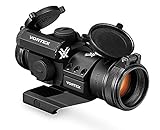
- The new 2019 Strikefire II Red Dot is a rugged, reliable red dot sight that is at home in a variety of applications allowing users to operate between 11 illumination settings.
Fast Target Acquisition When It Matters
In my survival classes, I emphasize that your home defense rifle needs optics that work instantly under stress. The Strikefire II delivers that reliability. During force-on-force training exercises, the unlimited eye relief and 4 MOA dot allow for rapid target engagement even with poor cheek weld or awkward shooting positions.
Defensive Applications
The red/green dot options provide visibility in various lighting conditions. The 4 MOA dot is large enough for quick acquisition but small enough for precise shot placement out to 100 yards. Battery life is exceptional – I’ve run one for over a year without replacement.
Field-Tested Reliability:
- Battery Life: 80,000+ hours on lowest setting
- Durability: Shockproof, waterproof, and fogproof
- Quick Acquisition: Unlimited eye relief for awkward positions
- Night Vision Compatible: Works with NV equipment if needed
Practical Considerations: While it’s designed for close-range work, I’ve successfully used it for precise shots out to 150 yards. Perfect for the multipurpose rifle that might serve for both home defense and occasional hunting.
5. Best for Competition: Nightforce NX8 2.5-20×50 F1

- OPERATION IN EXTREME CONDITIONS – The NX8 family of scopes has been designed and constructed to withstand heavy use in austere environments: extreme heat and cold, dust and sand storms, salty air, high altitude, water, mud, snow; package includes: Tenebraex flip up covers, cleaning fob/ cleaning cloth, multi-tool, power throw lever, stickers, manual
When Winning Matters
In competitive shooting, equipment failures cost matches. The NX8 represents the gold standard for reliability and precision. The 8x zoom range handles everything from close-range stages to long-range precision work, and the glass quality is simply outstanding.
Competition-Proven Features:
- ZeroStop Turrets: Quick, reliable return to zero
- First Focal Plane: Consistent holdovers at any magnification
- Superior Glass: Crystal clear even at maximum magnification
- Compact Design: Lighter than most scopes with similar magnification range
Real Competition Experience: I’ve used this scope in multi-stage competitions where quick transitions between distances are crucial. The wide magnification range and precise adjustments give you a significant advantage over competitors with lesser optics.
6. Best for Varmint Control: Bushnell Banner 6-18×50

- Low-light riflescope with 6-18x magnification and 50mm objective lens
- Dusk & Dawn Brightness (DDB) multicoated lenses for clarity and brightness
Long-Range Pest Management
When you’re protecting crops or livestock from varmints, precise shots at extended ranges become necessary. The Banner 6-18×50 provides the magnification needed for small target identification and precise shot placement. I’ve used it successfully on prairie dogs out to 400 yards and coyotes at similar distances.
Varmint-Specific Advantages:
- High Magnification: 18x allows precise shot placement on small targets
- Light Gathering: 50mm objective works well in low-light conditions
- Durability: Handles repeated shooting sessions without issue
- Value: Significant capability for reasonable cost
Field Application Notes: The higher magnification range makes this scope less suitable for close-range work, but for dedicated varmint rifles, it excels. Perfect for the .22-250 or .223 dedicated to pest control.
7. Best for Long-Range Shooting: Athlon Argos BTR 6-24×50
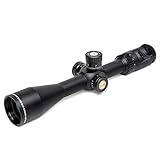
- 0.1 MIL Click Value, 18 MIL Total Adjustment, 10 yards to infinity Parallax adjustment
Reaching Out With Confidence
For serious long-range work, the Argos BTR delivers features typically found in scopes costing much more. The first focal plane reticle, zero-stop turrets, and excellent glass quality make it ideal for pushing your shooting skills to new distances.
Long-Range Performance:
- FFP Reticle: Accurate holdovers at any magnification
- Zero Stop: Quick return to original zero
- Side Parallax: Adjustable from 10 yards to infinity
- Illuminated Reticle: Helps in low-light precision work
Practical Range Testing: I’ve used this scope effectively out to 800 yards on steel targets and 600 yards on big game. The clarity remains excellent even at maximum magnification, and the turret tracking is precise and repeatable.
8. Best Budget Choice: Simmons 8-Point 3-9×50
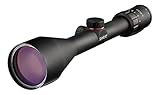
- Riflescope offers robust feature set for the price; Coated optics provide bright, high contrast images; Fully coated optics, waterproof, fog proof & recoil proof
Proving Budget Doesn’t Mean Worthless
My grandfather always said, “It’s not what you’ve got, it’s how you use it.” The Simmons 8-Point proves that point. While it lacks the refinement of premium scopes, it provides reliable performance for casual shooting and hunting at a price that won’t break the bank.
Budget Performance Reality:
- Glass Quality: Adequate for most hunting situations
- Durability: More robust than expected for the price
- Light Gathering: 50mm objective helps in low light
- Simplicity: Basic features that work reliably
Honest Assessment: This isn’t the scope for precision long-range work, but for putting meat in the freezer at reasonable ranges, it gets the job done. Perfect for young hunters or as a backup scope.
9. Best for Survival/Preparedness: Leupold VX-Freedom 1.5-4×20

- Model #180590 – VX-Freedom 1.5-4×20 Riflescope with a MOA-Ring Reticle, Capped Finger Click Adjustments and a Matte finish
Compact Reliability When Space Matters
On my survival rifle – a compact .308 that lives in my truck – the VX-Freedom 1.5-4×20 provides everything needed without unnecessary bulk. The low magnification range and wide field of view work perfectly for the varied scenarios a survival rifle might face.
Survival-Specific Advantages:
- Compact Size: Doesn’t add unnecessary bulk to a survival rifle
- Low Magnification: Wide field of view for close encounters
- Reliable Construction: Leupold quality in a small package
- Light Weight: Important for pack rifles or bug-out guns
Field Reality: At 1.5x, you can engage targets at conversational distance. At 4x, you can make precise shots out to 200+ yards. For a rifle that might be used for anything from home defense to emergency hunting, this magnification range covers the bases.
10. Best Entry-Level: Bushnell Banner 3-9×40

- Bright. Accurate. Dependable. We’ll assume your stand is in the right spot and suggest our Banner Dusk & Dawn series to capitalize on the latter. With their Dusk & Dawn Brightness (DDB) multi-coated lenses, these riflescopes cast clarity and brightness.
Where Everyone Should Start
This scope has probably introduced more hunters to quality optics than any other. It provides solid performance at an entry-level price, making it perfect for new hunters or as a backup scope. The 3-9x range handles most hunting situations, and the construction is more durable than the price suggests.
New Hunter Friendly:
- Simple Operation: No complicated features to confuse beginners
- Proven Range: 3-9x handles most hunting scenarios
- Durability: Tough enough for learning experiences
- Affordable: Leaves budget for other essential gear
Long-Term Perspective: Many hunters start with this scope and use it successfully for years before upgrading. It’s proof that you don’t need to spend a fortune to get reliable performance.
Understanding Rifle Scope Fundamentals
Magnification: Finding Your Sweet Spot
Practice makes permanent, so practice it right – and that includes choosing the right magnification for your intended use. Here’s what I’ve learned from decades of field experience:
Low Power (1-4x): Perfect for thick timber, close-range defense, or dangerous game. Wide field of view allows quick target acquisition and situational awareness.
Medium Power (3-9x, 4-12x): The sweet spot for most hunting. Versatile enough for everything from brush country whitetails to open meadow shots.
High Power (6-24x and up): Specialized tools for long-range precision work, varmint hunting, or competitive shooting.
Variable vs. Fixed Power: Variable scopes offer flexibility but add complexity. Fixed power scopes are simpler and more reliable but less versatile. For most hunters, variable magnification provides the best overall utility.
Glass Quality: Why It Matters More Than Magnification
I learned this lesson the hard way during a early morning elk hunt. My partner had a high-magnification scope with cheap glass, while I carried a lower-power scope with quality lenses. When a bull stepped into a small opening just after dawn, I could see him clearly enough for an ethical shot, while my partner couldn’t make out antler details through his dim, fuzzy glass.
Key Glass Quality Factors:
- Light Transmission: How much light reaches your eye
- Clarity: Sharpness across the entire field of view
- Color Accuracy: True-to-life color reproduction
- Contrast: Ability to distinguish objects from backgrounds
Field Testing Glass Quality:
- Look at text or fine details at maximum magnification
- Check edge-to-edge clarity, not just center sharpness
- Test in low light conditions when possible
- Compare similar magnification scopes side by side
Reticle Selection: Matching Design to Purpose
Duplex/Standard Crosshairs: Simple, proven, and fast. Perfect for traditional hunting where you’ll hold center mass and shoot within normal ranges.
BDC (Bullet Drop Compensator): Provides holdover points for extended ranges. Useful for hunting when you might encounter varied distances.
Mil-Dot/MOA Reticles: Precision reticles for serious long-range work. Require training to use effectively but provide ranging and holdover capabilities.
Illuminated Reticles: Helpful in low light but add complexity and battery dependence. Choose wisely based on your actual needs.
Mounting and Zeroing: Getting It Right
The wilderness doesn’t care about your schedule, but proper scope mounting and zeroing ensure your rifle will be ready when opportunity presents itself.
Proper Mounting Steps:
- Level the rifle in a secure rest
- Mount rings ensuring proper torque specifications
- Install scope with proper eye relief
- Level the reticle using a leveling tool
- Secure everything to manufacturer specifications
Zeroing Process:
- Bore sight to get on paper quickly
- Start at 25 yards for initial adjustments
- Move to 100 yards for final zero
- Confirm zero with multiple groups
- Test at hunting distances to verify holdovers
Pro Tips from the Field:
- Always re-check zero after transport or extreme temperature changes
- Practice shooting from field positions, not just bench rest
- Learn your scope’s click values and trust them
- Keep a log of your zero and any adjustments made
Scope Selection by Hunting Scenario
Whitetail in Thick Cover
Recommended Magnification: 1-4x or 2-7x
Key Features: Wide field of view, low magnification, fast target acquisition
Top Choice: Leupold VX-Freedom 1.5-4×20
When you’re hunting thick hardwoods where shots happen fast and close, you need optics that don’t get in your way. I’ve guided numerous hunters through Montana’s river bottoms where whitetails appear like ghosts and disappear just as quickly.
Western Big Game
Recommended Magnification: 3-9x or 4-12x
Key Features: Versatility for varied ranges, good light transmission, durable construction
Top Choice: Vortex Diamondback 4-12×40
Western hunting throws everything at you – close timber shots, medium-range meadow work, and occasional longer opportunities. You need versatility and reliability above all else.
Dangerous Game
Recommended Magnification: 1-4x or fixed 2.5x
Key Features: Bomb-proof reliability, wide field of view, simple operation
Key Consideration: When things go wrong with dangerous game, they go wrong fast. Keep it simple.
Varmint/Predator Hunting
Recommended Magnification: 6-18x or higher
Key Features: High magnification, precise adjustments, clear glass
Top Choice: Bushnell Banner 6-18×50
When you’re protecting livestock or crops from predators, precise shots at extended ranges become necessary. You need magnification to identify targets and make ethical shots.
Maintenance and Care in the Field
Protecting Your Investment
Daily Field Care:
- Use lens caps religiously – dust and scratches kill clarity
- Check mounting screws periodically – vibration loosens hardware
- Clean lenses properly – use appropriate cleaning materials, not your shirt
- Protect from impact – scopes are precision instruments, treat them accordingly
Long-Term Maintenance:
- Store in consistent temperature and humidity when possible
- Have professional cleaning done annually for hard-used scopes
- Replace batteries in illuminated reticles before critical hunts
- Keep documentation of purchase date for warranty purposes
Field Cleaning Kit Essentials
From my guide pack, here are the cleaning essentials I always carry:
- Lens cleaning solution and proper cleaning cloths
- Lens brush for removing debris before wiping
- Lens caps and scope covers for protection
- Multi-tool with appropriate bits for scope adjustments
When Scopes Fail: Backup Plans and Emergency Fixes
Your best survival tool is the six inches between your ears – and that includes having backup plans when your primary optic fails.
Common Field Failures and Solutions
Fogged Lenses: Usually caused by rapid temperature changes or seal failure. Prevention is better than cure – quality scopes with proper sealing avoid this issue.
Lost Zero: Can result from loose mounting, scope damage, or extreme environmental conditions. Always verify zero before important hunts.
Broken Reticle: Rare in quality scopes but devastating when it happens. Know your rifle’s iron sight capabilities as backup.
Electronic Failures: Dead batteries or electronic component failure in illuminated scopes. Carry spare batteries and know how to use your reticle without illumination.
Backup Sighting Systems
Every hunting rifle should have backup iron sights or know how to use the rifle without optics. I practice regularly with iron sights to maintain proficiency – you never know when you’ll need that skill.
Advanced Scope Features: Worth the Investment?
First Focal Plane vs. Second Focal Plane
First Focal Plane (FFP): The reticle changes size with magnification, maintaining accurate subtension measurements at any power setting. Excellent for precision long-range work where you use reticle markings for ranging and holdovers.
Second Focal Plane (SFP): The reticle stays the same size regardless of magnification. Better for traditional hunting where you primarily use the center crosshairs and want consistent reticle appearance.
My Recommendation: For hunting, SFP is usually preferred. For precision shooting or tactical applications, FFP offers advantages.
Illuminated Reticles
Advantages: Better reticle visibility in low light, faster target acquisition in dim conditions, enhanced contrast against varied backgrounds.
Disadvantages: Added complexity, battery dependence, potential failure points, increased cost.
Field Reality: Illuminated reticles can be helpful but aren’t essential for most hunting. I prefer simple, reliable systems that don’t depend on batteries.
Zero Stop and Turret Features
Zero Stop: Allows you to dial elevation adjustments and return quickly to your original zero. Useful for long-range shooting but unnecessary for most hunting.
Exposed vs. Capped Turrets: Exposed turrets allow quick adjustments but are more vulnerable to accidental movement. Capped turrets protect settings but slow adjustments.
Practical Application: For hunting, capped turrets are usually preferred. For precision shooting or competitive use, exposed turrets with zero stops offer advantages.
Budget Considerations: Getting the Most for Your Money The 50% Rule
Plan for the worst, hope for the best – including your optics budget. I recommend spending up to 50% of your rifle’s cost on optics. A $500 rifle deserves a $250 scope, while a $1,000 rifle can justify a $500 scope.
Where to Spend Your Money
Priority 1: Reliability and Durability – A scope that fails when you need it is worthless regardless of features.
Priority 2: Glass Quality – Poor glass limits your effective shooting time and accuracy potential.
Priority 3: Appropriate Features – Choose features that match your actual needs, not marketing hype.
Priority 4: Advanced Features – Nice to have but not essential for most applications.
Best Value Categories
Under $200: Simmons 8-Point, basic but functional
$200-400: Bushnell Banner series, proven performers
$400-600: Vortex Diamondback, excellent mid-range choice
$600-1000: Leupold VX-Freedom, premium quality and reliability
Over $1000: Nightforce and similar, professional-grade performance
Seasonal Considerations and Environmental Factors
Cold Weather Performance
Montana winters have taught me which scopes handle extreme cold and which ones fail. Quality optics maintain their zero and clarity in sub-zero temperatures, while cheaper scopes may fog, lose zero, or have sluggish adjustments.
Cold Weather Factors:
- Seal integrity prevents fogging and moisture infiltration
- Quality lubricants keep adjustments smooth in cold
- Thermal stability maintains zero through temperature changes
- Lens coatings resist condensation and ice formation
Hot Weather and High Altitude
Hunting in August heat or high altitude conditions creates different challenges. Mirage becomes a factor, air density changes affect bullet trajectory, and extreme temperature swings test scope durability.
Heat Management:
- Quality glass reduces mirage effects
- Stable mounting systems prevent thermal shift
- Proper eye relief prevents scope contact with hot barrels
- UV-resistant coatings maintain clarity
Teaching Others: Sharing Knowledge Responsibly
As an instructor, I’ve seen too many new hunters equipped with inappropriate or poorly set up optics. Respect the game, respect the land, respect yourself – and that includes using equipment that allows ethical, precise shots.
New Hunter Guidance
Start Simple: Begin with basic, reliable scopes rather than complex systems with features they don’t understand.
Emphasize Fundamentals: Proper shooting technique matters more than expensive optics.
Practice Regularly: Familiarity with your equipment is crucial for field success.
Understand Limitations: Know your scope’s capabilities and your own skill limitations.
Ethical Considerations
Every scope recommendation comes with the responsibility to use it ethically. Quality optics extend your effective range, but that doesn’t mean you should take shots beyond your skill level. Practice consistently, understand your limitations, and always prioritize clean, ethical shots over challenging ones.
Final Recommendations: Choosing Your Perfect Scope
After testing hundreds of scopes in conditions ranging from Montana’s frozen peaks to Arizona’s scorching deserts, here’s my straightforward advice:
For the All-Around Hunter: Choose the Leupold VX-Freedom 3-9×40. It’s reliable, clear, and handles 90% of hunting situations perfectly.
For Budget-Conscious Shooters: The Bushnell Banner 3-9×40 provides solid performance without breaking the bank.
For Precision Enthusiasts: The Primary Arms SLX 4-14×44 FFP delivers premium features at a reasonable price.
For Dangerous Game: Go simple and reliable – basic duplex reticle, proven magnification range, and bomb-proof construction.
For Long-Range Work: Invest in quality glass and precise adjustments – the Athlon Argos BTR 6-24×50 delivers both.
Remember, the wilderness doesn’t care about your schedule, but proper preparation – including quality optics – ensures you’re ready when opportunity presents itself. Choose wisely, practice regularly, and always prioritize ethics and safety over impressive shots.
Whether you’re putting meat in the freezer, defending your homestead, or passing on outdoor traditions to the next generation, the right scope makes all the difference. Practice makes permanent, so practice it right – and that includes using equipment you can trust when it matters most.
Want to learn more about survival skills, hunting techniques, and outdoor gear? Explore our other guides on wilderness preparedness, ethical hunting practices, and building the skills that keep you safe and successful in the field. Remember, the best gear is only as good as the person using it – never stop learning and improving your abilities.