Three months ago, my nephew showed up at the ranch with a brand new AR-15 and this Pinty red dot he’d bought off the internet for less than the cost of a tank of gas. “Uncle Flint,” he said, grinning like he’d discovered fire, “check out this deal I found!” By the end of that range session, we’d renamed it the “Pintless” – because that’s about how useful it proved to be under actual shooting conditions.
Look, I understand the appeal of budget optics. Not everyone has the scratch for an Aimpoint, and there’s something to be said for starting somewhere rather than nowhere. But after putting this particular Chinese-made red dot through its paces on everything from a Cricket .22 to a proper fighting rifle, I can tell you exactly where the line between “affordable” and “waste of money” sits. The Pinty 1×20 is firmly on the wrong side of that line.
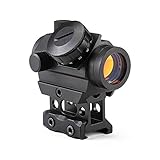
- RED DOT SIGHT: This little reflex sight by Pinty offers a red dot reticle with 11 levels of brightness to work in bright and dim lighting with equal ease; enjoy a wide field of view in any setting thanks to the tubeless design and 25mm reflex lens aperture
The Economics of False Economy
My grandfather had a saying: “Buy once, cry once, or buy cheap and cry forever.” After watching dozens of new shooters struggle with bottom-barrel optics over my years instructing, I’ve seen that wisdom proven true more times than I can count. The Pinty 1×20 represents everything wrong with the race-to-the-bottom mentality in shooting accessories.
But I’m getting ahead of myself. Let me share what three months of testing taught me about this particular piece of aluminum and glass.
What You’re Actually Getting
Specifications on Paper
The Raw Numbers:
- Magnification: 1x (allegedly)
- Dot Size: 4.5 MOA
- Brightness Settings: 11 levels
- Weight: 5.6 ounces
- Battery: CR2032
- Mount: Integrated 20mm Picatinny/Weaver
- Housing: 6063 Aluminum (thin as a beer can)
- Price: Usually $25-40
Those specs might look reasonable for the price, but specifications don’t tell you about quality control, durability, or whether the thing will actually hold zero when it matters. Let me fill in those blanks.
Three Months of Reality Checks
Test Platform Rotation
I ran this optic on four different platforms to give it every chance to prove itself:
- Ruger 10/22 – The gentlest test possible
- Heritage Rough Rider .22 – Rail adapter mount testing
- Mossberg 500 – Recoil tolerance evaluation
- S&W M&P15 – Real-world capability assessment
Each platform revealed different failures, and not the educational kind.
Initial Impressions: The Honeymoon Phase
Unboxing the Pinty, I’ll admit it didn’t look terrible. The aluminum housing felt lightweight but not completely plastic, and the glass appeared reasonably clear. The included Allen wrenches and cleaning cloth suggested someone at least thought about the user experience.
Mounting it on my trusty 10/22, I was pleasantly surprised when it zeroed quickly at 25 yards. The dot was visible, the adjustments clicked positively, and for about 50 rounds, I thought maybe – just maybe – we’d found a diamond in the rough.
Then reality set in harder than a Montana winter.
Where It All Falls Apart
The Mount: Engineering Malpractice
The integrated mount is this optic’s Achilles heel, if Achilles’ entire leg was made of wet cardboard. After 200 rounds through the 10/22 – a rifle with essentially no recoil – the zero had shifted 3 inches at 25 yards. The mount screws required constant retightening, and even with blue Loctite, they wouldn’t stay put.
When I moved it to the M&P15, things got comical. After one 30-round magazine, the entire sight had rotated 5 degrees clockwise. By round 100, the zero had wandered so far I couldn’t hit a barn door from inside the barn. The mount simply cannot handle any real recoil, period.
Glass Quality: You Get What You Pay For
The lens clarity is acceptable in perfect conditions – overcast day, moderate temperature, no stress. But introduce any real-world variables and it falls apart:
- Bright sunlight creates a diagonal red reflection that obscures 30% of the sight picture
- Temperature changes cause internal fogging
- The anti-reflective coating (if it exists) does nothing
- Edge distortion makes the dot look like a comet at higher brightness
Sarah looked through it once and asked if it was supposed to have a “funhouse mirror effect.” That about sums it up.
The Durability Test Nobody Asked For
During a November coyote hunt, I had this mounted on a backup .22 in the truck. Scout, in his excitement at seeing a rabbit, knocked the rifle off the tailgate – a whole 3-foot drop onto frozen ground. The optic survived physically but lost zero completely. When I opened it up later, I found the LED emitter had shifted in its housing.
For comparison, I’ve dropped Bushnell TRS-25s from tree stands and had them maintain zero. The Pinty couldn’t survive an excited dog’s tail wag.
Battery Life: The Only Bright Spot
Ironically, the one thing that works as advertised is battery life. Running at medium brightness, a CR2032 lasted about 800 hours. Of course, this assumes you can tolerate using the sight long enough to drain a battery, which is questionable.
Real-World Performance Failures
Accuracy (Or Lack Thereof)
When the mount stays put (rare), groups at 25 yards run about 1.5 inches with good ammo. Push out to 50 yards and you’re looking at 3+ inch groups, assuming you can see the target through the reflection and distortion. At 100 yards, you might as well be throwing rocks.
The 4.5 MOA dot is too large for precision work but somehow still hard to pick up quickly. It’s the worst of both worlds – not precise enough for accuracy, not bold enough for speed.
Environmental Testing
Montana weather doesn’t care about your budget constraints. This optic failed every environmental test:
- Rain: Fogged internally after 20 minutes
- Cold: Dot flickered and dimmed below 20°F
- Heat: Mount screws loosened in 90°F weather
- Dust: Accumulated inside the housing within weeks
The “waterproof” claim is laughable. This thing handles moisture about as well as a cat handles bath time.
Practical Applications
Where It Barely Works:
- Indoor range plinking with a .22
- Airsoft (maybe)
- Teaching kids what a bad optic looks like
- Paperweight duty
Where It Absolutely Fails:
- Any centerfire rifle
- Defensive applications
- Hunting (unless you enjoy missing)
- Competition (unless last place is the goal)
- Anything requiring reliability
Compared to Actual Options
Versus Bushnell TRS-25 ($60-80)
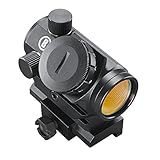
- Beautiful design and durability built to last
- Black with 3 MOA Dot reticle
For literally twice the price (still under $100), the TRS-25 is infinitely superior. Better mount, actual durability, holds zero, handles recoil. If the TRS-25 is a Toyota Corolla, the Pinty is a shopping cart with three wheels.
Versus Sig Romeo5 ($120-150)

- ROMEO5 GUN SIGHT – The ROMEO5 1X20mm Red Dot Sight mounts on any platform, and even though it’s small, it’s tough; The solid, lightweight aluminum design gives peak performance & years of service, so you can be on the top of a hunt or shooting competition
The Romeo5 exists in a different universe of quality. Motion activation, 40,000-hour battery life, actual waterproofing, and it holds zero through actual use. Yes, it costs 4x more. It’s also 40x better.
Versus Iron Sights (Free with rifle)
Your rifle’s iron sights are superior in every measurable way. They don’t lose zero, need batteries, fog up, or fall apart. If you can’t afford a real optic, stick with irons and practice.
Versus Saving Your Money
An empty rail and $40 in your pocket beats a Pinty mounted and frustration in your heart. Save for something better.
The Psychology of Bad Gear
Here’s what really bothers me about optics like the Pinty: they discourage new shooters. Someone buys this thinking they’re getting into red dot sights, has a miserable experience, and concludes either they can’t shoot or red dots don’t work. Neither is true – they just bought garbage.
I’ve watched new shooters struggle with cheap optics, blaming themselves for poor accuracy when the equipment is actively working against them. That’s not just wasteful; it’s harmful to the shooting sports.
What This Teaches Us
The True Cost of Cheap
When you factor in:
- Wasted ammunition trying to zero
- Frustration and lost range time
- Eventual replacement with something decent
- Possible damage to your shooting confidence
That $40 “deal” becomes a $200+ mistake.
Minimum Viable Optic
Based on decades of experience, here’s the absolute minimum you should accept in a red dot:
- Holds zero through 500+ rounds
- Survives a 3-foot drop
- Handles rain without fogging
- Battery lasts 1000+ hours
- Mount that actually works
The Pinty fails every single criterion.
The Uncomfortable Truth
I wanted to find something positive to say about this optic. I really did. Nobody enjoys writing completely negative reviews, and I always try to find the use case where even mediocre gear might shine. But the Pinty 1×20 is actively bad – not just “not good,” but actually detrimental to your shooting experience.
The only valuable service this optic provides is as a cautionary tale about the false economy of ultra-budget accessories.
Field Intelligence Summary
Who Should Buy This
Nobody. I’m serious. There is no use case where this optic makes sense:
- New shooters deserve better
- Kids learning to shoot need reliable equipment
- Plinkers have better options for a few dollars more
- Airsofters have purpose-built alternatives
Who Will Buy This Anyway
- People who see the price and ignore reviews
- Folks who think all red dots are the same
- Shooters about to learn an expensive lesson
- My nephew (who now owns a Romeo5)
The Replacement Timeline
Based on observed patterns:
- Week 1: “This seems pretty good for the price!”
- Week 4: “Why won’t it hold zero?”
- Week 8: “Maybe I need to tighten everything again…”
- Week 12: Orders actual optic, Pinty goes in trash
Save yourself the journey and skip to week 12.
Better Alternatives at Every Price Point
Under $50: Save your money or buy ammunition $50-80: Bushnell TRS-25 (actual functionality) $80-120: Sig Romeo MSR or Vortex Crossfire $120-150: Sig Romeo5 (best value in red dots) $150+: Holosun, Primary Arms, or entry-level Vortex
Each tier up provides exponential improvement in reliability and function.
The Bottom Line
The Pinty 1×20 represents everything wrong with the bottom-tier optics market. It promises basic functionality at an attractive price but delivers frustration and failure. It’s not a stepping stone into better optics – it’s a pothole that’ll damage your wallet and your confidence.
Your best survival tool is the six inches between your ears, and those six inches should tell you to avoid this optic entirely. The wilderness doesn’t care about your budget constraints, but it also doesn’t care if your optic fails when you need it most.
Practice makes permanent, but you can’t practice effectively with equipment that actively works against you. The Pinty 1×20 is a masterclass in how saving money upfront costs more in the long run.
Final Verdict: Hard Pass
After three months of testing, multiple platforms, and giving every benefit of the doubt, I cannot recommend the Pinty 1×20 for any application. It’s not just bad – it’s aggressively inadequate.
My grandfather would’ve looked at this optic, shaken his head, and gone back to iron sights. He’d be right. Sometimes no optic is better than a bad optic, and the Pinty 1×20 is definitely a bad optic.
Save your money, buy quality when you can afford it, and remember: the bitterness of poor quality remains long after the sweetness of low price is forgotten.
Plan for the worst, hope for the best, and never trust your life or your hunt to gear that can’t handle a light breeze.
Looking for optics that actually work? Check out our other reviews at Moosir.com where we test gear that earns its place in the field, not the trash bin. Because reliable equipment isn’t a luxury – it’s a necessity.