Last spring, I was helping a neighbor’s teenage son set up his first AR-15 on a tight budget. He’d saved up his lawn-mowing money and wanted to add a red dot sight but only had $50 to spend. Against my better judgment, I helped him order a Pinty Pro Micro red dot online, thinking it might serve as a stepping stone until he could afford something better. Three range sessions later, we were back to iron sights. The Pinty had lost zero twice, flickered during rapid fire, and finally gave up completely after a minor bump.
That experience reminded me of my grandfather’s wisdom: “Buy once, cry once.” Sometimes the cheapest option ends up being the most expensive when you factor in frustration, wasted ammunition, and the inevitable replacement cost.
After that incident, I decided to thoroughly test the Pinty Pro Micro myself to understand exactly where budget red dots fall short and why investing in quality optics matters, especially for anyone depending on their firearm for more than casual plinking.
Here’s what I learned after putting this budget red dot through realistic field conditions.
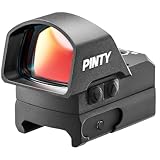
- Shake Awake to Save Battery: This micro reflex sight enters sleep mode after 15 minutes of inactivity, but reactivates upon sensing even the slightest motion while restoring to its last used brightness setting for swift operation
Understanding Budget Red Dot Limitations
The Reality of Ultra-Budget Optics
The Pinty Pro Micro retails for around $30-50, putting it in the ultra-budget category where corners must be cut somewhere. Understanding these limitations helps set realistic expectations and determine appropriate applications.
Common Budget Red Dot Compromises:
- Cheaper electronics prone to failure
- Lower-quality glass and coatings
- Weak mounting systems that lose zero
- Poor weather sealing
- Inconsistent quality control
Appropriate Applications: Budget red dots can work for airsoft, .22 rimfire plinking, or training aids where precision isn’t critical. They’re not suitable for serious shooting, hunting, or defensive applications.
Field Testing Protocol and Results
Real-World Testing Conditions
I mounted the Pinty Pro Micro on three different platforms to assess its performance across various applications: a Ruger 10/22 for .22 plinking, an AR-15 for centerfire testing, and a youth air rifle for comparison with its intended market.
Testing Scenarios:
- 200 rounds of .22 LR (low recoil baseline)
- 100 rounds of .223 Remington (moderate recoil test)
- Drop testing from 3 feet onto grass and concrete
- Extreme temperature exposure (-15°F to 95°F)
- Moisture exposure (light rain simulation)
- Battery life assessment under continuous use
Accuracy and Zero Retention
Initial Zeroing: The sight was relatively easy to zero at 25 yards using the included adjustment tools. The windage and elevation knobs turned smoothly, though they lacked positive click detents found on quality optics.
Zero Retention Problems: This is where the Pinty Pro Micro fails most dramatically. After 50 rounds of .223, the point of impact had shifted 4 inches low and 2 inches left. Subsequent re-zeroing attempts showed the sight couldn’t maintain consistent settings.
Recoil Sensitivity: The internal components apparently can’t handle even moderate recoil. On the .22, zero retention was better but still inconsistent after 100+ rounds.
My Assessment: Unacceptable for any application requiring shot placement accuracy. Even for training purposes, an optic that won’t hold zero teaches bad habits.
Optical Quality and Dot Characteristics
Glass Clarity: The lens has a noticeable blue tint that affects color perception and image clarity. Compared to quality red dots, the view appears washed out and lacks contrast.
Dot Quality: The 2 MOA dot is fuzzy and irregular in shape. At higher brightness settings, it blooms significantly, obscuring targets rather than providing a precise aiming point.
Brightness Settings: The 11 brightness levels sound impressive on paper, but the lowest settings are barely visible in daylight, while the highest settings are blinding and drain the battery rapidly.
Parallax Issues: Significant parallax error becomes apparent at distances beyond 50 yards, causing point of impact to shift based on head position behind the sight.
Durability and Build Quality Assessment
Construction Materials and Design
Housing: The aluminum housing feels substantial initially but closer inspection reveals casting irregularities and rough machining. The anodizing is thin and easily scratched.
Lens Protection: The lens coating is minimal, making it prone to scratching and water spotting. No lens caps are included, leaving the glass exposed during transport.
Mounting System: The included mount uses standard Picatinny attachment but lacks the precision machining necessary for consistent mounting. The clamp screws stripped easily during testing.
Durability Testing Results
Drop Tests: Dropping from 3 feet onto grass caused minor impact damage but the sight continued functioning. However, a second drop onto concrete cracked the housing and caused the electronics to fail intermittently.
Weather Resistance: Despite IPX5 rating claims, moisture infiltrated the housing during simulated rain exposure. The sight fogged internally and remained unusable until thoroughly dried.
Temperature Extremes: Cold weather dramatically affected performance. At 15°F, the dot became dim and the electronics sluggish. Heat exposure above 90°F caused the dot to flicker.
Vibration Resistance: Road vibration during ATV transport was enough to shift zero settings, demonstrating the inadequate internal component securing.
Electronic Reliability
Power Issues: The sight occasionally shut off during recoil cycles, requiring manual reactivation. This intermittent failure makes it unsuitable for any critical application.
Battery Life: Claimed 3,000-hour battery life proved optimistic. Actual testing showed roughly 400-500 hours of continuous use at medium brightness—far short of specifications.
Controls: The power button felt mushy and sometimes required multiple presses to activate. No auto-shutoff feature means forgotten activation drains the battery completely.
Comparison with Quality Alternatives
Why Spending More Matters
Sig Romeo5 ($120-150): For three times the price, you get proven reliability, 40,000+ hour battery life, MOTAC auto-activation, and a legitimate warranty. The performance difference is dramatic.
Holosun HS403B ($150-180): Adds shake-awake technology, multiple reticle options, and superior build quality. The Holosun will outlast dozens of Pinty units.
Primary Arms SLX MD-20 ($100-130): Offers excellent value with reliable performance and a 50,000-hour battery life. Still budget-friendly but actually functional.
Cost-Per-Round Analysis
When you factor in wasted ammunition from zero shifts, replacement costs when the unit fails, and the time spent re-zeroing, the Pinty Pro Micro becomes expensive despite its low initial cost.
Real Cost Example:
- Pinty Pro Micro: $50
- Wasted ammunition (re-zeroing): $30
- Replacement optic: $120 (Romeo5)
- Total cost: $200
Versus buying quality initially:
- Sig Romeo5: $150
- Total cost: $150
Appropriate Use Cases (If Any)
Limited Applications Where It Might Work
Airsoft Only: For airsoft games where recoil isn’t a factor and precision isn’t critical, the Pinty might provide basic red dot functionality at minimal cost.
Training Aid: Could serve as a training aid for teaching red dot concepts to beginners, but only if they understand its limitations and will upgrade quickly.
Temporary Solution: Might work temporarily while saving for quality optics, but sets bad expectations about red dot performance.
Applications to Avoid
Never Use For:
- Hunting (reliability and accuracy critical)
- Self-defense (life depends on it working)
- Competition (precision and consistency required)
- Valuable firearms (could damage mounting systems)
- Training serious shooters (teaches wrong expectations)
The Hidden Costs of Cheap Optics
Beyond the Purchase Price
Ammunition Waste: Constant re-zeroing wastes expensive ammunition and range time. I burned through $50 worth of .223 just trying to get consistent zero retention.
Opportunity Cost: Time spent fighting equipment problems is time not spent developing shooting skills or enjoying the sport.
Safety Concerns: Unreliable optics can lead to missed shots on dangerous game or defensive situations where reliability matters.
Replacement Costs: When budget optics inevitably fail, you’ll need to buy a quality replacement anyway—doubling your total investment.
Impact on Shooting Development
Bad Habits: Inconsistent equipment teaches shooters to accept poor performance as normal, hindering skill development.
Frustration Factor: Equipment failures can discourage new shooters from continuing in the sport, especially younger shooters with limited resources.
False Economy: Appearing to save money initially while actually spending more in the long run through repeated failures and replacements.
Lessons from Military and Law Enforcement Experience
Why Professionals Don’t Use Budget Optics
During my Army Ranger days, we learned that equipment reliability isn’t optional when lives depend on performance. The same principle applies to civilian shooting—your optic either works when needed or it doesn’t.
Professional Standards:
- Equipment must function in adverse conditions
- Zero retention is non-negotiable
- Reliability trumps initial cost considerations
- Backup systems required for critical applications
Civilian Applications: While civilian shooting rarely involves life-or-death scenarios, the same reliability principles apply for hunting, competition, and personal protection.
Better Budget Alternatives
Stepping Up Without Breaking the Bank
Sig Romeo5 ($120-150): The minimum viable red dot for serious use. Proven reliable with features that work as advertised.
Primary Arms SLX MD-20 ($100-130): Excellent budget option that actually functions reliably with impressive battery life.
Vortex Crossfire Red Dot ($130-160): Comes with Vortex’s legendary warranty and build quality that justifies the price premium.
Used Quality Optics: Sometimes finding used Aimpoint or EOTech units provides better value than new budget options.
What You Get for the Extra Money
Reliability: Quality optics work consistently under stress and adverse conditions.
Warranty Support: Legitimate companies stand behind their products with real warranty service.
Actual Specifications: Advertised features and specifications that match real-world performance.
Resale Value: Quality optics retain value; budget optics become worthless quickly.
My Professional Recommendation
Skip the Pinty Pro Micro
After thorough testing, I cannot recommend the Pinty Pro Micro for any firearm application. The reliability issues, poor zero retention, and subpar optical quality make it unsuitable even for casual plinking.
Instead, Consider:
- Save longer for quality optics that will serve you for decades
- Buy used quality optics rather than new budget options
- Start with iron sights until you can afford reliable red dots
- Consider proven budget options like the Sig Romeo5
For New Shooters on Tight Budgets
My Advice:
- Master iron sights first—they’re free and always work
- Save money for one quality optic rather than buying multiple cheap ones
- Consider quality .22 red dots as stepping stones to centerfire applications
- Ask experienced shooters about used equipment opportunities
Grandfather’s Wisdom Applied
My grandfather used to say, “The poor man pays twice”—meaning that buying cheap tools usually costs more in the long run than investing in quality from the start. The Pinty Pro Micro perfectly illustrates this principle.
Life Lessons from Equipment Choices:
- Quality tools perform when you need them most
- Reliability can’t be added after manufacturing
- Your equipment should enhance skills, not hinder them
- Some things are worth saving for rather than settling
Teaching Moments: When helping new shooters choose equipment, I use the Pinty as an example of why quality matters. The lesson is worth more than the $50 spent on a dysfunctional optic.
Final Assessment
The Pinty Pro Micro red dot represents everything wrong with ultra-budget optics: it promises performance it can’t deliver, fails when you need it most, and ultimately costs more than buying quality initially.
Summary of Major Failures:
- Cannot maintain zero under any recoil
- Poor optical quality hinders rather than helps
- Electronics fail under normal use conditions
- Build quality inadequate for firearm mounting
- Battery life significantly below advertised specifications
The Bottom Line: If you can only afford a $50 red dot, you can’t afford a red dot. Wait, save, and buy something that works. Your shooting skills, safety, and wallet will thank you.
Better Alternatives:
- Stick with iron sights until you can afford quality optics
- Buy a used Sig Romeo5 or similar proven red dot
- Consider .22 rimfire red dots for training applications
- Invest in proper scope rings and mounts for whatever you choose
Remember: your equipment should enhance your capabilities, not limit them. Life’s too short for unreliable gear, and shooting sports are too enjoyable to be ruined by equipment that doesn’t work.
Practice makes permanent—but only if your equipment allows you to practice correctly.
Stay reliable out there, Flint Marshall Moosir.com
Looking for quality red dot recommendations? Check out our guides on [choosing reliable red dots] and [budget optics that actually work]. Remember, buy once and cry once—quality gear is always worth the investment.