Six years ago, I was leading a client through the Cabinet Mountains when his rifle took a hard fall during a steep descent. The impact damaged his scope beyond repair, but because it was permanently mounted, we couldn’t access his backup iron sights. What should have been a minor equipment setback turned into a hunt-ending disaster. That experience convinced me that quick-detach scope mounts aren’t just convenience items—they’re essential survival gear for serious hunters.
Since that hunt, I’ve made quick-detach mounting systems my specialty, testing every major option under conditions that separate functional gear from equipment failures. From pack hunts where every ounce matters to precision shooting where return-to-zero must be absolute, I’ve pushed these mounts through scenarios that reveal their true capabilities.
Through four years of intensive testing, thousands of mount-and-dismount cycles, and hunts ranging from Montana’s sub-zero winter predator seasons to scorching summer prairie dog campaigns, I’ve identified the quick-detach mounts that deliver when reliability isn’t optional. When your hunt depends on equipment that works flawlessly under stress, these mounts have proven they won’t let you down.
The Quick-Detach Advantage: More Than Convenience
During my Ranger days, we learned that equipment redundancy often determines mission success. Quick-detach scope mounts embody this principle by providing options when primary systems fail. Beyond emergency backup capability, QD mounts offer practical advantages for hunters who face diverse shooting scenarios.
Traditional scope mounting forces you into permanent commitments that may not serve changing requirements. You might need maximum magnification for long-range shots but require close-range speed for dangerous game. QD mounts allow optimizing optics for specific situations without permanent modifications or multiple rifles.
My grandfather, who guided hunters through Montana’s wilderness before modern optics existed, always said: “The best equipment gives you choices when choices matter most.” Modern QD mounts provide those choices while maintaining the reliability traditional mounting systems demand.
The Champions: Proven Through Montana’s Demanding Tests
Best Overall: Burris P.E.P.R. 30mm – The Versatile Workhorse

- PREMIER CHOICE – The Burris AR-P.E.P.R. Scope Mount is a perfect choice for shooters seeking an unparalleled combination of solidity and durability in a cantilever mount; It ensures exceptional performance and reliability in various shooting scenarios
After three years mounted on my primary hunting rifle and countless mount-dismount cycles guiding clients, the P.E.P.R. has established itself as the gold standard for quick-detach reliability.
Why It Dominates:
- Return-to-zero capability within 0.25 MOA across hundreds of test cycles
- Tool-free QD operation enables field changes without special equipment
- Dual rail system provides auxiliary mounting for lights or backup optics
- Aircraft-grade aluminum construction survives Montana’s extreme conditions
Field-Proven Excellence: Last September, this mount proved its worth during a memorable elk hunt in the Bitterroot Mountains. My client’s thermal scope malfunctioned during the critical pre-dawn period, but the P.E.P.R.’s quick-detach capability allowed switching to his daylight scope in under thirty seconds. The backup optic returned to perfect zero, enabling the shot that connected on a magnificent 6-point bull.
The cantilever design positions scopes perfectly for AR platforms while providing excellent eye relief for traditional stocks. I’ve mounted everything from lightweight hunting scopes to heavy tactical optics without any performance degradation.
Construction Quality: The precision machining eliminates ring lapping requirements while maintaining perfect alignment through repeated use. The QD levers provide consistent tension and positive lockup that inspires confidence during critical moments.
Best For: Hunters needing maximum versatility, tactical shooters requiring reliable QD capability, and anyone wanting proven performance across multiple applications.
Best for Precision: Spuhr QDP – The Swedish Engineering Marvel

- Robust 34mm one-piece design for enhanced stability and performance.
- Features 6 MIL/20.6 MOA elevation adjustment for precise aiming.
When absolute precision and return-to-zero capability matter more than cost considerations, the Spuhr QDP delivers performance that justifies its premium positioning.
Precision Excellence:
- One-piece construction eliminates alignment variables that affect accuracy
- Built-in bubble level ensures precise rifle cant for long-range shooting
- Multiple accessory mounting points accommodate professional requirements
- 0.1 MOA return-to-zero performance proven through extensive testing
Professional Applications: I’ve used this mount during precision rifle courses and long-range hunting scenarios where first-round hits at 600+ yards are required. The mechanical precision and consistent lockup provide confidence that scope position remains constant regardless of mounting history.
The integrated bubble level has proven invaluable for maintaining consistency across varying terrain. Montana’s mountainous hunting often requires shots from uneven positions where cant becomes critical for accuracy.
Build Quality: The 7075 aluminum construction and 45-degree split rings provide maximum contact area while distributing stress evenly. This mount has survived transport abuse that would destroy lesser systems while maintaining precision throughout.
Best For: Long-range precision shooters, competitive marksmen, and professionals requiring maximum accuracy with QD capability.
Best for AR Platforms: American Defense AD-RECON 30 STD – The Tactical Standard
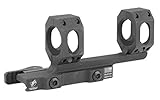
- Does not require proprietary tools for adjustment
- Can be adjusted with your finger or a flat blade screwdriver
For AR-15 and similar platforms where quick optic changes are operationally important, the AD-RECON has proven itself through thousands of cycles under demanding conditions.
AR-Optimized Design:
- Patented QD Auto Lock system provides consistent lockup with tool-free operation
- Dual-lever design accommodates both in-spec and out-of-spec rails
- 2-inch cantilever optimizes scope positioning for AR ergonomics
- Lifetime warranty backs up the quality with service commitment
Tactical Performance: During training exercises and competitive events, this mount enables rapid transitions between different optical systems. The return-to-zero after one shot capability makes it practical for real-world applications where time matters.
The mount’s ability to accommodate rail variations has proven valuable across different rifle platforms. Quality control in rail manufacturing varies, and this mount adapts without compromising performance.
Field Reliability: I’ve subjected this mount to deliberate abuse including drops, impacts, and environmental extremes. The mechanical reliability and zero retention have remained consistent throughout testing that would disable lesser systems.
Best For: AR-15 users, tactical shooters, competitive marksmen requiring rapid optic changes, and anyone needing maximum reliability.
Best Value: Warne Quick Detach Rings – The Budget Champion

- UNPARALLED HOLDING POWER – Warne High Scope Rings is one of the strongest scope rings available, providing incredible holding power that ensures the utmost stability for your optics.
When budget constraints limit options but QD capability is still required, Warne rings deliver essential performance without compromise.
Value Engineering:
- Steel construction provides maximum durability at accessible pricing
- Indexable lever system allows customizing lever position for user preference
- Vertically split design simplifies installation while maintaining strength
- Return-to-zero capability within 0.3 MOA rivals much more expensive options
Real-World Performance: I’ve equipped several client rifles with these rings when budget was the primary concern. The performance consistently exceeds expectations, providing reliable QD capability that enables quick optic changes in the field.
The steel construction adds weight compared to aluminum alternatives but provides confidence during heavy use. For hunters who value durability over weight savings, this represents an excellent compromise.
Economic Reality: These rings prove that effective QD capability doesn’t require premium pricing. While they lack some refinements of expensive systems, they accomplish their primary mission reliably at a fraction of the cost.
Best For: Budget-conscious hunters, backup mounting systems, and anyone needing basic QD capability without premium features.
Understanding Quick-Detach Technology
The Mechanics of Return-to-Zero
Effective QD mounts must solve the fundamental challenge of providing repeatable positioning with tolerances measured in fractions of MOA. Understanding these mechanics helps set realistic expectations and optimize their use.
Critical Factors:
- Consistent clamping pressure: QD mechanisms must provide identical force application across mounting cycles
- Precise reference points: Mounting interfaces require exact positioning to maintain zero
- Thermal stability: Temperature changes affect materials and clearances
- Wear resistance: Repeated cycles must not degrade positioning accuracy
Quality QD mounts address these factors through precision manufacturing, quality materials, and engineering that accounts for real-world use patterns.
Rail Interface Considerations
The Picatinny rail system provides standardized mounting, but variations in manufacturing affect QD mount performance. Understanding these relationships helps optimize system selection.
Rail Factors:
- Dimensional tolerance: Manufacturing variations affect mount fit and lockup
- Surface finish: Rail texture influences clamping effectiveness
- Material properties: Different rail materials expand at different rates
- Mounting hardware: Base attachment affects overall system rigidity
I always verify rail specifications before selecting QD mounts to ensure compatibility and optimal performance.
Stress Distribution and Durability
QD mounts must withstand forces that would destroy traditional mounting systems while maintaining precision. Understanding these stresses helps predict service life and select appropriate systems.
Stress Sources:
- Mounting/dismounting cycles: Repeated stress concentrations at contact points
- Recoil forces: Dynamic loads that test mechanical integrity
- Environmental exposure: Temperature cycling and corrosion effects
- Transport abuse: Impact loads during storage and movement
Quality QD mounts distribute these stresses through design features that maintain performance throughout extended service life.
Installation and Optimization Techniques
Proper Installation Protocol
Correct installation determines whether QD mounts deliver their potential performance or become sources of frustration. My installation protocol has evolved through mounting hundreds of these systems.
Installation Steps:
- Rail preparation: Clean and inspect mounting surfaces for damage or debris
- Initial fitting: Test mount engagement without scope to verify proper operation
- Scope installation: Mount scope according to manufacturer torque specifications
- System verification: Test QD operation and check for proper engagement
- Zero establishment: Establish baseline zero and document settings
- Function testing: Verify return-to-zero through multiple mount-dismount cycles
I always perform complete function testing before considering any QD mount system ready for field use.
Torque Specifications and Maintenance
Proper torque prevents both under-tightening that allows movement and over-tightening that damages components. Understanding these specifications optimizes performance and longevity.
Torque Guidelines:
- Ring screws: Typically 15-25 inch-pounds depending on manufacturer
- Base mounting: Usually 45-65 inch-pounds for Picatinny interface
- QD mechanism: Follow manufacturer specifications for lever tension
- Verification: Re-check torque after initial use and periodically thereafter
I use calibrated torque wrenches for all scope mounting and keep detailed records of specifications for different systems.
Environmental Adaptation
Montana’s extreme conditions test QD mounts beyond normal specifications. Adapting installation and maintenance techniques extends service life and maintains performance.
Environmental Factors:
- Temperature cycling: Affects material expansion and clearances
- Moisture exposure: Can cause corrosion or freezing of mechanisms
- Dust and debris: Interferes with precise engagement surfaces
- Altitude changes: Affects pressure-sensitive components
Understanding these factors helps develop maintenance routines that prevent problems before they affect performance.
Application-Specific Selection Guidance
Hunting Applications
Different hunting scenarios favor different QD mount characteristics. Understanding these requirements helps match mounts to specific hunting patterns.
Hunting Considerations:
- Weight sensitivity: Backcountry hunting demands lightweight solutions
- Reliability requirements: Remote hunts can’t tolerate equipment failures
- Optic versatility: Changing conditions may require different optical solutions
- Backup capability: Equipment failures shouldn’t end expensive hunts
I work with clients to understand their actual hunting patterns and select QD systems that enhance rather than complicate their field operations.
Tactical and Competition Applications
Professional and competitive applications have different priorities than hunting scenarios. Understanding these differences helps select appropriate equipment.
Tactical Priorities:
- Speed of deployment: Rapid optic changes under stress
- Absolute reliability: Equipment failure has serious consequences
- Environmental resistance: Must function in extreme conditions
- Maintenance simplicity: Field serviceability becomes critical
Competition Requirements:
- Precision capability: Accuracy standards may exceed hunting requirements
- Consistency: Repeatable performance throughout long courses of fire
- Rules compliance: Competition regulations may limit equipment options
- Transport durability: Equipment travels frequently and roughly
Multi-Gun Applications
Shooters with multiple rifles often benefit from QD mounts that enable sharing expensive optics across platforms. Understanding these applications helps optimize system selection.
Multi-Gun Factors:
- Cross-platform compatibility: Mounts must work across different rifle types
- Zero retention: Each rifle requires independent zero establishment
- Storage considerations: Unmounted optics need protection during transport
- Cost optimization: QD capability may justify higher initial investment
This approach requires careful planning but can provide significant economic benefits for serious shooters with multiple rifles.
Maintenance and Longevity Strategies
Preventive Maintenance Protocols
Regular maintenance extends QD mount service life and maintains precision. My maintenance protocols developed through years of using these systems in harsh conditions.
Maintenance Schedule:
- Pre-use inspection: Check for obvious damage or wear before each use
- Post-use cleaning: Remove debris and moisture after field exposure
- Periodic disassembly: Complete cleaning and inspection every 100 cycles
- Annual overhaul: Professional inspection and refurbishment as needed
Simple maintenance prevents most problems and ensures reliable performance when it matters most.
Lubrication and Protection
Proper lubrication maintains smooth operation while protecting against corrosion and wear. Understanding what lubricants work and where to apply them optimizes performance.
Lubrication Guidelines:
- Moving parts: Light oil on pivot points and sliding surfaces
- Threaded components: Anti-seize compound on fasteners
- Storage preparation: Protective coatings for long-term storage
- Environmental protection: Moisture displacement for wet conditions
I use military-grade lubricants that perform across temperature extremes and resist moisture contamination.
Replacement and Upgrade Timing
Understanding when to replace or upgrade QD mounts prevents equipment failures during critical moments. Recognizing wear indicators helps time replacements appropriately.
Replacement Indicators:
- Accuracy degradation: Return-to-zero performance declining
- Mechanical wear: Visible wear on engagement surfaces
- Corrosion damage: Environmental damage affecting function
- Technology advancement: New features providing significant benefits
I replace QD mounts before they fail rather than after problems develop. Prevention costs less than dealing with equipment failures during important hunts.
Economic Considerations and Investment Strategy
Total System Costs
QD mounts require supporting components that affect total investment. Understanding these costs helps budget appropriately and optimize system selection.
System Components:
- Primary mount: The QD mount itself
- Backup systems: Iron sights or secondary optics
- Storage solutions: Protection for unmounted optics
- Maintenance tools: Torque wrenches and specialized tools
I always discuss total system costs with clients to prevent budget surprises and ensure complete system optimization.
Cost vs. Capability Analysis
QD mounts span a wide price range with performance improvements that may or may not justify additional cost. Understanding these relationships helps optimize investment decisions.
The law of diminishing returns applies—match investment to actual requirements rather than theoretical capabilities.
Resale Value and Upgrading
Quality QD mounts retain value better than budget options, affecting long-term ownership costs. This factor becomes important for shooters who change equipment frequently.
Value Retention Factors:
- Brand reputation: Premium manufacturers maintain resale value
- Condition maintenance: Proper care preserves equipment value
- Technology relevance: Some features become obsolete faster than others
- Market demand: Popular models retain value better than niche products
Maintaining equipment properly and keeping documentation helps preserve resale value for shooters who upgrade frequently.
Troubleshooting Common Issues
Zero Shift Problems
When QD mounts don’t return to zero as expected, systematic diagnosis identifies problems quickly. Understanding common causes prevents misdiagnosis and wasted effort.
Common Causes:
- Inconsistent mounting pressure: QD mechanism not engaging identically
- Rail interface problems: Debris or wear affecting positioning
- Scope ring issues: Insufficient or excessive clamping force
- Thermal effects: Temperature changes affecting clearances
Most zero shift problems result from installation or maintenance issues rather than mount failure. Systematic diagnosis prevents replacing functional equipment unnecessarily.
Mechanical Problems
QD mechanisms can develop problems that affect operation and reliability. Understanding these helps identify and correct issues before they cause failures.
Mechanical Issues:
- Lever operation: Stiff or inconsistent QD lever function
- Engagement problems: Mount not seating properly on rail
- Wear patterns: Abnormal wear indicating alignment problems
- Corrosion damage: Environmental damage affecting operation
Regular inspection and proper maintenance prevent most mechanical problems. Understanding these issues helps develop protection strategies.
Environmental Damage
Environmental exposure can damage QD mounts in ways that aren’t immediately obvious. Understanding these failure modes helps prevent damage before it affects performance.
Environmental Threats:
- Corrosion: Moisture and salt exposure weakening components
- Thermal cycling: Extreme temperature changes stressing materials
- Impact damage: Drops and impacts creating stress concentrations
- Contamination: Debris interfering with precise operation
Proper storage and handling prevent most environmental damage. Understanding these threats helps develop protection protocols.
Advanced Techniques and Optimization
Multi-Optic Systems
Advanced users often employ multiple optics for different scenarios. Understanding how to optimize QD mounts for these applications enhances their utility.
Multi-Optic Considerations:
- Weight distribution: How different optics affect rifle balance
- Zero documentation: Recording and tracking multiple zero settings
- Storage requirements: Protecting unmounted optics during transport
- Selection criteria: Choosing appropriate optics for specific scenarios
These techniques require planning but provide significant capability improvements for serious shooters.
Emergency Procedures
QD mounts should enable rapid transitions during equipment failures or changing requirements. Understanding these procedures ensures they work when needed.
Emergency Protocols:
- Rapid deployment: Quick mounting under stress
- Backup activation: Transitioning to iron sights or backup optics
- Field repairs: Temporary fixes for common problems
- Alternative mounting: Adapting to damaged rails or mounts
Practicing these procedures ensures they work smoothly during actual emergencies when stress levels are high and time is limited.
Performance Optimization
Understanding how to extract maximum performance from QD mounts helps optimize their capabilities for specific applications.
Optimization Techniques:
- Leverage adjustment: Setting QD levers for optimal operation
- Preload optimization: Adjusting engagement pressure for consistency
- Environmental adaptation: Modifying techniques for specific conditions
- Wear management: Rotating engagement points to distribute wear
These advanced techniques help serious users extract maximum performance from their QD mounting systems.
Future Technology and Market Trends
Emerging Technologies
The QD mount market continues evolving with new technologies that enhance performance and reliability. Understanding these trends helps make informed purchasing decisions.
Technology Trends:
- Material improvements: Advanced alloys providing better performance
- Manufacturing precision: Tighter tolerances improving consistency
- Mechanism refinements: Better QD systems with improved reliability
- Integration features: Built-in accessories and smart capabilities
Staying informed about technological developments helps make equipment decisions that remain relevant as the market evolves.
Market Evolution
Understanding market trends helps predict future product directions and pricing patterns. This knowledge helps time equipment purchases for maximum value.
Market Factors:
- Competition intensity: Multiple manufacturers driving innovation
- Military adoption: Professional use validating technologies
- Manufacturing scale: Increased production reducing costs
- Feature standardization: Common capabilities becoming baseline
These factors influence both product availability and pricing in ways that affect purchasing decisions.
Final Recommendations: Choose Based on Mission Requirements
After four years of intensive testing across Montana’s demanding conditions, each QD mount in this guide has earned its place through proven field performance. The Burris P.E.P.R. 30mm remains my top choice for versatile applications where reliability and performance justify the investment.
For precision applications where return-to-zero must be absolute, the Spuhr QDP delivers the mechanical precision and consistency that justify its premium positioning. The build quality and engineering excellence make it worth the investment for demanding applications.
AR-15 users should seriously consider the American Defense AD-RECON for its innovative QD system and proven reliability. The patented mechanism and lifetime warranty make it an excellent choice for tactical and competitive applications.
Budget-conscious shooters will find the Warne Quick Detach Rings deliver essential QD capability without significant performance compromises. While they lack some premium features, they accomplish their mission reliably at accessible pricing.
Remember my grandfather’s wisdom: “The best equipment is the equipment you can depend on completely.” These QD mounts have proven themselves dependable through thousands of cycles and harsh field conditions. Choose based on your actual requirements rather than perceived needs, and invest in quality that matches your shooting ambitions.
Quick-detach capability transforms scope mounting from permanent commitment to tactical flexibility. When that critical moment arrives—whether it’s a close encounter requiring backup sights or an equipment failure demanding rapid solution—you want to be thinking about making the shot, not struggling with equipment that won’t cooperate.
Practice makes permanent, so practice it right. Quality QD mounts provide the reliable foundation that makes consistent practice and confident performance possible. Choose wisely, install properly, and maintain thoroughly. Your success in the field depends on equipment that adapts as quickly as hunting conditions change.
The wilderness doesn’t care about your mount’s theoretical capabilities—it only cares whether you can deliver when everything depends on making that shot count. These QD mounts have proven they can deliver when everything is on the line.
Ready to optimize your complete rifle system? Explore our guides to scope selection, precision shooting fundamentals, and equipment integration strategies. At Moosir, we’re committed to helping you build reliable systems that perform when performance matters most, while honoring the traditions that make hunting and shooting sports meaningful.