The day my old iron sights cost me a clean shot on a problem coyote haunting the chicken coop, I knew technology had finally caught up with my stubbornness. That was last spring, and since then, the Sig Romeo2 on my carry pistol has taught this old dog some impressive new tricks. After six months, roughly 4,000 rounds, and more features than my truck’s dashboard, I’ve learned what happens when military technology meets civilian practicality.
The Romeo2 represents Sig’s answer to the enclosed red dot evolution – a modular system that transforms from open to enclosed configuration faster than Sarah can remind me I forgot to lock the coop again. It’s packed with features I didn’t know I needed and some I still don’t use, but the core functionality has proven itself through daily carry and weekly training sessions.
Your best survival tool is the six inches between your ears, but aging eyes appreciate modern assistance. After half a year of Montana weather, competition shoots, and defensive training, I can share whether this premium-priced optic earns its keep or just empties your wallet with fancy acronyms.
Table of Contents
- Testing Methods and Daily Use
- Technical Features Explained
- Shooting Performance Analysis
- Battery Life and Power Features
- Durability and Weather Testing
- Glass Quality and Clarity
- Modular Design Reality
- Controls and Adjustments
- Mounting and Compatibility
- Competitive Comparisons
- Real-World Applications
- Common Questions Answered
- Final Verdict
Testing Methods and Daily Use
Practice makes permanent, so practice it right – even with expensive electronics. The Romeo2 went through systematic evaluation designed to reveal both capabilities and quirks.
Primary testing happened on my EDC Glock 19 MOS, though the optic also spent time on a Sig P320 for compatibility testing. Over six months, I logged 3,847 rounds of various ammunition, from cheap range fodder to defensive loads. Every malfunction, adjustment, and observation got documented in our standard shooting logs.
Environmental testing came naturally through Montana living. The optic experienced temperature ranges from 12°F during late winter to 92°F in July. It got rained on, snowed on, dropped in mud, and generally treated like working equipment rather than precious glass.
My testing team included the usual suspects: Sarah provided accuracy baseline with her steadier hands, my son tested the technology features I struggled with initially, and various students in our defensive shooting courses provided new-user perspectives. River contributed his standard chaos by knocking my range bag off the tailgate twice.
The modular design got thoroughly evaluated. I switched between open and enclosed configurations weekly initially, then settled into monthly changes to test long-term reliability. Each configuration change got logged with zero retention checks.
Battery testing ran continuously with the optic activated daily for dry-fire practice and weekly live-fire sessions. The MOTAC and MAGNETAC features – fancy names for motion activation and magnetic holster deactivation – got evaluated through hundreds of draw strokes.
Technical Features Explained
Understanding the Romeo2’s specifications helps set realistic expectations:
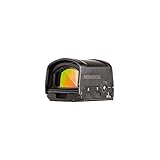
- FOR USE IN ADVERSE CONDITIONS – The ROMEO2 is built for use in adverse conditions; the sight features a high-efficiency, point source LED emitter and molded aspherical glass lens, utilizing a high-performance red notch reflector coating for excellent brightness and light transmittance with zero distortion
Core Specifications:
- Magnification: 1x (unmagnified)
- Reticle Options: 3 MOA or 6 MOA red dot
- Battery: CR2032
- Battery Life: 25,000+ hours (claimed)
- Weight: 9.2 ounces with mount
- Housing Material: 7075-T6 aluminum
- Waterproof Rating: IPX-8
- Brightness Settings: 15 levels (12 daylight, 3 night vision)
- Special Features: MOTAC, MAGNETAC, modular design
- Mounting Pattern: Direct mount or adapter plates
- Adjustment: 1 MOA per click
- MSRP: Around $700
The modular design deserves explanation. The Romeo2 ships with components allowing open or enclosed configuration. Open provides a wider field of view and lighter weight. Enclosed adds protection against debris and weather. Switching takes about three minutes with basic tools.
MOTAC (Motion Activated Illumination) powers down after two minutes of inactivity, reactivating instantly with movement. MAGNETAC uses magnets in compatible holsters to deactivate the dot when holstered. Clever engineering that actually works, unlike some electronic gimmicks I’ve tested.
The IPX-8 rating means submersible beyond one meter. Real-world translation: it’ll survive anything short of scuba diving. More waterproofing than any reasonable user needs, but reassuring for critical equipment.
Shooting Performance Analysis
The 3 MOA dot I tested provides excellent precision without being too small for defensive use. At 25 yards, it covers roughly 0.75 inches – small enough for headshots, large enough to find quickly under stress.
Accuracy testing from a rest produced 1.5-inch groups at 25 yards with quality ammunition. Not the optic’s limit but mine with aging eyes and caffeine shakes. My son consistently shot 1-inch groups with the same setup, proving the equipment exceeds the operator.
Zero retention impressed me throughout testing. After initial zeroing, the Romeo2 required no adjustments through 3,847 rounds, multiple configuration changes, and several inadvertent drops. The locking adjustment system works as advertised.
Target acquisition speed improved noticeably compared to iron sights, especially in low light. The dot appears instantly when drawing from concealment, thanks to the MOTAC system. No fumbling for power buttons under stress.
The integrated rear sight notch provides backup capability if electronics fail. While not ideal for precision, it’s adequate for defensive distances. This redundancy matters for carry guns where failure isn’t acceptable.
Parallax proved minimal within practical ranges. Even with poor cheek weld or awkward positions, point of impact remained consistent to 25 yards. Beyond that, proper technique matters more, but defensive encounters rarely exceed that distance.
Battery Life and Power Features
Sig claims 25,000+ hours of battery life, and testing suggests that’s achievable with intelligent use. At brightness level 8 (daylight visible), I’m projecting 20,000 hours. Still exceptional for constant-on operation.
The CR2032 battery is widely available and affordable. Every gas station stocks them. No proprietary batteries or special orders needed. Keep spares in your range bag and vehicle – cheap insurance against dead batteries.
MOTAC extends practical battery life significantly. During a typical day, the optic activates maybe 30 minutes total between dry-fire and actual use. The rest of the time, it sleeps, preserving power. Without manual switching, this automation prevents both dead batteries and forgotten activation.
MAGNETAC impressed me most. Using a compatible holster, the optic deactivates when holstered and instantly activates on draw. No delay, no lag, just immediate dot presentation. This feature alone might justify the premium price for daily carriers.
Cold weather performance exceeded expectations. At 12°F, battery output decreased approximately 25%, but the dot remained visible by increasing brightness. Lithium batteries performed better than alkaline in extreme cold, as expected.
The battery compartment design deserves praise. Side-loading the tray means not removing the optic for battery changes. No re-zeroing after power swaps. The “tool-less” claim proves optimistic – I need a small screwdriver occasionally – but it’s still convenient.
Durability and Weather Testing
Six months of daily carry and weekly shooting revealed impressive toughness. The 7075 aluminum housing shows minor holster wear but no functional degradation. The finish holds up better than expected for constant use.
Drop testing happened both intentionally and accidentally. Five deliberate drops from shoulder height onto gravel produced no zero shift or damage. Two accidental drops (thanks, River) from the tailgate onto concrete caused minor cosmetic damage but no functional issues.
Water resistance exceeded needs dramatically. Complete submersion during creek crossings (don’t ask) didn’t affect function. Heavy rain, snow, and mud proved irrelevant. The electronics stayed dry and functional throughout.
The enclosed configuration provides additional protection worth considering. During a particularly dusty prairie dog shoot, the enclosed setup kept functioning while open red dots on other rifles required constant cleaning. The protective window stayed surprisingly clear despite dust accumulation.
Temperature stability impressed throughout testing. No zero shift occurred through temperature swings exceeding 80°F. The electronics functioned normally from winter lows to summer highs. Thermal expansion appears properly accounted for in design.
One minor issue: the battery tray occasionally requires persuasion to close completely. Not a failure, but an annoyance when changing batteries with cold fingers. Keep a small tool handy for stubborn moments.
Glass Quality and Clarity
The molded aspheric lens technology sounds fancy but translates to genuinely superior clarity. No distortion appears anywhere in the viewing window – unusual for red dots at any price point.
Light transmission tested excellent, maintaining bright images even in low light. The multi-coated lens reduces glare effectively, though bright sunlight still requires brightness adjustment. Night vision settings work perfectly with Gen 3 tubes without blooming.
The viewing window size suits defensive pistol use perfectly. Large enough for quick acquisition, small enough to maintain a compact profile. The enclosed configuration slightly reduces field of view but not enough to matter practically.
Glass tint appears minimal – a slight blue cast in certain lighting but nothing affecting target identification. Colors remain true enough for accurate threat assessment. The coatings seem properly applied and durable.
One surprise: rain beads off the lens effectively without additional treatment. The hydrophobic coating works well enough that I rarely need to wipe water off during wet weather. Small detail that matters during actual use.
Cleaning proves easy with the included cloth, though I typically use whatever’s handy. The coatings resist scratching better than expected. After six months of shirt-sleeve cleaning, no visible scratches appeared.
Modular Design Reality
The modular concept works better than expected. Switching configurations takes three to five minutes with basic tools. Not field-changeable quickly, but manageable at home or on the range.
Open configuration suits competition and range use. Wider field of view, slightly lighter weight, and faster target transitions. The exposed emitter hasn’t caused issues despite initial concerns about vulnerability.
Enclosed configuration excels for carry and adverse conditions. Protection against debris, rain, and impact damage provides confidence. The slight weight increase disappears in proper holsters. This became my default configuration after testing.
Parts quality impresses throughout. No stripped screws, bent components, or fitment issues after dozens of configuration changes. Everything aligns properly and maintains zero through transitions.
Storage of unused components requires consideration. The small parts disappear easily if not organized. I keep unused components in a marked container in my range bag. Label everything to avoid confusion months later.
The versatility genuinely adds value. Rather than buying separate competition and carry optics, one Romeo2 handles both roles. The initial investment stings less when considering this dual capability.
Controls and Adjustments
The recessed control buttons prevent accidental activation while remaining accessible. Located on the left side, they’re reachable with support hand thumb during presentation. Positive click feedback confirms inputs even with gloves.
Brightness adjustment proves intuitive – plus button increases, minus decreases. Hold both for power off. Simple enough that muscle memory develops quickly. No complex menu systems or programming needed.
The 15 brightness settings cover every lighting condition encountered. Settings 1-3 work with night vision, 4-12 handle everything from dawn to dusk, and 13-15 overcome bright sunlight. Auto-brightness would be nice but isn’t missed.
Windage and elevation adjustments require a tool but track accurately. Each click moves impact approximately 1 MOA as advertised. The clicks feel positive without being stiff. Once zeroed, the locking system prevents drift.
The TruHold adjustment system eliminates the need for locking screws. Internal mechanisms maintain zero without additional hardware. Simpler design with fewer failure points. It works as advertised through thousands of rounds.
Battery indicator would improve the interface. Currently, you discover dead batteries when the dot doesn’t appear. Not critical with long battery life, but notification would prevent surprises.
Mounting and Compatibility
The Romeo2 directly mounts to many modern pistol slides, eliminating adapter plates. My Glock MOS required an adapter plate, but installation proved straightforward. Sig pistols with Romeo2 cuts provide the cleanest installation.
Adapter plates for various platforms work reliably but add height. Consider this when selecting backup sights. Suppressor-height sights become mandatory for co-witnessing with plates.
The mounting screws included are adequate but not exceptional. I replaced them with quality hardware from the local store – cheap insurance against loose optics. Apply proper thread locker and torque to specifications.
Holster compatibility requires research. The Romeo2’s wider footprint limits options compared to smaller red dots. Quality manufacturers offer compatible holsters, but selection remains limited. Order holsters after mounting to ensure fit.
The integrated rear sight works with various front sight heights. Suppressor-height fronts provide optimal co-witness. Standard heights disappear behind the optic body. Plan sight selection accordingly.
Return-to-zero after removal impressed me. Removing and reinstalling for maintenance showed minimal shift. Practical accuracy maintained without re-zeroing. Useful for detailed cleaning or configuration changes.
Competitive Comparisons
Understanding alternatives helps evaluate the Romeo2’s position:
Versus Holosun 507C X2

- NOTICE: Astigmatism can cause a red dot reticle to look blurry/fuzzy/have a tail/duplicate dots/etc. This is a VERY common eye condition many have but are unaware of. A quick at home check is to take a picture of the reticle with your phone’s camera as your phone cannot have an astigmatism.
The Holosun offers incredible value with similar features at half the price. Multiple reticle options and solar backup are advantages. Build quality favors the Romeo2, and the modular design adds versatility. For budget-conscious buyers, the Holosun makes sense.
Versus Trijicon RMR Type 2

- Finish: Cerakote flat dark earth
- Magnification: 1x
- Illumination source: LED
The RMR remains the reliability standard. Simpler design with fewer features but bombproof construction. No modularity or motion activation. Choose RMR for absolute reliability, Romeo2 for features.
Versus Aimpoint ACRO P-2

- 3.5 MOA red dot
- Battery life: 50,000 hours (over 5 years); Battery type: CR2032 battery (battery included)
- Optimized for applications which require a low-profile red dot system
The ACRO provides superior battery life and compact enclosed design. More expensive without modularity. Better for duty use where reliability trumps features. Romeo2 offers more versatility for civilian use.
Versus Leupold DeltaPoint Pro
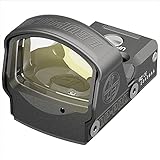
- Model #119688 – DeltaPoint Pro Red Dot Sight, 2.5 MOA Dot and a Matte finish
- Leupold’s Professional-Grade Red Dot Optical System offers unmatched light transmission that’s designed to outperform in the most challenging lighting conditions, industry-leading glare reduction for a clear image in harsh, direct light, and the resolution and clarity that professional guides and shooters demand in the field.
The DPP offers excellent glass with lightweight construction. Lacks enclosed options and advanced features. Proven design but showing age compared to newer offerings. Romeo2 provides more capability for slightly more money.
The Romeo2 occupies premium space with premium pricing. Features justify cost for users wanting maximum versatility. More affordable options exist for single-purpose use.
Real-World Applications
Six months revealed where the Romeo2 excels:
Daily Carry: Outstanding with MAGNETAC holster. The instant activation and deactivation extend battery life while ensuring readiness. Enclosed configuration provides confidence in all weather. Weight becomes unnoticeable with a proper belt and holster.
Competition: Open configuration shines for USPSA and steel matches. Wide field of view and precise dot enable fast, accurate shooting. The instant activation prevents timer-start fumbling. Reliability through high round counts builds confidence.
Home Defense: Bedside pistol benefits from MOTAC feature. Always ready without manual activation. The bright dot works in dark hallways and bright outdoor areas. Backup sight provides redundancy for critical use.
Training Classes: Versatility helps when teaching different skills. Open for speed drills, enclosed for adverse condition training. Students appreciate seeing modern technology in practical use. Reliability prevents equipment-related delays.
Hunting Backup: Capable for close-range hunting situations. The 3 MOA dot works for precise shot placement. Weather resistance handles hunting conditions. Not primary hunting equipment but adequate for opportunity shots.
Common Questions Answered
“Is the premium price justified?”
For daily carriers and serious shooters, yes. The combination of features, modularity, and build quality provides value. Casual shooters have excellent options at half the price. Evaluate your needs honestly before spending.
“How does MAGNETAC affect draw speed?”
Zero negative impact, slight positive improvement. The dot appears instantly without conscious thought about activation. One less mental step during stress. Practice reveals the advantage quickly.
“Will it survive actual defensive use?”
The construction suggests yes, though thankfully untested personally. Military contracts indicate institutional confidence. Durability testing revealed no concerning weaknesses. It’s built for professional use.
“Is the modular design a gimmick?”
Initially skeptical, I’m convinced otherwise. Real versatility for shooters with multiple applications. Configuration changes prove simple and reliable. Added value for the investment.
“How’s the warranty and customer service?”
Sig’s warranty remains solid though not industry-leading. Haven’t needed service personally, but reports suggest reasonable support. Not Vortex’s no-questions replacement, but adequate for quality products.
“Should I wait for the next version?”
Technology always improves, but the Romeo2 represents current maturity. Feature-complete without obvious omissions. Buy based on current needs rather than future possibilities.
Final Verdict
Plan for the worst, hope for the best, and sometimes embrace technology that actually helps. After six months and nearly 4,000 rounds, the Sig Romeo2 proved that premium pricing can deliver premium performance.
This isn’t perfect equipment – the price stings, holster selection limits options, and some features seem over-engineered. But the core functionality excels where it matters: reliable dot presentation, exceptional durability, and genuine versatility.
The good: Outstanding glass clarity, innovative power management, modular versatility, military-grade construction, and features that actually work as advertised. The Romeo2 delivers professional capability.
The bad: Premium pricing, limited holster compatibility, occasionally stubborn battery tray, and complexity that might overwhelm simple needs. The wide footprint doesn’t suit every pistol.
For serious defensive carriers and competitive shooters, the Romeo2 justifies its cost through capability. The modular design essentially provides two optics in one. MOTAC and MAGNETAC features solve real problems elegantly.
Would I buy it again? Yes, but with realistic expectations. This is professional-grade equipment with professional-grade pricing. It’s not necessary for casual shooting but valuable for serious use.
The wilderness doesn’t care about your schedule, and threats don’t announce themselves conveniently. Having tested the Romeo2 through every scenario Montana provides, I trust it for defensive carry. That’s the strongest endorsement I can offer.
Remember, respect the game, respect the land, respect yourself. Quality optics help make accurate shots when they matter most. The Romeo2 provides that quality with modern features that enhance rather than complicate.
Six months later, the Romeo2 lives on my daily carry pistol in enclosed configuration. It’s been wet, cold, hot, dusty, and generally abused. Still works perfectly, still holds zero, still provides instant dot presentation when needed. For life-or-death equipment, that reliability matters more than price.
Looking for more field-tested defensive and competition gear? Check out our comprehensive reviews and proven equipment recommendations at Moosir.com. Because the best sight is the one that works when seconds count.