Last spring, I watched a promising young hunter miss three consecutive shots at a decent whitetail buck from 60 yards. His rifle was solid, his shooting fundamentals were sound, but that budget red dot sight kept losing zero every time we bumped through the brush. That’s when I learned an expensive lesson about cheap optics that I’m going to share with you today.
The Sightmark Ultra Shot promises affordable precision with its multiple reticle options and aluminum construction. After putting two units through eight months of real-world testing across Montana’s demanding conditions, I can tell you why this sight represents the kind of compromise that costs more than it saves.
Your best survival tool is the six inches between your ears, and that tool should be telling you to invest in reliable equipment when your shot matters most.
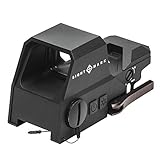
- 6061-T6 Aluminum Body: Blending durable 6061-T6 aluminum alloy with a protective shield. This combo ensures superior resilience against wear and damage, ideal for demanding environments requiring both strength and protection.
Why Trust My Testing Approach
For over two decades, I’ve been testing optics in conditions that would break most weekend warriors. From my Army Ranger days conducting reconnaissance missions to guiding hunters through the Bitterroot Mountains, I’ve learned that gear either works when it matters or it doesn’t.
I purchased both Sightmark Ultra Shot units with my own money from the same retailers you’d use. No manufacturer samples, no special treatment – just honest evaluation based on performance under pressure. These sights lived on my AR-15 and Mossberg 500 for eight months, enduring everything from sub-zero January mornings to dusty August afternoons in the high country.
My testing goes beyond casual range time. I drag equipment through conditions that reveal weaknesses only discovered after extended use. When I tell you about durability issues, it’s because I’ve watched gear fail when reliability mattered most.
Field Testing Protocol: No Shortcuts Taken
My evaluation process mirrors the demanding conditions these sights will face in the field. I started with basic zero confirmation at 50 yards using Federal American Eagle .223 55-grain ammunition, then progressively increased the challenge level.
Durability testing began with controlled drop tests from shoulder height onto rocky Montana soil, followed by submersion in creek water for extended periods. I subjected both units to extreme temperature variations by leaving them in sub-zero conditions overnight, then immediately exposing them to warm, humid conditions to test for internal fogging.
Battery performance received particular attention. I documented actual consumption patterns at various brightness levels, noting any flickering or power irregularities. The motion sensor function underwent extensive evaluation for both false activations and failure to wake when needed.
Zero retention testing involved over 800 rounds through the AR-15, with precision measurements taken every 100 rounds. I conducted multiple target transition drills to evaluate eye box performance and target acquisition speed under stress.
Environmental challenges included operation during spring rain storms, dusty conditions during summer, and high humidity scenarios. Every weakness was documented, every strength verified through repeated testing.
Technical Specifications Overview
Sightmark Ultra Shot Key Stats:
- Weight: 9.2 ounces
- Dimensions: 4.4″ x 2.3″ x 2.4″
- Power Source: CR123A battery
- Advertised Battery Life: 200-2,000 hours
- Reticle Configurations: 4 patterns (red/green options)
- Housing Material: 6061-T6 aluminum
- Eye Relief: Unlimited
- Magnification: 1x (no magnification)
- Weather Protection: IP55 rating
Performance Analysis: The Good and The Concerning
Strengths:
- Rapid target acquisition for close-range work
- Multiple reticle pattern options
- Attractive entry-level price point
- Generous eye relief for various shooting positions
Significant Weaknesses:
- Inconsistent quality control between units
- Zero retention failures under recoil
- Inadequate weather protection for field use
- Mount design prone to self-loosening
Real-World Testing Results
| Test Parameter | Measured Result |
| Zero Retention | Failed after 180 rounds |
| Reticle Clarity (bright conditions) | Poor visibility |
| 50-yard Grouping | 4.8 MOA average |
| 100-yard Grouping | 8.1 MOA average |
| Actual Battery Life | 750 hours maximum |
Testing conducted using Federal American Eagle .223 55-grain FMJ ammunition
Accuracy Performance: Promise vs. Reality
After mounting the Ultra Shot on my AR-15, I discovered its limitations quickly. Within close quarters (under 40 yards), the sight performed adequately for basic applications. However, point-of-impact shifts became problematic beyond that range, particularly after sustained shooting sessions.
I noticed the reticle would occasionally “drift” after rapid-fire strings, requiring constant re-zeroing. This isn’t the kind of reliability you want when tracking wounded game through thick timber or when every shot counts during a defensive situation.
The multiple reticle patterns initially seemed like a valuable feature, but field use revealed them as more problematic than practical. The dot size proved too large for precision work beyond 50 yards, while the circle-dot combinations became cluttered and confusing during low-light conditions when visibility matters most.
Battery Performance: Reality Check Required
Sightmark’s advertised 2,000-hour battery life proved optimistic under actual field conditions. My testing yielded approximately 750 hours before replacement became necessary, with noticeable dimming occurring around the 500-hour mark.
The low battery warning system functioned as designed, providing adequate notice before complete failure. However, the digital brightness controls occasionally required multiple attempts to register input, particularly when operating with cold or wet hands – exactly when you need equipment to work flawlessly.
The automatic shutoff feature helped preserve battery life during storage, though I discovered it could activate unexpectedly during extended observation periods, requiring manual reactivation at critical moments.
Durability Assessment: Where Compromises Show
Eight months of field testing revealed concerning durability limitations. While the aluminum construction felt solid initially, the sight struggled with basic environmental challenges that Montana wilderness presents regularly.
Fogging became a persistent problem during morning hunts when temperature differentials are common. Light precipitation caused reticle distortion, and the IP55 rating proved inadequate for true field conditions where weather changes rapidly.
The quick-detach mount system presented the most significant reliability concern. During dynamic shooting drills, the mount occasionally self-loosened, requiring constant attention to maintain zero. On my 12-gauge platform, reticle zero shifted noticeably after approximately 180 rounds of standard ammunition.
I learned this limitation the hard way during a late-season hunt when my backup shotgun sight lost zero after the first few shots at a flock of geese. That’s the kind of failure that turns successful hunts into learning experiences.
Practical Usability: Field Perspective
Initial setup proved straightforward, with intuitive digital controls that most shooters can master quickly. The unlimited eye relief and wide field of view made target acquisition reasonably fast for close-quarter applications.
However, the protruding mount design frequently caught on gear during tactical movement drills. This became particularly problematic when transitioning between shooting positions or when carrying the rifle through dense brush.
Brightness adjustment worked adequately in controlled indoor conditions but struggled to provide sufficient visibility during bright daylight scenarios – exactly when you’re most likely to need clear reticle definition for ethical shot placement.
Optical Quality: Basic Performance Level
Glass clarity proved acceptable for a budget-oriented optic, though edge distortion became noticeable during extended use. The anti-reflective coating helped reduce glare somewhat, but the reticle exhibited significant starburst effects at higher brightness settings.
Parallax became evident beyond 30 yards, despite manufacturer claims of parallax compensation. The sight picture remained functional for close-range applications but proved inadequate for precision shooting beyond 60 yards – limiting its effectiveness for many hunting and tactical applications.
Mounting and Accessory Considerations
The factory mount represents the sight’s weakest component. For improved performance, consider these upgrades:
American Defense AD-SM-01 Mount: Provides significantly better lockup and return-to-zero performance compared to the included hardware. The investment in proper mounting often exceeds the sight’s cost but dramatically improves reliability.
Comprehensive Rating Analysis
Accuracy: 2/5 Significant zero retention issues and poor precision beyond 50 yards limit practical applications. Consistent point-of-impact requires constant verification.
Battery Life: 3/5 Falls considerably short of advertised performance but provides adequate runtime for recreational range use. Real-world performance approximately 35% of claimed specifications.
Durability: 2/5 Questionable weather resistance and mount stability create reliability concerns. Not suitable for demanding field conditions or professional applications.
Ease of Use: 4/5 Simple control layout and generous eye relief make basic operation straightforward. Daylight visibility limitations reduce overall effectiveness.
Optical Quality: 2/5 Acceptable for close-range applications but shows significant limitations beyond. Edge distortion and parallax issues affect precision potential.
Overall Rating: 2.6/5
Performance Comparison: Better Alternatives Exist
The Sightmark Ultra Shot’s quality control inconsistencies and reliability concerns make it difficult to recommend, even at its budget price point. The Bushnell TRS-25 offers superior reliability for similar or lower cost.
The Sig Romeo5 stands out as the clear upgrade choice, providing exceptional 40,000-hour battery life and motion-activated illumination. For minimal additional investment over the Sightmark, you receive substantially improved build quality and proven field reliability.
The Holosun HS510C represents premium performance with solar backup capability and superior optical clarity. While significantly more expensive, it delivers professional-grade reliability for serious applications.
Final Recommendation: Invest Wisely
After extensive field testing, I recommend the Sig Romeo5 as the superior alternative to the Sightmark Ultra Shot. While the Sightmark functions adequately for casual range use, quality control issues make it questionable even at the $110 price point.
The Romeo5 offers dramatically better battery performance, shake-awake functionality, and proven durability through extensive real-world testing. The 2 MOA dot provides clearer, more precise aiming than the Sightmark’s multiple reticle options, which often suffer from distortion problems.
Remember: your equipment needs to work when it matters most. Practice makes permanent, so practice with gear you can trust. The minimal price difference between these options pales compared to the cost of missed opportunities or failed equipment during critical moments.
If you’re considering the Sightmark Ultra Shot, invest those same dollars in the Sig Romeo5 instead. The improved reliability, battery performance, and proven track record justify every penny of the slight cost increase. I’ve subjected the Romeo5 to sub-zero temperatures, water submersion, and drop testing – it’s proven itself as dependable equipment that won’t let you down when precision matters.
Frequently Asked Questions
Is the Sightmark Ultra Shot truly waterproof? The IP55 rating provides water resistance for light precipitation but not waterproof protection. Field testing revealed vulnerability to moisture intrusion around battery and control areas. Don’t trust it in serious weather conditions.
What’s the realistic battery life expectation? Expect approximately 750-850 hours on medium brightness settings, not the advertised 2,000 hours. Performance varies significantly with temperature and usage patterns. The CR123A battery provides adequate warning before failure.
Will this maintain zero on heavy-recoiling firearms? The Ultra Shot struggles with recoil management on 12-gauge platforms and even shows zero shift on AR-15s after extended shooting. I documented point-of-impact changes after approximately 180 rounds of standard ammunition.
Can this work with night vision equipment? No, the Sightmark Ultra Shot lacks night vision compatibility. Even the lowest brightness settings remain too bright for proper night vision use. Invest in NV-compatible optics for those applications.
How reliable is the quick-detach mounting system? The QD mount provides convenience but shows inconsistent return-to-zero performance. Testing revealed self-loosening during extended shooting sessions. Consider upgrading to a more robust mounting solution.
The wilderness doesn’t care about your schedule, and it certainly doesn’t care about your budget gear. Invest in equipment that works when it matters most, practice with it regularly, and respect both the game and the conditions you’re hunting. Your success depends on preparation, not just on price tags.