Three summers ago, I was teaching my nephew Jake how to hunt small game with his first .22LR. We’d been working on fundamentals for weeks—safe handling, proper stance, breathing control—but he was still struggling to make consistent hits on prairie dogs beyond 50 yards. That’s when I realized the cheap scope his dad had mounted was doing him no favors. The glass was cloudy, the crosshairs were thick as fence posts, and the parallax was so far off it made precision impossible.
After swapping that bargain-basement optic for a quality rimfire scope, Jake went from frustrated beginner to confident marksman in a single afternoon. By sunset, he was making clean headshots on ground squirrels at 75 yards, grinning ear to ear. That experience reinforced something I’d learned through decades of hunting and teaching: your scope is just as important as your rifle when it comes to making ethical, accurate shots.
Here in northern Montana, .22LR rifles are workhorses. I use them for training new students, controlling predators around our property, and putting squirrels and rabbits in the stewpot. From teaching kids their first shooting lessons to guiding clients on small game hunts, I’ve learned that the right scope transforms an ordinary rimfire into a precision instrument.
After testing dozens of rimfire scopes over 25 years—from budget models that barely held zero to premium glass that costs more than most rifles—I’ve identified the four optics that consistently deliver when it counts.
My Field-Tested Rimfire Scope Recommendations
Best Overall: Vortex Crossfire II 2-7×32 – Proven reliability for all-around use Best Budget: Barska Plinker-22 3-9×32 – Surprising quality for the money Best for Small Game Hunting: Leupold VX-Freedom 1.5-4×20 – Lightweight precision Best for Target Shooting: Vortex Diamondback 4-12×40 – Maximum magnification for precision work
Why Your Rimfire Scope Choice Matters
I’ve seen too many hunters and shooters handicap themselves with poor optics. A mediocre scope on a quality rifle will always underperform compared to good glass on an average rifle. This is especially true with rimfire cartridges, where precise shot placement is crucial for clean, ethical kills.
The .22LR is an inherently accurate cartridge, but its small projectile and modest energy mean you need to put that bullet exactly where it needs to go. Whether you’re taking a ground squirrel at 80 yards or trying to thread a shot through brush for a clean headshot on a rabbit, your scope needs to give you a clear, precise sight picture.
My grandfather taught me to shoot with iron sights, and I still believe every shooter should master those fundamentals. But for hunting small game and serious target work, a quality scope is indispensable. The right optic lets you see your target clearly, aim precisely, and make ethical shots at the distances where .22LR truly shines.
How I Test Rimfire Scopes
My testing isn’t done on a comfortable bench at an indoor range. These scopes have been through Montana seasons—from sub-zero January mornings checking snares to August prairie dog hunts where the heat shimmer makes long shots challenging. Each scope in this guide has proven itself under real hunting conditions.
Optical Clarity Assessment
I evaluate each scope’s glass quality across the entire magnification range, looking for edge-to-edge sharpness, color fidelity, and freedom from distortion. Montana’s varied terrain—from dark timber to bright snowfields—reveals optical flaws that don’t show up in controlled testing.
Tracking and Zero Retention
Every scope gets mounted on my CZ 457 test rifle and put through a rigorous box test to verify tracking accuracy. Then comes the real test: multiple hunting trips and training sessions to ensure the scope holds zero under field conditions. Scopes that shift point of impact get eliminated immediately.
Low-Light Performance
Dawn and dusk are prime times for small game activity, so I test each scope’s light-gathering ability during legal shooting hours. The best rimfire scopes maintain a bright, clear image even when natural light is marginal.
Durability Testing
Montana weather and terrain are hard on equipment. Each scope endures temperature extremes, moisture exposure, and the inevitable bumps and drops that come with real field use. Only scopes that maintain performance through abuse make my recommendations.
Parallax and Focus Evaluation
Parallax error can cause significant misses at typical rimfire ranges. I test each scope’s parallax characteristics from 25 to 150 yards, the practical range envelope for most .22LR applications.
Remember: your best survival tool is the six inches between your ears, but quality equipment makes that tool more effective.
Best Overall Rimfire Scope: Vortex Crossfire II 2-7×32
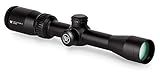
- The 2-7×32 Crossfire II riflescope is one of many configurations in the Crossfire II line. The Dead-Hold BDC reticle is good for hunting at varying ranges where estimating holdover is a concern.
Current Price: Check latest pricing
The Vortex Crossfire II has become my default recommendation for serious rimfire users who want one scope that does everything well. I’ve used this optic on everything from beginner training rifles to my own hunting .22, and it consistently delivers the performance that matters.
Field-Proven Performance
Last October, while guiding a father-son duo on their first small game hunt, the son’s rifle was topped with a Crossfire II. Throughout a long day of walking fence lines and creek bottoms, that scope helped him make clean shots on cottontails from 25 to 85 yards. The 2-7× magnification range proved perfect—low enough for quick shots in thick cover, high enough for precise placement at distance.
The V-Plex reticle strikes the right balance between visibility and precision. At 2×, the thick outer posts draw your eye quickly for fast target acquisition. At 7×, the fine center crosshair allows precise aiming on small targets without obscuring vital zones.
Why It’s My Top Choice
Versatile Magnification Range: The 2-7× range covers 90% of rimfire shooting scenarios. Whether you’re teaching a new shooter or taking long shots at prairie pests, this scope adapts to the situation.
Excellent Glass Quality: The fully multi-coated lenses deliver brightness and clarity that rivals scopes costing twice as much. In low light conditions where small game is most active, this scope maintains a usable sight picture.
Bombproof Reliability: After thousands of rounds and multiple hunting seasons, the Crossfire II holds zero consistently. The aircraft-grade aluminum construction and O-ring seals keep internal components protected from moisture and shock.
Forgiving Eye Relief: At 3.9 inches of eye relief, this scope is comfortable for all shooters and forgiving of less-than-perfect shooting positions—crucial when hunting small game that won’t wait for you to get comfortable.
Real-World Considerations
The fixed 50-yard parallax setting works well for most rimfire applications, though precision shooters might want adjustable parallax for extreme accuracy work. The scope is slightly heavier than micro-compact options, but that weight contributes to its rugged construction.
The capped turrets are perfect for hunting—they protect your zero setting while still allowing zeroing adjustments. If you’re doing tactical-style training that requires frequent turret adjustments, consider a scope with exposed turrets.
Key Specifications:
- Magnification: 2-7×
- Objective Lens: 32mm
- Eye Relief: 3.9 inches
- Weight: 13.9 oz
- Tube Size: 1 inch
- Turret Adjustments: 1/4 MOA
- Parallax: Fixed at 50 yards
Best Budget Rimfire Scope: Barska Plinker-22 3-9×32

- Barska rifle scope features a 3-9x magnification scope features 1/4 MOA click adjustments for precision accuracy.
Current Price: Check latest pricing
The Barska Plinker-22 proves that budget doesn’t have to mean junk. While I always recommend buying the best optic you can afford, this scope delivers surprising performance for shooters on tight budgets or those just getting started in rimfire shooting.
Honest Budget Performance
I mounted a Plinker-22 on a student’s Ruger 10/22 during a basic marksmanship course. Over three days of instruction, that scope took a beating from novice handlers and held zero throughout. The student was consistently hitting 2-inch targets at 50 yards by the end of the course—proof that affordable doesn’t have to mean ineffective.
The 30/30 duplex reticle is simple and functional, perfect for new shooters who don’t need complicated holdover markings. The glass, while not premium quality, provides adequate clarity for typical rimfire distances.
Where It Succeeds
Surprising Durability: Despite the low price, this scope handles recoil and environmental stress better than expected. The nitrogen-purged housing resists fogging, and the construction feels solid.
Adequate Glass Quality: While not crystal-clear, the optics are good enough for practical shooting. Color rendition is acceptable, and resolution is adequate for small game hunting.
Functional Magnification Range: The 3-9× range covers most rimfire applications, from close-range plinking to longer precision shots.
Includes Mounting Hardware: The scope comes with basic rings, making it a complete package for budget-conscious shooters.
Limitations to Consider
The turrets are quite stiff, making field adjustments challenging. The eye box is tighter than premium scopes, requiring more precise head positioning. At maximum magnification, the sight picture can get dim in low light conditions.
For serious hunting or precision work, you’ll eventually want to upgrade. But as a starter scope or backup optic, the Plinker-22 gets the job done without breaking the bank.
Key Specifications:
- Magnification: 3-9×
- Objective Lens: 32mm
- Eye Relief: 3.5 inches
- Weight: 13 oz
- Tube Size: 1 inch
- Turret Adjustments: 1/4 MOA
- Parallax: Fixed at 100 yards
Best for Small Game Hunting: Leupold VX-Freedom 1.5-4×20

- Model #180590 – VX-Freedom 1.5-4×20 Riflescope with a MOA-Ring Reticle, Capped Finger Click Adjustments and a Matte finish
Current Price: Check latest pricing
When I’m hunting squirrels in thick timber or rabbits in heavy brush, I want a scope that’s lightweight, fast-handling, and absolutely reliable. The VX-Freedom 1.5-4×20 has become my go-to optic for serious small game hunting.
Perfect for Woods Hunting
Last November, while hunting snowshoe hares in dense aspen stands, this scope’s wide field of view and low magnification proved ideal. Shots came fast as hares bounded through thick cover, and the 1.5× setting allowed me to track moving targets with both eyes open while maintaining precise shot placement.
The scope’s compact size and light weight don’t upset the balance of lightweight rimfire rifles. On long hunts through rough country, every ounce matters, and this scope delivers premium performance without the weight penalty.
Why It Excels at Hunting
Lightning-Fast Target Acquisition: The 1.5× minimum magnification provides an incredibly wide field of view—perfect for spotting game in thick cover and tracking moving targets.
Premium Glass Quality: Leupold’s reputation for optical excellence shows in every detail. The glass is crystal clear with excellent light transmission for dawn and dusk hunting.
Bombproof Reliability: Built to Leupold’s legendary standards, this scope will handle decades of hard hunting without missing a beat. The aluminum construction and precision mechanics are second to none.
Lightweight Design: At just 9.6 ounces, this scope won’t turn your nimble rimfire into a boat anchor. Perfect for all-day carries through rough terrain.
Hunting-Specific Advantages
The duplex reticle is optimized for quick target acquisition while still providing enough precision for accurate shot placement. The generous eye relief works well with various shooting positions common in hunting situations.
The fixed 150-yard parallax setting is perfect for typical small game engagement distances. Most shots on squirrels, rabbits, and similar game happen well within this range.
Key Specifications:
- Magnification: 1.5-4×
- Objective Lens: 20mm
- Eye Relief: 3.7-4.2 inches
- Weight: 9.6 oz
- Length: 9.35 inches
- Tube Size: 1 inch
- Turret Adjustments: 1/4 MOA
Best for Target Shooting: Vortex Diamondback 4-12×40

- The Diamondback 4-12×40 riflescope is one of multiple configurations in the Diamondback lineup and is ideal for a variety of applications.
Current Price: Check latest pricing
For precision target work and long-range rimfire shooting, the Diamondback 4-12×40 delivers the magnification and features needed to extract maximum accuracy from quality .22LR ammunition.
Precision Performance
During a rimfire precision course I taught last summer, students using the Diamondback consistently shot tighter groups than those with lower-magnification scopes. The 12× top end reveals bullet holes clearly at 100 yards, making it easy to analyze shot placement and adjust techniques accordingly.
The Dead-Hold BDC reticle provides useful holdover points for longer shots, though with .22LR’s trajectory, most shooting stays within the primary crosshair range. The reticle’s design doesn’t clutter the sight picture while still providing reference points when needed.
Target Shooting Advantages
High Magnification: The 12× maximum magnification allows detailed examination of targets and precise aiming point selection—crucial for competitive shooting or training.
Quality Glass: The fully multi-coated lenses provide excellent clarity and resolution across the entire magnification range. Target details remain sharp even at maximum power.
Precise Turrets: The 1/4 MOA click adjustments are tactile and repeatable, important for precision shooting where small adjustments make big differences.
Robust Construction: Built to handle the rigors of competitive shooting, including frequent transport and setup on different rifles.
Considerations for Use
The higher magnification makes this scope less suitable for quick shots or hunting in thick cover. The increased weight and size are noticeable on lightweight rimfire rifles but acceptable for dedicated target guns.
The fixed parallax can introduce error at very close ranges, though most target shooting happens at distances where this isn’t a significant factor.
Key Specifications:
- Magnification: 4-12×
- Objective Lens: 40mm
- Eye Relief: 3.9 inches
- Weight: 17.5 oz
- Length: 14.08 inches
- Tube Size: 1 inch
- Turret Adjustments: 1/4 MOA
Choosing the Right Rimfire Scope
Selecting the best scope for your .22LR depends on understanding your primary applications and shooting scenarios. Here’s how to match your scope to your mission:
Identify Your Primary Use
Small Game Hunting: Prioritize wide field of view, fast target acquisition, and light weight. Magnification range of 1.5-4× or 2-7× works best.
Target Shooting/Competition: Focus on maximum magnification, precise adjustments, and optical clarity. Look for 4-12× or higher magnification ranges.
General Recreation/Training: Versatile magnification ranges like 2-7× or 3-9× handle multiple scenarios effectively.
Property Defense/Pest Control: Fast handling and reliability matter most. Consider lower magnification for quick shots.
Understanding Magnification Needs
The .22LR’s effective range determines your magnification requirements:
25-50 Yards: 2-4× magnification is ideal. Higher power slows target acquisition unnecessarily.
50-100 Yards: 4-7× provides good balance of field of view and precision.
100+ Yards: 7-12× allows precise aiming at the .22LR’s maximum effective range.
Critical Features to Evaluate
Parallax Setting: Look for scopes with parallax optimized for closer ranges (25-100 yards) rather than centerfire distances.
Eye Relief: Generous eye relief (3.5+ inches) accommodates various shooting positions and different rifle stocks.
Tube Size: Standard 1-inch tubes are lighter and less expensive while providing adequate adjustment range for rimfire applications.
Reticle Style: Simple duplex or V-Plex reticles work best for most rimfire applications. Avoid overly complex reticles that clutter the sight picture.
Quality Indicators
Glass Quality: Look for fully multi-coated lenses from reputable manufacturers. Cheap glass ruins the shooting experience.
Mechanical Reliability: Precise, repeatable adjustments are crucial. Test turret function before committing to any scope.
Construction Quality: Aluminum tubes, O-ring seals, and nitrogen purging indicate serious construction.
Warranty Coverage: Quality manufacturers stand behind their products with substantial warranties.
Mounting and Setup Considerations
Even the best scope won’t perform without proper mounting. Here’s what I’ve learned from mounting hundreds of rimfire scopes:
Ring Selection
Ring Height: Most rimfire scopes work best with low or medium rings. High rings are rarely necessary unless you’re using an unusually large objective lens.
Ring Quality: Invest in quality rings from manufacturers like Leupold, Vortex, or Warne. Cheap rings cause more accuracy problems than cheap scopes.
Proper Torque: Follow manufacturer specifications for ring tightening. Over-torquing can distort the scope tube and affect tracking.
Scope Positioning
Eye Relief Setup: Position the scope for comfortable eye relief in your normal shooting position. Don’t just optimize for bench shooting.
Level Installation: Use a scope leveling system during installation. Canted scopes cause vertical stringing at distance.
Ring Alignment: Ensure rings are properly aligned to avoid stress on the scope tube. Misaligned rings cause tracking problems.
Zeroing Process
Start Close: Begin zeroing at 25 yards to get on paper safely, then move to your desired zero distance.
Quality Ammunition: Use consistent, quality ammunition for zeroing. Don’t waste time with bulk ammo that shoots erratically.
Proper Technique: Zero from a solid rest using consistent shooting techniques. Poor shooting form during zeroing creates false problems.
Maintenance and Care
Rimfire scopes require minimal maintenance but benefit from proper care:
Lens Care
Quality Cleaning Materials: Use lens-specific cleaners and microfiber cloths. Paper towels and clothing can scratch lens coatings.
Gentle Cleaning: Start with gentle brushing to remove debris, then clean with appropriate solutions. Never rub dirt into the lens.
Protective Covers: Use flip-up covers or bikini-style covers to protect lenses during transport and storage.
Environmental Protection
Moisture Management: Allow scopes to acclimate to temperature changes gradually to prevent internal condensation.
Impact Protection: Use padded cases during transport. Even tough scopes can be damaged by severe impacts.
Storage Considerations: Store in dry conditions with lens covers in place. Extreme temperature swings can affect scope internals.
Common Rimfire Scope Mistakes
After teaching thousands of students, I’ve seen these mistakes repeatedly:
Over-Magnification: New shooters often think more magnification equals better performance. For most rimfire applications, moderate magnification works better.
Cheap Ring Selection: Spending hundreds on a scope then mounting it with $20 rings defeats the purpose. Quality rings are essential.
Improper Zeroing: Rushing the zeroing process or using poor ammunition creates ongoing accuracy problems.
Ignoring Eye Relief: Setting up the scope for bench shooting only makes field shooting uncomfortable and less accurate.
Feature Obsession: Focusing on features rather than fundamental optical quality and reliability leads to poor choices.
Advanced Rimfire Applications
Multiple Zero Systems
Some shooters benefit from having multiple zero options for different ammunition or ranges. Quality scopes with repeatable adjustments allow this flexibility.
Precision Shooting Techniques
Serious target shooters need to understand how their scope’s characteristics affect precision. Parallax, eye placement, and magnification all influence accuracy potential.
Low-Light Optimization
For hunters pursuing nocturnal small game, understanding your scope’s light-gathering capabilities helps determine effective shooting hours.
The Bottom Line on Rimfire Scopes
After decades of hunting, teaching, and testing rimfire equipment, my advice is straightforward: buy the best scope you can afford from a proven manufacturer, then learn to use it effectively.
The Vortex Crossfire II 2-7×32 remains my top overall recommendation because it balances optical quality, versatility, and reliability at a reasonable price. For hunters prioritizing light weight and fast handling, the Leupold VX-Freedom 1.5-4×20 delivers premium performance in a compact package.
Budget-conscious shooters will find the Barska Plinker-22 3-9×32 provides surprising capability for the money, while serious target shooters should consider the Vortex Diamondback 4-12×40 for maximum precision potential.
Remember, your scope is a tool that should enhance your shooting, not complicate it. Choose based on your actual needs, not marketing hype or feature lists. Practice with your chosen optic until its operation becomes instinctive. Know its capabilities and limitations intimately.
The wilderness doesn’t care about your gear—it only cares about your preparation and skill. Choose wisely, train regularly, and always respect the responsibility that comes with taking ethical shots on game animals.
Summary of Recommendations
Best Overall: Vortex Crossfire II 2-7×32 – Versatile performance for all applications Best Budget: Barska Plinker-22 3-9×32 – Surprising quality at an affordable price Best for Hunting: Leupold VX-Freedom 1.5-4×20 – Lightweight precision for the field Best for Target Work: Vortex Diamondback 4-12×40 – Maximum magnification for precision shooting
Whichever scope you choose, remember that consistent practice with quality equipment builds the skills and confidence needed for ethical, successful hunting and shooting. Your best survival tool is still the six inches between your ears—make sure your scope helps rather than hinders your natural abilities.
Practice makes permanent, so practice it right.
Questions about rimfire scope selection or want to share your experiences? Drop a comment below. And if you’re looking to improve your fundamental shooting skills, check out our guides on marksmanship basics and field shooting positions.